Inspiration
Online scams are becoming increasingly convincing. Suspicious messages, fake websites, and fraudulent job offers can trick people into sharing personal information or losing money. We wanted to build a tool that helps people recognize these warning signs before they become victims.
What it does
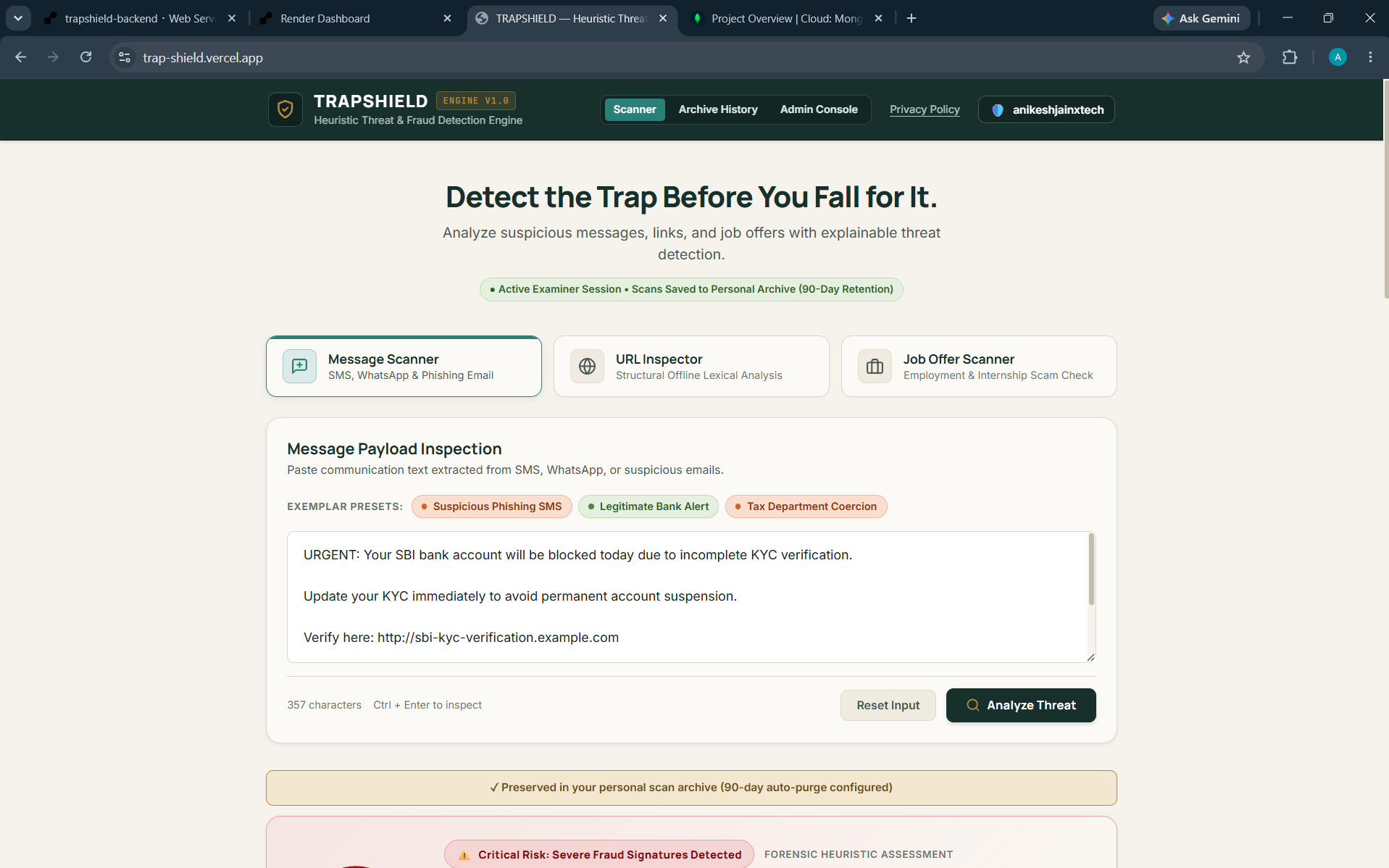
TRAPSHIELD is an explainable threat-analysis platform that scans three types of suspicious content:
- Message Scanner: Identifies suspicious language, urgency, threats, payment requests, and phishing indicators.
- URL Inspector: Examines URLs for suspicious patterns such as IP-based hosts, impersonation, redirects, and credential-related paths.
- Job Offer Scanner: Detects warning signs such as upfront fees, unrealistic salaries, and suspicious recruitment practices.
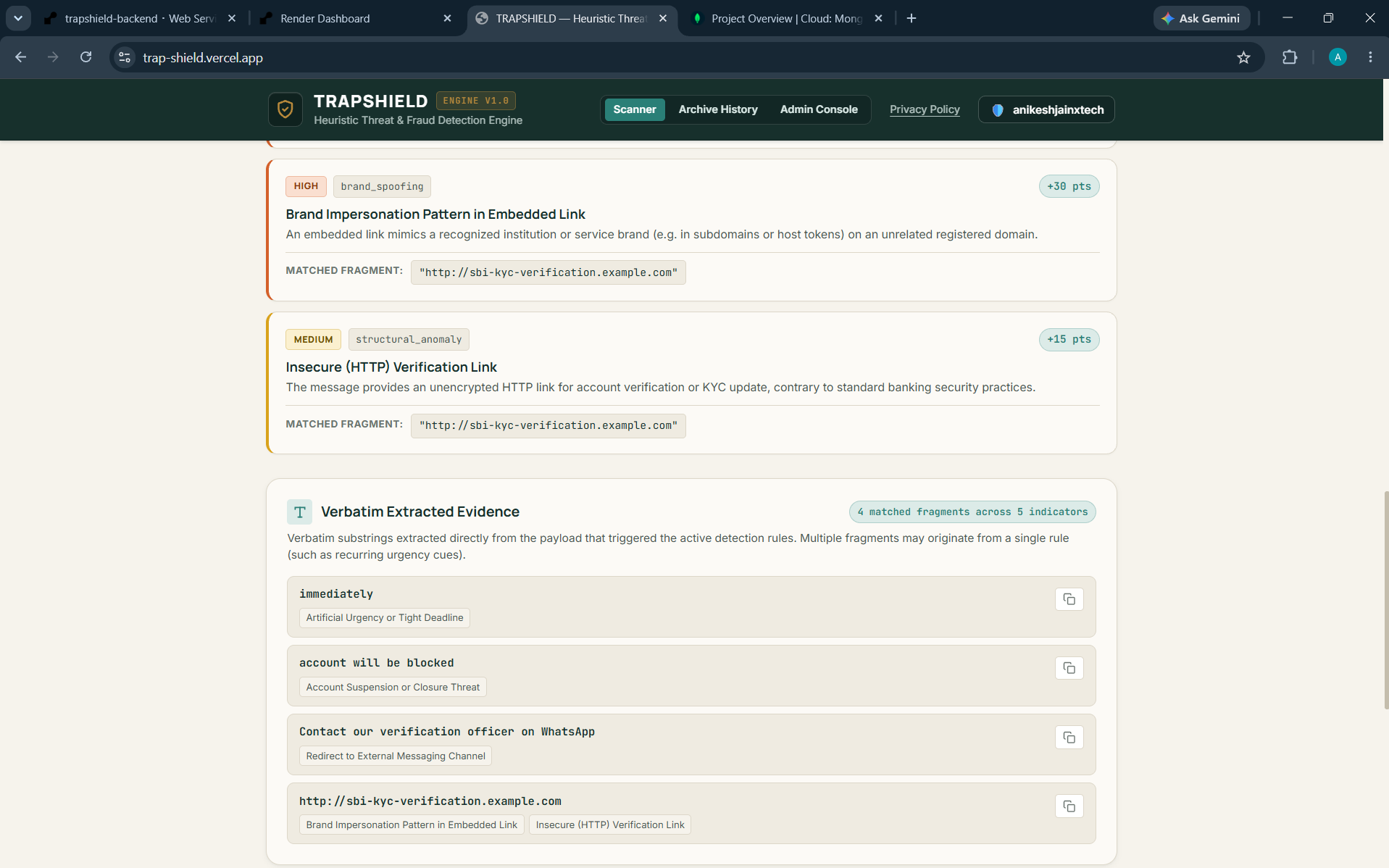
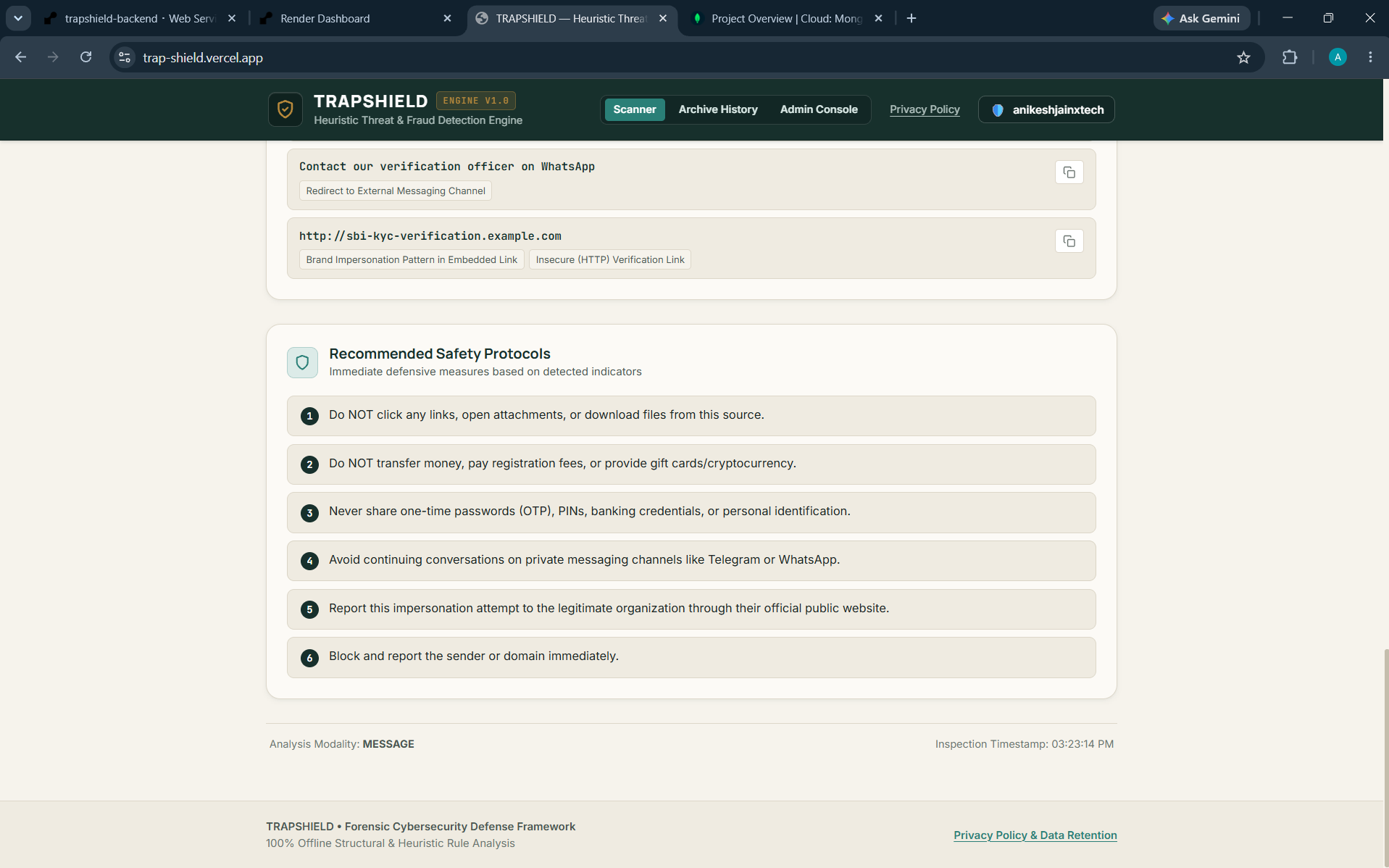
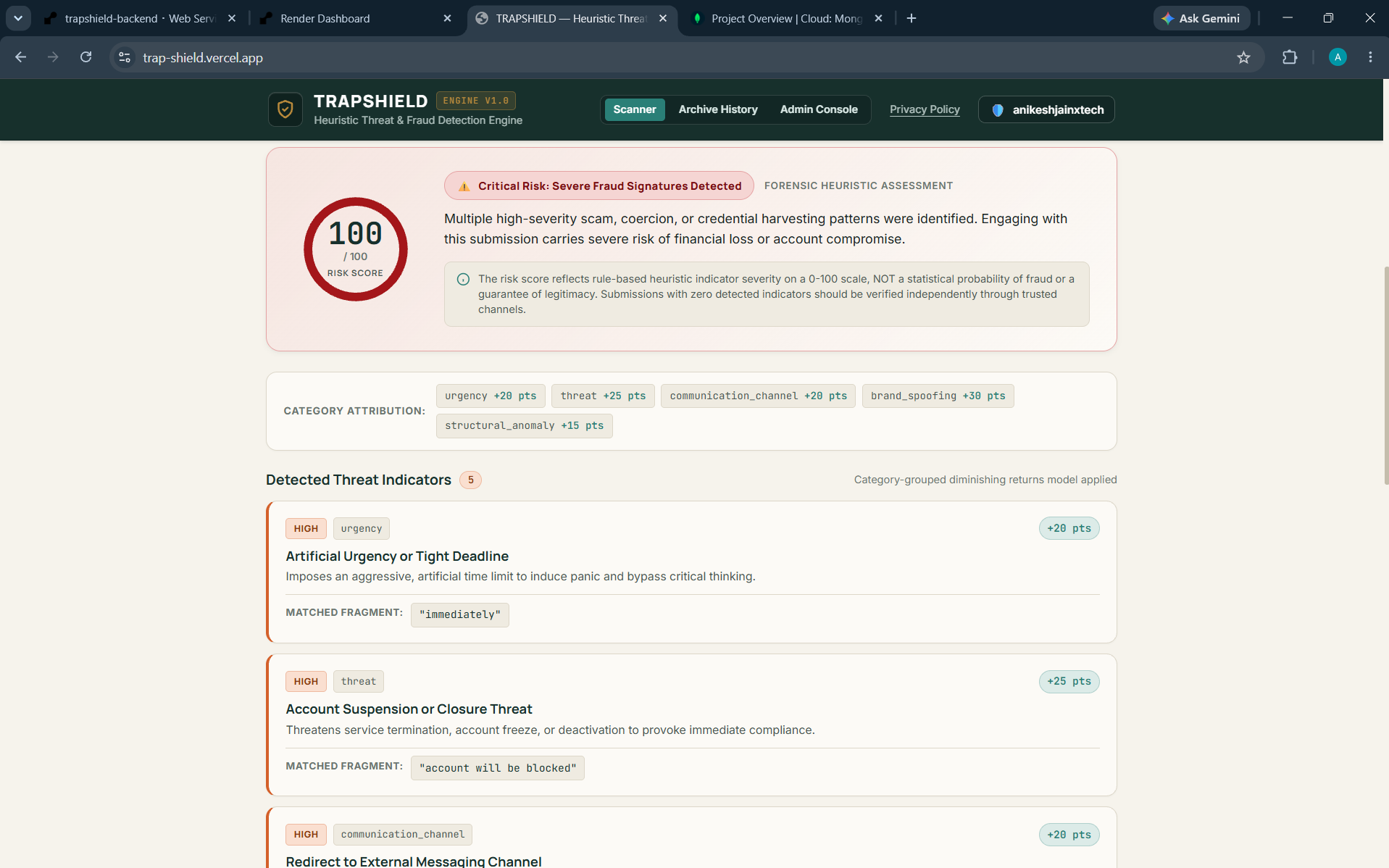
Each scan produces a risk score, threat classification, highlighted evidence, explanations, and recommended safety actions.
How we built it
We built TRAPSHIELD using React and Vite for the frontend, Node.js and Express for the backend, and MongoDB Atlas for data storage.
Its core detection engine uses weighted, rule-based heuristics to analyze suspicious patterns and generate explainable risk assessments without depending on an external AI API.
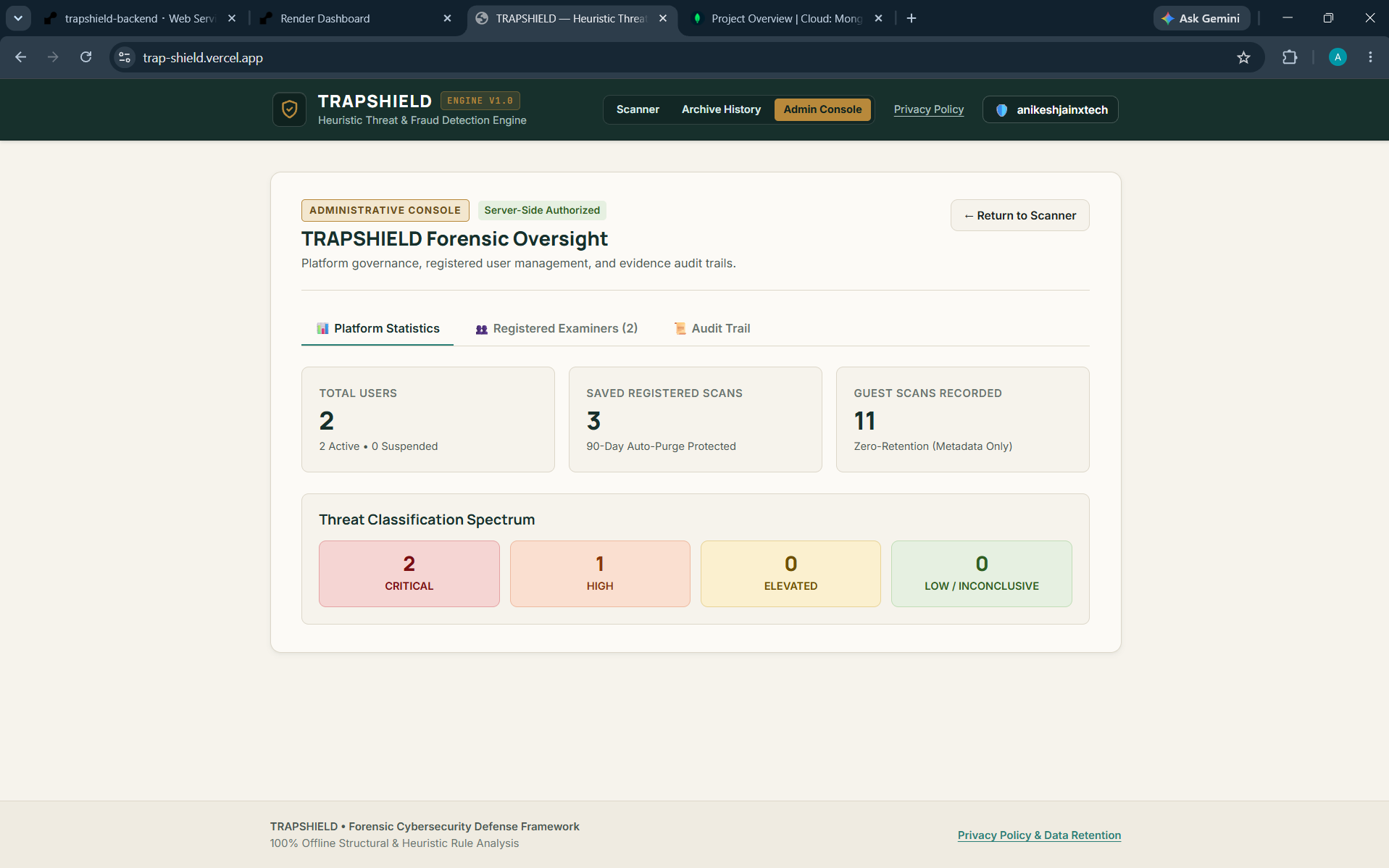
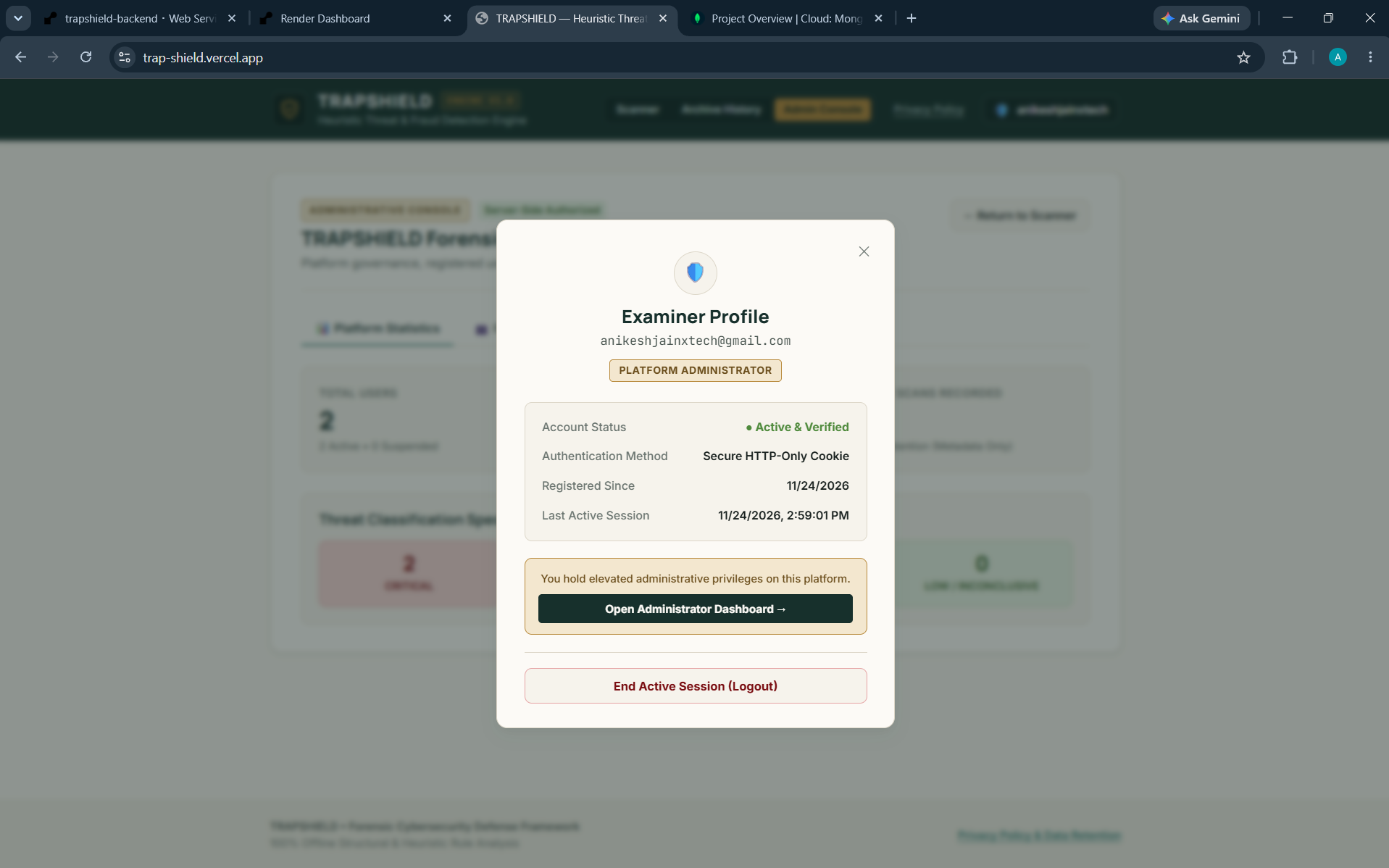
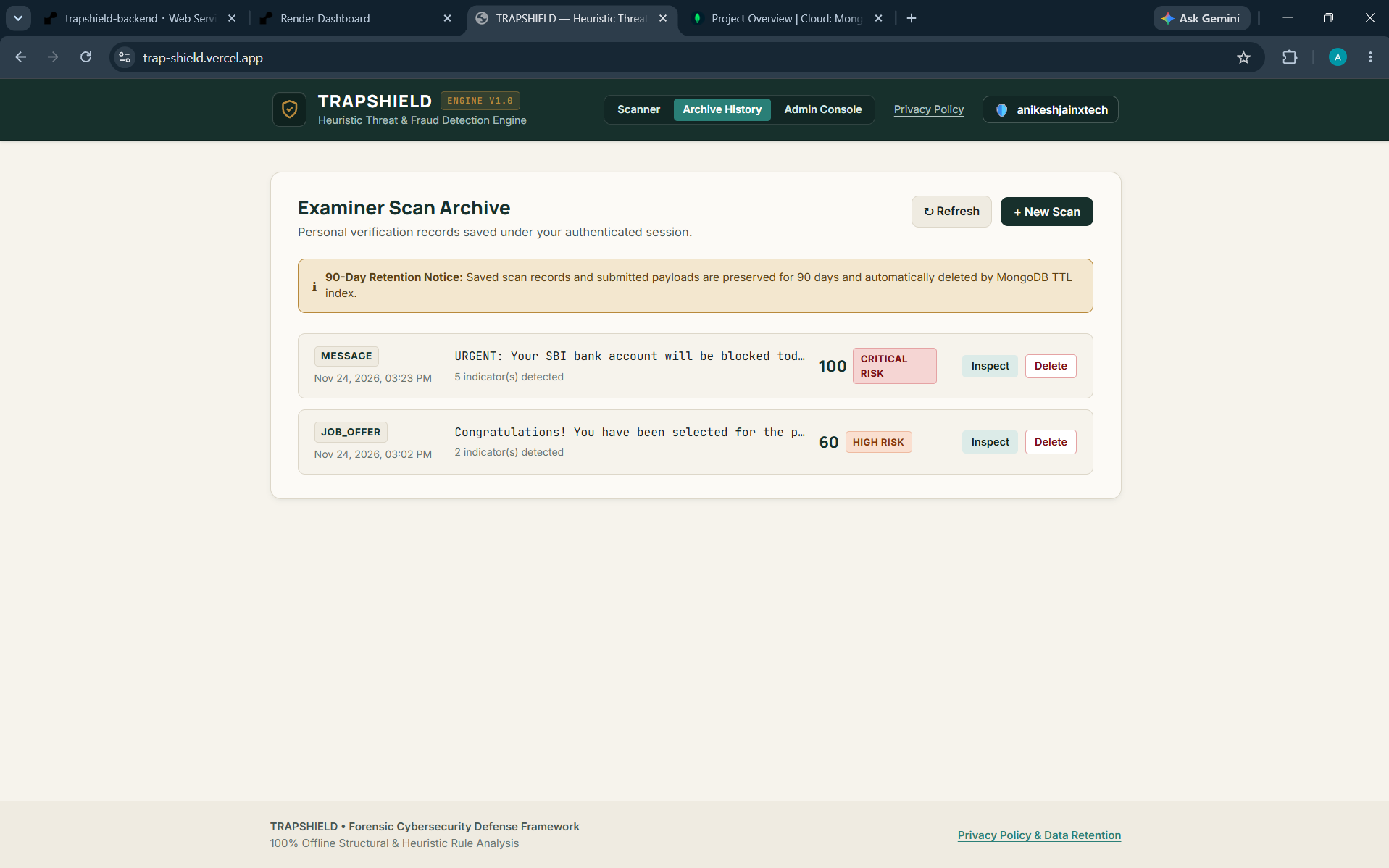
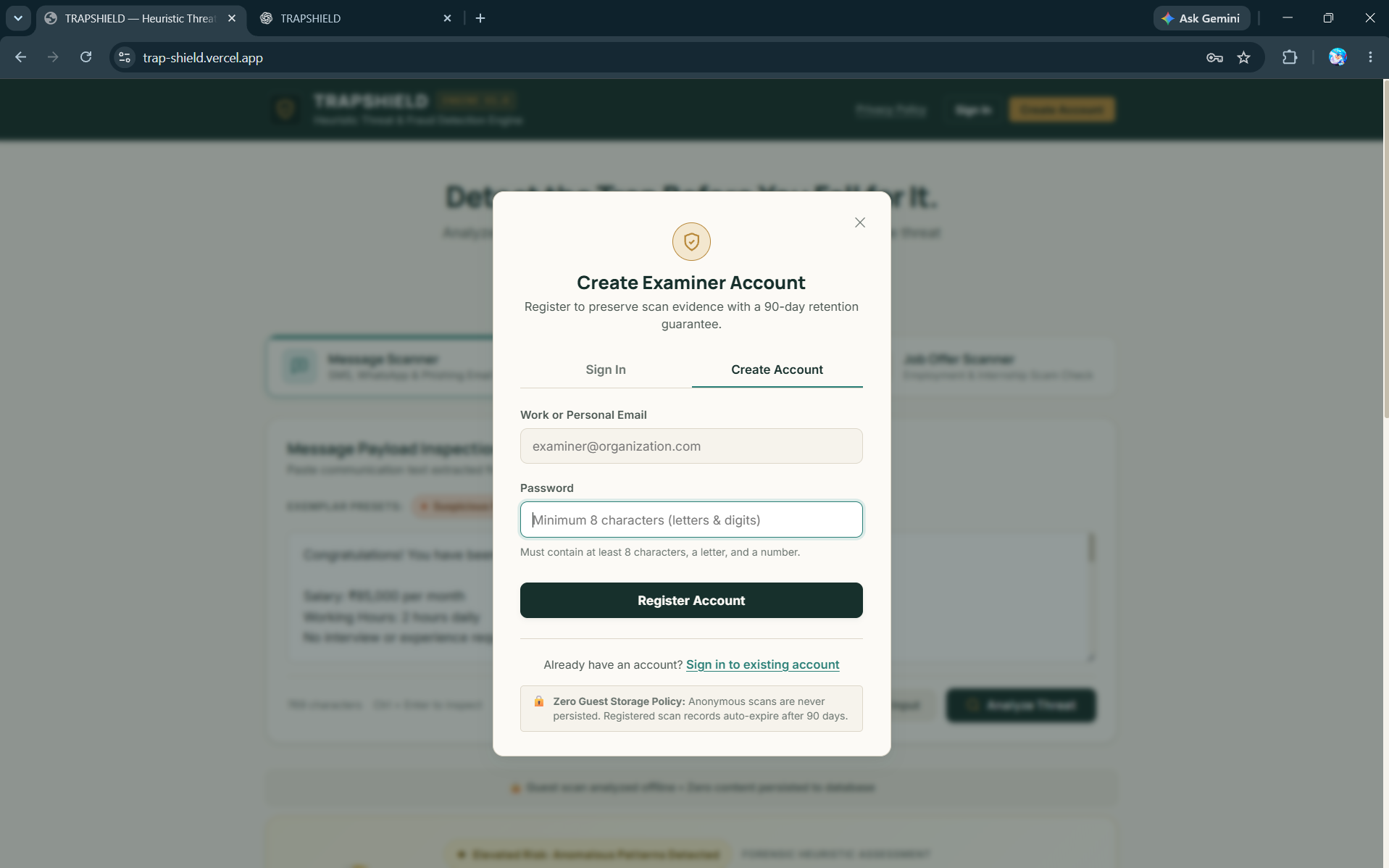
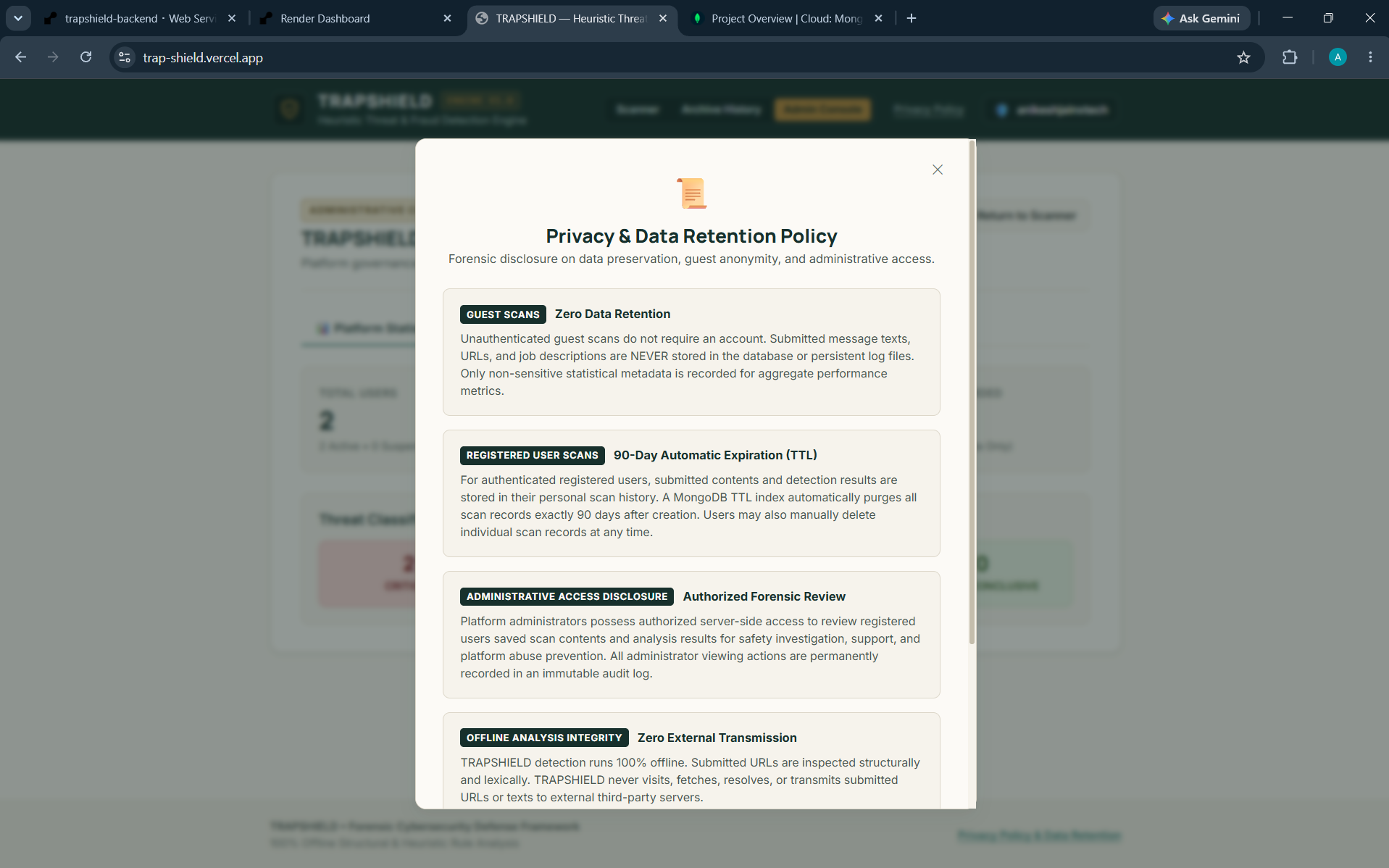
We also implemented secure authentication, role-based access control, registered-user scan history, and an administrative dashboard.
Challenges we ran into
One of our main challenges was making the detection results understandable rather than simply showing a warning. We worked on evidence-based explanations and a structured scoring system.
We also faced challenges integrating authentication, cross-origin requests, cookies, database persistence, and separate frontend and backend deployments.
Accomplishments that we're proud of
- Built three specialized threat-analysis scanners.
- Implemented an explainable risk-scoring engine.
- Added evidence highlighting and actionable recommendations.
- Created secure authentication and role-based administration.
- Implemented scan history and an administrative dashboard.
- Deployed the frontend and backend for public access.
What we learned
We learned how to turn a real-world security problem into a complete web application, design explainable detection logic, integrate a database and authentication system, handle deployment challenges, and test functionality across the entire application.
We also learned that a risk score is an indicator, not a guarantee. Detection systems must communicate limitations and help users make informed decisions.
What's next for TRAPSHIELD
We aim to expand detection coverage, improve recognition of emerging scam patterns, reduce false positives, and introduce more advanced threat intelligence while preserving transparency, usability, and privacy.
Built With
- api
- atlas
- css
- express.js
- html
- javascript
- jwt
- mongodb
- node.js
- react
- render
- rest
- vite
