Inspiration
In many industries, small visual changes can have major consequences. From manufacturing defects on assembly lines to infrastructure degradation like cracks or rust, and even brand compliance checks for packaging, identifying changes quickly and accurately is critical.
We were inspired to build a general-purpose system that combines pixel-level precision, semantic understanding, and AI-driven analysis to detect, classify, and track changes in both images and videos over time. Our goal was to make visual change detection smarter, faster, and actionable, empowering industries to prevent costly mistakes and improve operational efficiency.
What it does
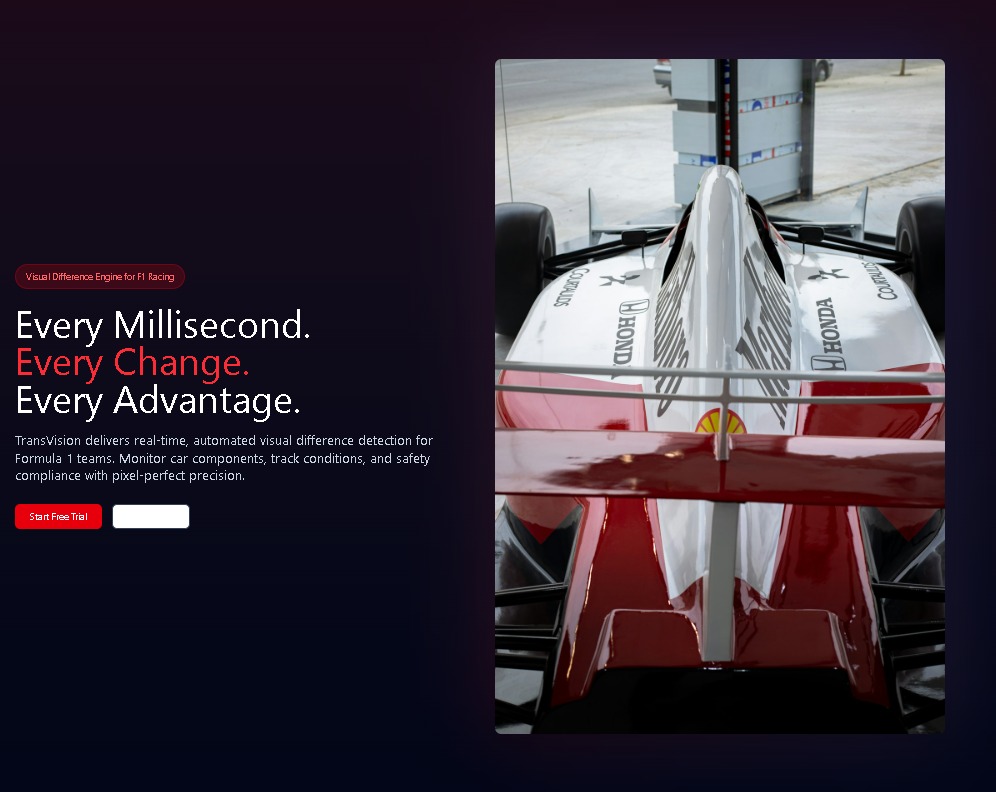
TransVision takes time-series images or videos and identifies exactly what changed, where, and how severe it is. Key capabilities include:
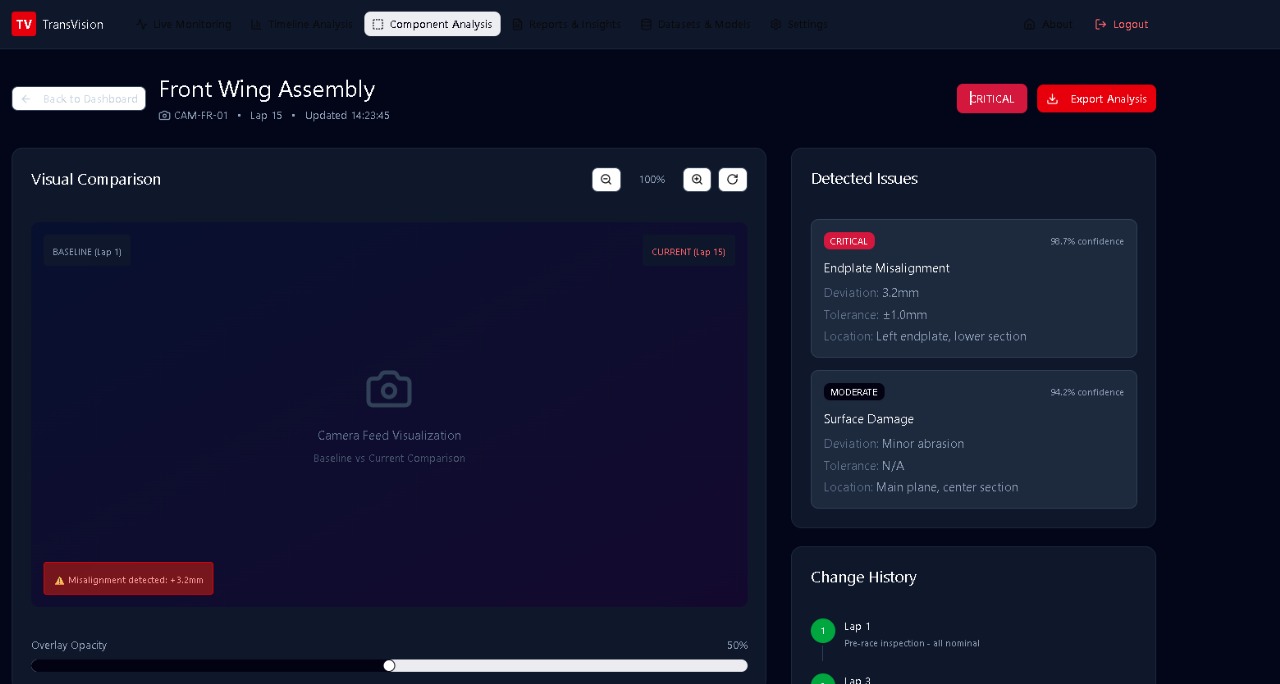
- Pixel-level change maps that highlight exact regions of change.
- Semantic classification of changes (cracks, missing components, sticker misalignment, rust, new objects).
- Severity scoring for prioritization (minor, moderate, major).
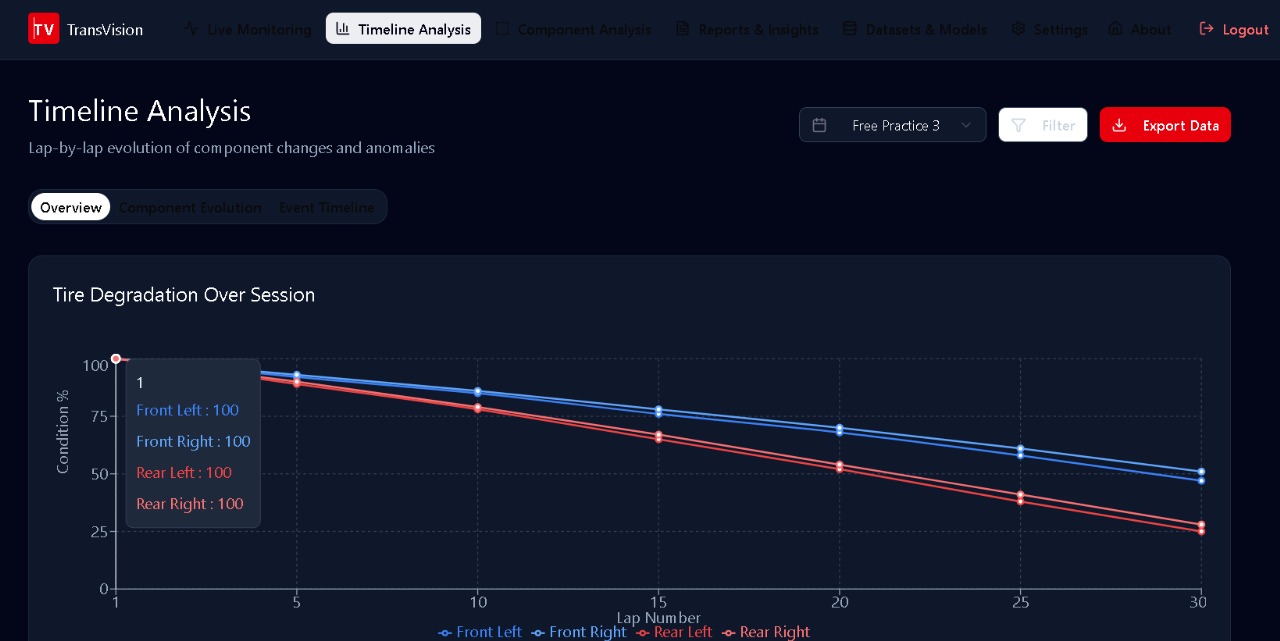
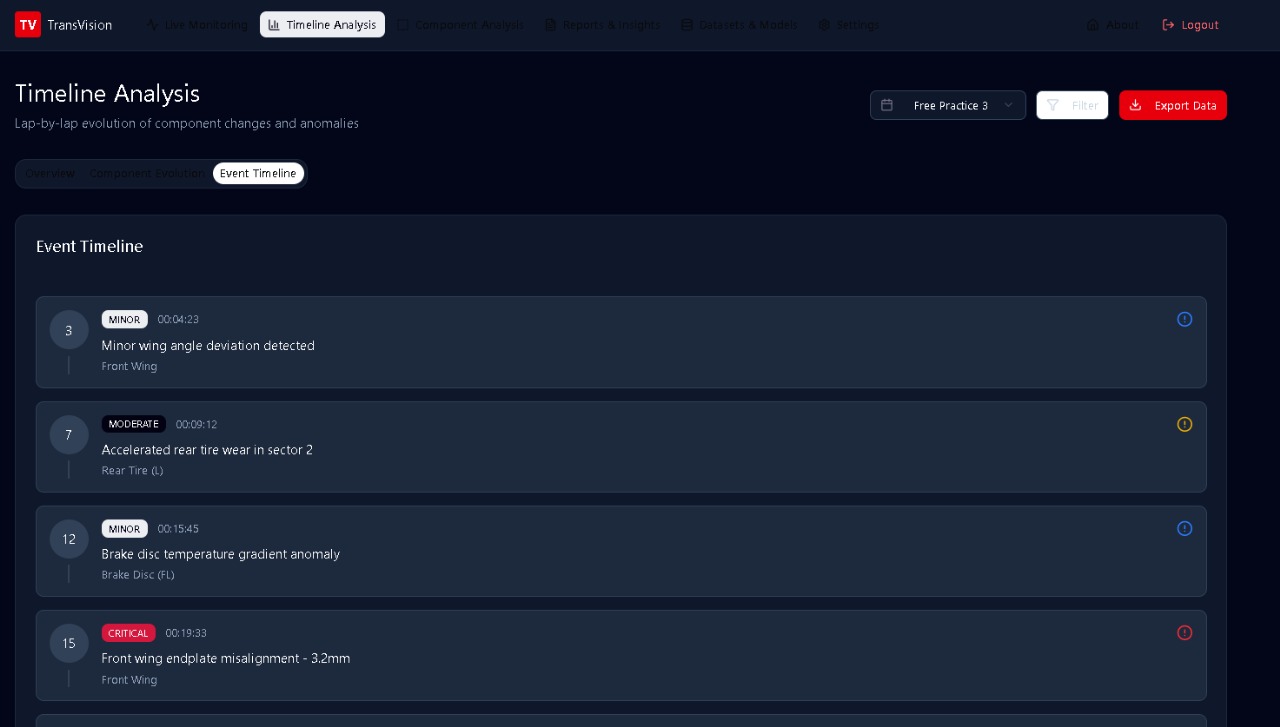
- Temporal analysis and timeline visualization to track changes across frames or sequences.
- Human-in-the-loop active learning to improve accuracy with operator feedback.
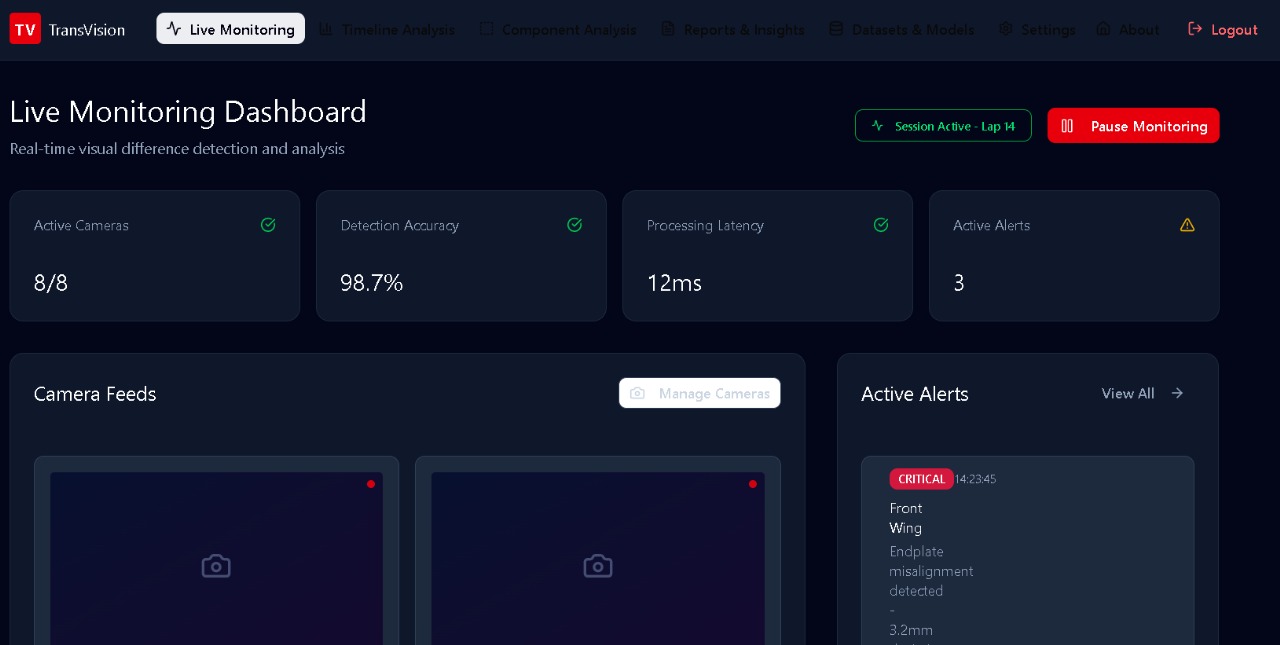
- Real-time alerts and notifications for critical changes.
- ML-powered insights and recommendations to suggest causes and corrective actions.
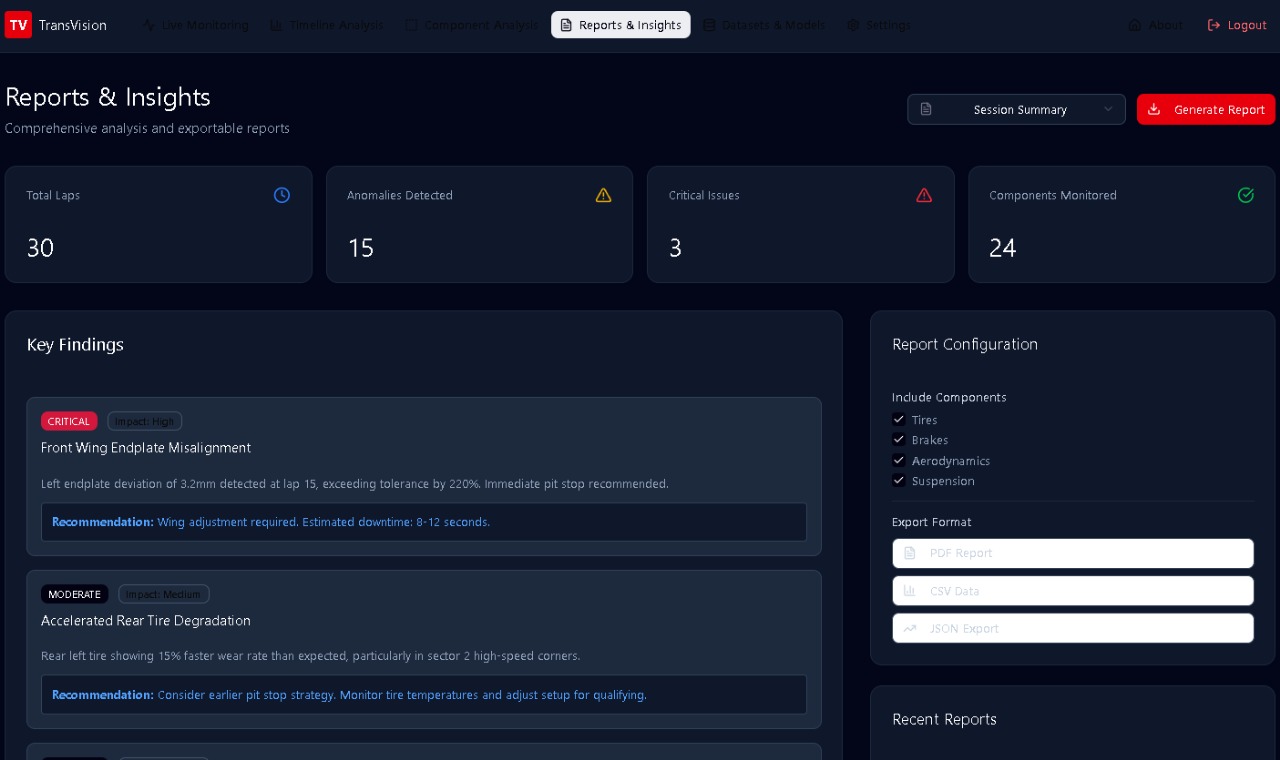
- Exportable reports and dashboards for audit trails, compliance, and actionable decision-making.
TransVision works seamlessly across domains like manufacturing inspection, infrastructure monitoring, brand compliance audits, and more.
How we built it
We designed TransVision as a robust, hybrid system combining classical computer vision and advanced AI/ML techniques:
Input & Preprocessing
- Supports both time-series images and video sequences.
- Performs alignment, lighting normalization, lens correction, and ROI cropping to ensure accurate detection.
- Supports both time-series images and video sequences.
Change Detection & Segmentation
- Generates pixel-level change maps using classical differencing methods combined with deep learning refinement.
- Uses Mask R-CNN / U-Net for precise segmentation of changed regions.
- Generates pixel-level change maps using classical differencing methods combined with deep learning refinement.
Semantic Classification & Severity
- Assigns labels to detected changes (e.g., crack, missing part, misaligned sticker).
- Computes severity scores based on area, confidence, and type of change.
- Assigns labels to detected changes (e.g., crack, missing part, misaligned sticker).
Temporal Analysis & Timeline
- Tracks changes across frames or sequences.
- Provides timeline view and trend analysis for progression over time.
- Tracks changes across frames or sequences.
Anomaly Detection & Active Learning
- AI models (Siamese networks, autoencoders, contrastive learning) detect subtle/unusual changes.
- Human-in-the-loop feedback updates model weights for continuous improvement.
- AI models (Siamese networks, autoencoders, contrastive learning) detect subtle/unusual changes.
Alerts, Insights & Reporting
- Real-time alerts via dashboard.
- Predicts likely cause and suggests corrective action.
- Generates exportable reports (PDF, CSV) with full audit trail and visual overlays.
- Real-time alerts via dashboard.
Tech stack:
- Languages: Python, JavaScript (optional for dashboard enhancements)
- Computer Vision & Image Processing: OpenCV, scikit-image, Pillow
- Deep Learning / AI Models: PyTorch, TensorFlow, Keras
- Segmentation & Object Detection: Mask R-CNN, U-Net
- Anomaly Detection & Representation Learning: Siamese networks, Autoencoders, Contrastive learning
- Data Handling & Analysis: NumPy, pandas
- Visualization: Matplotlib, Plotly, Seaborn
- Dashboard / UI: Streamlit, Gradio, Dash
- Databases / Storage: MongoDB, PostgreSQL, Qdrant, or Weaviate for storing images, metadata, and feature embeddings
Challenges we ran into
- Lighting and viewpoint variations: Subtle changes caused false positives. Resolved with geometric registration and radiometric normalization.
- Temporal consistency: Differentiating between transient changes (like shadows) vs. persistent changes required implementing temporal smoothing and trend analysis.
- Video processing efficiency: Real-time detection on videos was computationally intensive; optimized using frame sampling and lightweight models.
- Semantic classification of diverse changes: Training models to classify multiple defect types across different domains required careful dataset augmentation and labeling strategy.
Accomplishments that we're proud of
- Achieved pixel-level detection with semantic classification for both images and videos.
- Built a timeline visualization that clearly shows progression of changes over time.
- Integrated human-in-the-loop feedback allowing the system to improve dynamically.
- Designed exportable reports and dashboards for actionable insights and compliance tracking.
- Created a hybrid system combining classical CV with advanced ML for high precision and robustness.
What we learned
- The importance of robust preprocessing (alignment, lighting normalization) to reduce false positives.
- How combining classical computer vision with AI models provides both speed and precision.
- The value of active learning and human feedback in dynamic environments.
- Techniques for temporal trend analysis, especially for video sequences.
- Designing systems with auditability, explainability, and operational feasibility is as important as accuracy.
What's next for TransVision
- Edge deployment for real-time industrial monitoring with lightweight models.
- Domain-specific fine-tuning for manufacturing, infrastructure, and brand compliance.
- Expanded ML-powered insights, predicting root causes and maintenance recommendations.
- Multi-camera fusion for 3D or large-area monitoring.
- Integration with IoT and sensor data to complement visual analysis for predictive maintenance.
TransVision is now positioned as a next-generation visual difference engine that is precise, explainable, and actionable across multiple domains.

Log in or sign up for Devpost to join the conversation.