-
-
role-selection
-
-
-
Executive Summary
TransportUrbain is an Android urban mobility platform designed for African cities.
This project was conceived, architected, implemented, documented and refined with the assistance of GPT-5.6 and Codex, demonstrating how AI-assisted software engineering can dramatically accelerate the development of production-ready mobile applications.
Inspiration
Every day, millions of transportation decisions are made across African cities without reliable real-time information.
Every morning, millions of people leave their homes hoping to reach work, school, hospitals, or markets on time. At the same moment, thousands of taxi and motorcycle taxi drivers begin their day searching for passengers.
Yet, passengers waste valuable time looking for transportation, while drivers spend hours riding or waiting without customers.
For passengers, this means stress, fatigue, missed opportunities, and lost productivity.
For drivers—especially motorcycle taxi drivers whose families often depend entirely on their daily earnings—every minute without a passenger represents lost income that may directly affect their household's ability to buy food or meet essential daily needs.
The challenge is not a shortage of vehicles.
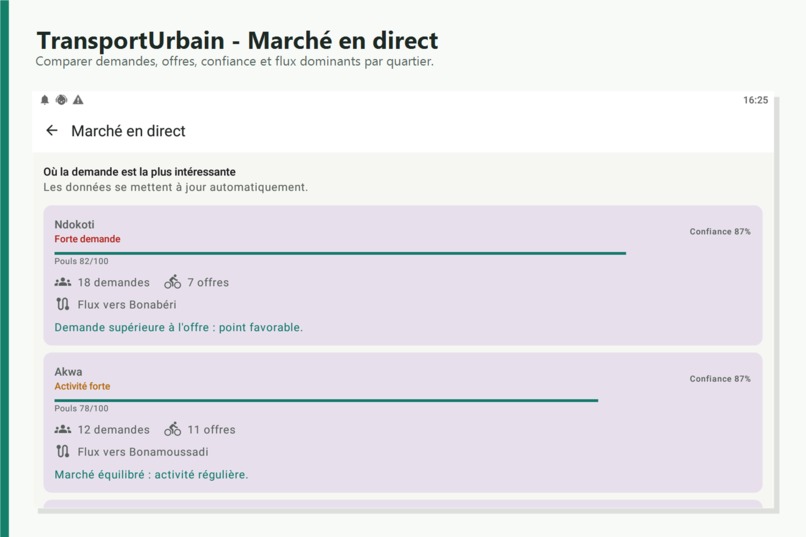
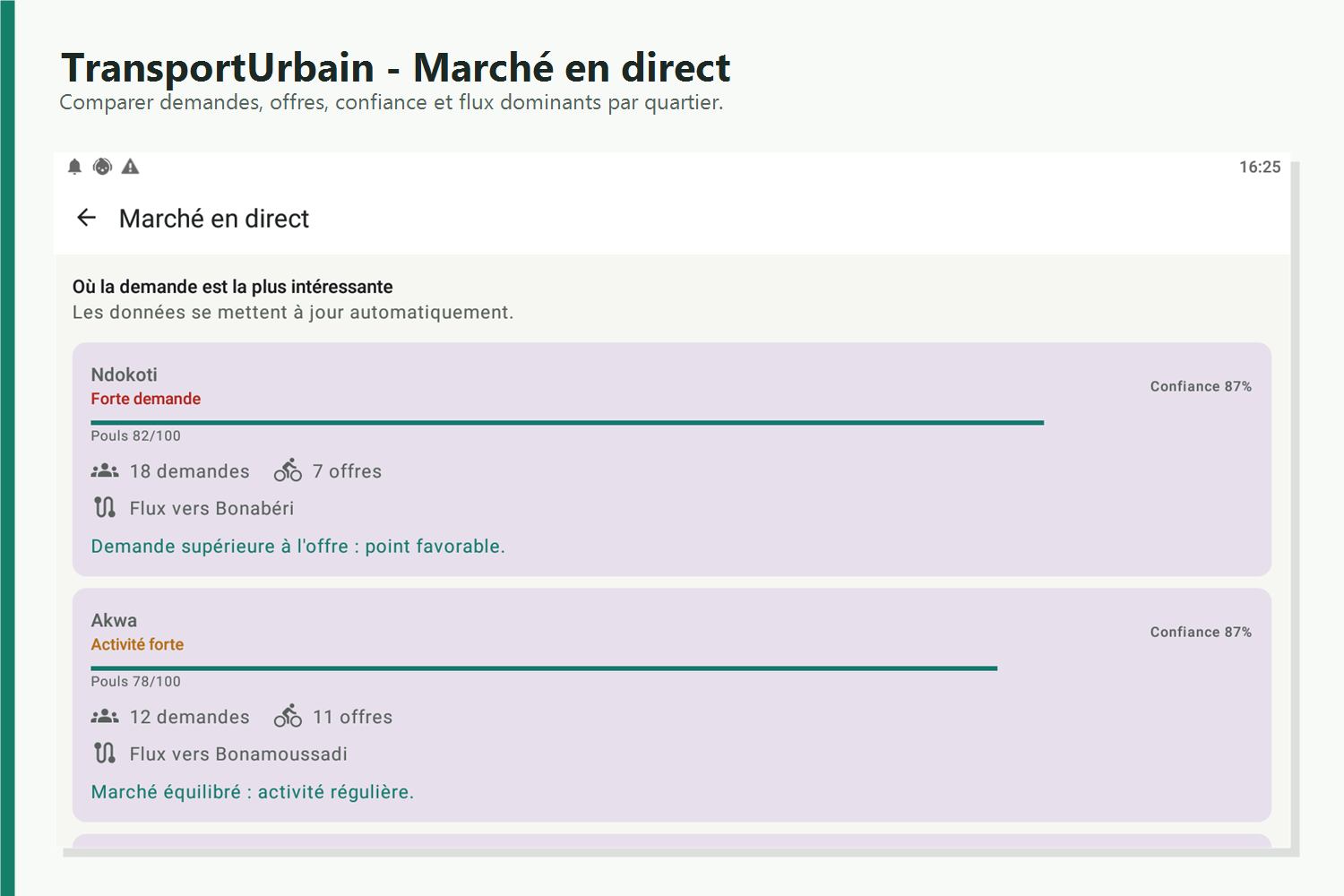
The real challenge is the lack of efficient, real-time information connecting transportation demand with available drivers.
TransportUrbain AI was created to help bridge this gap by providing a simple, efficient, and scalable digital platform designed specifically for African cities.
What it does
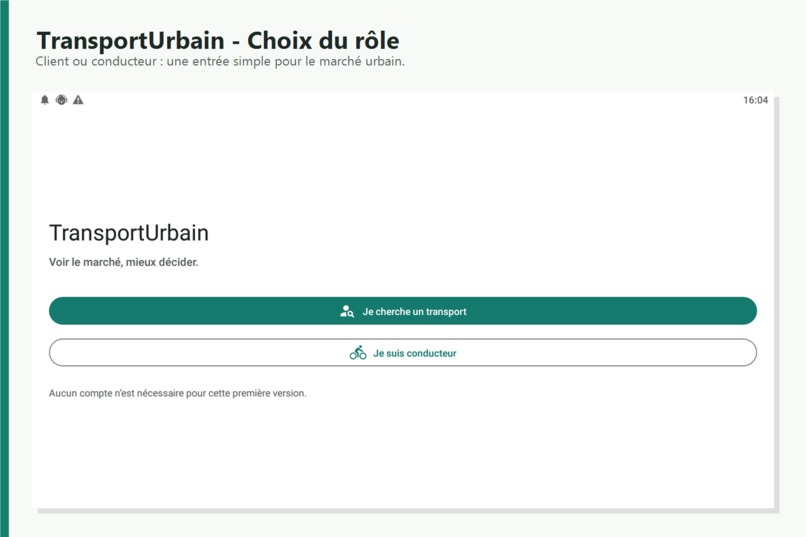
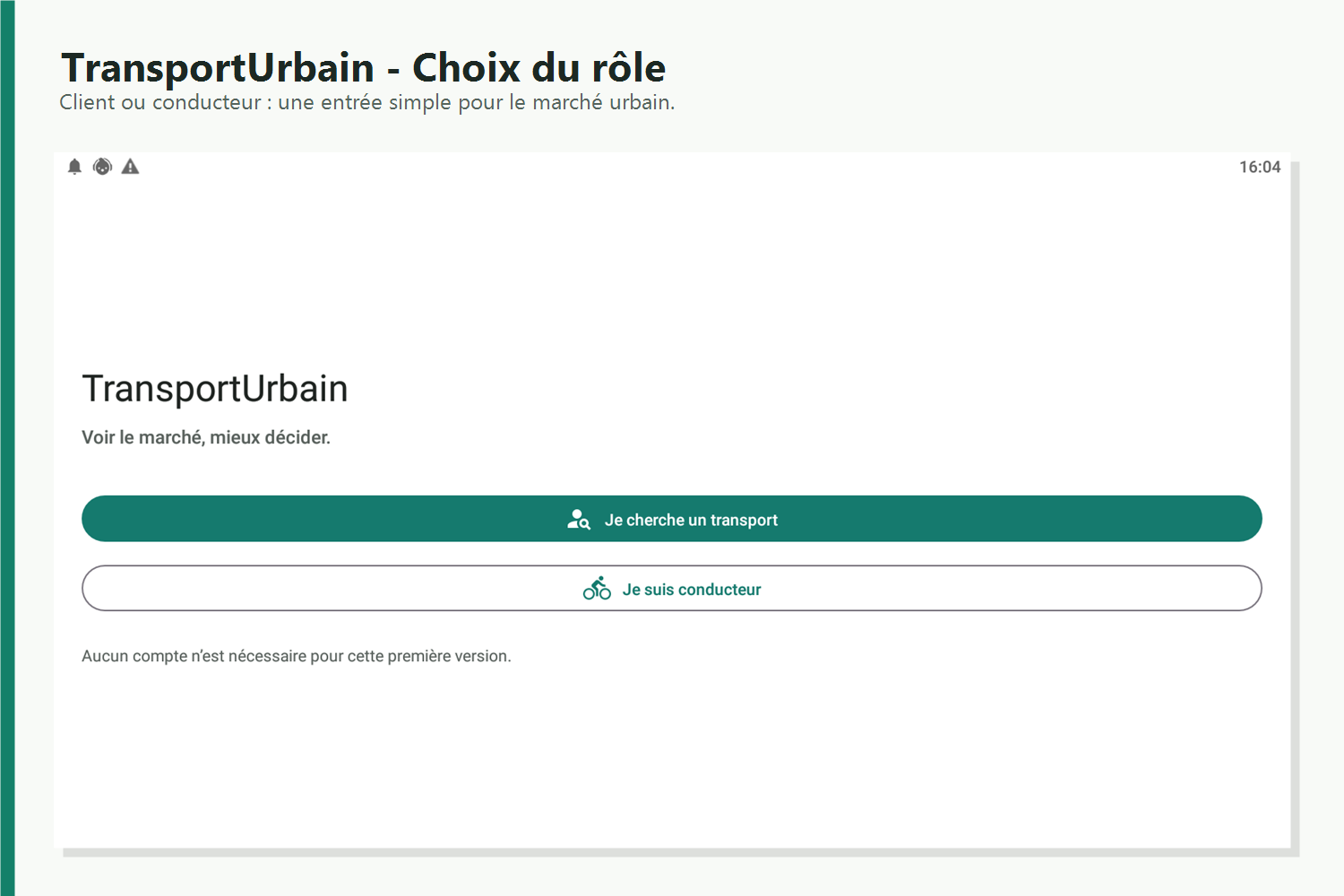
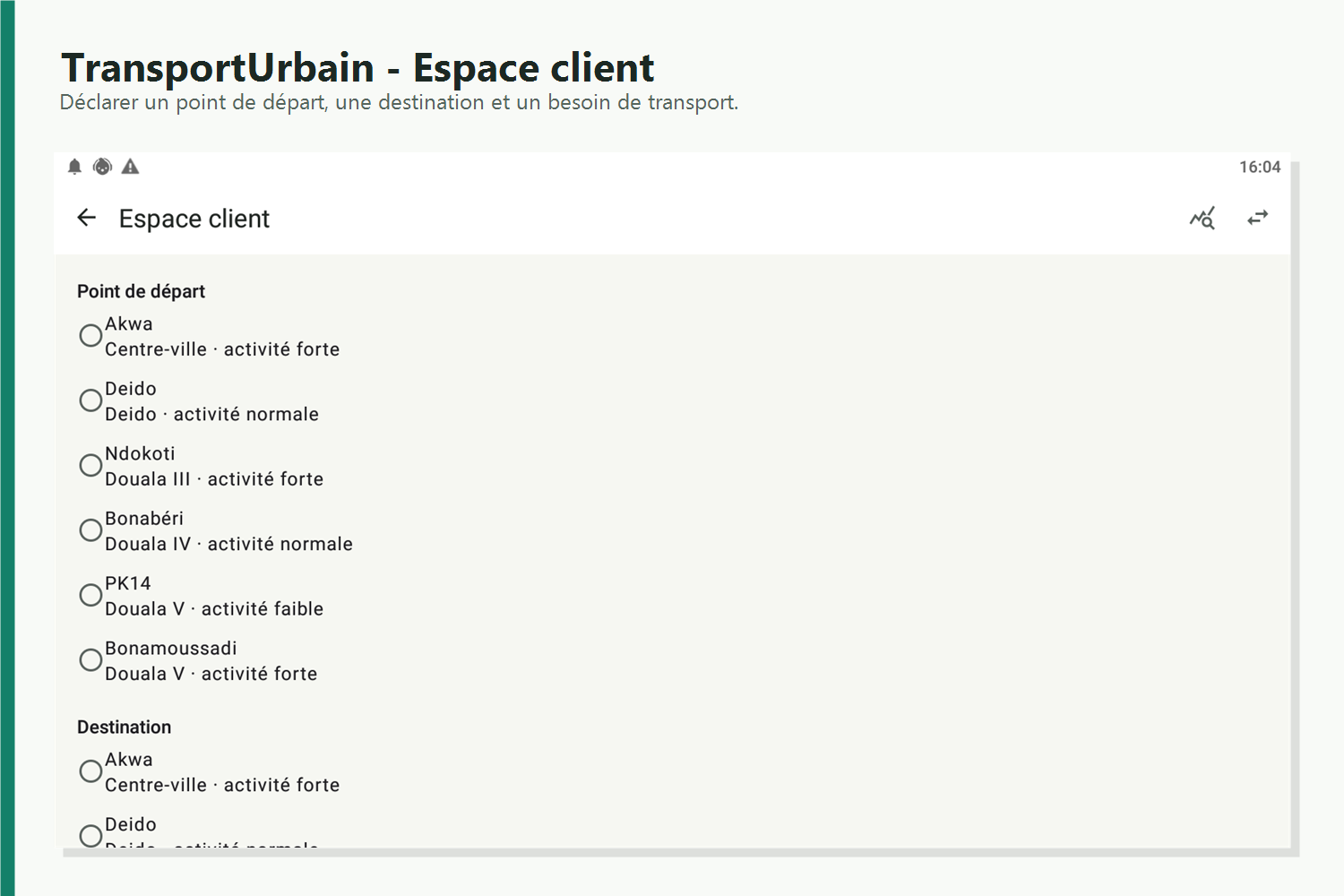
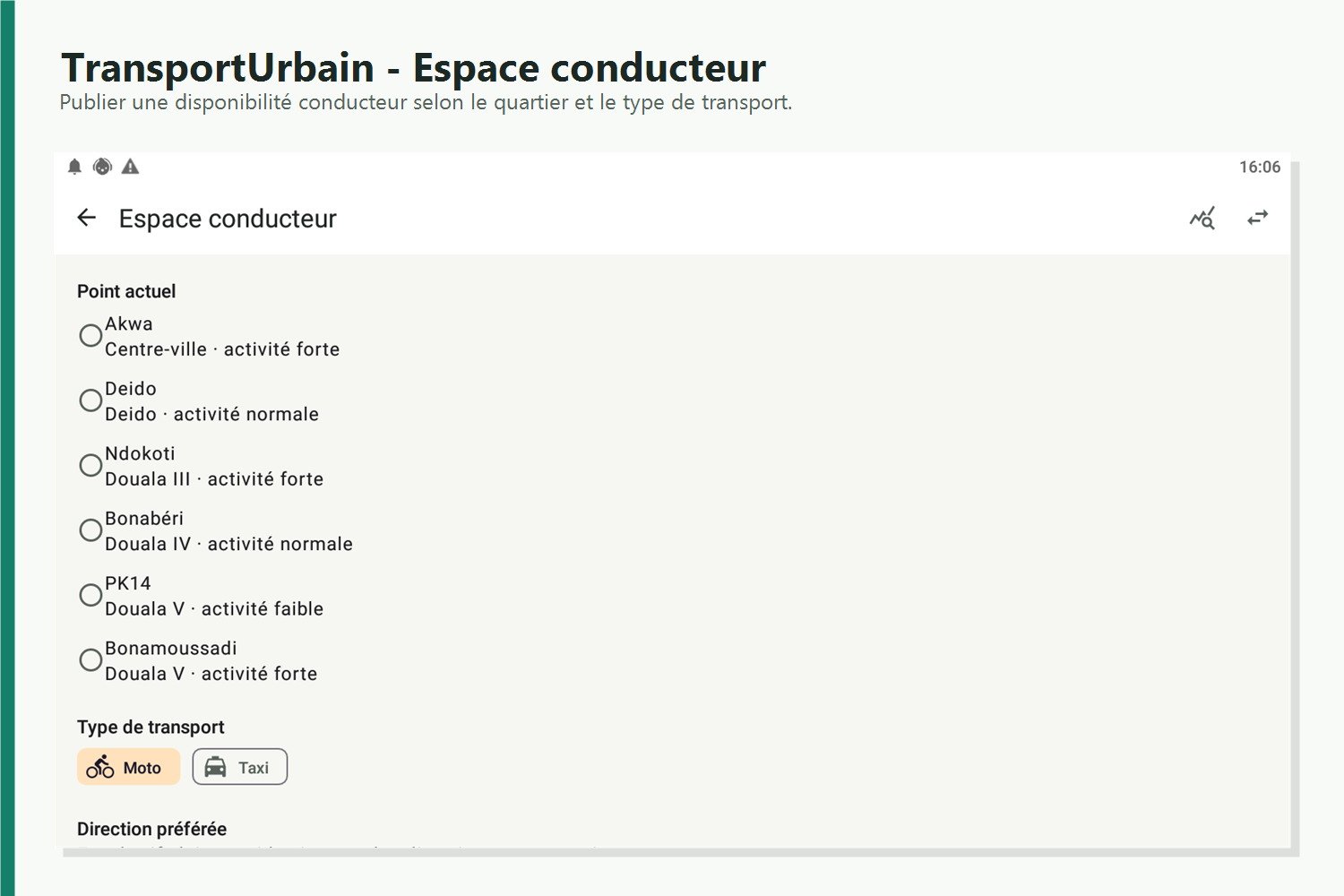
TransportUrbain AI is an Android application that connects passengers with taxi and motorcycle taxi drivers.
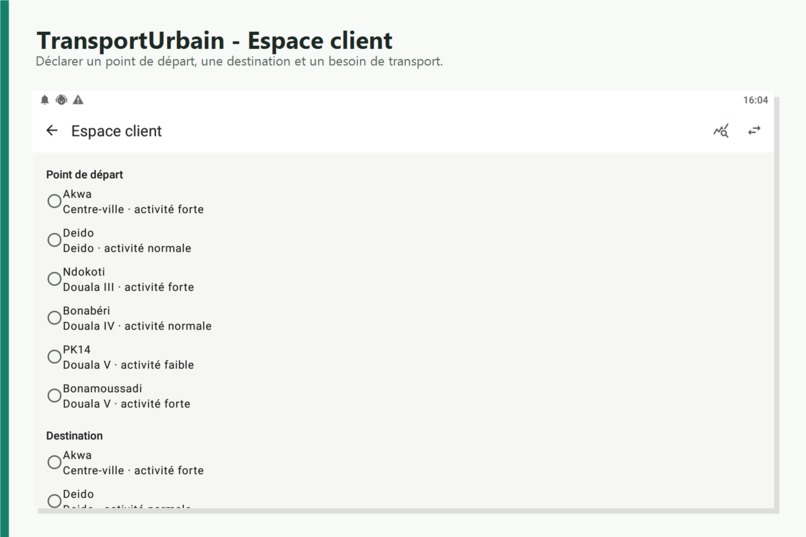
Passengers can quickly publish transportation requests.
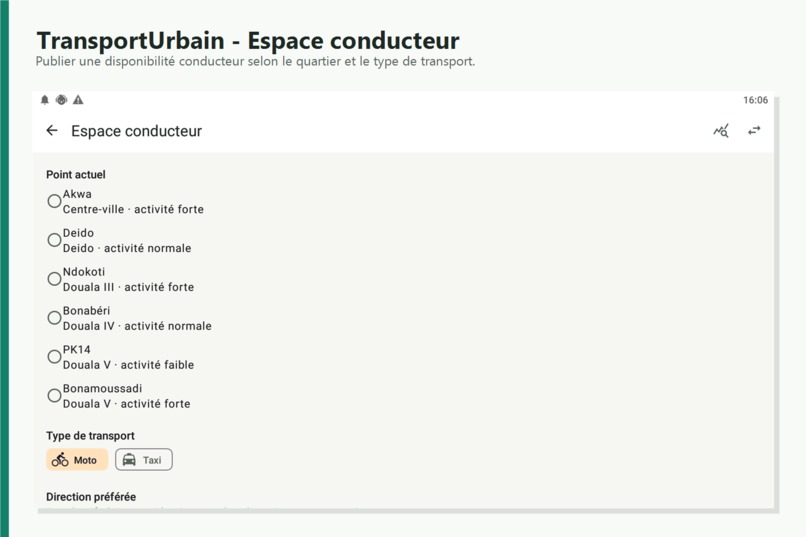
Drivers can browse available requests, contact passengers, and accept trips more efficiently.
The application is designed to reduce waiting times for passengers while helping drivers increase their chances of finding customers.
Unlike traditional ride-hailing platforms, TransportUrbain AI focuses on improving the circulation of transportation information without replacing the existing transportation ecosystem.
Why Africa
Many African cities have vibrant transportation ecosystems based on taxis and motorcycle taxis.
However, these ecosystems remain largely informal and disconnected.
TransportUrbain AI was designed around these realities.
Rather than replacing existing transportation systems, it aims to make them more efficient by improving access to transportation information.
Although initially developed with Cameroon in mind, the platform has been designed so it can easily expand to other African cities.
How we built it
TransportUrbain AI was developed using modern Android technologies, including:
- Kotlin
- Jetpack Compose
- MVVM Architecture
- Firebase Authentication
- Cloud Firestore
- Firebase Cloud Messaging
- Material Design 3
Throughout the project, GPT-5.6 and Codex played a significant role in the development process.
They were used to accelerate software design, generate boilerplate code, improve software architecture, assist with debugging, review implementation choices, and produce technical documentation.
This collaboration enabled faster development while maintaining a clean and maintainable codebase.
How GPT-5.6 and Codex contributed
Rather than being integrated into the application itself, GPT-5.6 and Codex were used as AI-assisted software engineering tools throughout the project.
They supported multiple stages of development, including:
- Requirements analysis
- Product vision
- Software architecture
- MVVM design
- Kotlin development
- Jetpack Compose implementation
- Firebase integration
- Code review
- Refactoring
- Bug fixing
- Technical documentation
- Project organization
This AI-assisted workflow significantly increased development productivity and allowed more time to focus on solving the actual transportation problem.
Challenges we faced
One of the biggest challenges was designing an application simple enough for everyday users while keeping the architecture scalable and maintainable.
Another challenge was modeling a transportation workflow that reflects the realities of African cities instead of copying existing ride-hailing platforms.
What we're proud of
We are proud to have built:
- A modern Android application.
- A clean MVVM architecture.
- A scalable Firebase backend.
- A solution adapted to African transportation realities.
- A project developed using an AI-assisted engineering workflow with GPT-5.6 and Codex.
What we learned
This project demonstrated how AI-assisted software development can dramatically improve productivity.
GPT-5.6 and Codex helped us accelerate architecture design, implementation, debugging, documentation, and software quality.
More importantly, they allowed us to spend more time solving user problems rather than repetitive engineering tasks.
Why this matters
Urban mobility remains a major challenge across many African cities.
By improving the flow of transportation information between passengers and drivers, TransportUrbain AI contributes to reducing waiting times, improving drivers' earning opportunities, and making existing transportation networks more efficient.
The project also demonstrates how AI-assisted software engineering can help independent developers build complex applications faster while maintaining professional quality.
What's next
Future versions of TransportUrbain AI will include:
- Voice-based trip requests
- Multilingual support
- Mobile Money integration
- Real-time driver positioning
- Intelligent trip recommendations
- Deployment across multiple African cities
Our long-term vision
To build one of Africa's leading urban mobility platforms while demonstrating how AI-assisted software engineering can accelerate the development of impactful digital solutions.

Log in or sign up for Devpost to join the conversation.