-
-
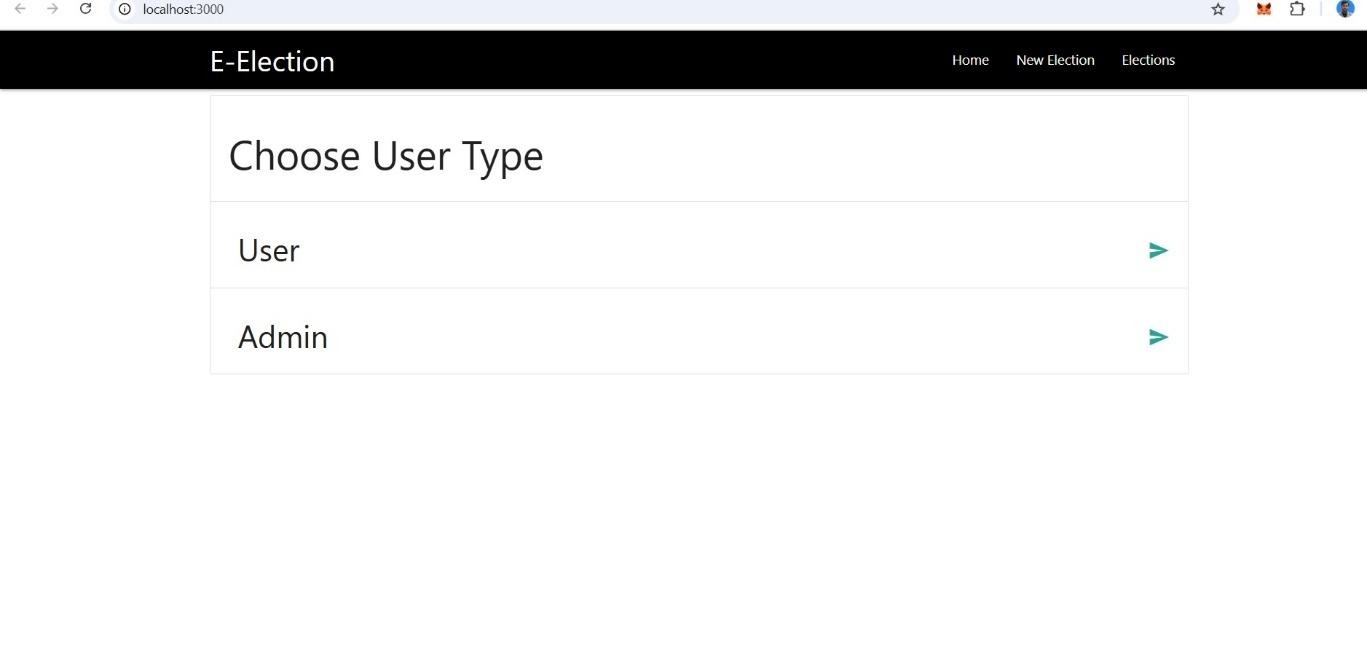
User Selection
-
-
-
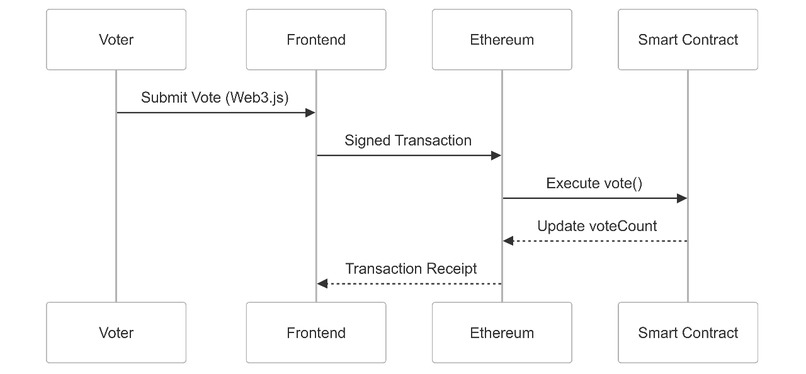
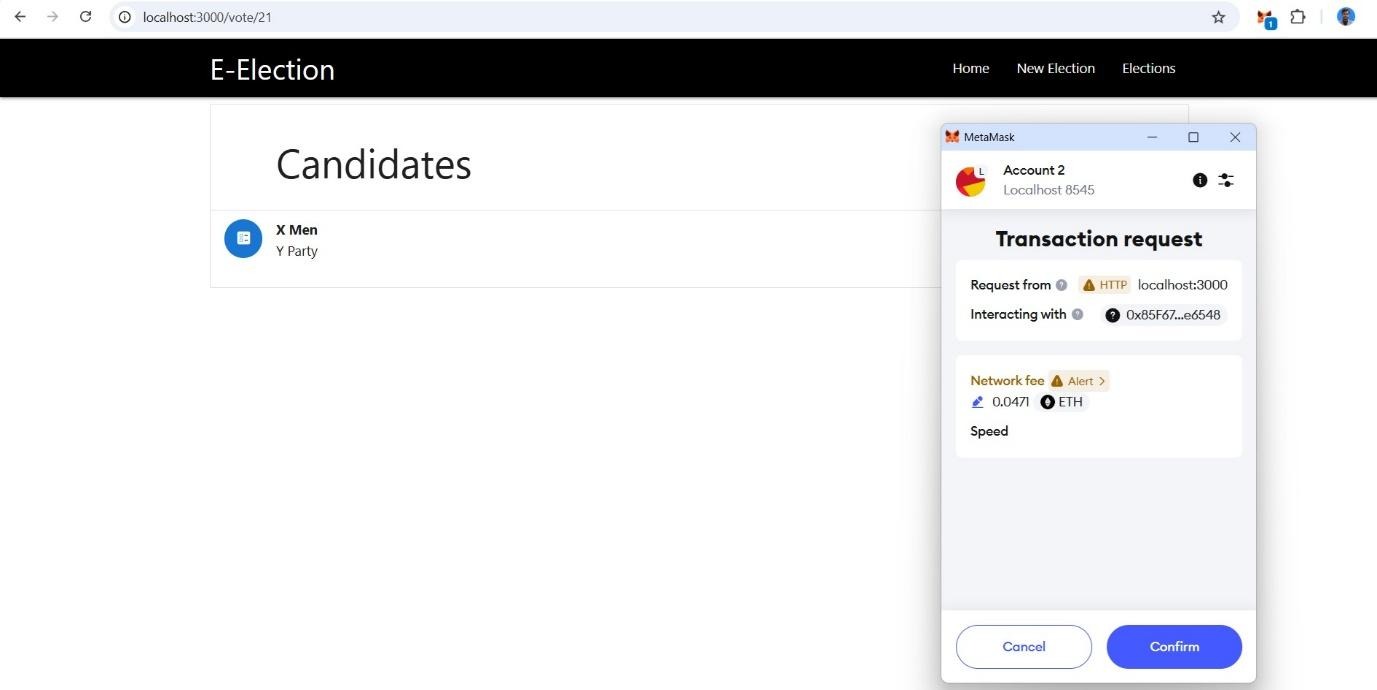
Voting workflow dig
-
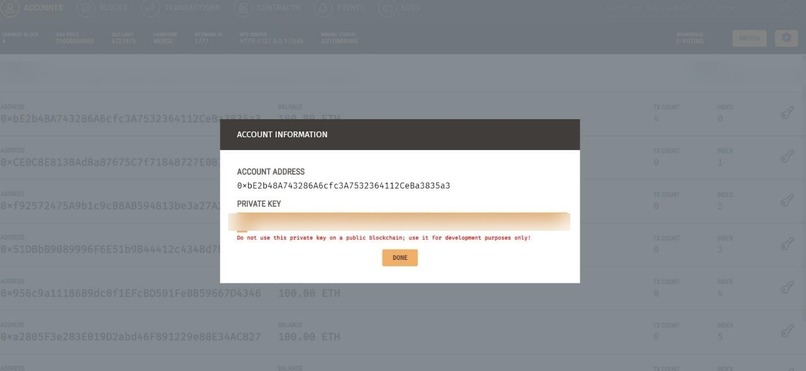
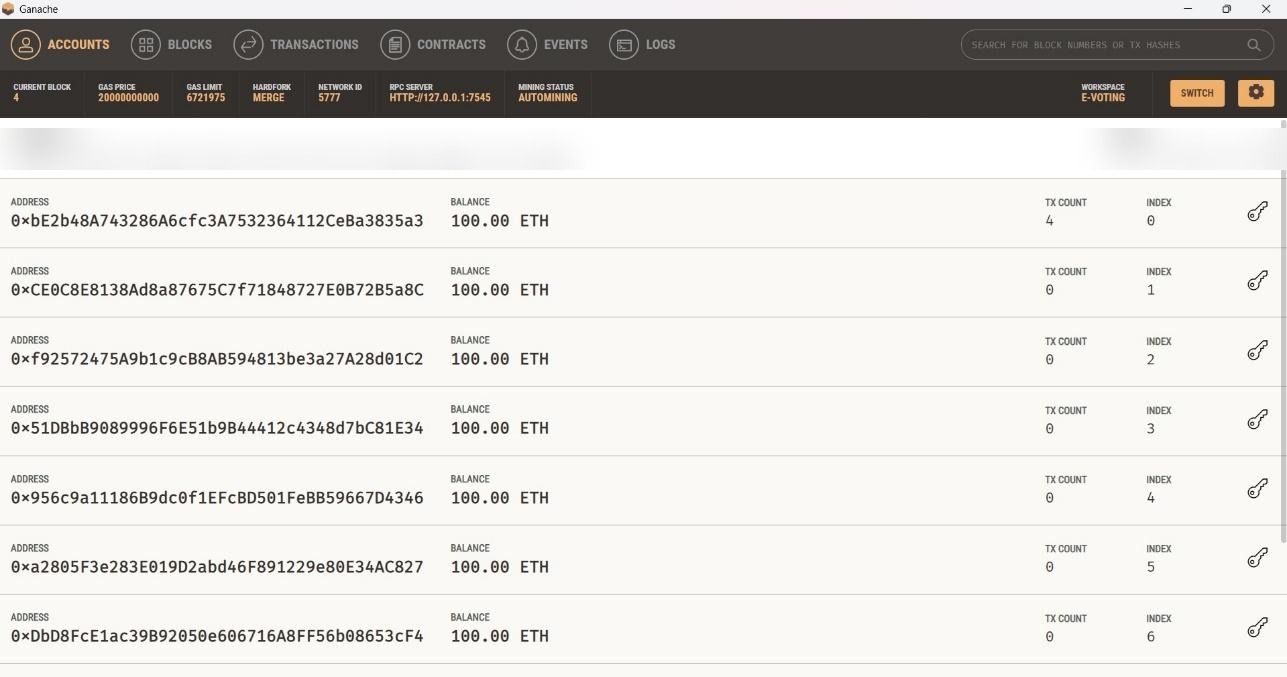
Ganache account
-
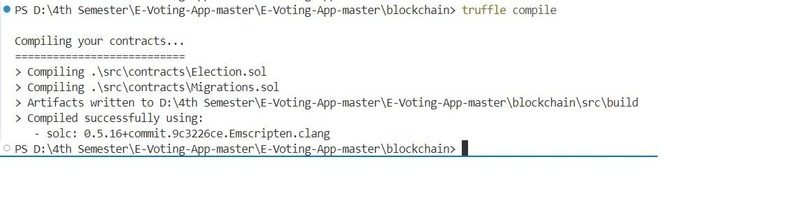
-
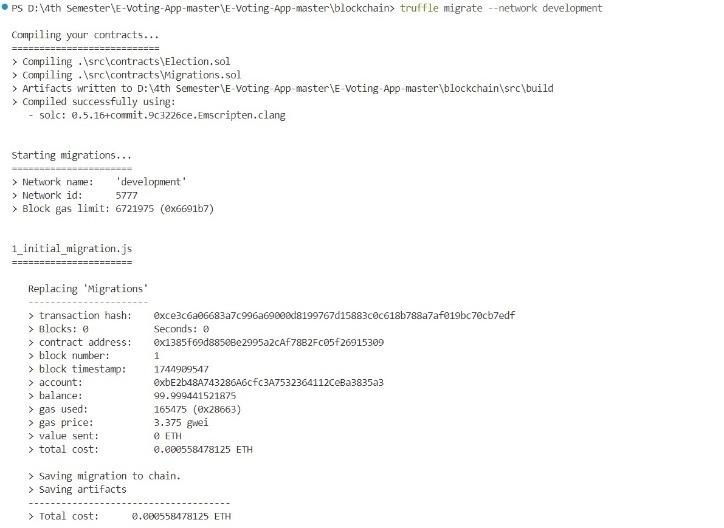
-
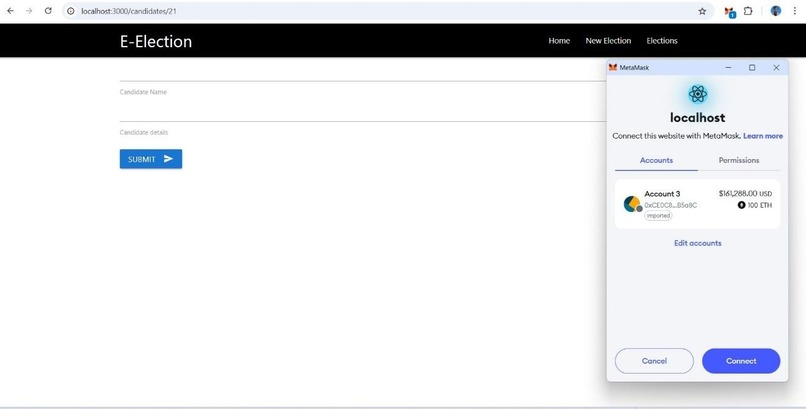
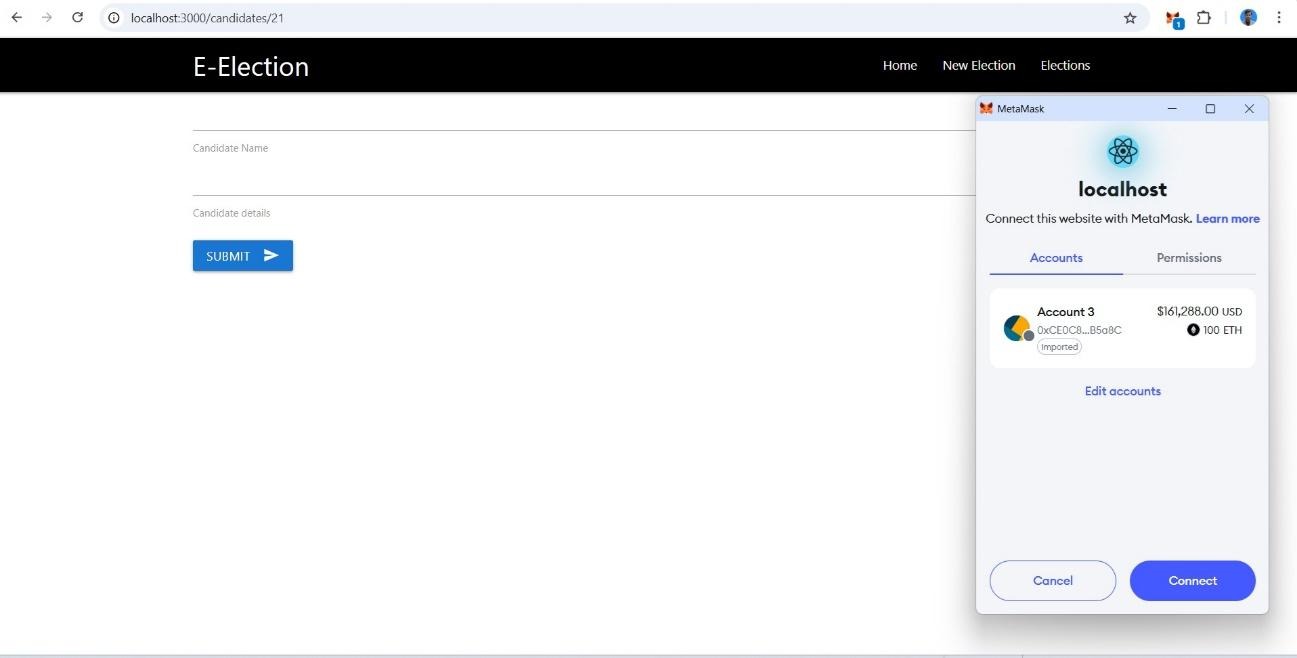
Metamask connect
-
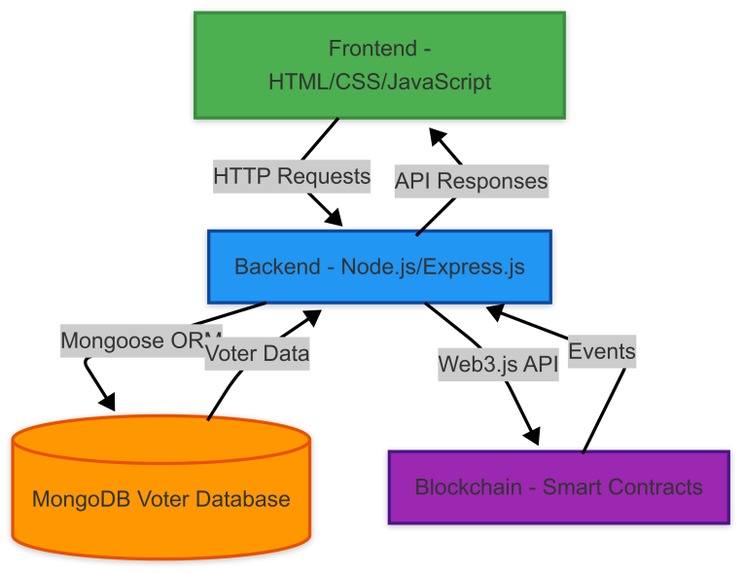
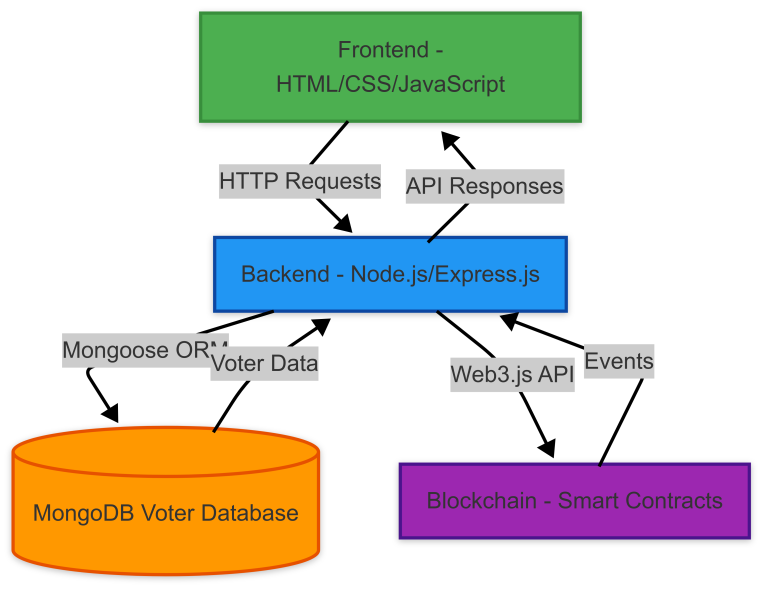
System Architecture
-
-
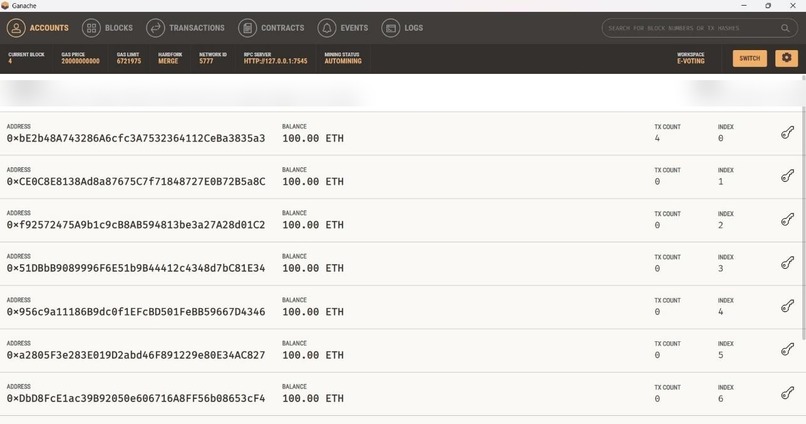
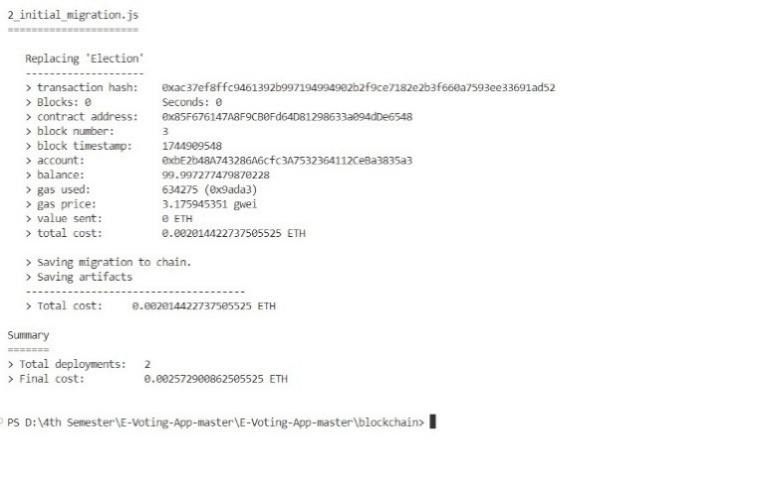
Ganache
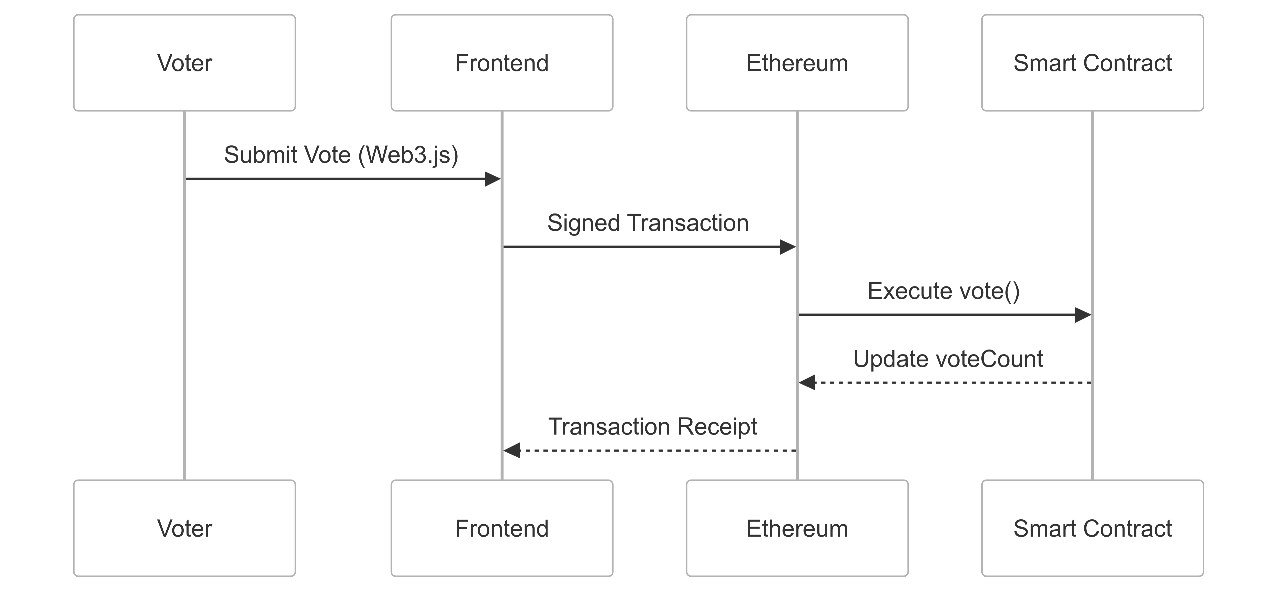
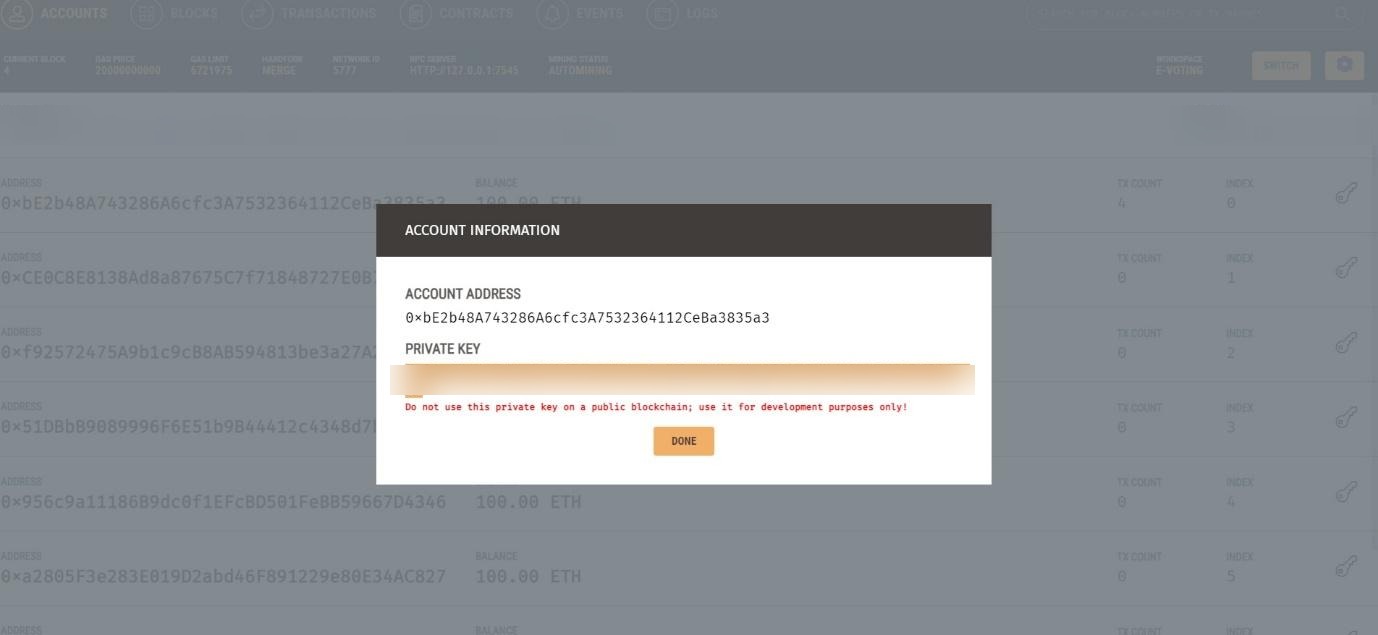
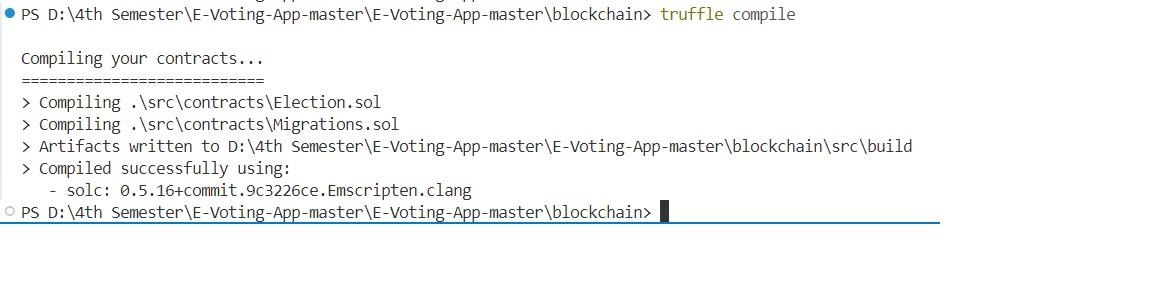
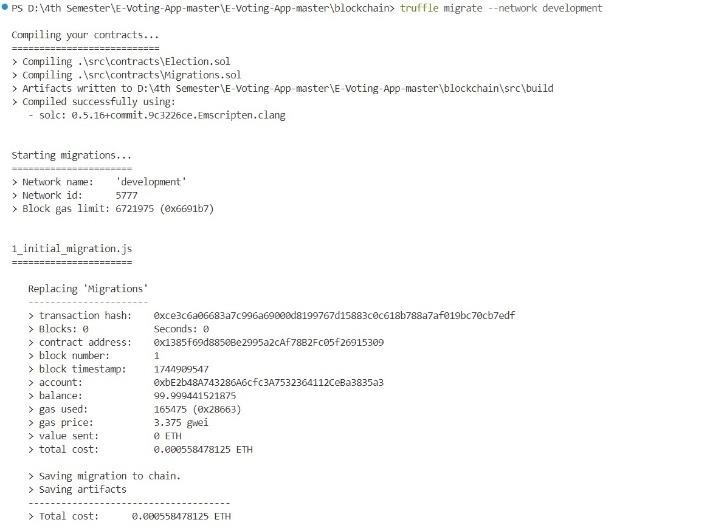
Inspiration
Elections are the backbone of democracy, but traditional voting systems paper ballots and EVMs still struggle with centralized control, limited transparency, security vulnerabilities, and high operational costs. Watching these issues play out in real elections made us want to explore whether blockchain technology could offer a more transparent, tamper-proof, and verifiable alternative.
What it does
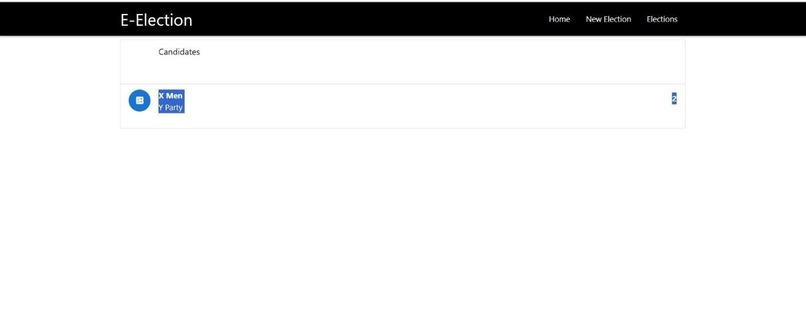
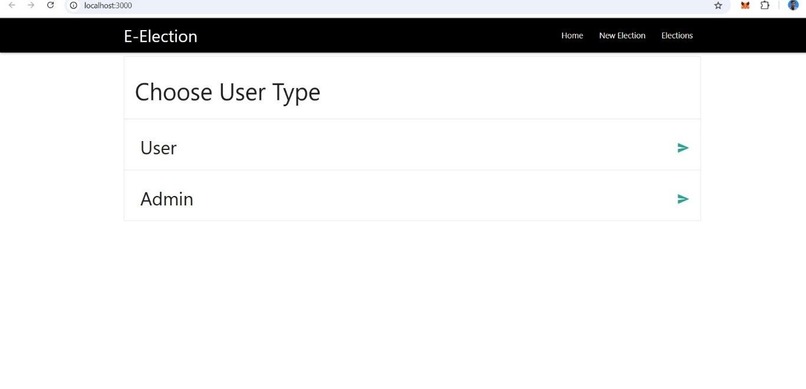
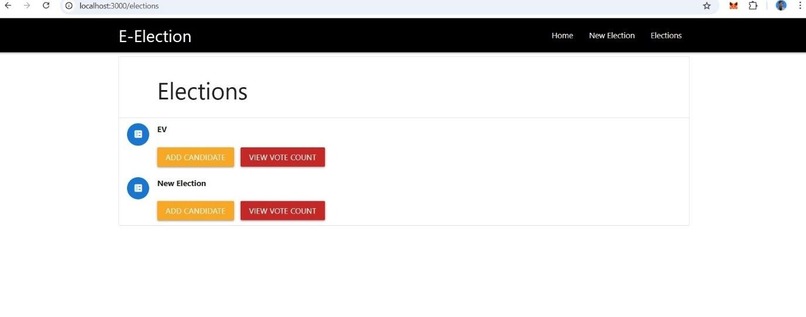
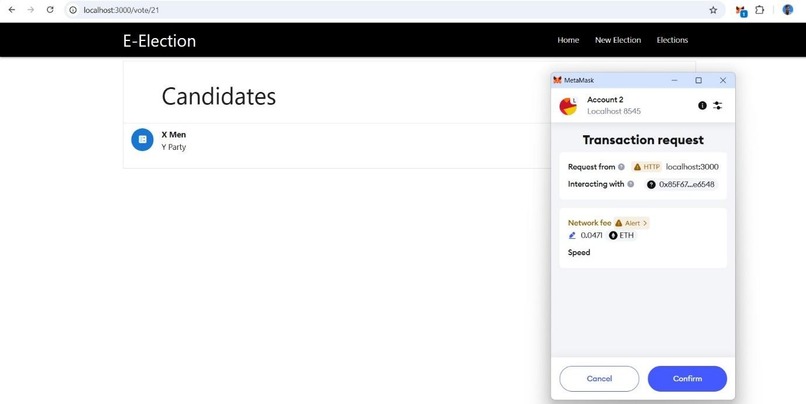
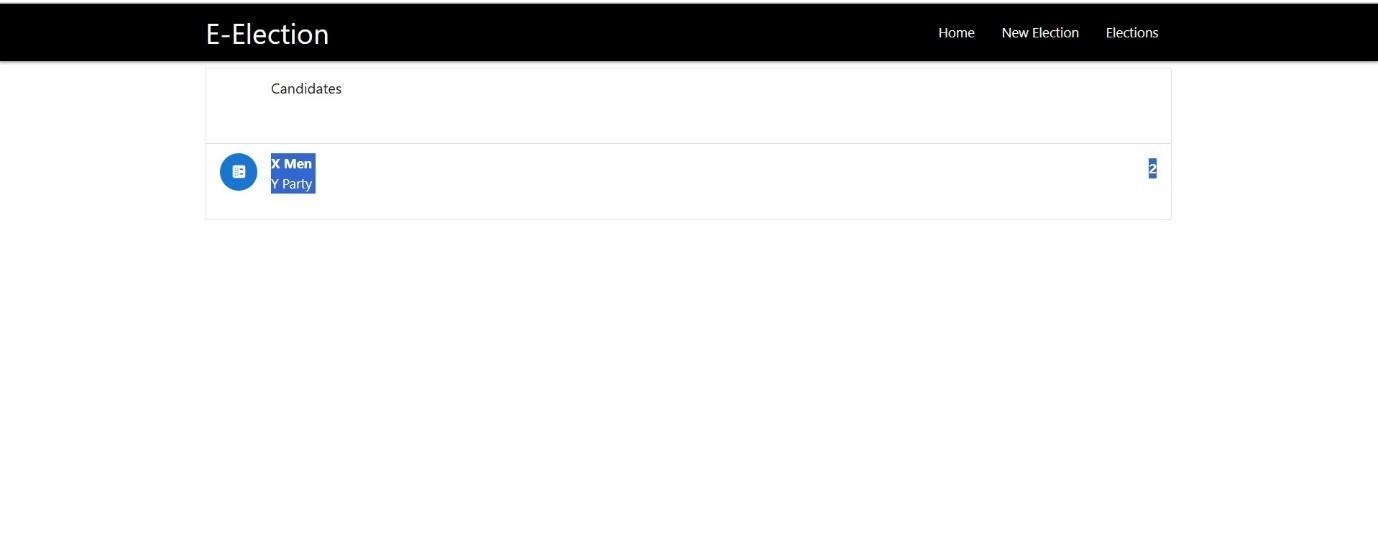
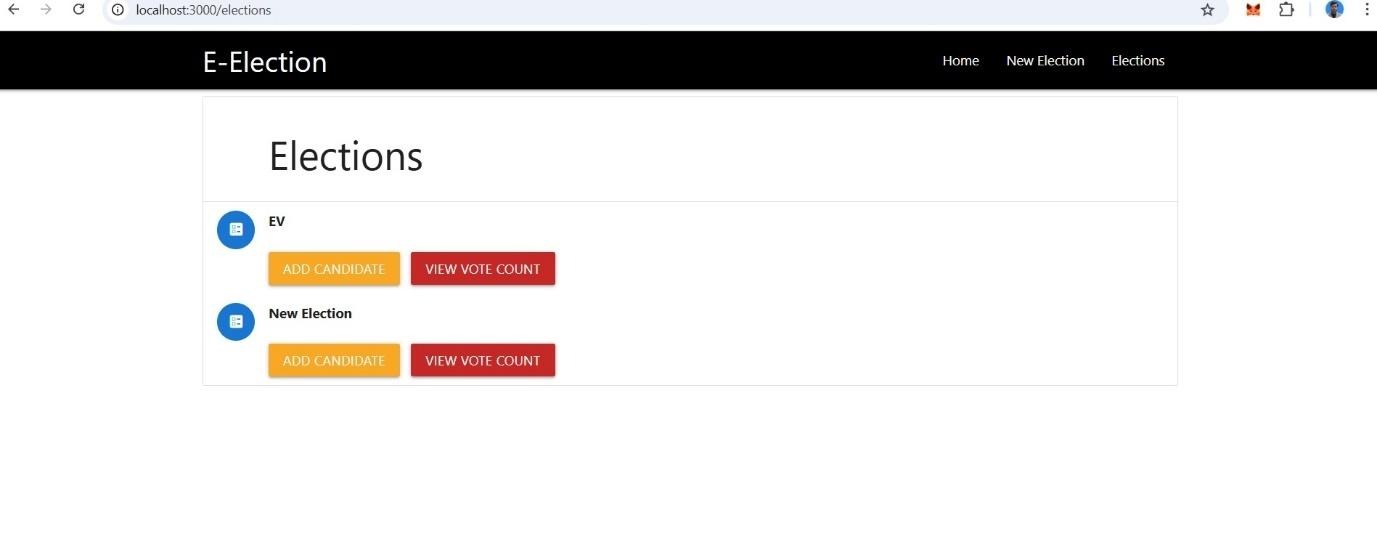
Our project is a blockchain-based e-voting system that allows administrators to create elections through a secure, password-protected interface and lets voters cast their ballots directly through MetaMask. Every vote is recorded as an immutable transaction on the blockchain, and results are fetched and displayed in real time giving anyone the ability to audit the entire election by tracing transaction hashes. Key features: Decentralized & tamper-proof voting — votes can't be altered once cast Real-time results — vote counts update live from the blockchain Full audit trail — every vote is independently verifiable Role-based access — admin workflow for creating and managing elections MetaMask integration — secure wallet-based voter authentication
How we built it
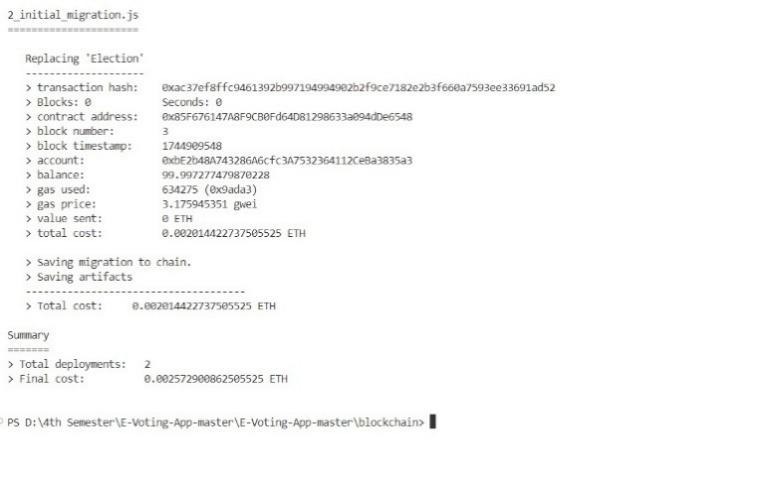
We followed a four-phase approach: Requirement Analysis & Design — identified security, privacy, and usability requirements, and designed the smart contract logic and UI. Blockchain & Smart Contract Development — wrote and tested Solidity smart contracts for voter registration, voting, and vote tallying using Truffle and Ganache for local blockchain simulation. System Integration & Testing — connected the React frontend to the blockchain via Web3.js, with a Node.js backend, and tested for vulnerabilities such as double voting. Evaluation & Performance Analysis — measured gas costs, evaluated scalability, and gathered feedback on usability.
Challenges we ran into
Balancing voter privacy with accountability ensuring votes are anonymous while preventing duplicate voting. Managing gas costs, which can be a barrier to adoption for large-scale elections. Designing a UI simple enough for non-technical users while preserving the underlying blockchain guarantees. Navigating the scalability trade-offs inherent to public blockchains for high-volume voting scenarios.
Accomplishments that we're proud of
Successfully designed and deployed working smart contracts for voter registration, voting, and vote tallying on a local Ethereum blockchain using Truffle and Ganache. Built a fully functional end-to-end system from MetaMask-based voter authentication to real-time, on-chain vote tallying with no central point of failure. Achieved a complete audit trail where every single vote is independently verifiable via its transaction hash, delivering on blockchain's core promise of transparency. Implemented a secure, role-based admin workflow that lets election administrators set up and manage elections without compromising the integrity of the voting process. Successfully tested the system against common attack vectors like double voting, proving the smart contract logic holds up under adversarial conditions. Translated complex blockchain concepts into a usable interface that non-technical voters can navigate with minimal friction.
What we learned
Building this system gave us hands-on experience with smart contract development, decentralized application architecture, and the real-world trade-offs between transparency, privacy, cost, and usability in blockchain systems especially in a civic context like elections.
What's next for Transparent Blockchain Voting
Building this system gave us hands-on experience with smart contract development, decentralized application architecture, and the real-world trade-offs between transparency, privacy, cost, and usability in blockchain systems especially in a civic context like elections.


Log in or sign up for Devpost to join the conversation.