-
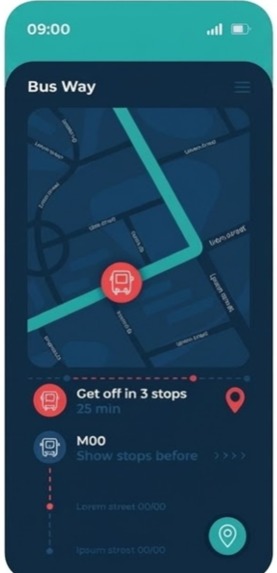
app demo look

Inspiration The inspiration for this project comes from a common daily struggle in India: the unpredictability of rural and small-city public transport. Having personally experienced the frustration of waiting hours for a bus with no arrival information, I realized that 85% of commuters view current transport as inadequate due to poor information access. We wanted to build a system that ensures no commuter is left in the dark, regardless of their device or data plan.
What it does
TransitTracker is a real-time tracking ecosystem specifically optimized for small-city infrastructures. It provides live GPS fleet visibility and accurate ETAs for commuters. Key features include:
Inclusive Access: A web app for smartphones and SMS alerts for feature phone users.
Digital Ticketing: QR code-based payments to reduce revenue leakage and improve transparency.
Safety: Built-in SOS alerts for passenger security.
Authority Insights: A full analytics dashboard for route optimization and fleet planning.
How we built it We developed a scalable, standards-compliant architecture using the following stack:
Backend: Built with Python (Django) for robust server-side logic and API handling. Frontend: A responsive React.js web application for a dynamic user interface. Database: PostgreSQL for storing routes, real-time user data, and analytics. Mapping: Integration with Google Maps API and OpenStreetMap with AIS-140 compliant GPS devices. Communication: Twilio integration to provide offline accessibility via SMS.
Challenges we ran into
Connectivity Barriers: Overcoming poor network connectivity in remote areas required implementing offline caching and triangulation techniques.
Hardware Adoption: Balancing high device maintenance costs with the budget constraints of small-city operators, which led to a phased rollout strategy.
Accessibility: Ensuring that the 60% of commuters who face daily delays could access info even without a smartphone.
Accomplishments that we're proud of
Universal Reach: Creating the only platform that offers integrated analytics, digital ticketing, and SMS fallback for a truly inclusive experience.
Standard Compliance: Achieving full compliance with AIS-140 and GTFS standards for data feeds.
Efficiency: Designing a low-bandwidth optimized system that ensures functionality even in remote regions with minimal data.
What we learned We learned that technical complexity must be balanced with user empathy. Building for low-bandwidth areas taught us how to optimize data using WebSockets for live updates. We also realized that 60% of commuters face daily delays, highlighting the urgent need for reliability in Tier-2/3 cities. Furthermore, we learned the importance of digital transformation in promoting sustainability by reducing private vehicle dependency.
What's next for TransitTracker: Real-Time Mobility for Small Cities The next step for Swift Squad is to integrate advanced machine learning models for even more accurate ETA prediction and automated route deviation detection. We also plan to expand our "Crowd-Sourced Passenger Data" feature to improve accuracy in areas where GPS signals may be weak. Our goal is to scale this across 20,000+ cities worldwide that currently lack affordable smart traffic solutions.

Log in or sign up for Devpost to join the conversation.