-
-
UI screenshots
-
UI screenshots
Inspiration
The necessity of efficient and reliable public transit systems is more clear today than ever before. Transportation is the largest contributor of carbon emissions in the U.S. According to the EPA, over 30% of greenhouse gases are the result of heavy traffic on American roadways and most of these vehicles are cars that transport not more than a few people. At the same time, widening roads and building more road infrastructure barely contributes to reducing traffic and actually result in a larger number of light vehicles on streets due to induced demand. Most studies show the most effective long term solution to traffic congestion, carbon emissions are more investments in public transport. Despite this, the demand for public transit in the U.S. is fairly low. We were inspired by the Dutch company MobiFi that pioneered this idea and felt we could significantly build on top of this by focusing on benefits to an entire community over individual incentives.
What it does
TransitCoin uses a community-based approach to encourage more people to use local public transit. TransitCoin partners with local transit authorities such as the Mass Transit District (MTD) in Champaign-Urbana or the Chicago Transit Authority or the Metropolitan Transportation Authority in New York along with local restaurants, grocery shops and other retailers. When someone takes a public transit (bus, train, subway) he earns a certain amount of TransitCoin, our digital currency, that can then be used for discounted fares for local public transit or at shops in the local network. While TransitCoin exists globally, its value will change based on different communities. Each community works as a "micro-economy", if more people use public transit in that locality, the value of the coin goes up in that area relative to other regions and therefore it is community based in nature.
How we built it
In developing TransitCoin, we embraced a modern and responsive technology stack that catered to both frontend and backend needs, creating a strong platform that bridges sustainability and the blockchain. On the frontend, we used Flutter for its efficient and flexible approach to building interactive user interfaces. For the backend, Node and express js were lightweight, yet powerful tools to quickly and reliably build a scalable api. Supabase's Postgresql ORM and built-in JWT authentication provided an easy interface to use to handle the vast majority of our data. Additionally, we integrated Solana to create our token and various Associated Token Accounts to simulate a local network of a public transit authority, restaurants and small businesses. Together, these technologies facilitated the creation of a secure, scalable, and user-friendly platform, underscoring our commitment to promoting public transit.
Challenges we ran into
Integrating Solana definitely proved to be challenging but very enjoyable. We spent a long time working out how to configure various wallets, link different accounts together and working out how the idea would actually materialise using connection of various LiquidityPools to create a community-based approach. Real-time Ride Verification was also an important factor to consider, ensuring that users genuinely used public transit (and not just claimed rewards without riding) was a challenge. We experimented with GPS tracking and in the end chose a simpler solution of QR code scanning and transit system APIs to verify trips accurately.
Accomplishments that we're proud of
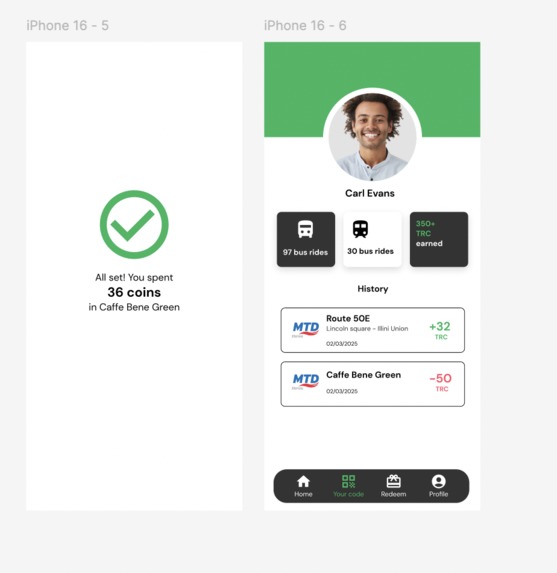
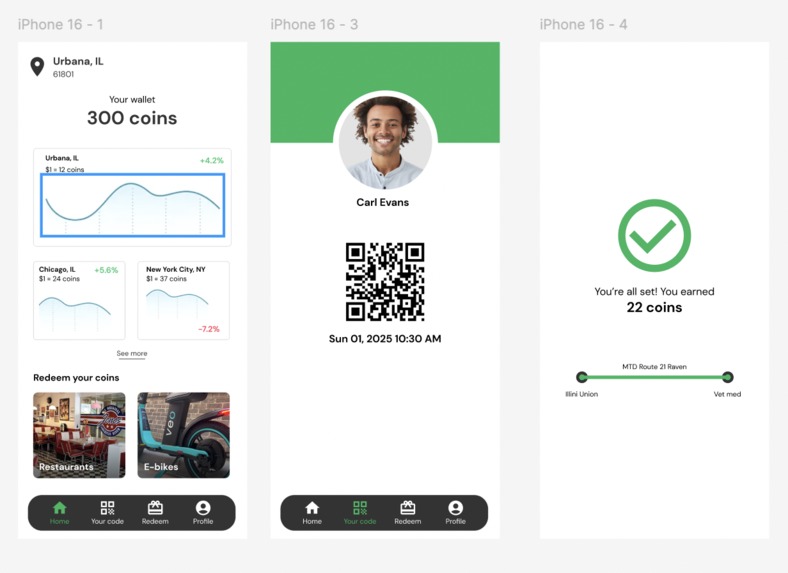
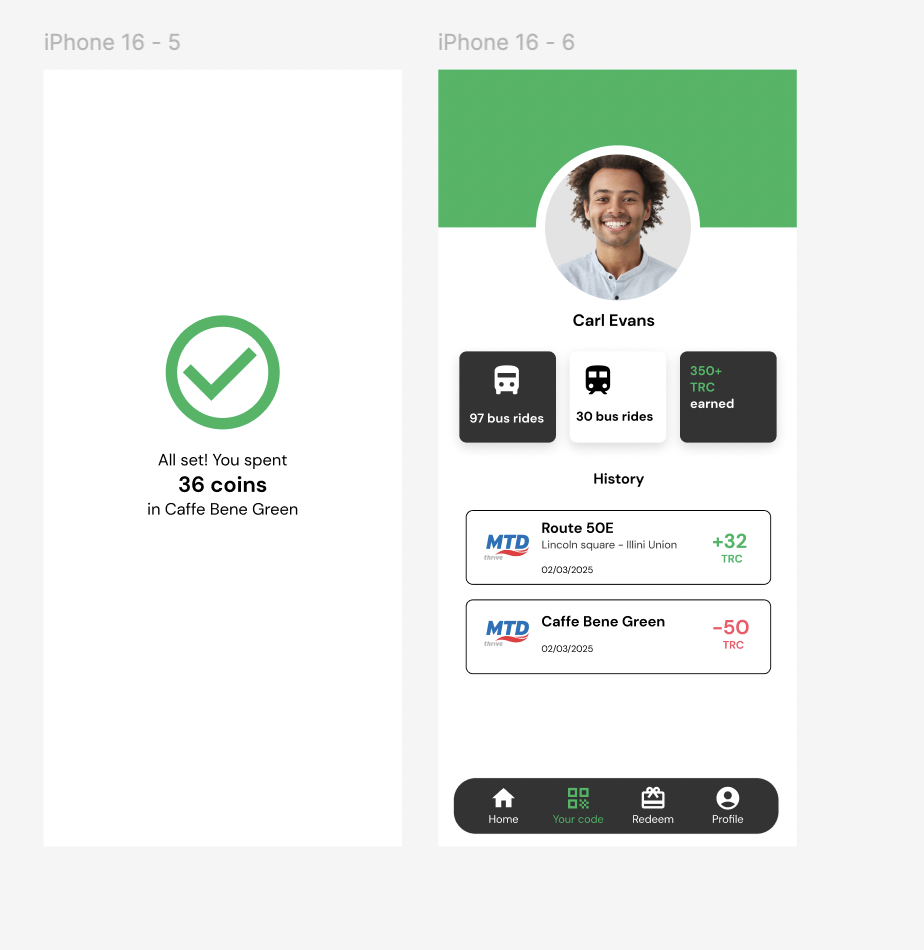
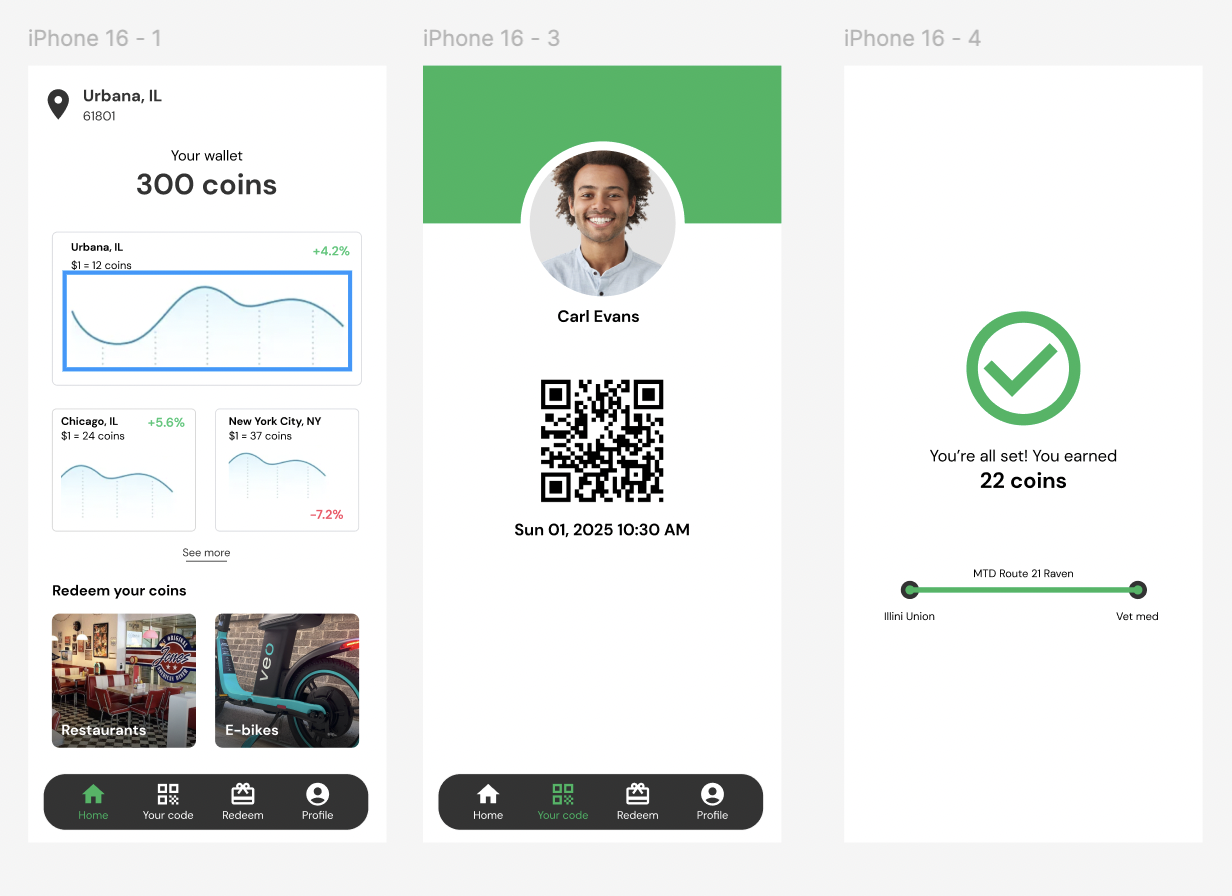
We're proud of a responsive and enjoyable UI which we spent a quite a bit of time wireframing and designing. We had to design an intuitive onboarding process that simplified wallet creation and exchanging tokens without overwhelming users with technical jargon, considering that everyone uses public transport.
What we learned
We learned a lot about implementing a complex blockchain system and that often the most challenging problems have simple solutions. We learnt the state of public transport systems in various parts of the world, how important the nature of the community has on the extent to which people use these systems and how we can take advantage of that to nudge people toward using buses and trains over driving to work everyday.
What's next for TransitCoin
Looking ahead, we are excited to make TransitCoin into a more user-friendly mobile application, expanding our reach and impact. We'll have to expand transit partnerships, integrating with more public transit agencies and mobility-as-a-service (MaaS) platforms to offer seamless ride verification and better incentives. Enhancing fraud prevention would be another important factor to improve, implementing advanced verification methods like transit system API integration, NFC-based check-ins, and AI-powered anomaly detection to prevent misuse.
Built With
- dart
- express.js
- flutter
- javascript
- node.js
- solana
- supabase


Log in or sign up for Devpost to join the conversation.