-
-
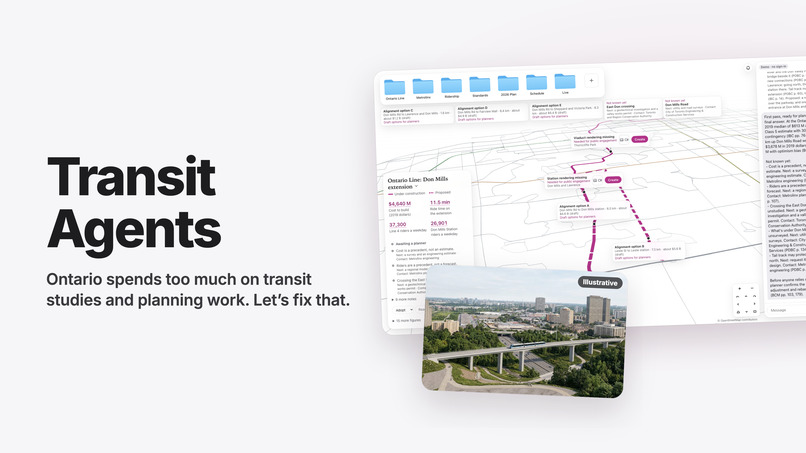
Banner
-
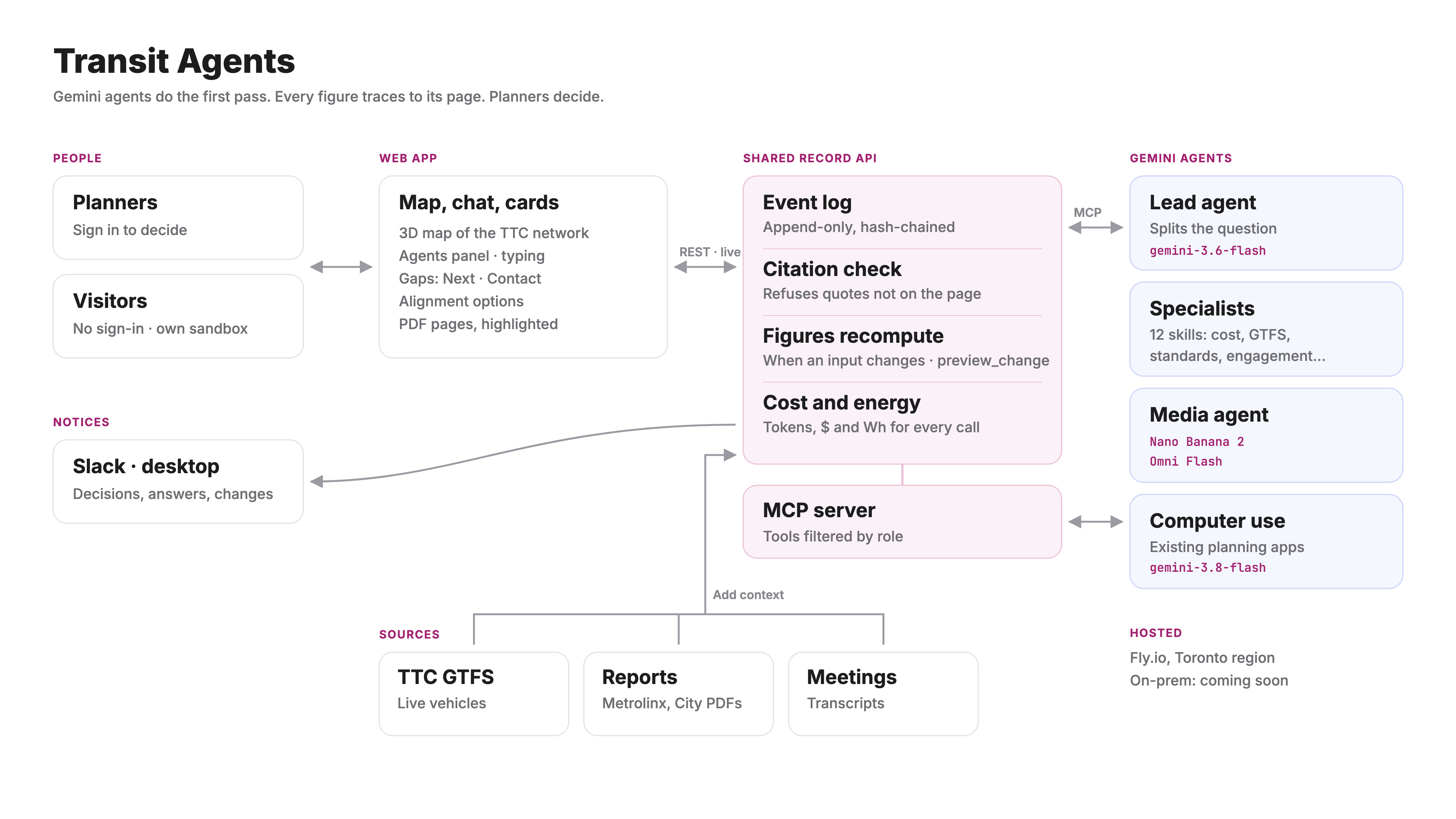
System Diagram
-
-

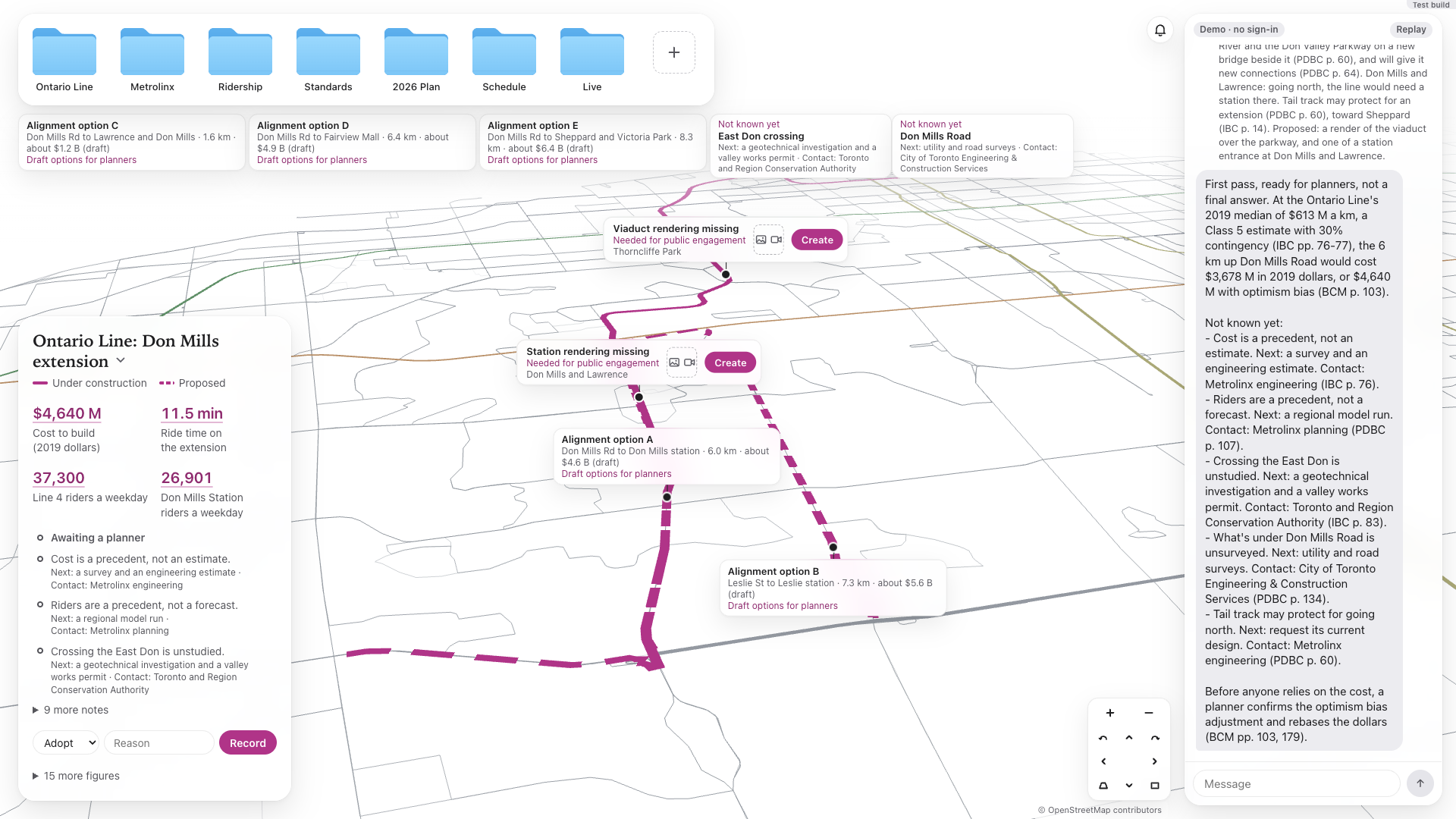
Rendered image
-

Rendered image


Seeking Gemini, GoDaddy, Auth0, and main tracks
Domain: saveourtransit.co
Try it here: https://transit-agents.fly.dev/
Inspiration
Toronto studied a downtown relief subway for 35 years and spent $15.4 million on one design (City of Toronto, EX4.1d, p. 4). Then the plan changed and the studies started over. We study, delay, re-study.
What it does
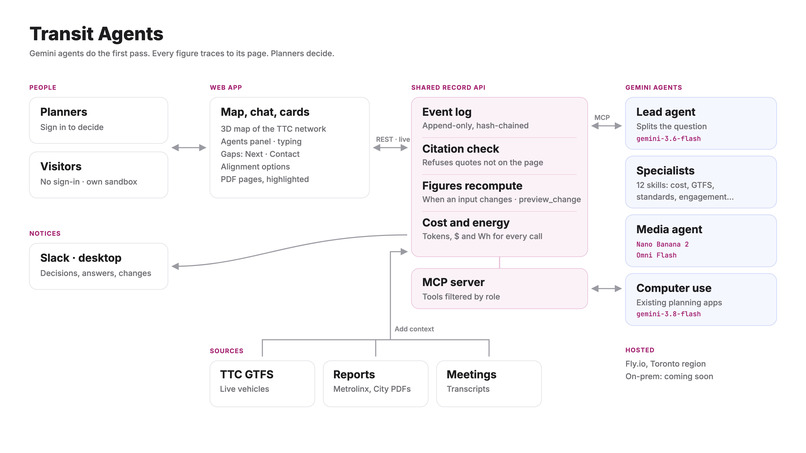
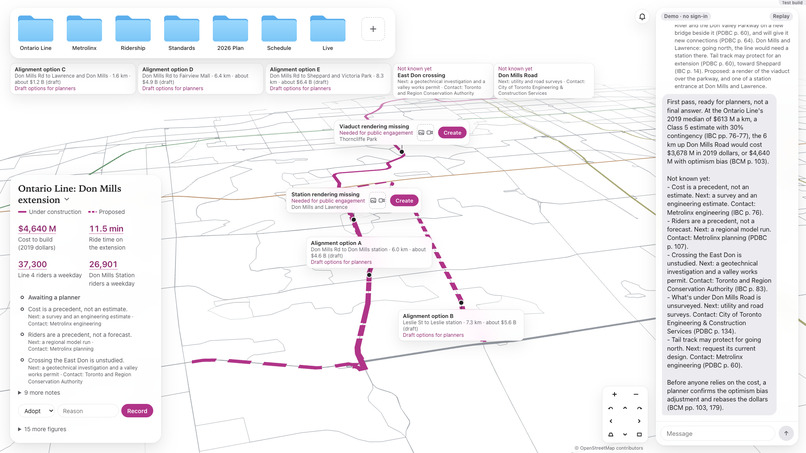
Transit Agents is an agentic platform to manage a transit study and automate all tedious work to get studies done in days, not months. Ask a question in plain words and a lead agent splits it between specialists working at the same time. Every figure links to the page it came from, and quotes that aren't on the page are refused. When it doesn't know something, it says who to contact. Only planners can record a decision.
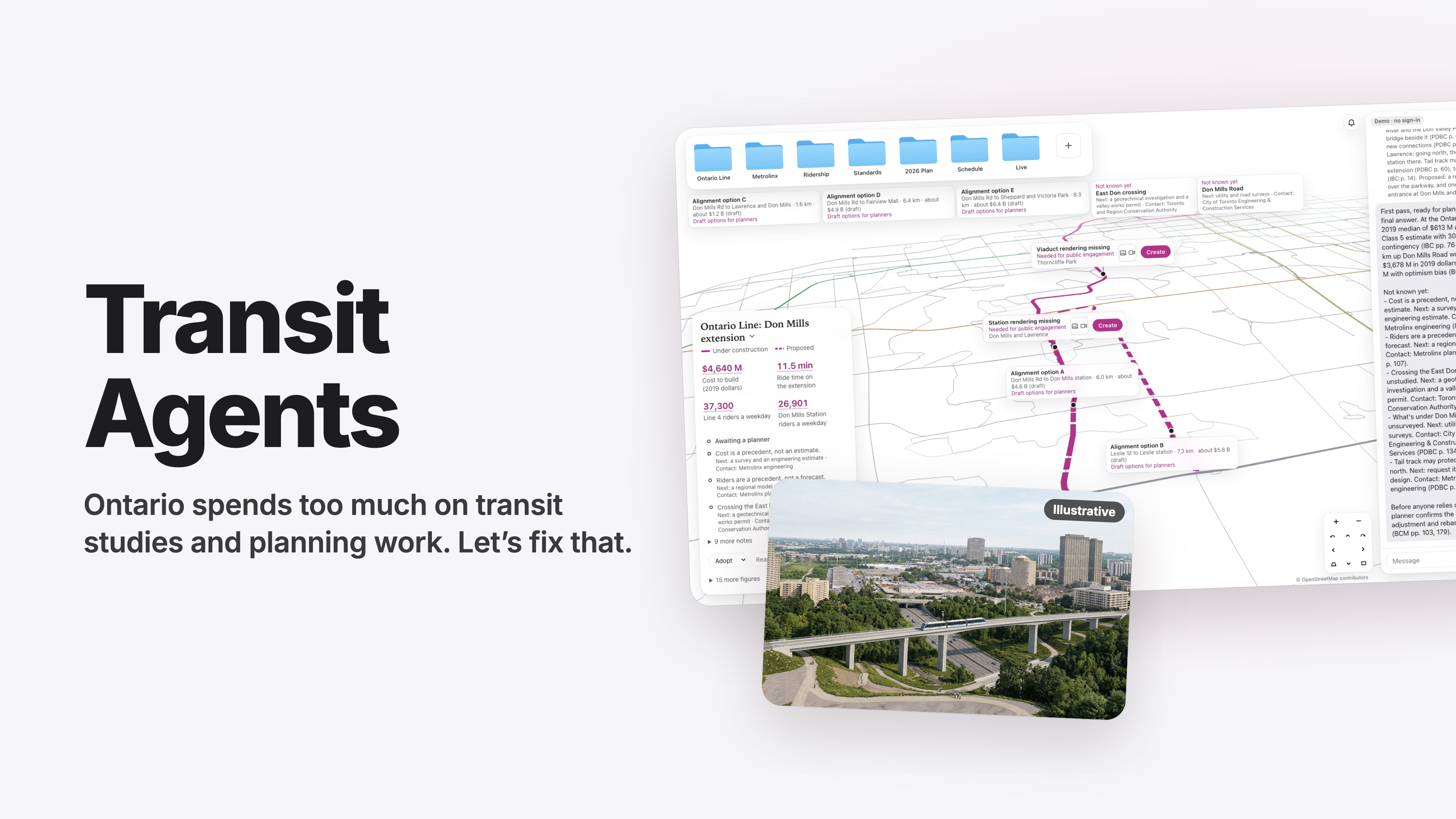
Ask it to reconsider the end stations and it draws new route options on the map. Each one follows typical TTC routing patterns and comes with its cost.
It also:
speaks planning jargon, with the page each term comes from tries "what ifs" without saving them pins unknowns on the map, with who to contact makes renders and short films for public meetings works old desktop planning apps, and asks before saving pulls notes from meeting transcripts shows live TTC vehicles on a 3D map posts decisions to Slack tracks the cost and energy of every answer full authentication buildout, as real deployment in agencies must be very locked down and on-prem
How we built it, and how it uses Gemini and Auth0
Gemini 3.6 Flash runs a lead agent we hand-coded. It splits each question between up to 4 specialist subagents, 2 at a time, and you can watch them work in a live agents panel.
We wrote 12 planning skills for the specialists:
- TTC service standards and service changes
- Metrolinx business cases and benefit-cost analysis
- a business case template
- ridership from TTC timetables
- cost benchmarks
- public consultation and engagement needs
- monitoring service trials
- handing decisions to planners
- a planning glossary, so it speaks planner
- also tried fine-tuning/post-training using Google Cloud Vertex AI for better planning industry speak/understanding!
Every figure must quote its source page. Our server checks each quote against the PDF and refuses it if it isn't there. When the agents don't know something, they flag it with who to contact next. They can also try a "what if" without saving it, and draw new route options that follow real TTC bus routes, costed with the study's own rules.
Nano Banana 2 makes renders from a real photo of the site. Omni Flash turns them into short films for public meetings. Both are labelled Illustrative.
Gemini 3.8 Flash computer use works existing desktop planning apps by sight, and asks before saving. It works great on planning-specific software like PTV Vissim thanks to our fine-tuning.
The agents connect over MCP, and each one only sees the tools its role allows. Every call is tracked for tokens, cost and energy. We also built our own Ontario benchmark: 48 cases from real TTC and Metrolinx plans.
Challenges we ran into
Relied on Gemini API free tier; API was returning 503 errors. MacBook kept running out of storage. Keeping the agents from making up quotes took a page checker.
Accomplishments that we're proud of
I hand-coded the agents layer with no agent framework! I made this project solo.
Made this project solo.
What we learned
Agents are most useful when they say what they don't know. Planning runs on jargon and PDFs, so the skills and the glossary mattered more than prompt tricks.
What's next for Transit Agents
Transit Agents is part 1 of a research paper I'm writing. I've wanted to make this for a long time. Next I want agencies to be able to run it on their own servers, and to train it further on planning documents.


