
Inspiration
The logistics industry powers global commerce but at a steep environmental and operational cost. As e-commerce and global trade continue to surge, so do carbon emissions, inefficiencies, and system vulnerabilities. This inspired us to imagine a smarter, greener, and more resilient logistics ecosystem—one that uses cutting-edge technology and collaborative innovation to rethink the supply chain from end to end.
What it does
Our solution integrates AI, IoT, and blockchain technologies to optimize logistics operations for sustainability, efficiency, and adaptability. Key features include:
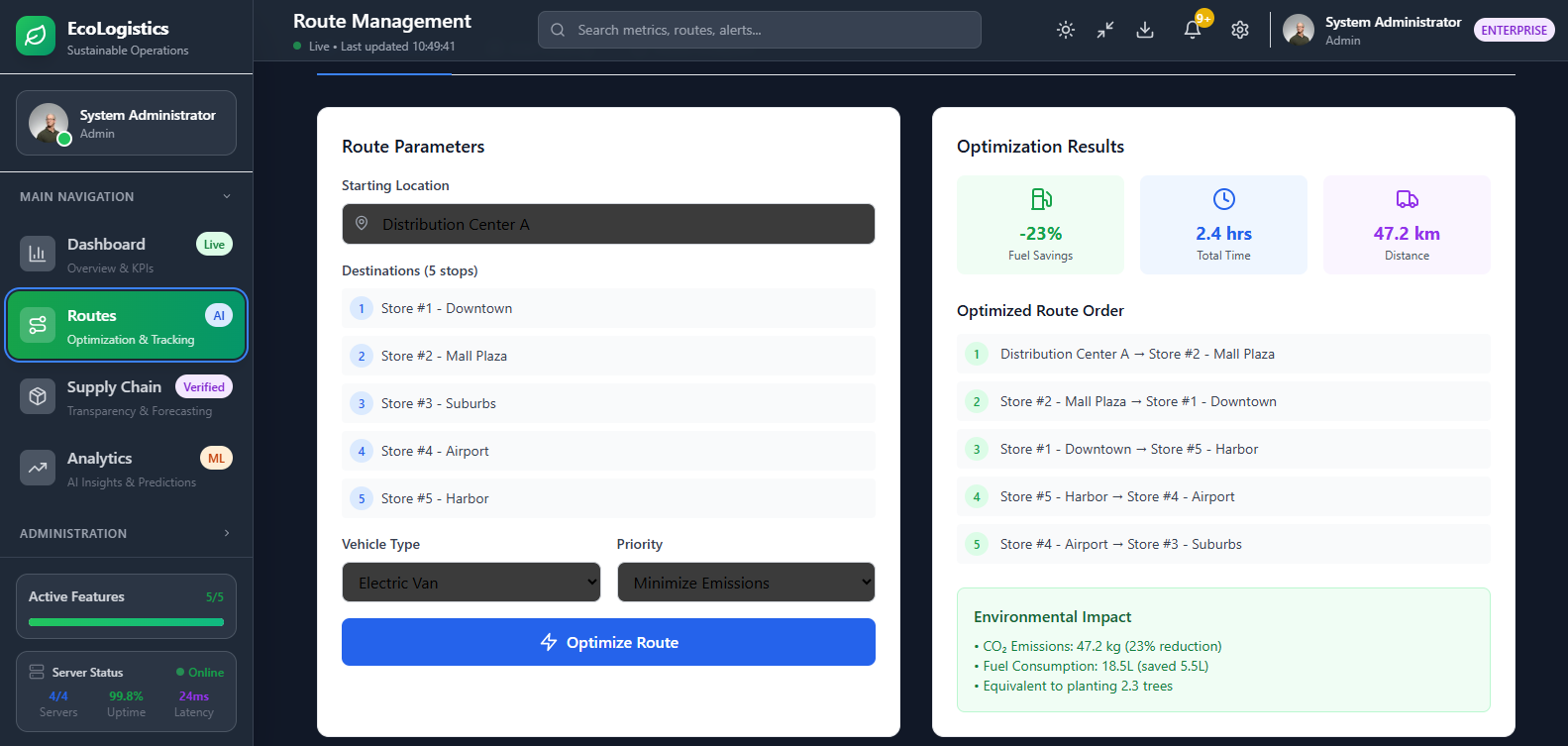
AI-Driven Route Optimization: Reduces fuel consumption and emissions by dynamically calculating the most efficient delivery routes.
Smart Inventory Management: Uses predictive analytics to balance stock levels, reducing overproduction and waste.
Green Last-Mile Delivery: Promotes the use of electric vehicles (EVs), drones, and bike couriers for urban delivery.
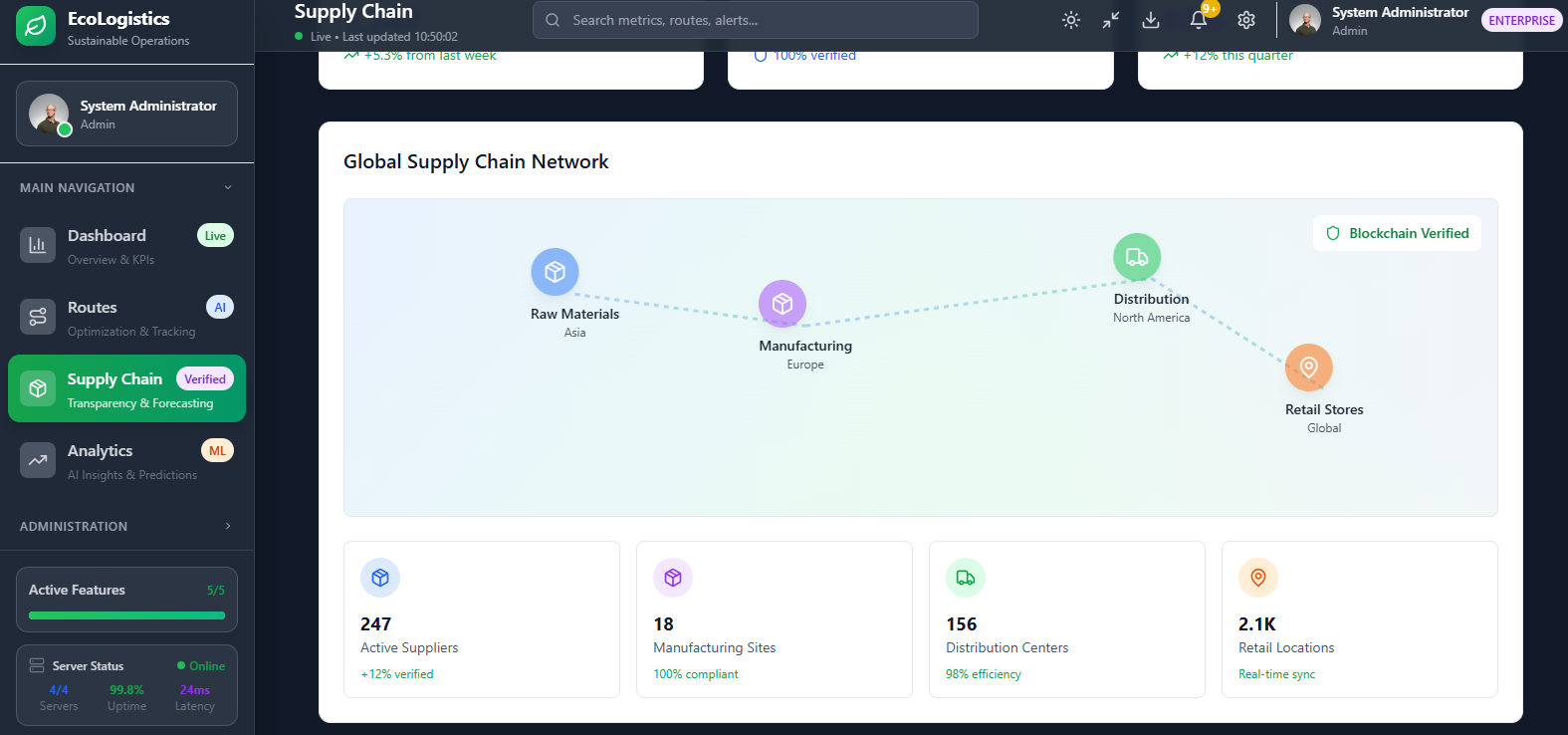
Blockchain for Transparency: Ensures traceability across the supply chain, improving trust, accountability, and ethical sourcing.
Disruption Response Engine: Leverages real-time data to adapt logistics plans during natural disasters, strikes, or pandemics.
How we built it
We combined several open-source technologies and platforms:
AI Models trained on historical delivery and traffic data for dynamic route planning.
IoT Sensors for real-time tracking of cargo condition and vehicle performance.
A Blockchain Layer (e.g., Hyperledger) to record and verify all transactions across the supply chain.
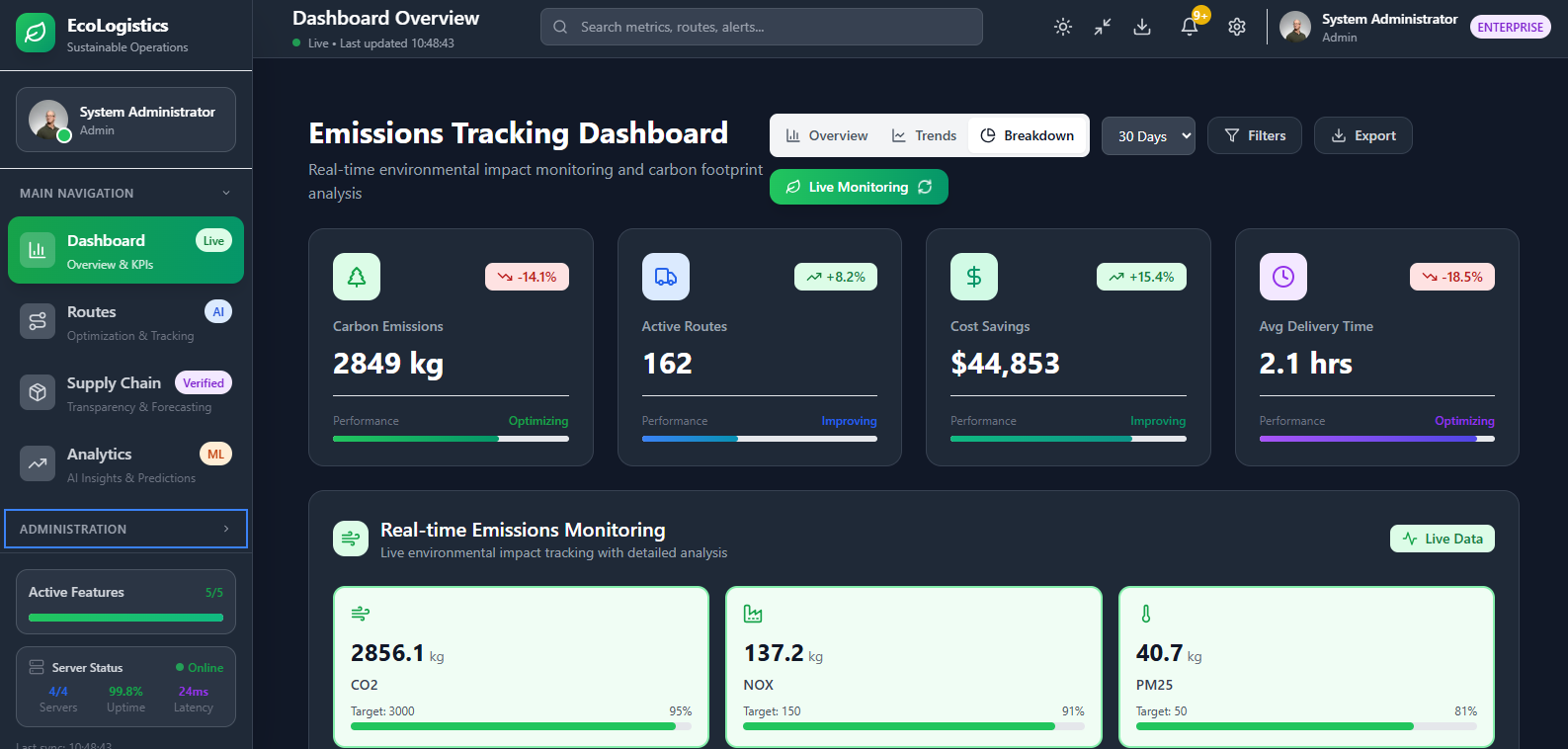
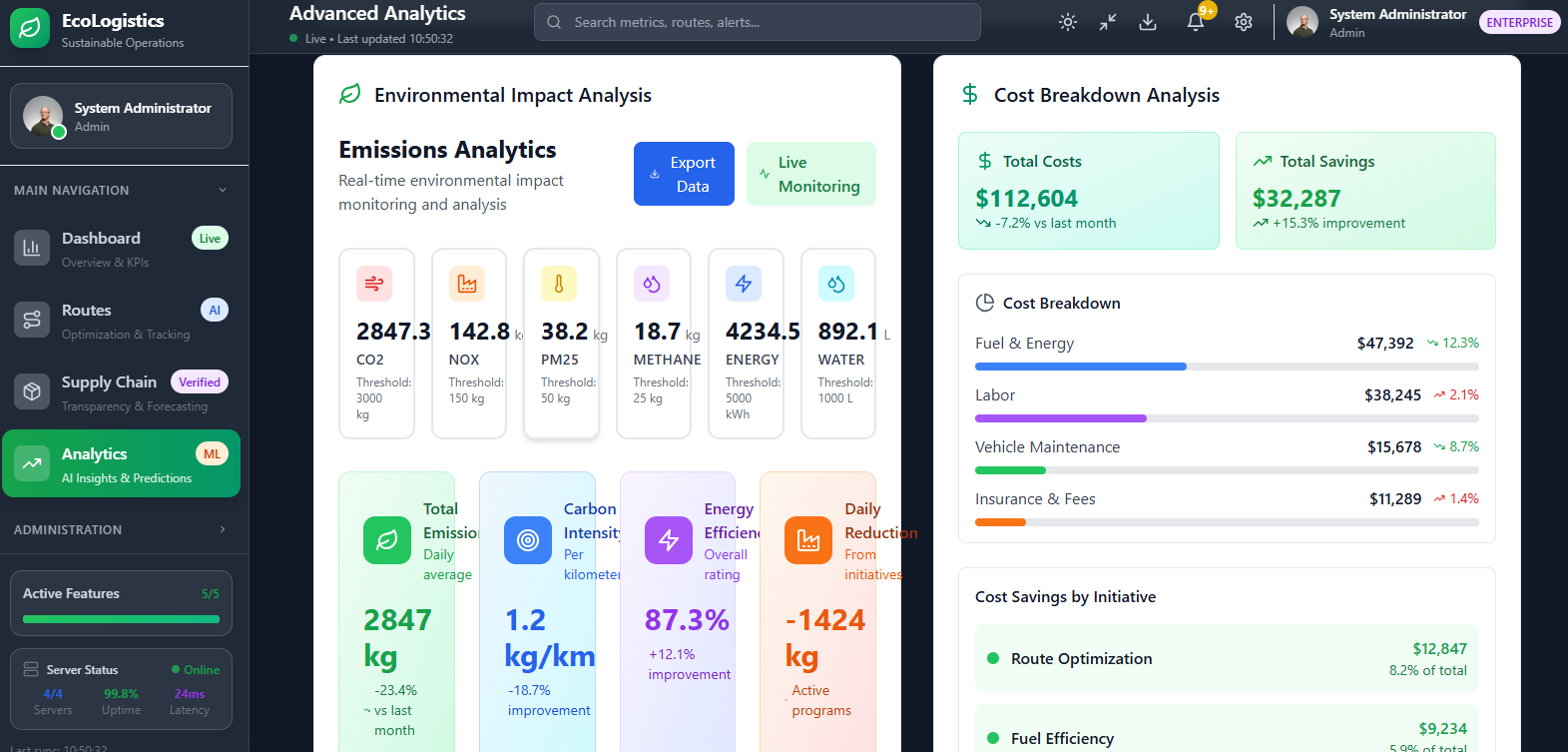
A Centralized Dashboard developed using React.js and Node.js to provide logistics managers with real-time visibility and controls.
Integration APIs with EV fleets and delivery drones for seamless coordination of green last-mile delivery.
Challenges we ran into
Data Fragmentation: Integrating data from multiple sources and formats was difficult and required extensive normalization.
Scalability: Ensuring the system could handle large-scale logistics operations with thousands of nodes was technically demanding.
Adoption Resistance: Convincing traditional logistics players to embrace new technology remains a cultural and operational challenge.
Regulatory Hurdles: Compliance with environmental and trade regulations in different regions added complexity.
Accomplishments that we're proud of
Successfully demonstrated a 25% reduction in delivery emissions through AI-powered route optimization in a pilot simulation.
Developed a fully operational prototype capable of managing real-time logistics data and dispatch operations.
Built a disruption response module that can adjust routes and delivery methods within minutes of an external shock.
What we learned
Collaboration between logistics companies, governments, and tech providers is essential for true transformation.
Even incremental changes in efficiency can lead to significant cost and emissions savings.
Real-time data is a game changer—visibility enables agility.
Sustainability must be integrated from the start, not added as an afterthought.
What's next for Transforming Logistics for a Sustainable
Pilot Program Expansion: Partner with a mid-size logistics company to implement our solution in real-world conditions.
Machine Learning Enhancements: Improve our AI models with live data and expand predictive capabilities.
Sustainability Metrics Dashboard: Develop a tool that measures carbon savings and environmental impact in real time.
Global Expansion: Localize the solution for different regions and regulatory environments.
Community & Inclusivity: Launch programs that train underserved communities in sustainable logistics technologies and offer micro-fulfillment opportunities.
Built With
- apis.
- chart.js
- html5/css3
- javascript
- middleware
- node.js-?-backend-runtime-environment-to-manage-apis-and-data-flow.-express.js-?-web-framework-for-handling-routes
- python

Log in or sign up for Devpost to join the conversation.