-
-
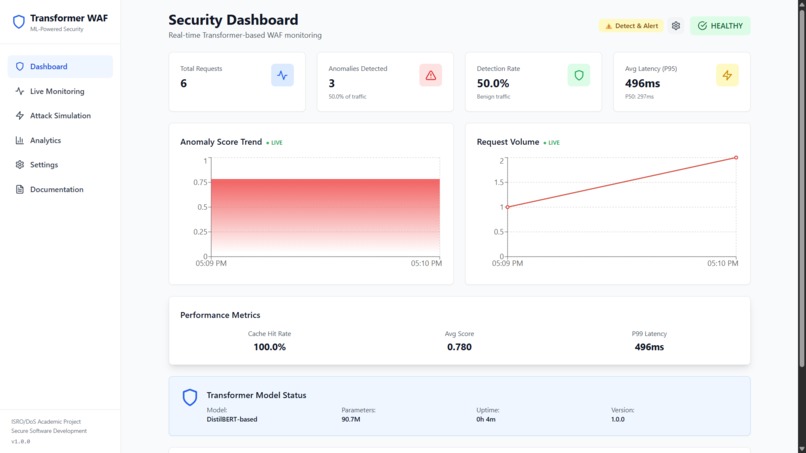
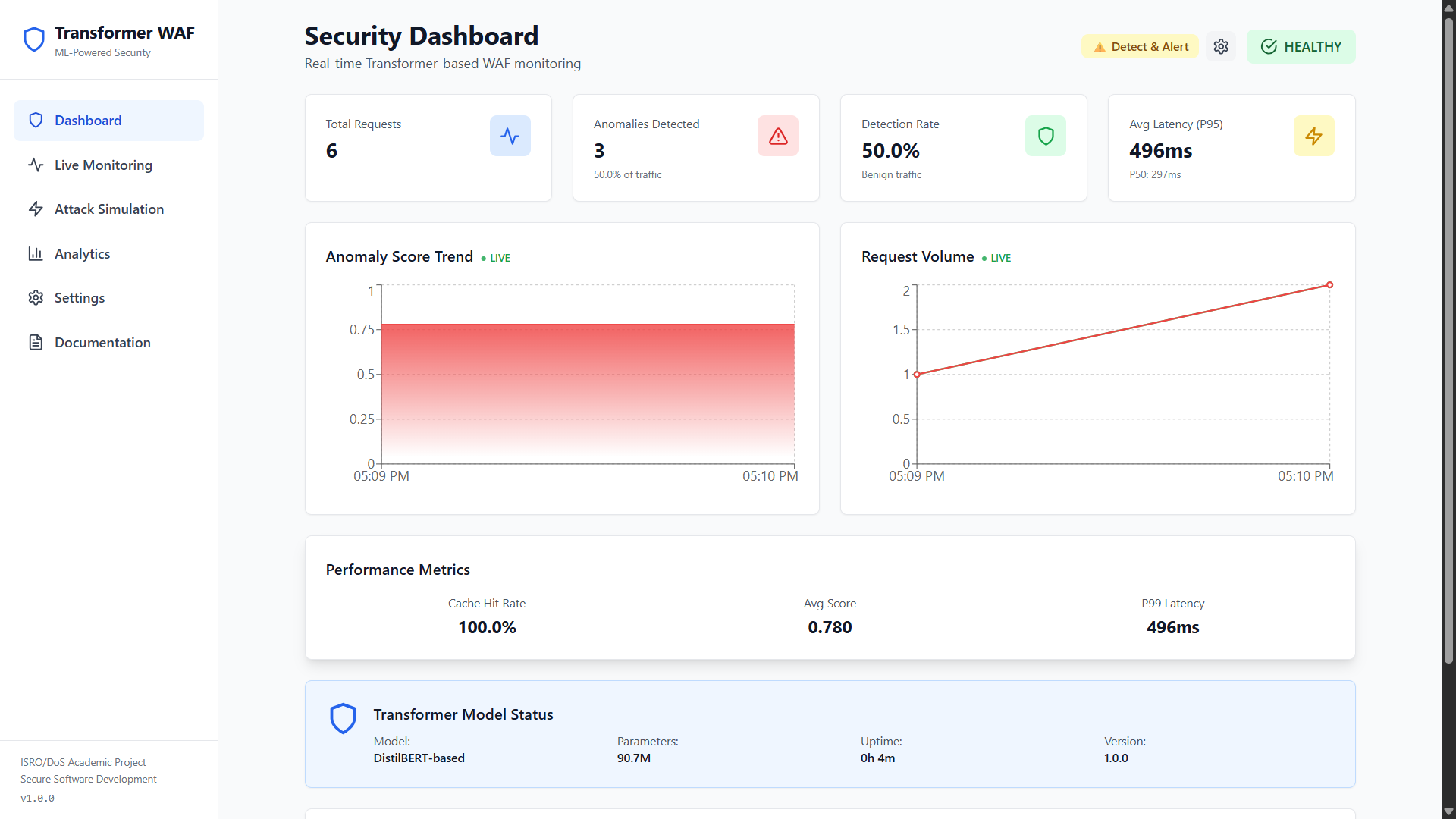
Security Dashboard of AI-WAF
-
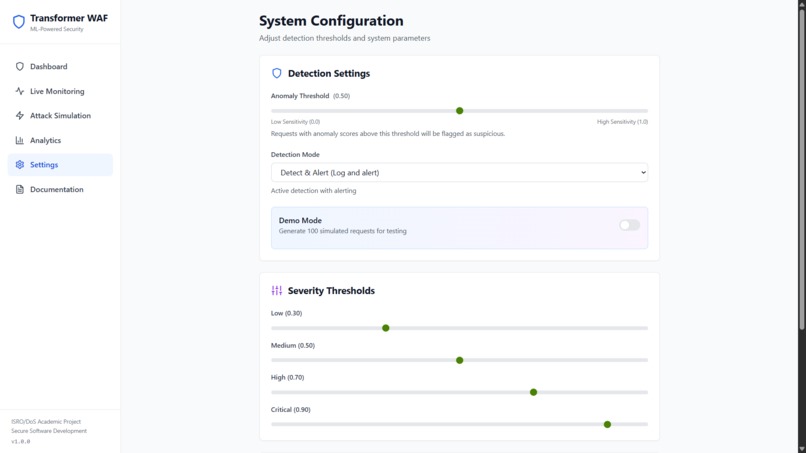
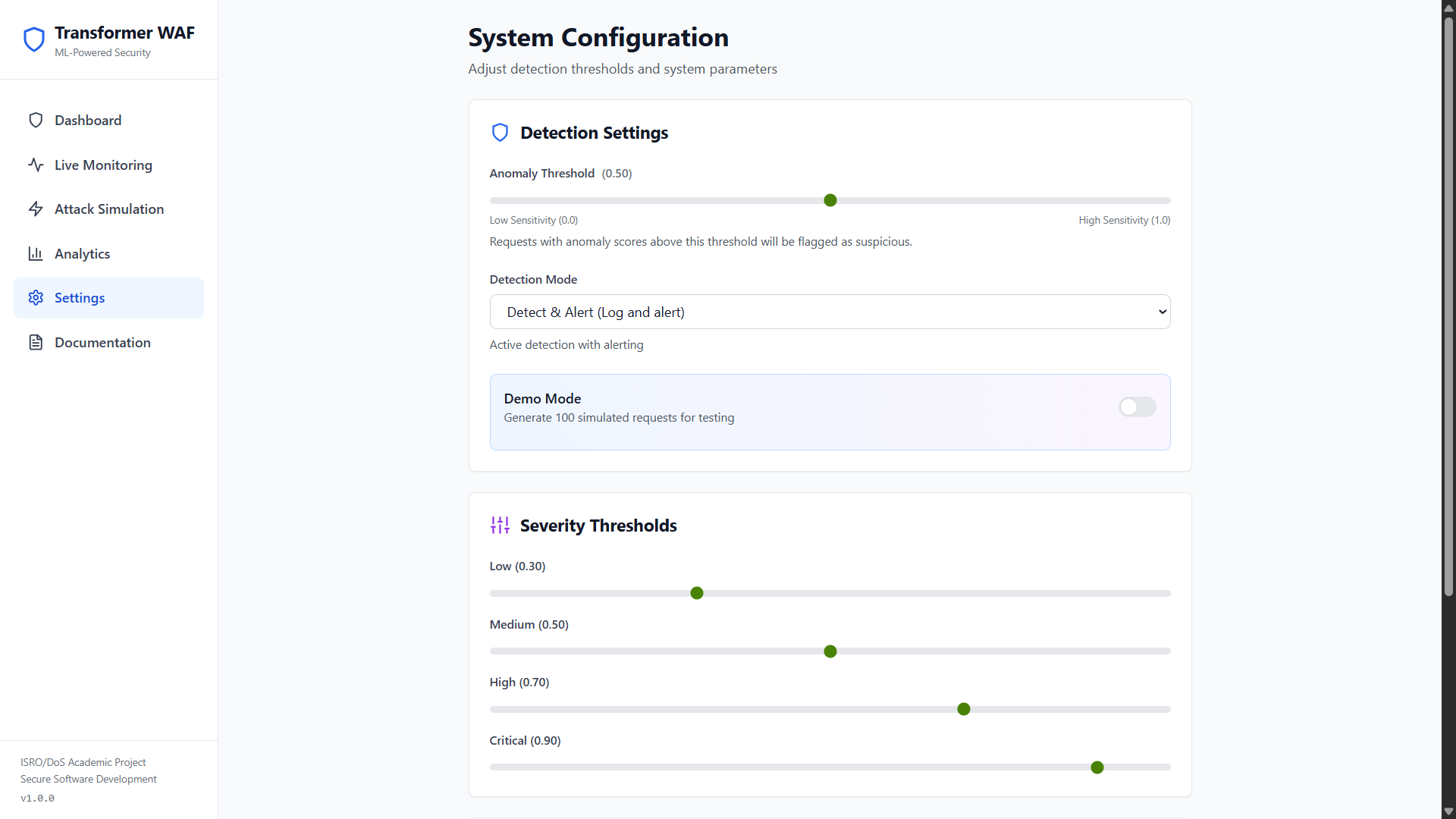
System Configuration of AI-WAF
-
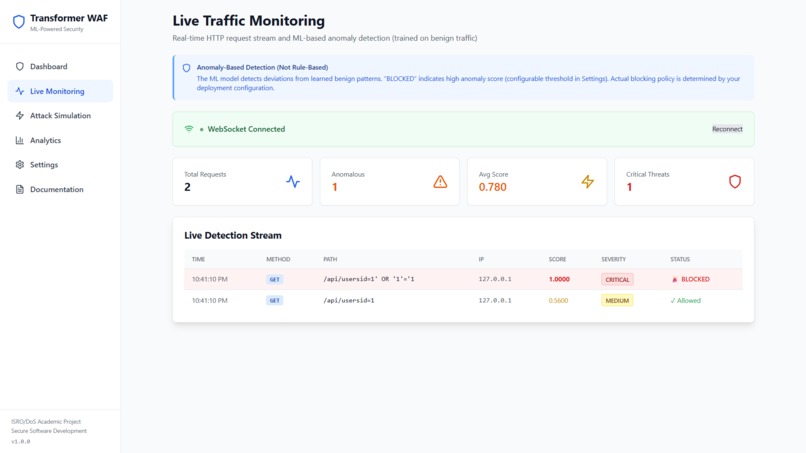
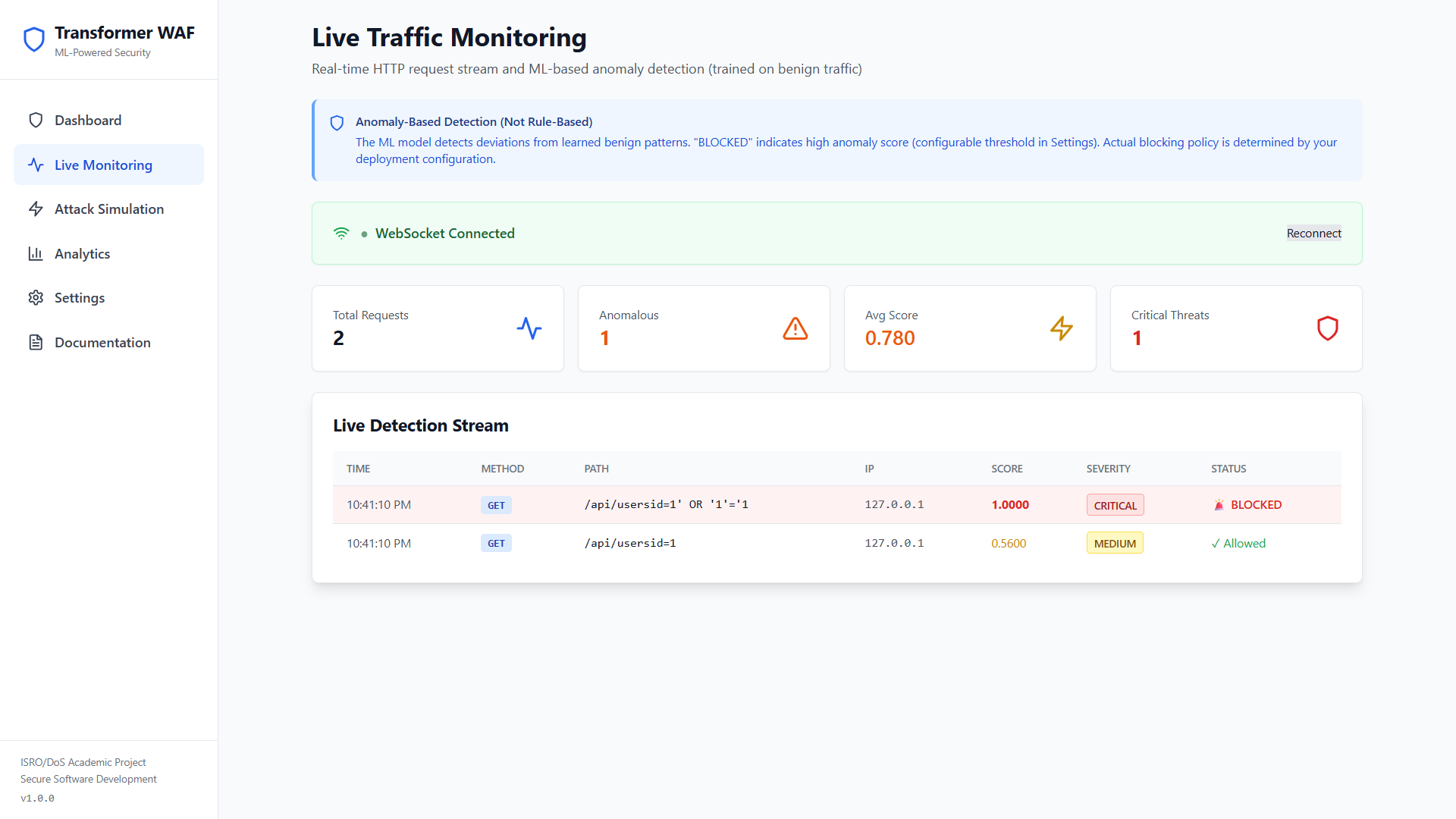
Live Traffic monitoring of AI-WAF
-
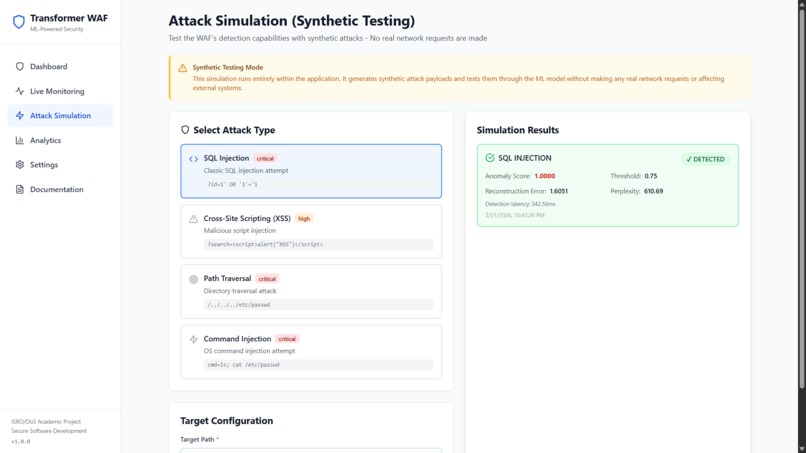
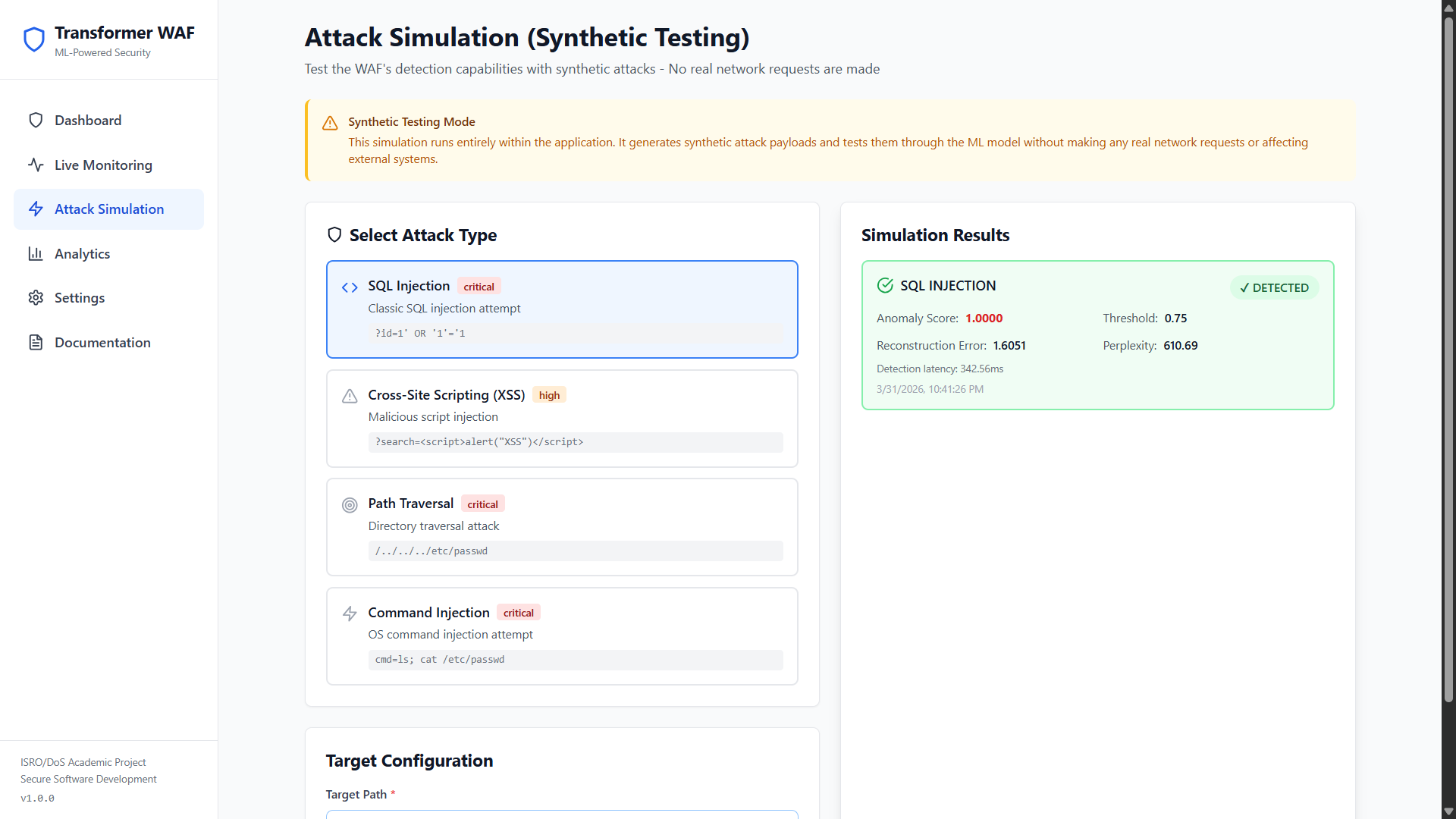
Attack Simulation of AI-WAF
-
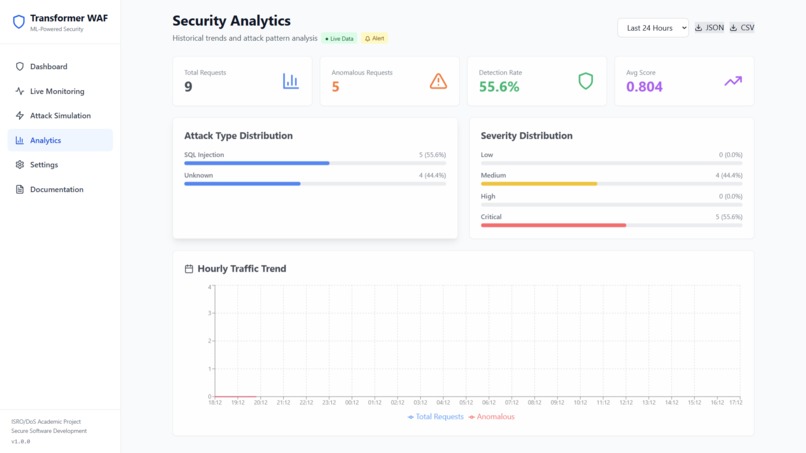
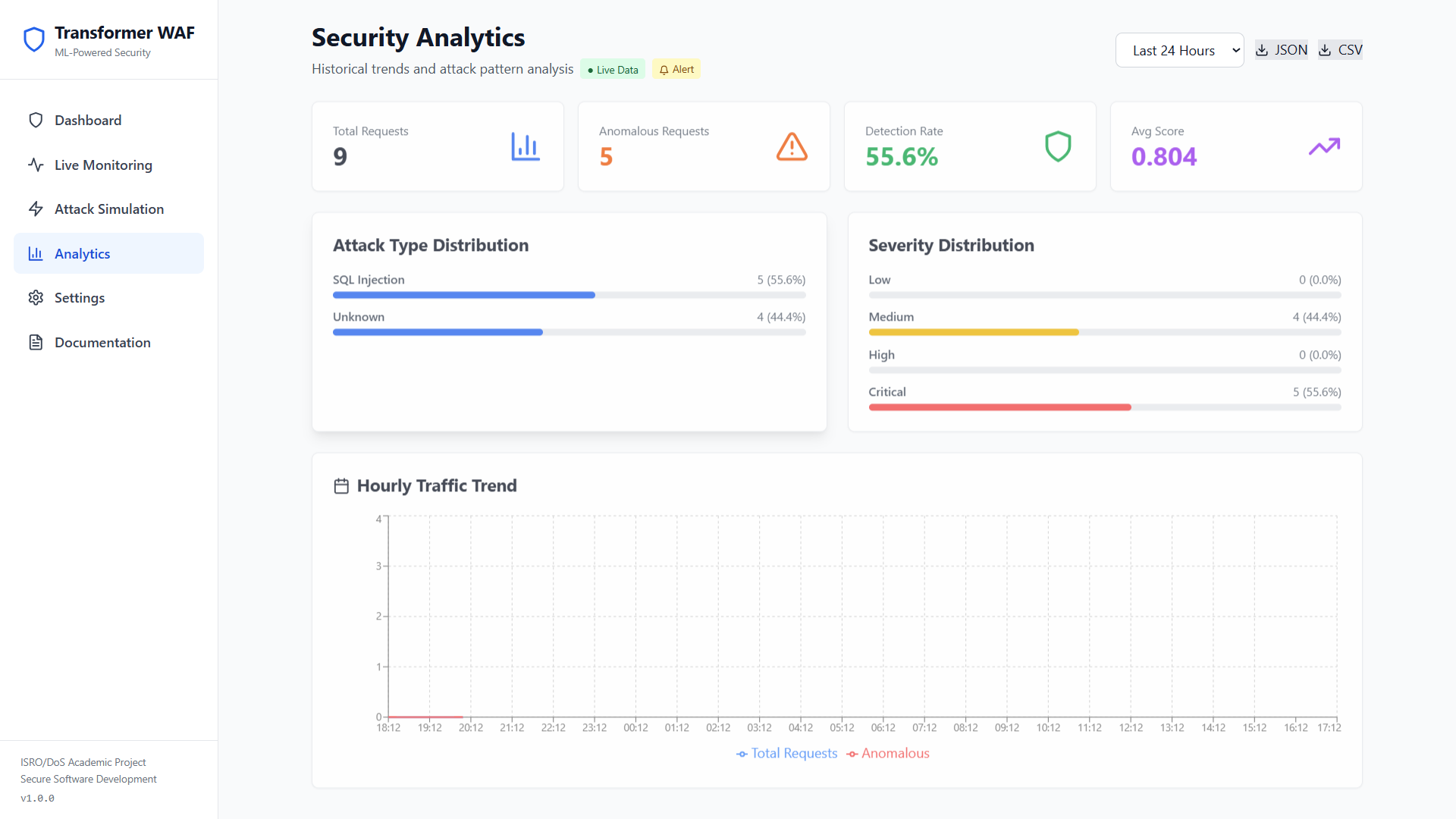
Security Analysis if AI-WAF
Transformer-Based Intelligent Web Application Firewall (AI-WAF)
Inspiration
Traditional Web Application Firewalls (WAFs) rely heavily on predefined rules and attack signatures, making them less effective against modern cyber threats such as zero-day attacks and sophisticated payloads. As web applications become increasingly complex, attackers continuously evolve their techniques to bypass conventional security mechanisms.
We were inspired to build an intelligent, AI-driven firewall capable of understanding the context of HTTP requests rather than simply matching predefined patterns. By leveraging Transformer-based deep learning models, we aimed to create a next-generation Web Application Firewall that can detect both known and previously unseen attacks while adapting to emerging threats over time.
What it does
Transformer-Based Intelligent Web Application Firewall (AI-WAF) is an AI-powered security solution that protects web applications by analyzing incoming HTTP requests in real time.
The system:
- Collects and monitors incoming HTTP traffic.
- Normalizes and tokenizes requests for deep learning analysis.
- Uses a Transformer model to understand contextual relationships within requests.
- Detects malicious activities such as SQL Injection, Cross-Site Scripting (XSS), Path Traversal, Command Injection, and other anomaly-based attacks.
- Identifies zero-day attacks without relying solely on predefined signatures.
- Assigns an anomaly score to every request for intelligent decision-making.
- Automatically monitors, alerts, or blocks suspicious traffic.
- Provides a real-time dashboard with attack visualization and security analytics.
- Continuously improves detection accuracy through adaptive learning.
How we built it
Our solution follows an end-to-end AI security pipeline.
- Traffic Collection
- Captured HTTP requests from Apache/Nginx web servers and simulated attack environments.
- Request Processing
- Parsed HTTP methods, URLs, headers, query parameters, cookies, and request payloads.
- Data Preprocessing
- Normalized dynamic values.
- Tokenized HTTP requests.
- Converted requests into contextual embeddings suitable for Transformer models.
- Transformer-Based Detection
- Trained a Transformer architecture using normal web traffic.
- Used self-attention mechanisms to understand relationships between request components.
- Generated anomaly scores representing malicious behavior.
- Decision Engine
- Combined AI predictions with configurable security thresholds.
- Performed Monitor, Alert, or Block actions in real time.
- Monitoring Dashboard
- Built an interactive dashboard using WebSockets for live attack visualization.
- Displayed request statistics, anomaly scores, alerts, and blocked attacks.
Our technology stack includes:
- Python
- TensorFlow
- Hugging Face Transformers
- Docker
- Apache/Nginx
- WebSockets
- HTML, CSS, and JavaScript for dashboard visualization
Challenges we ran into
Developing an AI-powered firewall introduced several technical challenges.
- Designing a preprocessing pipeline capable of handling diverse HTTP request formats.
- Training a Transformer model to accurately distinguish between normal and malicious traffic.
- Reducing false positives while maintaining high detection accuracy.
- Achieving low-latency inference suitable for real-time protection.
- Integrating AI predictions into a decision engine without disrupting legitimate user traffic.
- Building a scalable architecture capable of handling continuous web requests efficiently.
- Making AI decisions explainable for easier monitoring and debugging.
These challenges helped us improve both the intelligence and reliability of our security solution.
Accomplishments that we're proud of
- Developed an AI-driven Web Application Firewall powered by Transformer architecture.
- Successfully detected common attacks including SQL Injection, Cross-Site Scripting (XSS), and Path Traversal.
- Designed an anomaly-based detection system capable of identifying previously unseen attack patterns.
- Built a real-time monitoring dashboard with live attack visualization.
- Reduced dependence on traditional signature-based security techniques.
- Implemented an adaptive learning framework for continuous model improvement.
- Created a scalable and modular architecture suitable for modern web applications.
What we learned
This project significantly expanded our understanding of both cybersecurity and artificial intelligence.
We learned:
- How Transformer architectures can be applied beyond Natural Language Processing.
- The importance of contextual understanding in detecting sophisticated cyber threats.
- Practical implementation of anomaly detection using deep learning.
- Building real-time AI inference pipelines.
- Integrating machine learning models into production-oriented security systems.
- The importance of balancing detection accuracy with performance and scalability.
- Effective collaboration between AI, backend development, and cybersecurity practices.
Most importantly, we learned that modern cybersecurity increasingly depends on intelligent systems capable of adapting faster than attackers.
What's next for Transformer-Based Intelligent Web Application Firewall
Our vision is to evolve AI-WAF into a production-ready autonomous cybersecurity platform.
Future enhancements include:
- Multi-Agent AI architecture using UiPath Agentic Automation.
- Autonomous incident investigation and response.
- Integration with SIEM platforms and Security Operations Centers (SOC).
- Federated learning for privacy-preserving model improvements.
- Support for GraphQL, REST, WebSocket, and API security.
- Threat intelligence integration for real-time attack correlation.
- Explainable AI (XAI) for transparent security decisions.
- Cloud-native deployment with Kubernetes and edge inference.
- LLM-powered security assistant for attack explanation and remediation guidance.
- Automated vulnerability assessment and adaptive policy generation.
Our long-term goal is to build a self-learning cybersecurity platform capable of protecting modern applications against the ever-evolving threat landscape with minimal human intervention.
Built With
- artificial-intelligence
- css
- cybersecurity
- deep-learning
- docker
- github
- html
- hugging-face-transformers
- javascript
- json
- machine-learning
- python
- rest-api
- tensorflow
- transformer
- web-application-firewall
- websocket

Log in or sign up for Devpost to join the conversation.