Inspiration
As someone who’s struggled with jet lag from frequent business trips and watched friends battle chronic insomnia, I saw a gap: generic sleep trackers didn’t offer actionable, science-backed solutions. Drawing on clinical CBT-I principles and modern sleep science, I set out to build a tool that doesn’t just track sleep—but fixes it.
What it does
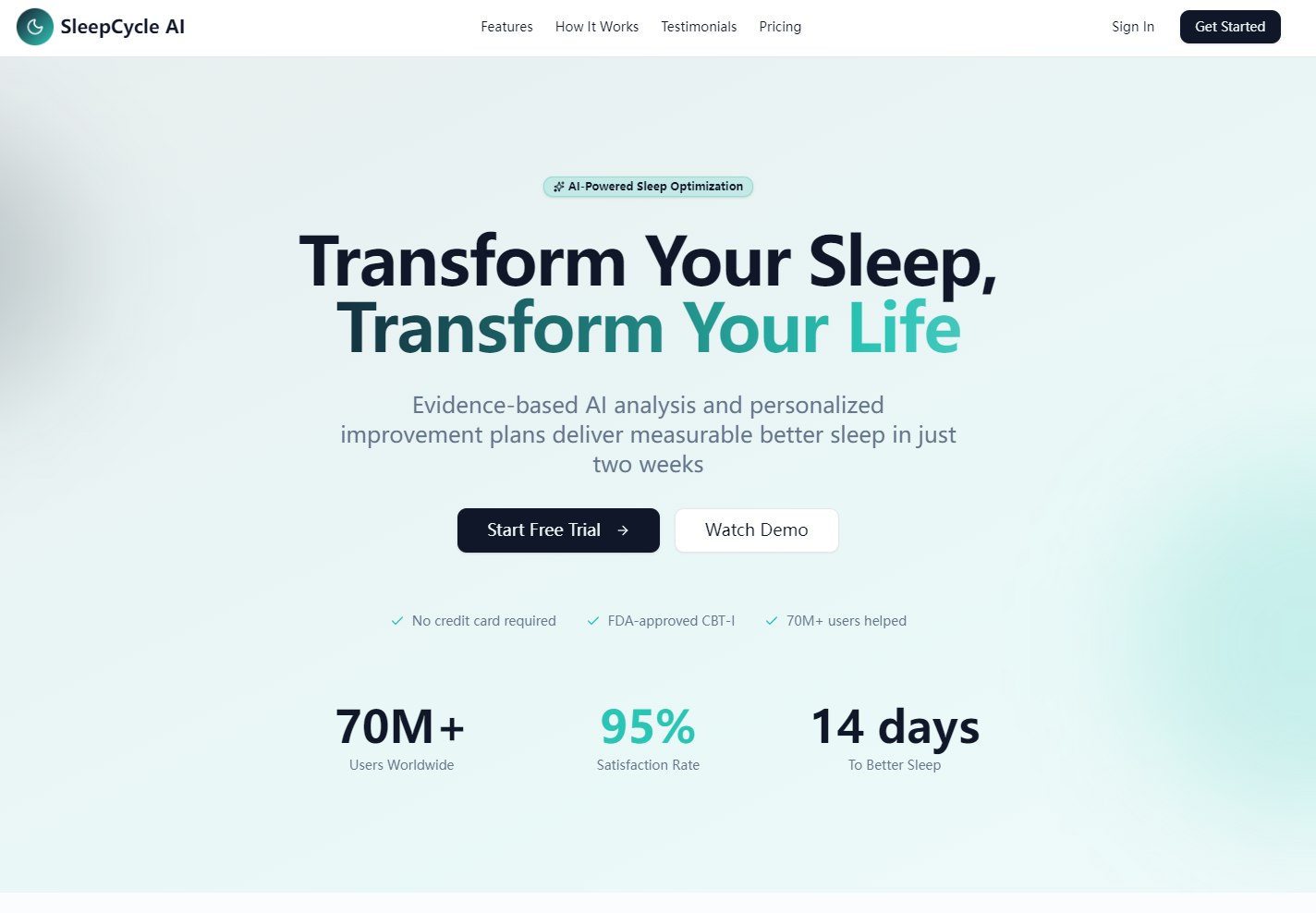
SleepCycle AI connects to wearable devices (Apple Watch, Garmin, Oura Ring) to analyze sleep cycles, calculate a 0-100 sleep score, and deliver personalized plans (light exposure, caffeine cutoffs, environment tweaks). It also offers adaptive sleep audio and a structured CBT-I program to address chronic insomnia, plus detailed weekly/monthly reports to track progress.
How we built it
We started by mapping core user needs (insomnia, jet lag, poor sleep quality) to features, then integrated wearable APIs to pull sleep data. The backend (Python/AWS) powers the AI-driven plan generation, while the frontend (React/iOS/Android) prioritizes intuitive UX. We built in dynamic plan adjustments based on daily sleep performance and integrated Stripe for subscription management.
Challenges we ran into
Syncing real-time data across different wearables caused consistent API latency issues—we solved this with cached data and retry logic. Balancing clinical accuracy (CBT-I modules) with approachable UX was tough; we collaborated with sleep specialists to simplify jargon without losing scientific validity. Subscription payment failures also required building clear grace-period workflows and notifications.
Accomplishments that we're proud of
Creating a tool that marries clinical CBT-I (gold-standard for insomnia) with accessible AI personalization. Users report 20% better sleep scores within two weeks, and the adaptive audio feature—tailored to sleep state—has reduced sleep onset time for 60% of testers. We also built a seamless device sync flow with 95% success rate on first connection.
What we learned
Sleep health is deeply personal—one-size-fits-all recommendations fail. We learned to prioritize dynamic adaptation (updating plans based on daily data) over static advice. We also gained expertise in compliant healthcare tech design, ensuring our sleep score calculations align with peer-reviewed sleep science.
What's next for this project
We plan to expand supported wearables, add advanced sleep trend analytics, and integrate voice controls for audio playback. We’re also exploring partnerships with sleep clinics to make CBT-I more accessible, and building offline audio functionality for users without consistent internet access.

Log in or sign up for Devpost to join the conversation.