Inspiration
I’ve watched friends and colleagues struggle to process anger healthily—bottling it up or lashing out, with no private, judgment-free outlet. Living in a fast-paced culture where stress is constant, I wanted to create something that lets people release emotion without harm, then move toward calm and understanding. That spark led to RageRoom Digital: merging emotional wellness with intuitive digital design to fill a gap in accessible mental health tools.
What it does
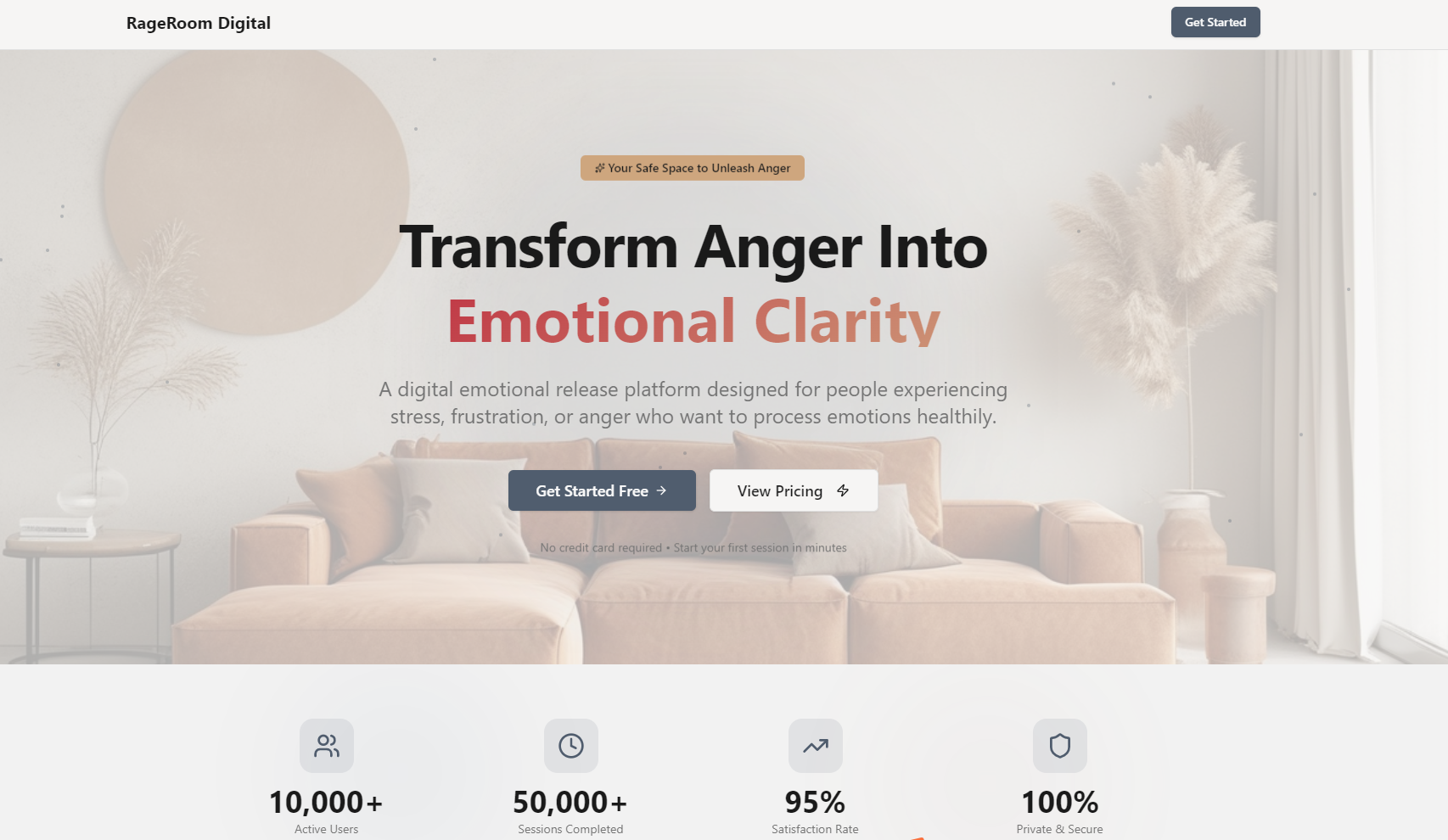
RageRoom Digital is a digital emotional release platform that offers a safe space to process anger through interactive virtual destruction, voice-guided movement workouts, unfiltered journaling, emotion analysis, and guided calming exercises. It tracks session history to highlight emotional patterns, all behind a privacy-focused design that keeps user data personal.
How we built it
We started with mapping core user flows—from the virtual rage room to the calming module—then built the frontend with React for interactive UI, paired with Node.js/Express for backend logic. AWS hosted the platform, MongoDB stored session data (with privacy controls), WebAudioAPI added immersive sound effects, and SpeechSynthesisAPI enabled voice guidance. We prioritized intuitive navigation to keep the experience seamless.
Challenges we ran into
Balancing immersion (realistic destruction feedback) with performance was tough—we had to optimize visual/audio assets to avoid lag. Ensuring emotion analysis was supportive (not clinical) required iterating on language to keep it empathetic. We also faced hurdles with offline functionality: enabling diary writing without internet while ensuring sync later took multiple testing rounds.
Accomplishments that we're proud of
Creating a fully functional flow from rage release to calm that users find intuitive and meaningful. The privacy features—letting users auto-delete diary entries or save them securely—resonated deeply in testing. We’re proud the platform feels judgment-free: it meets users where they are, without pushing “perfect” emotional responses.
What we learned
Emotional wellness tools demand empathy first, code second. Users care more about feeling seen than flashy features—so we simplified design to center their experience. We also learned the importance of flexibility: building modules that work independently (for quick use) and in sequence (for full sessions) made the platform far more usable for busy lives.
What's next for this project
We want to expand the virtual rage room with more interactive objects, refine emotion analysis to pick up on nuanced triggers, and add short, 1-minute “quick calm” exercises for on-the-go use. We’re also exploring lightweight offline mode for all modules, so users can access support even without internet—critical for busy, on-the-move lifestyles.
Built With
- amazon-web-services
- css3
- html5
- mongodb
- webaudioapi

Log in or sign up for Devpost to join the conversation.