-
-
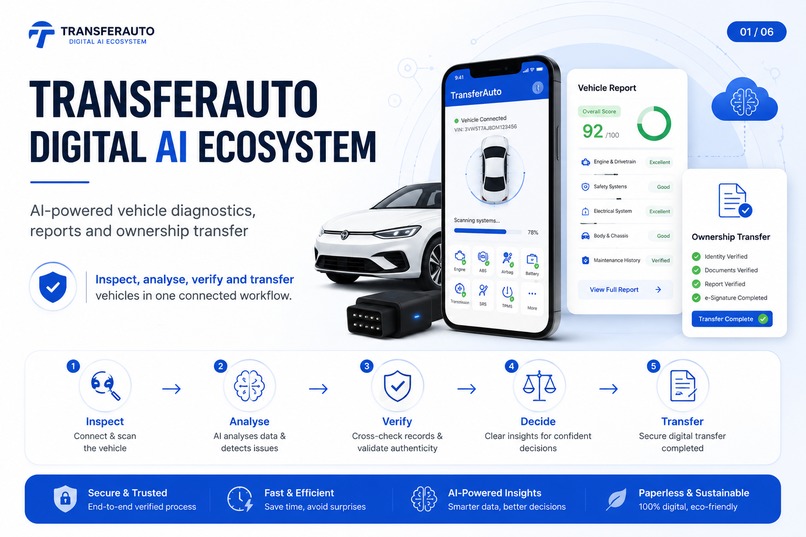
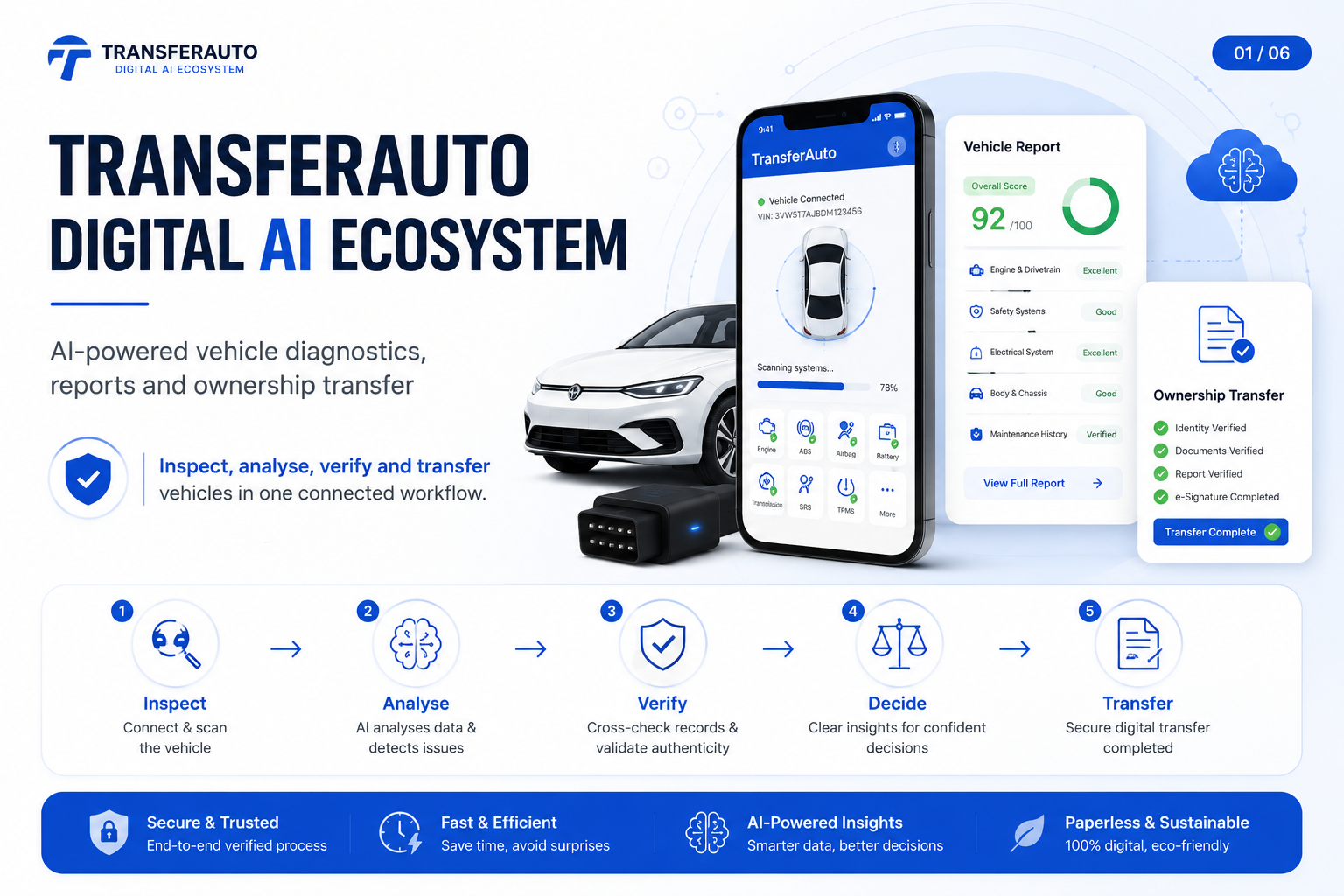
TransferAuto Digital AI Ecosystem: one connected workflow from vehicle inspection to ownership transfer
-
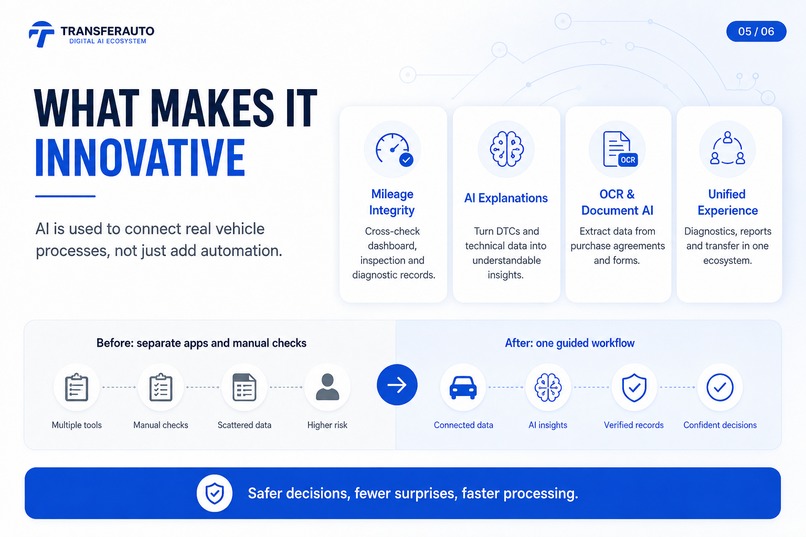
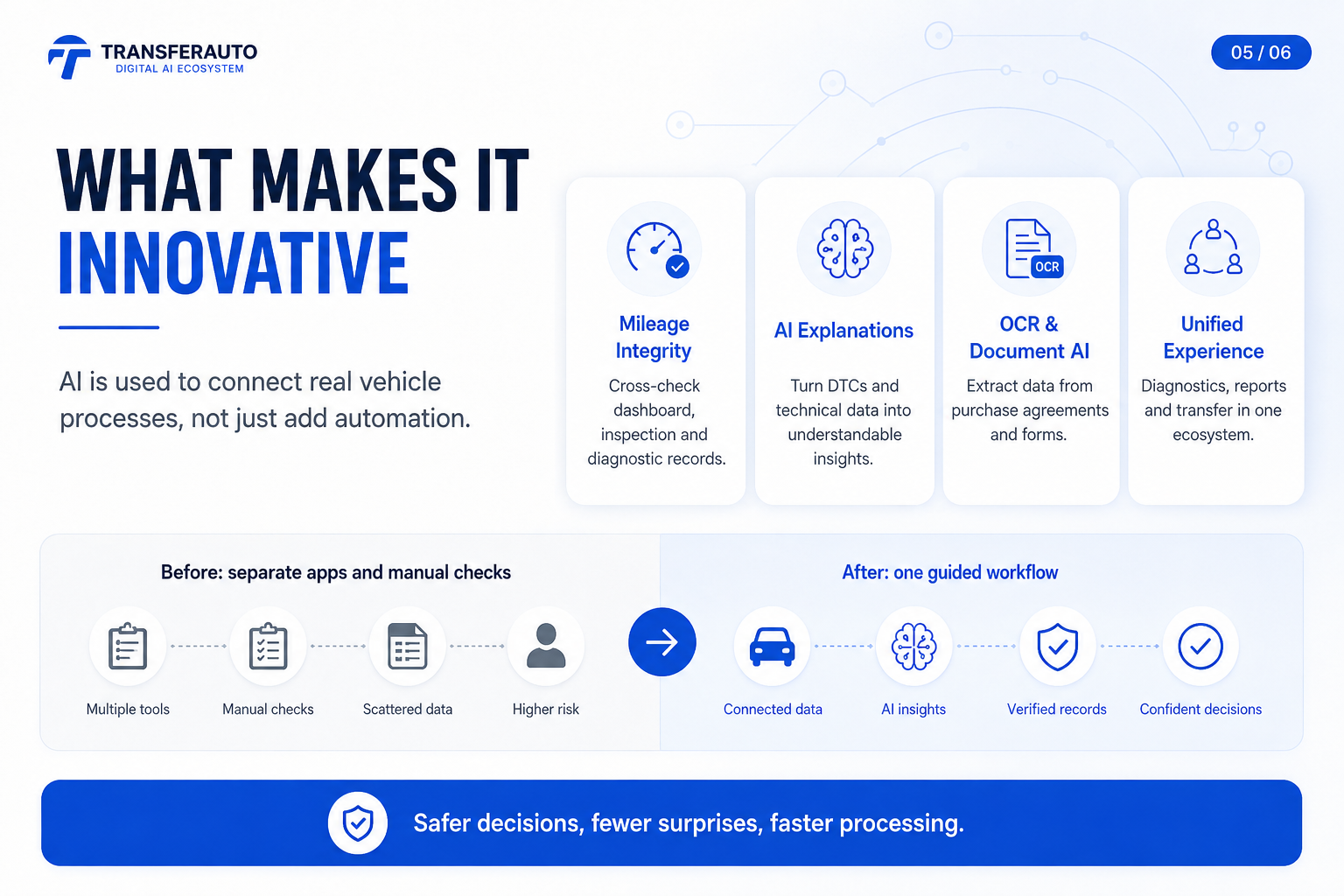
What makes it innovative: AI, mileage integrity, OCR and one unified vehicle experience
-
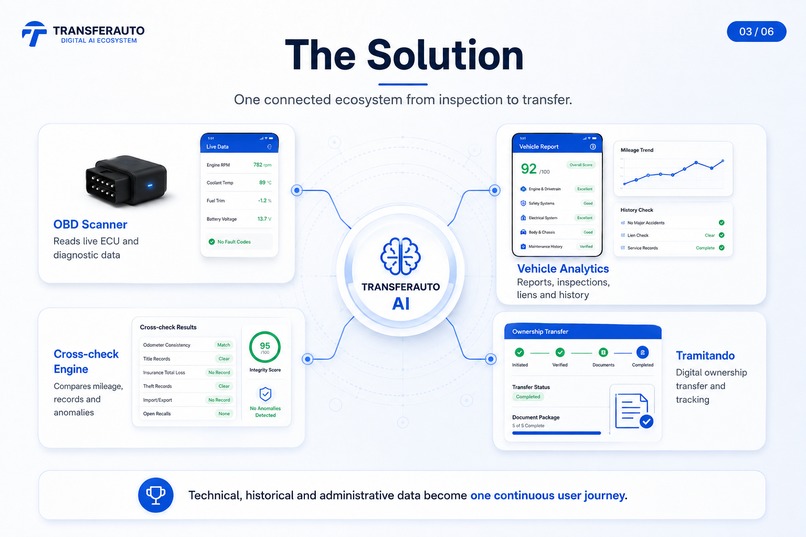
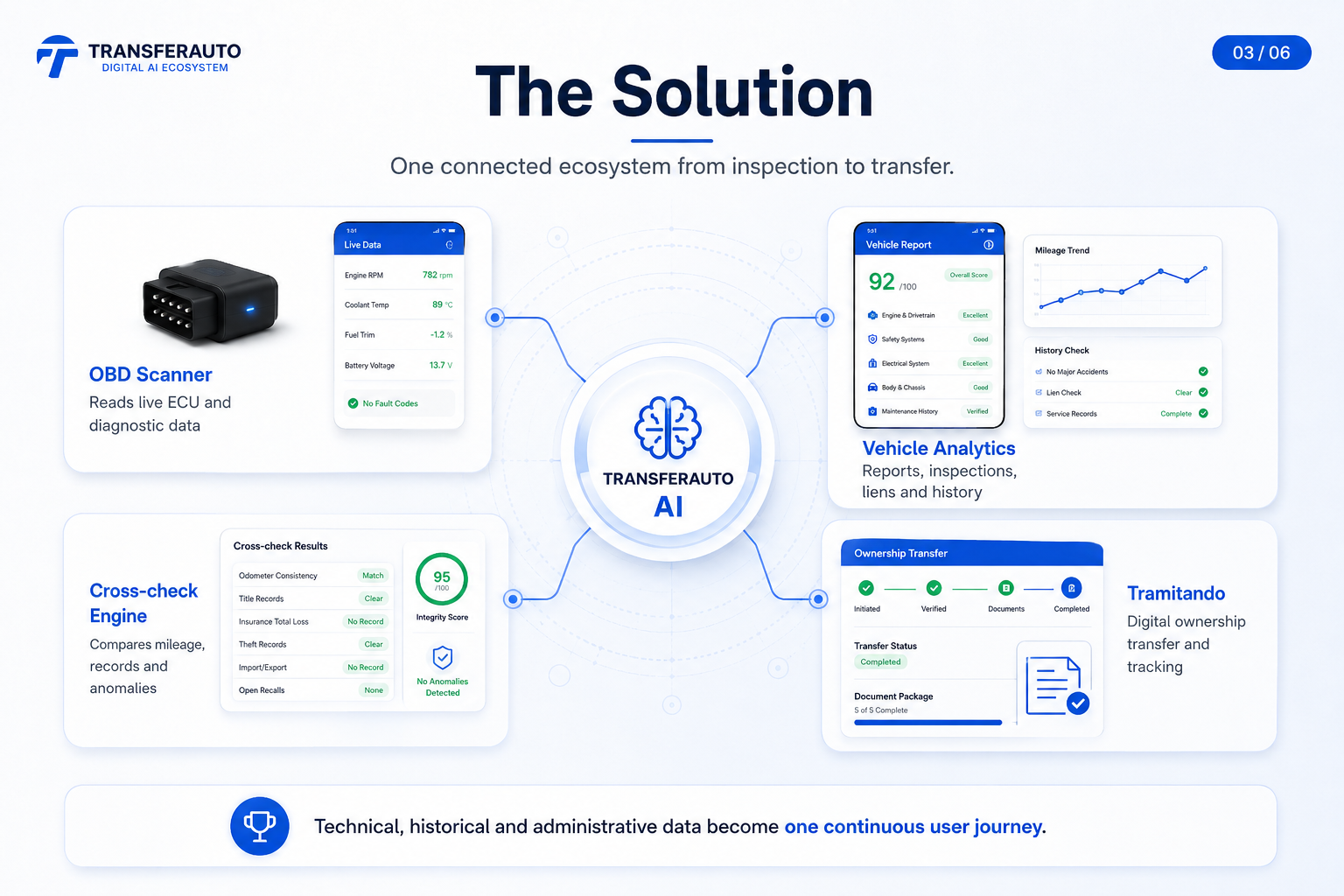
The solution: one AI-powered ecosystem connecting diagnostics, reports, verification and transfer
-
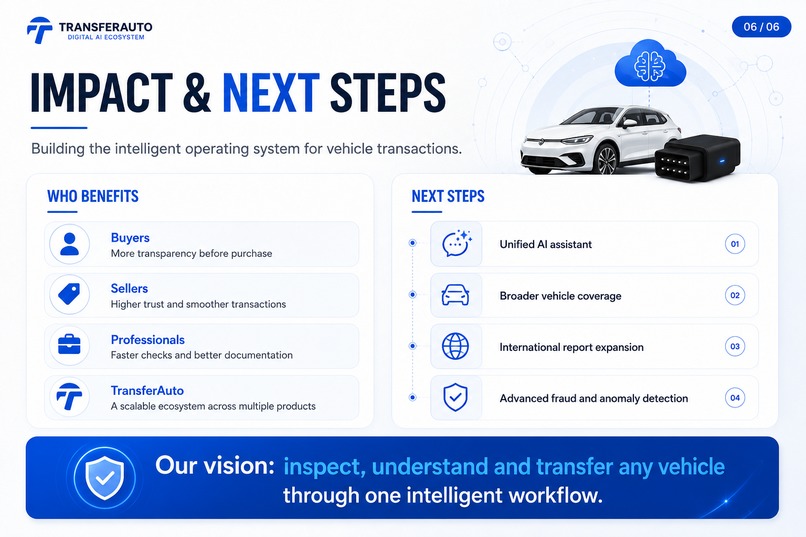
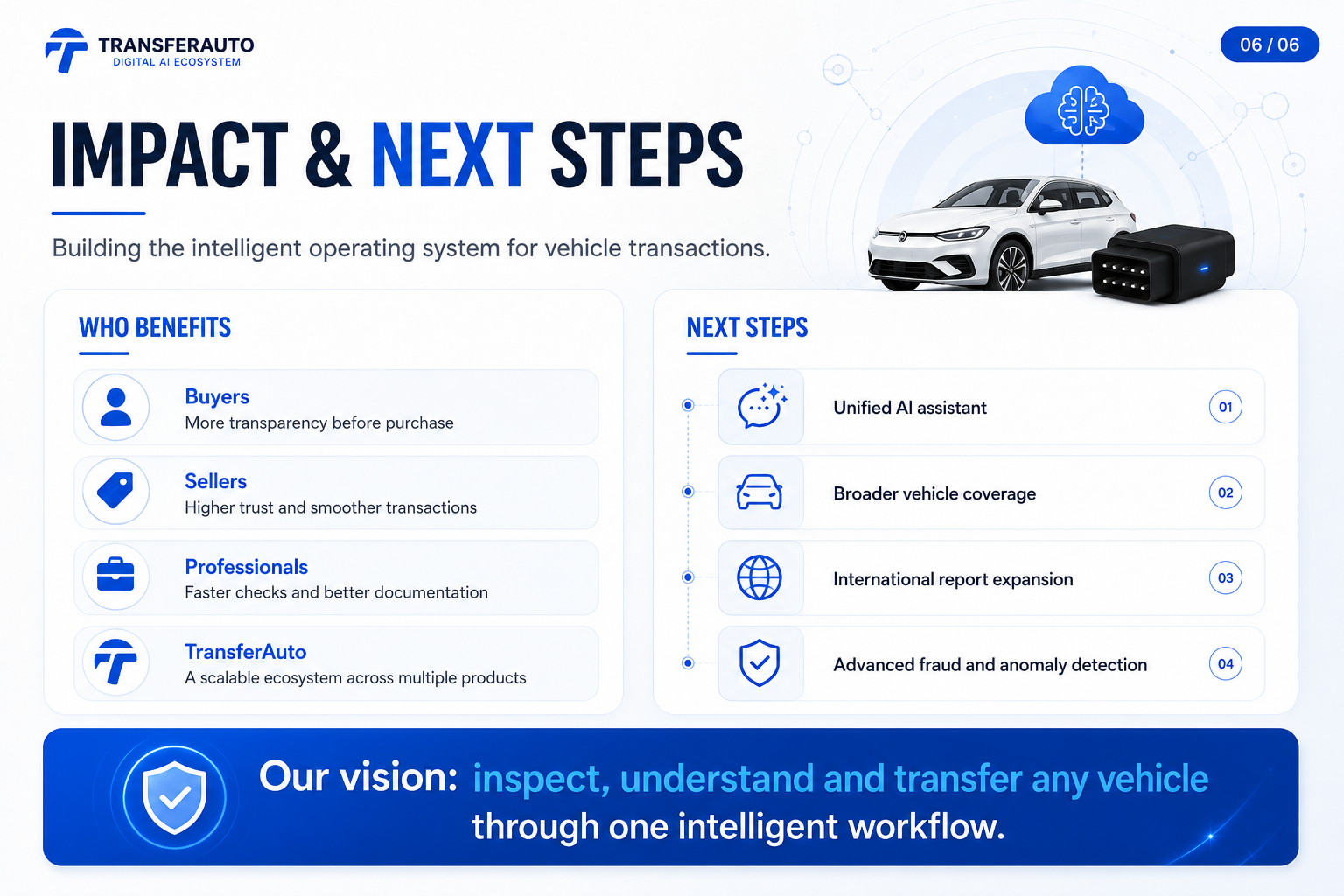
Impact & next steps: safer transactions today, broader coverage and smarter AI assistance tomorrow
-
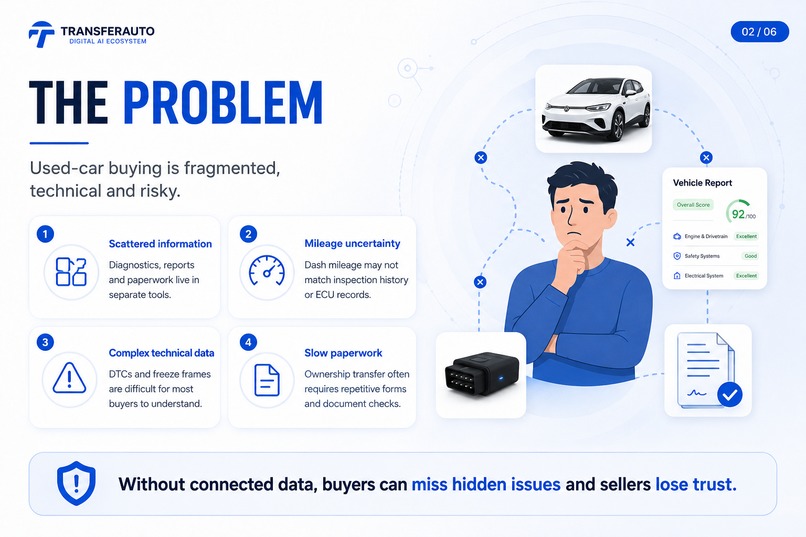
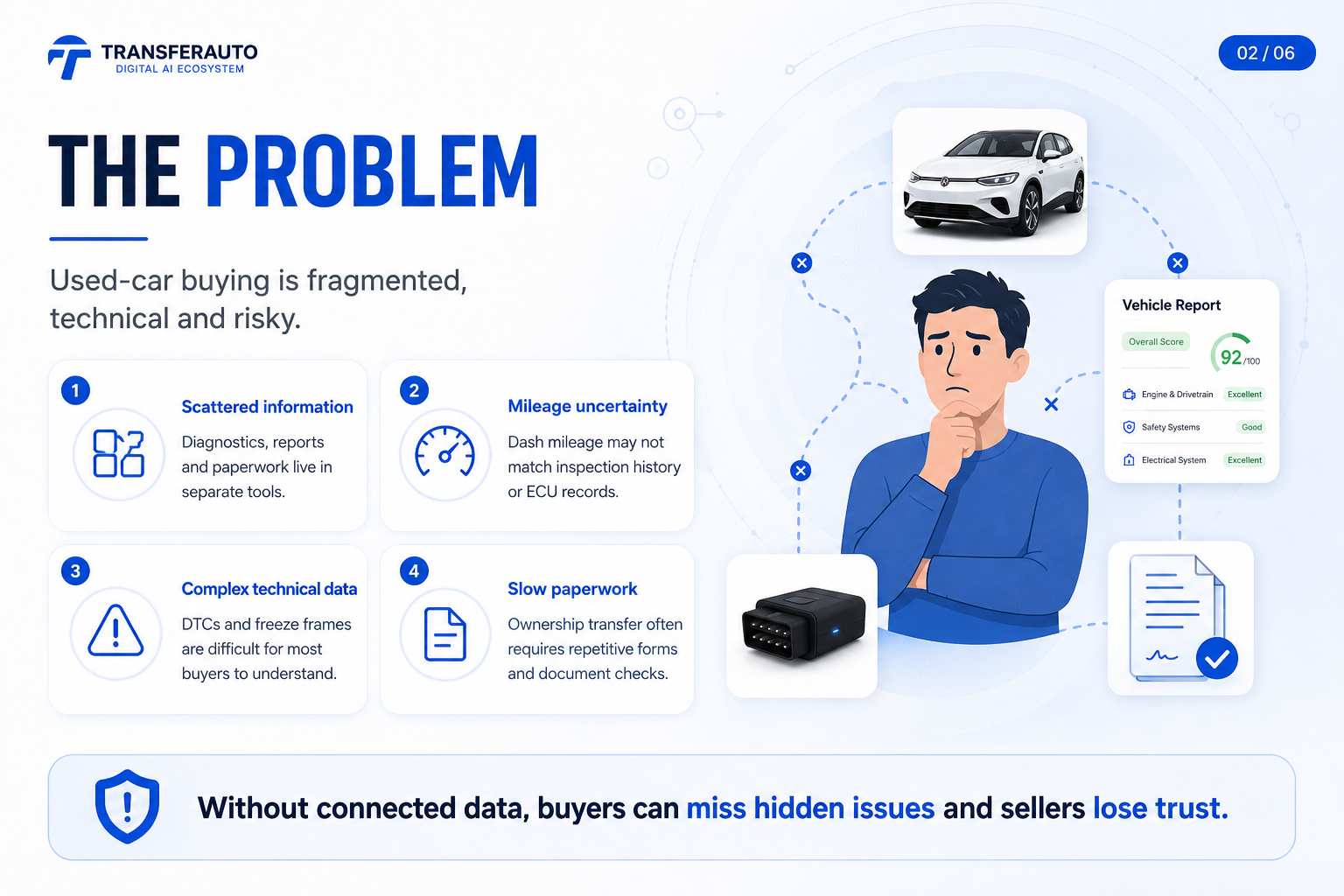
The problem: used-car buying is fragmented, technical and risky without connected data
-
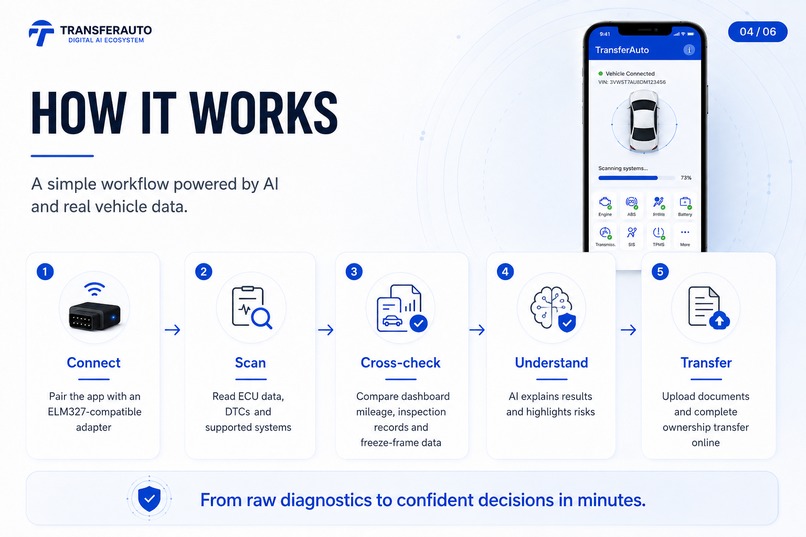
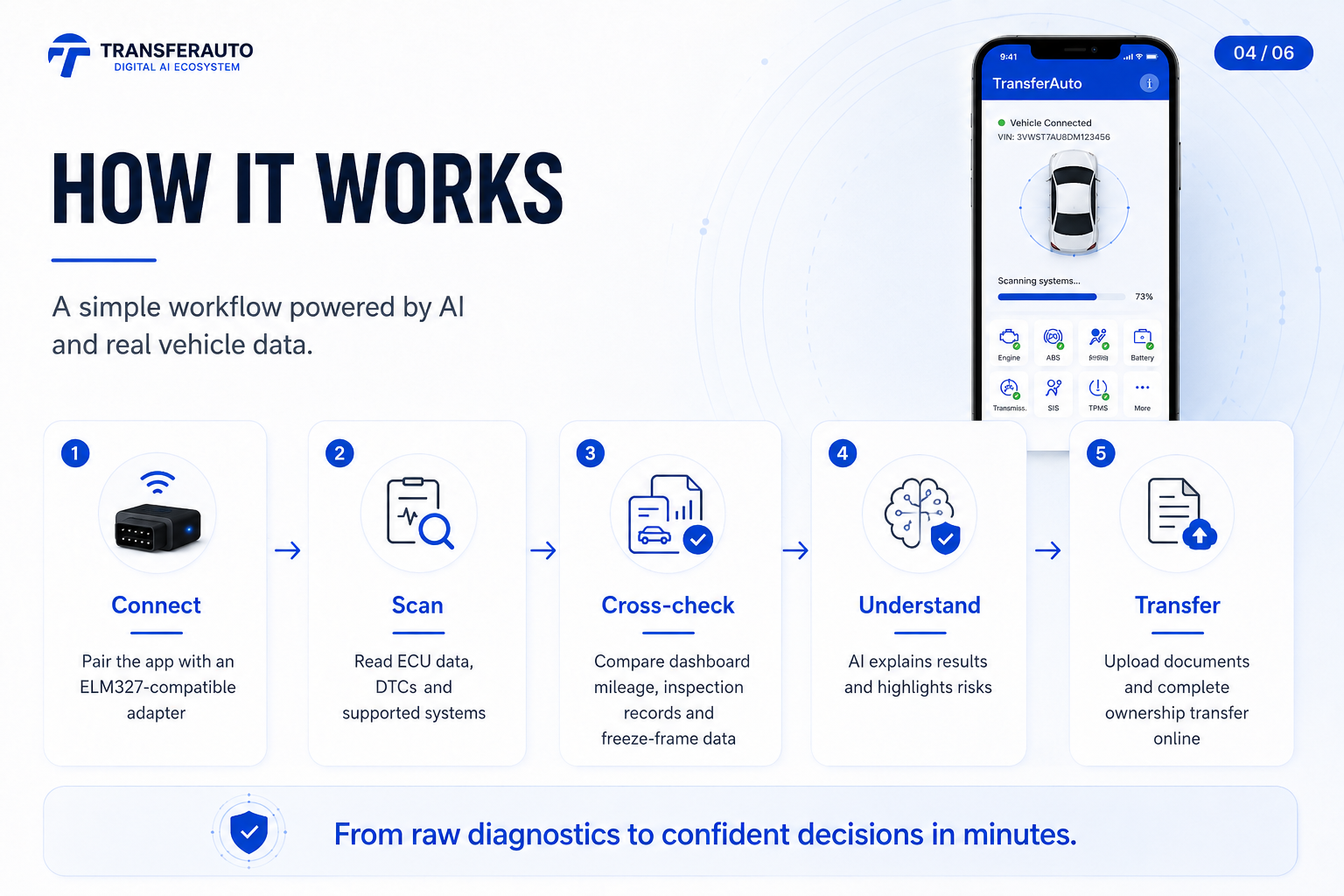
How it works: connect, scan, cross-check, understand and transfer in a simple guided workflow
Inspiration
Buying a used vehicle is still a fragmented and risky process. A buyer may need to inspect the vehicle, check its history, verify its mileage, understand diagnostic trouble codes, review legal or administrative issues, and finally complete the ownership transfer through completely separate services.
We created TRANSFERAUTO DIGITAL AI ECOSYSTEM to connect all these steps into one intelligent workflow. Our goal is to help users make safer decisions before buying a vehicle and complete the transaction without leaving the ecosystem.
What it does
TRANSFERAUTO combines vehicle diagnostics, official and commercial vehicle data, artificial intelligence, document processing, and online administrative services.
The ecosystem includes:
- OBD Scanner, which connects to the vehicle through an ELM327-compatible adapter and reads diagnostic information directly from the ECU.
- Vehicle Analytics, which provides vehicle reports containing information such as ownership history, inspections, administrative restrictions, liens, mileage records, and other available vehicle data.
- Cross-checking tools, which compare the mileage shown by the vehicle, historical inspection records, and mileage stored inside diagnostic freeze-frame data.
- AI-assisted analysis, which helps users understand technical information and identify possible inconsistencies or warning signs.
- Tramitando, our online vehicle ownership-transfer platform, where users can upload documents, complete forms, follow the status of their procedure, and request assistance.
- AI document processing, which can extract information from purchase agreements and other documents to reduce manual data entry.
The result is a complete user journey: inspect the vehicle, analyze its history, detect possible risks, make an informed decision, and complete the ownership transfer.
How we built it
We connected our existing mobile applications, web services, vehicle-data systems, document-processing workflows, and administrative platform into one unified ecosystem.
The OBD Scanner application communicates with compatible diagnostic adapters and uses the adapter only as a bridge to the vehicle. The application contains the logic required to interpret the information received from the ECU.
Vehicle information is then connected with our Analytics platform, allowing diagnostic data to be compared with historical and administrative records.
For document workflows, we use OCR and AI-assisted data extraction to identify relevant information from uploaded documents. OpenAI-powered workflows help transform complex technical and administrative information into explanations that are easier for normal users to understand.
The ecosystem is designed as several independent products that share data, accounts, and services while working together as one continuous experience.
Challenges we ran into
One of the main challenges was the large variation between vehicles, ECUs, communication protocols, and ELM327 adapters. Many low-cost adapters report misleading firmware information or behave differently depending on the vehicle.
Another challenge was combining information from very different sources. Diagnostic data, inspection records, vehicle reports, user documents, and administrative procedures all have different formats and levels of reliability.
We also had to make highly technical information understandable without oversimplifying it. Diagnostic trouble codes and freeze-frame values can be useful, but only when they are explained in the correct context.
Finally, building a connected experience across several existing products required us to redesign the user journey so that every service felt like part of the same ecosystem.
Accomplishments that we're proud of
We created a working ecosystem that connects the technical, legal, administrative, and transactional stages of buying a used vehicle.
We are especially proud of:
- Using OBD data and historical vehicle information together instead of treating them as separate products.
- Comparing mileage from multiple sources to detect possible inconsistencies.
- Making professional diagnostic information accessible to non-technical users.
- Using AI to reduce repetitive document entry and explain complex information.
- Connecting vehicle inspection and analysis directly with the ownership-transfer process.
- Providing core diagnostic functionality without requiring a mandatory subscription.
What we learned
We learned that AI is most useful when it connects real processes instead of being added as an isolated feature.
Vehicle diagnostics alone cannot explain the full history of a vehicle, and a vehicle report cannot reveal its current mechanical condition. The real value comes from combining both sources and presenting the result in a way that helps the user make a decision.
We also learned that transparency is essential. AI-generated explanations must clearly distinguish between confirmed data, possible inconsistencies, and recommendations that require professional verification.
What's next for TRANSFERAUTO DIGITAL AI ECOSYSTEM
Our next step is to create a unified AI assistant capable of guiding the user through the entire vehicle transaction.
The assistant will analyze vehicle reports, interpret OBD results, review uploaded documents, detect missing information, explain risks, and prepare the ownership-transfer workflow.
We also plan to expand vehicle coverage, improve international vehicle-report support, add more advanced mileage and fraud-detection tools, and create a single dashboard where users can manage their vehicles, reports, diagnostics, documents, and administrative procedures.
Our long-term vision is to turn TRANSFERAUTO into the intelligent operating system for buying, inspecting, managing, and transferring vehicles.
Built With
- android
- api
- artificial
- computer
- diagnostics
- firebase
- github
- gpt
- intelligence
- kotlin
- next.js
- node.js
- obd-ii
- ocr
- openai
- postgresql
- react
- rest
- typescript
- vehicle
- vision


Log in or sign up for Devpost to join the conversation.