Inspiration
The inspiration for TranscribeRST came from the growing need for efficient documentation processes in software development and content creation. I noticed that many professionals spend hours transcribing audio files into structured formats. I wanted to simplify this process, making it accessible and user-friendly for anyone needing quick documentation.
What it does
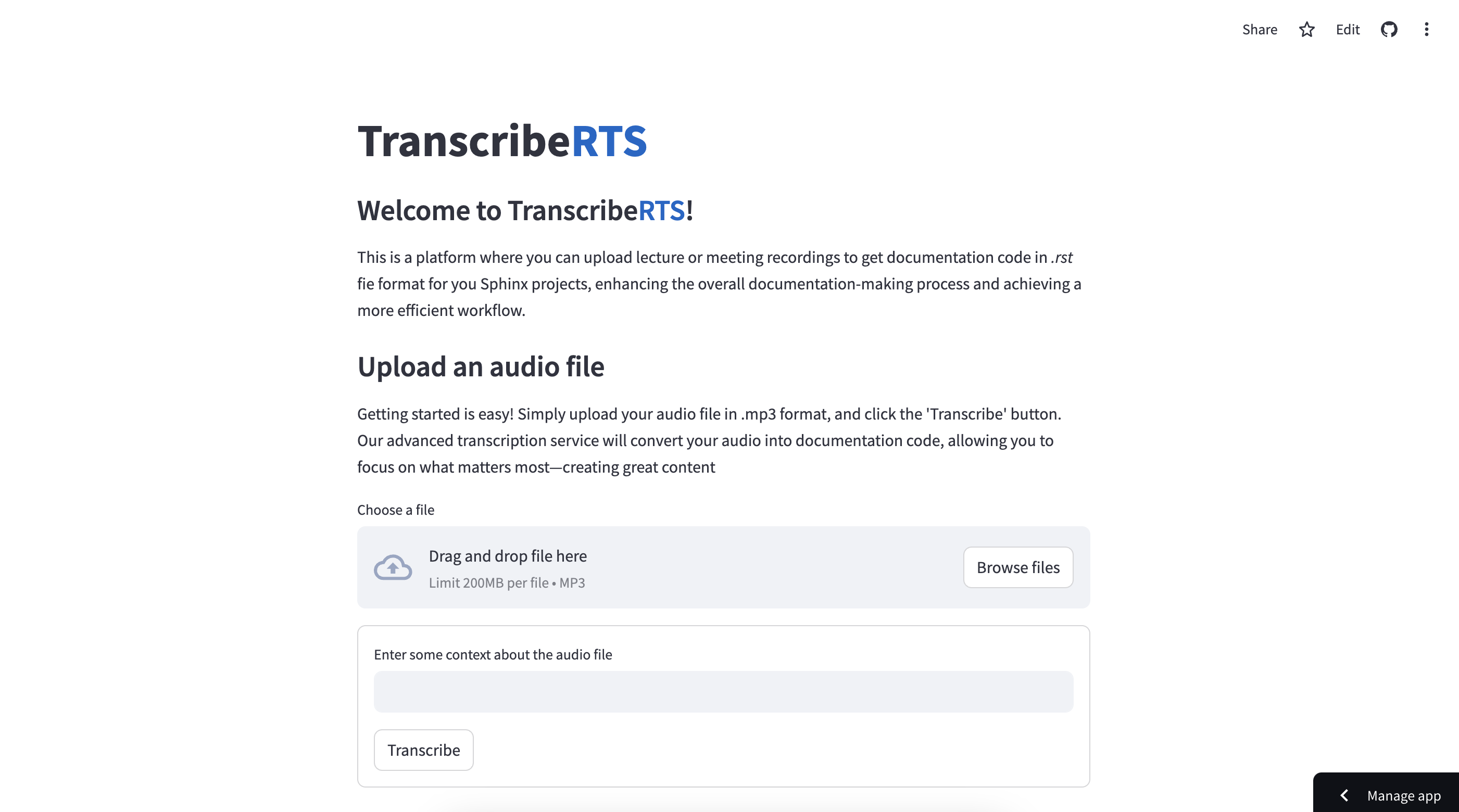
TranscribeRST allows users to upload audio files and converts them into usable reStructuredText (.rst) documentation with just a click of a button. The tool leverages speech recognition technology to ensure accurate transcription, enabling users to focus on their content rather than the tedious task of manual transcription.
How I built it
I built TranscribeRST using Python, utilizing libraries such as OpenAI Whisper for speech to text processing, and GPT 4o mini for code processing, and a user-friendly interface built with Streamlit. The workflow involves uploading audio files, processing them with speech recognition algorithms, and formatting the output into .rst files. I also implemented error handling and user notifications for a smoother experience.
Challenges I ran into
One of the main challenges was ensuring high accuracy in transcription, especially with varying audio qualities and accents. Additionally, formatting the transcriptions into .rst format posed some difficulties, as I had to carefully manage indentation and syntax to maintain compatibility with existing documentation standards.
Accomplishments that I'm proud of
I’m proud of successfully creating a tool that significantly reduces the time needed to transcribe audio into structured documentation. The positive feedback from initial users regarding the tool's ease of use and accuracy has been very rewarding.
What I learned
Throughout the project, I learned a lot about speech recognition technology and its nuances, including how to handle different audio qualities and accents effectively. I also gained valuable experience in building a user interface with Streamlit and optimizing user workflows.
What's next for TranscribeRTS
In the future, I plan to enhance TranscribeRST by incorporating additional features such as multi-language support, a more robust editing interface for users to make quick adjustments to the transcriptions, and integration with popular documentation tools for seamless workflows. I also aim to gather more user feedback to refine the tool further.
Built With
- openai
- python
- streamlit
- whisper

Log in or sign up for Devpost to join the conversation.