-
-
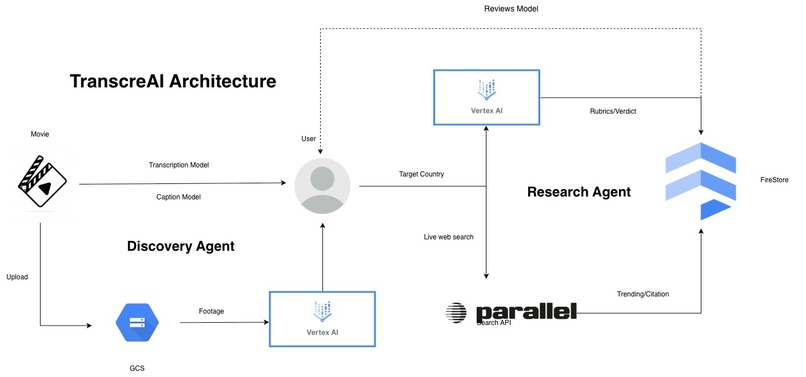
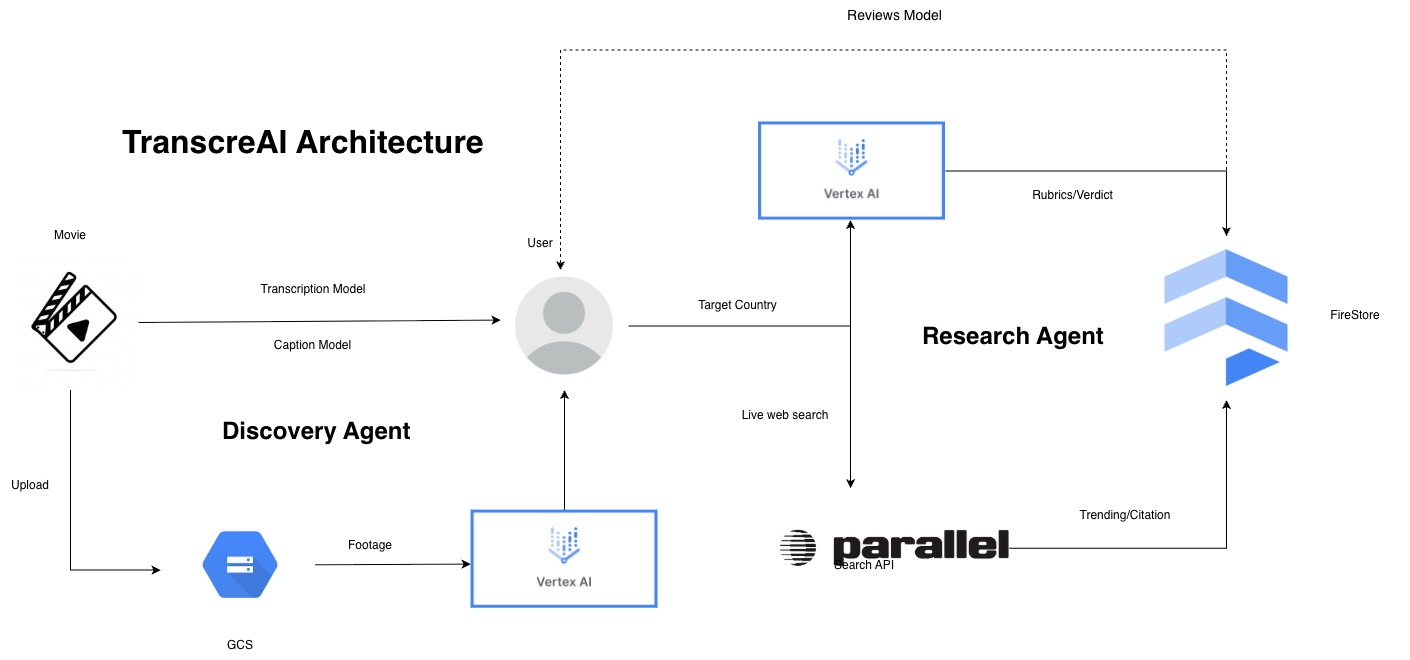
Architecture Flow
-
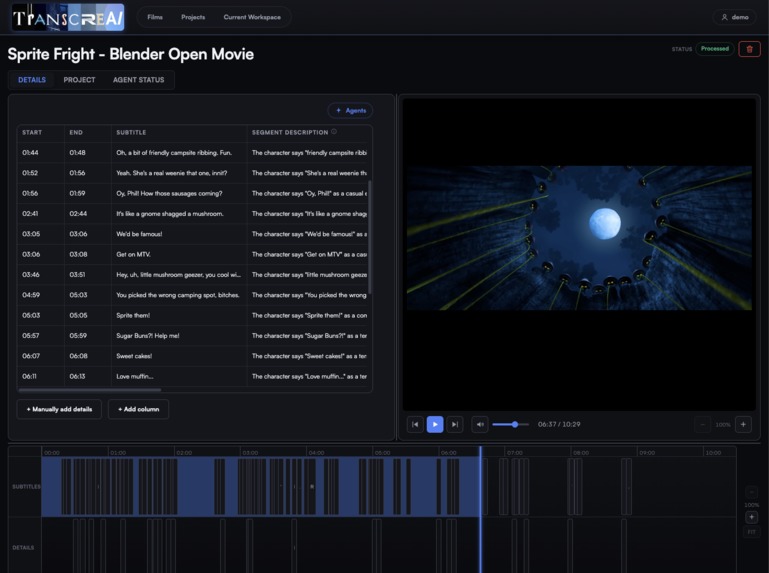
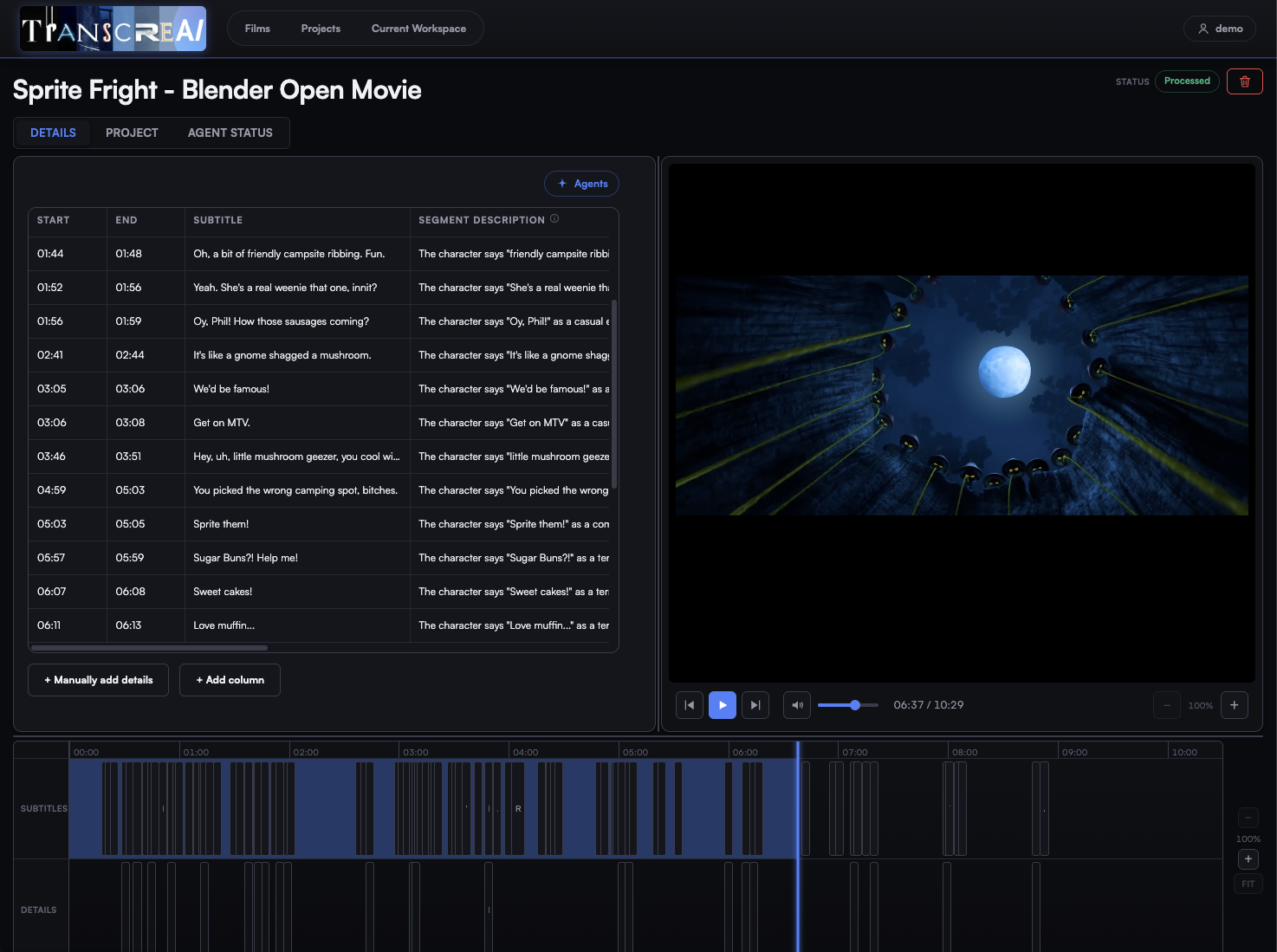
Film workspace
-
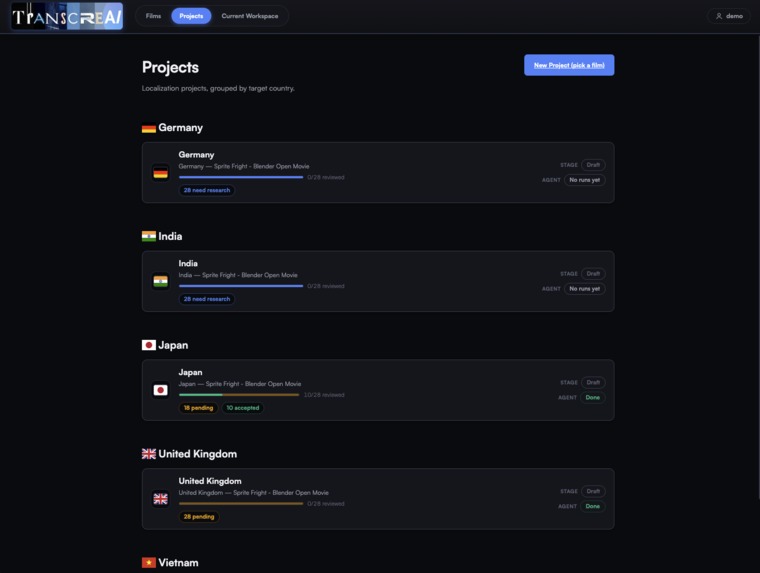
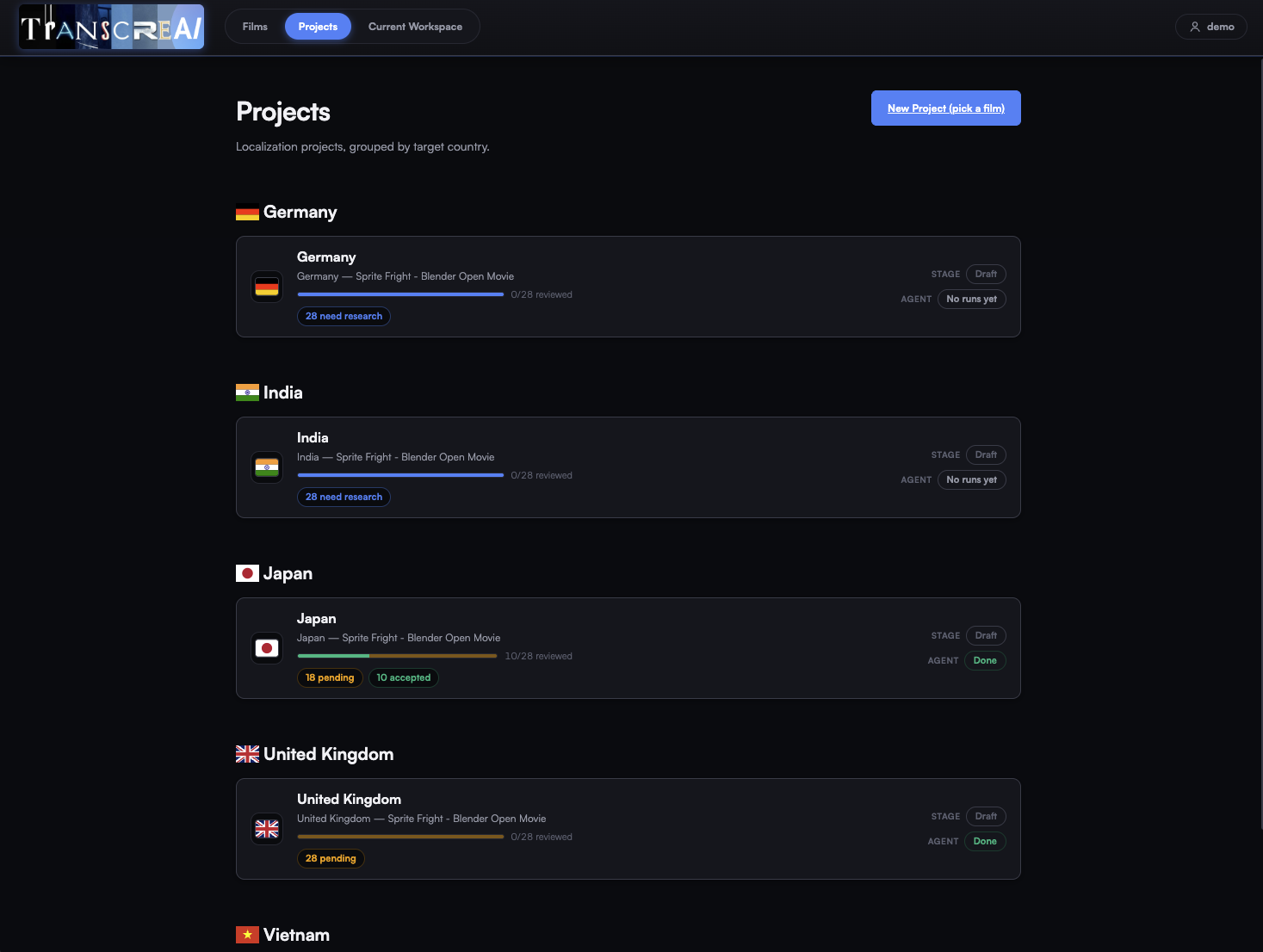
List of projects for targeted countries
-
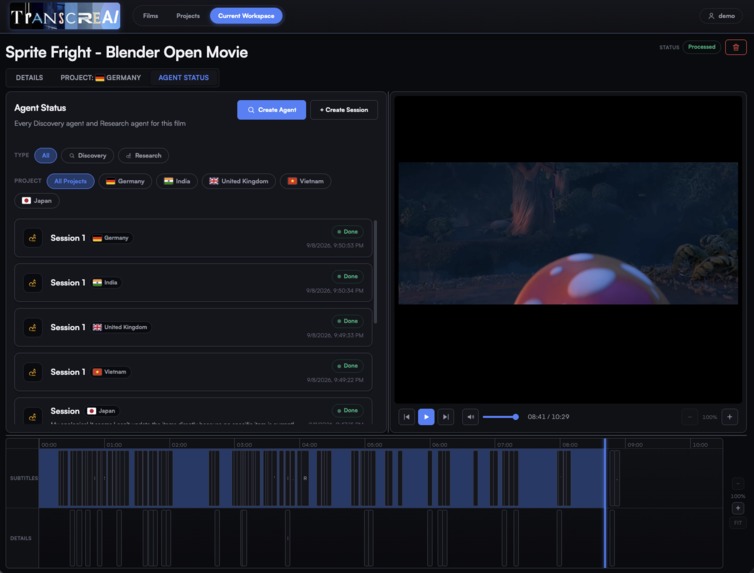
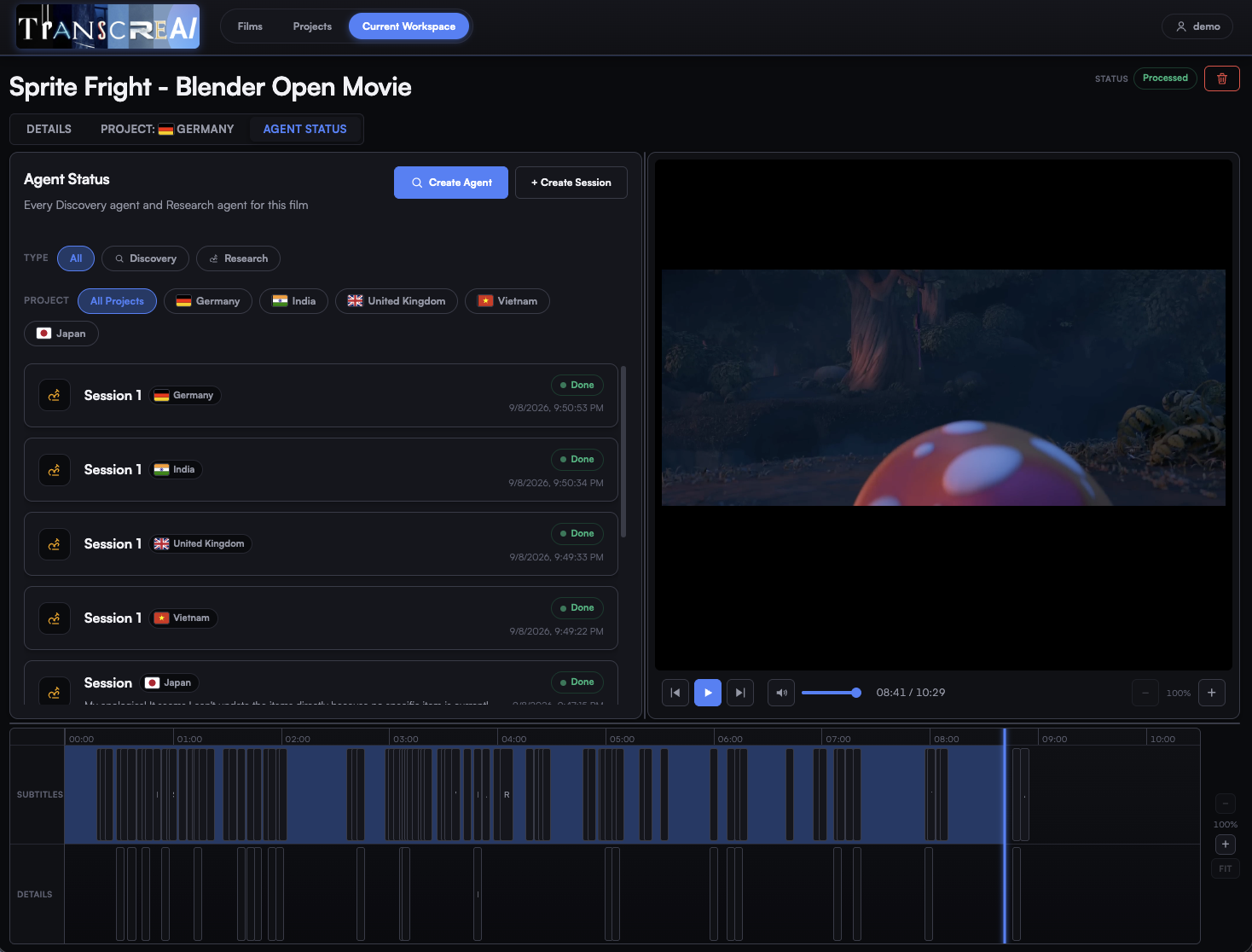
Parallel agentic workflow
Demo: https://cinema.vietrochack.com/
email: [email protected] pass: publicdemo
NOTE TO JUDGES: Please use the link in the Additional Info section available to judges only to access our demo! If that doesn't work, please use this public demo account. Thanks!
Inspiration
A script can be translated perfectly, and a scene can still die.
In Inside Out, Riley refuses a plate of broccoli, a joke that lands with American kids and falls flat in Japan, where broccoli isn't the reviled vegetable. Pixar caught it and re-animated the scene with green peppers instead, across 28 graphics and 45 shots (SlashFilm). This has a name in the industry, transcreation, and it's distinct from translation. Translation asks "can they understand this?" Transcreation asks "will they connect with it?"
The gap is widening, not closing:
- Iyuno-SDI's CEO, whose company translates 600,000+ episodes a year across 100+ languages, said on record the industry would run short of translator supply for two to three years (Rest of World).
- Streaming turned one episode a week into eight.
- Video subtitle translation alone is projected to grow from $3.8B in 2026 to over $10B by 2035 (MarkWide Research).
The person who'd catch a cultural miss is exactly the resource running out. And the misses reach real audiences: in Squid Game, "gganbu" (the word an entire episode's ending turns on) was subtitled as "we share everything," when it means closer to "there's no ownership between us" (CBR).
This isn't a translation, dubbing, or subtitle-QC tool:
- Translation and dubbing are commoditized.
- Mechanical QC checks timing and formatting but never asks what a line means.
- Compliance tools flag what will get a studio banned.
- Nothing sits between them asking the one question that decides whether a joke survives: will this line still land here? No regulator fails it, no format check trips; the scene just quietly underperforms, and nothing in the pipeline notices.
It's also not just a subtitle tool. The Pixar fix wasn't a subtitle edit; it was a re-animated prop. TranscreAI flags any detail that carries cultural risk, dialogue or not: a prop, a gesture, on-screen text, a background sign. A subtitle-only tool structurally can't catch this, because the risk was never in the words.
We're not automating the transcreator's job. We're accelerating the noticing step that today only happens on titles with the budget for a human to watch every frame.
- Expanding transcreation to a new country currently means hiring a consultant for that country; fifty countries means fifty consultants.
- TranscreAI grounds itself in live research instead of a person's in-market knowledge, so a studio can push transcreation into far more markets without hiring one-to-one with them.
- The human reviewer's time still matters most; TranscreAI just decides where to spend it.
What it does
A localization specialist submits a script, a video, and a target country. TranscreAI returns a ranked, evidenced shortlist of details worth transcreating, not just dialogue, but any prop, gesture, or visual gag a scene depends on. Each flagged item comes with:
- Why it was flagged
- Live evidence from a real-time Parallel search on whether the target market recognizes the reference
- A priority score
- A suggested replacement the specialist can accept, edit, or reject
TranscreAI never silently changes anything. It only decides which details the human sees first, and why.
It's a real workspace, not an API response:
- An NLE-style split panel with the film on one side, a timestamped details table on the other
- A scrubbable timeline tying every flagged detail to its exact moment on screen
- Every finding lands in a review queue first (accept, edit, or discard, individually or in bulk), following the same human-in-the-loop pattern real review tools use: approve and reject must be equally easy, and every verdict needs its evidence attached (AI UX Design Guide)
Every agent is also a chat partner: a specialist can ask why a detail scored the way it did, request a re-check, or drag a row into the chat as a reference. Nothing in chat bypasses the review queue unless explicitly asked.
How we built it
Two chat-based agents plus one on-demand tool, all backed by Vertex AI Gemini.
- Discovery Agent: scans the script and video for candidate details with emotional or narrative weight, including freeform findings with no dialogue at all. Deliberately country-agnostic ("does this matter?", not "will this translate?"), which avoids a circular dependency: Discovery doesn't need cultural knowledge it hasn't gathered yet. Candidates land in a review queue before becoming tracked items.
- Research Agent: does Prioritization and Proposal. Scores every candidate against a project's customizable rubrics (0 to 10 each), grounding each score in a live Parallel Search API check instead of the model's own memory, necessary since slang, brand presence, and celebrity recognition move faster than training data. Synthesizes a verdict and, where warranted, a replacement line. In chat mode, the specialist can question and override any score directly.
- Trend Agent: an on-demand, per-item tool that also calls Parallel to ground a slang or meme-style replacement with live citations.
Infrastructure:
- Cloud Run (backend) and Firebase Hosting (frontend)
- Deployed via GitHub Actions with Workload Identity Federation, so no service-account key is ever stored
- Firestore backs all data; video lives in GCS via direct-to-GCS resumable uploads
Challenges we ran into
- Circular dependency in the first design: Discovery needed cultural knowledge only Research could produce. Fixed by making Discovery purely about narrative weight, with no cultural judgment at all.
- No academic precedent: no literature validates a localization risk-ranking approach, so we designed the scoring rubric ourselves.
- Scope cut: we considered a visual, n8n-style workflow builder for the whole pipeline and cut it for the demo, since judges reward depth on one real problem over feature breadth.
Accomplishments that we're proud of
- A working end-to-end pipeline: script in, ranked and evidenced shortlist out
- A real workspace, not a script output: review queue by default, full agentic chat layer underneath
- Live cultural grounding through Parallel instead of model guesswork
- A defensible, auditable rubric, not a black-box ranking
- A genuine whitespace: no existing professional localization tool does cultural risk flagging or line prioritization
What's next
- Expand the rubric with more cultural categories and country-specific weighting
- Let specialists customize and save their own rubrics per project
- Explore the visual workflow builder we deprioritized for this demo
Built With
- cloud-storage
- express.js
- firebase-hosting
- firestore
- gemini
- google-cloud-run
- node.js
- parallel
- react
- server-sent-events
- typescript
- vertex-ai
- vite
- zustand


Log in or sign up for Devpost to join the conversation.