-
-
landing view
-
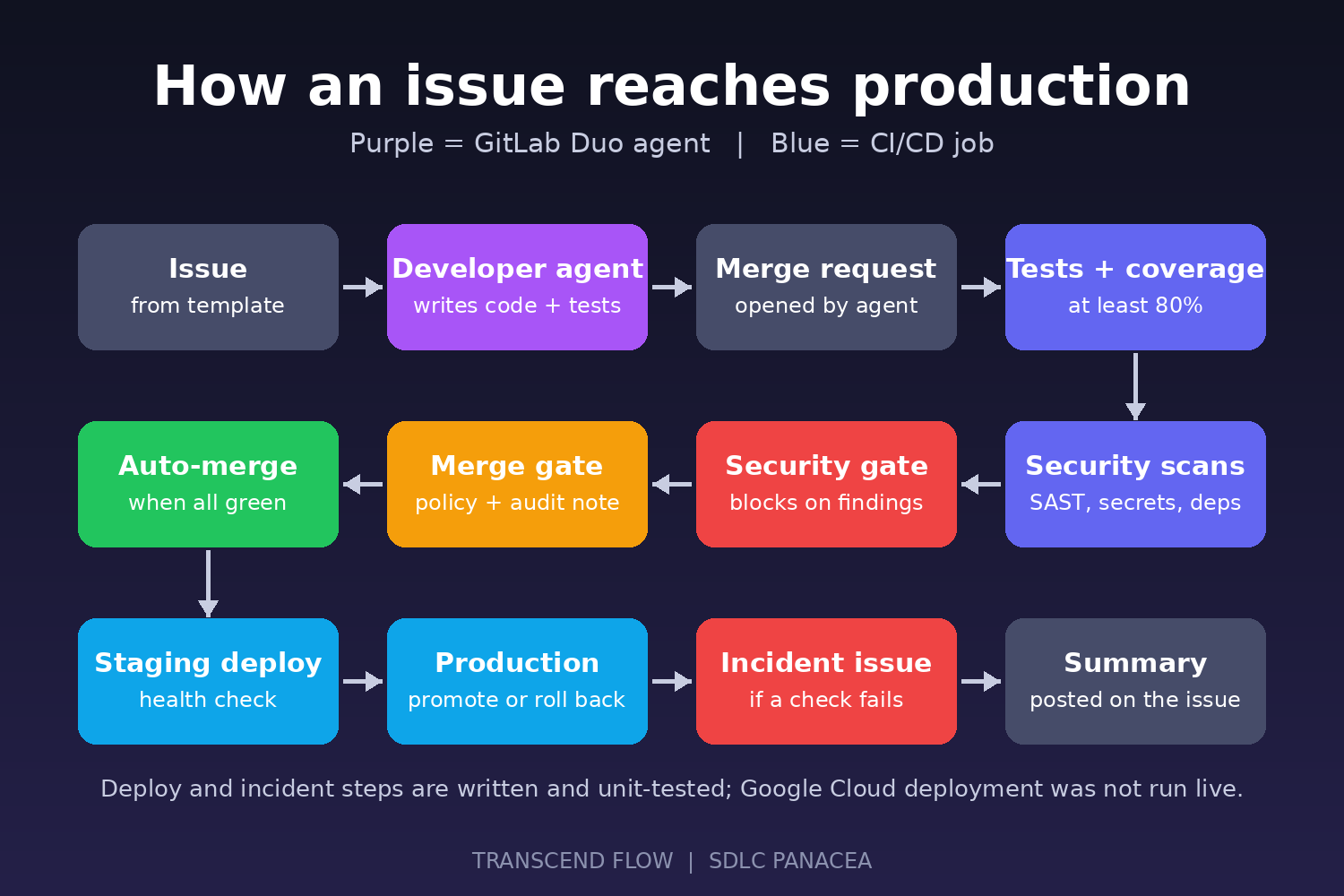
architecture
-
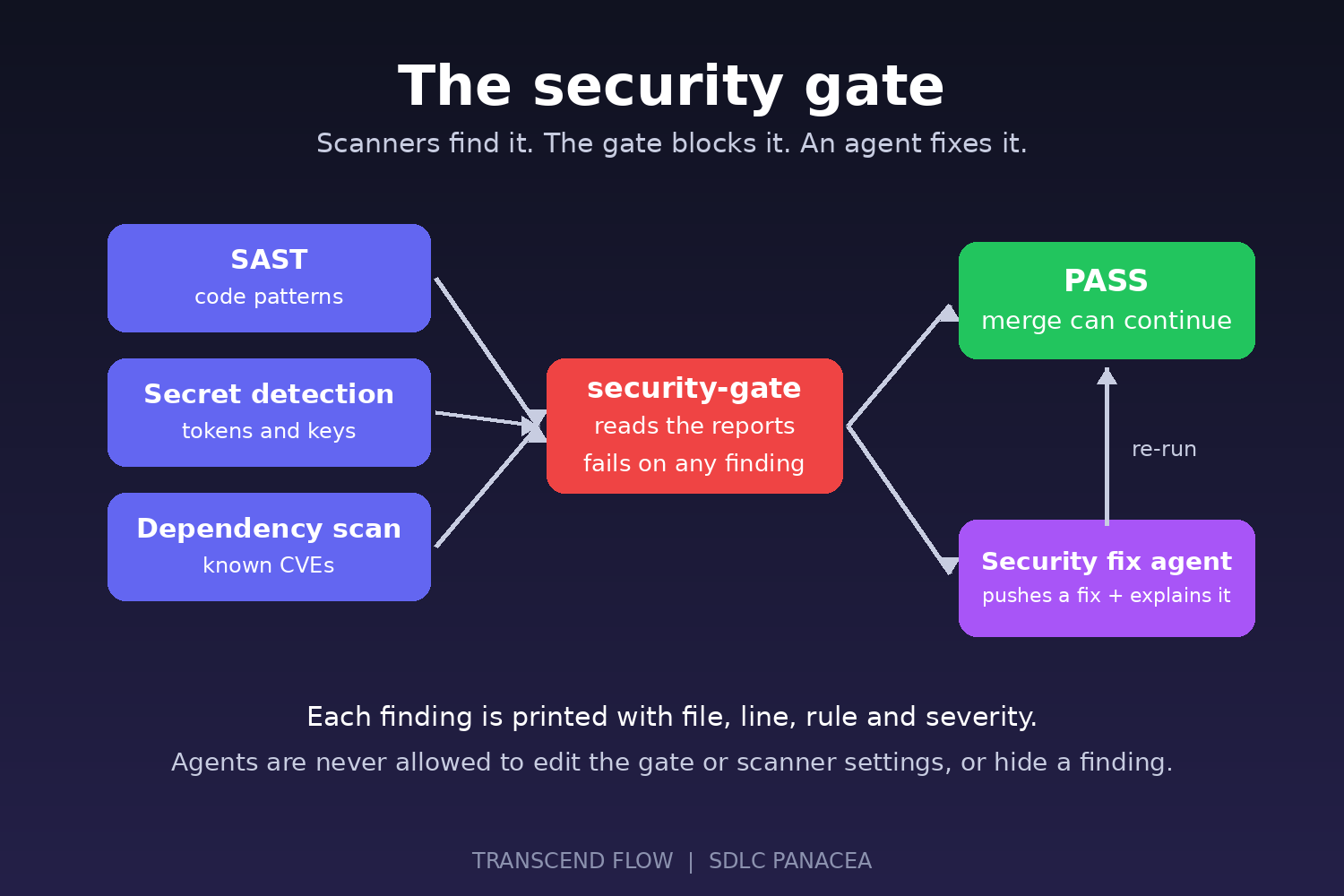
security-gate
-
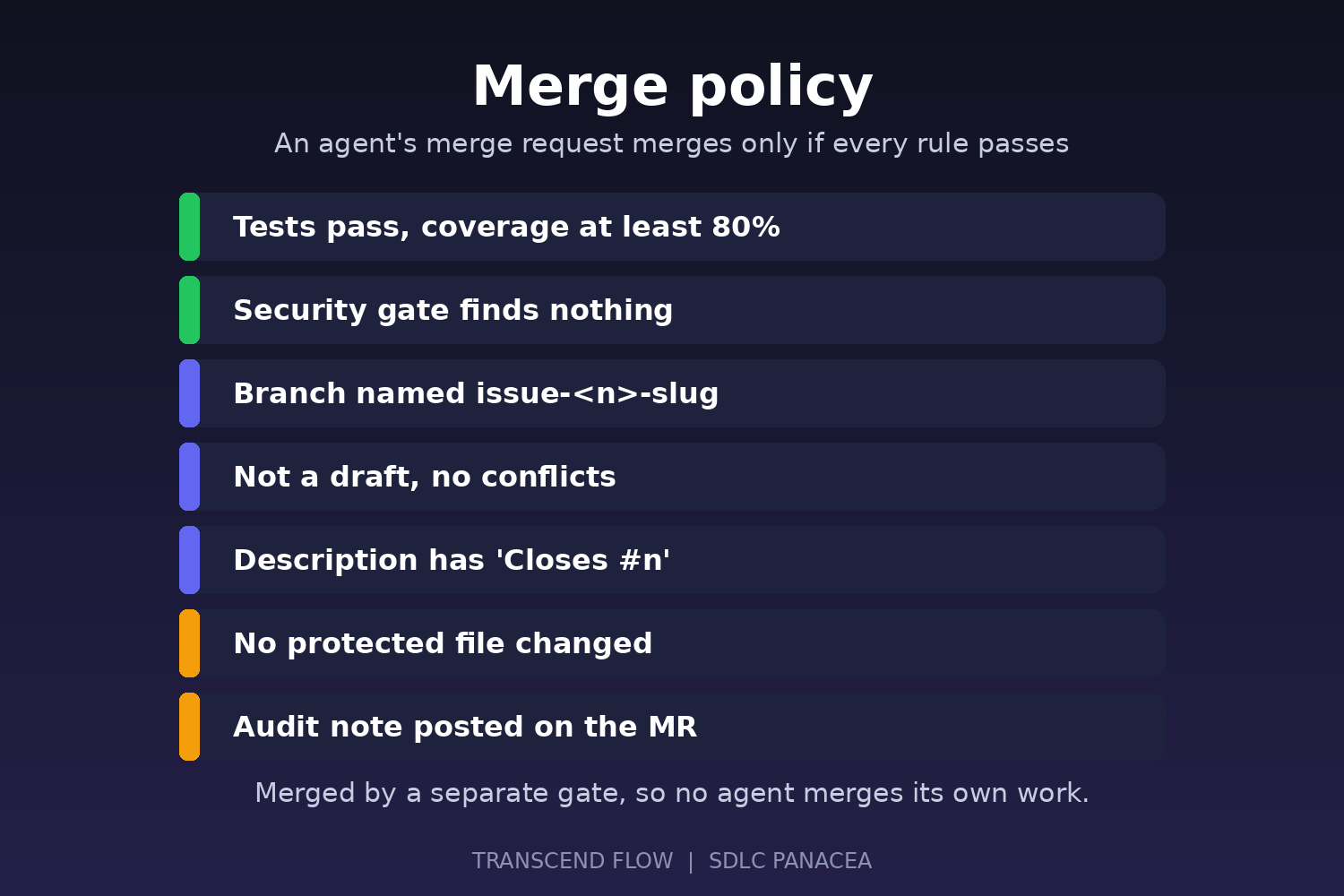
merge policy
-
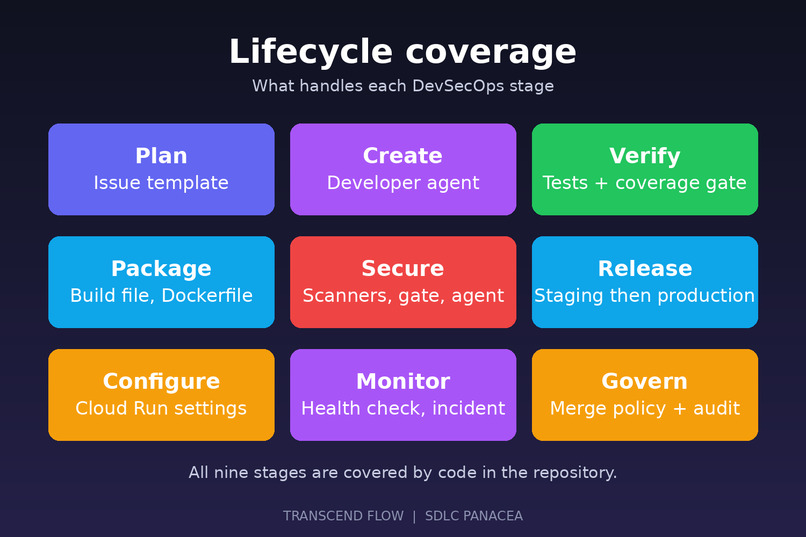
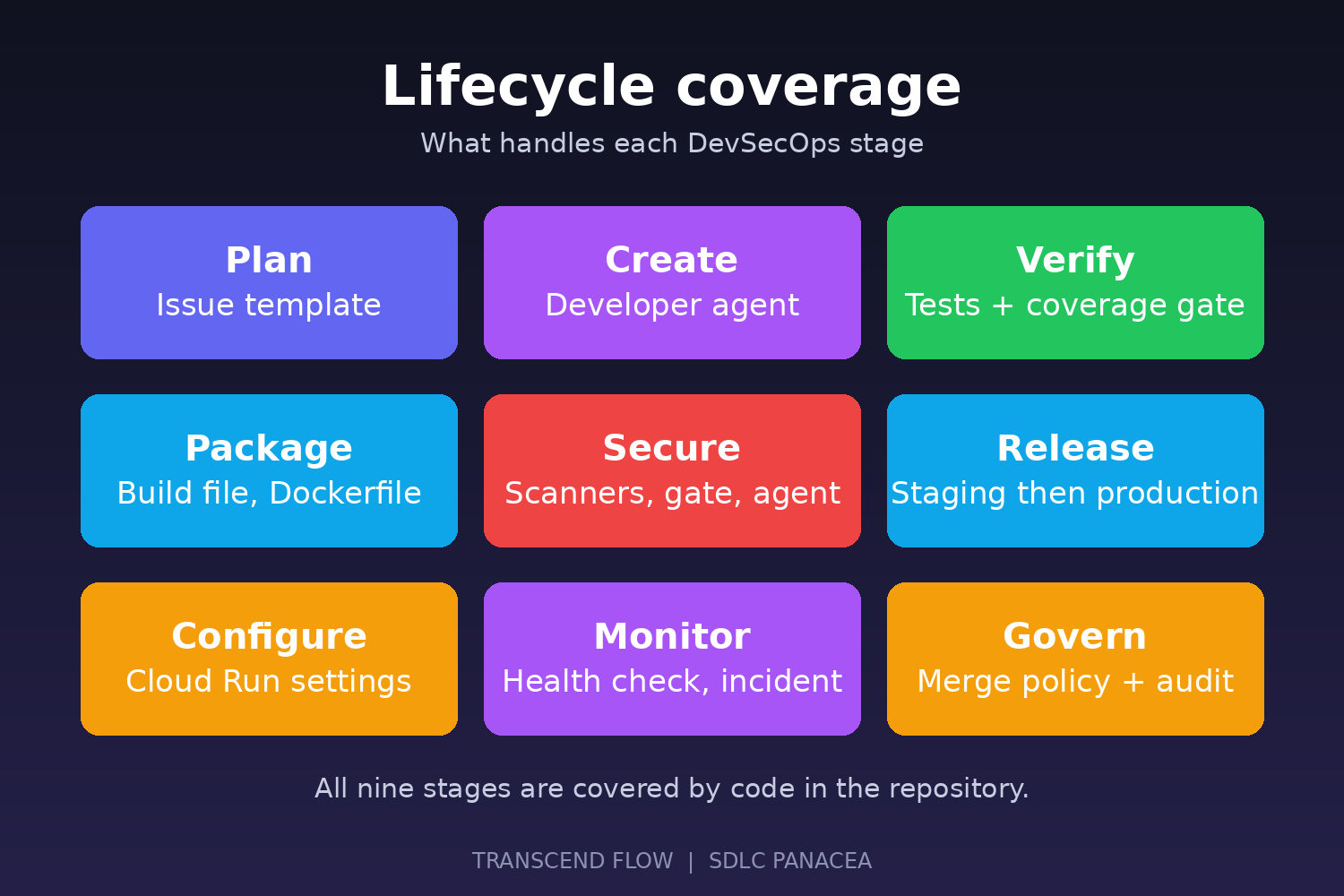
life coverage
-
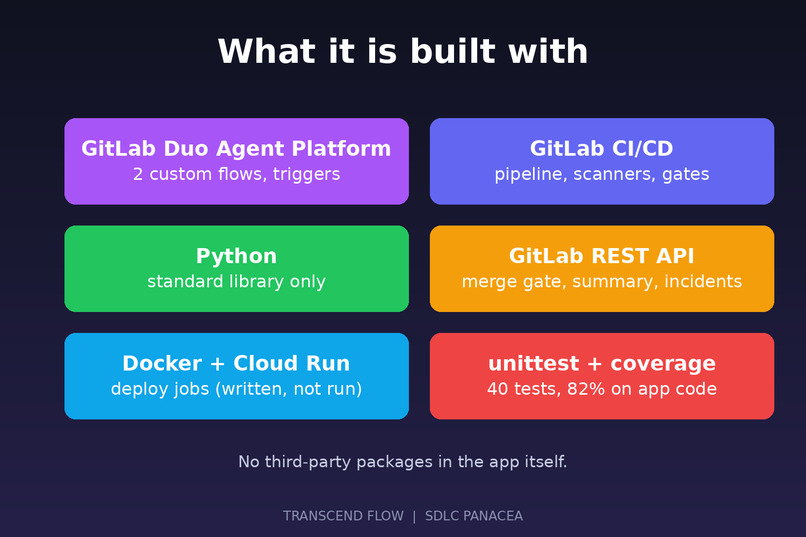
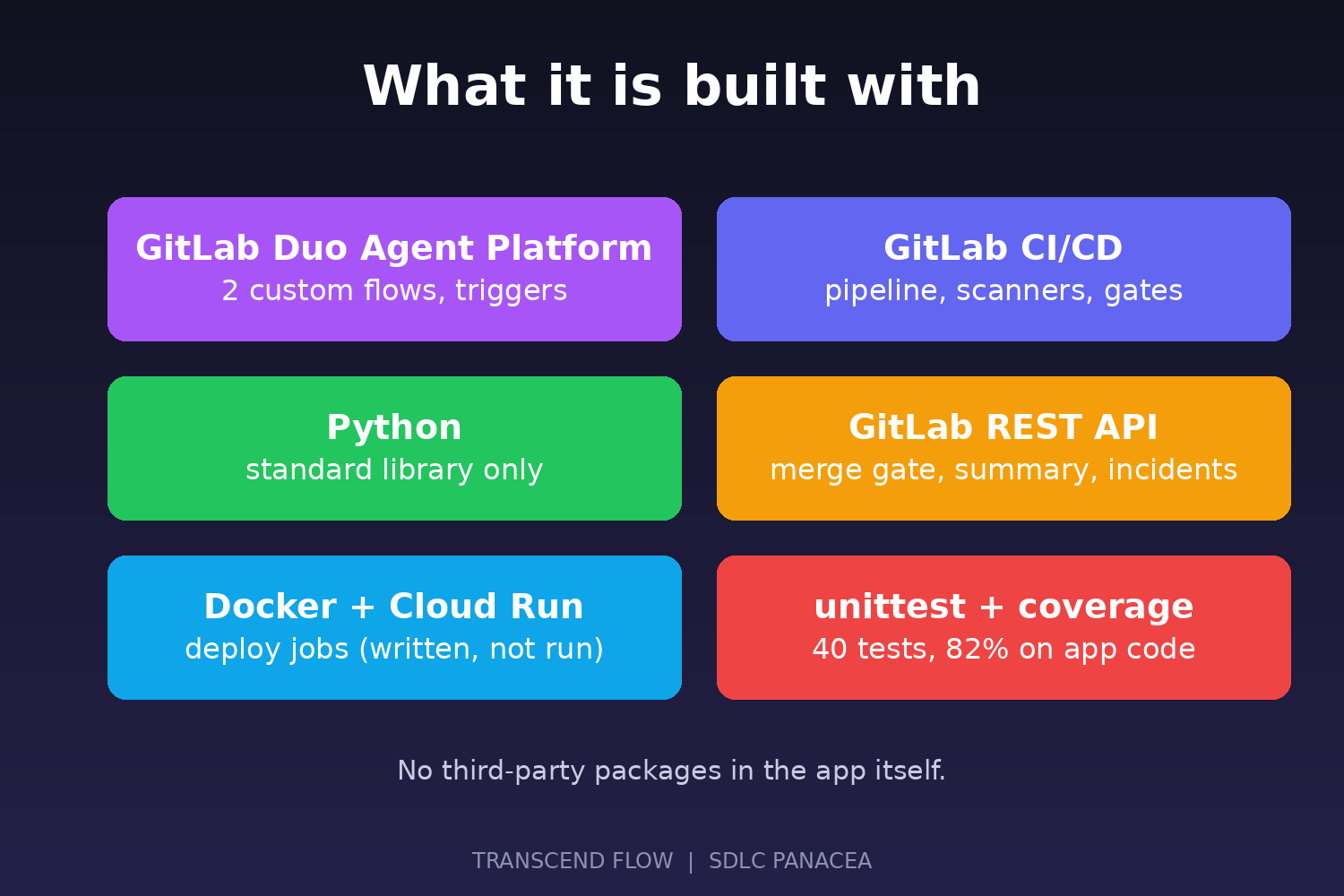
tech stack
-
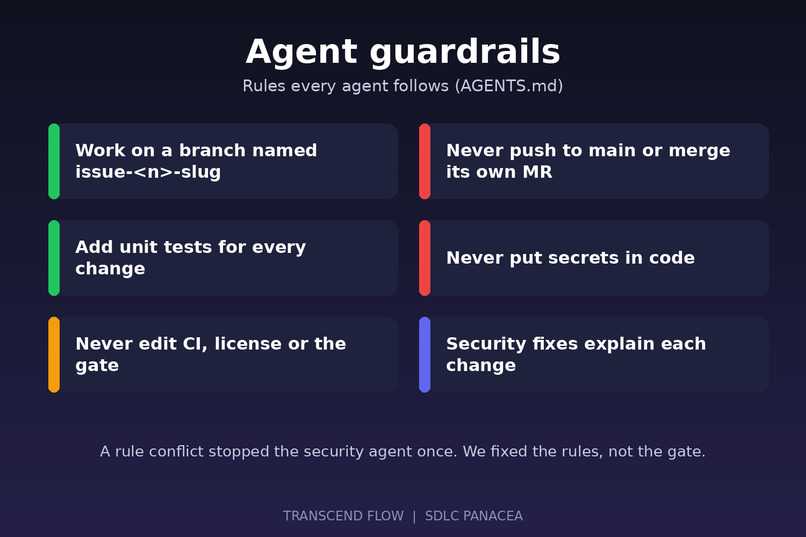
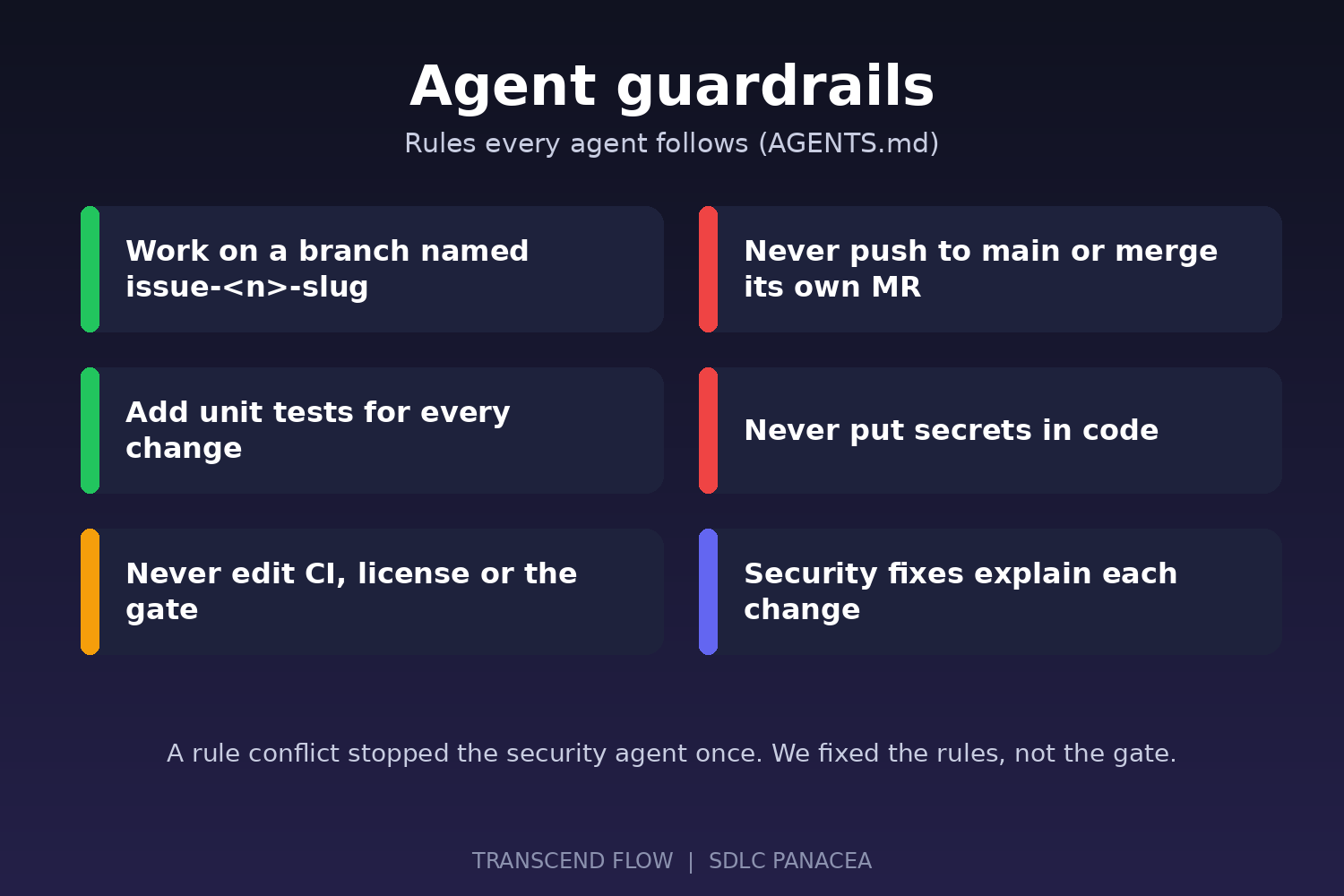
guardrail
-
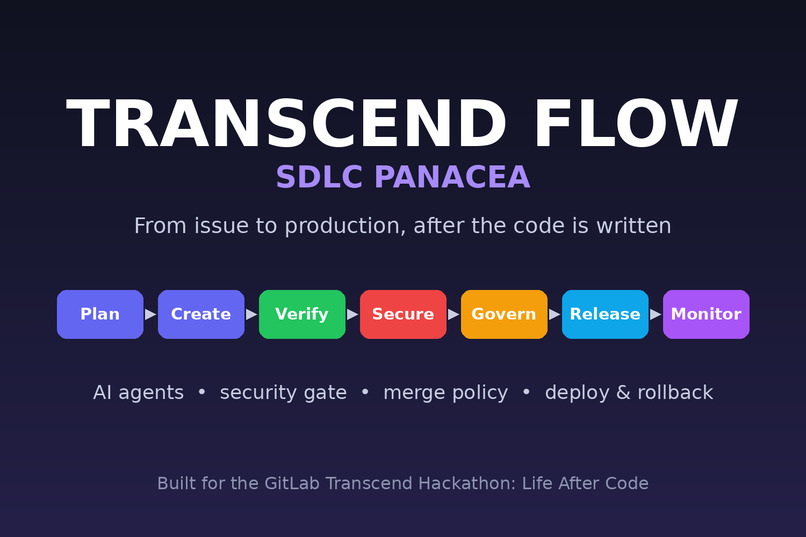
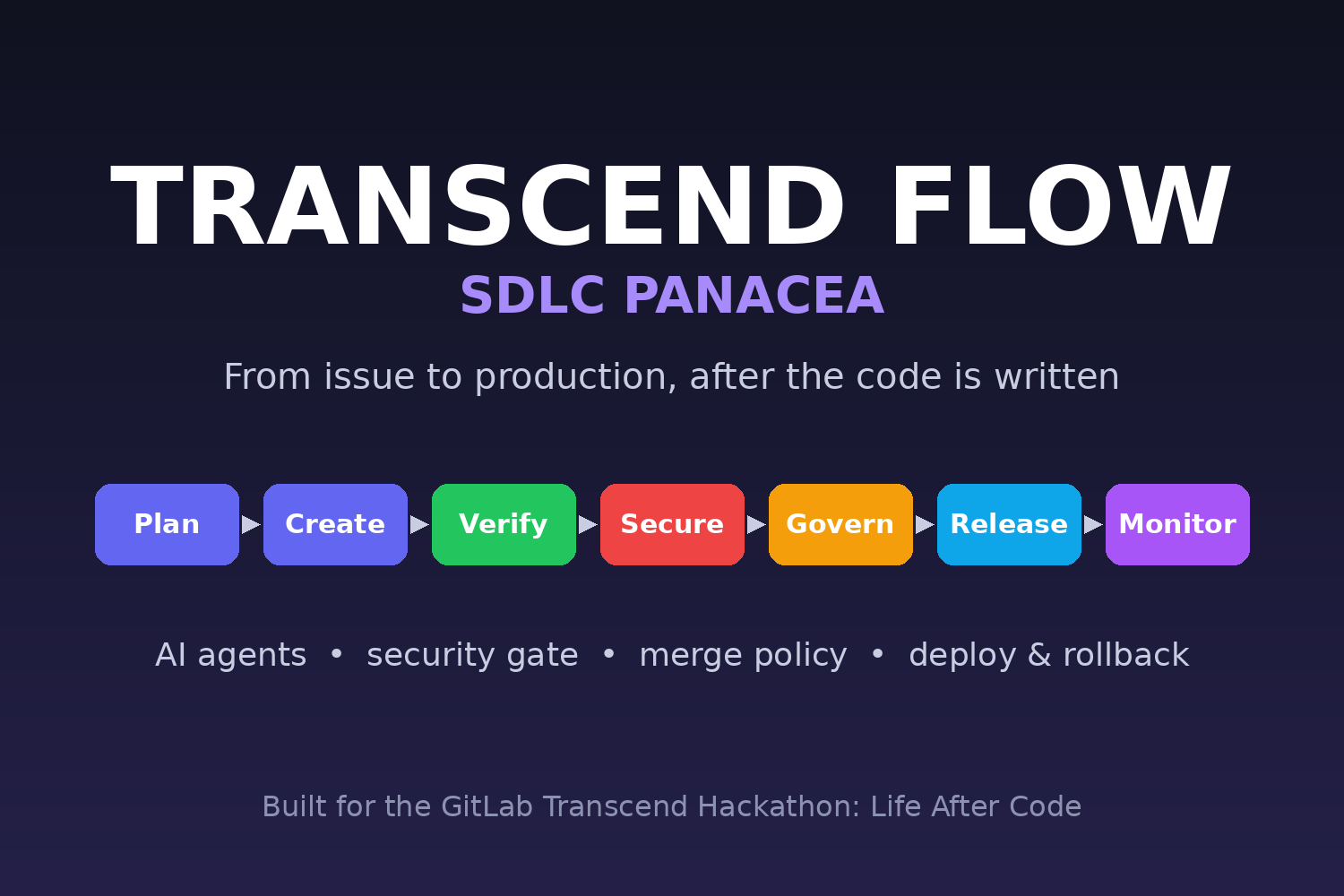
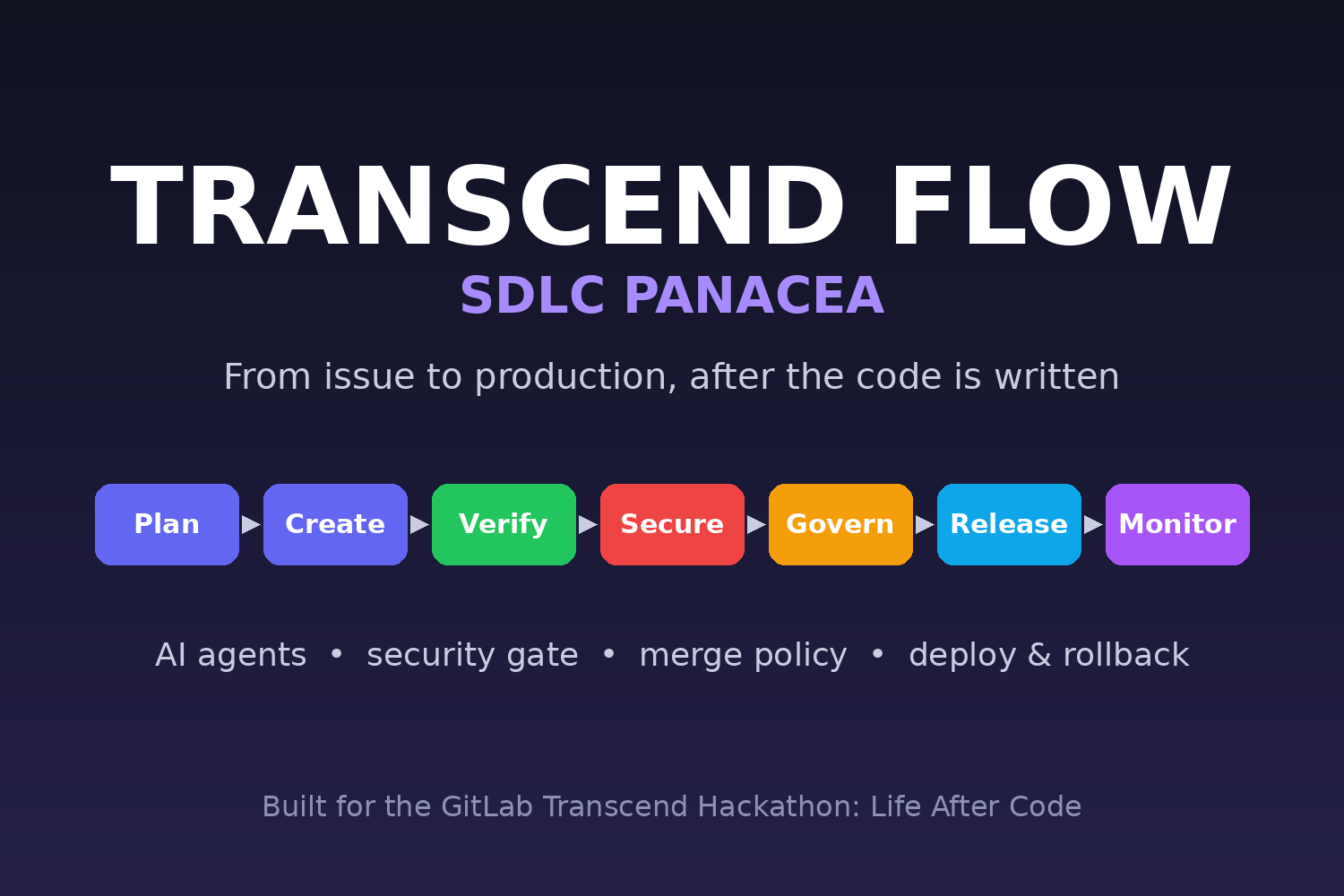
flow banner
Inspiration
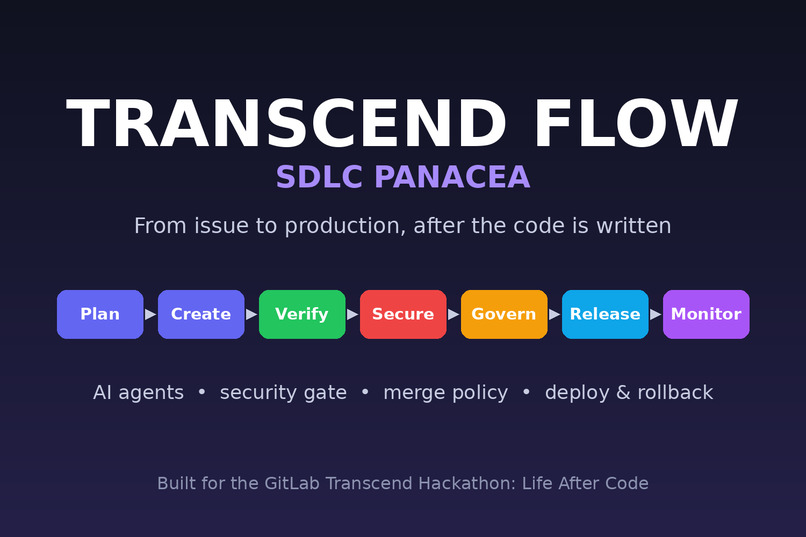
AI can now write code in seconds, but the work that comes after the code is still slow and manual: reviewing it, testing it, scanning it for security problems, merging it and releasing it. As a computer science student, I kept seeing the same pattern: code waits in a queue for people. The "Life After Code" theme described exactly that gap, so I built TRANSCEND FLOW ("SDLC PANACEA"), a set of GitLab agents and automated checks that carry work from an issue toward production.
What it does
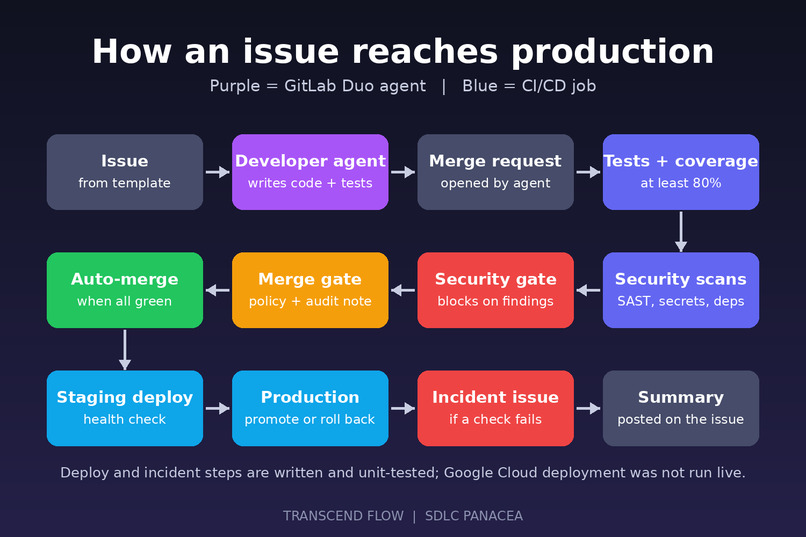
TRANSCEND FLOW takes a GitLab issue through the delivery pipeline:
- Plan and Create: an issue created from a template is picked up by a GitLab Duo developer agent, which opens a merge request with code and unit tests.
- Verify: CI runs the unit tests and requires at least 80% coverage of the app code.
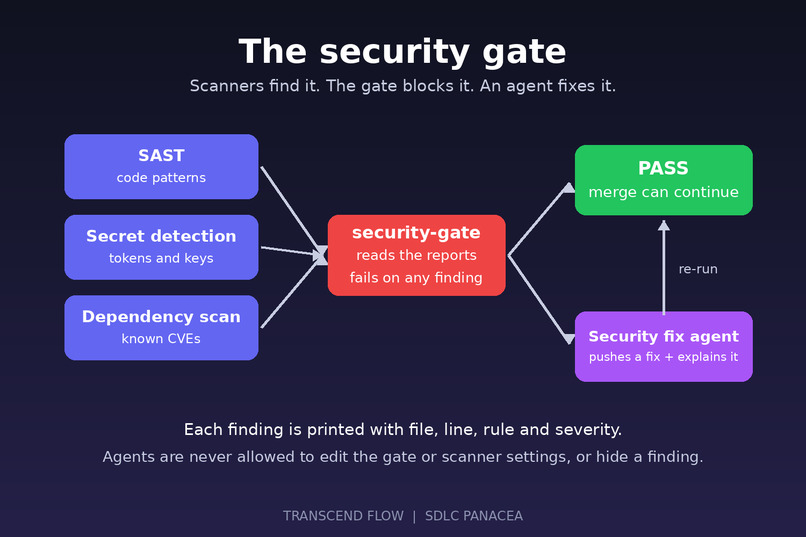
- Secure: GitLab SAST, secret detection and dependency scanning run on every change. A custom
security-gatejob reads the scanner reports, prints each finding (file, line, rule, severity) and blocks the merge if any exist. - Fix: a second Duo agent reads a failed gate, pushes a fix, and explains it in plain English.
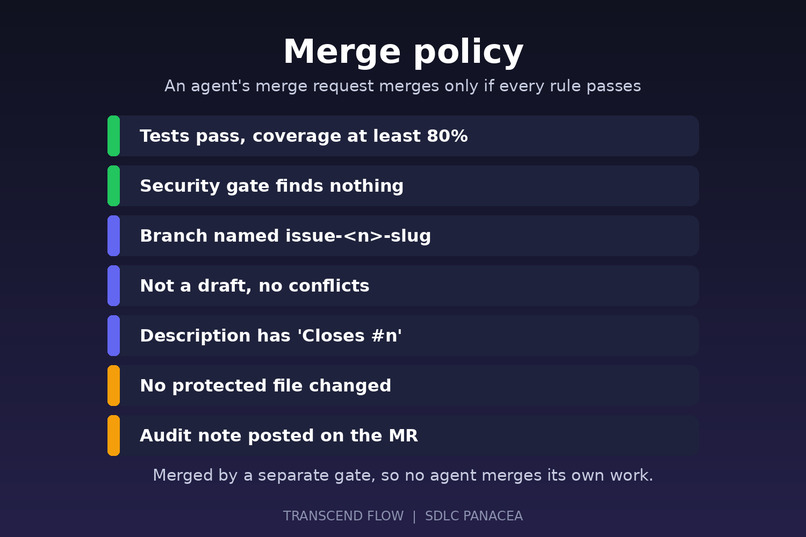
- Govern: a merge gate applies a written policy (
docs/policy.md), leaves an audit note, and enables auto-merge only for safe agent merge requests. - Release and Monitor: deploy jobs for Google Cloud Run with staging, health checks, promotion, rollback and an incident issue.
- Report: a summary comment on the original issue.
How I built it
The project is a small Python web service (standard library only) that the agents build, test and ship. I wrote the system in stages and tested each one before moving on.
- GitLab Duo Agent Platform: two custom flows,
issue-to-mrandsecurity-fix, with triggers and a sharedAGENTS.mdfile of rules for the agents. - GitLab CI/CD: the scanner templates, the
security-gatejob, the coverage gate, and build, deploy and report jobs. - Python scripts: a merge gate, a summary reporter and an incident opener that use the GitLab API, all tested with fake API responses (40 unit tests).
- Sustainability: a script that estimates pipeline carbon intensity with the Software Carbon Intensity formula, $$SCI = ((E \times I) + M) \text{ per } R$$ where $R$ is one pipeline run. It is included but I make no claim about measured savings.
What actually ran
- [EDIT] The developer agent opened a real merge request from an issue (adding
GET /api/tasks/<id>). - [EDIT] I seeded a fake token and a risky
shell=Truecall in a test branch. The scanners caught both, and the security agent pushed a fix with plain-English explanations. A secret that has entered git history keeps the gate red until it is revoked, which is correct behaviour. - The gate also caught a real finding in my own new code (Bandit B310 in
scripts/gitlab_api.py). I fixed it by replacingurllibwithhttp.client, and the pipeline turned green.
Challenges
- The trigger I assumed did not exist. GitLab has no "issue created" trigger, and triggers need a human action. I worked around it with an issue template that assigns the agent.
- My own rules blocked my own agent.
AGENTS.mdforbade edits underscripts/while the security rules told the agent to fix findings there. The agent correctly refused to act. I fixed the conflict instead of loosening the gate. - Credits ran out. Duo credits ended mid-build, so I moved the code between projects with git, wrote the remaining automation outside Duo, and kept the agents for the parts that must run on Duo.
- Time. I started late and cut scope to a working core instead of claiming everything.
What I learned
- Agents need precise, non-conflicting rules. Ambiguity makes them stop, which is the safe behaviour.
- A gate that reads machine-readable reports works on any GitLab tier and gives agents a clear, testable target.
- Honest scope beats big claims: the auto-merge, deployment and summary steps are built and unit-tested, but [EDIT: say whether you ran them live].
What's next
Run the full issue-to-production loop end to end, deploy to Google Cloud Run, measure the real SCI savings, and replace the personal token used by the merge gate with a project-scoped one.
Repository: https://gitlab.com/gitlab-ai-hackathon/transcend-october-2026/43140565/showcase

Log in or sign up for Devpost to join the conversation.