-
-
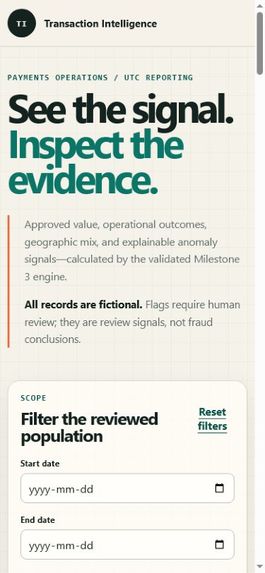
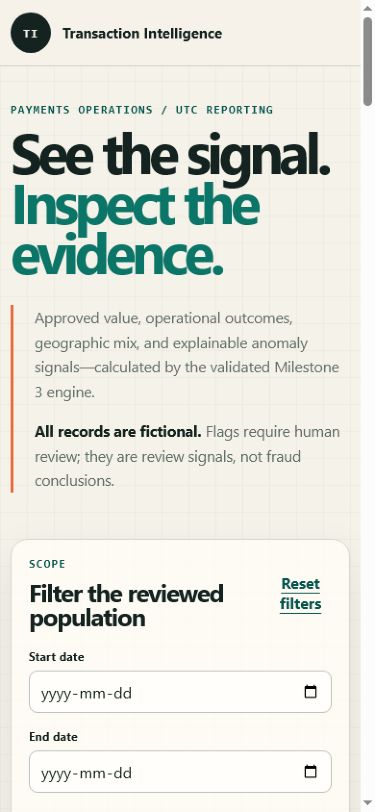
Dashboard Mobile
-
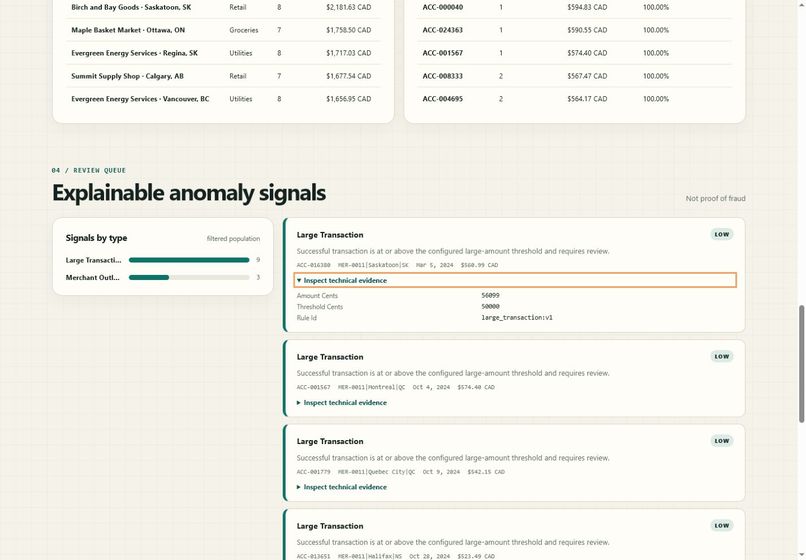
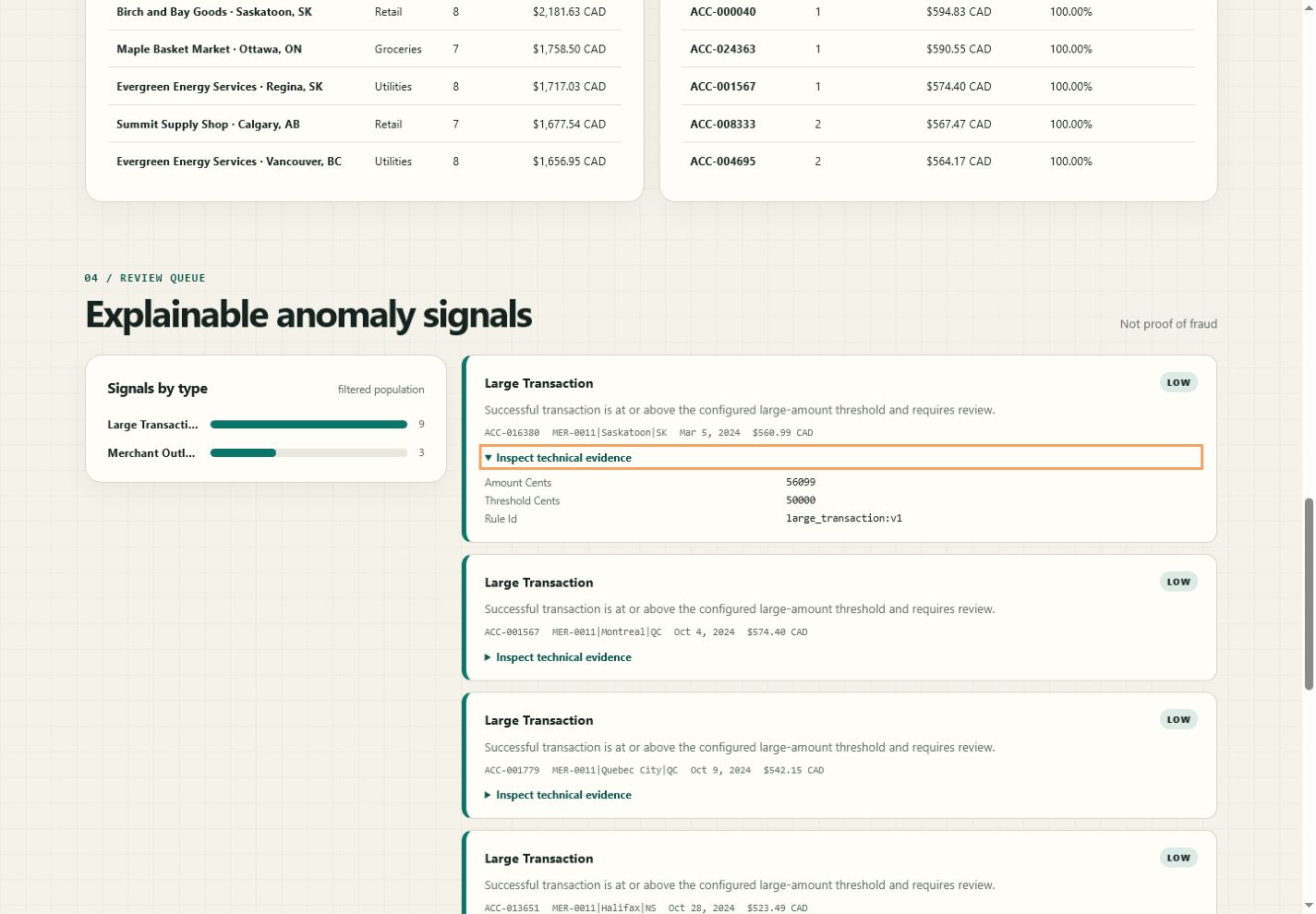
Anomoly Evidence
-
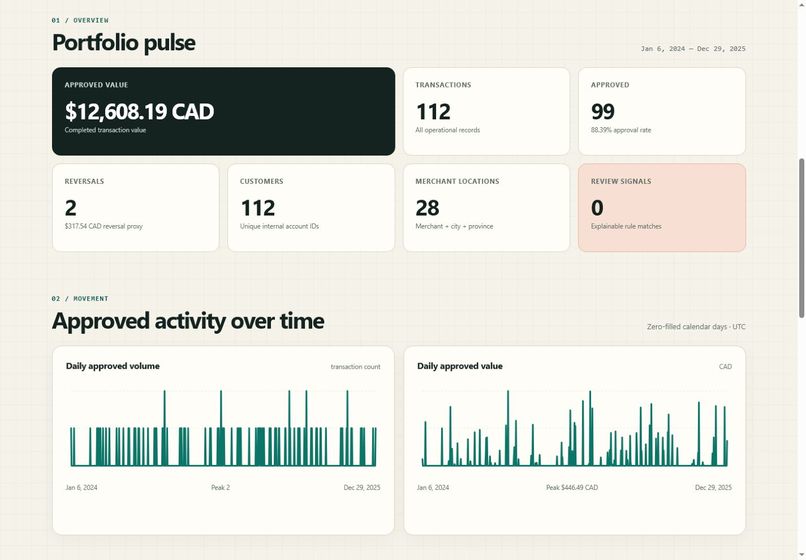
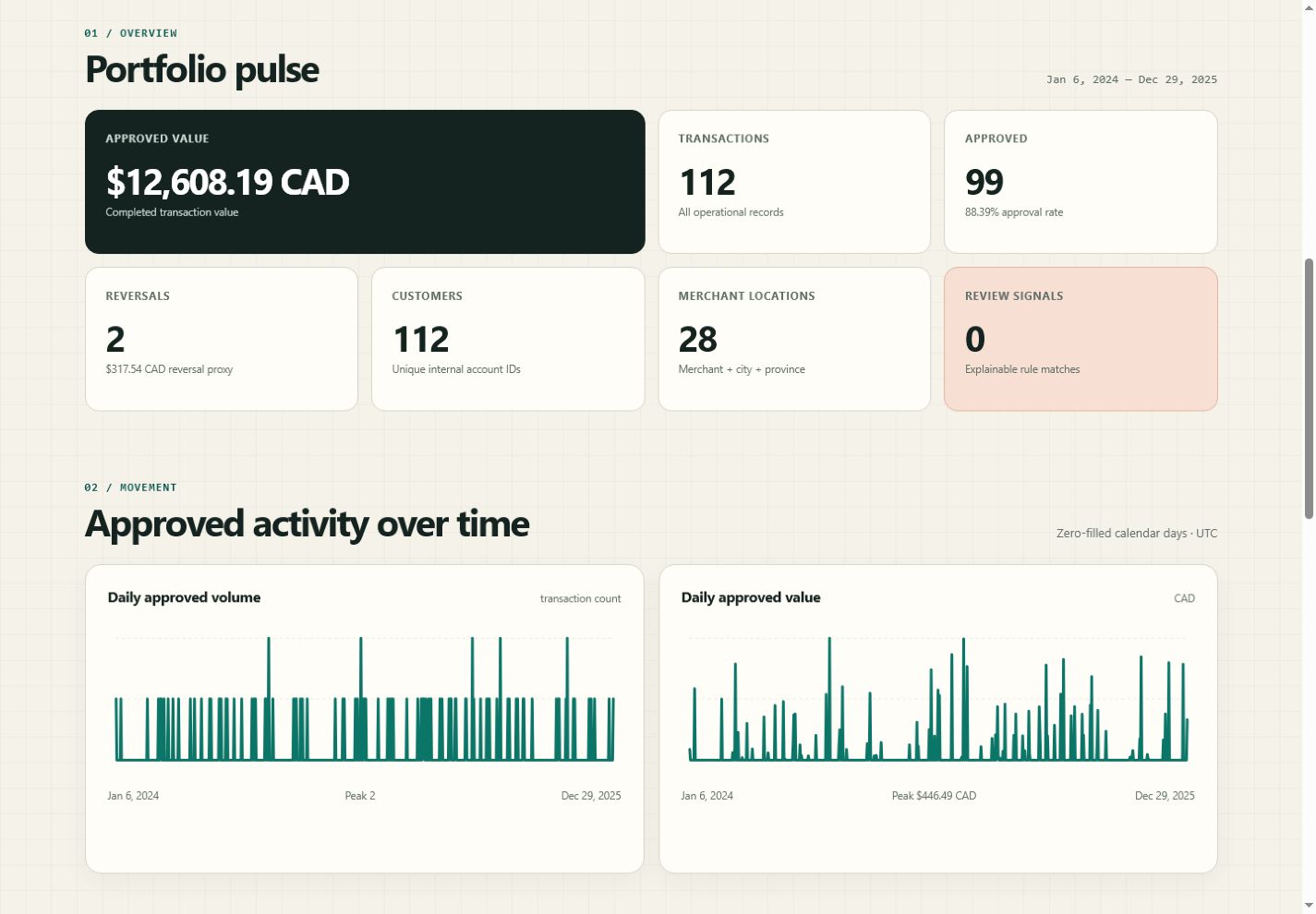
Dashboard Filtered
-
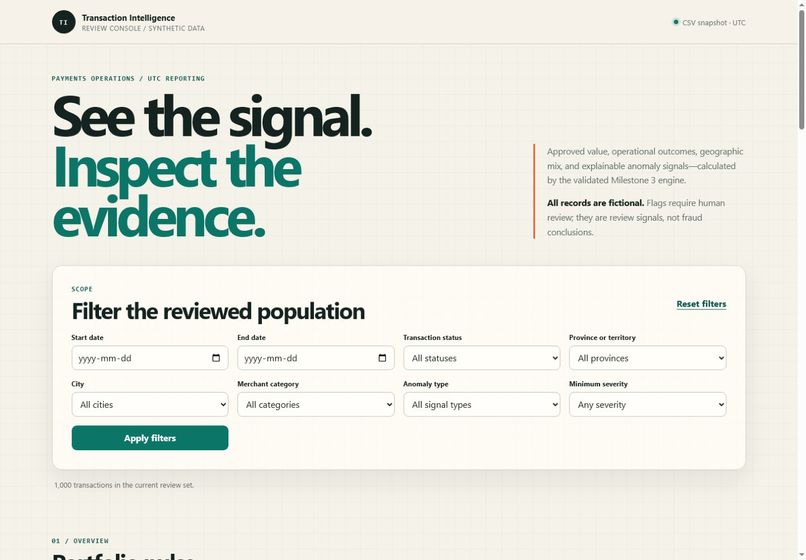
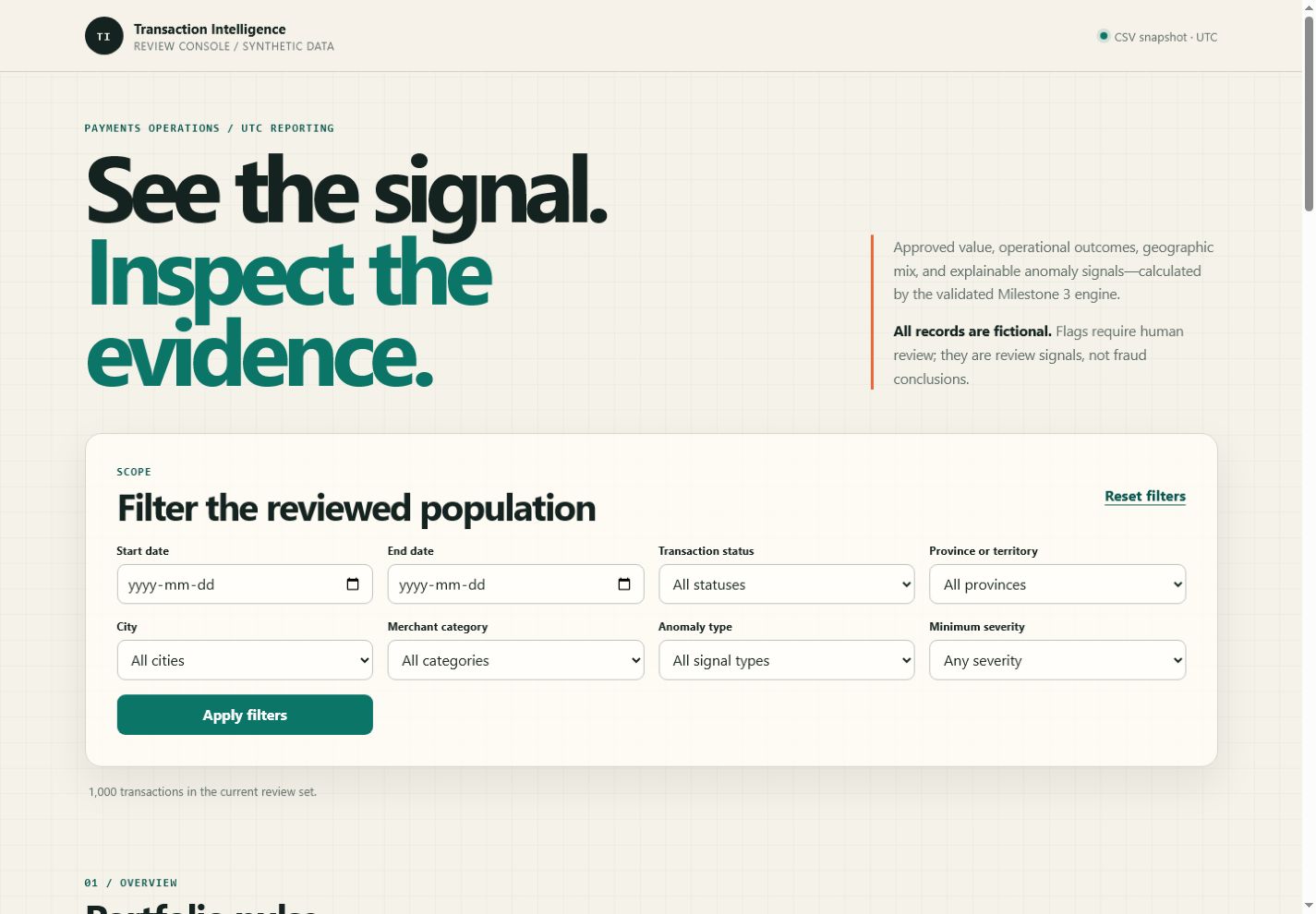
Dashboard
Inspiration
Financial systems generate an insane amount of transaction data, but having more data does not automatically mean having better information.
A business could have thousands of transactions in front of them and still miss the one pattern that actually matters: an unusual spike in activity, abnormal spending behaviour, a suspicious merchant cluster, or a sudden change hidden inside rows of otherwise normal data.
I wanted to build something that went beyond simply putting transactions into charts.
That idea became the Transaction Intelligence Platform — a system designed to take raw transaction data, analyze it, identify activity worth investigating, and explain the signals behind what it finds.
The goal was simple:
Turn raw financial data into information someone can actually act on.
What it does
The Transaction Intelligence Platform processes transaction datasets and transforms them into an interactive intelligence dashboard.
Instead of forcing someone to manually search through thousands of records, the platform surfaces important patterns and abnormal activity automatically.
It helps answer questions like:
- What transactions deserve attention?
- Where is abnormal activity occurring?
- Which merchants or patterns are driving risk?
- Why was a particular transaction flagged?
- How much transaction value is associated with unusual activity?
- What should someone investigate first?
The platform combines transaction analytics, risk detection, explainable signals, business metrics, and investigation tools into one workflow.
The focus is not just on saying "something looks unusual."
The focus is on explaining what happened, why it matters, and where to look next.
How I built it
I built the backend using Python and FastAPI, creating APIs responsible for ingesting transaction data, validating it, running analytics, and returning structured intelligence to the frontend.
I also created a synthetic transaction generator so I could produce realistic datasets and test different patterns without using private financial information.
Transactions pass through an analytics pipeline where the application calculates metrics and evaluates different behavioural and risk signals.
One thing I cared about was making the results explainable.
A system that simply gives a transaction a high risk score is not very useful if nobody understands where that score came from. The platform is designed so users can investigate the individual signals and patterns contributing to an alert rather than treating the result like a black box.
I also put significant effort into reliability. The project includes automated testing for the backend and analytics logic as well as end-to-end testing for important user workflows.
Challenges I ran into
One of the hardest parts was figuring out the difference between interesting data and useful intelligence.
It is easy to create another dashboard with dozens of graphs and numbers. It is much harder to decide which information actually helps somebody make a decision.
I repeatedly simplified the interface and analytics around that idea.
Another challenge was explainability. I wanted the platform to provide enough information for someone to understand why activity was considered unusual instead of asking them to blindly trust an algorithm.
Connecting the transaction generator, analytics engine, API layer, frontend, and testing infrastructure into one reliable workflow was also a major engineering challenge.
Accomplishments that I'm proud of
I'm most proud that the project became more than a transaction dashboard.
I built a complete pipeline that can go from:
raw transactions → analysis → abnormal activity → explanation → investigation
Some of the parts I'm especially proud of include:
- Building a transaction analytics pipeline from scratch
- Creating realistic synthetic transaction datasets
- Designing explainable risk and anomaly signals
- Building a FastAPI backend with structured APIs
- Turning analytics into business-focused insights
- Creating investigation workflows instead of only displaying charts
- Building automated backend tests
- Adding end-to-end application testing
- Designing the project so it can be reproduced without access to sensitive financial data
The most important result is that the platform can reduce thousands of transaction records into a much smaller set of signals that someone can actually understand and investigate.
What I learned
This project taught me that building an analytics product is not about displaying the largest amount of data possible.
It is about finding the smallest amount of information necessary to help someone understand what is happening.
Technically, I learned a lot about FastAPI, API architecture, data validation, analytics pipelines, testing, synthetic data generation, and connecting backend systems to an interactive frontend.
But the biggest lesson was about product design.
Good analytics tells you what happened. Great intelligence helps you understand why it happened and what deserves your attention next.
That principle ended up shaping almost every part of the Transaction Intelligence Platform.
What's next
There is a lot more I want to explore with the platform.
Future versions could include:
- Real-time transaction streaming
- Historical behavioural baselines
- More advanced anomaly detection
- Custom detection policies
- Alert prioritization
- Investigation case management
- Organization and role-based access
- Additional financial data integrations
- More advanced reporting and business intelligence
Long term, I want the Transaction Intelligence Platform to become an intelligence layer between raw financial infrastructure and the people who need to understand what is actually happening inside it.
Built With
- css3
- fastapi
- html5
- javascript
- playwright
- pydantic
- pytest
- python
- restapi

Log in or sign up for Devpost to join the conversation.