-
-
-
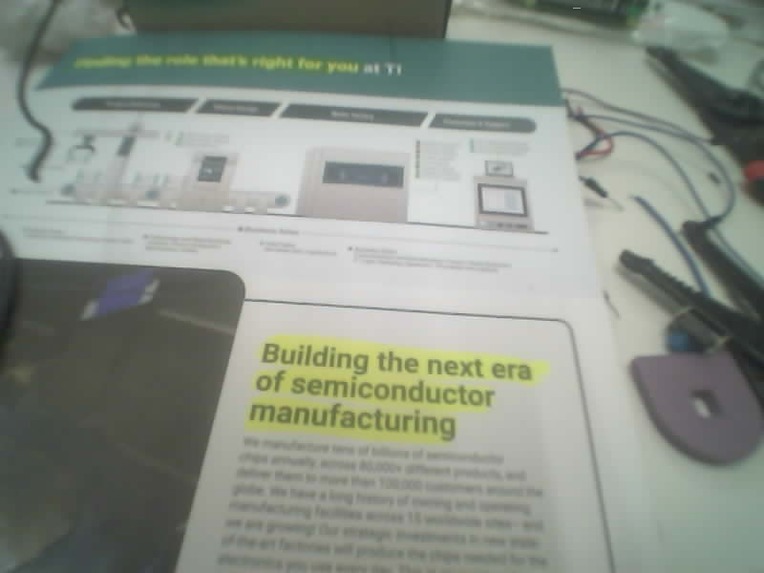
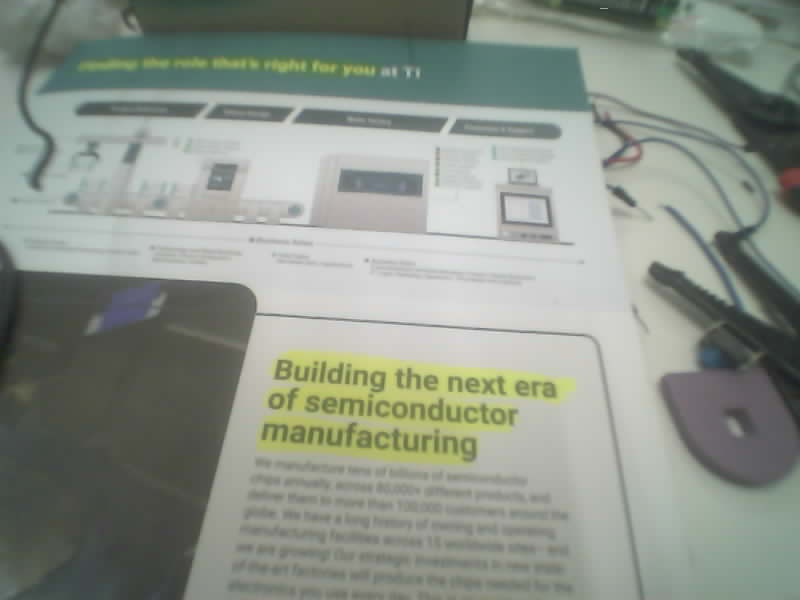
Image Captured from ESP-32 S3 SENSE CAM
-
-
-
-
Inspiration
Our inspiration was to address the challenges faced by ESL (English as a Second Language) learners. Many existing tools rely heavily on smartphones, which can be distracting and inaccessible, while also separating pronunciation from meaning. We wanted to create a more seamless, intuitive way for users to learn and understand new words in real time.
What it does
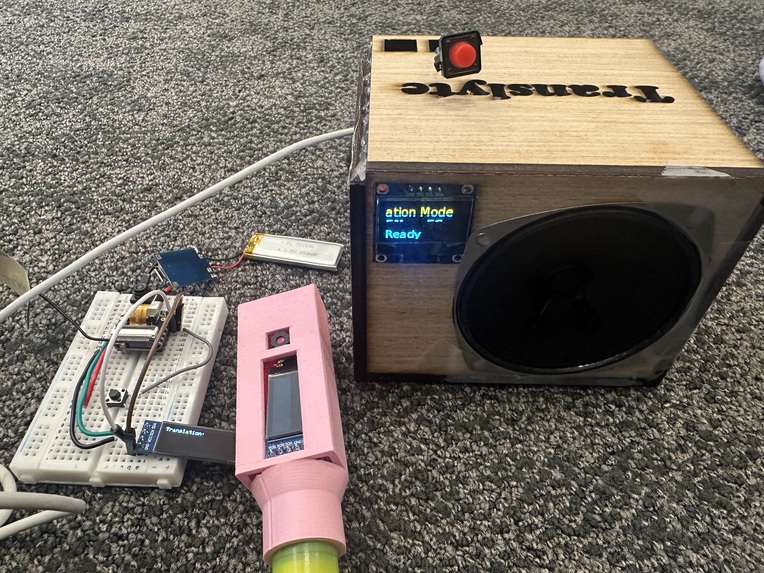
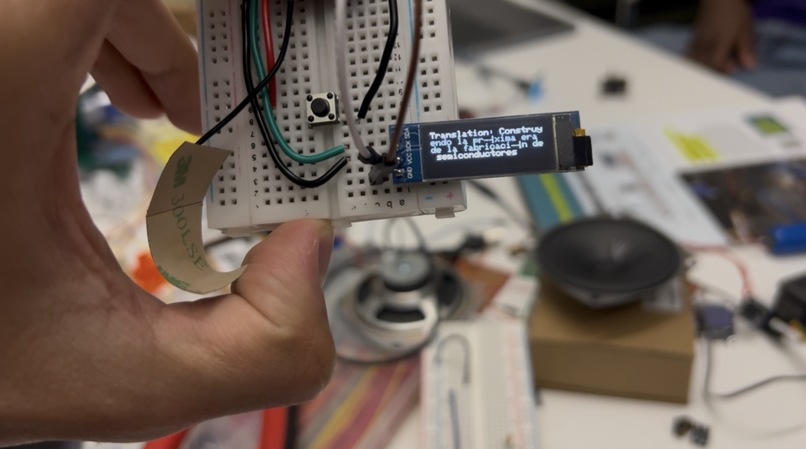
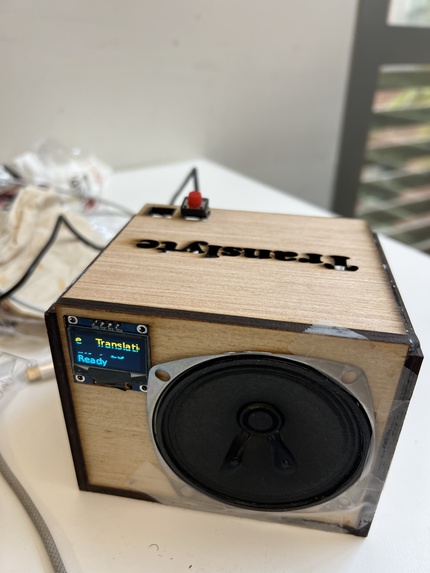
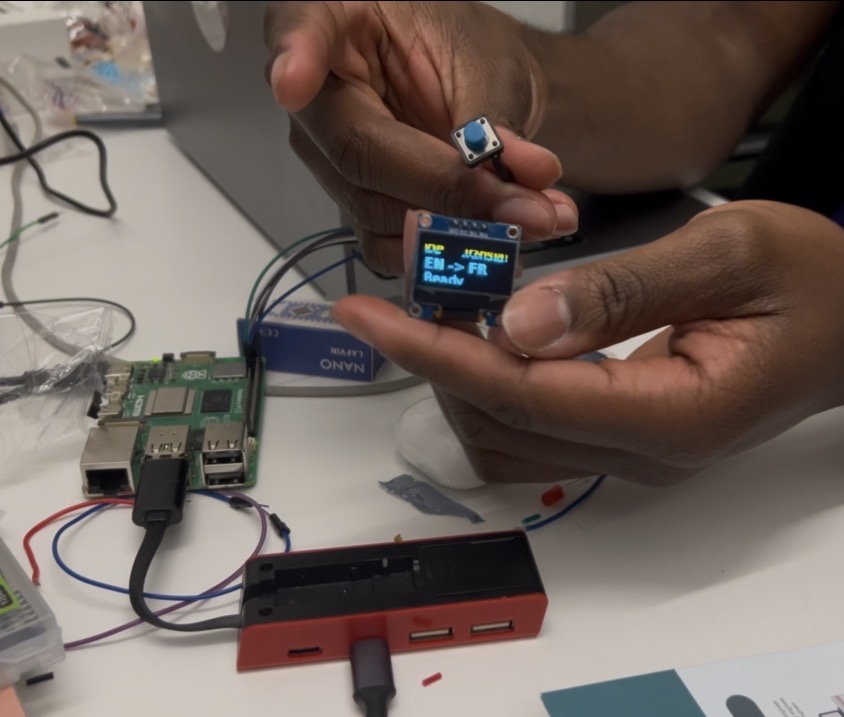
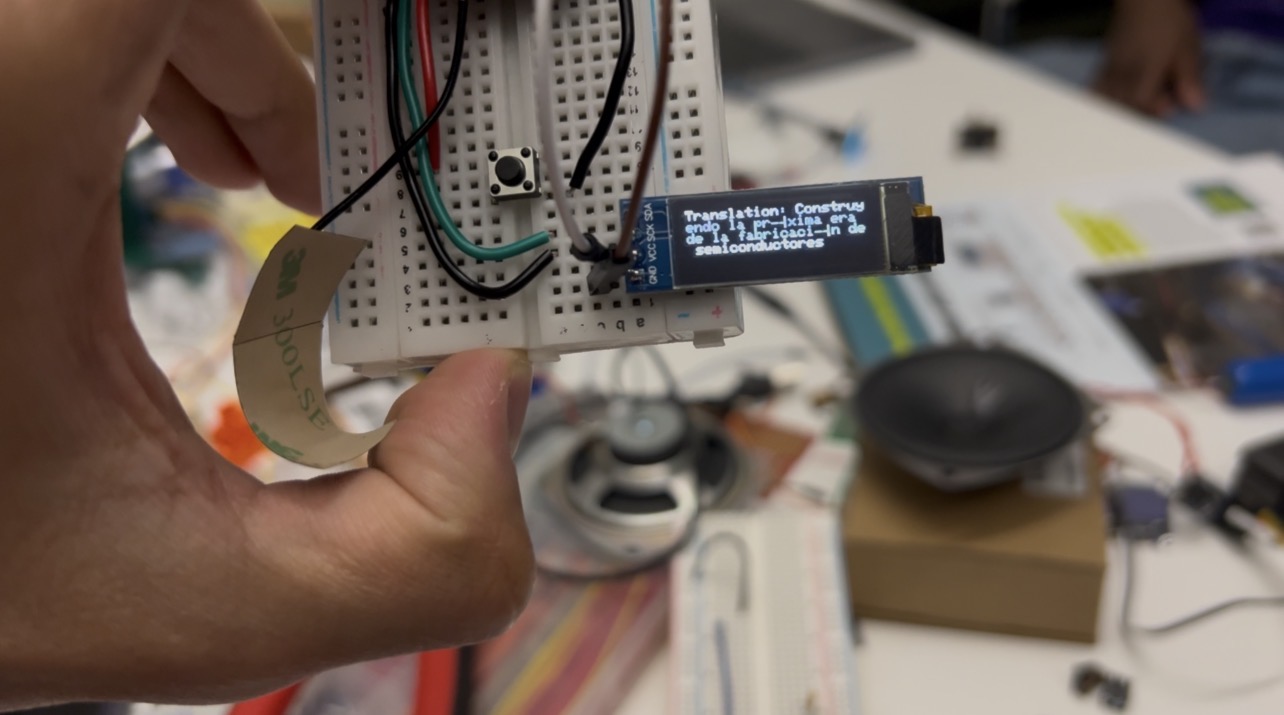
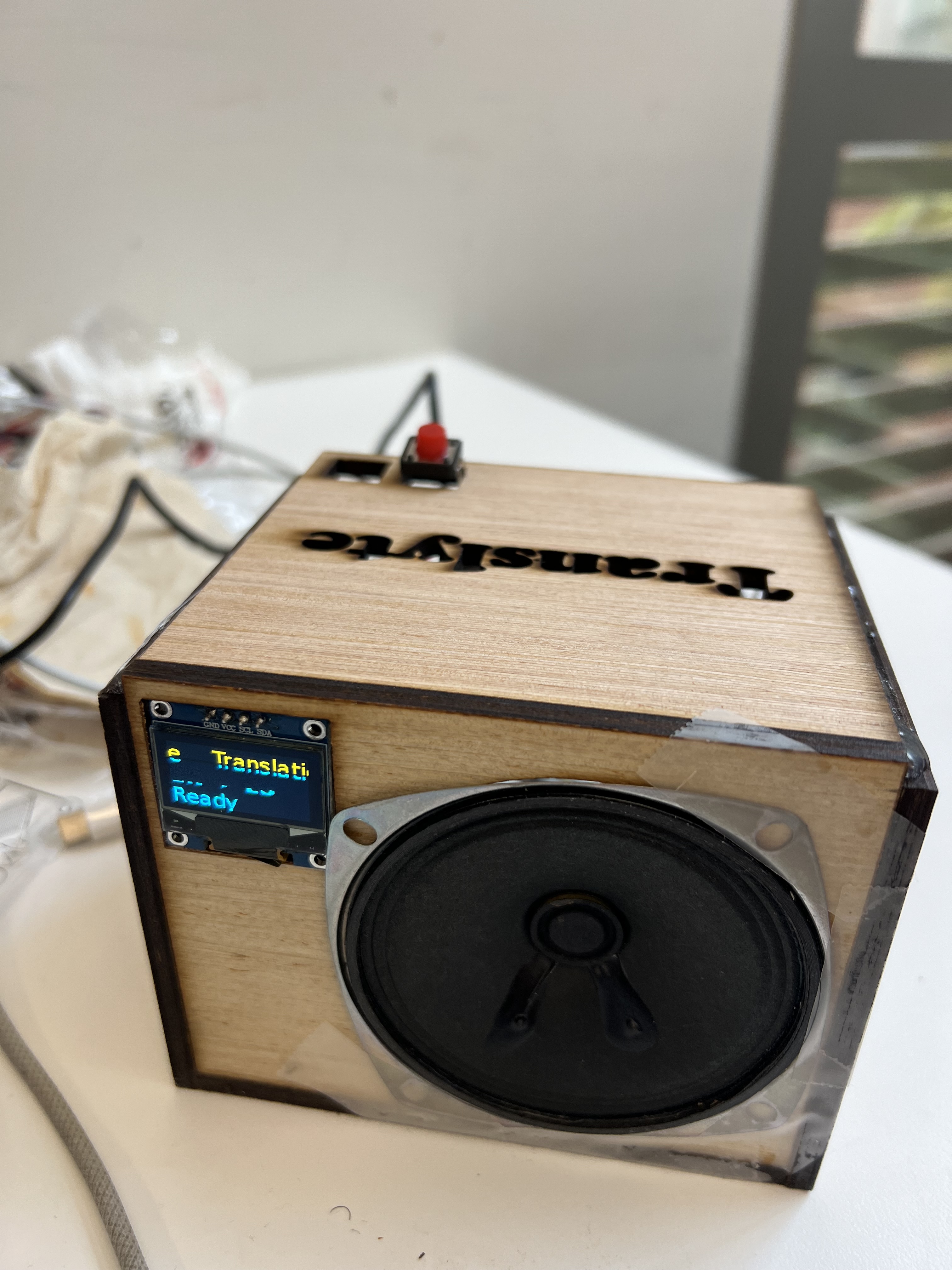
Trans-Lyte is a portable, real-time language learning highlighter that allows users to scan printed text, instantly translate it, and hear correct pronunciation. By simply highlighting a word and pressing a button, users can view the translated meaning on a display while hearing the spoken word through a speaker—without needing a phone or external app.
How we built it
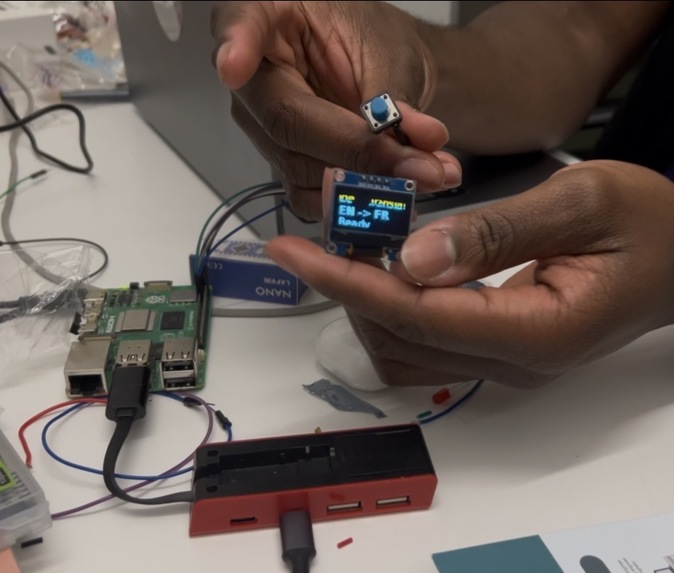
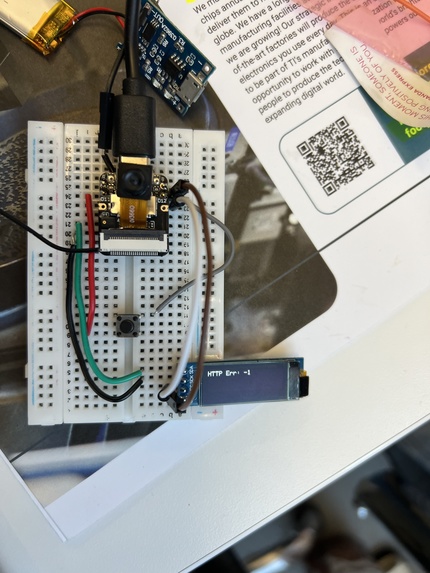
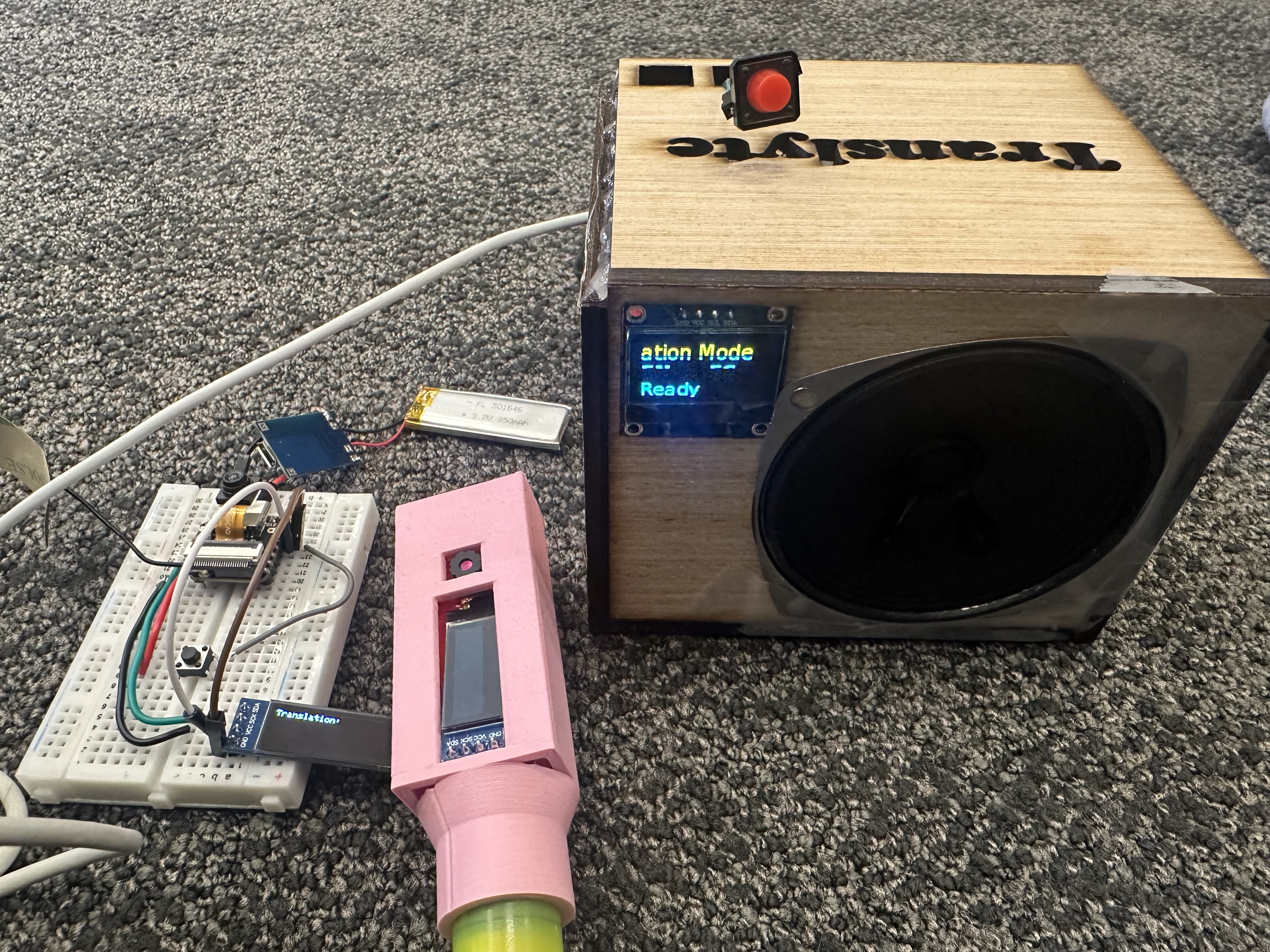
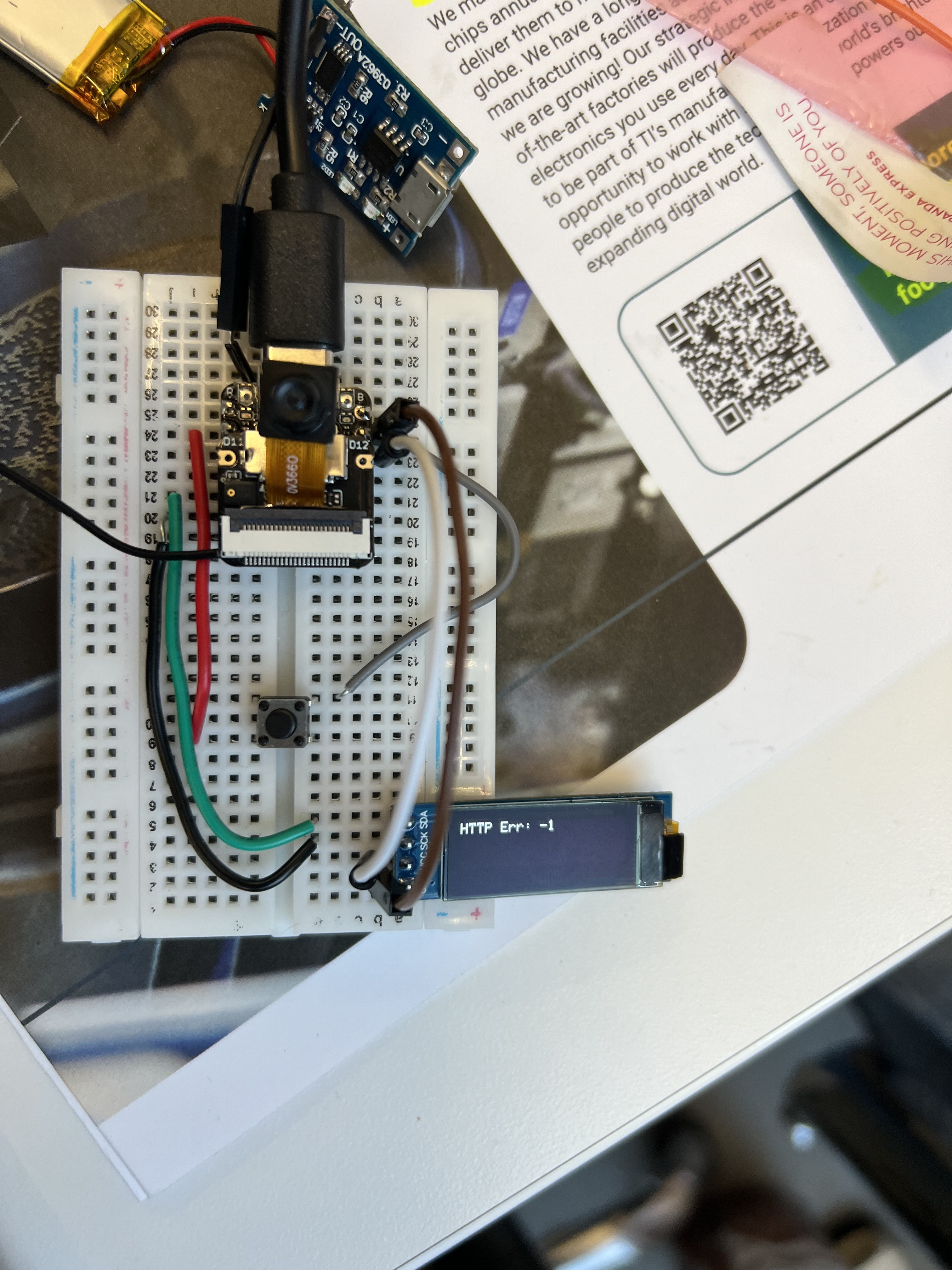
We built Trans-Lyte using a combination of hardware and software systems. The device uses a camera module to capture text, which is processed through OCR (optical character recognition) to extract words. A translation model then converts the text into the target language, while an audio module outputs pronunciation through a speaker. The system integrates an ESP32 and Raspberry Pi for communication, dual OLED displays for visual feedback, and a battery-powered design for portability.
Challenges we ran into
One of our main challenges was ensuring reliable communication between the ESP32 and Raspberry Pi, especially over wireless connections. We also faced issues with OCR accuracy due to imperfect image capture, as well as hardware constraints when trying to maintain a compact form factor. Additionally, integrating multiple components required various adapters and careful system coordination.
Accomplishments that we're proud of
We’re proud of successfully building a fully functional, portable system that integrates real-time OCR, translation, and audio output into a single device. Our solution eliminates the need for phones and provides a distraction-free learning experience, while demonstrating strong hardware-software integration and system design.
What we learned
Through this project, we gained experience in system integration, embedded programming, and hardware communication. We learned how to work with OCR and translation pipelines, troubleshoot wireless communication issues, and design within real-world constraints like size, power, and usability.
What’s next for Trans-Lyte
Next, we plan to improve OCR accuracy at the sentence level, add phonetic spelling to help users with pronunciation, and develop a fully offline system for both translation and speech. We also aim to enable direct device-to-device communication to eliminate the need for external network connections.
Built With
- 3dprinting
- arduino
- c++
- i2c
- image-processing
- laser-cutting
- raspberry-pi


Log in or sign up for Devpost to join the conversation.