-
-
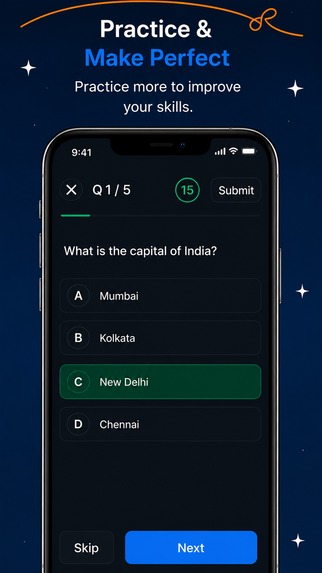
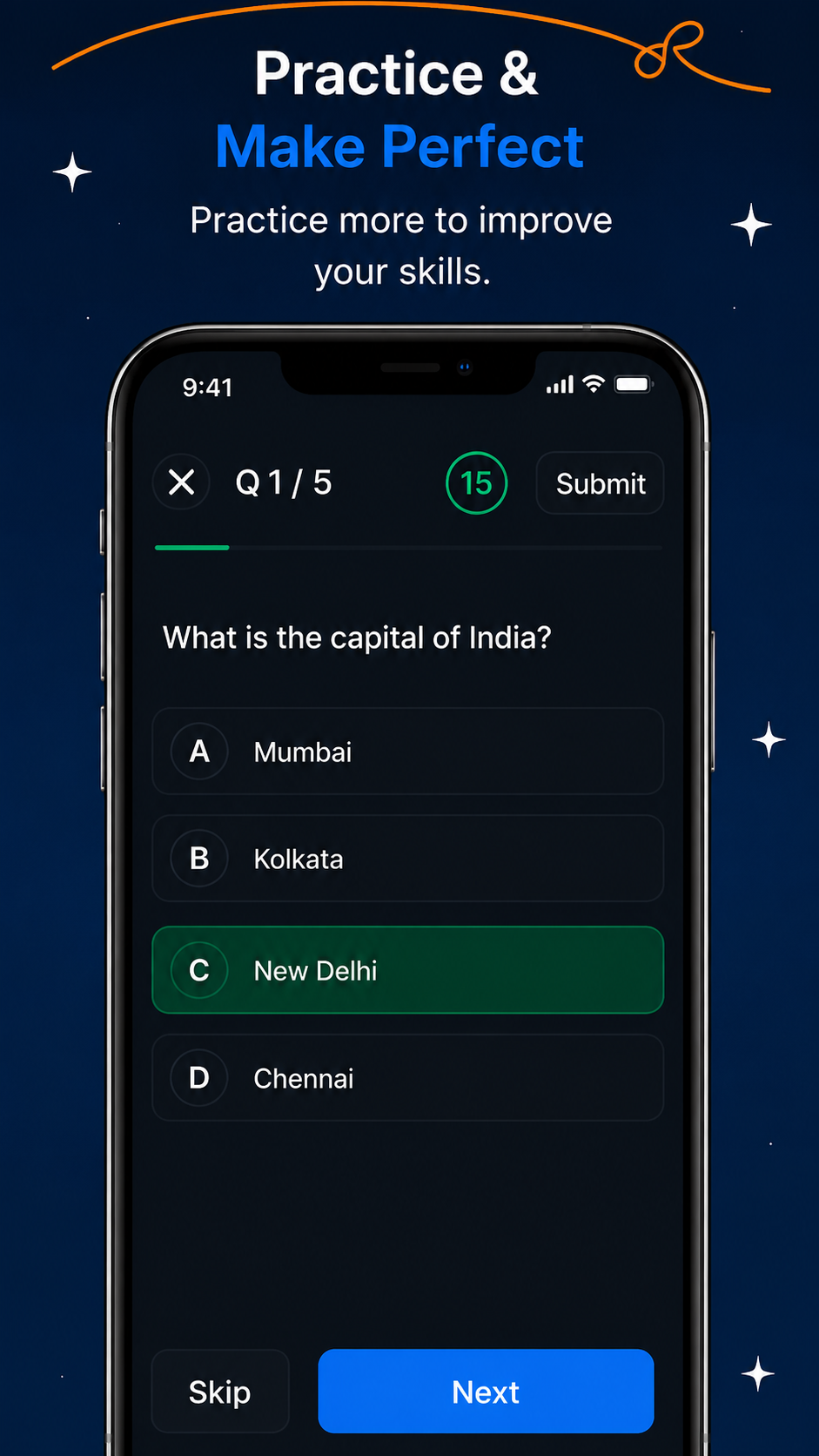
Quiz Questions
-
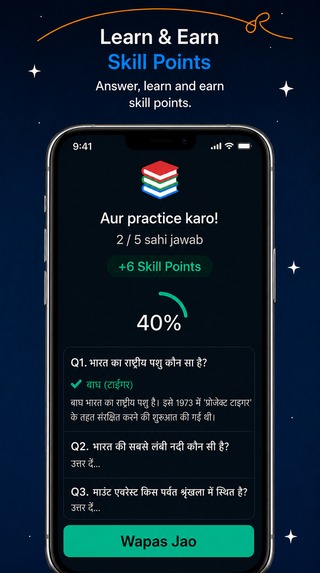
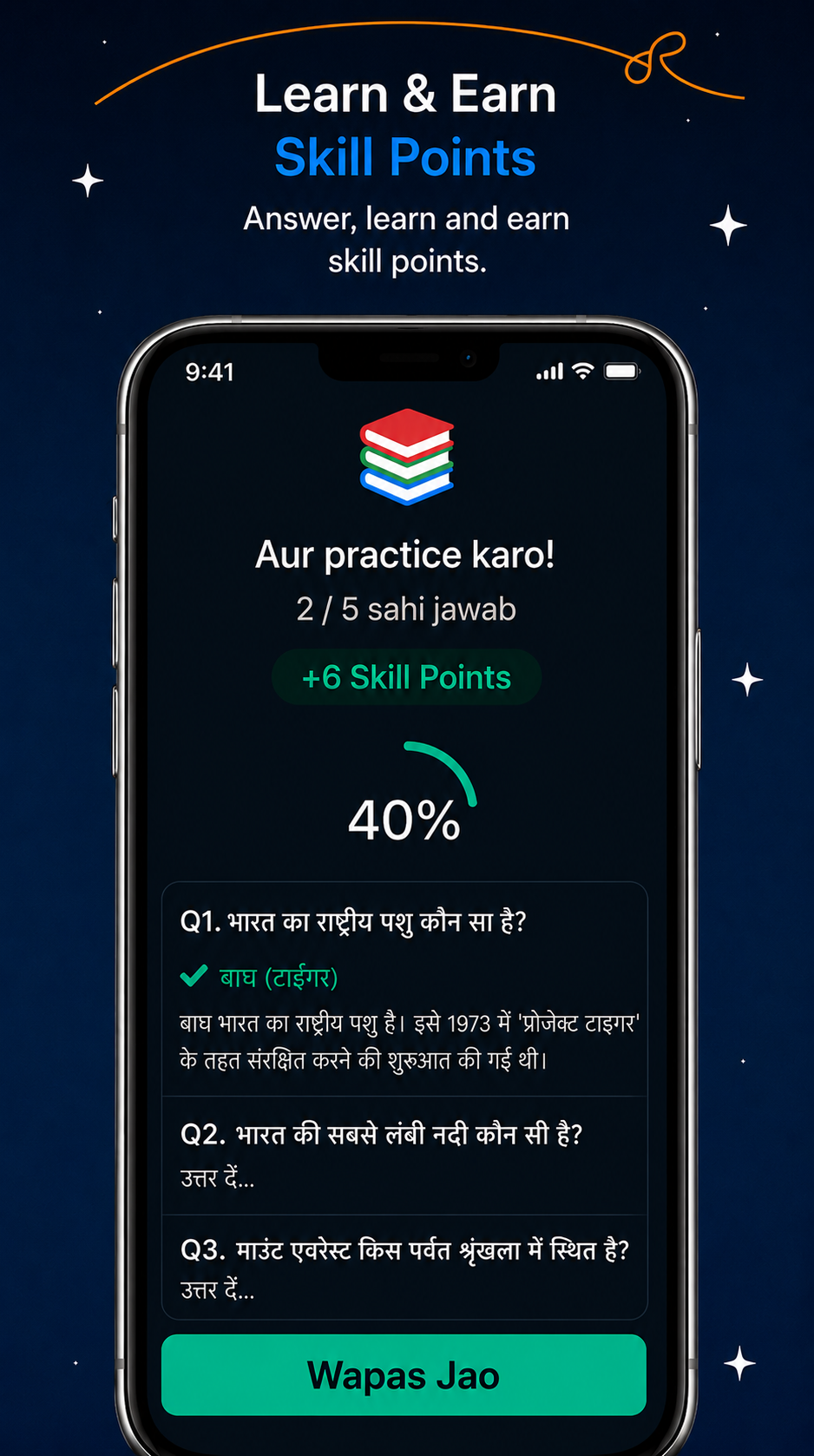
Quiz score
-
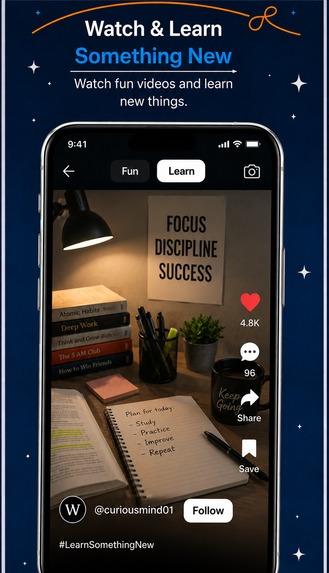
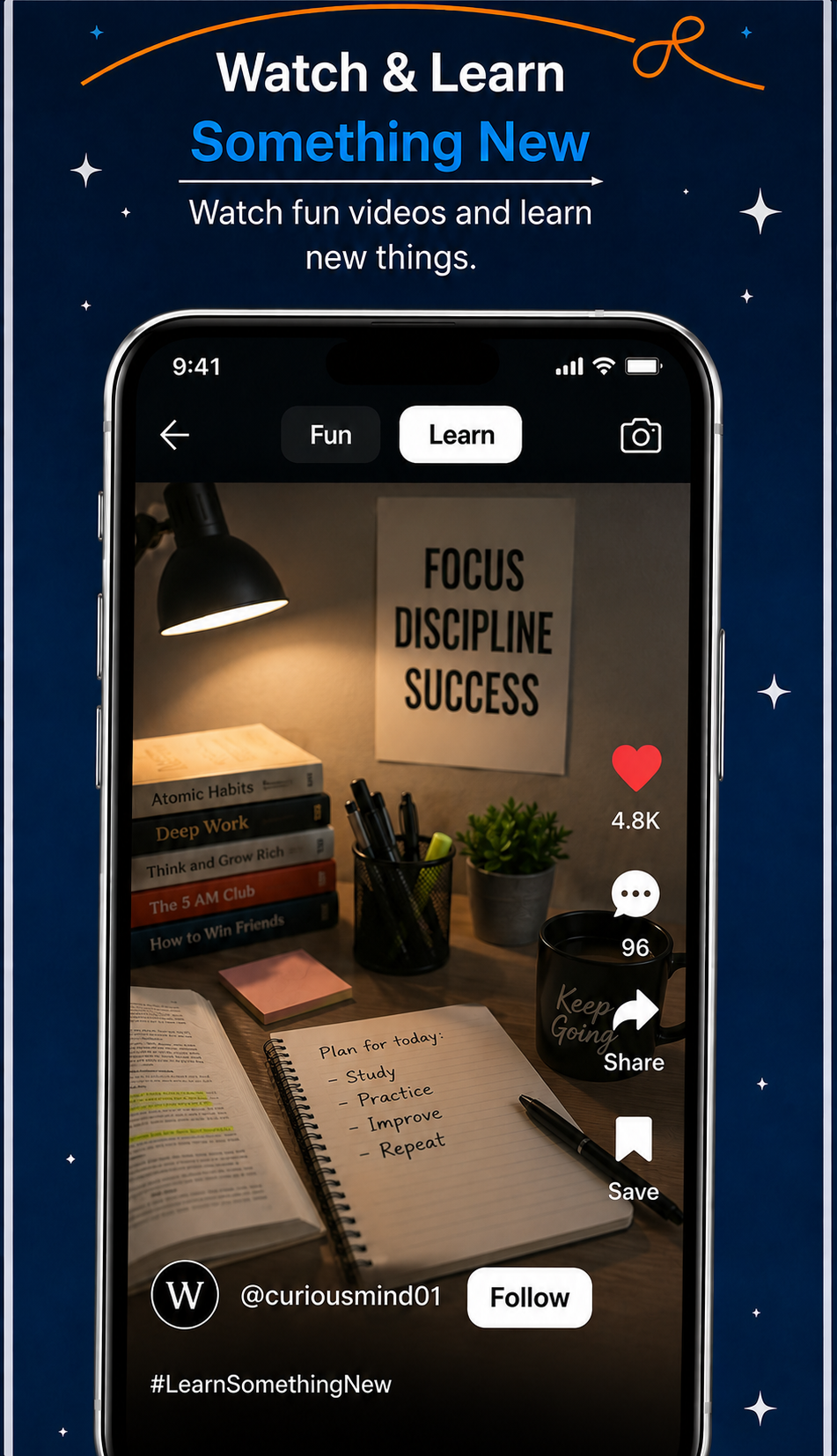
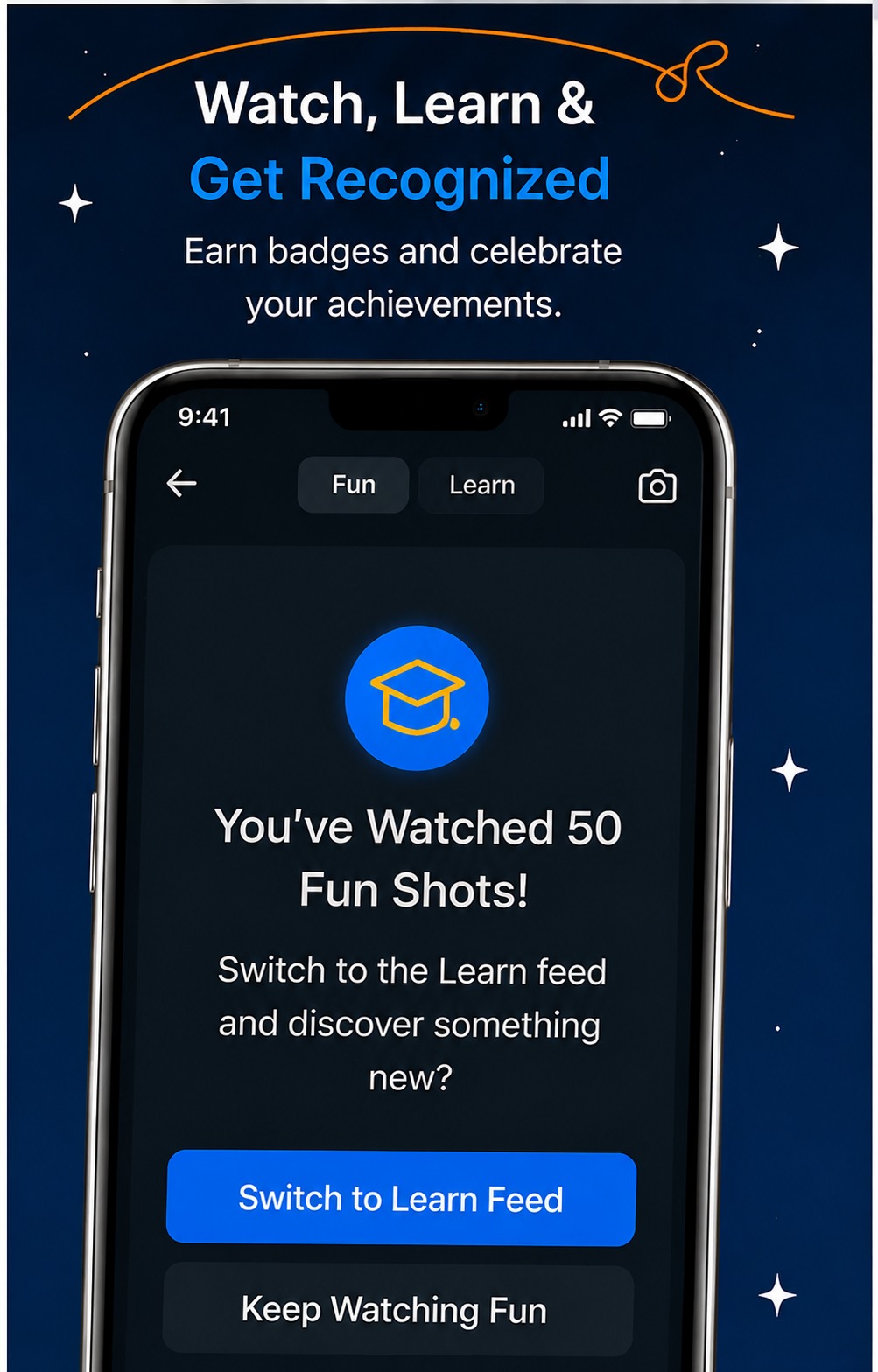
Fun & Learn feed
-
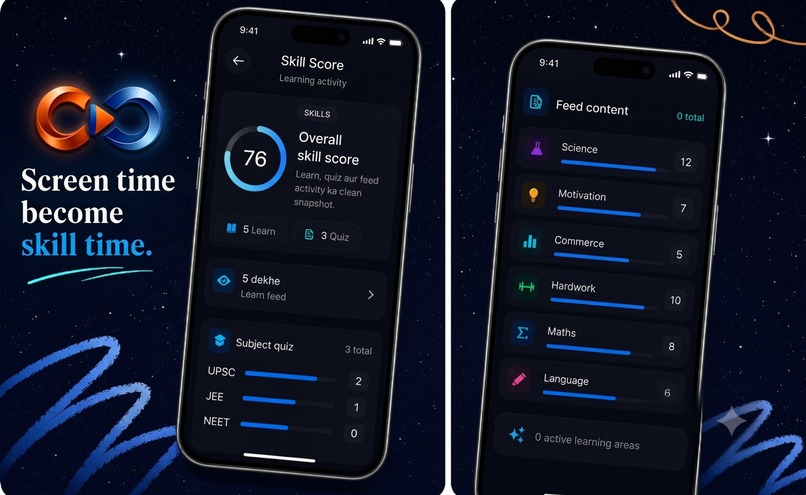
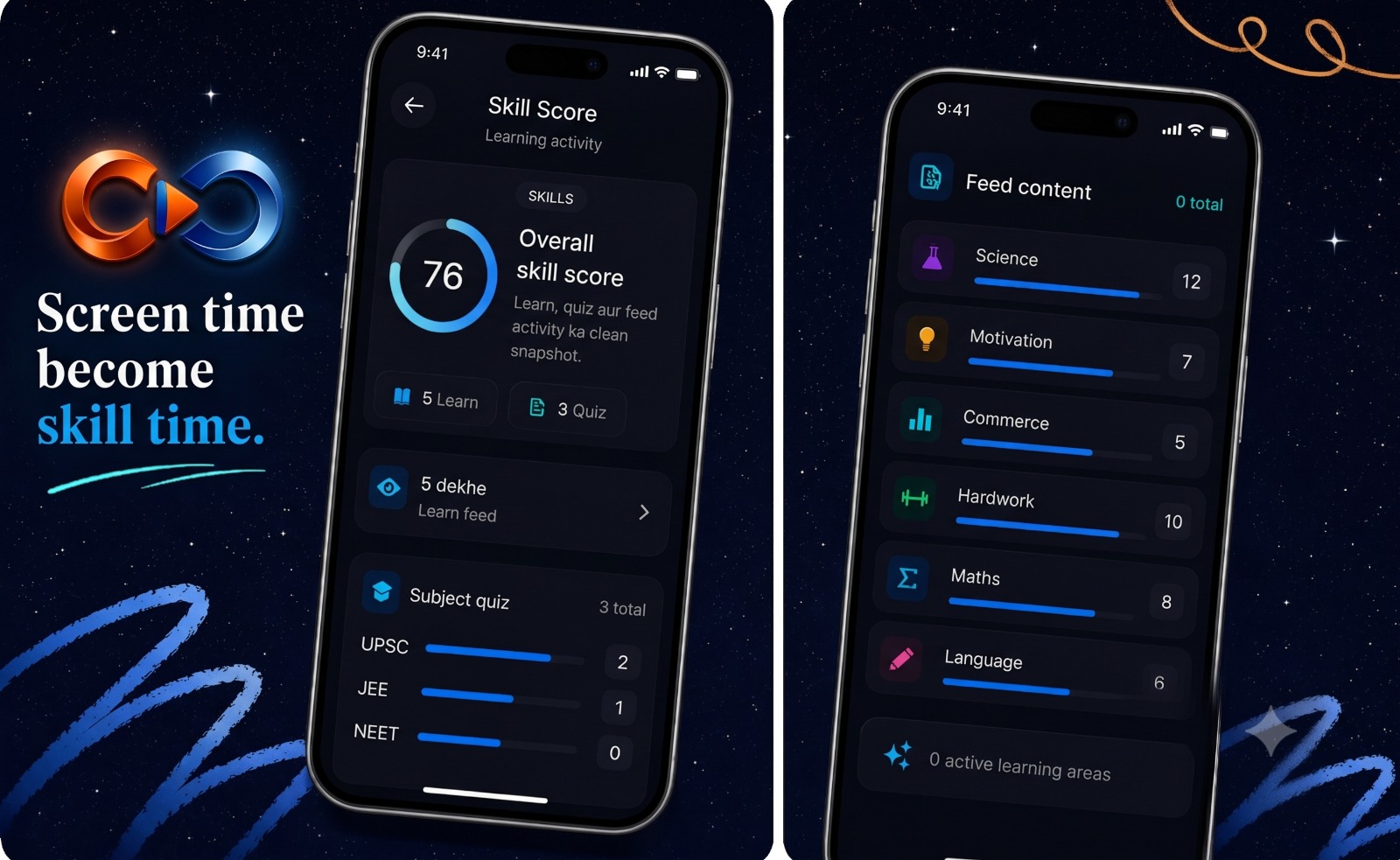
Skill score
-
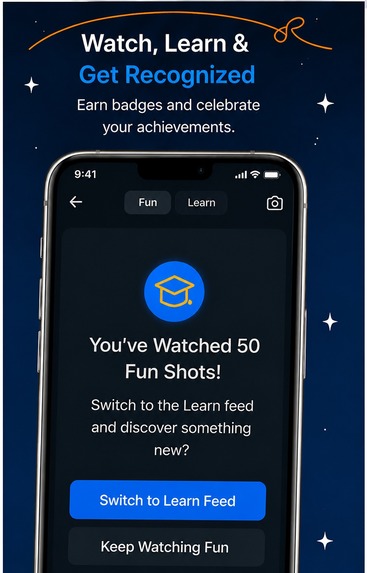
Nudge fun to learn
-
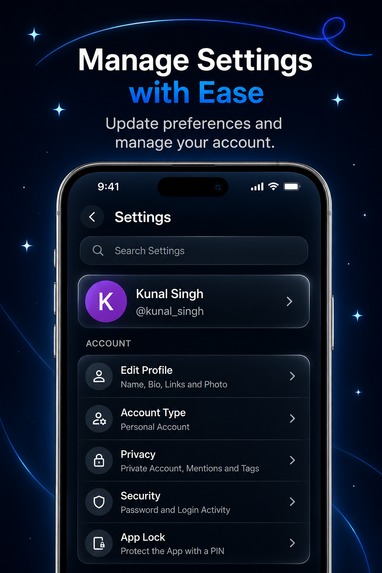
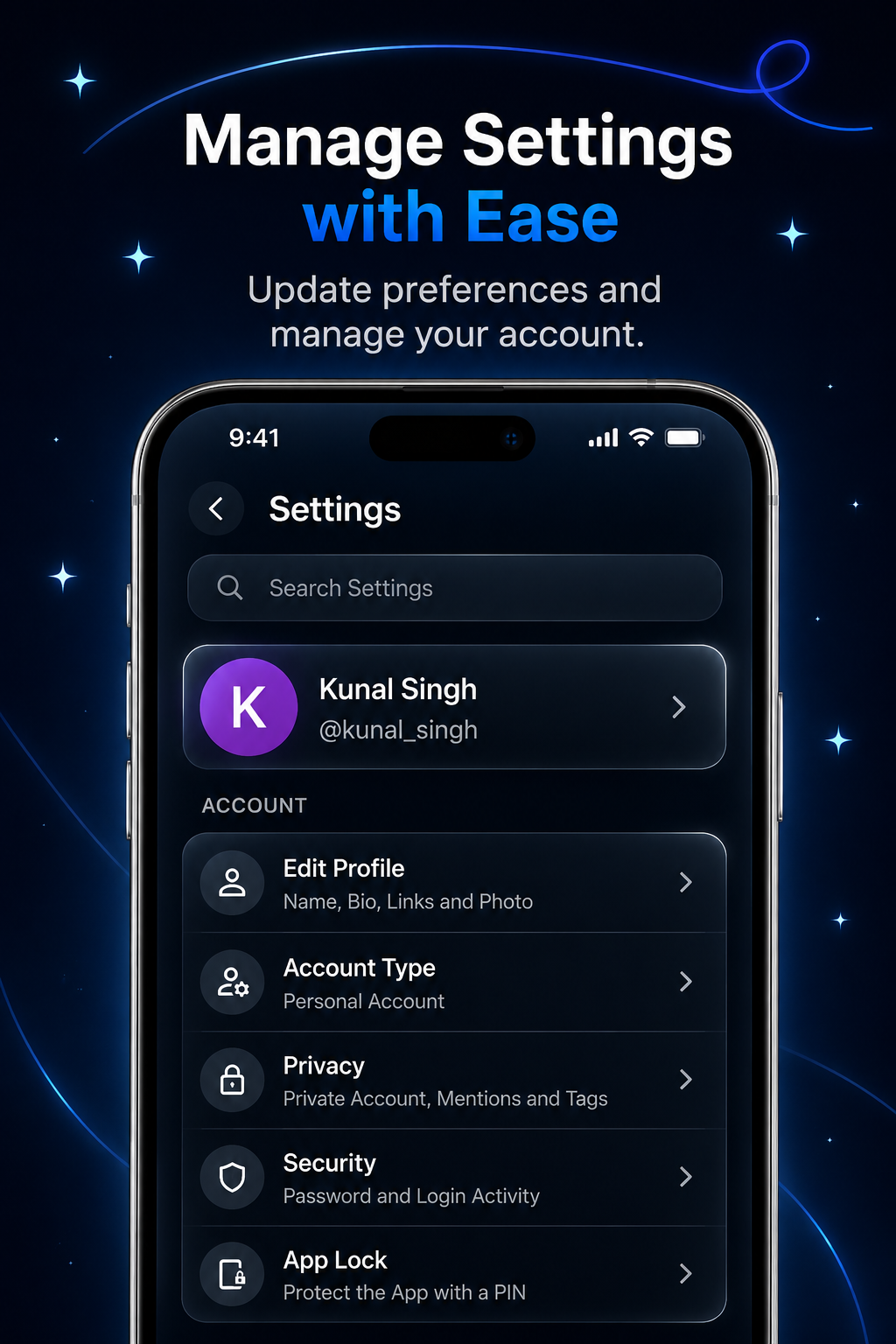
Profile setting
-
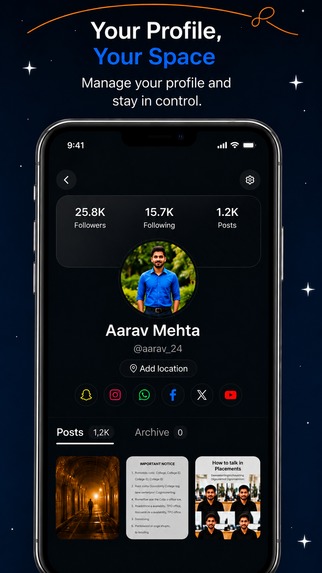
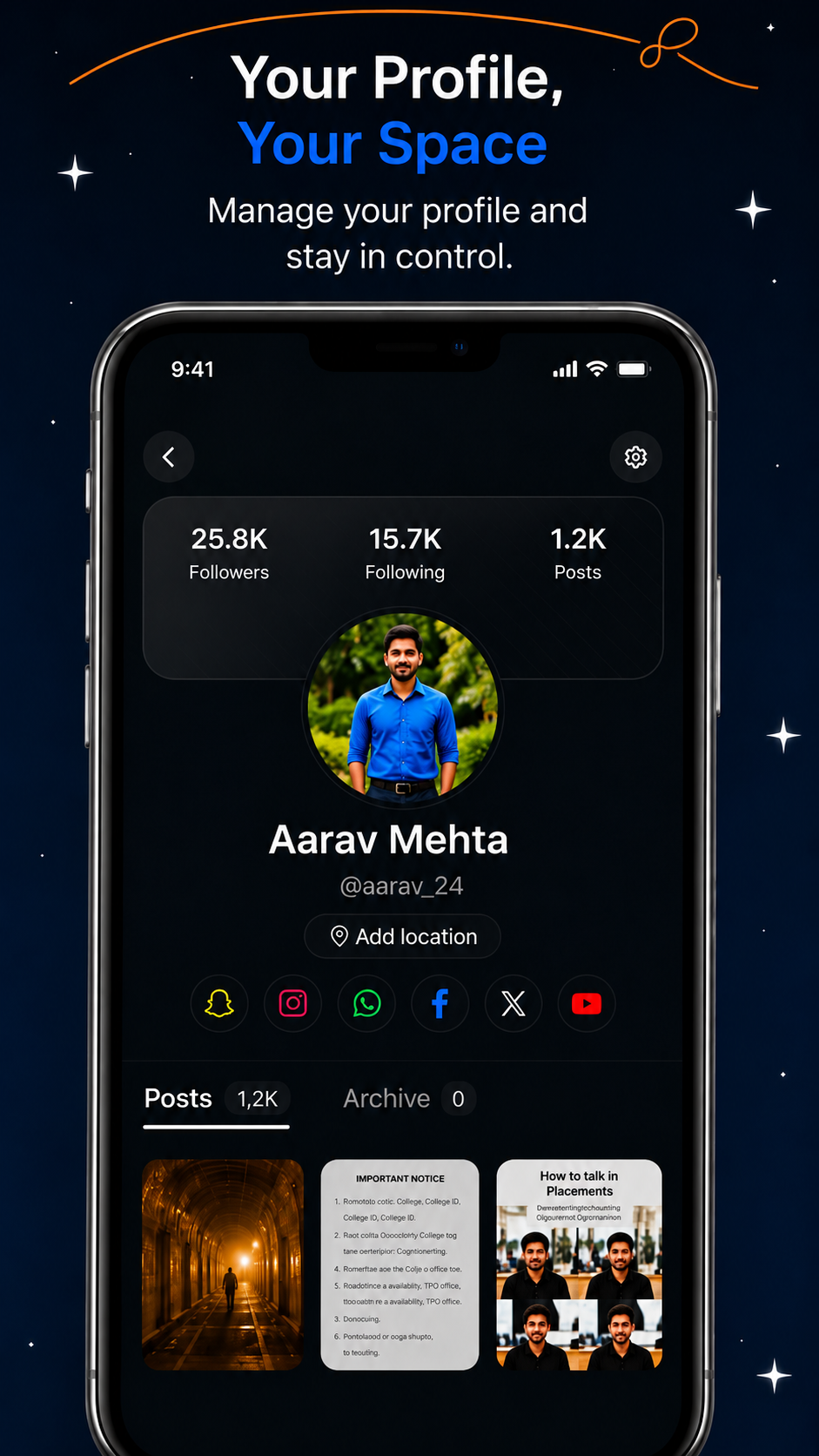
my porfile
-
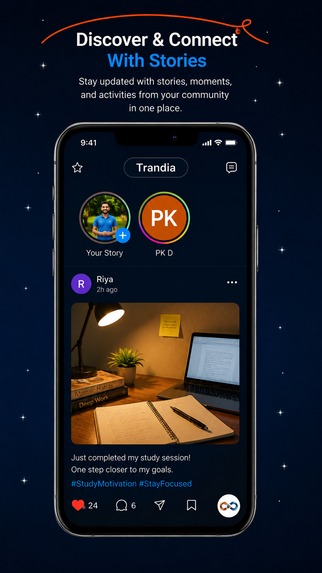
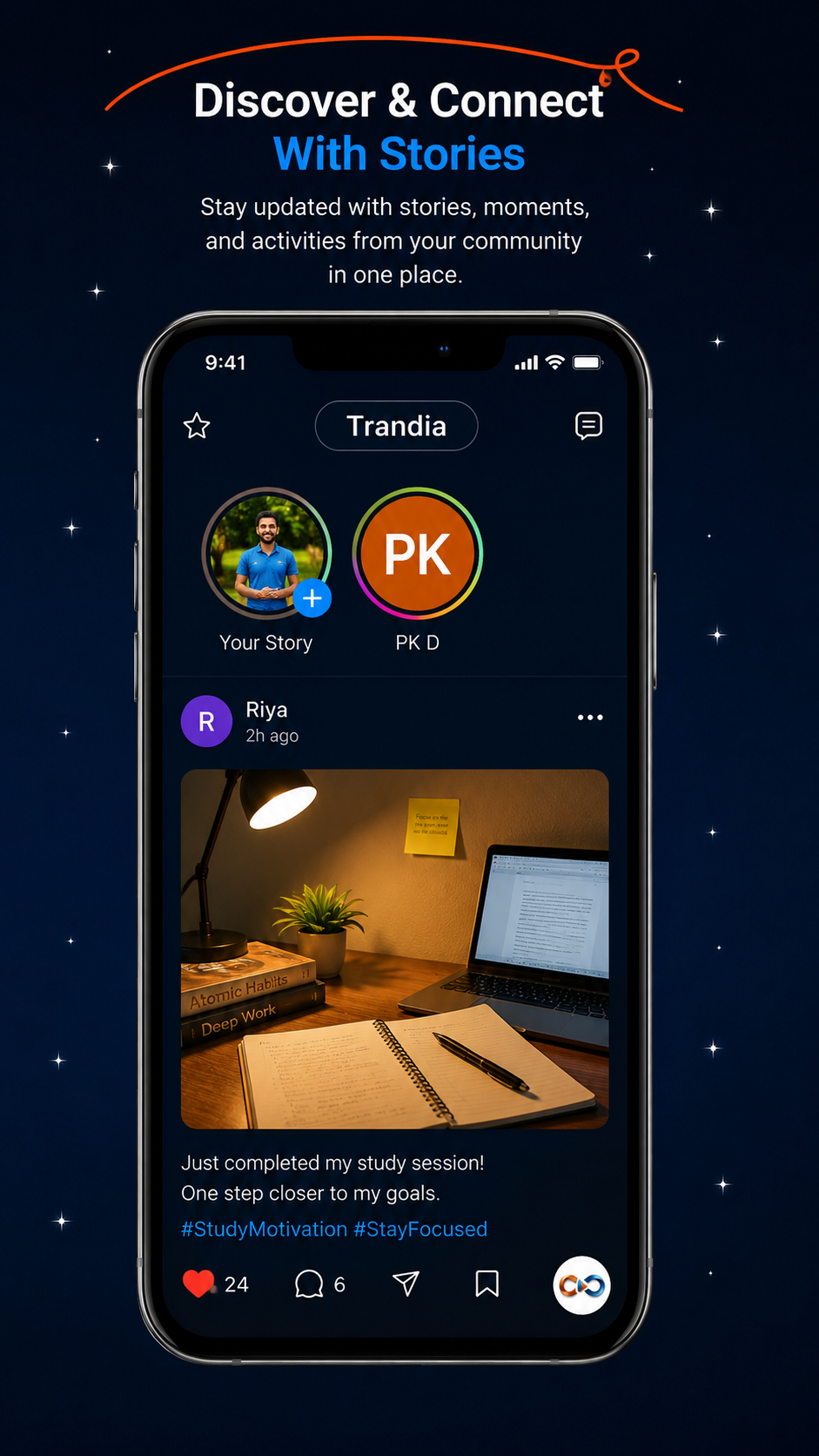
home screen
💡 Inspiration
The genesis of Trandia came from a harsh reality observed during a classroom discussion: India has over 600 million people under 25, nearly all with smartphone access, yet this hasn't translated into proportional learning. A 2025 IIM Rohtak study revealed that youth spend roughly 7 hours daily on social media, with 54.52% focused on entertainment and a meager 14.28% on education.
Entertainment platforms are engineered to maximize ad revenue based purely on "time spent"—they are not built to deliver measurable skill outcomes. This has led to declining study consistency and a widening skill gap across Tier 2 and Tier 3 India.
Our students asked a definitive question: Can we build something that flips the script? Can we make skill-building as addictive as scrolling? Driven by this challenge, we set out to embed structured learning directly inside an entertainment ecosystem.
🛠️ How We Built It
Trandia was developed entirely on school computers at zero institutional cost over a rigorous 14-month cycle. The core architecture is engineered specifically for the infrastructure reality of "Bharat" (Tier 2/3 cities):
- Dual-Feed Architecture: Built on Flutter to ensure high performance on low-cost Android devices under low-bandwidth network conditions (Jio, Airtel, BSNL). It hosts a frictionless Fun Feed alongside a goal-oriented Learn Feed.
- The 50-Trend Rule (AI Nudge Engine): An intelligent AI layer monitors consumption behavior. Once a threshold of pure entertainment content is crossed, it algorithmically nudges the user toward relevant educational units without restricting their experience.
- Automated NLP Quiz Pipeline: We integrated a Natural Language Processing (NLP) pipeline that instantly parses uploaded video content and automatically generates localized Hindi/Hinglish MCQs. This makes the platform completely content-agnostic; any creator's content becomes an active learning unit.
- Gamified Skill Score: Users earn a verifiable, running ledger of their demonstrated knowledge, reinforcing consistency.
- DPDP Act 2023 Compliance by Design: Built from day one with India-hosted data localization, strict age-gating, OTP-based parental consent flows for users under 18, and a transparent parental dashboard.
🛑 Challenges We Faced
Operating with zero external funding presented extreme technical and logistical bottlenecks. All infrastructure costs were personally bootstrapped by our guiding teacher.
Building a production-ready, heavy-data social platform on limited school hardware required massive optimization. We had to write over 15,000+ lines of clean, optimized production code and enforce a strict debugging discipline. Our team wrote 108 automated tests to identify and squash 11 critical production bugs during development. Furthermore, architecting the rigid parental consent workflows and hard-blocking mechanisms required under the DPDP Act 2023—without hurting app engagement—was a massive data engineering hurdle.
🧠 What We Learned
This journey completely revolutionized our understanding of education and human potential:
- Stream Doesn't Limit Genius: Several of our core team members came from the Automotive stream—a background often unfairly underestimated by peers. This project proved that when provided with real-world problems and the right guidance, vocational students can build world-class software.
- Shift to Project-Based Mastery: Our classroom teaching completely shifted from rigid theory to deployment-based evaluation. We didn't just learn to pass exams; we learned to build, debug, optimize, and deploy.
- Content-Agnostic Scalability: We learned that we don't need a massive content creation team. By using AI to make existing content learnable, we built a scalable model capable of transforming digital consumption for millions of Indian youth.


Log in or sign up for Devpost to join the conversation.