Inspiration
The inspiration for TRANA came from a deeply alarming realization about the dark side of synthetic media. Seeing the systemic horror of the Nth Room case in Korea, combined with the rapid rise of unmoderated, hyper-realistic generation tools like Grok AI, made me realize just how terrifyingly easy it has become to weaponize someone's digital footprint. Anyone can clip a few seconds of your voice or scrape a photo from your profile to commit identity fraud. I realized that protecting your biometric data is no longer optional—we need a way to armor our digital presence. I built TRANA to give everyday users a proactive shield to fight back and truly Own Their Identity.
What it does
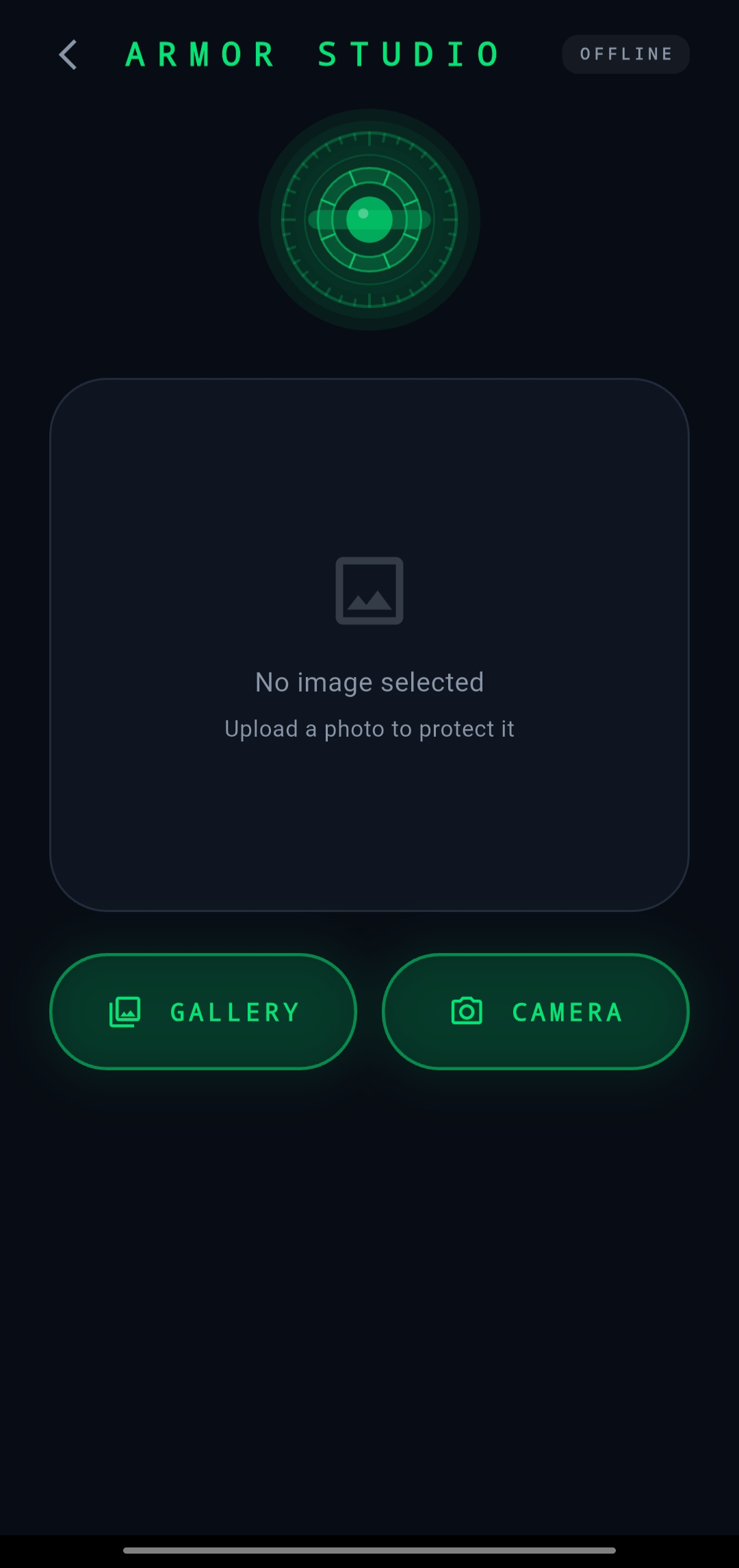
TRANA is a real-time mobile security dashboard tailored to protect your vocal and visual identity from predatory AI exploitation. Operating entirely on a local engine, it tracks passive app background behavior and instantly flags abnormal microphone or camera access using an intuitive, live state banner (SECURE vs. THREAT). When an exploit is simulated, the app instantly updates a localized activity timeline, allowing users to trace threat signatures. TRANA also serves as an interactive proof-of-concept for digital "identity armoring"—giving users a visual command center to protect their personal media from unauthorized AI training scraping bots.
How we built it
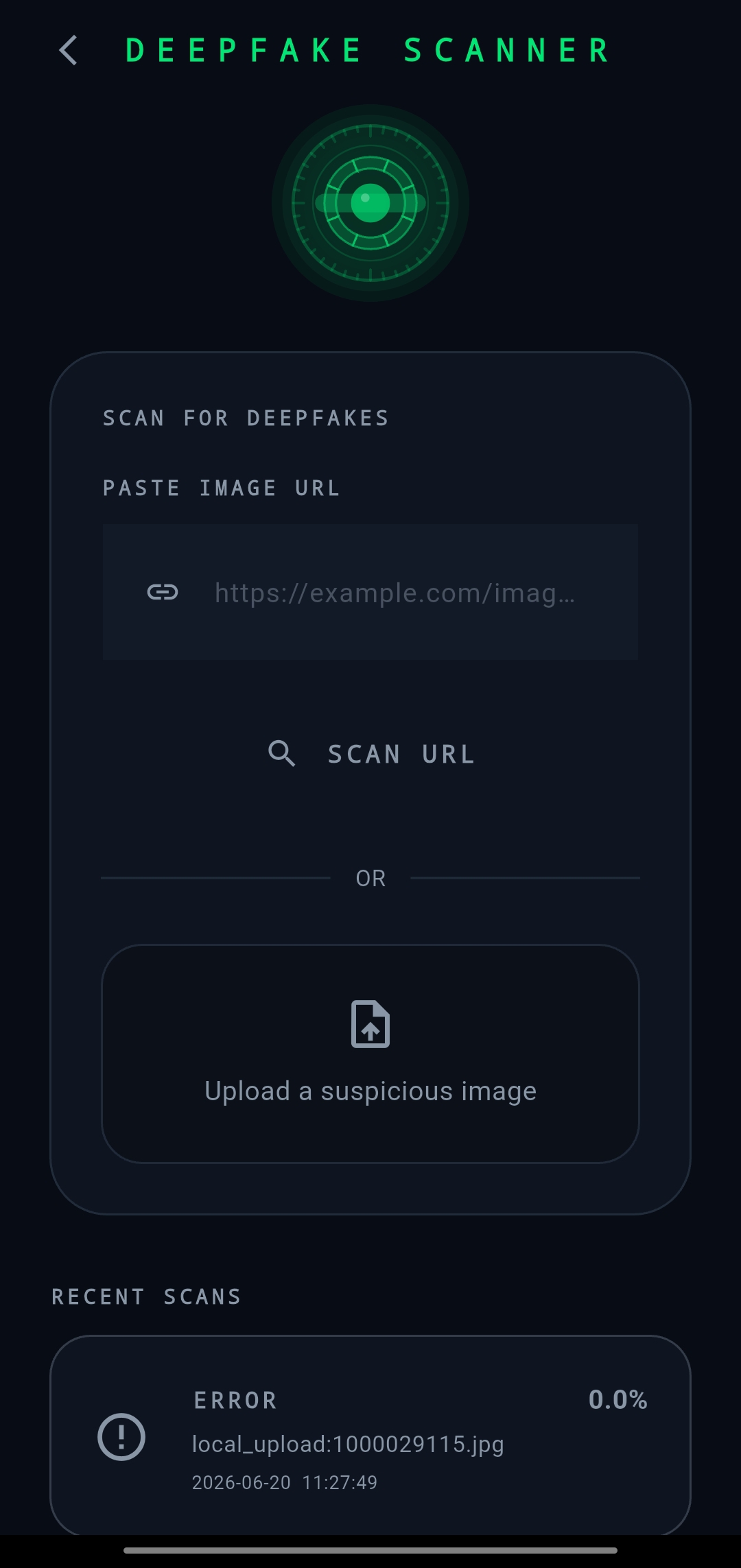
I engineered TRANA as a multi-layered prototype consisting of a mobile client and a local development server: The Frontend: Built using Flutter and Dart, utilizing a decoupled controller-listener pattern (DashboardController) to keep the UI highly responsive on the device. The Device Storage: Integrated Hive as a local key-value database on the mobile hardware to instantly cache threat logs and timeline states locally. The Python Server Structure: Set up a lightweight Python FastAPI local server running via Uvicorn to handle incoming requests from the app. I organized the backend services to define routes for authentication and scanning, utilizing libraries like NumPy and Pillow to establish the foundation for future media file processing and deepfake detection pipelines.
Challenges we ran into
Honestly, doing this alone as a beginner with my exams right around the corner was a massive mental puzzle. The Flutter Errors: Early on, my app completely crashed because my navigation routes couldn't find my AuthController. I spent way too long staring at ProviderNotFoundException errors before I figured out how to correctly wrap my root app tree in ChangeNotifierProvider inside main.dart. Connecting Flutter to Python: Getting a physical Android phone to actually talk to a local Python FastAPI server running on my computer was a nightmare of IP address mismatches and connection timeouts. It took a lot of trial and error in the terminal to get them on the same page. Laggy UI: At first, the app would lag whenever it tried to write data to the Hive database and animate the screen at the same time. I had to learn how to separate those database writes so the screen stayed smooth. I didn't know how to do half of this when I started, but having unlimited access to the internet meant I could search my way through every crash until it finally worked.
Accomplishments that we're proud of
I am incredibly proud that I actually got this entire loop working by myself under a tight deadline. The absolute best moment was setting up my environment, opening the terminal, and successfully compiling the code directly onto my physical Android phone. When the app booted up, connected to my Python server, and that red THREAT banner flashed alive right in my hands, it felt amazing. I don’t know how else to describe it, but watching my very first true software creation come to life felt close to alchemy.
What we learned
This project completely changed how I look at coding. I used to think building an app was just about making a pretty screen, but I learned how to actually connect different pieces—getting a Flutter frontend, a Hive database, and a Python backend to talk to each other without breaking. More than anything, I learned that being a beginner doesn't matter if you know how to use your resources. Having the entire internet at my fingertips meant that even when I hit a wall or a scary terminal error, the answer was out there. It taught me how to problem-solve on the fly and gave me the confidence to realize I can actually build real things from scratch.
What's next for Trana
Right now, the app is a functional prototype, but it's far from perfect. My next step is to make the backend significantly more functional and precise. I want to move away from simulations and actually train a lightweight, native machine learning model that runs directly on the device. The plan is to have it analyze incoming audio streams for synthetic voice-clone signatures in real time and experiment with injecting imperceptible mathematical noise into photos so predatory web-scraping bots can't harvest them. I want to keep building and tweaking until it is a truly foolproof security shield.

Log in or sign up for Devpost to join the conversation.