-
-
Title
-
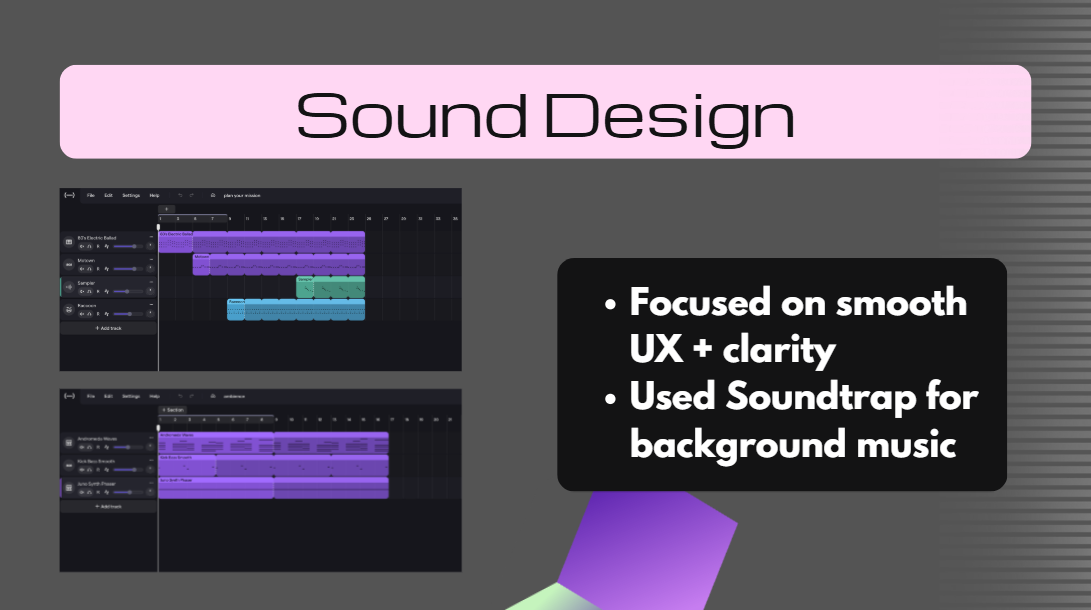
Sounds
-
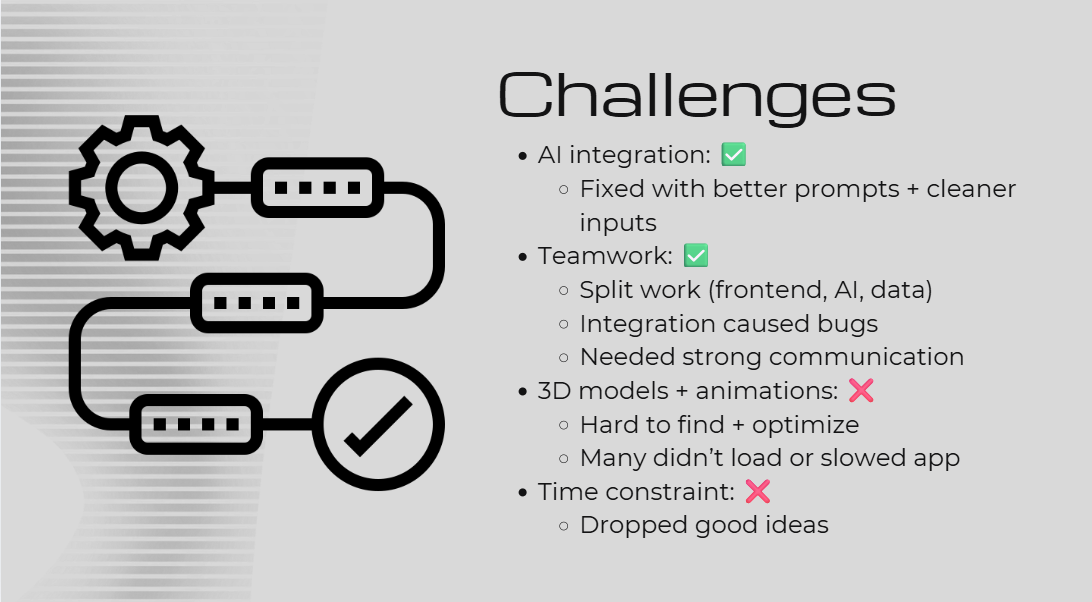
Challenges
-
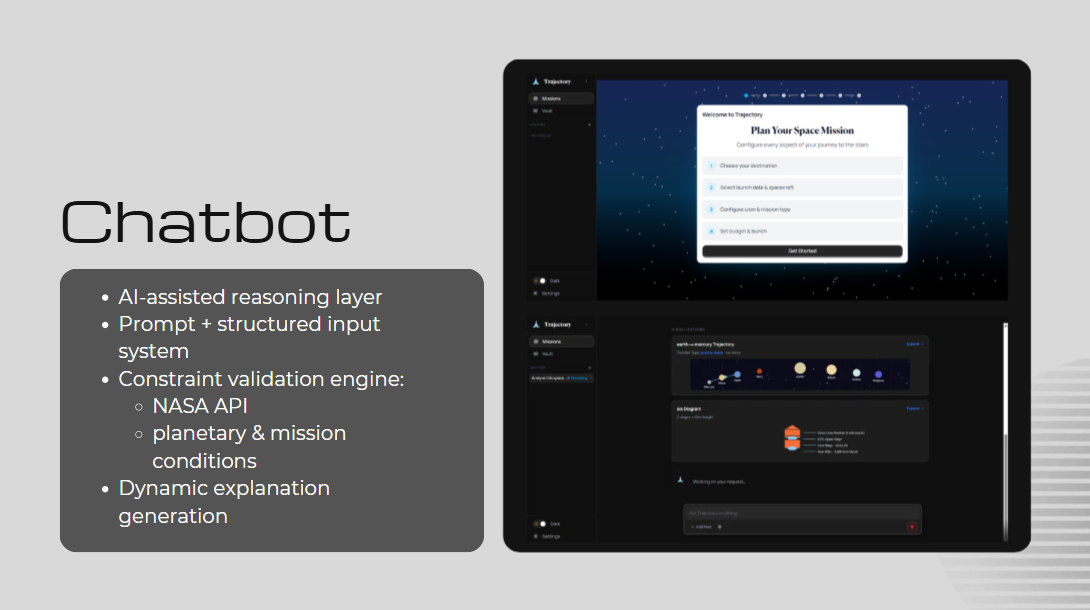
Chatbot/AI
-
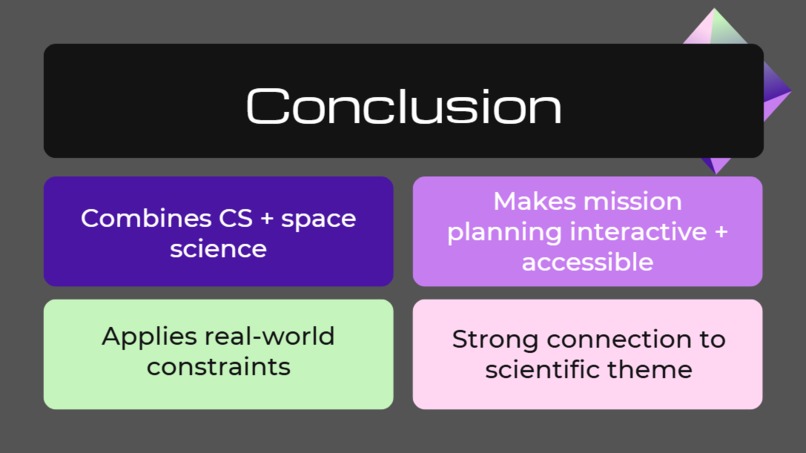
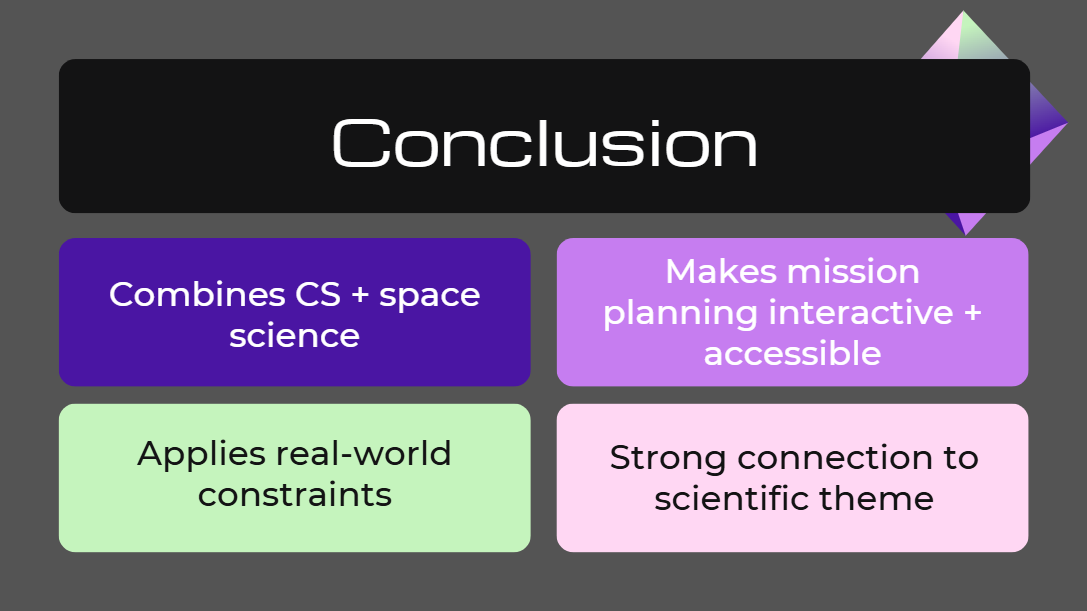
Conclusion
-
Thank you
Trajectory — Interactive Space Mission Planner
Inspiration
Our inspiration came from a specific moment: watching coverage of Artemis II, NASA's first crewed lunar mission in decades. What struck us wasn't just the spectacle of it — it was the question lurking underneath. Is this actually feasible? What does it take, in cold hard numbers, to get people from Earth to another world?
We looked around for tools that could help a curious person explore that question. Everything we found was either buried under aerospace jargon or dumbed down to the point of being useless. So at Ridgehacks 2026, we decided to build the middle ground ourselves.
What We Built
Trajectory is an interactive space mission planner that puts real mission design decisions in the hands of anyone curious enough to try. Users can:
- Choose a destination planet from across our solar system
- Select a spacecraft from actual rockets — Starship, Falcon Heavy, SLS, New Glenn
- Define crew size, mission objectives, and budget constraints
- Launch their mission and get calculations in minutes that would otherwise take weeks
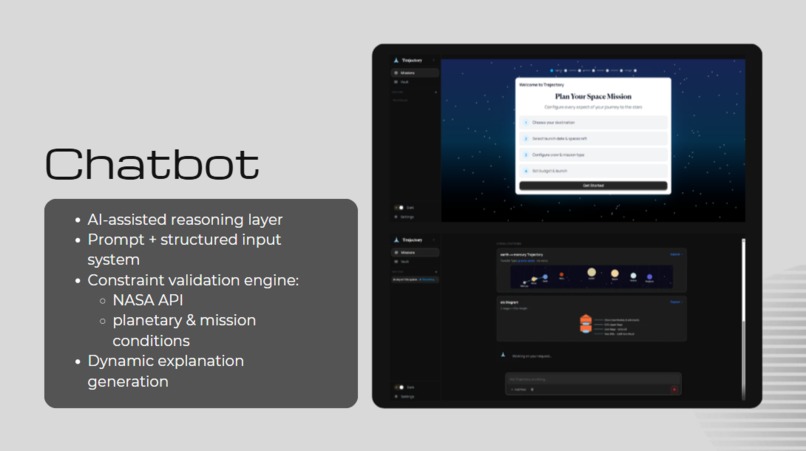
The app pairs a clean, step-by-step interface with an AI-powered assistant that explains mission feasibility in plain language, real-time validation to catch impossible configurations before they happen, and 2D planetary visualization to ground the experience.
How We Built It
Tech Stack
Frontend
- Next.js 16 (App Router) with React 19 and TypeScript
- Tailwind CSS v4
- Claude API powering our mission analysis chatbot
- NASA API for real planetary data
Backend
- Convex — database, serverless functions, and real-time sync in one
- JWT validation on every function call
Assets
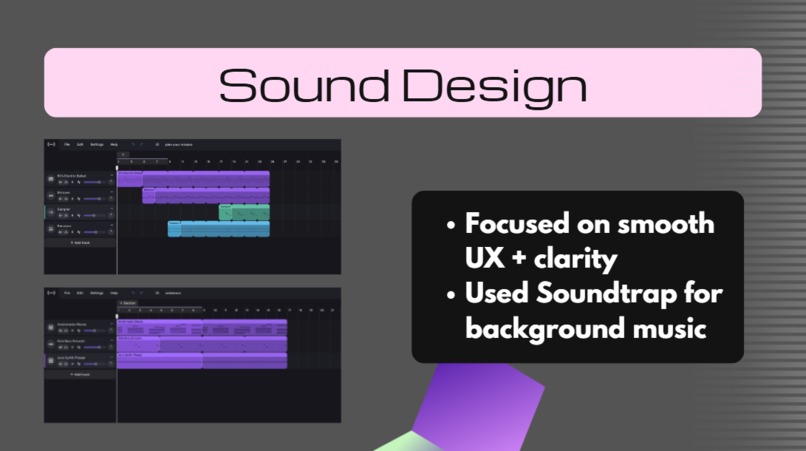
- Original soundtracks composed by our team
- Custom icons and SVGs
- Canela and Manrope typography
Architecture
We used Convex's reactive data model to keep mission state synchronized across every component as users move through the planner. Each configuration step writes to the database in real time, and our AI layer reads the complete mission profile to generate success probability estimates and resource breakdowns.
Challenges We Ran Into
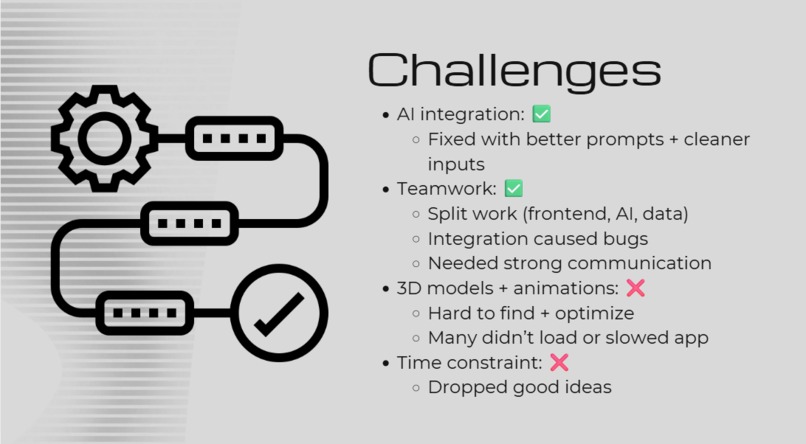
AI-Powered Validation
The hardest part of making this feel real was making it be real. We needed the AI validation to reflect actual aerospace constraints — not just plausible-sounding ones. That meant defining meaningful limits for each spacecraft and grounding fuel calculations in the rocket equation:
$$\Delta v = I_{sp} \cdot g_0 \cdot \ln\left(\frac{m_0}{m_f}\right)$$
Where $\Delta v$ is the required velocity change, $I_{sp}$ is specific impulse, $g_0$ is standard gravity, $m_0$ is initial mass, and $m_f$ is final mass.
The challenge was calibrating this so it was accurate without becoming a wall of numbers that shuts users out. Getting that balance right took most of our iteration time.
Real-Time State Management
Walking a user through a multi-step mission configuration — while keeping everything in sync and responsive — required careful architectural decisions. We leaned on Convex's reactive queries to automatically reflect changes in the UI, added optimistic updates for instant feedback, and built validation into each step so users never hit a dead end at the end of the flow.
Adapting Under Pressure
Our original plan included full 3D planet rendering. When that fell apart mid-hackathon, we made the call to cut it and redirect our energy toward a polished 2D experience rather than ship something broken. It wasn't the feature we wanted, but the decision kept the rest of the product solid.
Working as a team through that kind of setback — and through the disagreements that come up when everyone has a strong opinion — pushed us to communicate better and compromise faster than we expected to.
What We're Proud Of
The chatbot is the thing we keep coming back to. Explaining mission feasibility in a way that feels intuitive rather than clinical is genuinely hard, and we think we got there. Beyond that, we're proud that we shipped a complete, working product — interface, animations, physics calculations, and AI analysis all integrated — in the time we had.
What We Learned
This project forced us to think across disciplines. We came in as developers and left with a working knowledge of orbital mechanics, planetary conditions, and the physics of motion and energy that underpin space travel. On the technical side, we deepened our understanding of reactive data patterns and what it actually takes to design for complex, multi-step user workflows.
The softer lessons hit just as hard: time management under pressure, staying flexible when things break, and the value of knowing when to cut a feature versus fight for it.
What's Next
We see a lot of room to grow Trajectory into something more comprehensive:
- Destinations beyond our solar system
- Detailed mission timeline planning
- Collaborative planning for teams
- Deeper integration with live NASA data
The journey to the stars starts with asking whether it's possible. Trajectory makes that question approachable for everyone.
Team
- Adhyaay Karnwal
- Nishant Das
- Keshav Patel
- Kapil Raghul
Built With
- convex
- nextjs
- react
- tailwindcss
- three.js
- typescript
- vercel

Log in or sign up for Devpost to join the conversation.