-
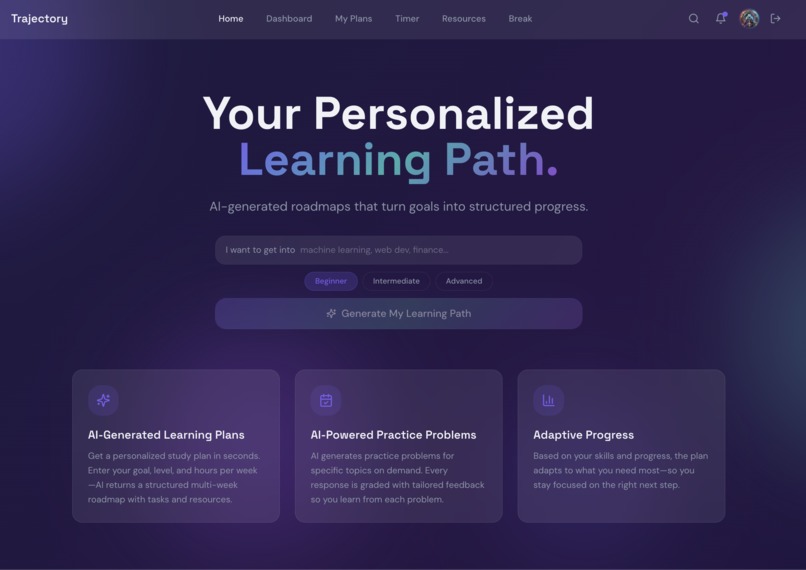
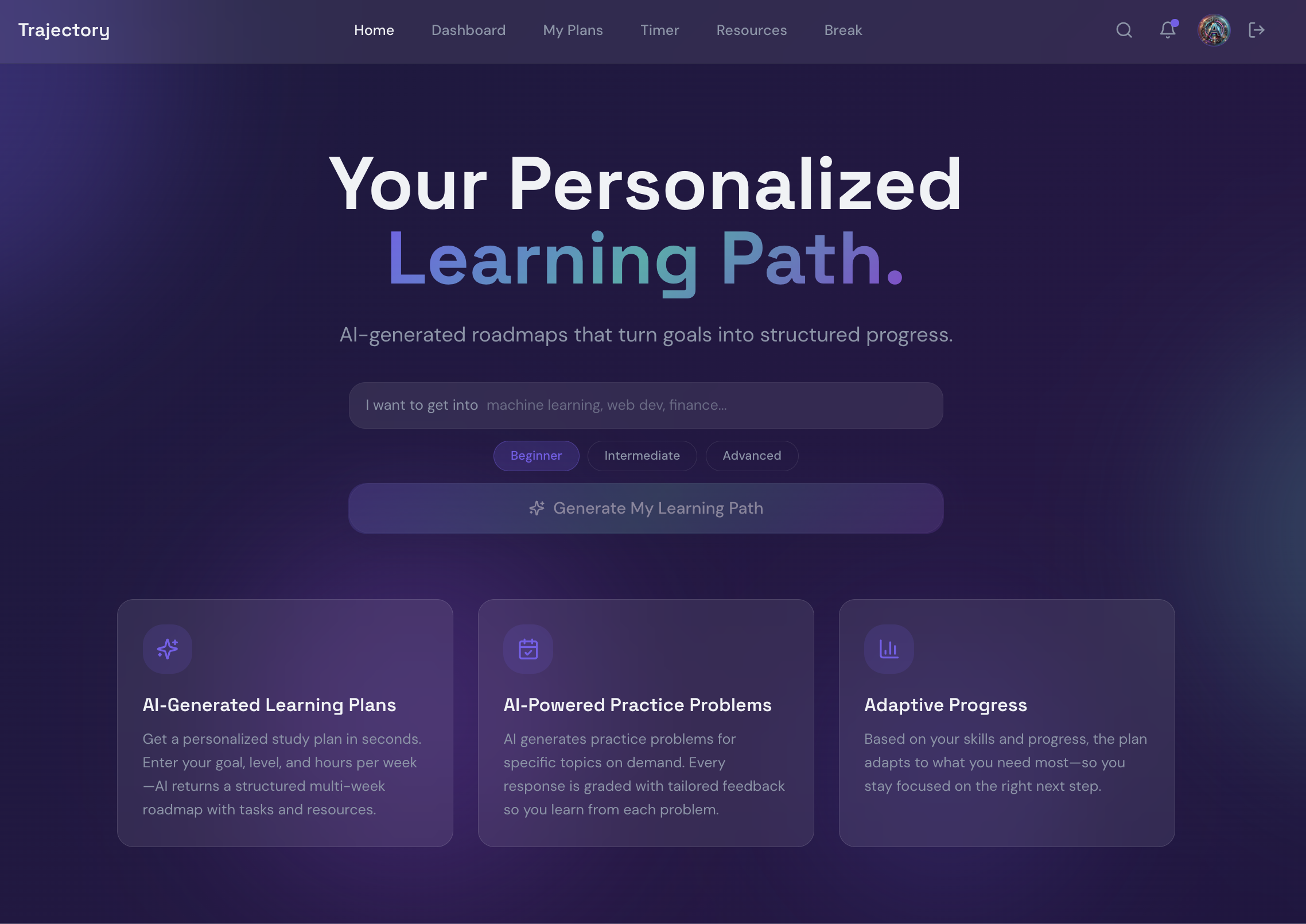
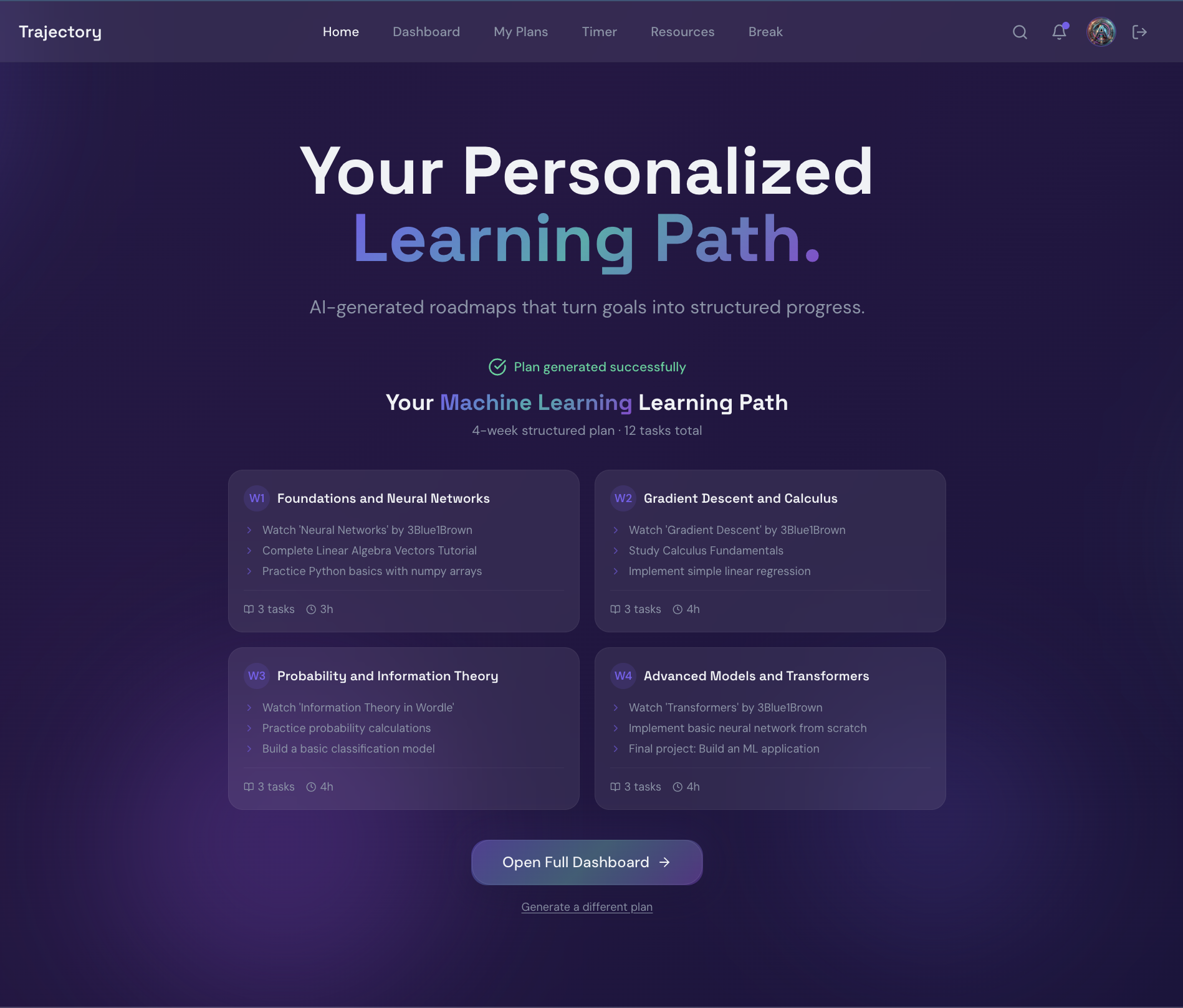
Home Page
-
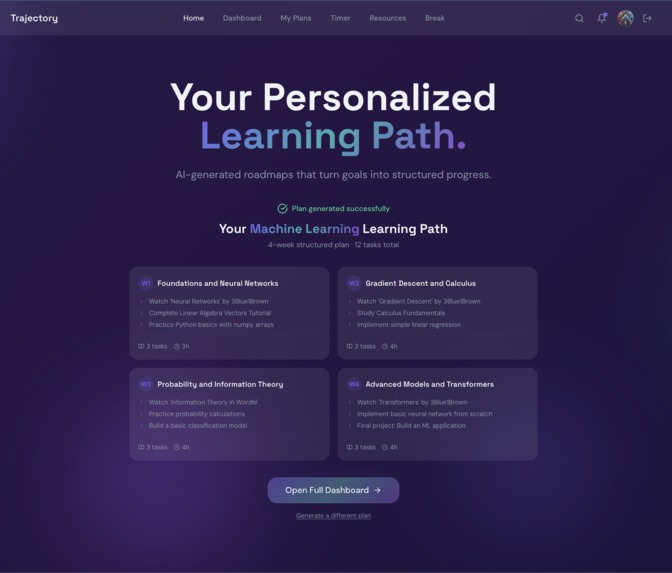
Example Curriculum
-
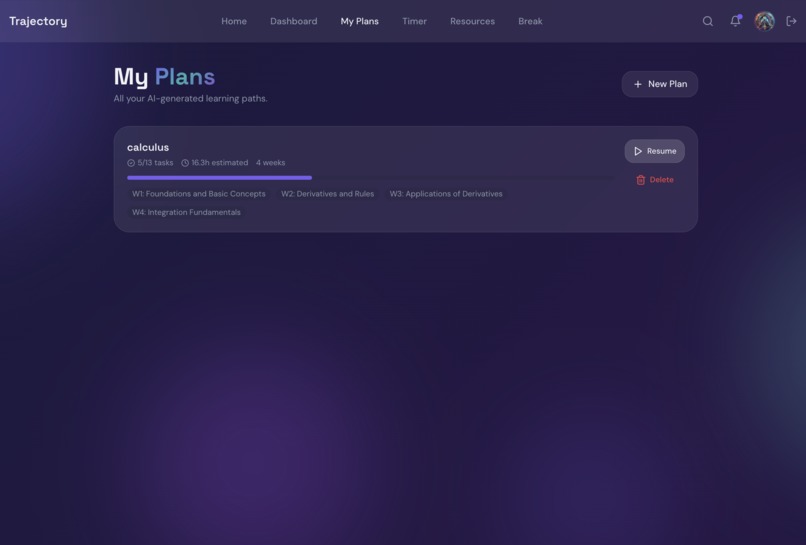
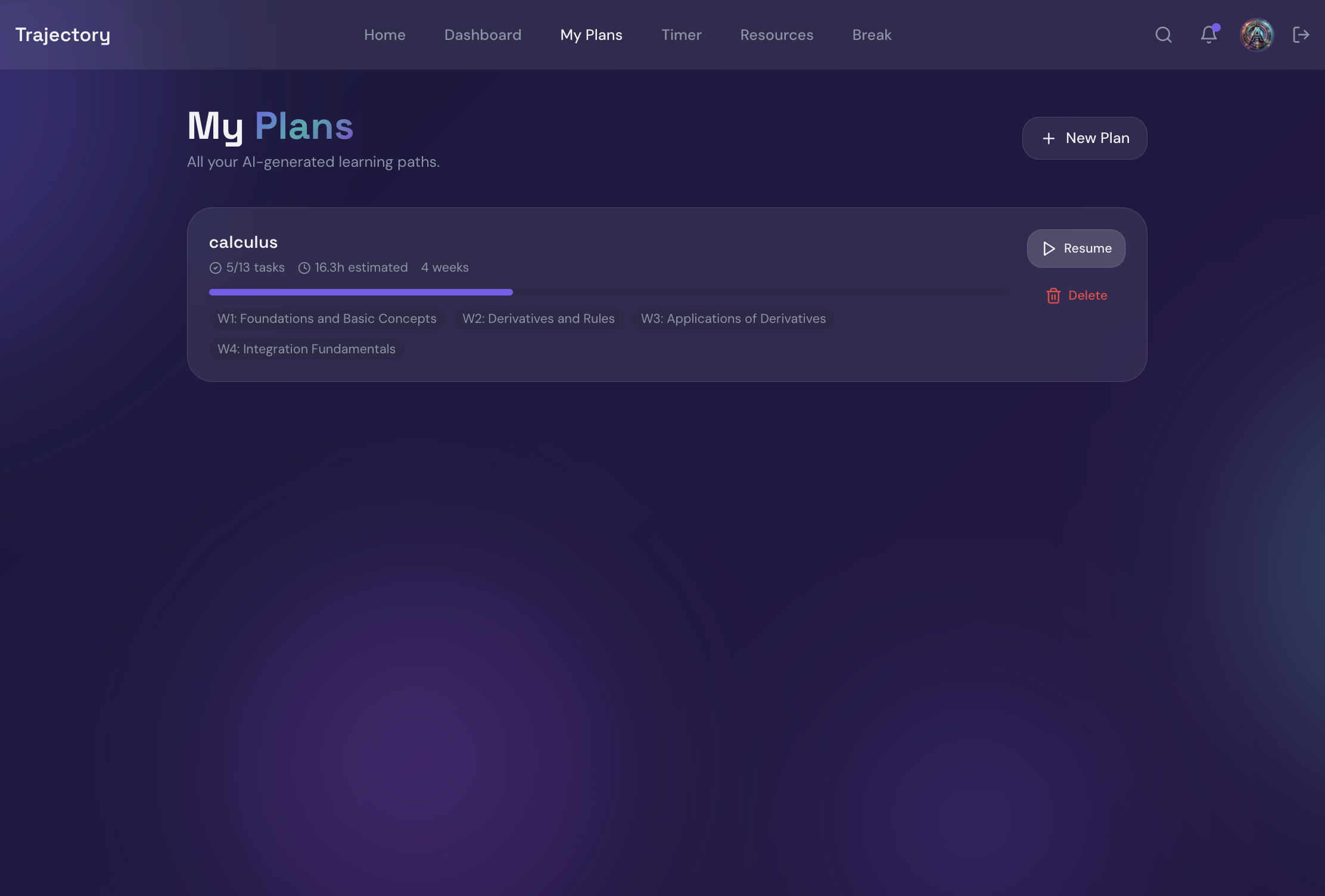
Plans Page
-
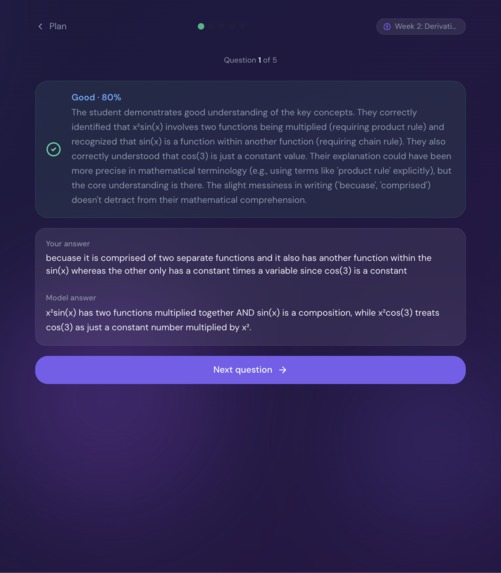
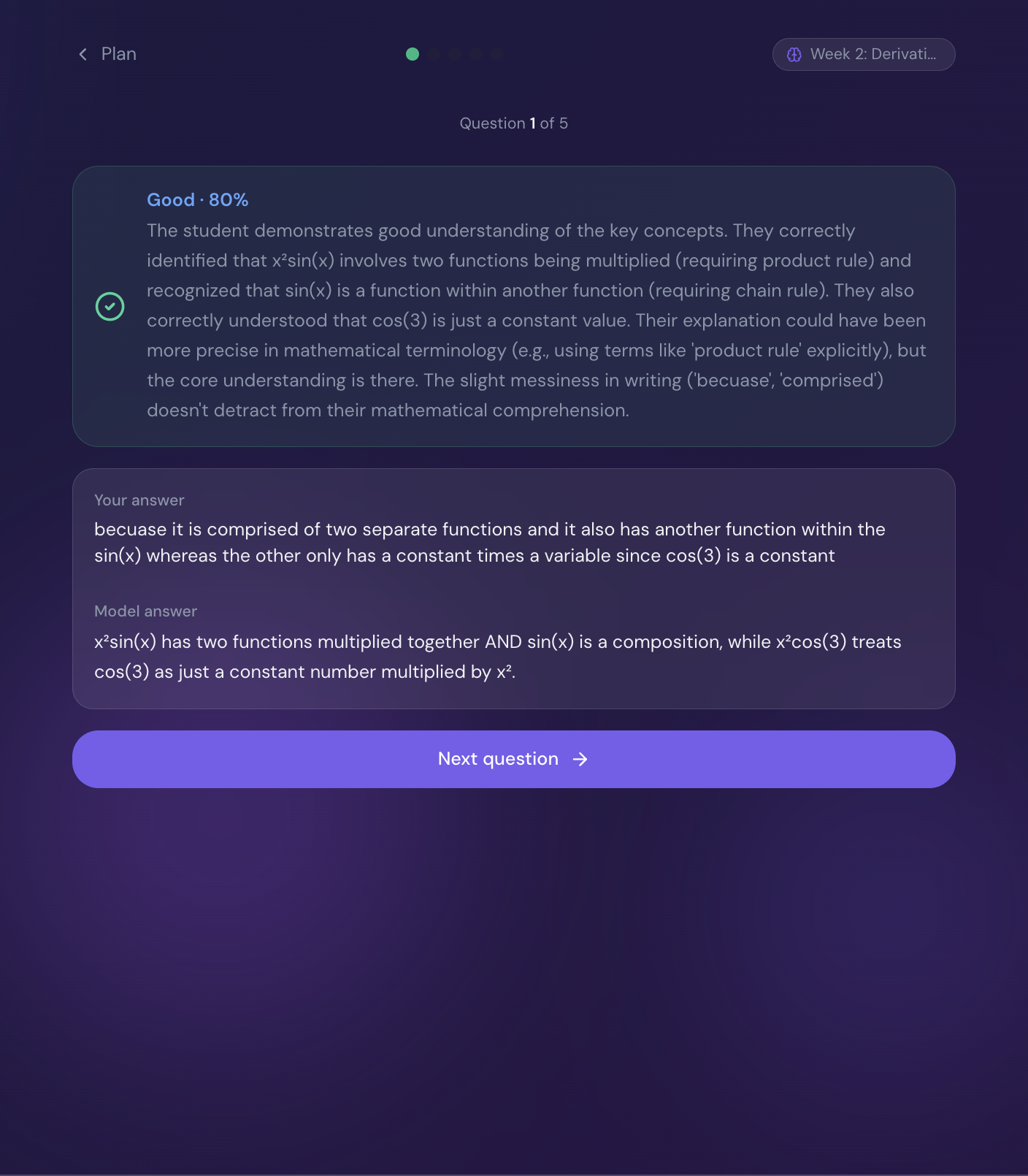
Problem Session
-
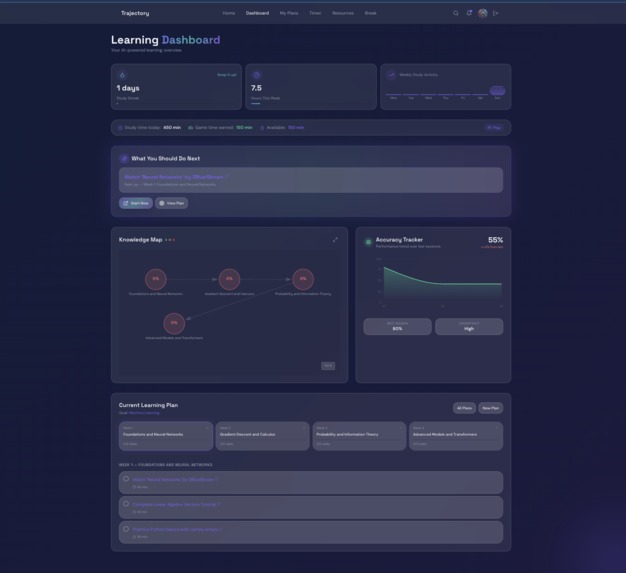
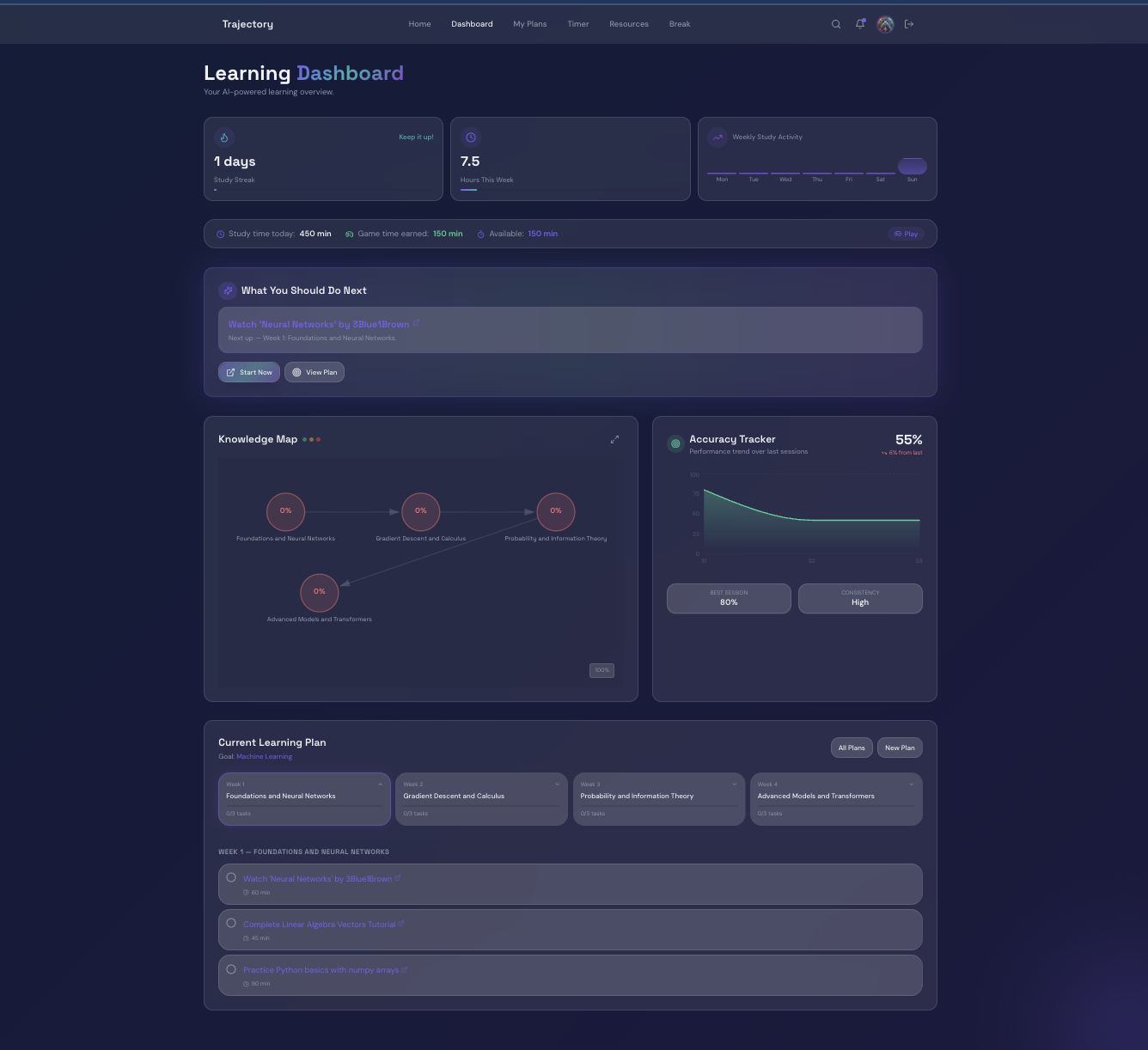
User Dashboard
-
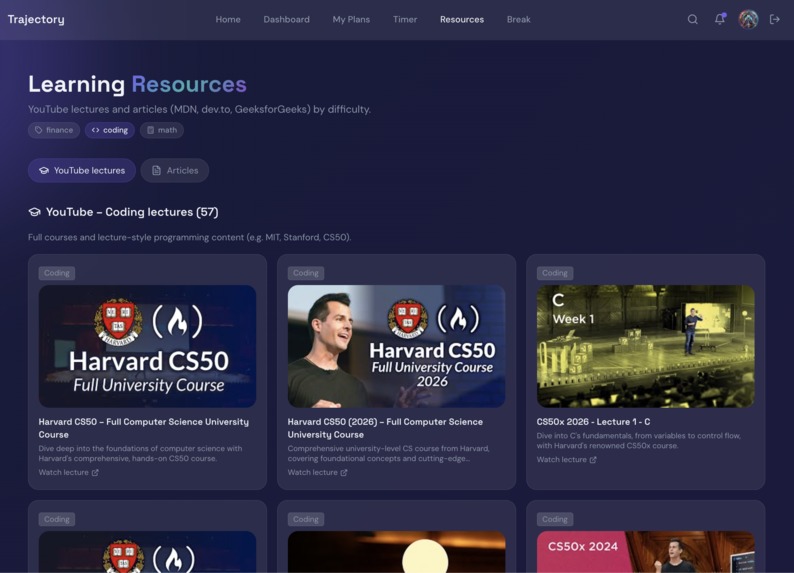
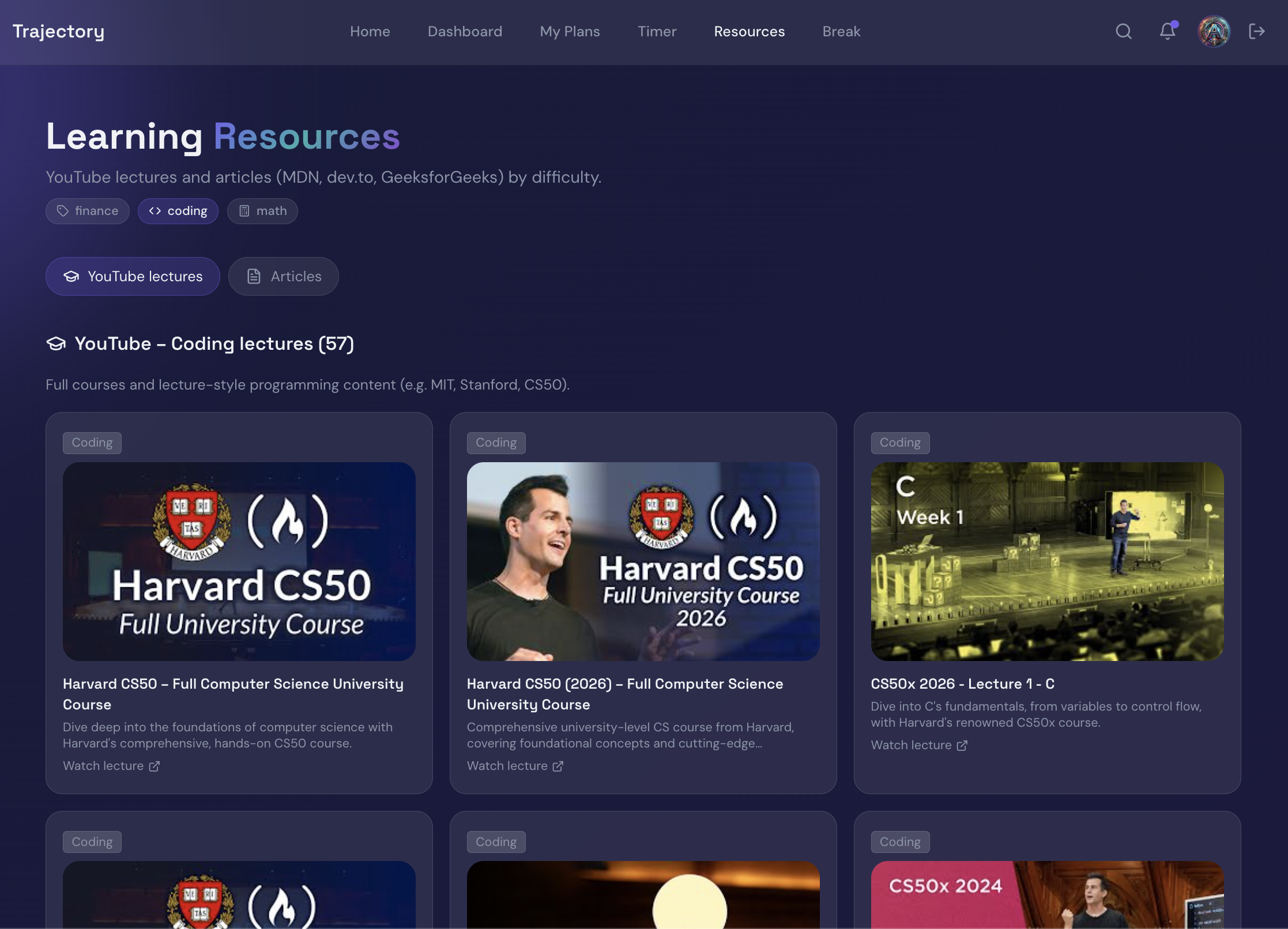
Coding Video Resources
-
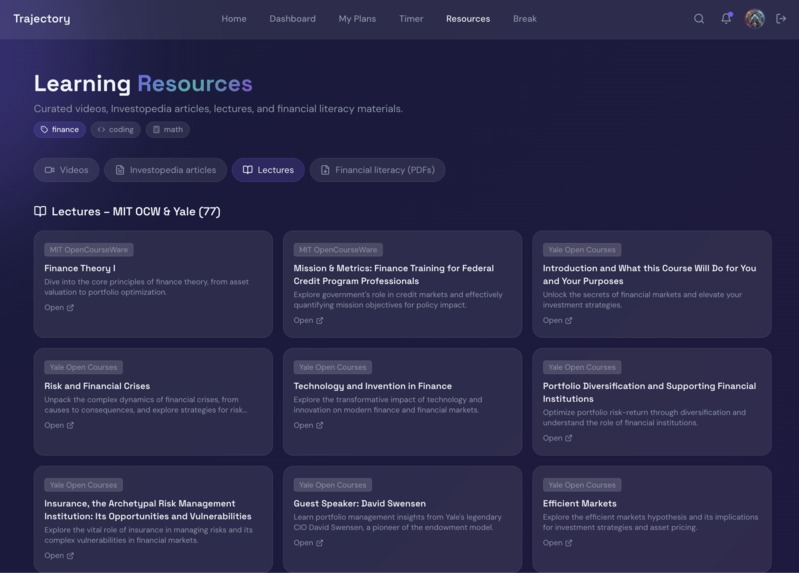
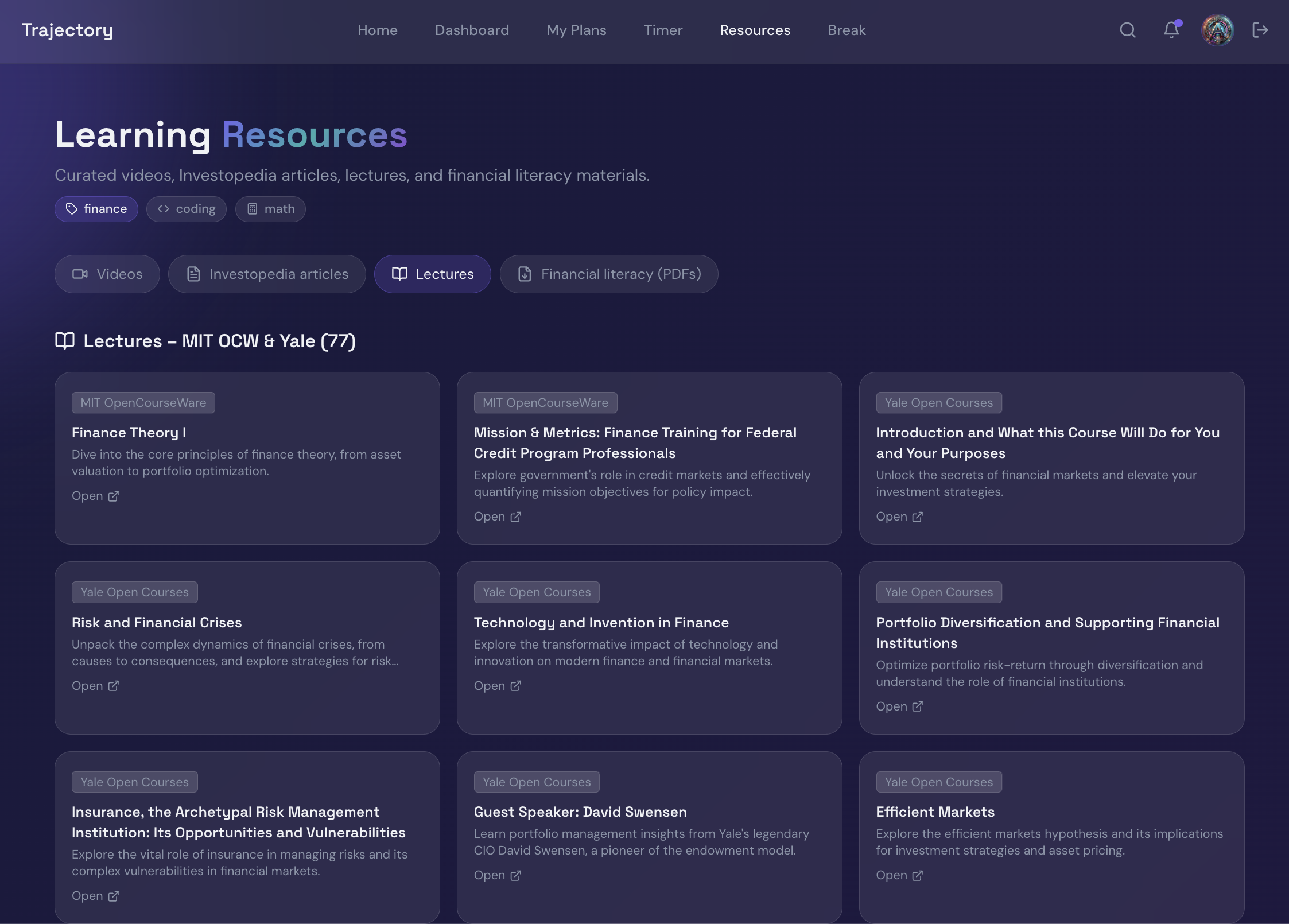
Finance Lecture Resources
-
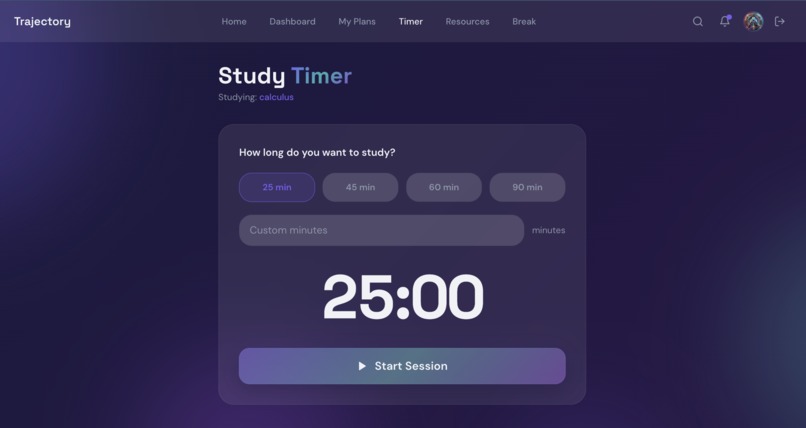
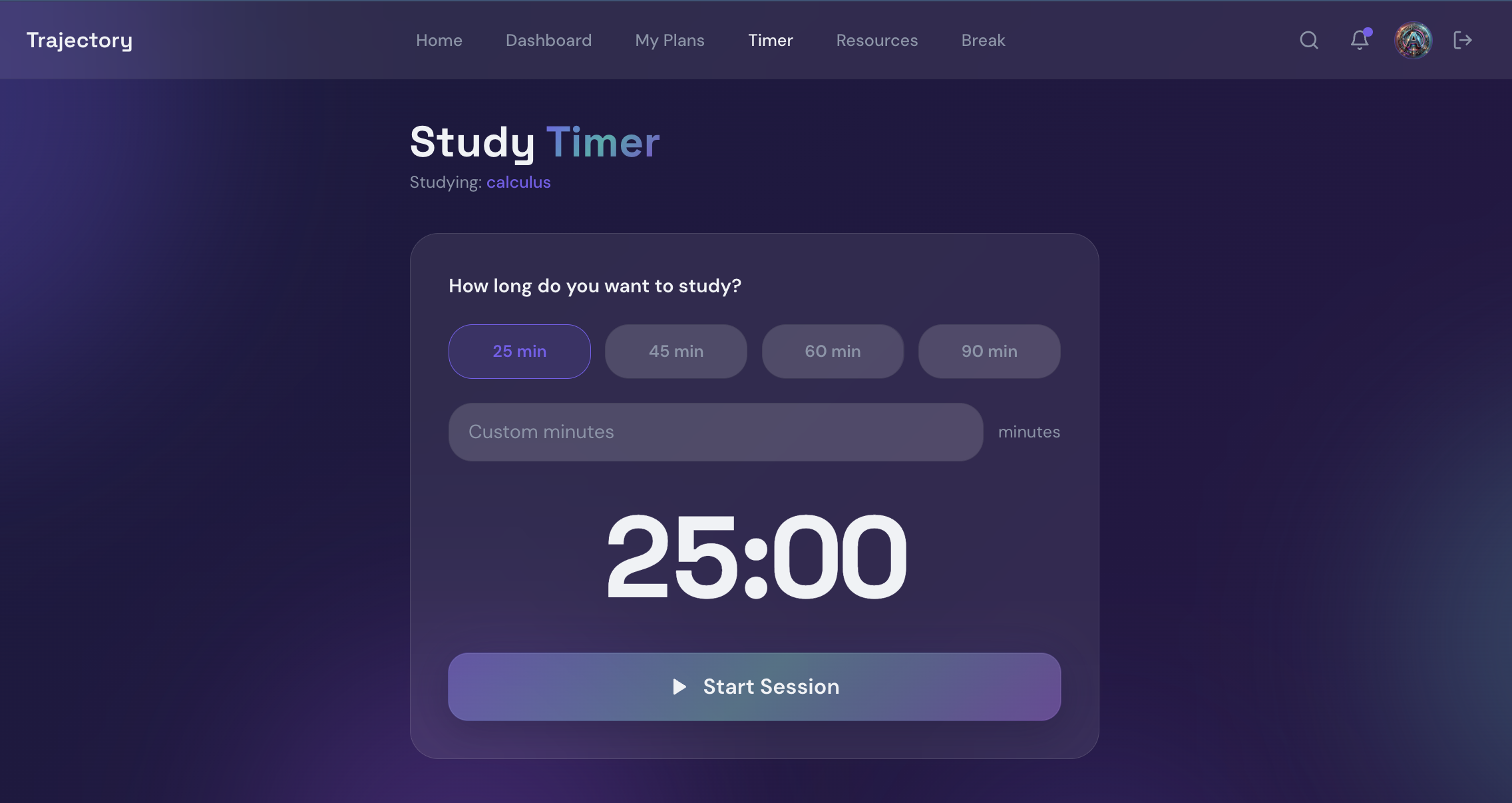
Session Timer
-
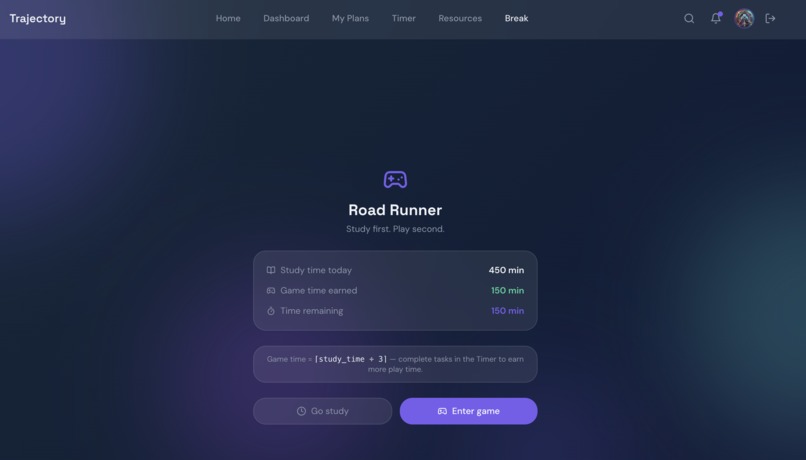
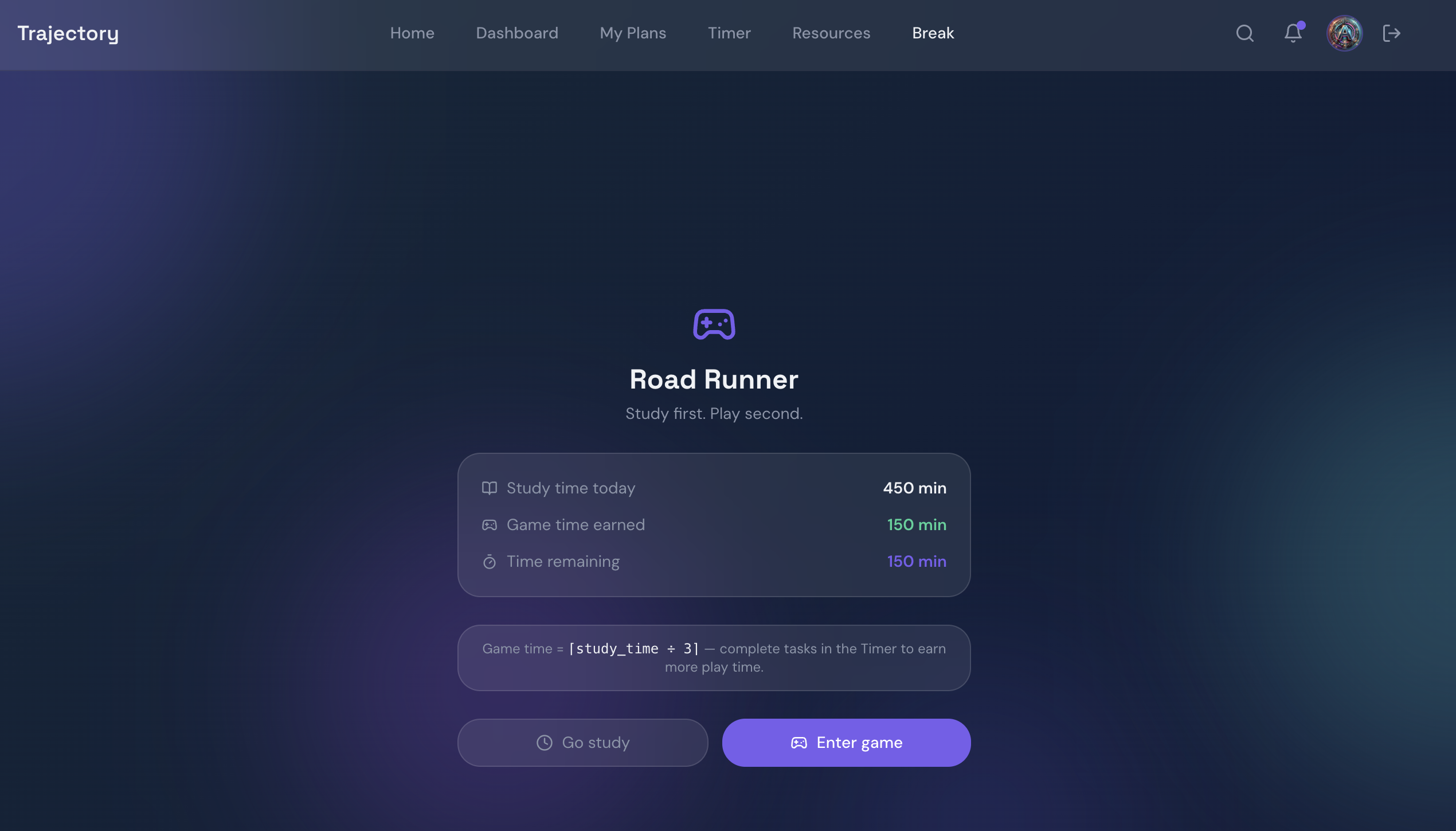
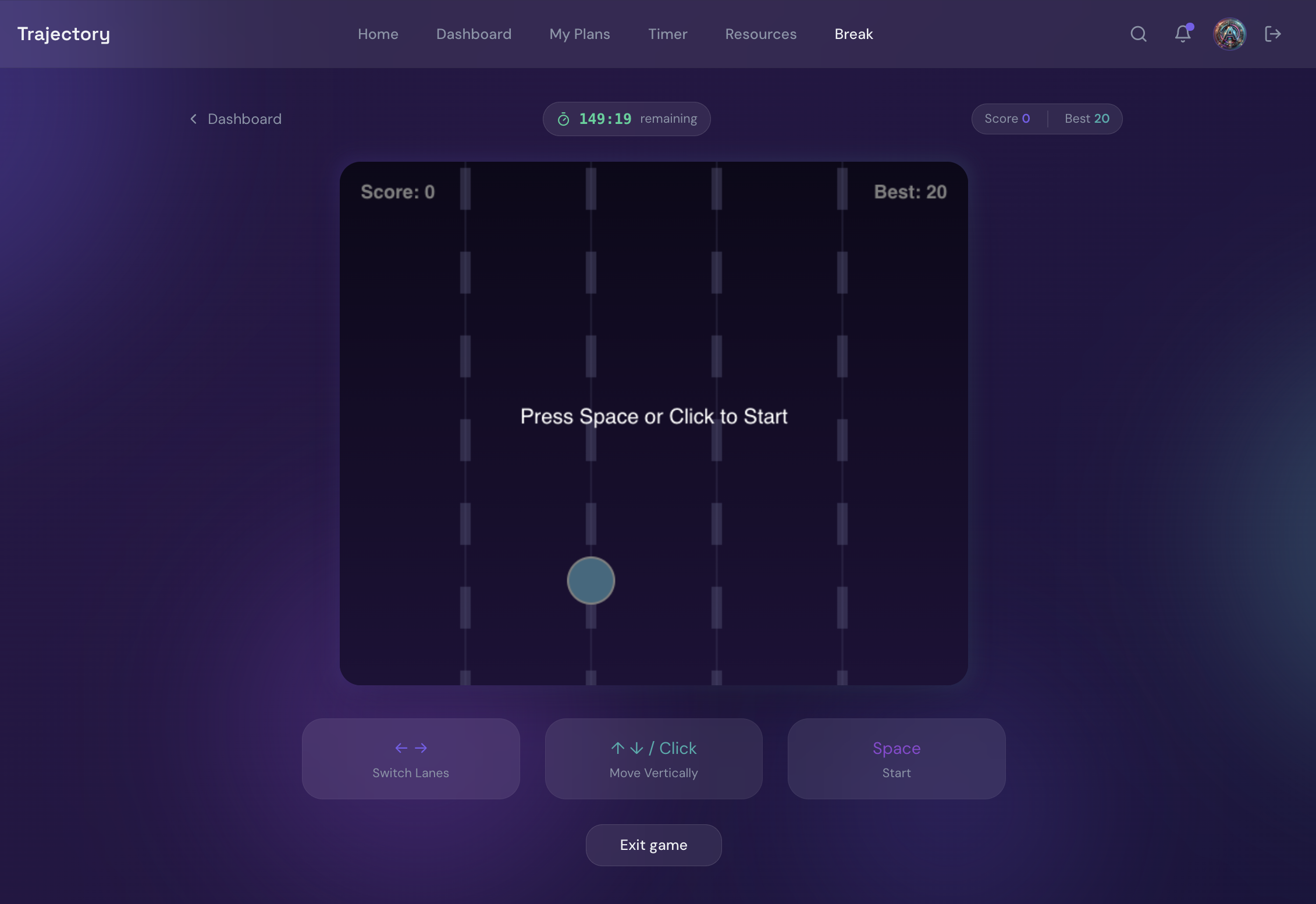
Game Break Page
-
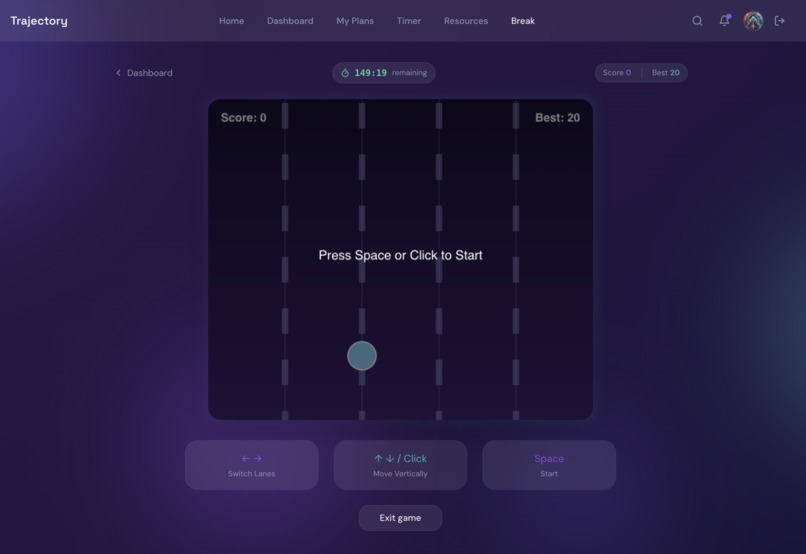
Game Demo Page
-
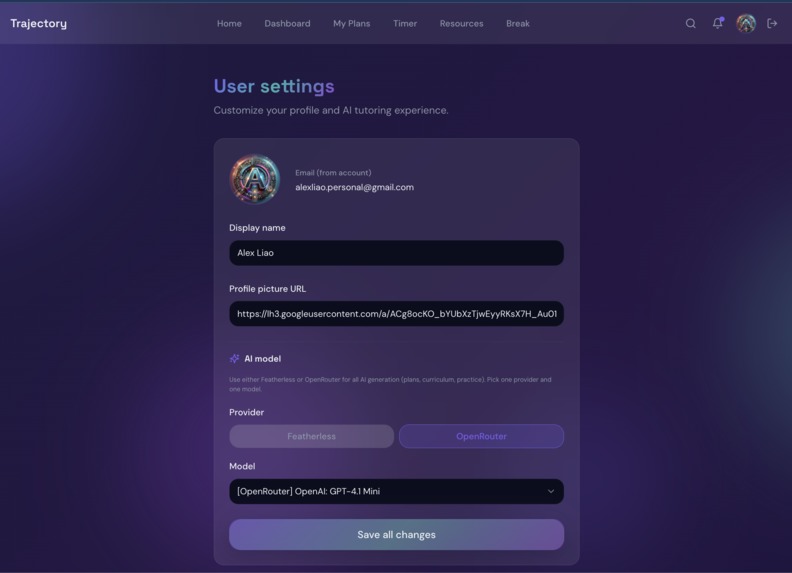
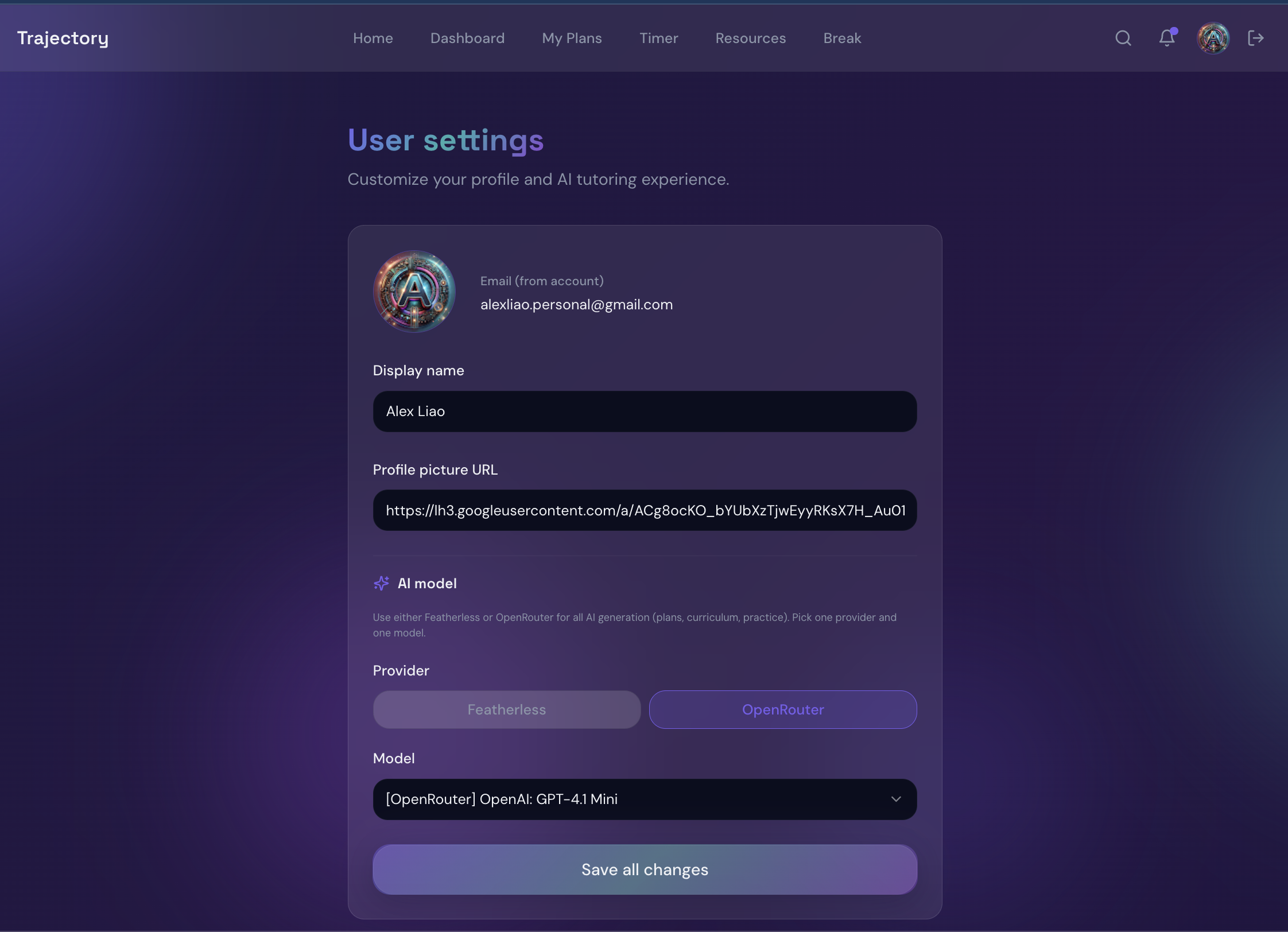
User Profile
Inspiration
Online learning has never been more accessible, yet most learners never finish what they start. Studies show that around 90% of learners never complete online courses, largely because existing platforms lack structure, feedback, and motivation.
Most current AI study tools focus on isolated features such as tutoring, flashcards, or answering homework questions. While helpful in small moments, they fail to guide learners through a complete learning journey.
We wanted to build something different: a system that not only answers questions, but guides users from learning concepts to mastering them while staying motivated along the way.
That idea became Trajectory.
What it does
Trajectory is an adaptive AI learning platform that turns a learning goal into a structured path from concept discovery to mastery. Instead of just tutoring, Trajectory builds a structured learning loop: Adaptive Curriculum – Trained AI generates a personalized learning path based on the user's goal and as the user continues the curriculum adapts to the users learning style and progress. Lectures – High-quality video lessons are dynamically organized for each concept from over thousands of lectures online on OpenCourseWare, Yale and Investopedia. Targeted Practice – Problems are generated based on the exact concepts the user just learned. Mastery Tracking – The system tracks understanding and adjusts future lessons accordingly. Motivation System – Micro-break games keep learners engaged and prevent burnout. Analytics Dashboard – Users can see progress and mastery across their learning trajectory. By integrating the entire learning cycle, discovering topics, learning concepts, practicing skills, and maintaining motivation, Trajectory transforms scattered AI tools into a single continuous learning system.
How we built it
Trajectory was designed as a hybrid system that combines a high-performance frontend with an AI-driven backend.
The platform’s interface is built using React, TypeScript, and Vite to create a fast and responsive learning environment. Tailwind CSS and Framer Motion power the modern UI and smooth transitions across the dashboard.
Behind the interface, a Python-based AI layer handles the core intelligence of the platform. This system maps relationships between concepts, tracks mastery scores based on practice performance, generates study plans from user goals, and dynamically creates practice questions tailored to the learner’s level.
To power the learning content itself, we built a data pipeline that scrapes and normalizes educational resources from sources like OpenCourseWare, Yale lectures, and Investopedia. These resources are cleaned and converted into a unified format that both the AI system and frontend can use.
User progress, study plans, and concept mastery are stored in a Supabase PostgreSQL database, allowing the system to track learning over time and update the visual knowledge graph in real time.
Together, these components create a system where the interface, AI engine, and learning data all work together to guide the learner through their trajectory.
Challenges we ran into
One of the biggest challenges was moving beyond a simple AI tutoring system. Many AI tools can already answer questions, but designing a platform that: structures learning, tracks mastery, adapts curriculum, keeps users motivated, required building a cohesive system rather than individual features. Another challenge was linking generated content together so that: lecture videos, practice problems, and curriculum progression all remained aligned with the learner’s progress. We also had to balance AI generation speed with quality so lessons could appear instantly without sacrificing clarity or accuracy.
What we learned
This project taught us that effective learning requires more than just information. Students often struggle not because resources are unavailable, but because they lack: structure, feedback, motivation, progress visibility We also learned how powerful AI can be when used to generate educational content dynamically and personalize learning experiences. We learned the importance of designing systems, not just features. The most valuable part of Trajectory is not any single tool, but how all the components work together to guide the learner. On the technical side: Trajectory uses a modern full-stack architecture designed for performance and scalability. The frontend is built with React, TypeScript, and Vite, while the backend intelligence layer is implemented in Python. We use Supabase and PostgreSQL for data storage, authentication, and real-time updates, with Edge Functions handling lightweight serverless operations. The platform integrates AI models through the OpenAI/OpenRouter APIs to generate study plans, explanations, and practice questions dynamically. To support adaptive learning, we built a concept graph system that models relationships between topics. This allows the platform to track mastery across concepts and adjust future lessons based on a learner’s progress. The result is a system that blends interactive frontend design, structured educational data, and AI-driven personalization into a single adaptive learning platform.
What's next for Trajectory
We see Trajectory evolving into a full AI learning platform. Future plans include: Community learning features such as collaborative study and peer challenges, Expanded content to cover more humanities topics and more games for users to play. Ultimately, our goal is to reduce the 90% course dropout rate by giving learners the structure, feedback, and motivation they need to succeed.
Built With
- fastapi
- featherless
- openrouter
- python
- react
- typescript
- vercel
- xyz


Log in or sign up for Devpost to join the conversation.