-
-
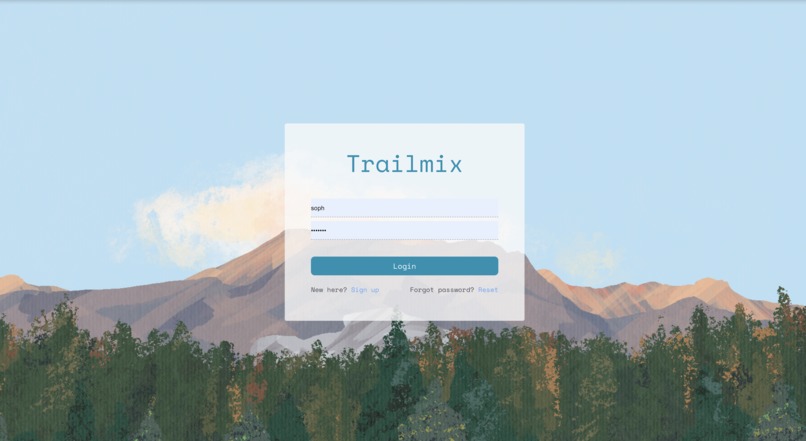
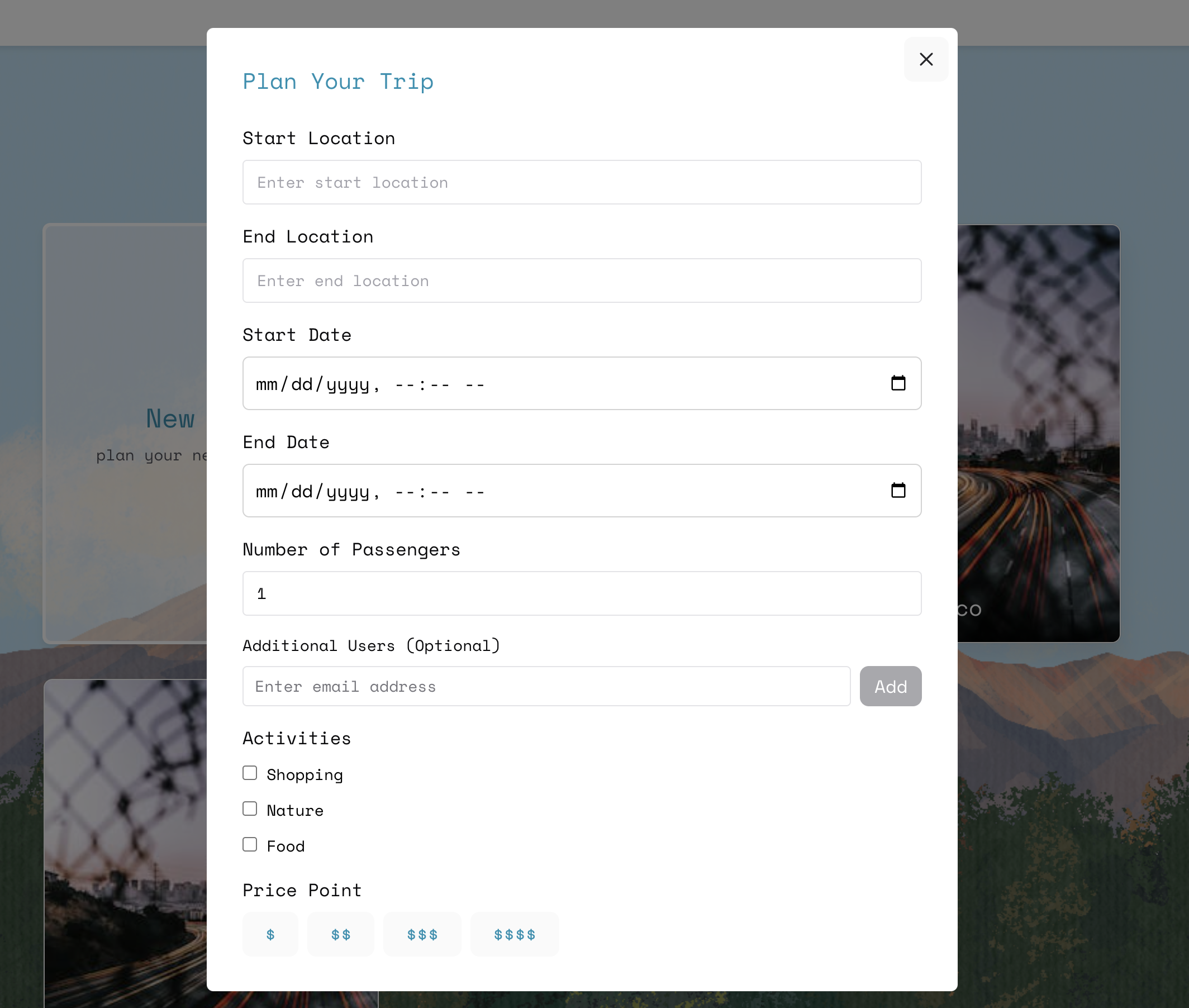
login
-

home
-
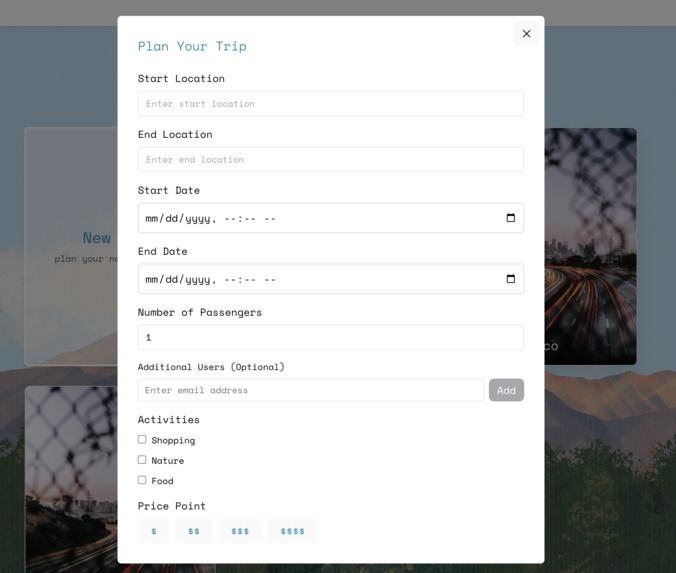
form

Inspiration
Road trips mean vacations of freedom and discovery. But the heavy-lifting planning is overwhelming. Plotting routes down to the minute, hunting for the best places to eat and sleep, juggling activity budgets, and researching local hotspots all take away from the spontaneity of a road trip. TrailMix was born to bridge this gap, automating the concern of budget planning with logistics to optimize travelers' exploring time.
What it does
Trailmix lets you craft personalized, budget-friendly road trips in just a few clicks. Simply enter your start and end points, travel dates, number of passengers, preferred activities, and price range, then sit back as Trailmix curates a complete itinerary of scenic stops, top-rated eateries, comfortable lodging, and more that fit your criteria. Then share your trip with friends and watch it appear instantly on their private dashboards for easy access.
How we built it
Trailmix is built on the classic MERN tech stack, with an additional FLASK backend. The frontend was developed using Chakra-UI components and artwork hand-drawn by our team. The backend uses MongoDB to store user objects and trip objects, where important information like passwords is hashed. In addition, all pages are also authenticated with a JWT token. The itinerary generation uses Gemini and Fetch AI agents to make requests to the Yelp and Google Maps API's.
Challenges we ran into
Integrating Fetch.ai agents posed a significant hurdle for our team. Since we didn't plan to use these AI tools from the beginning, we had to pivot our architecture, adding a Python-based database layer to support them. To get up to speed, we dove into the Fetch.ai documentation and worked closely with their developer representatives. Another major hurdle was integrating our API calls with Gemini; perfecting the prompts and analyzing bugs took hours of iterative testing and debugging before everything clicked.
Accomplishments that we're proud of
One of our key achievements was establishing a fully working client–server integration within the first hours of the event, giving every team member a stable foundation for rapid feature development. We’re also proud to have executed our first implementations of Fetch AI’s UAgents and Google’s Gemini API.
What we learned
Our team worked on our first integration with Google’s Gemini API and developed a solid understanding of Fetch AI’s UAgents. In addition, all of our team members we exposed to new technologies such as: Postman, MongoDB, mongoose, etc., which were great learned experiences.
What's next for Trailmix
Looking forward, our team wants to integrate more personalized options into the initial trip plan request that users make. Also, we want to improve how specific our itinerary suggestions can get, incorporating more consideration factors like gas locations and daily weather.
Looking ahead, we plan to deepen personalization by letting users specify even more preferences, such as scenic detours, dietary requirements, or pacing, and then tailor their trip request accordingly. We’ll also sharpen our itinerary engine to pull in real-time data, considering gas-station locations, daily weather forecasts, and local events so every recommendation is as precise and relevant as possible. Lastly, we would like to implement the option for users to replace a recommended event, and an altered itinerary is given with a replacement suggestion. ## Inspiration Road trips mean vacations of freedom and discovery. But the heavy-lifting planning is overwhelming. Plotting routes down to the minute, hunting for the best places to eat and sleep, juggling activity budgets, and researching local hotspots all take away from the spontaneity of a road trip. TrailMix was born to bridge this gap, automating the concern of budget planning with logistics to optimize travelers' exploring time.
What it does
Trailmix lets you craft personalized, budget-friendly road trips in just a few clicks. Simply enter your start and end points, travel dates, number of passengers, preferred activities, and price range, then sit back as Trailmix curates a complete itinerary of scenic stops, top-rated eateries, comfortable lodging, and more that fit your criteria. Then share your trip with friends and watch it appear instantly on their private dashboards for easy access.
How we built it
Trailmix is built on the classic MERN tech stack, with an additional FLASK backend. The frontend was developed using Chakra-UI components and artwork hand-drawn by our team. The backend uses MongoDB to store user objects and trip objects, where important information like passwords is hashed. In addition, all pages are also authenticated with a JWT token. The itinerary generation uses Gemini and Fetch AI agents to make requests to the Yelp and Google Maps API's.
Challenges we ran into
Integrating Fetch.ai agents posed a significant hurdle for our team. Since we didn't plan to use these AI tools from the beginning, we had to pivot our architecture, adding a Python-based database layer to support them. To get up to speed, we dove into the Fetch.ai documentation and worked closely with their developer representatives. Another major hurdle was integrating our API calls with Gemini; perfecting the prompts and analyzing bugs took hours of iterative testing and debugging before everything clicked.
Accomplishments that we're proud of
One of our key achievements was establishing a fully working client–server integration within the first hours of the event, giving every team member a stable foundation for rapid feature development. We’re also proud to have executed our first implementations of Fetch AI’s UAgents and Google’s Gemini API.
What we learned
Our team worked on our first integration with Google’s Gemini API and developed a solid understanding of Fetch AI’s UAgents. In addition, all of our team members we exposed to new technologies such as: Postman, MongoDB, mongoose, etc., which were great learned experiences.
What's next for Trailmix
Looking forward, our team wants to integrate more personalized options into the initial trip plan request that users make. Also, we want to improve how specific our itinerary suggestions can get, incorporating more consideration factors like gas locations and daily weather.
Looking ahead, we plan to deepen personalization by letting users specify even more preferences, such as scenic detours, dietary requirements, or pacing, and then tailor their trip request accordingly. We’ll also sharpen our itinerary engine to pull in real-time data, considering gas-station locations, daily weather forecasts, and local events so every recommendation is as precise and relevant as possible. Lastly, we would like to implement the option for users to replace a recommended event, and an altered itinerary is given with a replacement suggestion.

Log in or sign up for Devpost to join the conversation.