-
-
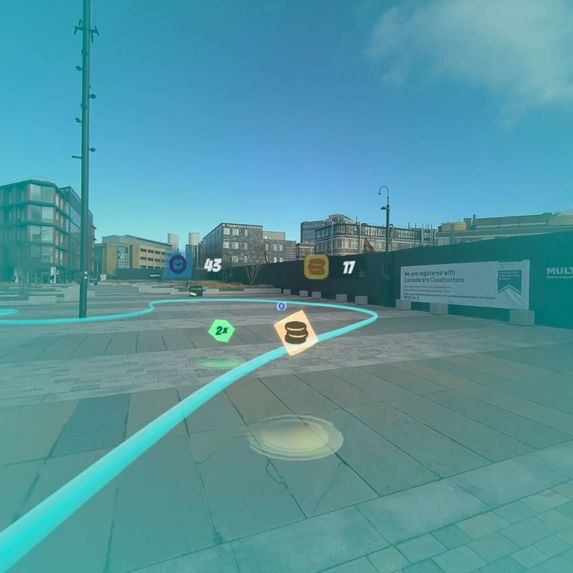
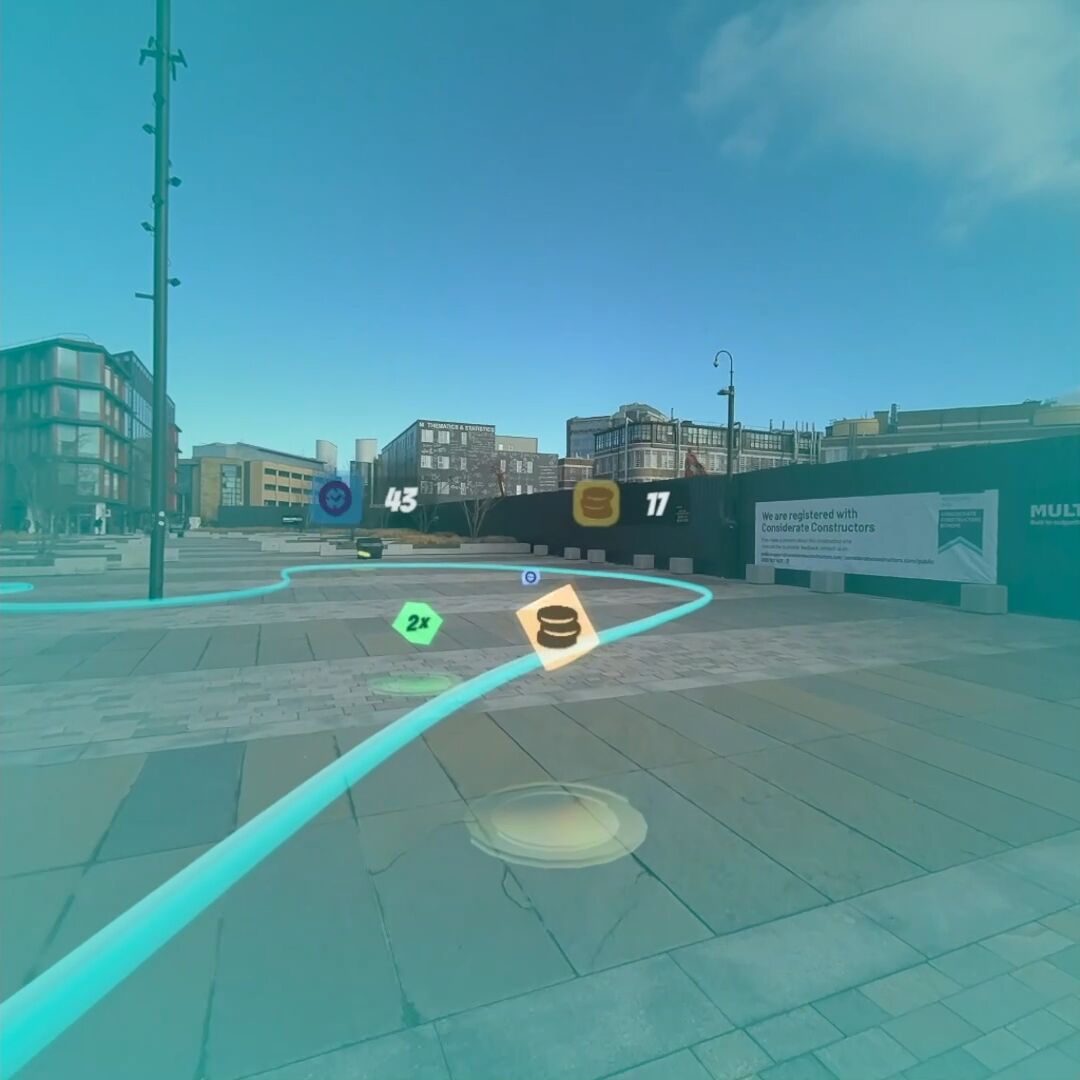
What you see in the headset. The player is cycling towards a stack of coins leaving a narrow gap between them and their trail on the left.
-
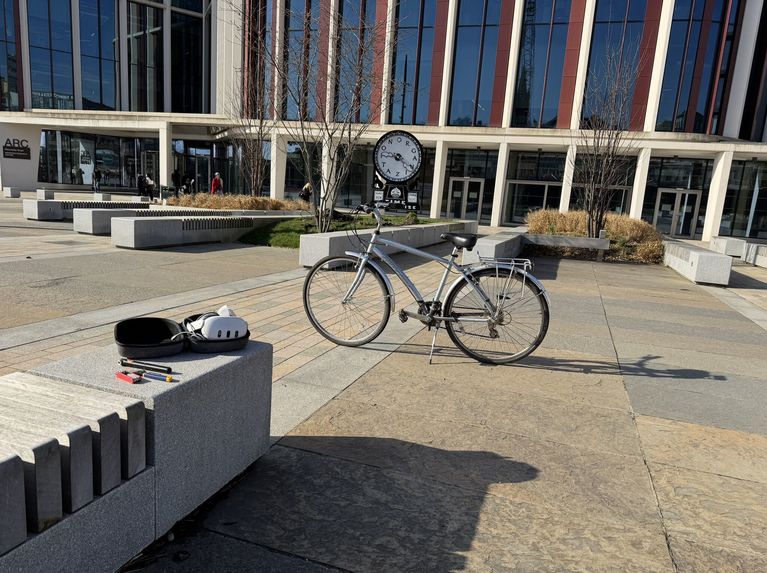
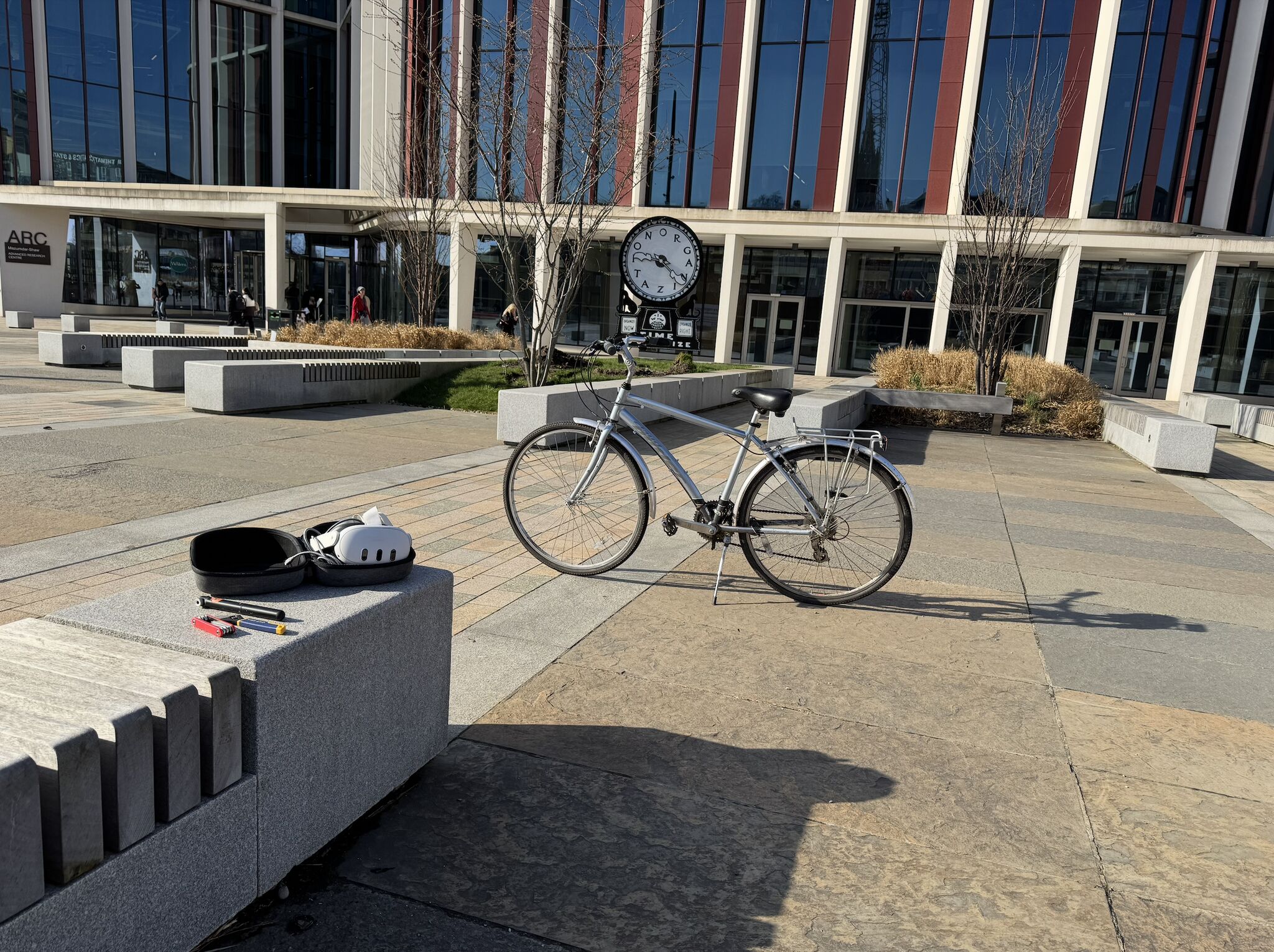
The setup for Trailblazer
-
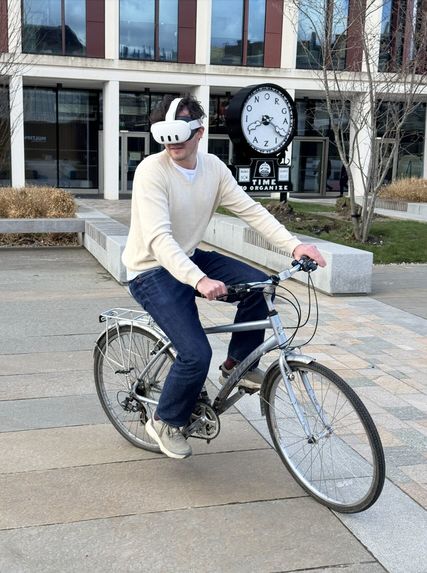
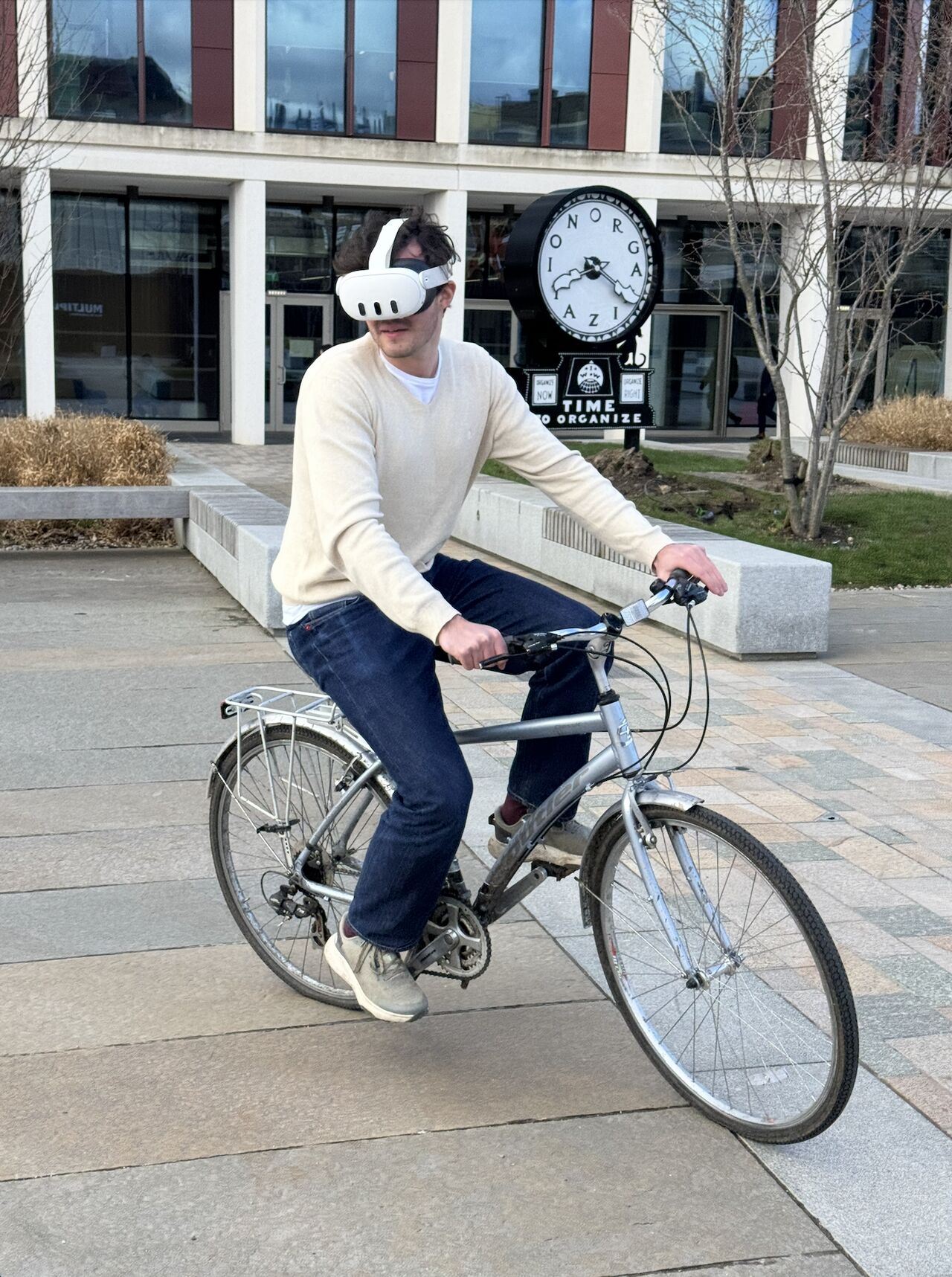
Immersed Player 1
-
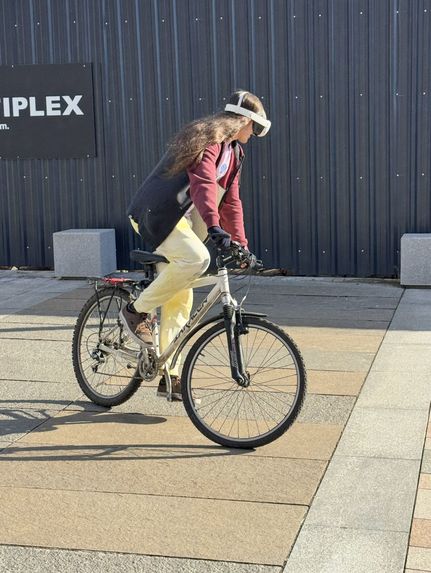
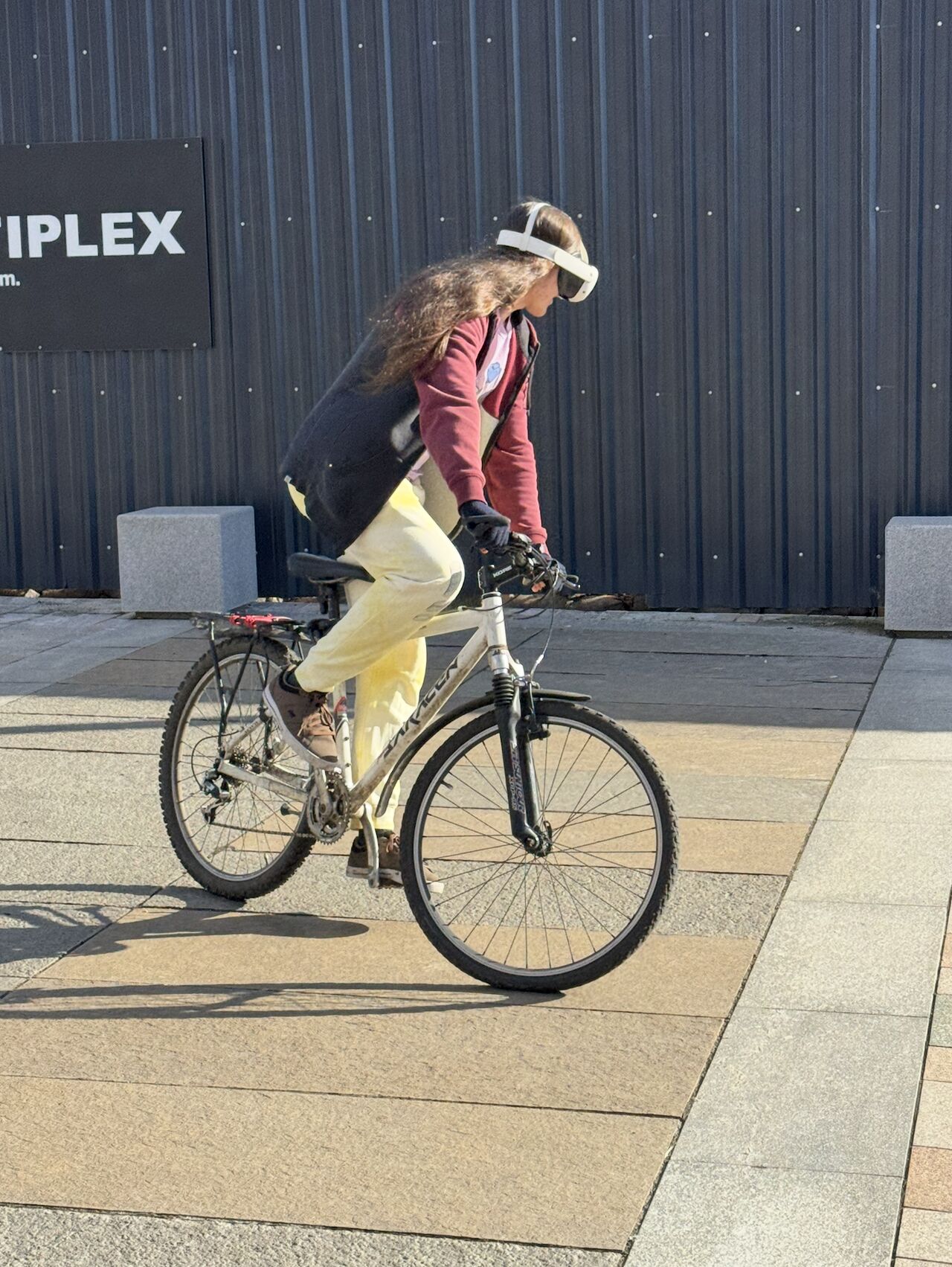
Immersed Player 2
Inspiration
My project supervisor, Stephen Brewster, encouraged me to build an XR experience for a bike. I wanted to create something that hasn't been done before. So I decided to make a game. The Tron lightcycles massively inspired Trailblazer's design, and the basic game loop draws heavy inspiration from Snake.
What it does
Trailblazer transforms any wide-open space into a game that you play wearing your headset while riding a bike. Power-ups spawn scattered across the space: coins, score multipliers, time boosters, etc. As the player is drawn to collect power-ups, they notice a glowing trail pacing behind them. This trail increases in length as your score improves. Collide with that trail and lose 20 points. Sound effects, animations, basic UI, and a coloured vignette would keep the player immersed and engaged without hindering their spatial awareness.
How I built it
This was built with Unity 6 for the Meta Quest 3. Models are simple geometry, and assets are all open-source. The project repository is up on my GitHub. I had 17 players try out the experience, all of whom left with overwhelmingly positive responses. Players would come back, compare scores, and ask to go again. They had never experienced a virtual augmentation of a real physical activity, such as cycling, before.
Challenges I ran into
This is not an experience or a use case supported by Meta Horizon OS or the Meta Quest 3. The boundary was necessary to draw out a valid area for power-ups to spawn. However, since this is a game played in a large open space, Horizon OS's boundary features deny the ability to stray too far away from the origin point. Therefore, the game is launched and positioned with spatial features enabled. Then, with the game open in the background, they are disabled. This allows MRUK to load a map of the space into the scene while also preventing the OS from shutting down the experience once players cycle too far.
Accomplishments that I'm proud of
This is the first-ever outdoor cycling game built for a head-mounted device, with no team and little to no XR development experience. All controls and interactions are executed solely through collision detection and position updates. Safety considerations were a big part of the game's design, where the speed at which you bike through the virtual gates determines whether or not the game initiates or prompts you to try again.
What I learned
Designing for movement is fundamentally different from stationary experiences. Less is often more, and visual elements need to enhance rather than distract. Information density must account for physical exertion and divided attention. The balance between immersion and spatial awareness became a constant consideration in every design decision. The playtests also showed me that people's excitement about XR extends far beyond what's commercially available. Players weren't just enjoying a game; they were experiencing a glimpse of how technology could transform everyday activities. Their competitive spirit and requests to replay validated that the core concept resonated.
What's next for Trailblazer
So much can be done to iterate on this experience. More importantly, additional safety features are needed to ensure real-use viability. Perhaps running a small computer vision model which detects passerby and dynamically tones down effects and visuals accordingly.
Built With
- metaxr
- unity


Log in or sign up for Devpost to join the conversation.