-

Safety for Everyone
-
Privacy by Design
-
How Trail Works
-
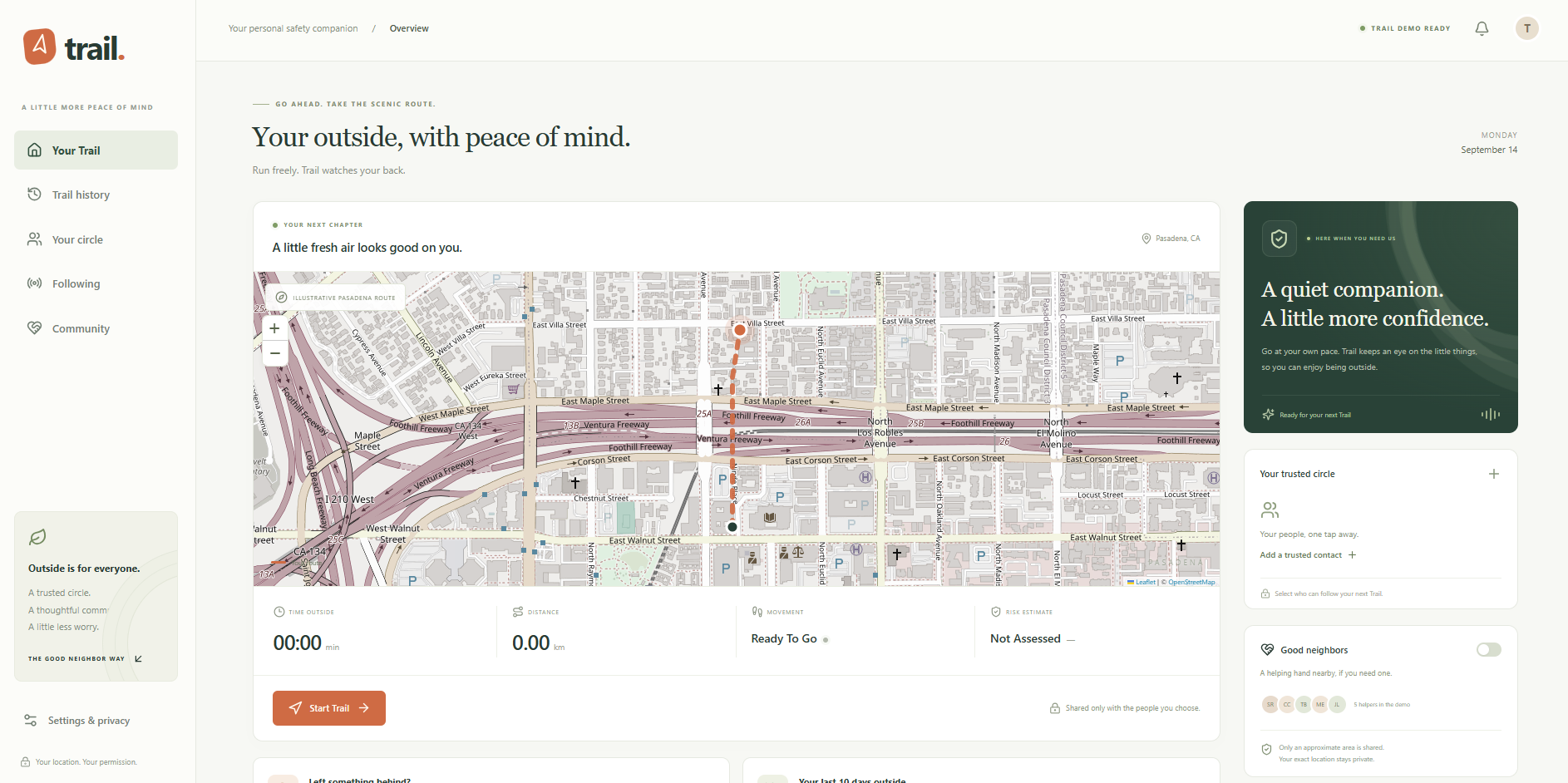
Your Trail (Home Page)
-
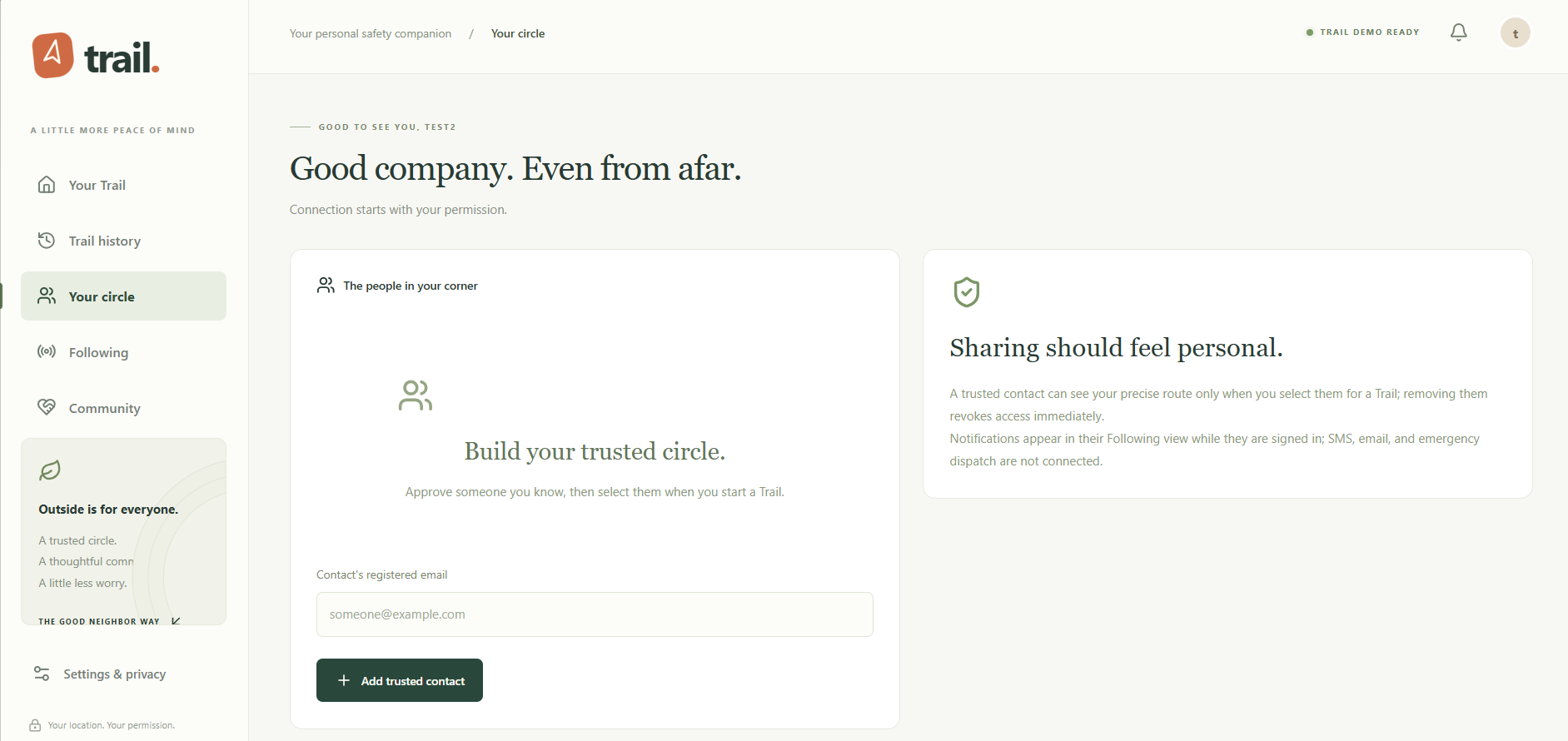
Your Circle
-
Trail History
-
Community
-
Mobile Friendly Interface
-
QR Codes (Mobile Scan)

Inspiration
Many people enjoy running, walking, or jogging alone, but safety can be a concern. Sharing your location helps, but it still requires a friend or family member to keep checking a map. I created Trail because I wanted safety technology that could watch for unusual changes and only get someone's attention when it may be needed.
What it does
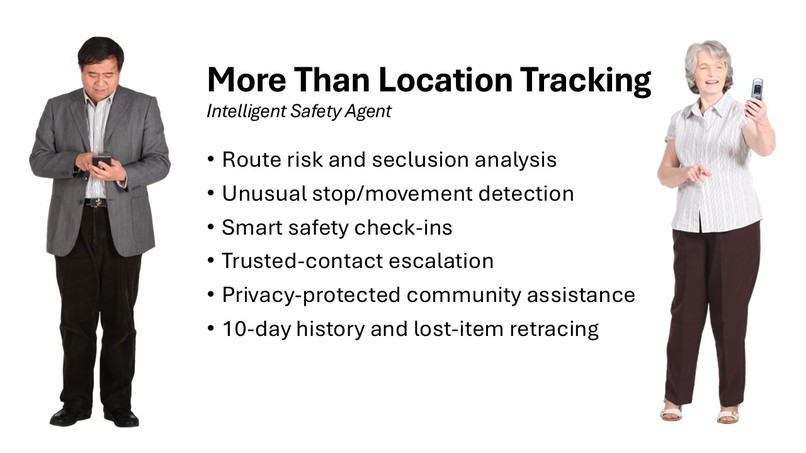
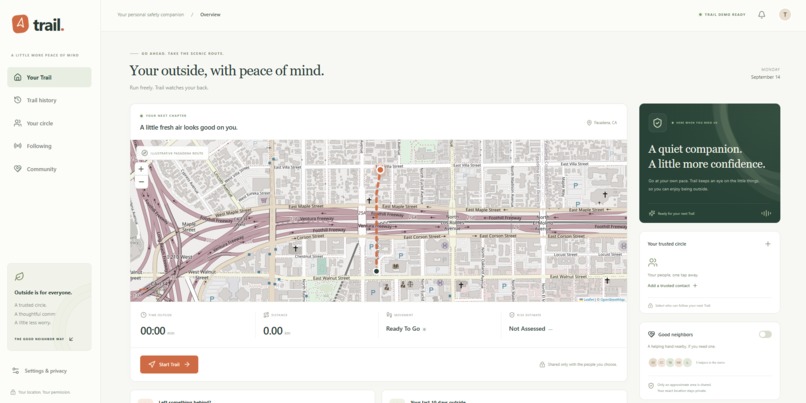
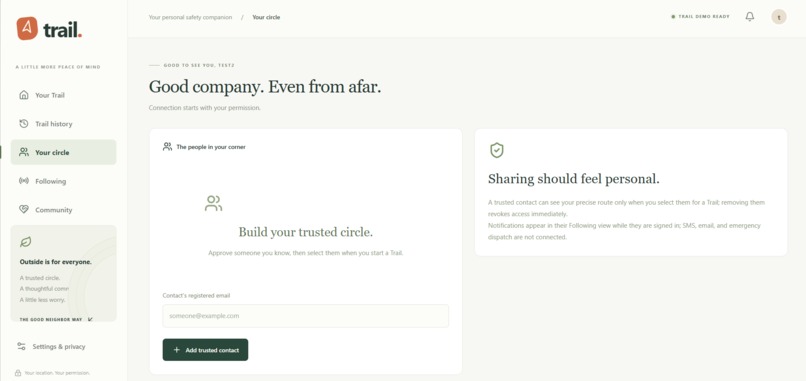
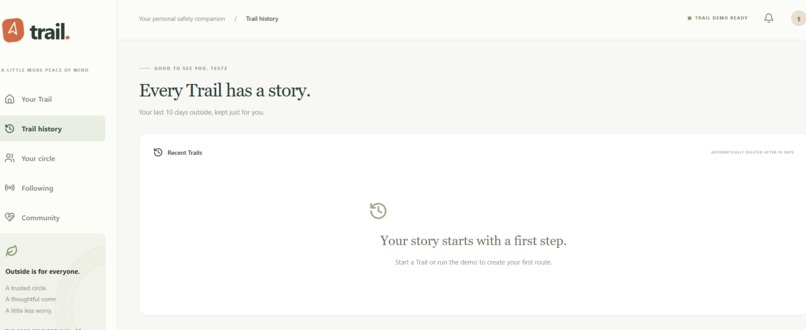
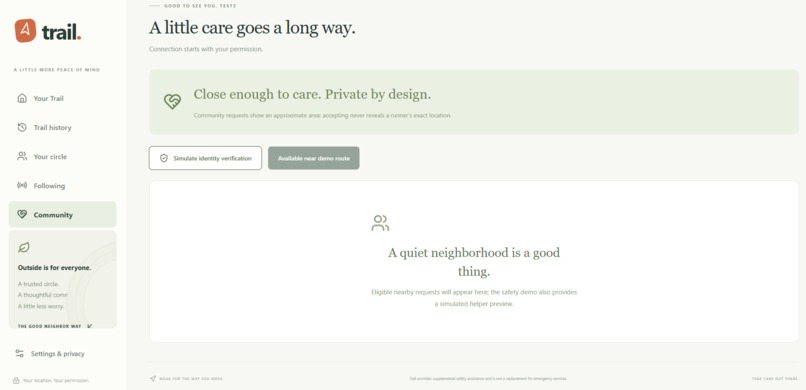
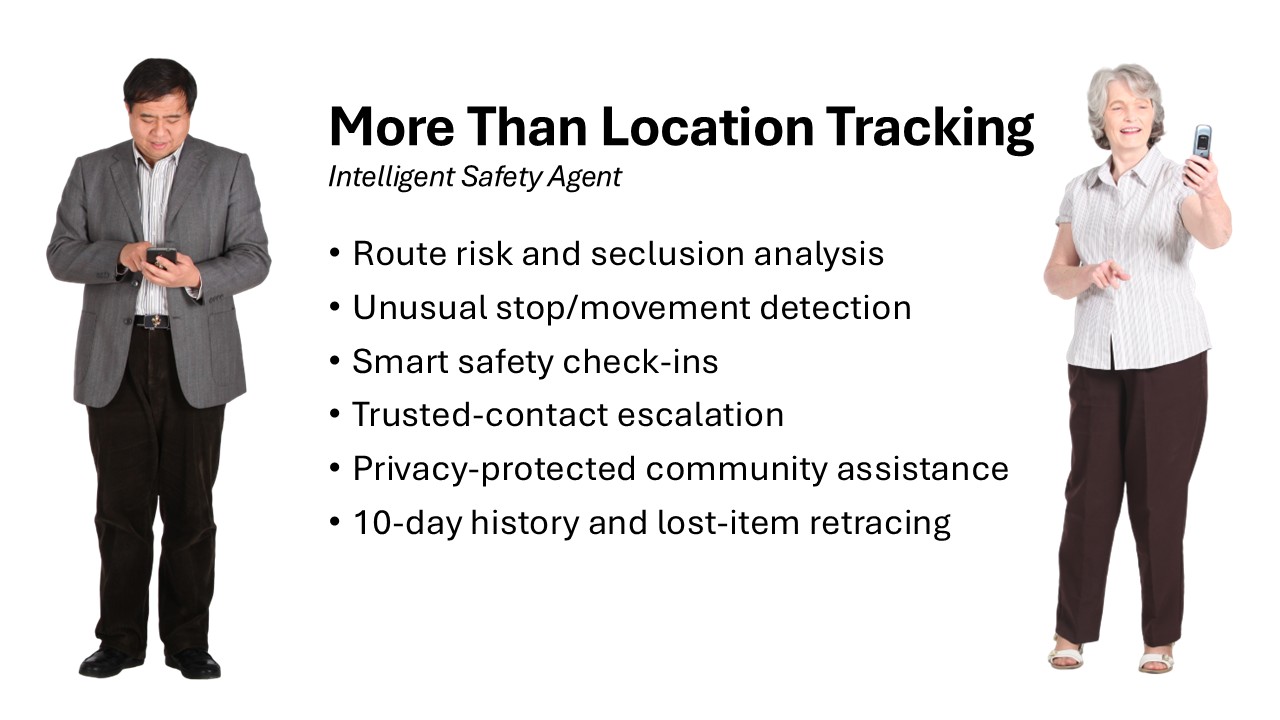
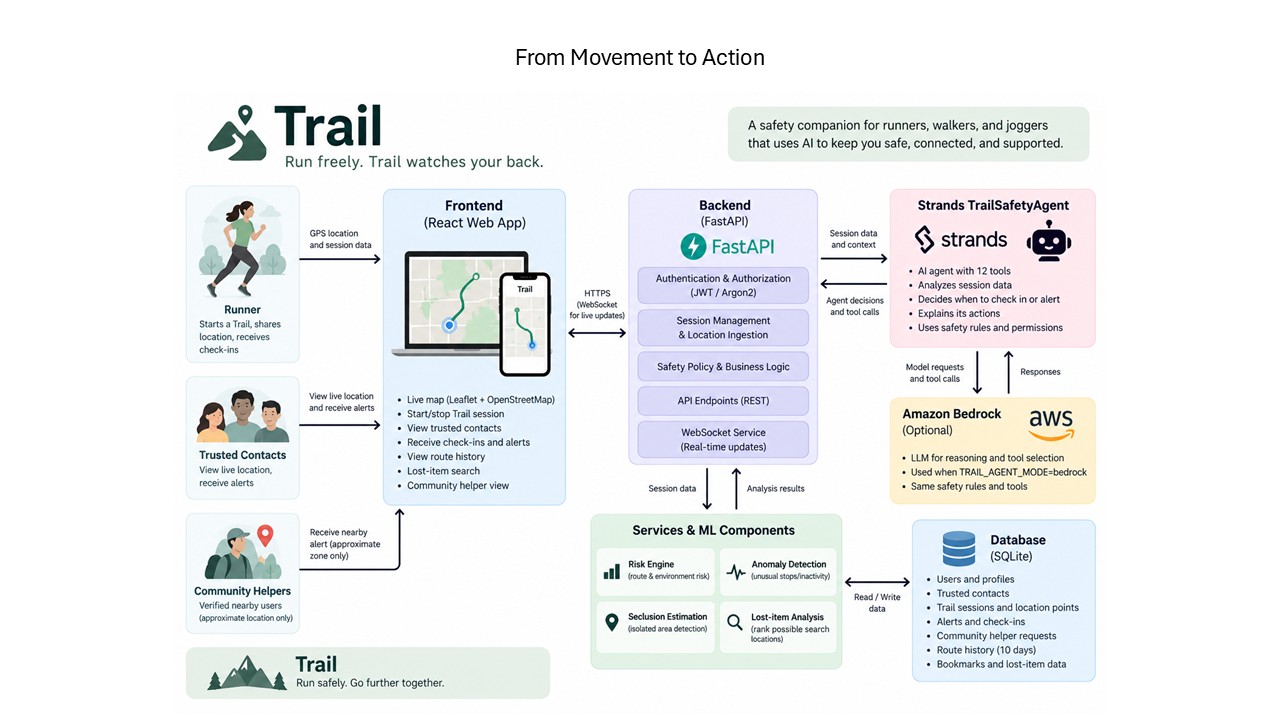
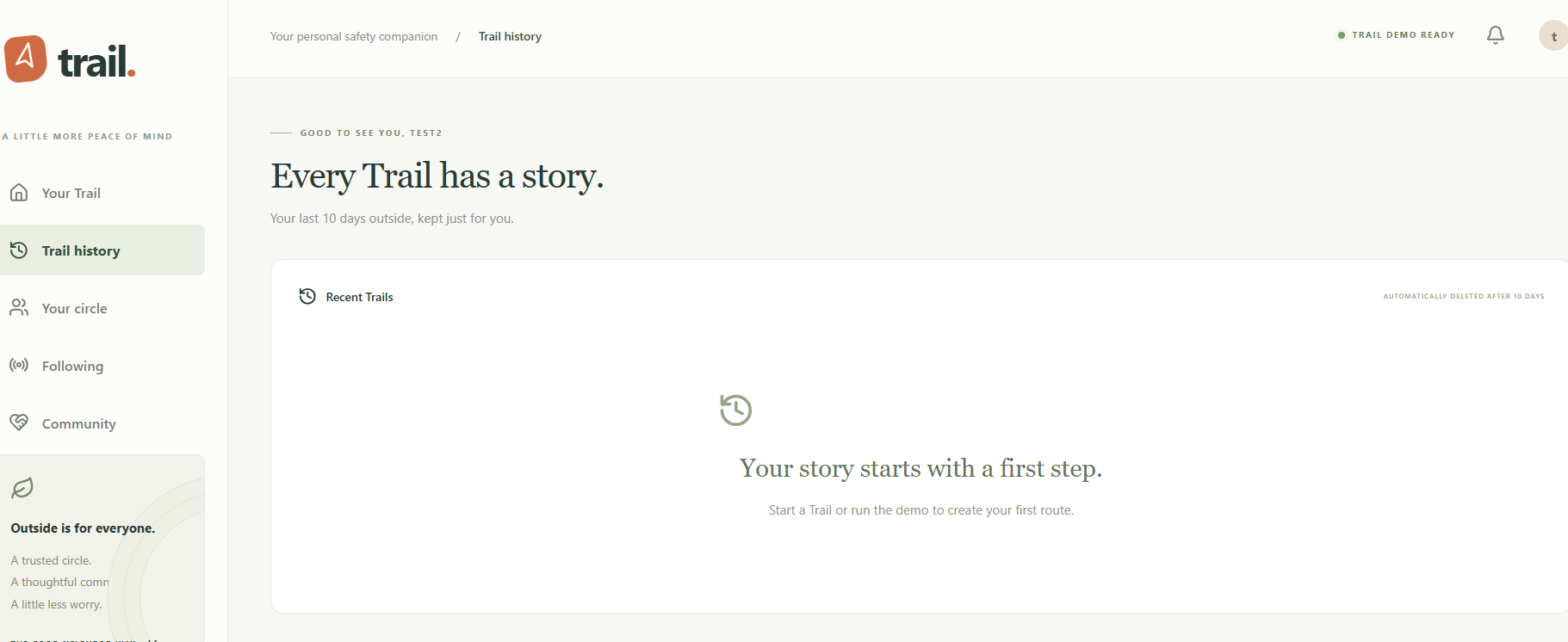
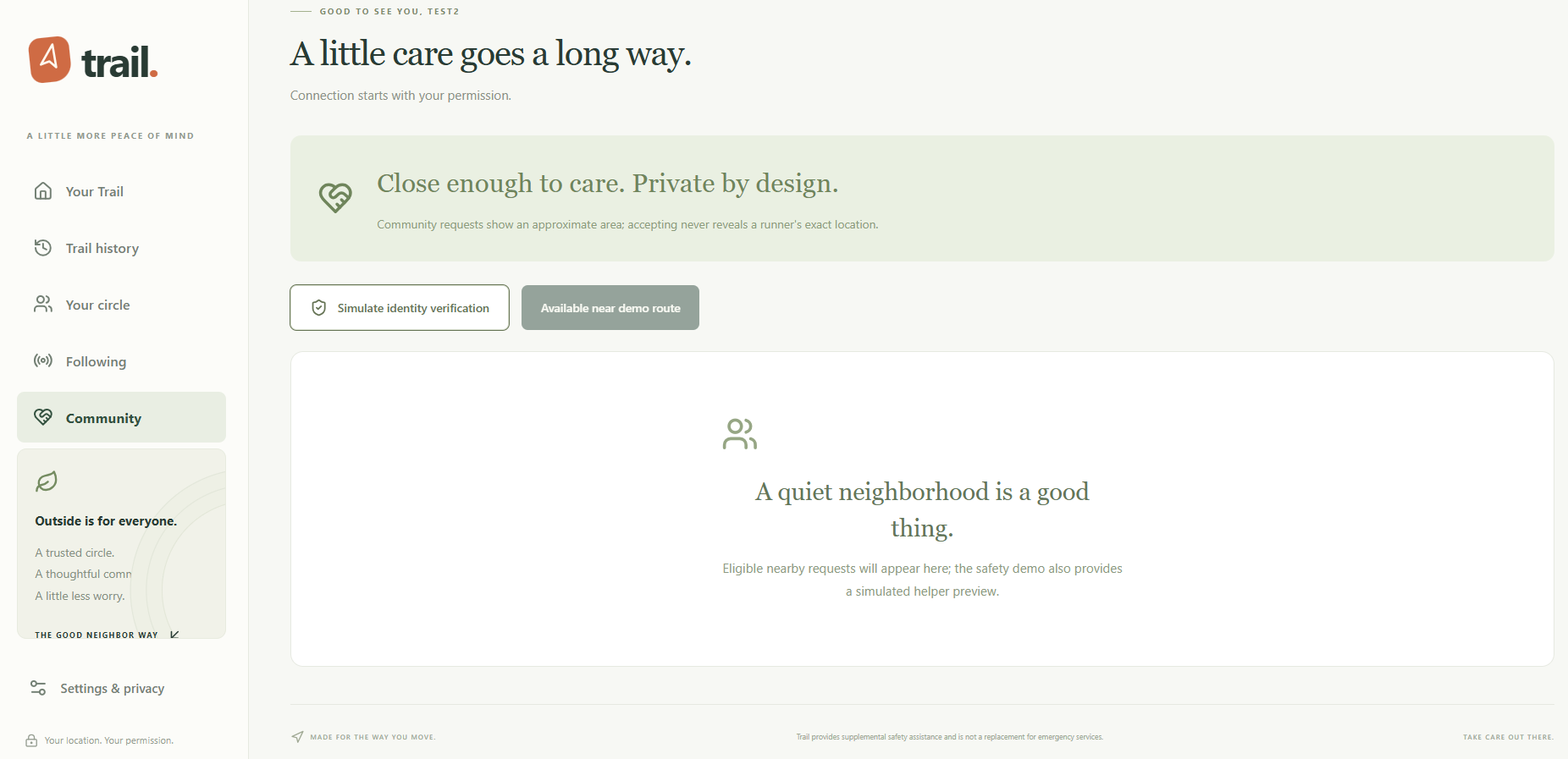
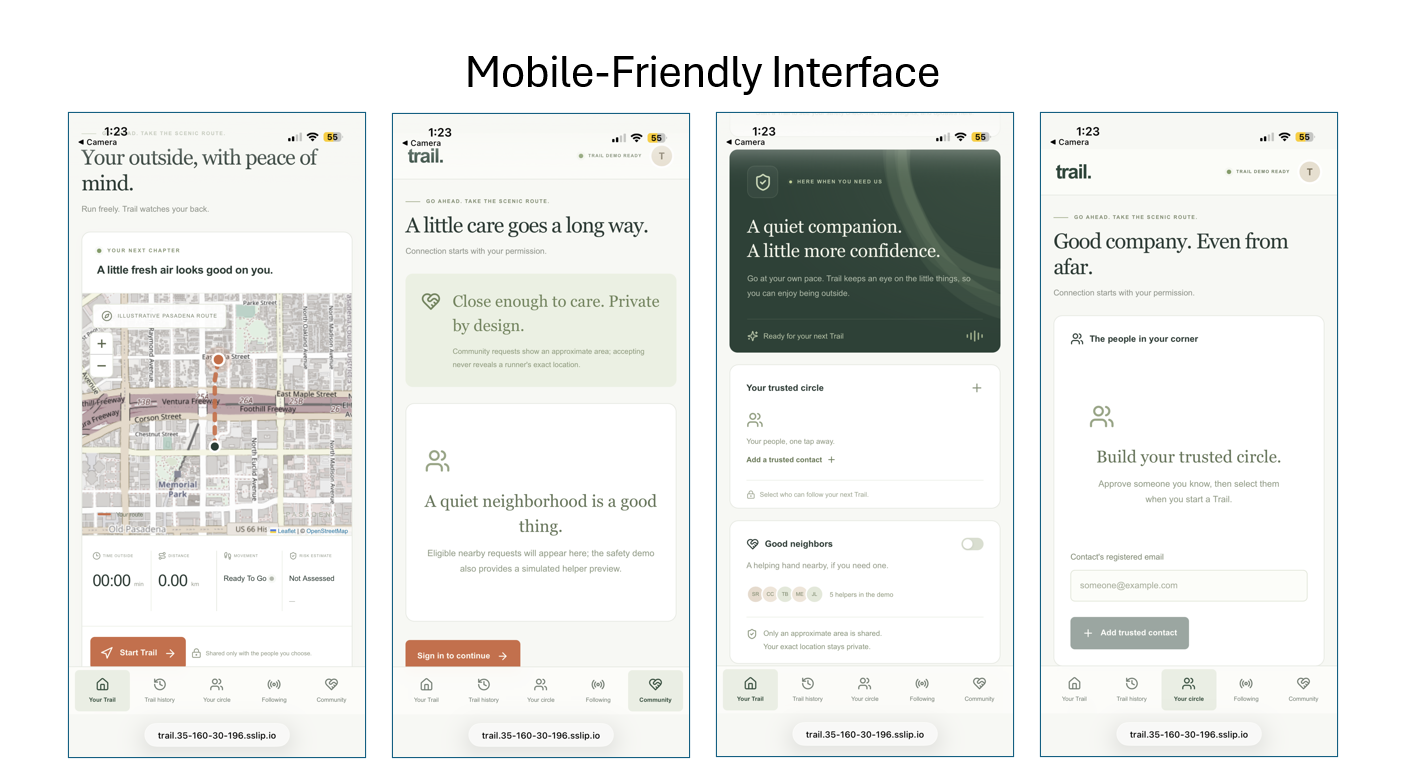
Trail is an AI-powered safety companion for runners, walkers, and joggers. Users can start a Trail session and share their live route with trusted friends or family. Trail watches movement, stops, route conditions, and other signals during a session. If something unusual happens, Trail first asks the runner if they are okay. If they ask for help or do not respond, Trail can alert their trusted contacts. Trail also has an optional community safety network. It can find up to five verified nearby helpers while protecting the runner's exact location. Trail also stores up to 10 days of route history, which can help users retrace their steps if they lose something.
How we built it
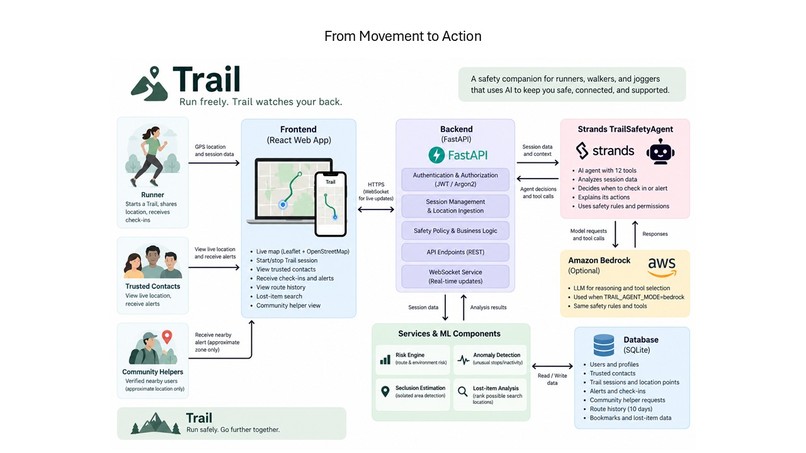
I built Trail with React, TypeScript, Tailwind CSS, Leaflet, and OpenStreetMap for the frontend. The backend uses Python, FastAPI, SQLAlchemy, SQLite, and WebSockets for live updates. The main AI system uses the Strands Agents SDK. The Trail Safety Agent receives information from the current session and can use 12 different tools to decide what action should happen. I also created systems for route risk, secluded-area detection, and unusual movement detection. Trail uses safety rules around the AI agent so it cannot perform actions that the user has not allowed.
Challenges we ran into
One major challenge was balancing safety with privacy. I wanted Trail to help people without turning it into a system that allows strangers to track someone. Another challenge was deciding when the AI should take action. A runner stopping does not always mean something is wrong. I designed Trail to look at several signals and usually check with the runner before alerting someone. I also needed my demo to work without requiring someone to physically go outside and run. I created simulated running sessions that still go through the real Trail backend, database, safety systems, and AI agent.
Accomplishments that we're proud of
I are proud that Trail is more than an AI chatbot. The Strands agent can use real tools, analyze session information, make decisions, and explain those decisions in a timeline. I also built live location sharing, trusted contacts, safety check-ins, route history, lost-item retracing, community assistance, WebSocket updates, and automated safety demos. Most importantly, I designed the community feature so strangers do not receive the runner's exact coordinates or identity.
What we learned
I learned that building a safety agent requires more than connecting an AI model to an application. Important actions need clear rules, permissions, and privacy protections. I also learned how Strands Agents can combine AI reasoning with tools and normal application logic. This allowed us to use AI for decisions while keeping important safety rules controlled by code.
What's next for Trail
My next goal is to turn Trail from a hackathon project into a more complete mobile safety platform. Future versions could include native iOS and Android background location tracking, real push notifications, better routing and environmental data, real identity verification, encrypted location storage, and stronger account privacy controls. I would also like to improve Trail's AI models using real-world testing and validated data while continuing to make privacy and user consent a major part of the product.
Built With
- amazon-bedrock
- amazon-web-services
- docker
- fastapi
- leaflet.js
- python
- react
- strands-agents-sdk
- typescript
- websockets


Log in or sign up for Devpost to join the conversation.