Project Story – TradingCard
Inspiration
TradingCard began as a completely different concept — a Bitcoin financial alert app. After reviewing the hackathon’s requirements and available tools, the idea didn’t align with the event’s scope. We pivoted to a Bitcoin business simulator for educational use, but that proved too complex to define within the hackathon timeframe.
A mentorship session about gamification inspired a shift toward a loot-style survival game. Several prototypes were built with Cursor, using libraries like Dojo, Torii, and Katana, but technical limitations blocked meaningful progress. After multiple working lunches, mentorships, and collaborative feedback, a speaker from Chipi Pay introduced v0.app, enabling rapid, functional development. This discovery pivoted the project again — resulting in TradingCard, a digital platform that blends the nostalgia of physical card collecting with modern trading features.
What it does
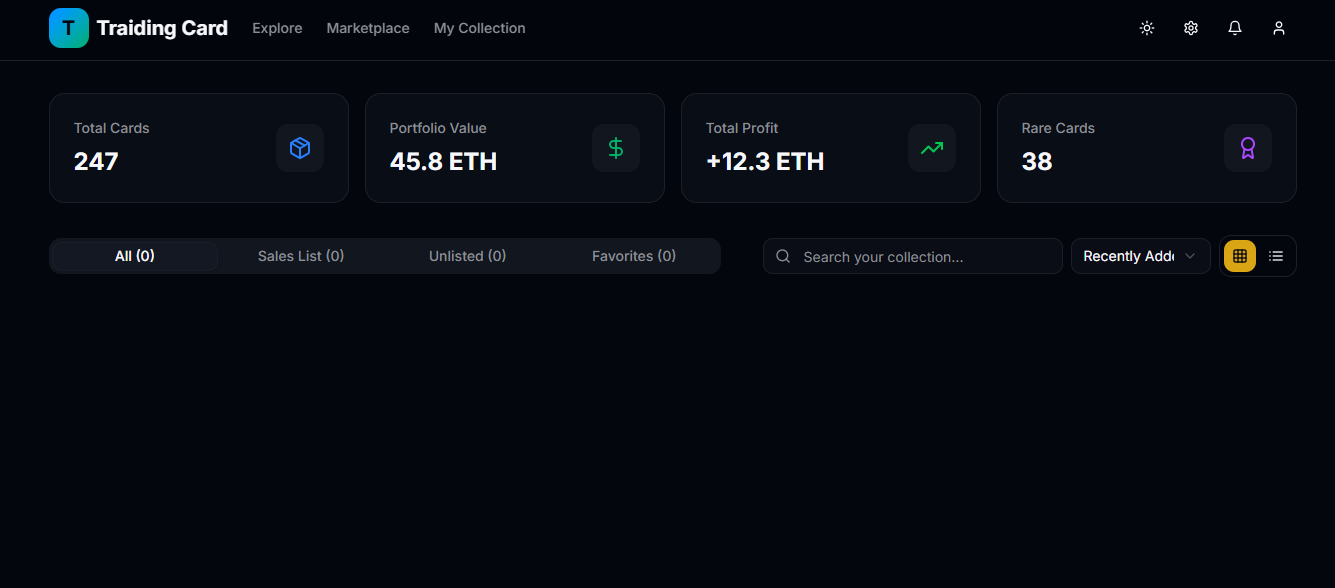
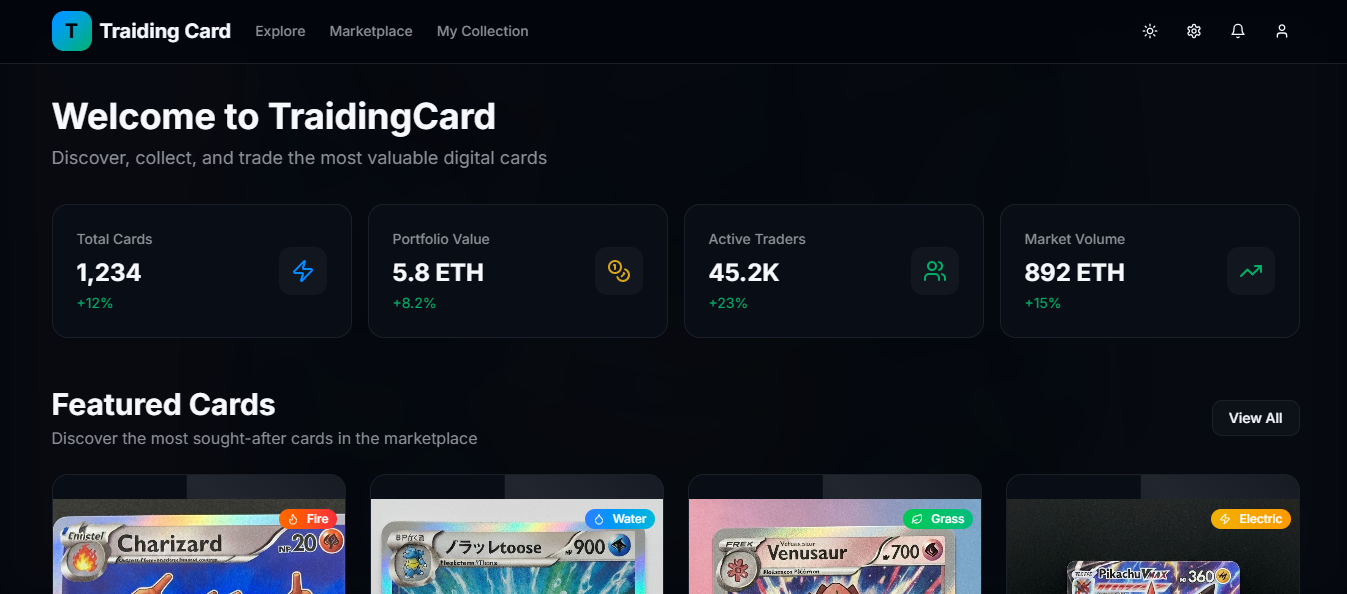
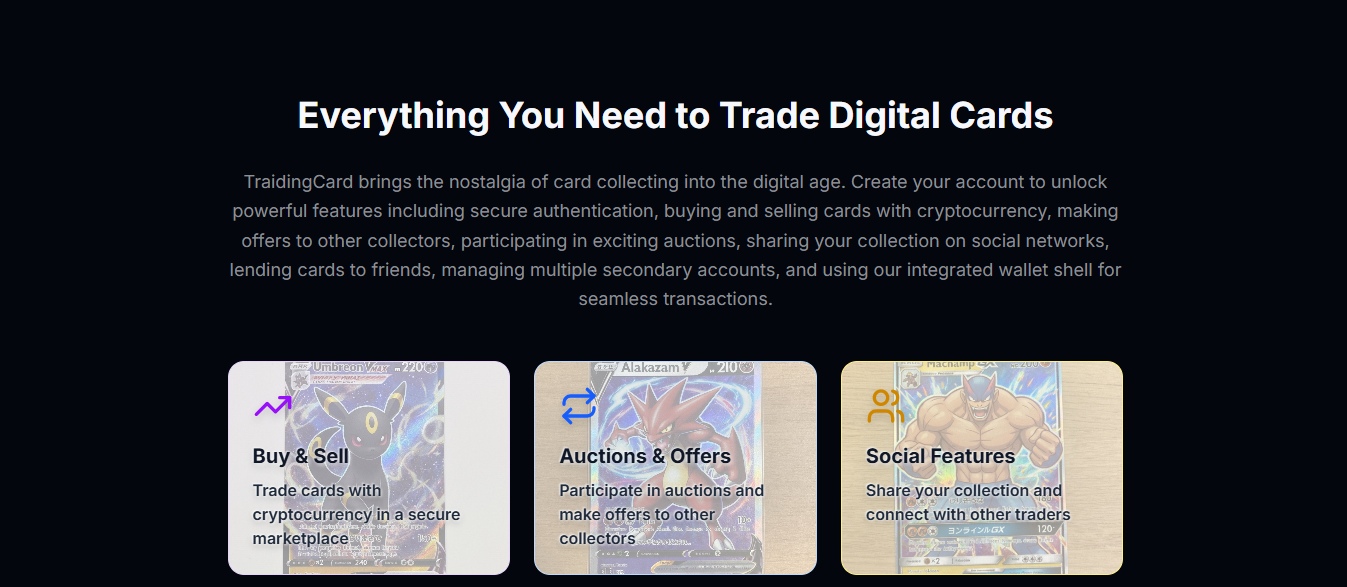
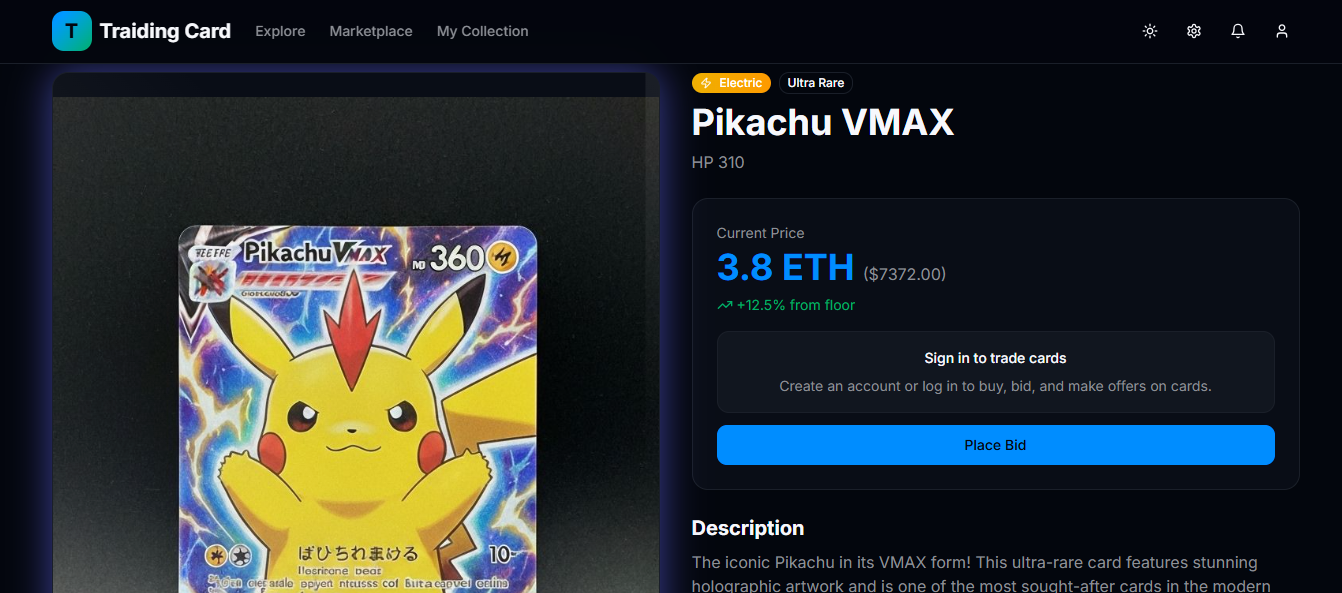
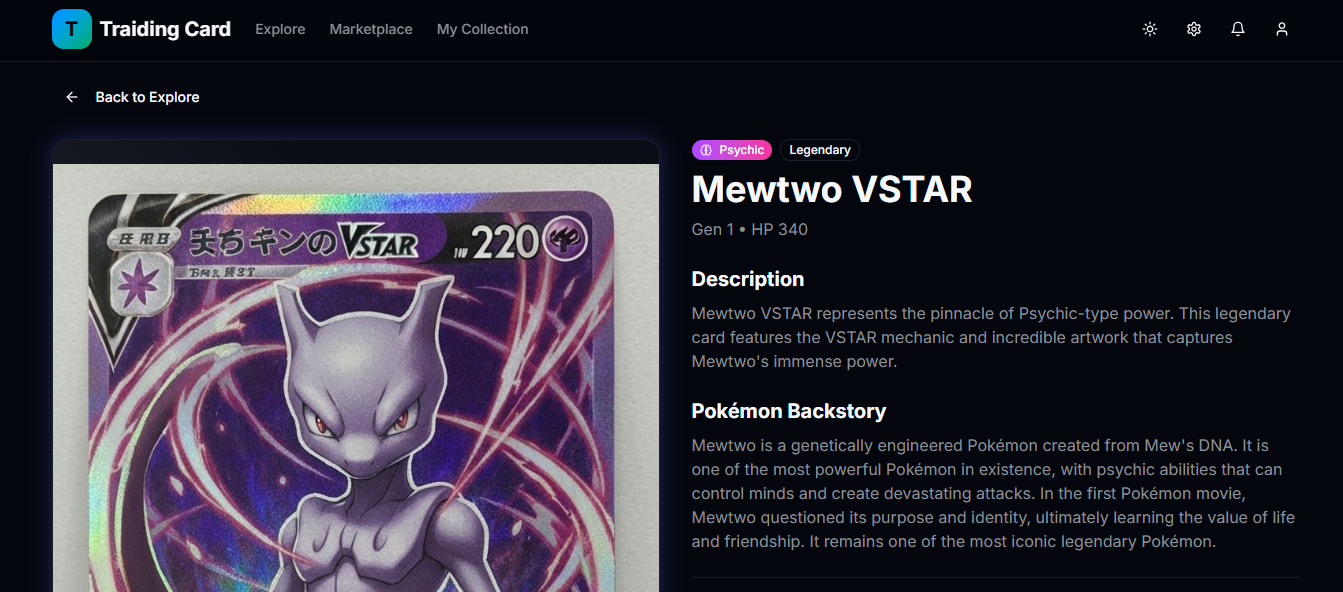
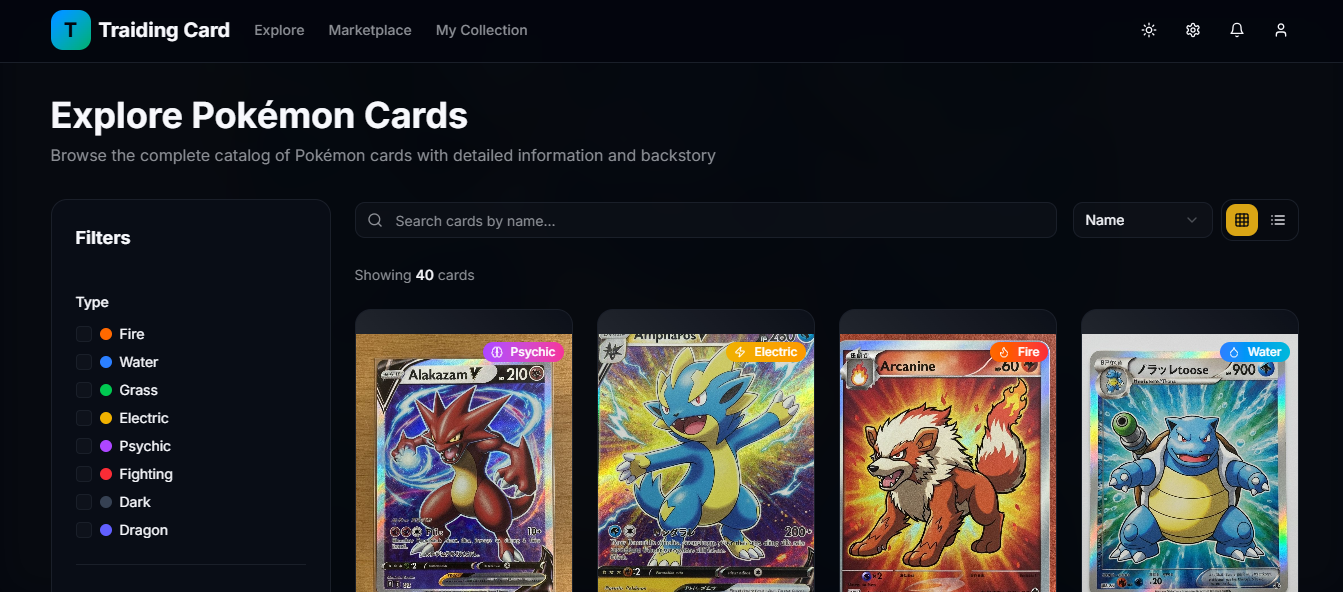
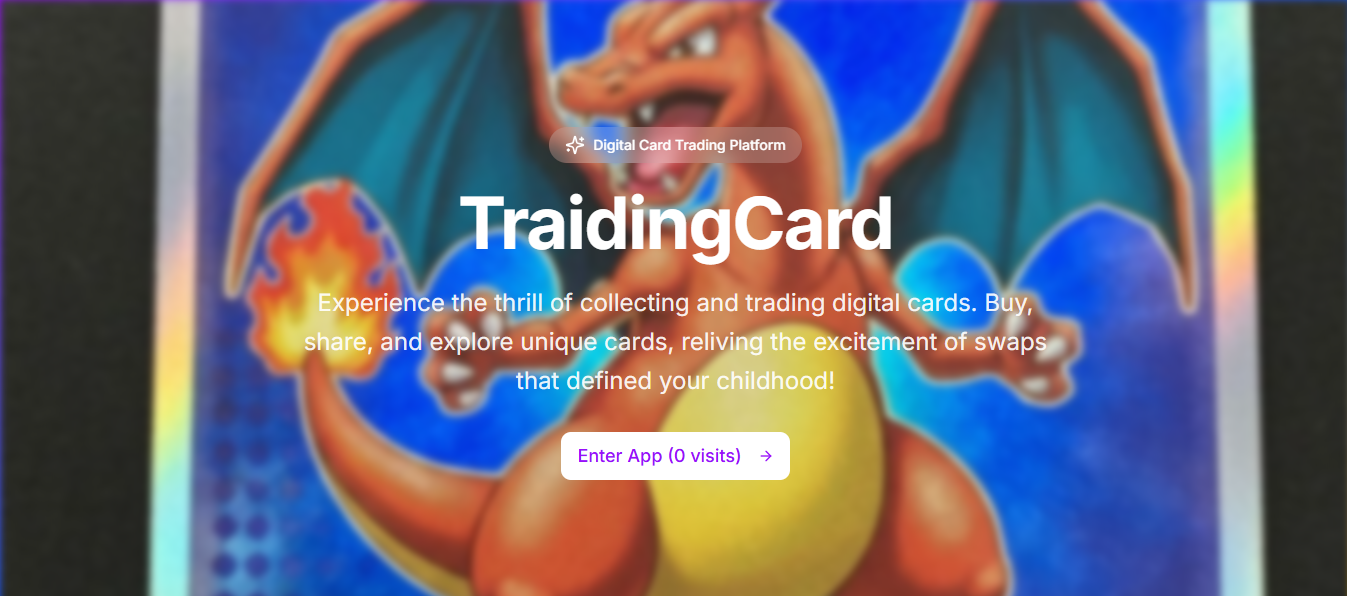
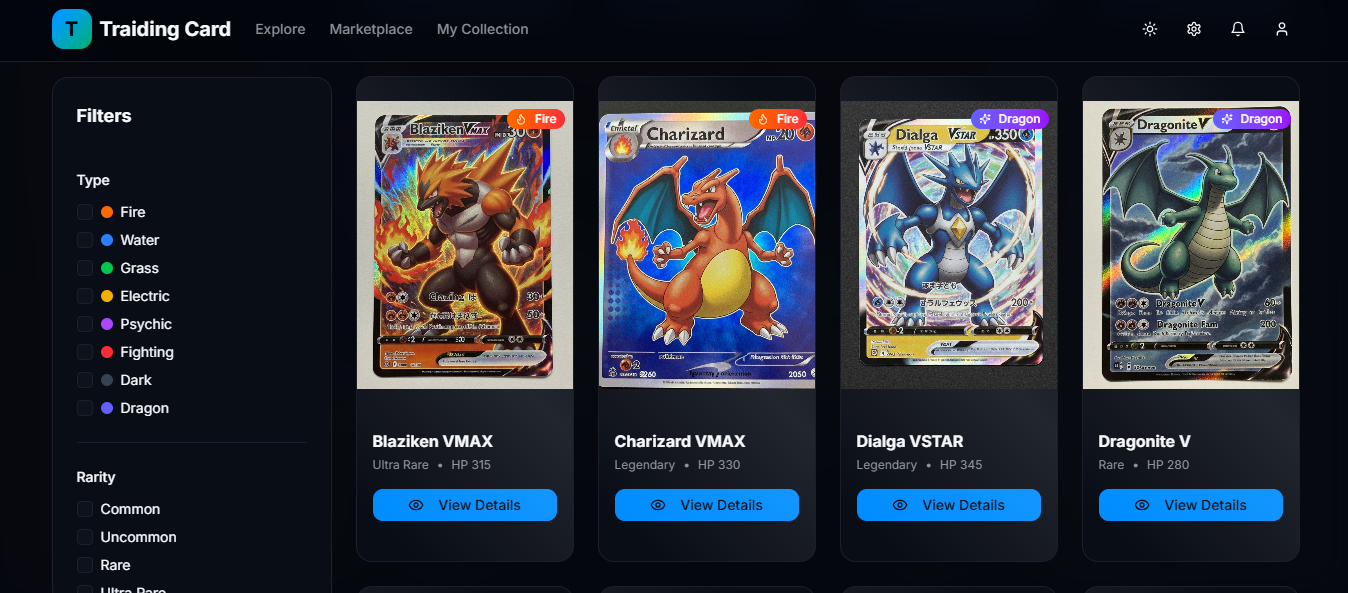
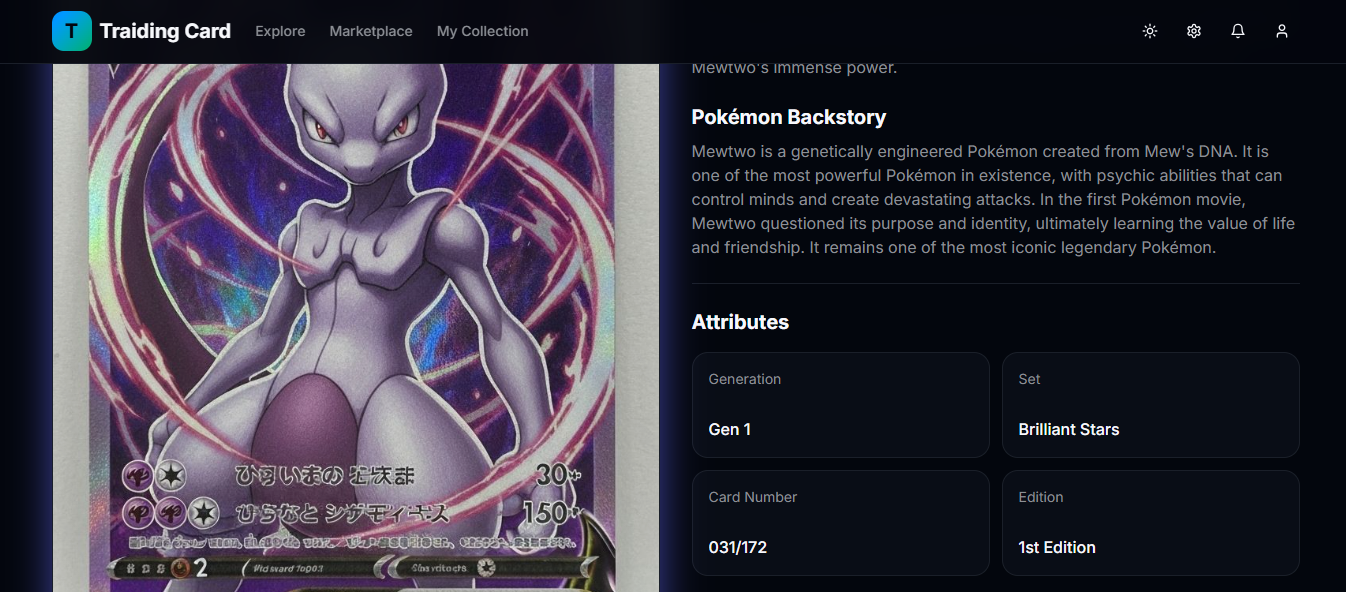
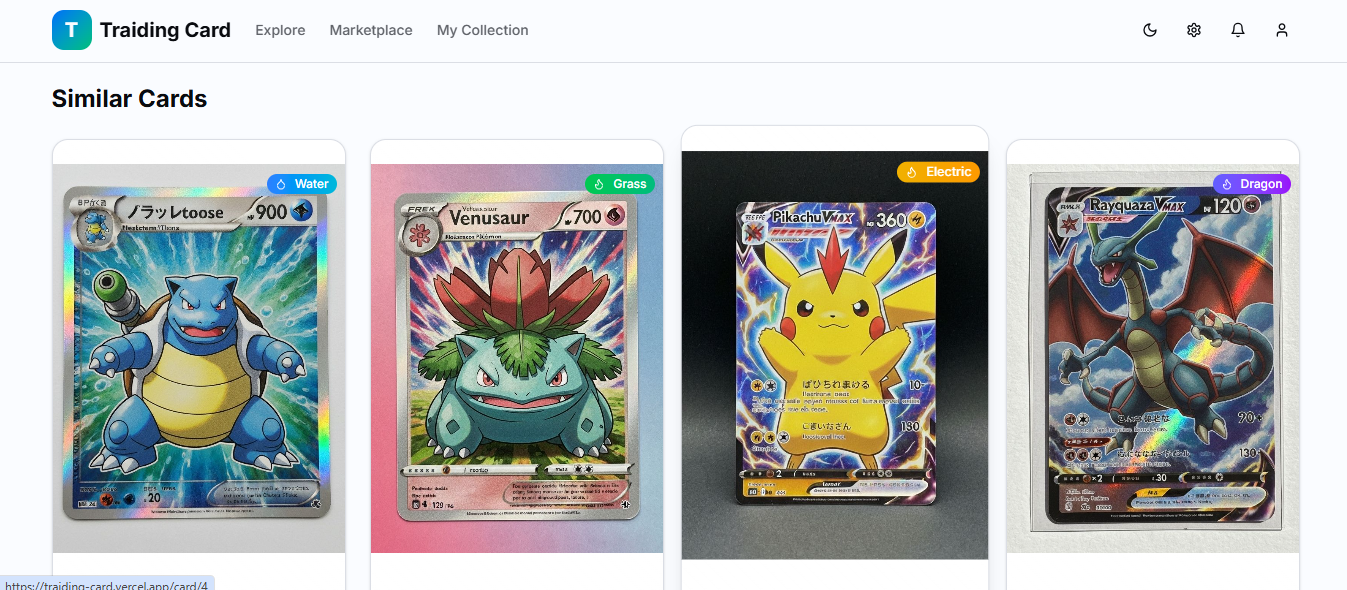
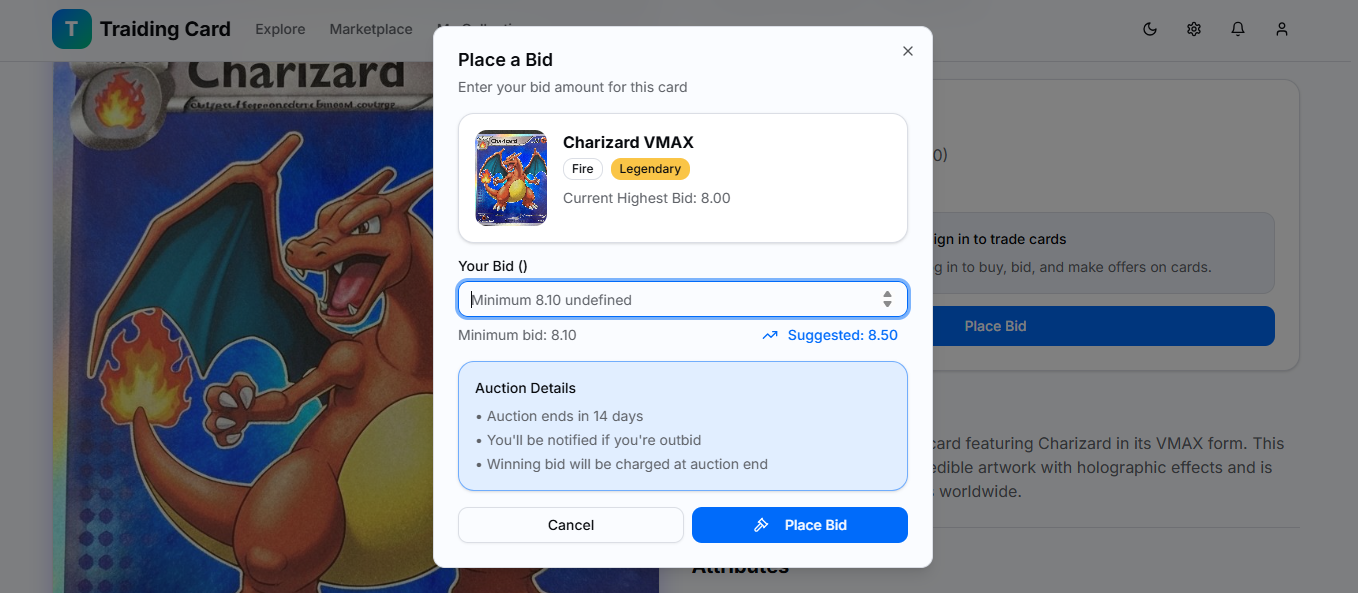
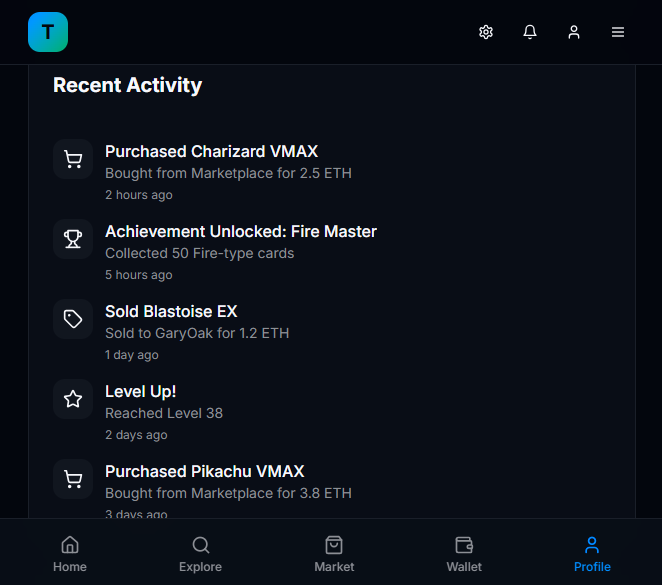
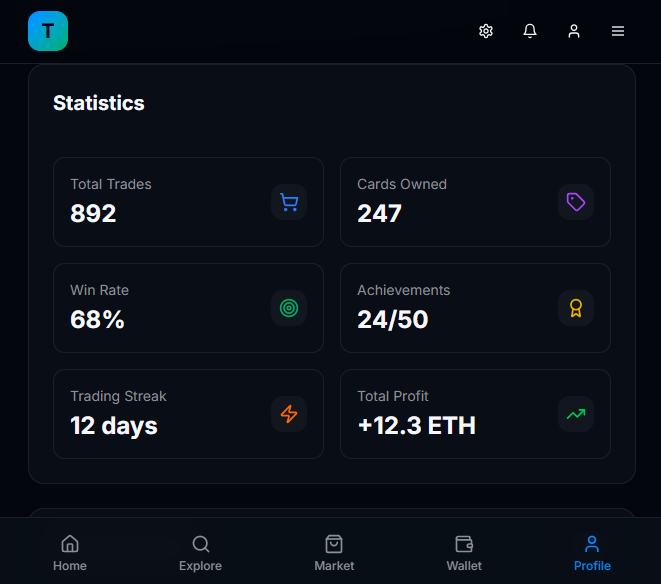
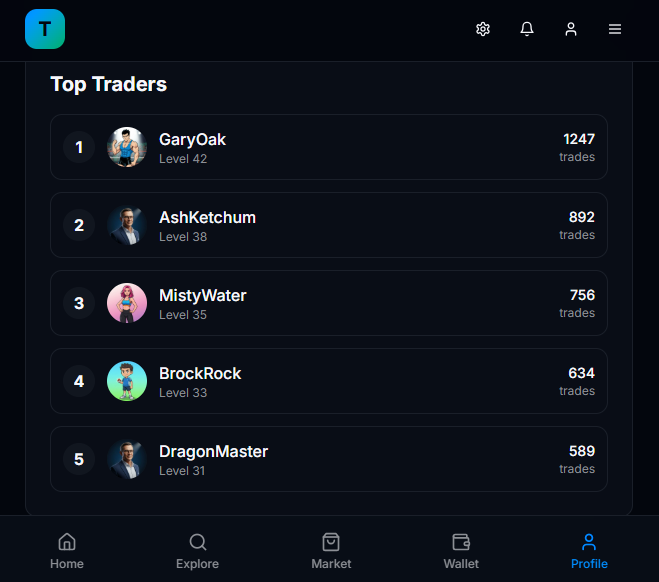
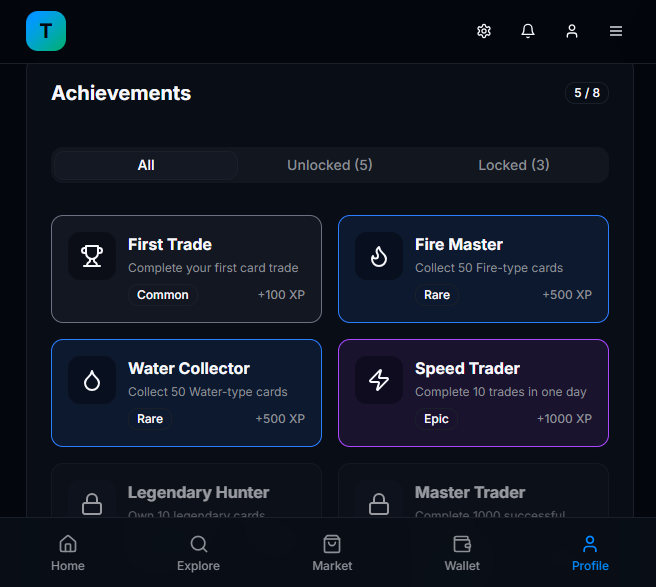
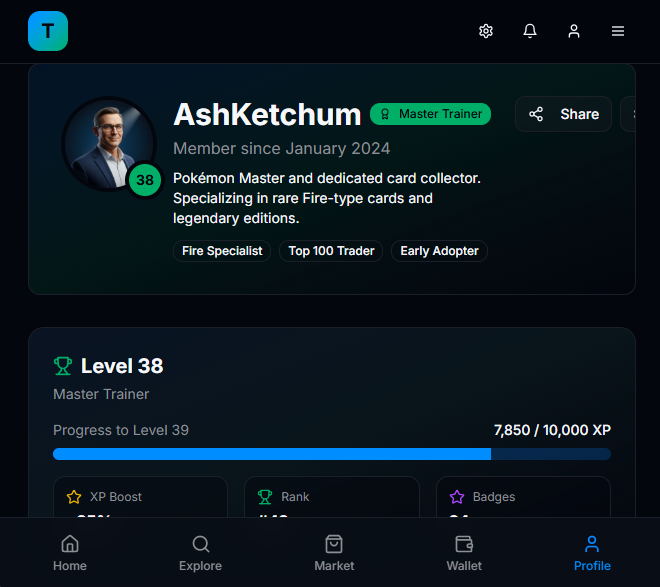
TradingCard brings the nostalgia of physical trading cards into a modern, connected experience. Users can:
- Sign up / log in via phone, email, or username with password confirmation.
- Create new accounts with confirmed passwords.
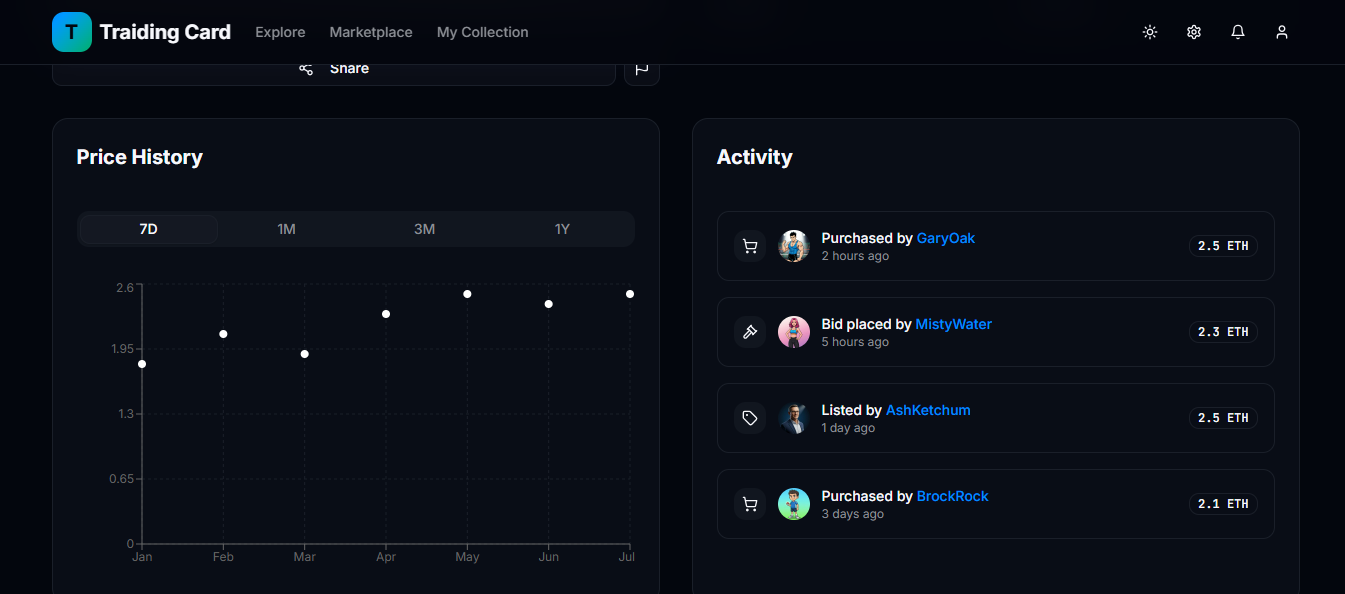
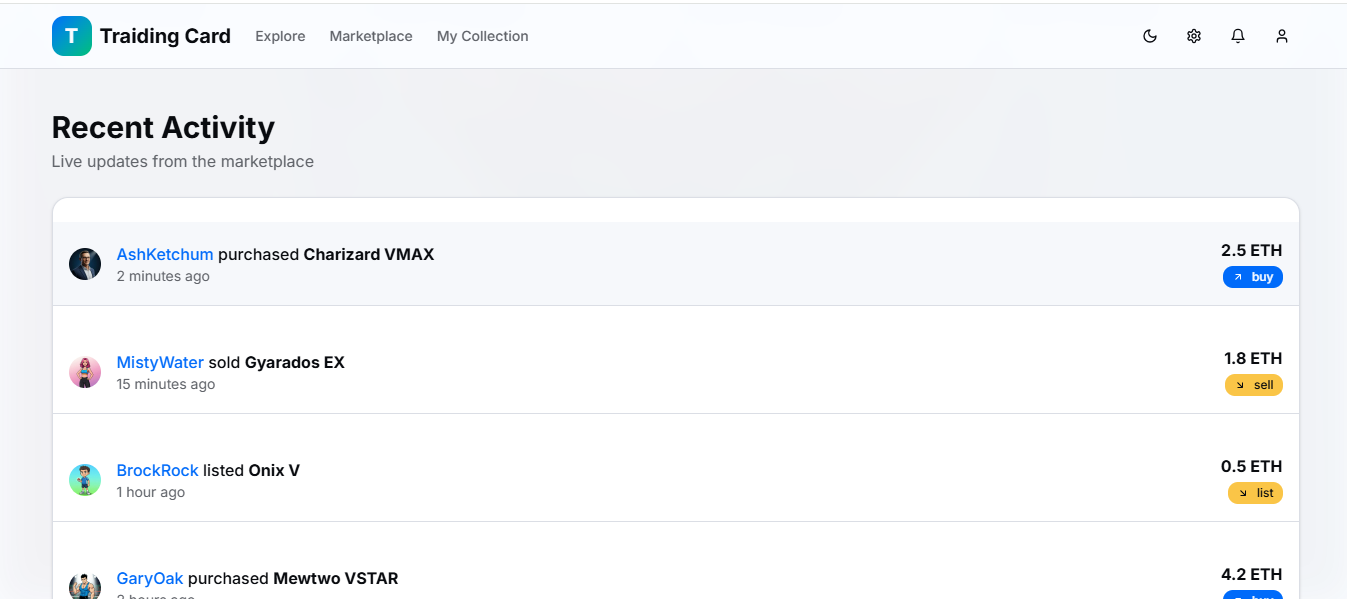
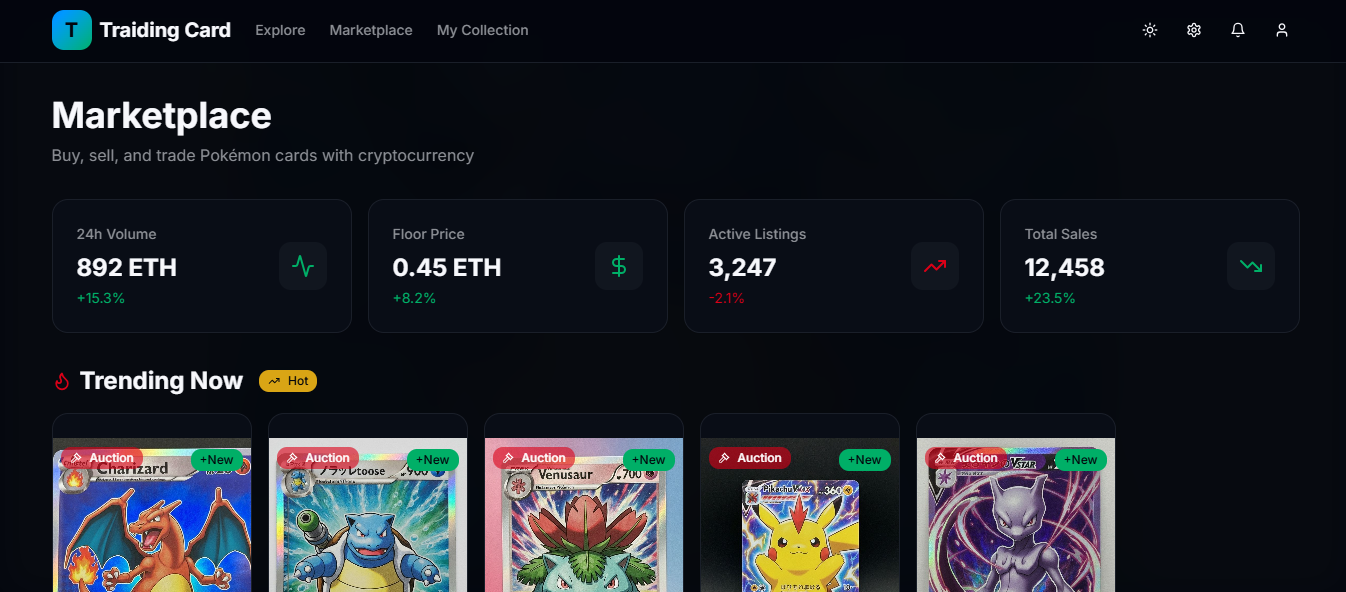
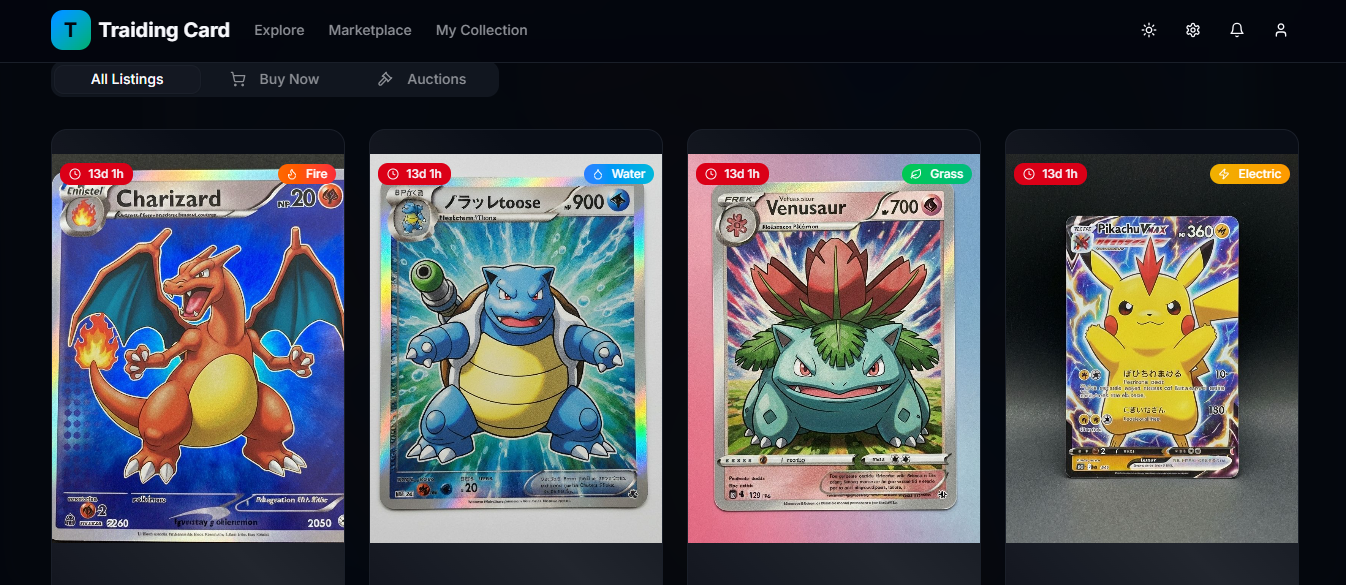
- Buy cards directly (direct purchases).
- Make offers on owned cards with owner-readable comments (owners can accept or reject).
- Participate in auctions for unowned cards and, optionally, for owned cards (auction + offer paths under verification).
- Share cards and profiles on social networks (public info and selected cards).
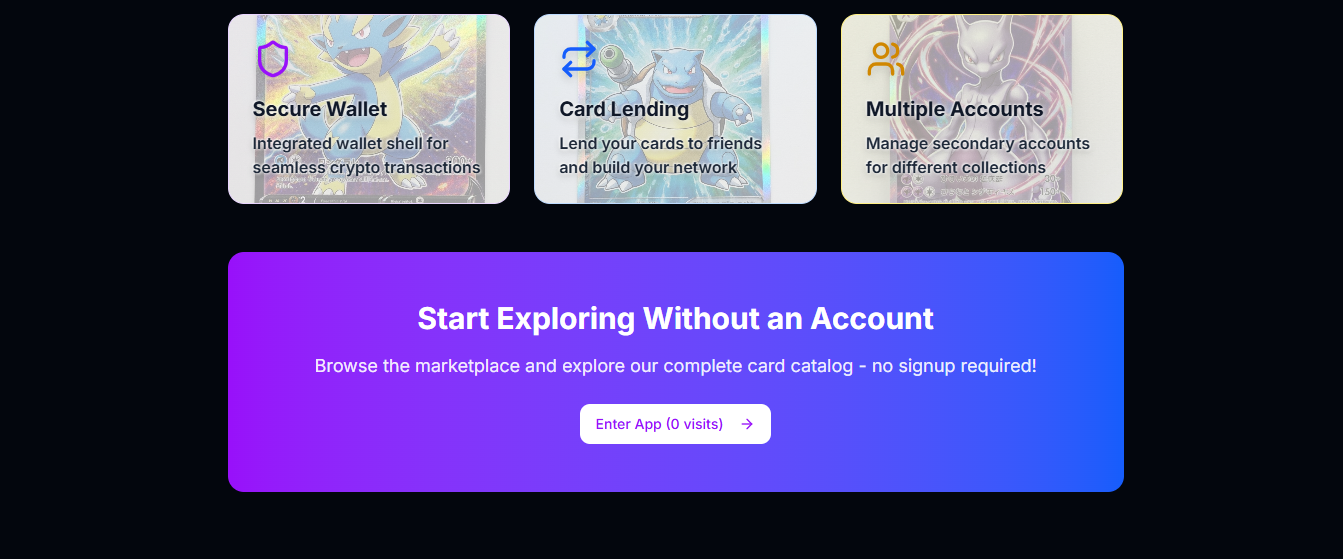
- Lend cards to other users under defined restrictions (functionality to be verified).
- Create linked secondary accounts tied to a primary profile for additional trading.
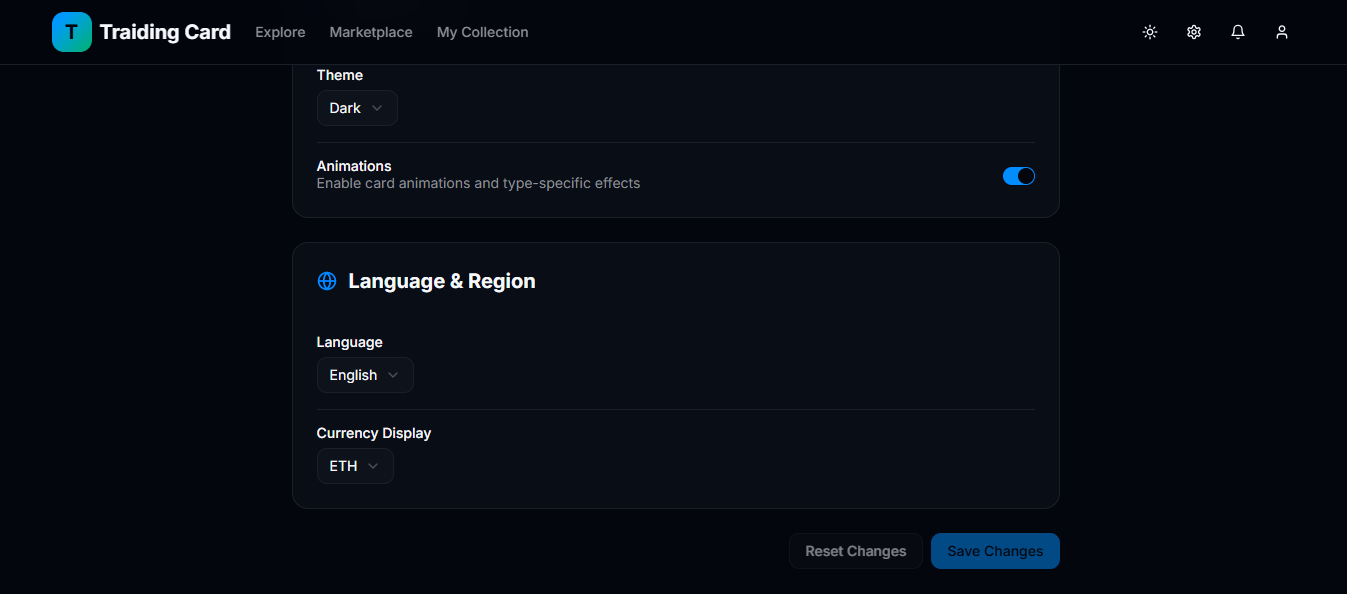
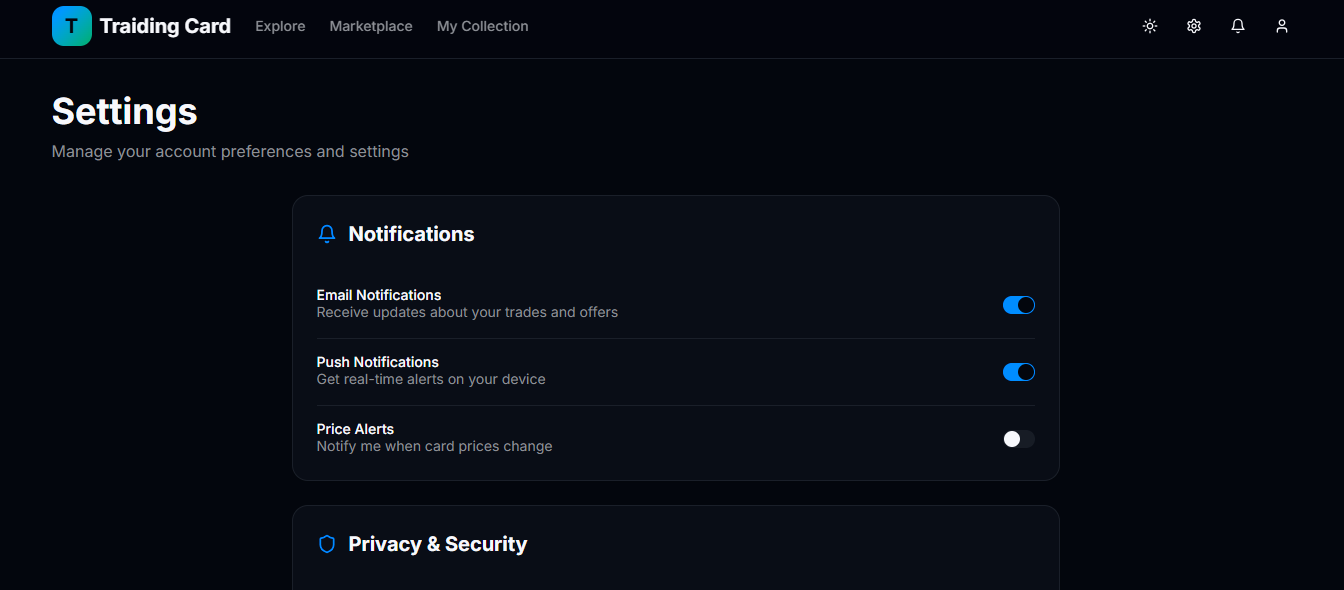
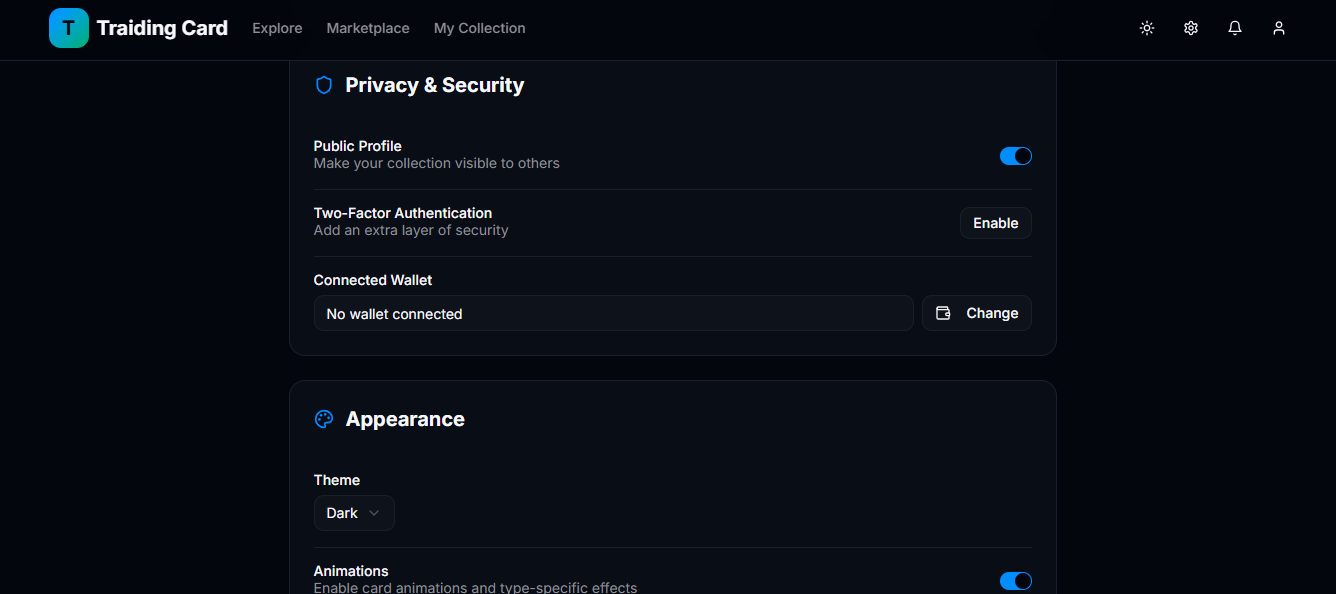
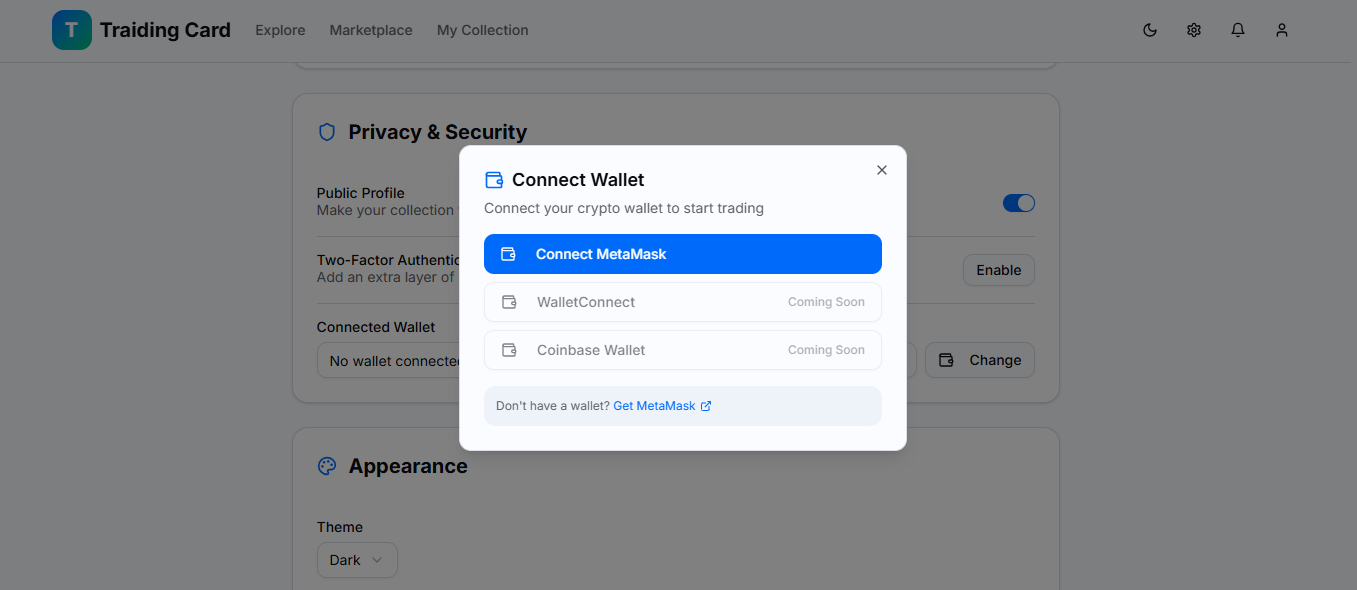
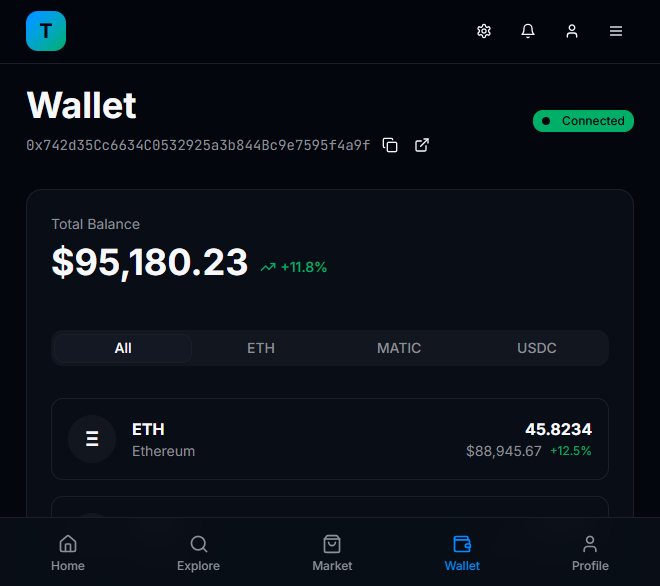
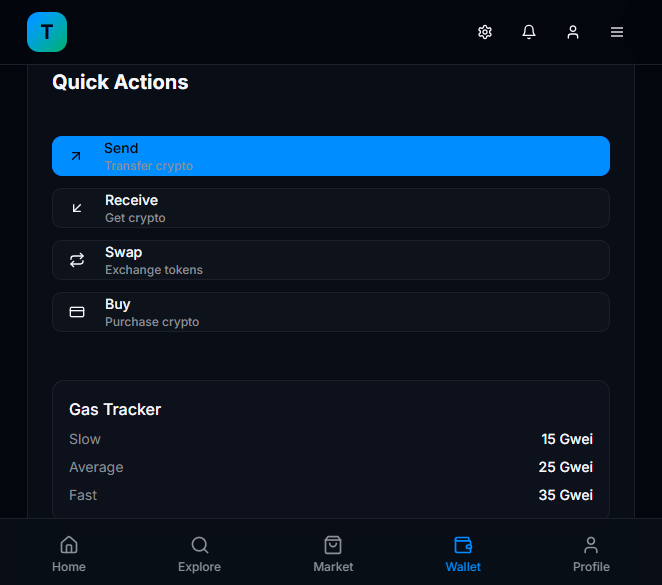
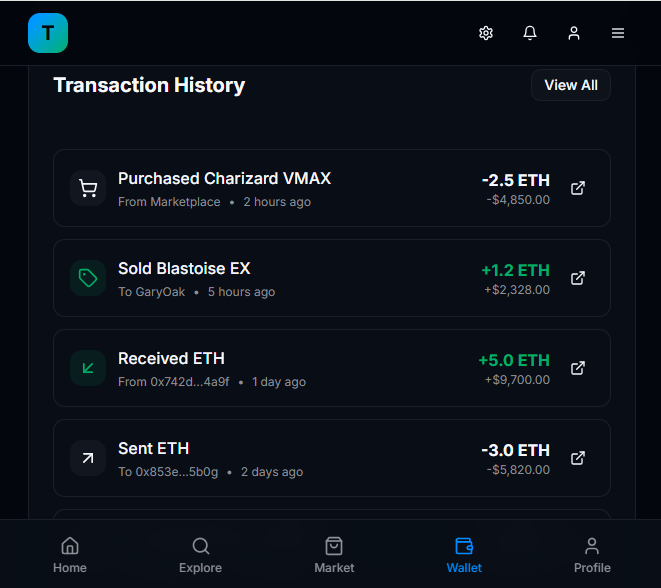
- Generate an integrated wallet UI for real-money transactions — currently implemented as a visual shell, with Chipi Pay integration still pending.
All features aim to recreate the communal and emotional experience of classic card trading while enabling modern transactional and social interactions.
How we built it
The project was originally intended as a team effort, but low participation and time constraints meant development moved to a primarily solo-driven effort. That necessitated strategic organization and heavy use of AI and developer tools to simulate collaborative workflows.
Tools and platforms used across phases:
- ChatGPT, Gemini, Copilot, DeepSeek, Cursor — ideation, UI suggestions, code review, product design, and UX refinement.
- GitHub — version control, issue tracking, and documentation.
- Chipi Pay — evaluated as the target payment gateway (integration pending).
- v0.app — main rapid-development platform used to produce a functional prototype and UI flows.
Each tool served different roles: brainstorming features, reviewing code, refining aesthetics, defining target audiences, estimating timelines, and assessing quality requirements.
Challenges we ran into
- Repeated pivots under tight hackathon deadlines.
- Minimal active participation from team members; much of the work became solo-driven.
- Limited programming experience for implementing advanced integrations.
- Integrating multiple tooling approaches (Cursor prototypes, v0.app builds, and future payment links).
- Prioritizing core functionality vs. exploratory features within available time.
Accomplishments that we're proud of
- Pivoted multiple early concepts into a clear, deliverable product.
- Built a multi-feature prototype that includes authentication, marketplace actions (buy, offer, auction), social sharing, lending concept, secondary accounts, and a wallet UI shell.
- Managed the project largely independently while leveraging AI-assisted workflows and mentor feedback.
- Created a product that merges nostalgia with a scalable digital marketplace framework.
What we learned
- Rapid adaptation and strategic pivoting are essential in short-cycle development.
- Tool choice (and knowing each tool’s learning curve) critically impacts deliverability.
- AI tools can significantly accelerate ideation, code review, and UX iteration when used purposefully.
- Effective time management, modular development, and clear scope boundaries preserve progress under uncertainty.
- Mentorship, peer feedback, and persistence can turn uncertain starts into a tangible prototype.
What’s next for TradingCard
Planned next steps and priorities:
- Integrate Chipi Pay to enable verified real-money transactions and link the wallet shell to a working payment flow.
- Finalize auction/offer flows for cards with owners and verify lending workflows.
- Add game-like features inspired by earlier loot-survivor prototypes (use cards as playable assets).
- Implement card attribute upgrades to increase gameplay depth and trading strategy.
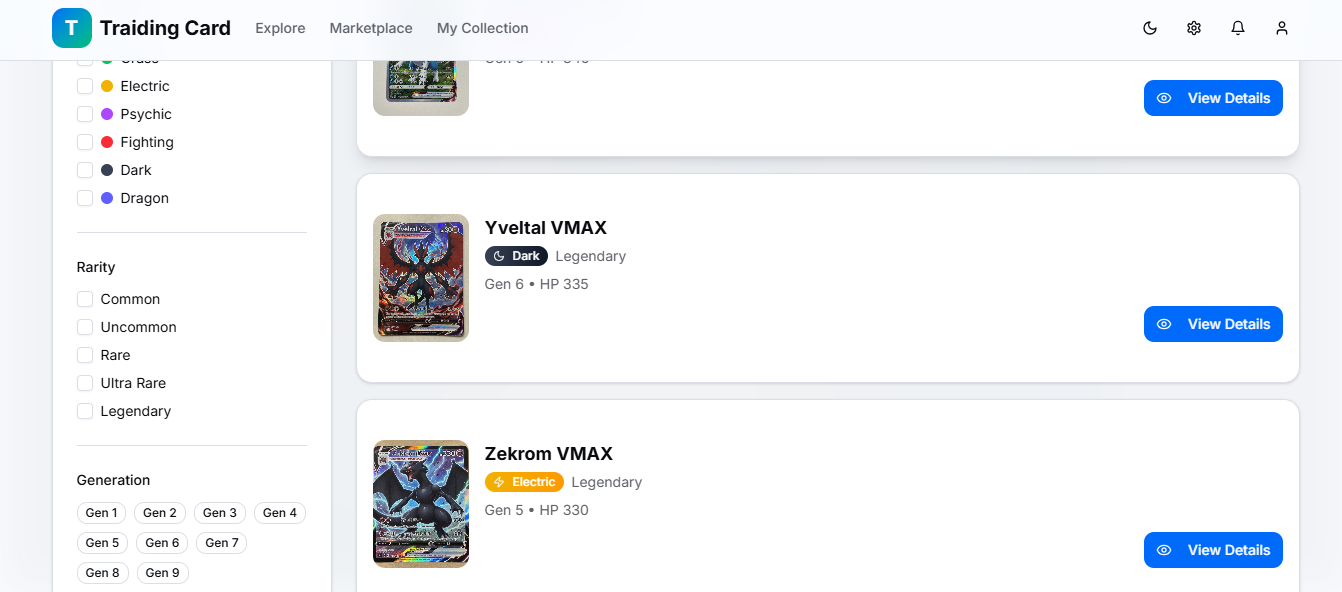
- Expand the card catalog with fully original artwork, lore, and legal compliance (the current model used Pokémon-like mechanics only as a starting reference; final commercial versions will use original IP).
- Develop mobile app releases and community features to broaden user reach.
Ultimately, TradingCard aims to revive the excitement of collecting through a secure, social, and playful digital marketplace — combining nostalgic feel with modern commerce and gameplay.
Awards & Motivation
TradingCard is competing for multiple prize tracks, each representing a challenge and an opportunity to learn, innovate, and grow:
Bitcoin Unleashed – Starknet Foundation Prize Pool ($3,000 USD in STRK) Motivates us to deepen our understanding of blockchain and Bitcoin technologies, ensuring TradingCard leverages crypto mechanics effectively. Even if we don’t win, the knowledge gained strengthens our technical foundation.
Bitcoin Unleashed – StarkWare Prize Pool ($4,000 USD in STRK) Pushes us to innovate in the Bitcoin ecosystem, testing real-world implementations of crypto-enabled trading and exploring how TradingCard could evolve into a fully operational marketplace.
Next-Gen Payments – Chipi Pay Prize ($1,000 USD in STRK) Excites us because we’ve explored integrating Chipi Pay. It motivates us to continue refining the wallet experience, gain hands-on insights into digital payment systems, and push the limits of secure, user-friendly transaction flows.
Next-Gen Payments – Starknet Foundation Prize ($3,000 USD in STRK) Encourages strategic thinking about scaling TradingCard for broader audiences, learning tools and frameworks in the Starknet ecosystem, and exploring the long-term vision of combining collectible games with blockchain-powered trading.
Why this matters:
These prizes fuel our motivation, provide direction, and help turn a nostalgic card game into a socially connected, technically innovative, and scalable digital platform. They inspire us to:
- Master new tools and technologies, from blockchain protocols to digital payment platforms.
- Experiment with product scaling and real-world deployment.
- Collaborate, innovate, and adapt under real-world constraints.
Plan for multiple scenarios:
- Positive outcome: Use these tracks as a launchpad to refine TradingCard, attract users, and build a sustainable platform.
- Challenging outcome: Even without prizes, gain accelerated learning, strengthened technical skills, and a tested prototype ready for future iterations.
Built With
- chatgpt
- chipipay
- copilot
- css
- cursor
- deepseek
- dojo
- gemini
- github
- html
- javascript
- katana
- torii
- typescript
- upstash
- v0.app

Log in or sign up for Devpost to join the conversation.