GoDaddy Domain User Website: https://thetraffixperiment.info/
Inspiration
Our team was inspired by the noticeable yet unsolved modern challenge faced by millions of regular people everyday: Inefficient traffic. The more time we spend stalled on the road, exhaust fumes piling into the sky, the greater our digital blueprint and the worse our mood. Traffic signals are usually moderated by hard-coded interval times, which is not always intuitive; how many times have you driven to an empty intersection, only to be stopped by a red light despite the complete and absolute absence of cars on the road perpendicular? How much time could you save if you could just fly through those empty intersections (without breaking the law, of course!) That is how TraFFIX was born.
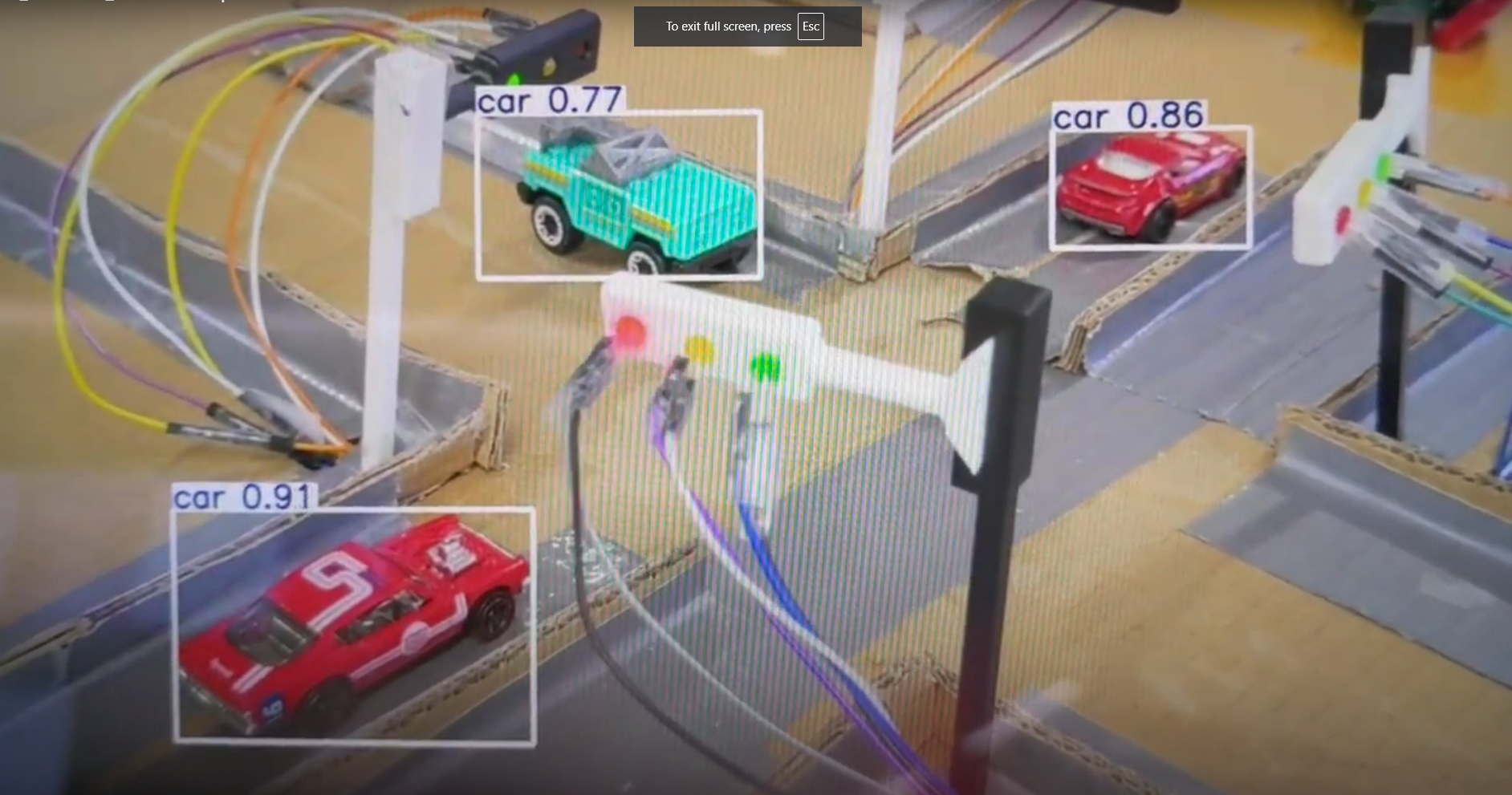
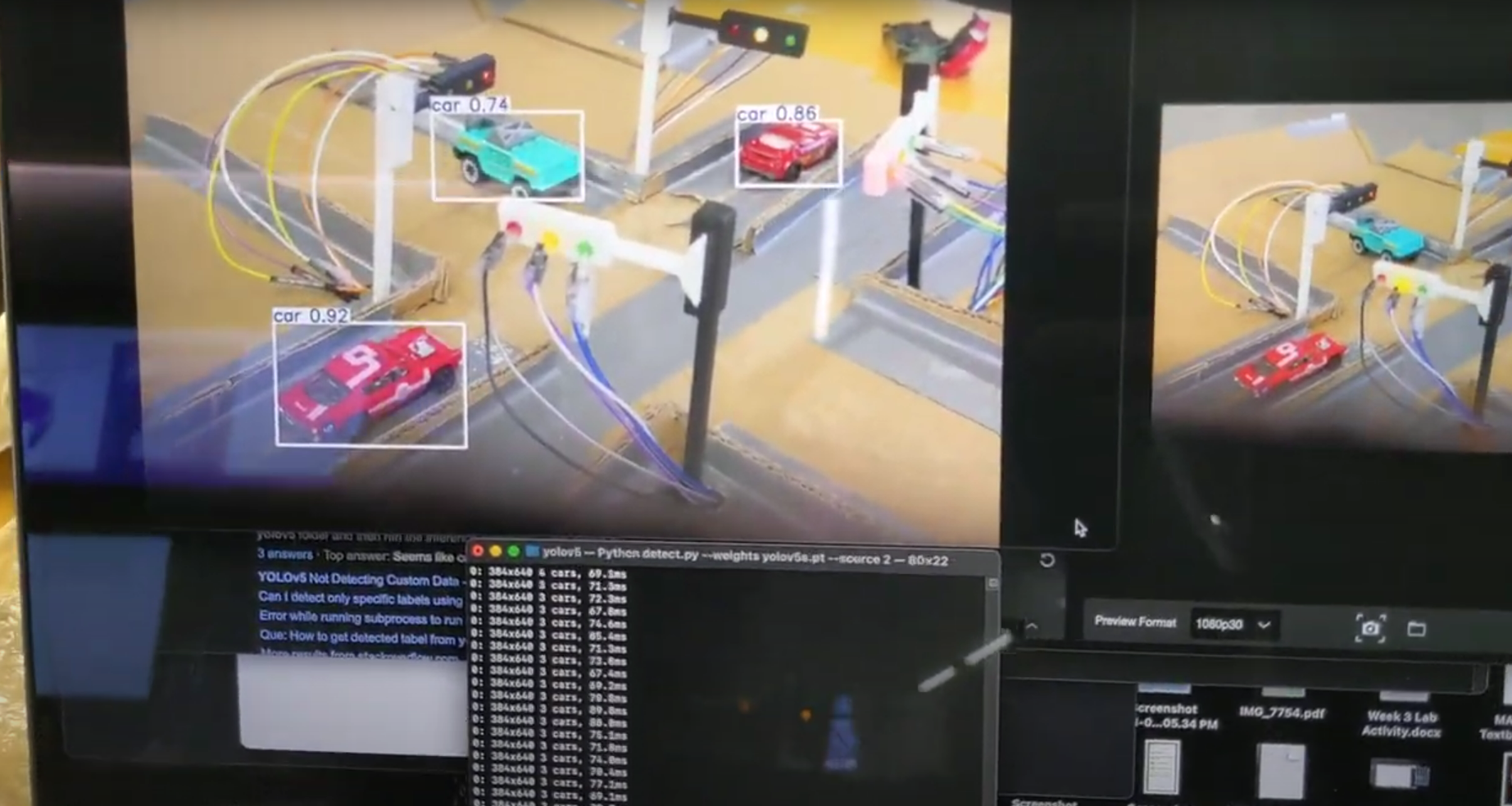
TraFFIX employs image recognition AI to count the number of cars present at an intersection. An AI model detects and labels different objects on a screen, as well as quantifies the number visible on the screen. This data can then be analyzed and the traffic light intervals are thus adjusted.
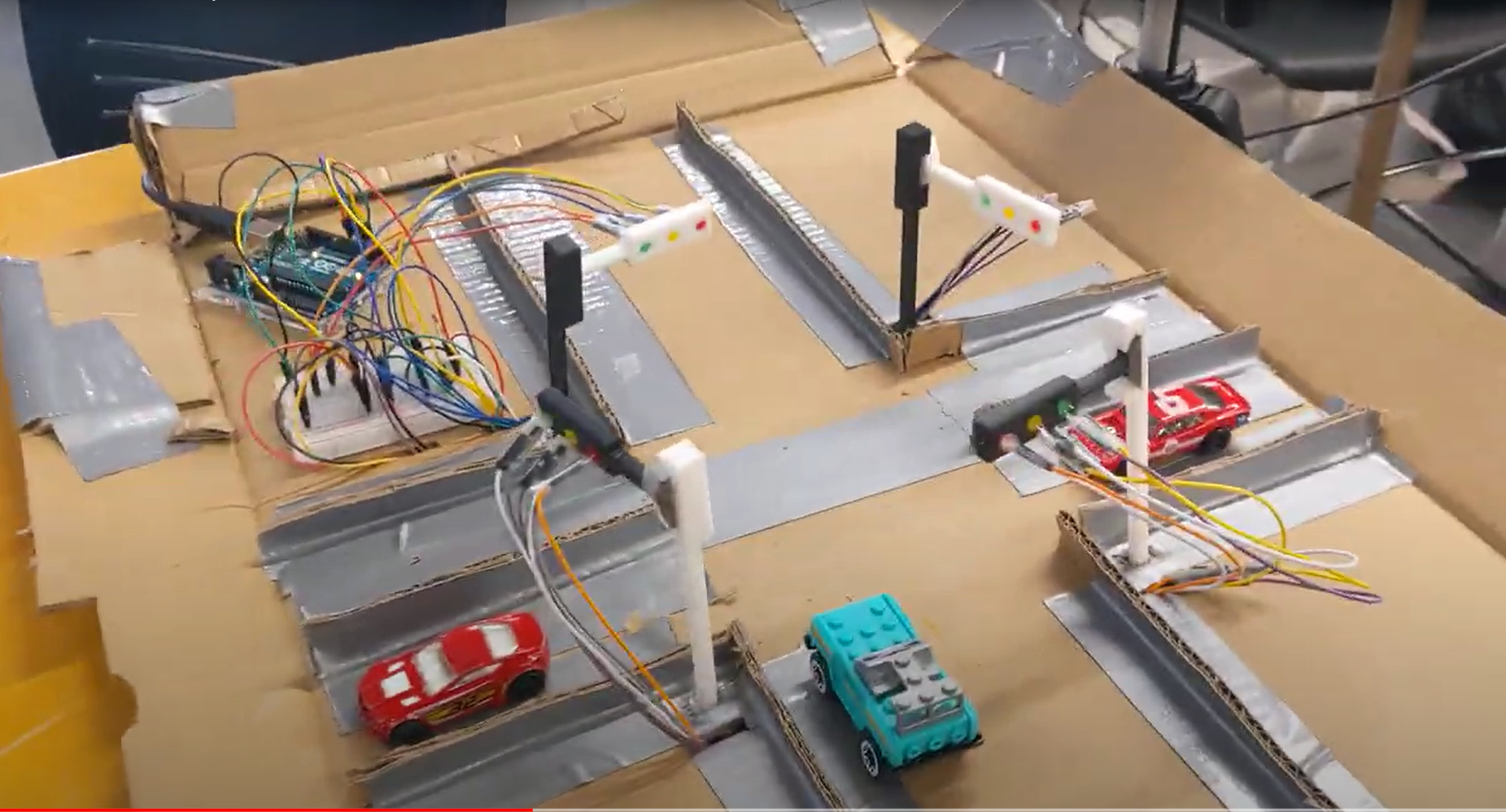
To test on a real intersection was not feasible; unfortunately, as regular University and High-school students, we did not have access to the traffic light control systems. As such, we created a miniature intersection model in order to demonstrate and execute our idea. Traffic light templates were 3D printed and LEDs were placed in the holes. An arduino was used and programmed to control each of the lights and the duration for which they were turned on.
Like aforementioned, we did not have access to a real life intersection to test and develop our idea. We solved this by creating a miniature model.
Integrating the AI model and extracting and analyzing the data was a challenging task that we overcame and succeeded in. Traffix leverages a convolutional neural network (CNN) trained to detect vehicles, pedestrians, and cyclists using image detection from cameras installed at intersections.
What we learned
We gained experience and skills in working with AI databases as well as data analysis and management. Additionally, we explored the complexity of real world problems; the variables to consider in a real-time real life road situation was astounding. We learned to navigate these, managing what we could, and distributing tasks.
Moving forward, TraFFIX will work on making even more clever systems, and traffic lights that communicate with each other: we will begin engineering better ROADS, not just intersections.


Log in or sign up for Devpost to join the conversation.