-
-
https://traffic-sense-ai-eta.vercel.app
-
-
-
Inspiration
Traffic management is often reactive. By the time a rally, accident, VIP movement, construction activity, or major event creates visible congestion, valuable response time has already been lost. We wanted to solve a bigger question: What is likely to happen next, and what should traffic authorities do about it right now?
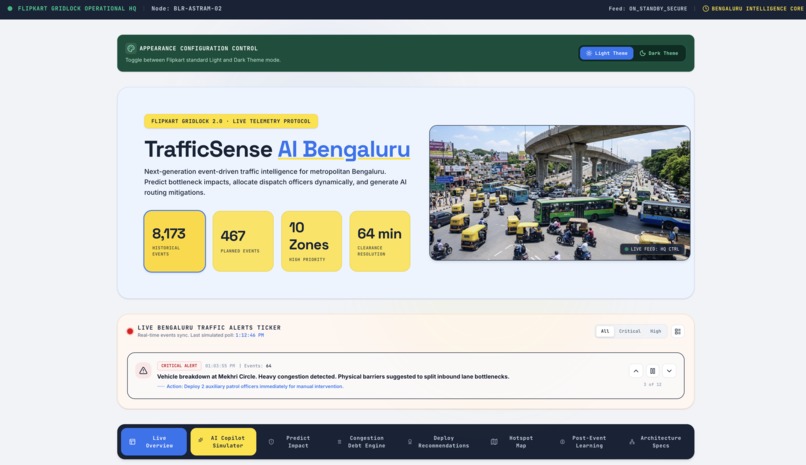
This inspired us to build TrafficSense AI, an AI-powered traffic command platform that transforms traffic management from reactive incident handling into predictive, decision-ready intervention.
What it does
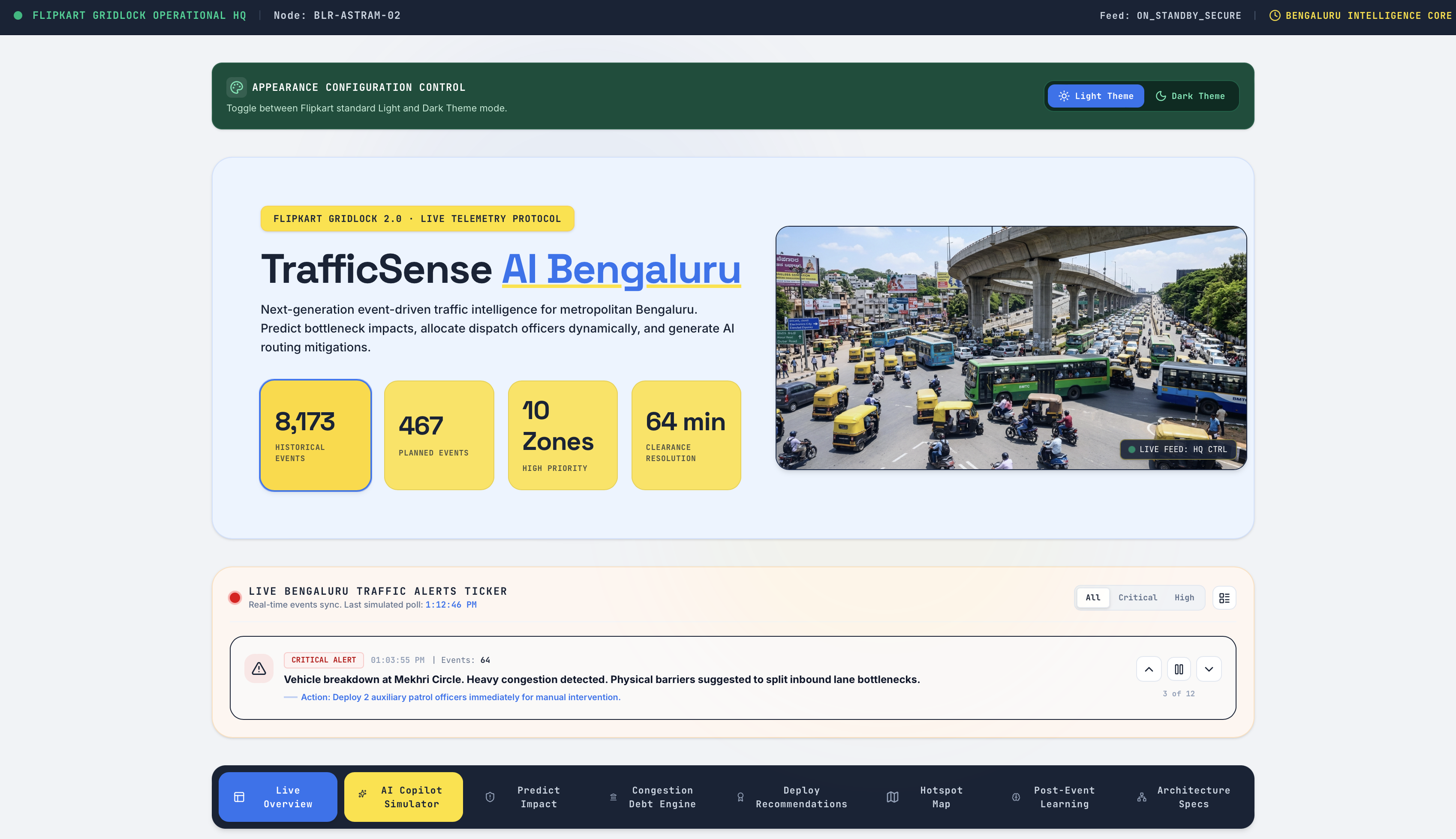
TrafficSense AI combines real-world traffic data, machine learning, geospatial analytics, and Google Gemini AI to predict and respond to planned and unplanned traffic events.
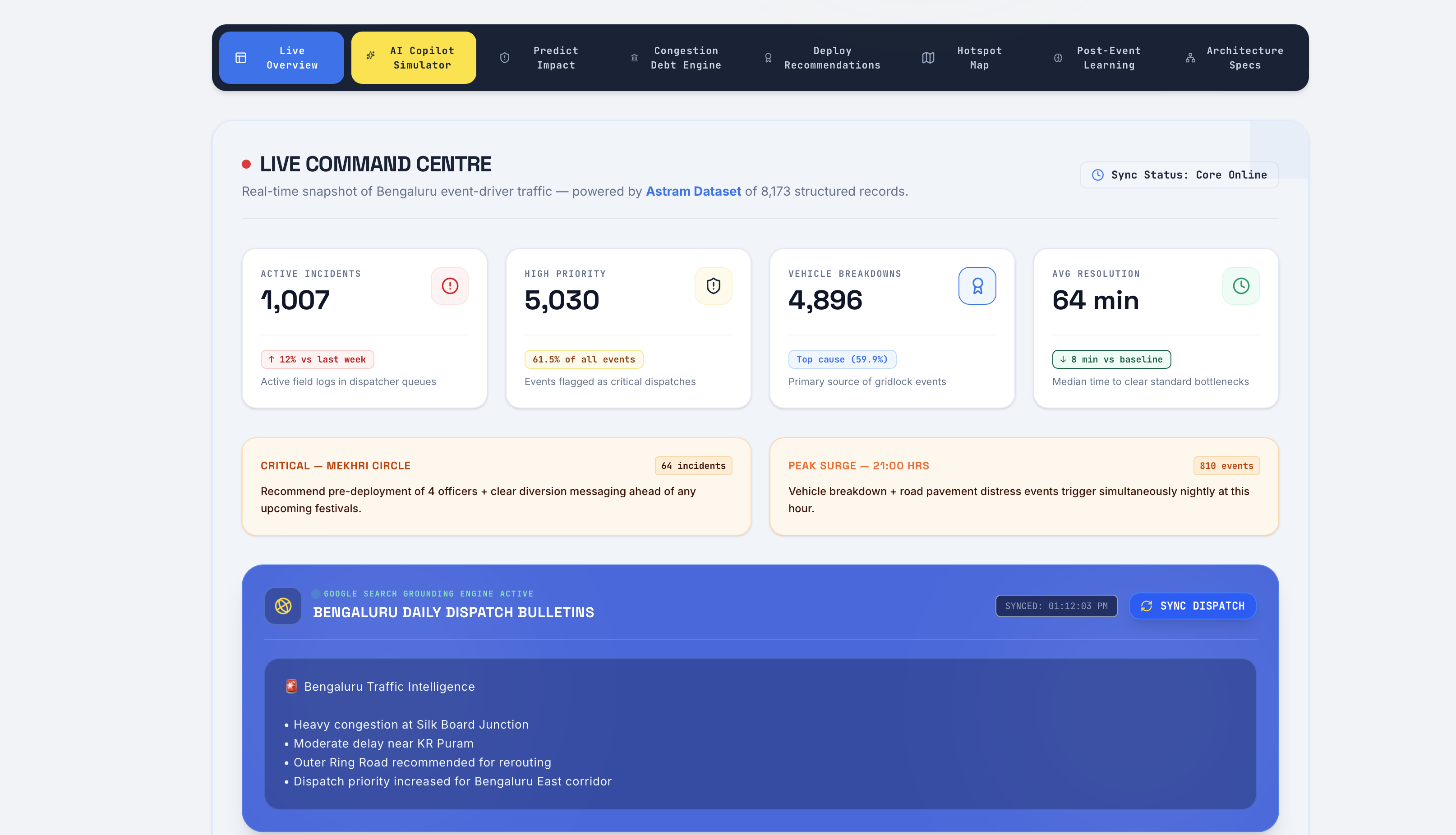
Using the ASTraM Bengaluru Traffic Dataset with 8,173 verified traffic events, the platform analyzes historical patterns to forecast congestion severity, clearance time, traffic spread, and resource requirements.
Its Gemini Traffic Copilot allows operators to describe an incident in natural language and generates actionable recommendations for manpower allocation, barricading, diversion routes, and chronological deployment plans.
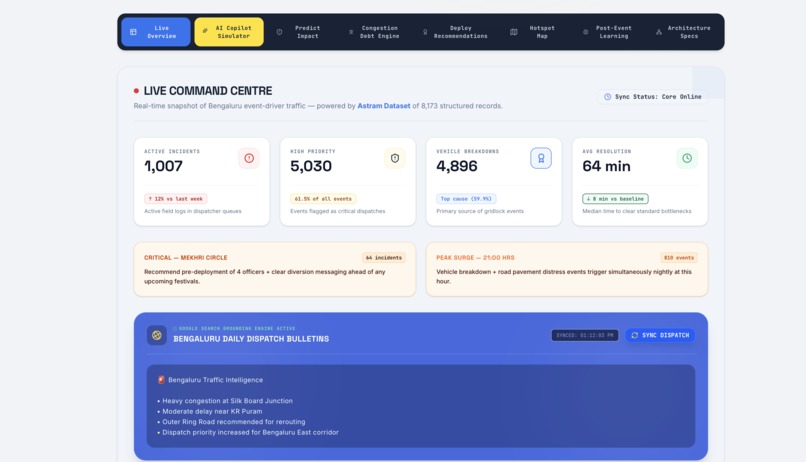
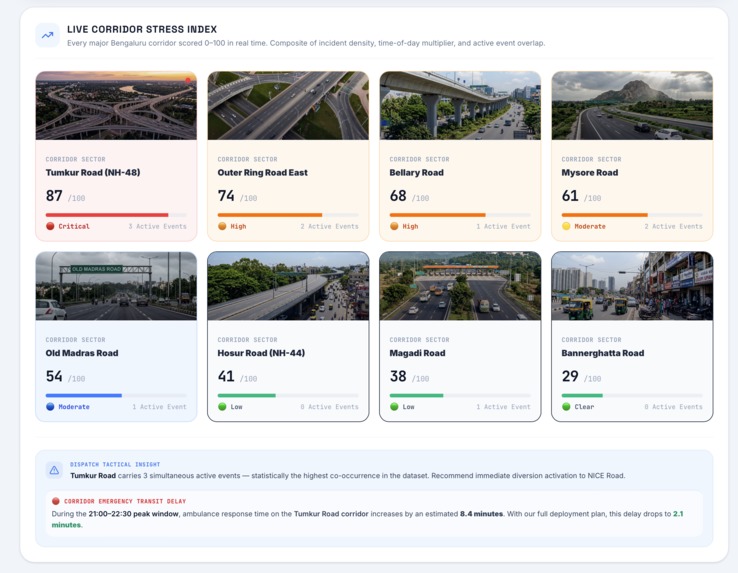
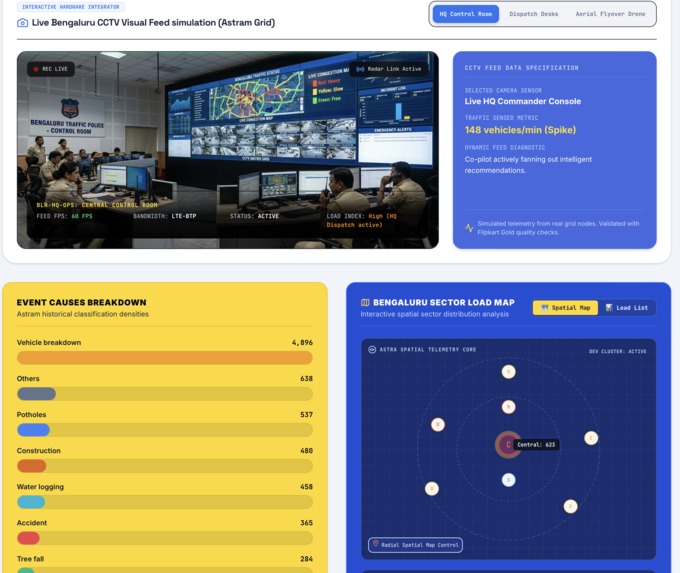
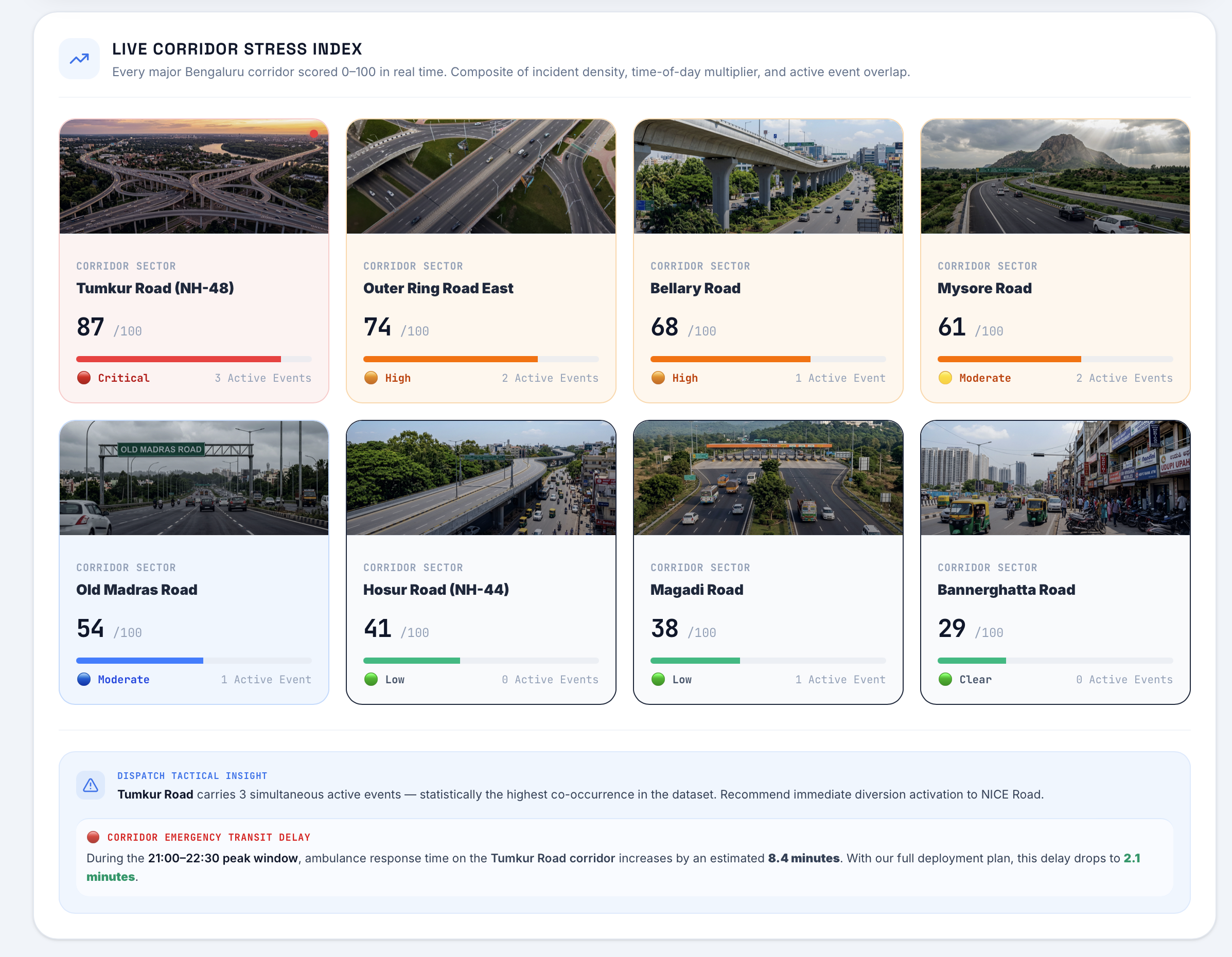
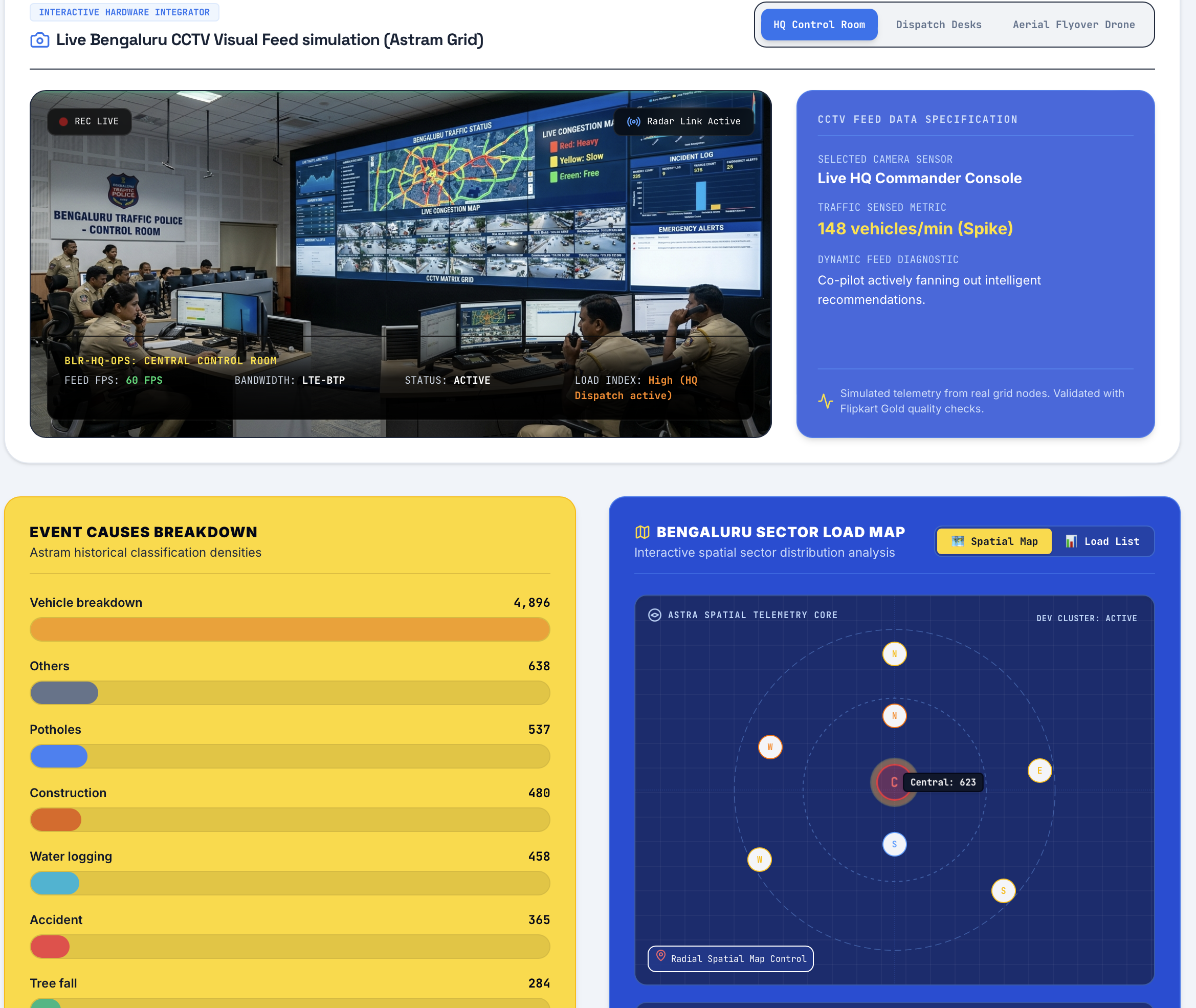
The platform also includes a Live Command Centre, hotspot and sector analytics, deployment recommendation engine, and Congestion Debt Engine that identifies recurring congestion patterns and recommends preventive interventions.
Our core workflow is:
Predict → Plan → Deploy → Learn.
How we built it
We built the platform using React and TypeScript for the frontend, Node.js and Express.js for backend services, and PostgreSQL for structured traffic and incident data.
For predictive intelligence, we used XGBoost and LightGBM to model traffic outcomes from historical event patterns. We integrated Google Gemini as the natural-language and operational reasoning layer.
A key architectural decision was to keep predictive modeling and generative AI separate. The ML models provide data-driven predictions, while Gemini converts structured intelligence and incident descriptions into understandable operational plans rather than inventing the underlying predictions.
We deployed the application on Vercel and built the interface around an operator workflow: Detect → Understand → Predict → Recommend → Deploy → Learn.
Challenges we ran into
One of our biggest challenges was turning predictions into actionable decisions. Simply predicting severe congestion is not enough for an operator, so we designed the system to connect predictions with manpower, barricading, diversion, and deployment recommendations.
Another challenge was working with real-world traffic event data, where incidents vary significantly in type, location, duration, severity, and surrounding conditions. Structuring this information into useful predictive features required careful data processing and engineering.
We also had to determine how to use generative AI responsibly. Rather than creating a generic AI wrapper, we designed Gemini to work alongside predictive models and structured traffic intelligence.
Accomplishments that we're proud of
We are proud to have transformed 8,173 real-world traffic events into a working predictive intelligence platform rather than building only a conceptual AI demo.
We successfully combined machine learning, generative AI, backend engineering, databases, geospatial analytics, and an interactive command-centre interface** into one end-to-end product.
Most importantly, TrafficSense AI goes beyond predicting what might happen. It attempts to help answer what should happen next, making the system more useful for real operational decision-making.
What we learned
Our biggest learning was that AI becomes significantly more valuable when it is connected to a real workflow and a real decision.
We learned how to combine predictive ML with generative AI without making the LLM responsible for the underlying predictions. We also learned that building a strong AI product requires more than a good model it requires reliable data, thoughtful architecture, clear UX, and outputs that users can actually act upon.
What's next for TrafficSense AI — Predictive Traffic Command Center
We want to take TrafficSense AI from a prototype toward a production-grade traffic intelligence platform.
Next, we plan to integrate live traffic and sensor feeds, real-time CCTV event detection, more granular geospatial forecasting, automated incident severity detection, traffic-signal integration, and continuous learning from actual intervention outcomes.
Our long-term vision is a system that doesn't just tell authorities what is happening, but helps them understand what is likely to happen, what they can do about it, and whether that intervention worked.
Predict. Plan. Deploy. Learn.
Built With
- ai
- analytics
- data
- express.js
- gemini
- generative
- geospatial
- learning
- lightgbm
- machine
- node.js
- postgresql
- predictive
- python
- react
- typescript
- xgboost


Log in or sign up for Devpost to join the conversation.