-
-
TrafficQ Logo
-
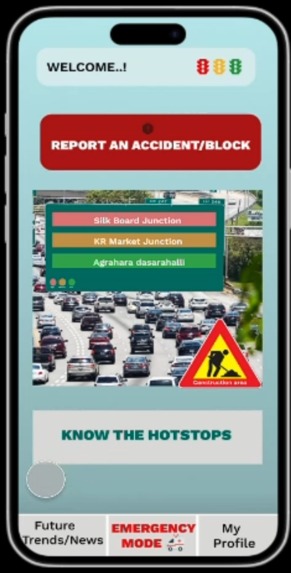
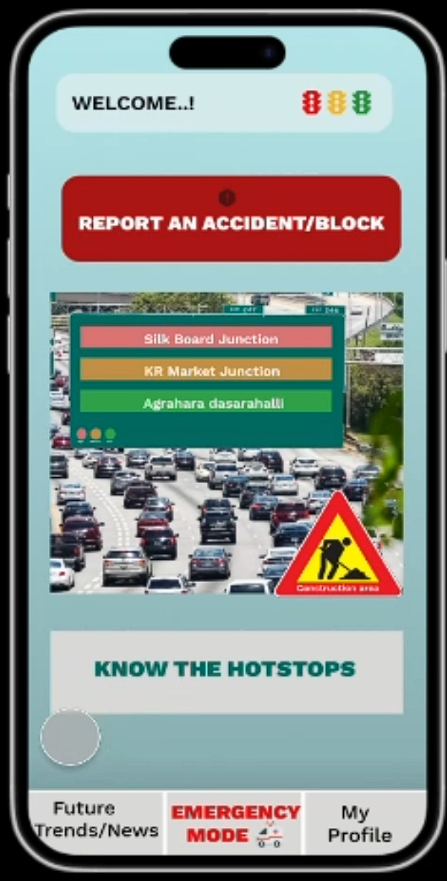
App Interface
-
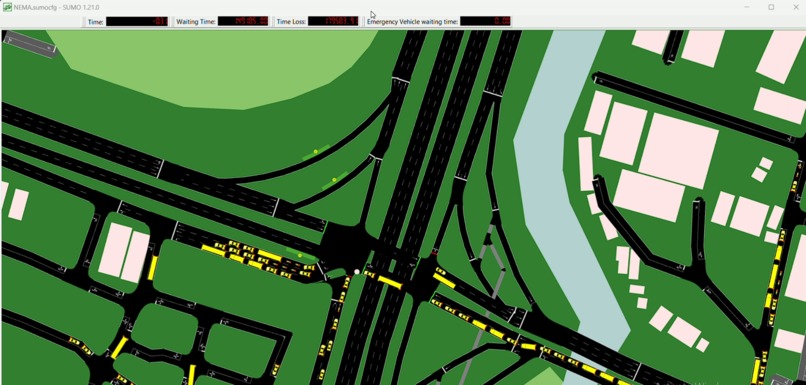
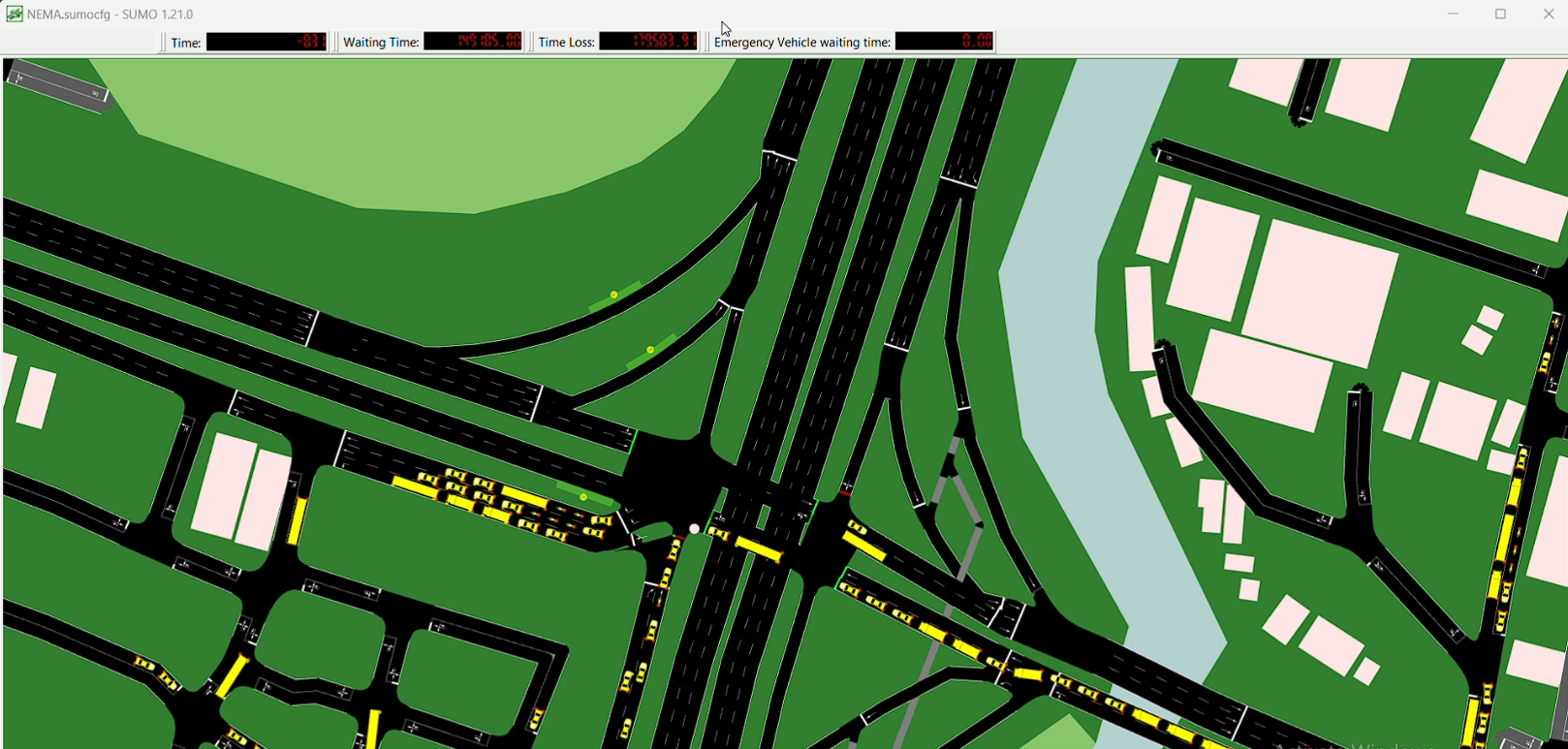
Simulation Demo
-
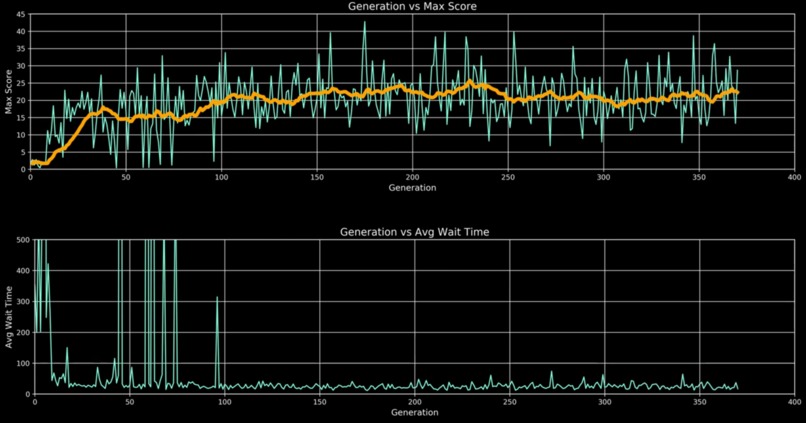
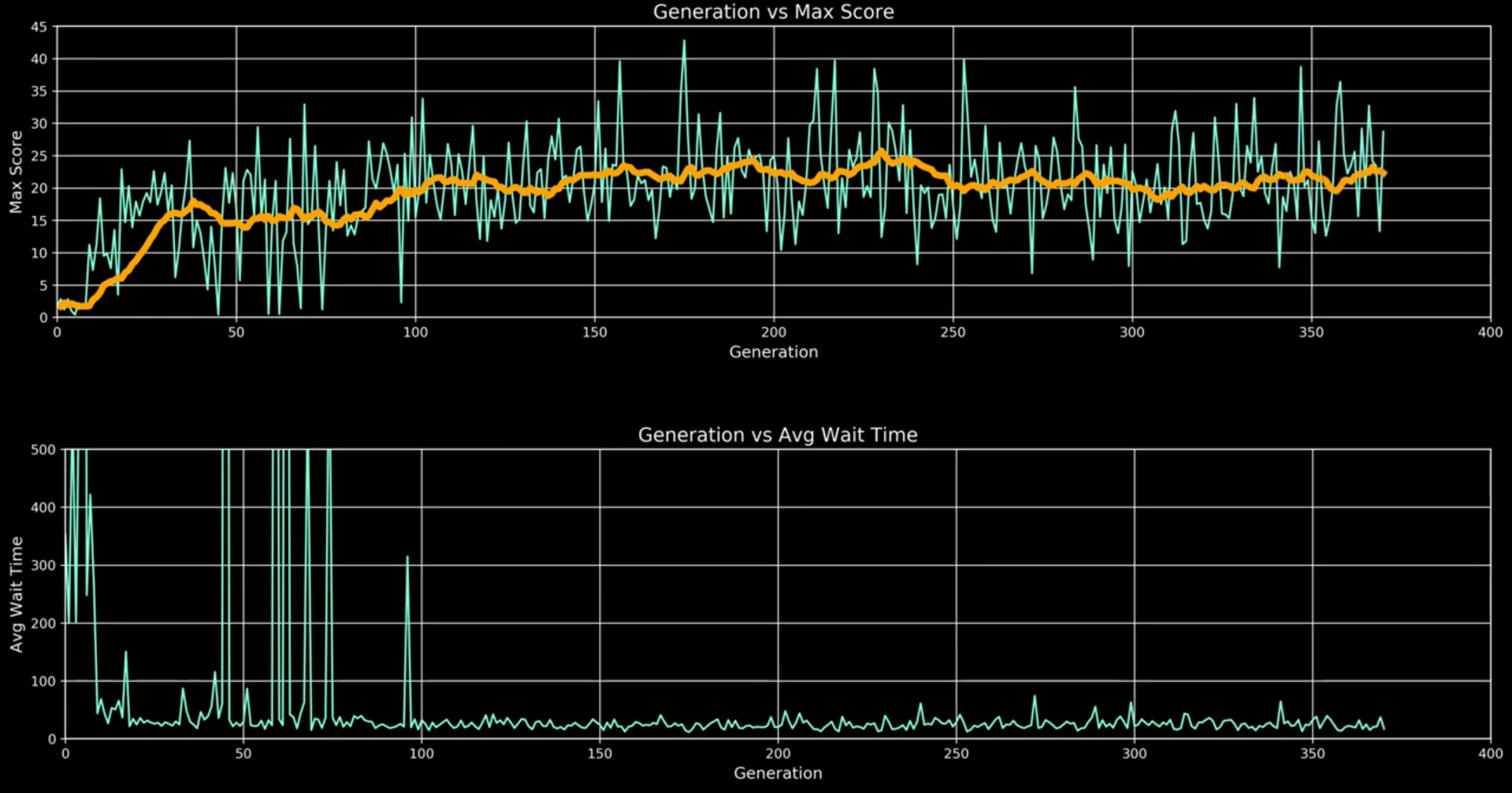
Training Model Results
Inspiration
It all started on a seemingly ordinary day when I was traveling 40 kilometers across Bangalore to attend a hackathon. The excitement of the event quickly turned into frustration as I found myself stuck at a traffic signal—multiple times. Yes, the same signal. I stopped there not once, not twice, but three times within the same journey.
What made it worse was witnessing an ambulance struggling to navigate through the gridlock. Every second counts in emergencies, and yet, here was a life-saving vehicle stranded due to an inefficient traffic management system. At that moment, I realized that the existing traffic light systems weren’t just inefficient—they were potentially costing lives.
This wasn’t just a personal inconvenience; it was a problem begging for a solution.
What it does
TraffiQ is an AI-driven traffic management system designed to optimize urban mobility. It adapts traffic signals in real-time using advanced Deep Reinforcement Learning algorithms, ensuring smoother commutes, quicker emergency vehicle responses, and reduced fuel consumption. Key features include:
Emergency Vehicle Priority: Ambulances and other emergency vehicles get immediate right-of-way.
Multi-Section Coordination: Signals work together to optimize traffic flow across city sections.
Public Transport Efficiency: High-priority lanes for buses during peak hours
Free Flow Of Vehicles
How we built it
Data Integration : We collected live data from IoT cameras, GPS, and historical traffic datasets. This data serves as the foundation for real-time decision-making.
AI Algorithms : A custom Deep Q-Learning model was trained using thousands of traffic scenarios. We enhanced its coordination with Graph Neural Networks for better signal communication.
YOLO Model Integration : For emergency vehicle and high-priority object detection.
Challenges we ran into
Training the Deep Learning Model:
Data Scarcity
Computation Requirements: Training the deep Q-learning model with graph neural networks required significant computational resources, leading to prolonged iterations.
Edge Case Handling: Incorporating scenarios like emergency vehicles, festivals, or unexpected roadblocks required extensive fine-tuning.
Simulation Environment:
Realistic Modeling: Simulating urban traffic dynamics with accuracy required integrating various factors like traffic density, and signal timing.
Hardware Limitations: Running real-time simulations for multi-signal coordination stressed available computational infrastructure.
Scalability: Ensuring the simulation could scale from a single intersection to a city-wide network required significant optimization.
Accomplishments that we're proud of
Reducing ambulance travel time by 30% in simulations.
Creating a modular system ready for phased implementation in smart cities.
Developing a model that reduces fuel consumption and emissions by 20%, contributing to environmental sustainability.
Successfully coordinating signals across multi-section urban areas.
Crafting an AI solution that can truly save lives and improve the quality of urban life.
What we learned
The importance of understanding real-world challenges faced by commuters, emergency responders, and city planners.
Importance of Diverse Data: The project underscored the significance of having diverse, high-quality data to train models that can handle varied traffic scenarios, including emergencies and peak hours.
Deep Learning in Real-World Applications: We gained an in-depth understanding of how deep Q-learning combined with graph neural networks can solve complex traffic optimization problems and adapt dynamically to real-world conditions.
How to optimize AI models for real-time responsiveness and reliability.
Problem-Solving Under Constraints: Working with limited computational resources for training models and running simulations required innovative approaches to optimize processes and improve efficiency.
Building smarter cities is as much about human-centric design as it is about advanced technology.
What's next for TrafficQ - The Visionary AI Traffic Optimizer
Pilot Testing: Deploy TraffiQ in a small urban area for real-world validation and refinement.
Dynamic Public Transport Schedules: Integrate with bus and metro systems to optimize arrival and departure timings.
AI-Driven Citizen Alerts: Notify citizens of real-time traffic updates and emergency vehicle routes through a mobile app.
Data Privacy and Security Enhancements: Ensure compliance with global standards while securing citizen data.
Collaboration with Smart City Initiatives: Partner with governments and tech providers to drive urban transformation.
Global Scalability: Expand TraffiQ’s reach beyond India, adapting it to international traffic systems.
Built With
- arduinoide
- deep-learning
- figma
- google-maps
- machine-learning
- opencv
- openweathermap
- pygame
- python
- pytorch
- raspberry-pi
- sumo
- tensorflow
- yolo


Log in or sign up for Devpost to join the conversation.