-
-
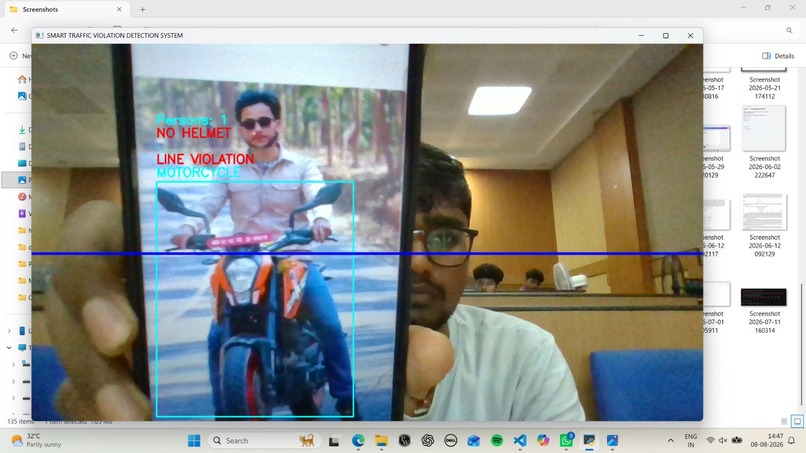
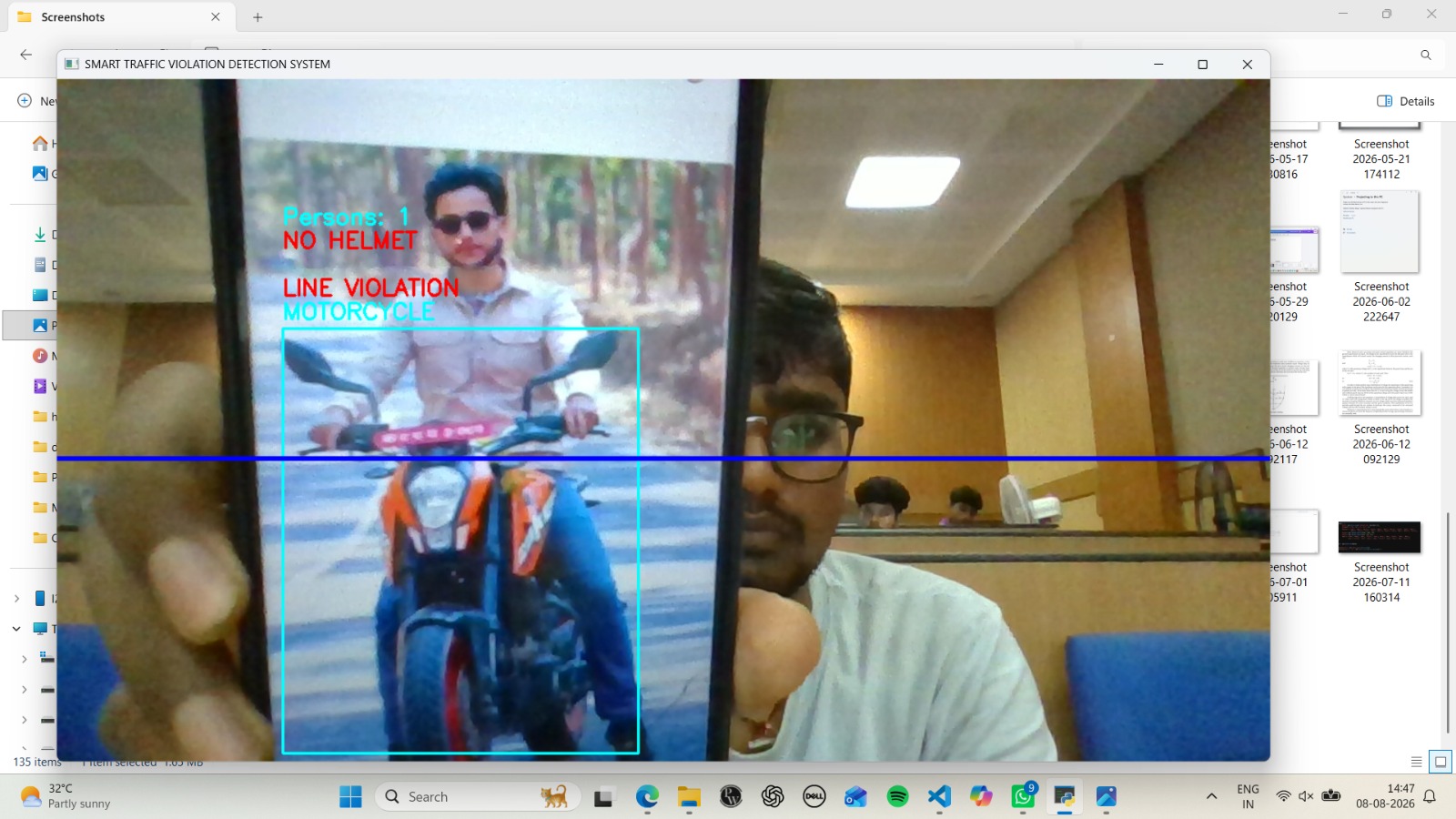
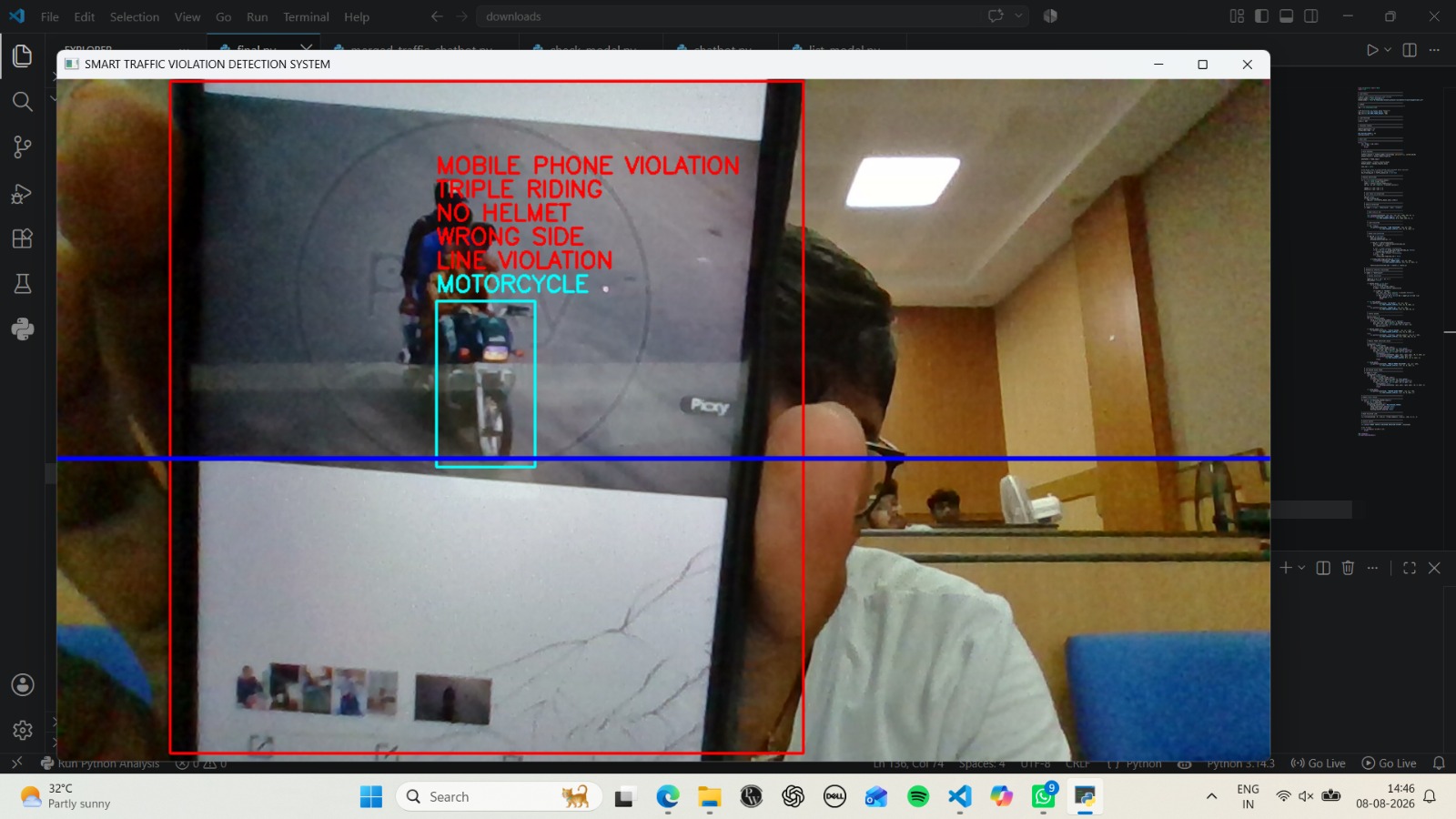
Helmet and line violation
-
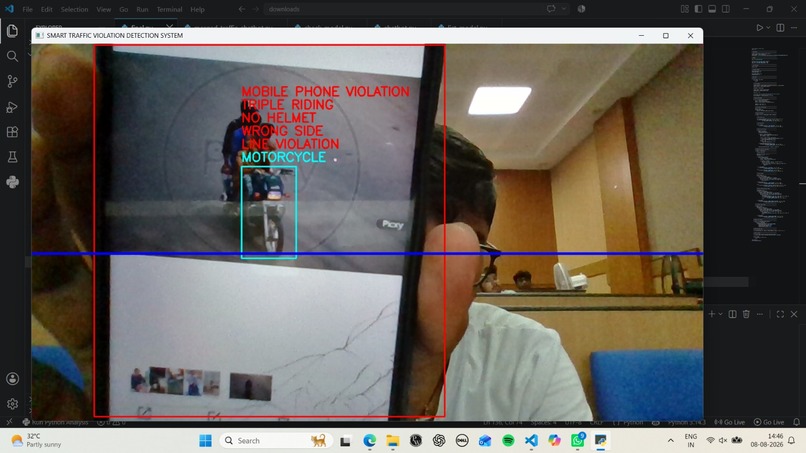
Triple riding
-
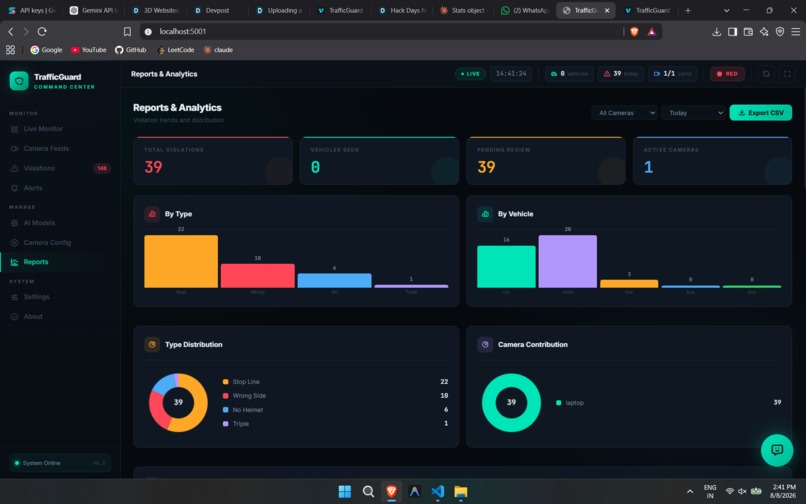
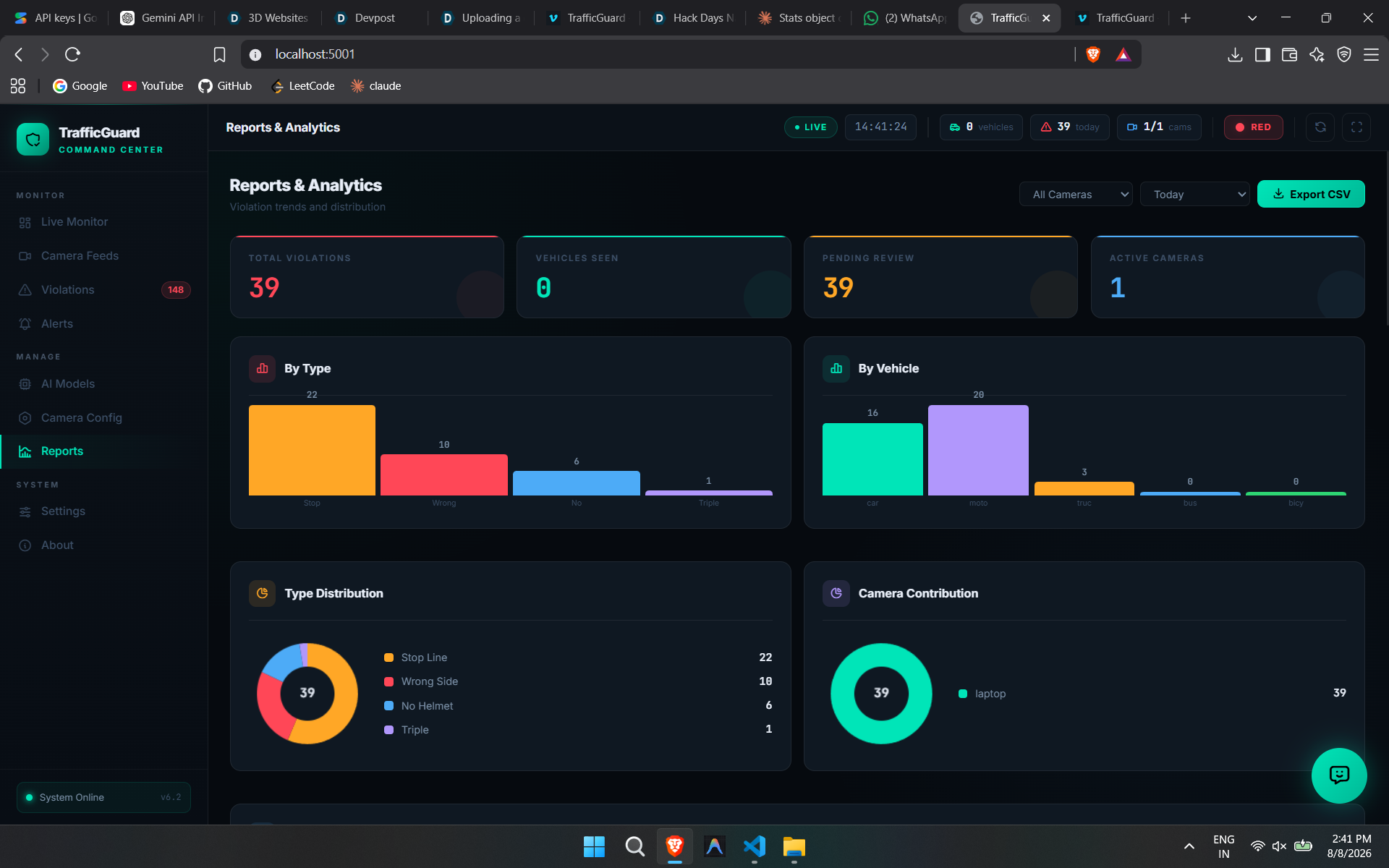
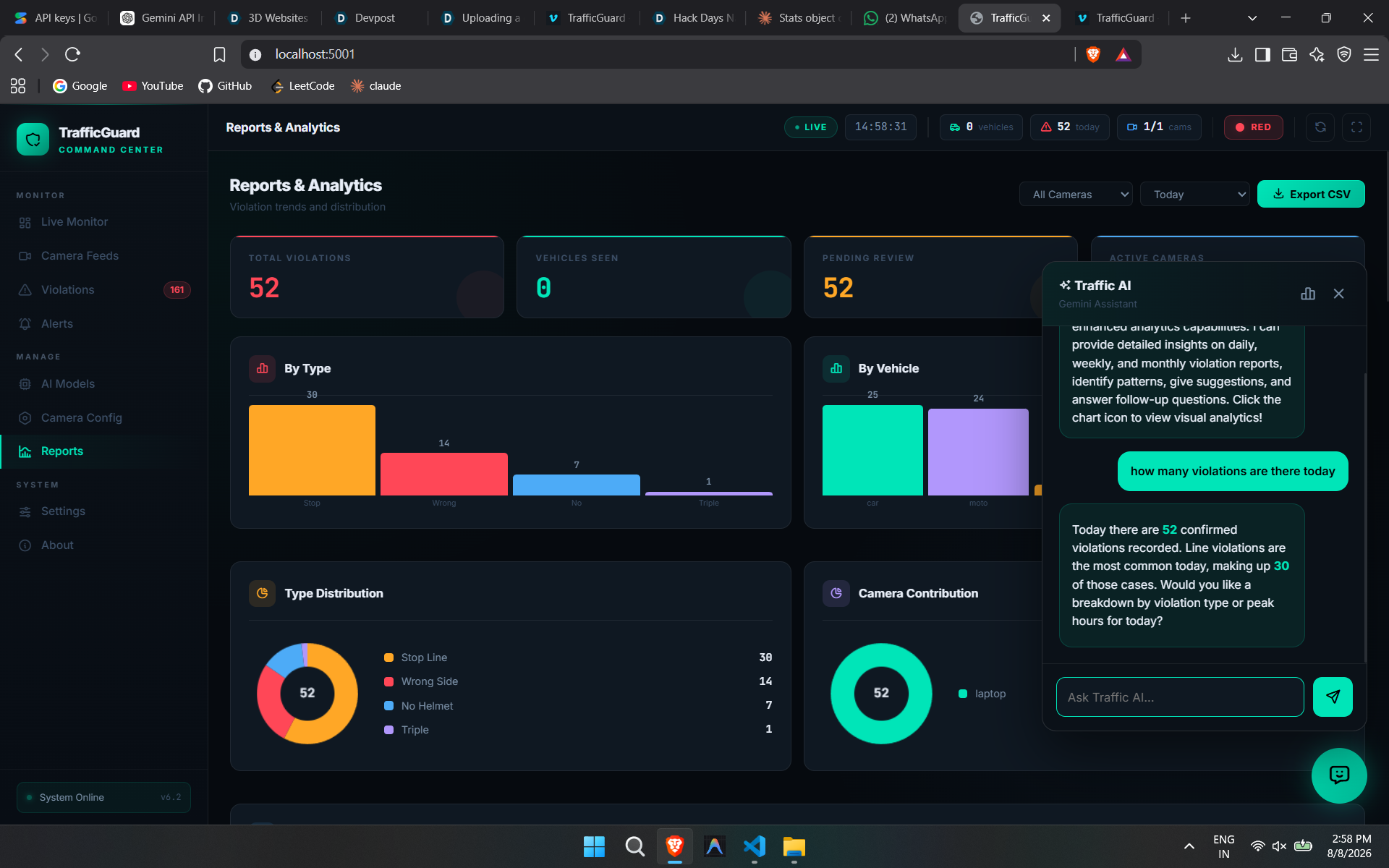
Analytics
-
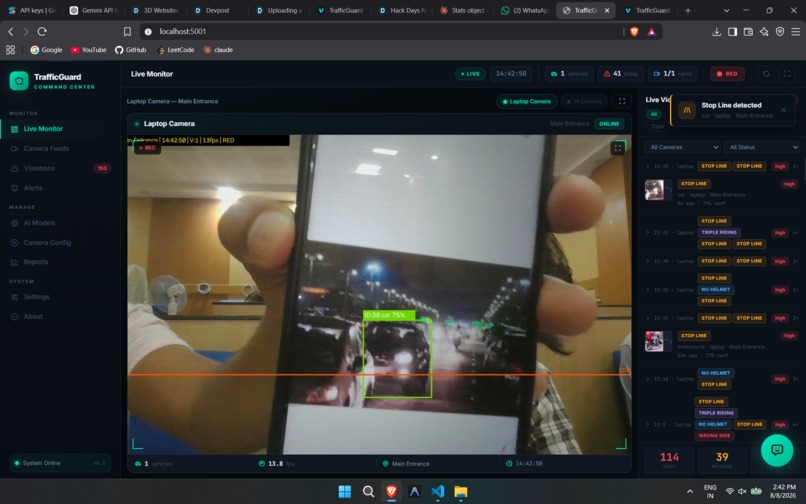
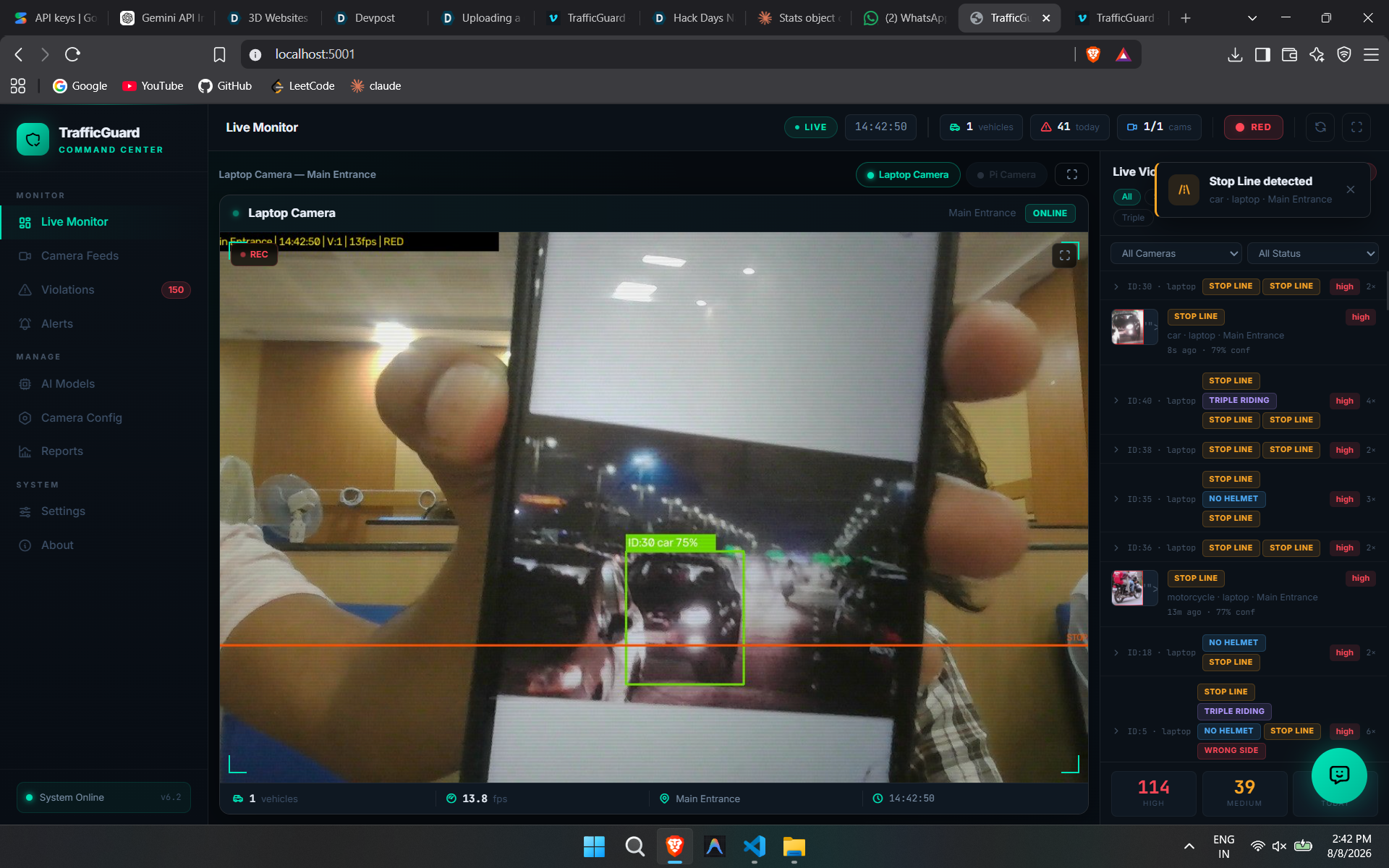
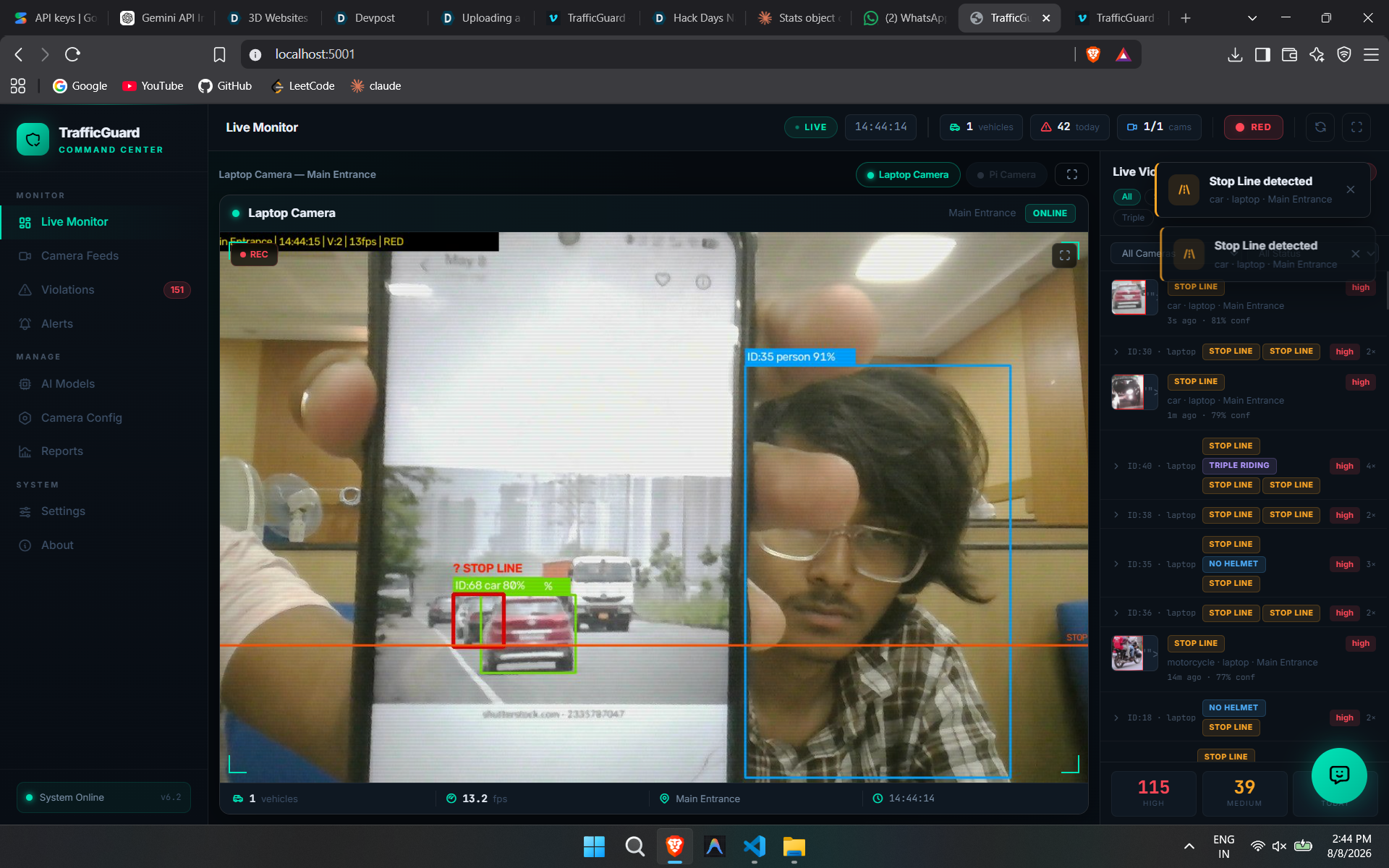
Line violation
-
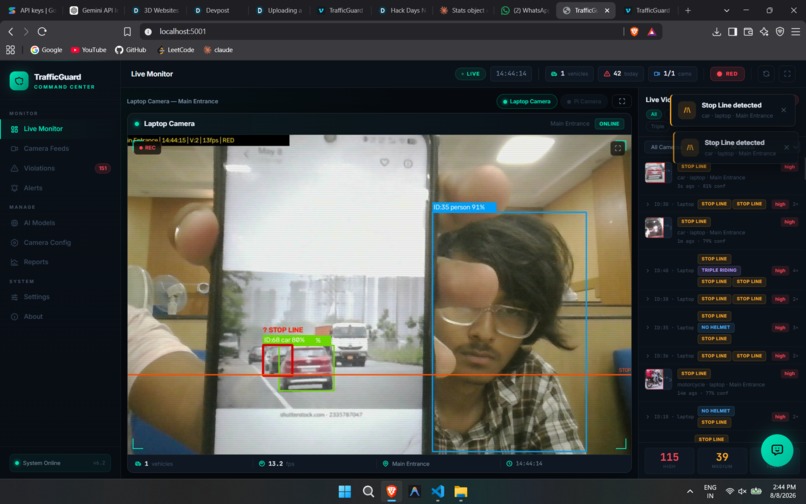
Wrong side detection
-
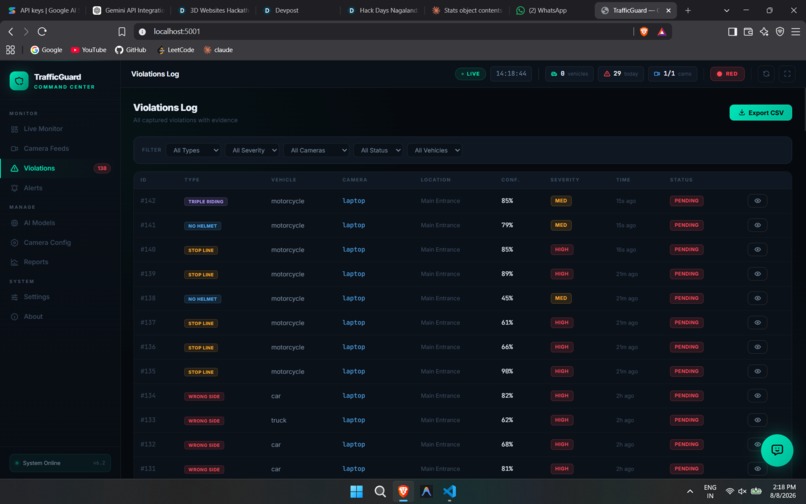
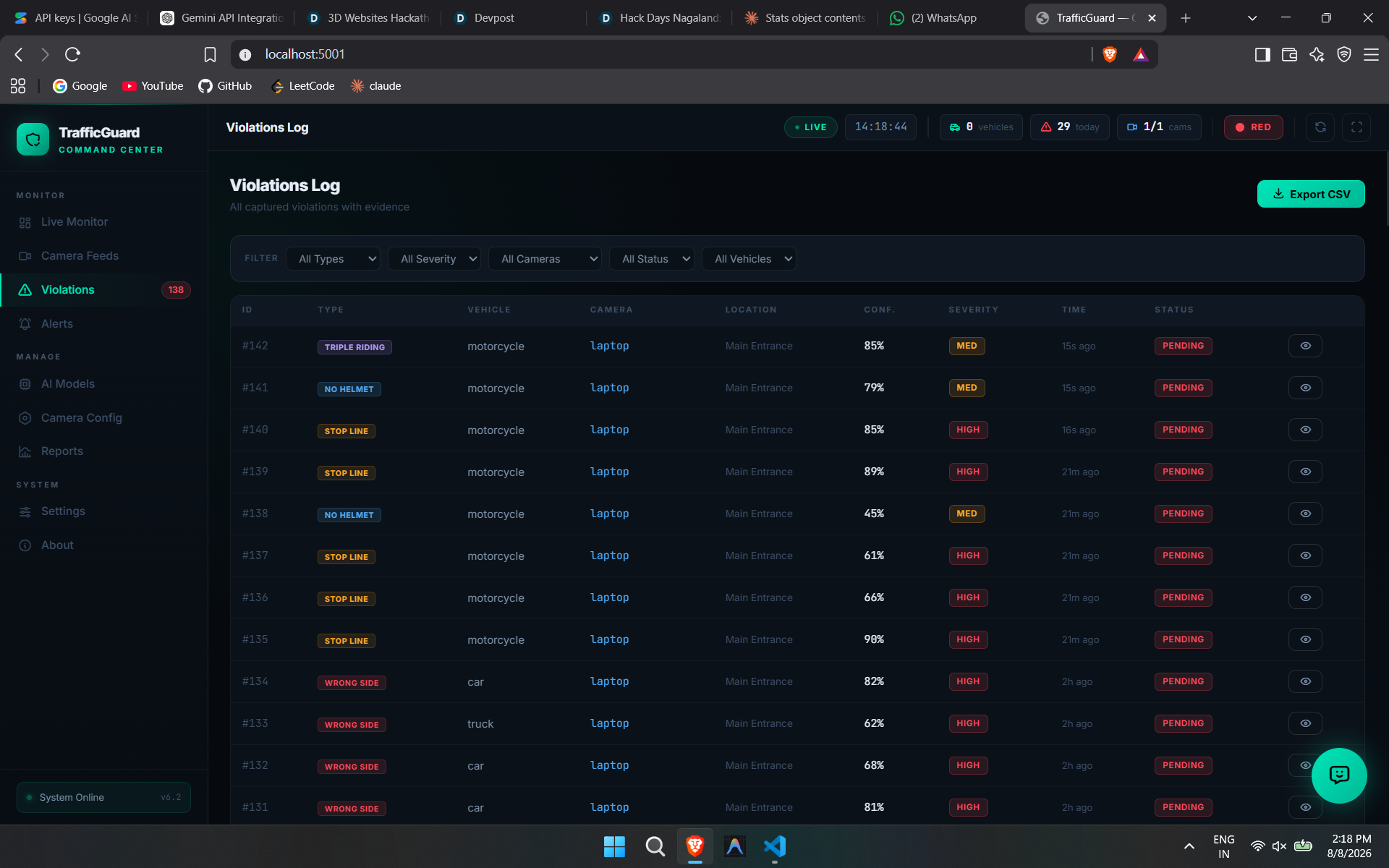
Records of violations
-
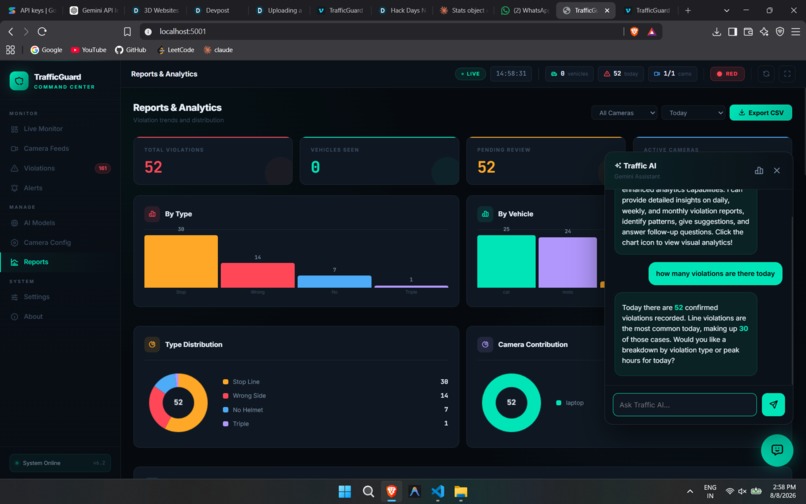
Chatbot
Project Story Inspiration
Traffic violations such as riding without a helmet, triple riding, wrong-side driving, and red-light violations are common on roads, and monitoring them manually is slow, inconsistent, and resource-intensive. We wanted to build a system that could automatically detect these violations and turn raw traffic camera footage into actionable, structured information.
What We Built
We developed an AI-based Traffic Violation Detection System using Python, OpenCV, and YOLO. The system analyzes traffic video footage, detects vehicles and riders, and identifies the four violation types above:
No helmet — via a custom-trained helmet detection model Triple riding — by counting riders detected per vehicle Wrong-side driving — by tracking vehicle trajectories against defined lane boundaries Red-light violations — by combining traffic signal state detection with vehicle position tracking
We trained custom AI models (built on YOLO[v8]) for helmet detection and number plate detection. When a violation is detected, the system locates the associated number plate, applies OCR to recognize it, and logs the vehicle number, violation type, date, time, and an evidence image to a database.
We also built a web dashboard (HTML, CSS, JavaScript) to display live traffic data, violation records, and analytics.
AI Traffic Assistant
To make the system more useful beyond raw logging, we integrated an AI chatbot using the Google Gemini API, acting as a traffic analysis assistant. It can:
Generate daily, weekly, and monthly violation reports Identify the most common violation types and emerging trends Suggest interventions for reducing repeat violations Answer natural-language follow-up questions (e.g., "Which violation happened the most this week?" or "What changed compared to last month?"), maintaining context across the conversation. Challenges & Learning
The biggest challenge was integrating multiple moving parts — detection models, number plate recognition, OCR, a database, a dashboard, and a chatbot — into one cohesive pipeline. Number plate recognition was especially difficult due to variable lighting, camera distance, angle, and image quality, which we mitigated through [preprocessing steps you used — e.g. cropping, contrast correction, multi-frame voting].
Through this project we gained hands-on experience with computer vision, YOLO-based model training, OCR, web development, API integration, and database design — and more broadly, learned how to combine several standalone AI components into one practical, real-world system.
Impact
Our goal is to make traffic monitoring smarter, faster, and more data-driven — automatically detecting violations, preserving evidence, generating analytics, and helping authorities understand traffic patterns through an AI-powered assistant.
What's Next Real-time deployment on live traffic camera feeds Edge inference for lower-latency detection Expanding violation coverage (e.g., signal jumping at multiple intersections, seatbelt detection)

Log in or sign up for Devpost to join the conversation.