-
-

-
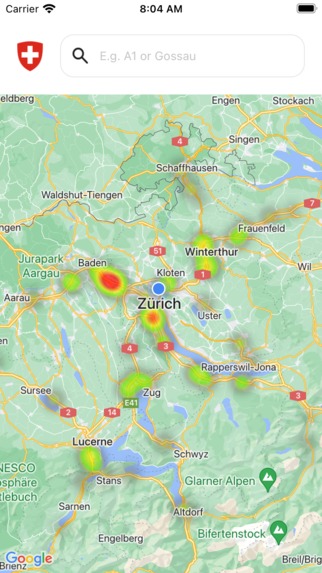
View Real-Time Traffic Conditions
-

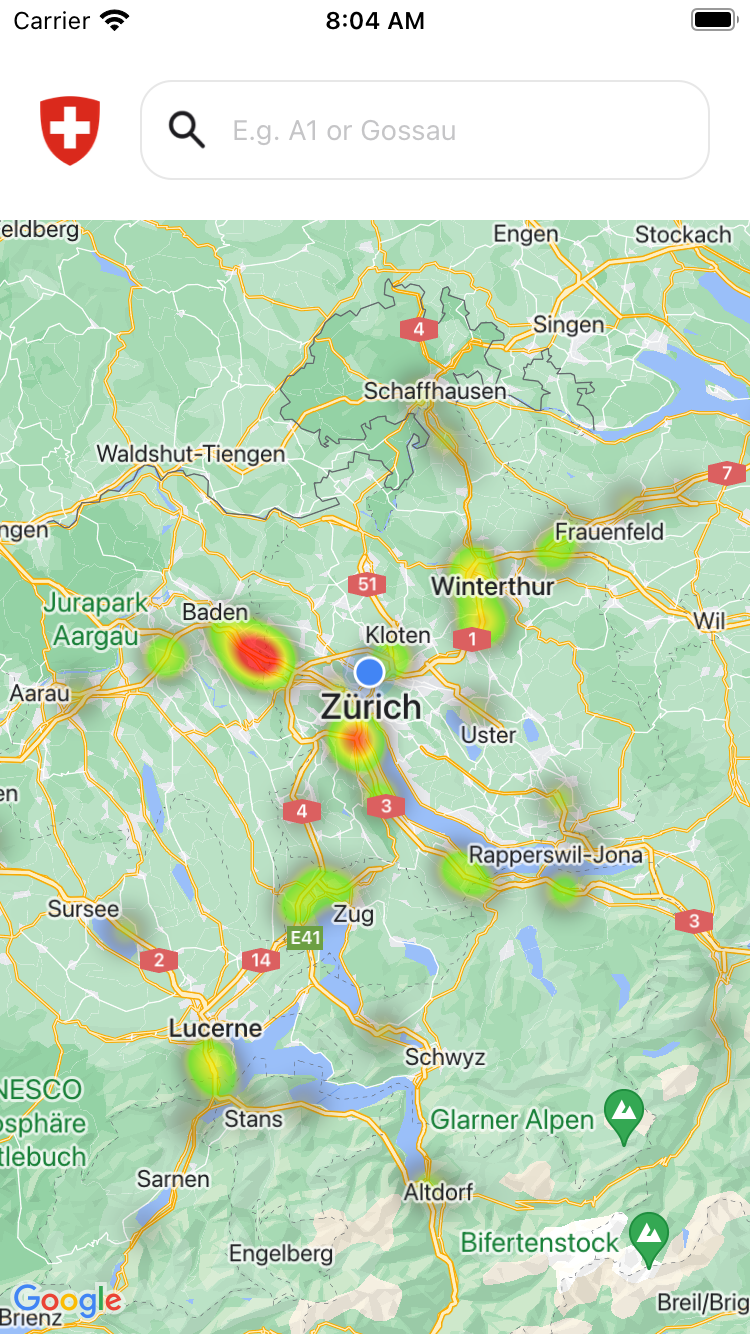
Search for a Specific Highway


Inspiration
Traffic jams are not only leading to frustration, but also negatively impacting the environment. The mobile app provides a traffic forecast featuring a state-of-the-art machine learning model. This will hopefully make travelling the roads of the future faster, cheaper, safer and more ecological.
What it does
Loads transformed historical data from >800 sensors across Switzerland and tries to predict the next traffic flux states for each sensor. We also built a service (frontend+backend) to ease the access and visualisation of data.
How we built it
Using kaggle, we trained models that most appropriately fit our use case, monitoring the state. We are 5 team members, where two were fully dedicated into building the prediction model (ML team), another team member was exploring the mathematical approach to this problem, and the other two were developing the frontend and backend for the service.
Challenges we ran into
The provided data is quite sparse, so using continuous mathematical traffic models is not possible. 10Gb would take a lot of time to train the model, so we limited the training set to 1Gb which would yield less precise results at the end.
Accomplishments that we're proud of
Building and training an LSTM machine learning model.
What we learned
A lot about traffic theory, LSTM (ML) models (we experimented with pytorch and tensorflow), and not least important, team work.
What's next for Traffic Skipper
The first step to make Traffic Skipper successful would be to develop a more robust model with the complete data provided. Then, we would move on to make real time suggested.


Log in or sign up for Devpost to join the conversation.