Inspiration: The growing number of road accidents caused by drivers missing or misinterpreting traffic signs inspired us to develop a solution that leverages AI to enhance road safety. With YOLOv8's cutting-edge object detection capabilities, we aimed to create a system that ensures drivers stay aware of traffic signs in real-time, minimizing human error and improving overall traffic compliance.
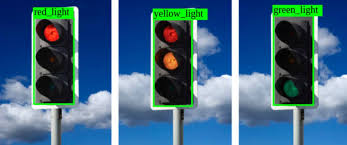
What it does: The Traffic Sign Detection system uses YOLOv8 to detect and classify various traffic signs from images or video streams in real-time. It highlights detected signs with bounding boxes and labels, ensuring drivers or autonomous vehicles can quickly recognize and respond to traffic regulations.
Key functionalities: Real-time detection and classification of traffic signs. Supports multiple sign types such as speed limits, stop signs, and warnings. High accuracy and speed, making it suitable for on-road deployment.
How we built it: Data Collection & Preprocessing: We used publicly available datasets like the German Traffic Sign Dataset (GTSRB) and augmented them to increase variability. Images were preprocessed to enhance quality and normalize input dimensions.
Model Training: YOLOv8 was fine-tuned on the traffic sign dataset using transfer learning. Annotated datasets were fed into the model to learn object detection and classification.
System Integration: The trained model was integrated with a Python-based pipeline for inference on real-time video feeds or static images. Tools like OpenCV were used for video stream handling and displaying results.
Testing and Optimization: The system was tested on multiple video streams for accuracy and latency. Parameters like confidence threshold and IoU were optimized for performance.
Challenges we ran into: Dataset Diversity: Many datasets had limited representation of real-world conditions (e.g., poor lighting or weather conditions). Real-Time Processing: Achieving low latency for real-time detection required model optimization and hardware acceleration. Sign Similarities: Differentiating between visually similar signs (e.g., speed limit signs) posed classification challenges. Deployment Environment: Integrating the system with hardware devices like dashcams or onboard vehicle systems required additional tuning.
Accomplishments that we're proud of: Achieved high detection accuracy (>95%) for a wide variety of traffic signs. Reduced inference time significantly, enabling real-time detection. Successfully handled edge cases, such as partially obscured signs or poor lighting. Built a user-friendly pipeline that can be easily deployed in real-world scenarios.
What we learned: The importance of robust data augmentation to make models adaptable to real-world conditions. Techniques for optimizing object detection models for speed without sacrificing accuracy. How to manage hardware limitations while working with high-performance AI models. Insights into real-world applications of AI in autonomous systems and traffic management.
What's next for Traffic Signs Detection using YOLOv8: Model Improvement: Train on larger, more diverse datasets to improve accuracy in different regions and conditions. Edge Deployment: Optimize the model for deployment on edge devices like Raspberry Pi or NVIDIA Jetson Nano. Integration with Navigation Systems: Combine traffic sign detection with GPS data to provide real-time driver alerts. Advanced Features: Add functionality for recognizing dynamic signs (e.g., digital speed displays) and road markings. Open-Source Contribution: Publish the project on GitHub to encourage collaboration and further innovation.
Built With
- cnn
- yolo
