🚦 AI-Based Traffic Management System
An AI-based traffic management system providing real-time traffic monitoring and adaptive signal control to optimize traffic flow at busy intersections.
🗒️ Overview
The Smart Adaptive Traffic Management System combines cutting-edge artificial intelligence, computer vision, and optimization algorithms to improve traffic conditions. By analyzing live video feeds from multiple intersection directions, the system detects and counts vehicles in real-time, processes this data using machine learning, and intelligently adjusts traffic signal timings. This dynamic approach aims to reduce traffic congestion, decrease vehicle waiting times, lower emissions, and improve overall road safety.
✨ Features
- Real-Time Vehicle Detection: Utilizes YOLOv4, a state-of-the-art convolutional neural network, to accurately detect vehicles across various weather and lighting conditions from live or recorded video streams.
- Intelligent Traffic Signal Optimization: Implements a genetic algorithm that continuously evolves and adapts green light durations based on traffic density and flow, optimizing signal timing to maximize intersection throughput.
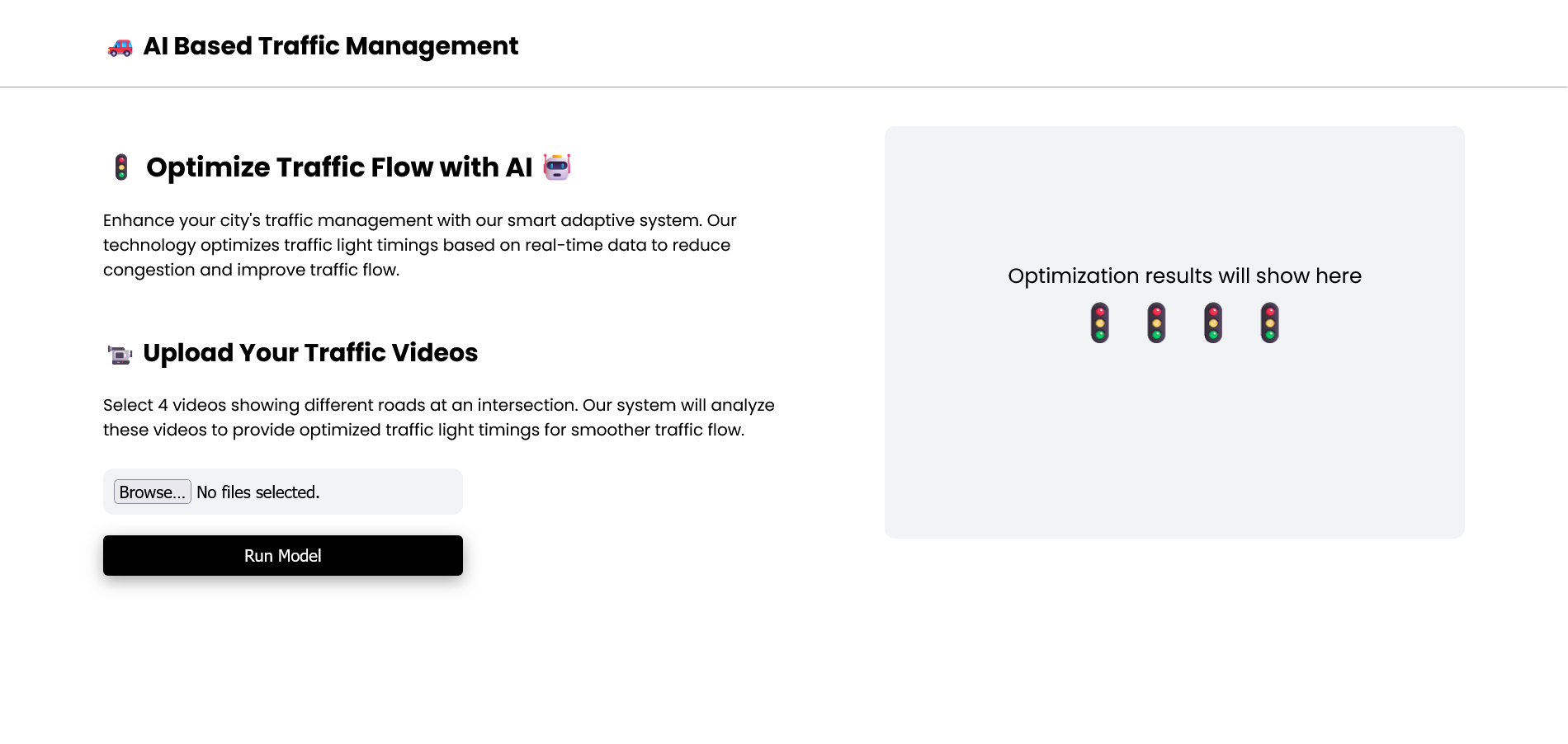
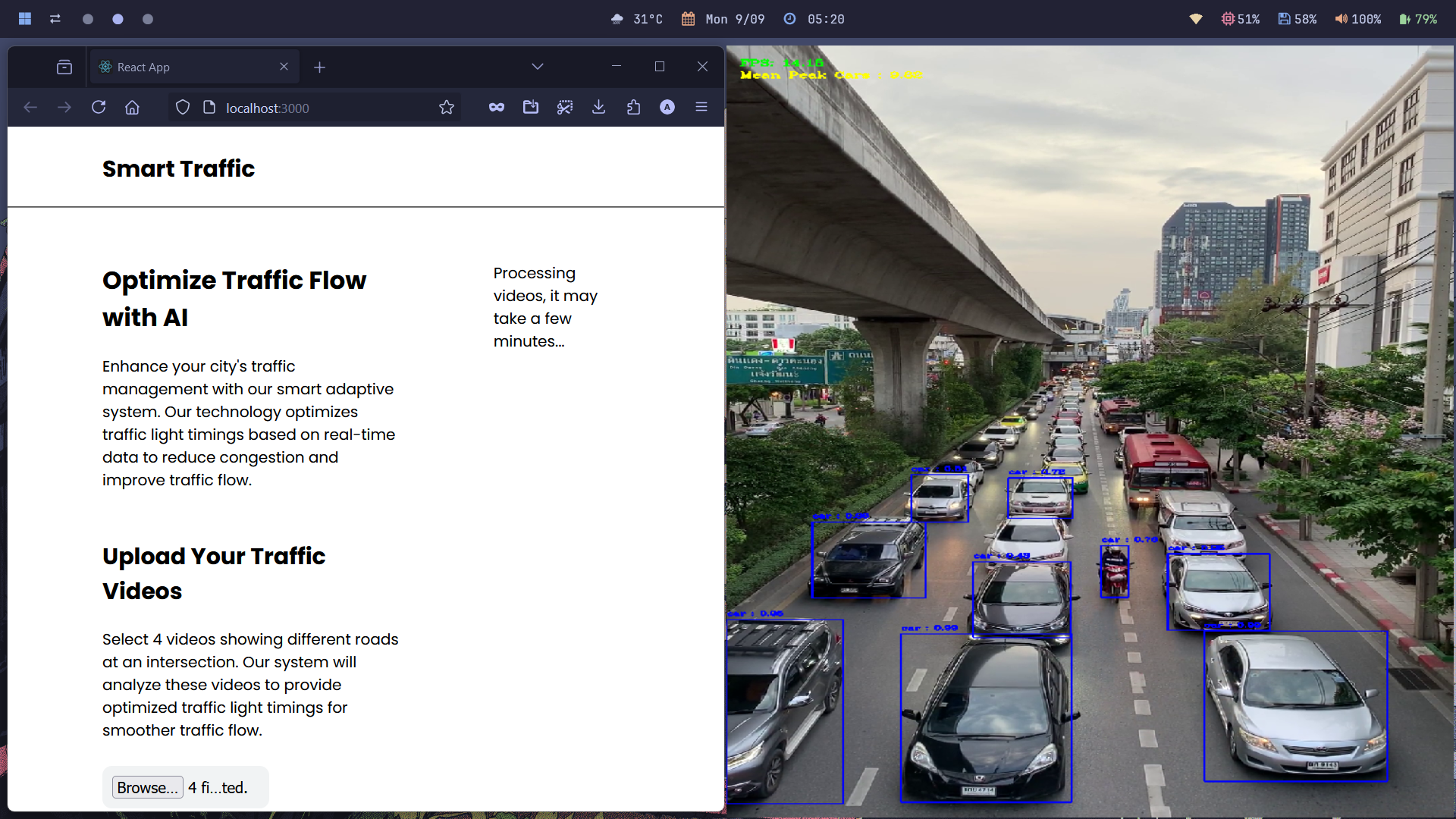
- User-Friendly Web Interface: Provides an accessible platform where users can upload traffic videos, monitor the detection process live, and receive actionable recommendations for traffic signal timings. The interface supports multiple video uploads for comprehensive analysis of all directions at an intersection.
- Scalable and Modular Architecture: Designed to easily integrate additional cameras, sensors, or AI models for enhanced functionality and future expansions.
💡 Inspiration
Urban traffic congestion is a significant challenge worldwide, contributing to wasted time, increased fuel consumption, and pollution. Traditional fixed-timing traffic signals often fail to accommodate fluctuating traffic volumes, leading to inefficiency. Inspired by advancements in AI and computer vision, we envisioned a system that learns and adapts in real-time to current traffic conditions—transforming static signals into intelligent, responsive systems that can ease congestion, improve commute times, and support sustainable urban mobility.
🤖 What it does
- Accepts traffic video feeds or pre-recorded footage from four different directions of an intersection, allowing comprehensive monitoring of traffic flow.
- Processes the video frames using the YOLOv4 model to detect vehicles such as cars, motorcycles, buses, and trucks, accurately counting their numbers in real-time.
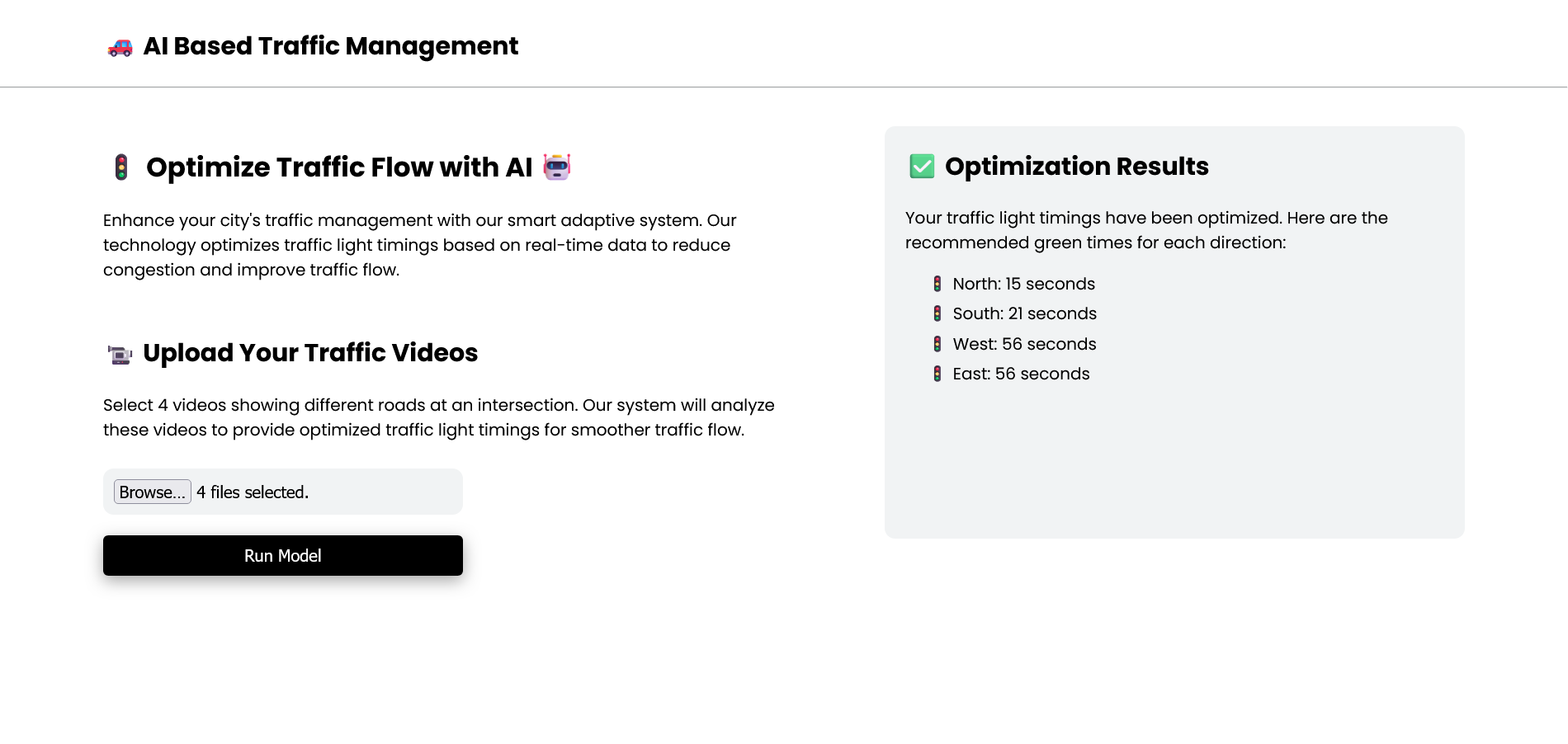
- Uses a genetic algorithm to analyze vehicle counts and optimize green light durations, prioritizing directions with heavier traffic and balancing the overall flow.
- Presents the optimized traffic light timings and vehicle counts through a clean, interactive web interface, enabling traffic authorities or city planners to make informed decisions or automate signal control.
🛠️ How we built it
- Backend: Developed with Python and Flask, handling video upload, frame extraction, vehicle detection with YOLOv4, and optimization logic. OpenCV is used extensively for video and image processing.
- Machine Learning Model: Integrated YOLOv4 pre-trained weights for vehicle detection, optimized for real-time performance.
- Optimization Algorithm: Implemented a genetic algorithm in Python to find near-optimal green light durations by evolving solutions based on traffic fitness criteria.
- Frontend: Built using Node.js and modern web technologies, offering a responsive UI for video upload, detection visualization, and traffic signal recommendations.
- Integration: REST APIs enable smooth communication between frontend and backend for asynchronous video processing and live UI updates.
- Tools & Libraries: OpenCV, Flask, YOLOv4, Python, Node.js, npm.
🧩 Challenges we ran into
- Achieving efficient real-time processing with YOLOv4 on multiple video streams without excessive lag.
- Handling large video file uploads and asynchronous processing without degrading user experience.
- Tuning genetic algorithm parameters to reliably optimize signal timings across variable traffic patterns.
- Synchronizing frontend and backend to provide smooth real-time updates and interaction.
- Maintaining detection accuracy despite different lighting, weather, and camera angles.
🏆 Accomplishments that we're proud of
- Delivered a fully integrated system combining AI detection, optimization, and frontend visualization.
- Real-time, accurate vehicle detection across various traffic conditions.
- Developed a user-friendly web dashboard that simplifies complex AI data into actionable insights.
- Demonstrated successful optimization of traffic signal timings through genetic algorithms.
- Created a scalable architecture for future enhancements and multi-intersection management.
📚 What we learned
- Practical use of YOLOv4 for object detection in real-time traffic video analysis.
- Application of genetic algorithms to solve real-world optimization challenges.
- Designing responsive web interfaces that interact with intensive backend AI processing.
- Managing asynchronous workflows in full-stack development.
- Importance of modular, extensible system design for AI projects.
🔮 What's next for Traffic Manager
- Integrate live traffic camera feeds for real-world adaptive control.
- Expand vehicle detection to classify vehicle types (cars, buses, emergency vehicles).
- Add time-series forecasting models for proactive traffic management.
- Scale the system to manage multiple intersections collaboratively.
- Develop mobile apps for traffic managers and commuters.
- Collaborate with municipal authorities to pilot deployments in smart cities.


Log in or sign up for Devpost to join the conversation.