Project Background
Inspiration
The inspiration for this project came from the growing need for secure and reliable payment infrastructure in the Web3 ecosystem. As blockchain adoption increases, merchants accepting crypto payments face higher risks such as fraud, suspicious transactions, and lack of real-time risk assessment tools. Traditional payment systems rely heavily on centralized fraud detection services, but similar solutions are still limited in decentralized environments. We wanted to explore how AI and on-chain infrastructure could work together to build a smarter, transparent, and automated risk control system for Web3 merchants.
What We Learned
Through this project, we gained deeper experience in integrating AI-driven risk analysis with blockchain infrastructure. We learned how decentralized storage and smart contracts can work together to create verifiable and auditable risk evaluation records. We also improved our understanding of real-time transaction analysis, feature engineering for risk detection models, and how on-chain data can be leveraged for intelligent decision-making.
How We Built the Project
Our system combines blockchain, decentralized storage, and AI-based risk analysis into a closed-loop workflow:
- Smart Contracts (Sui Move): Handle merchant registration, transaction requests, risk result recording, and appeal processes.
- Walrus Storage: Stores merchant profiles, transaction history, AI feature datasets, and audit logs in a decentralized and encrypted manner.
- AI Risk Engine: An off-chain service analyzes transaction features such as historical transaction behavior, payer risk score, and abnormal activity patterns to generate a real-time risk score.
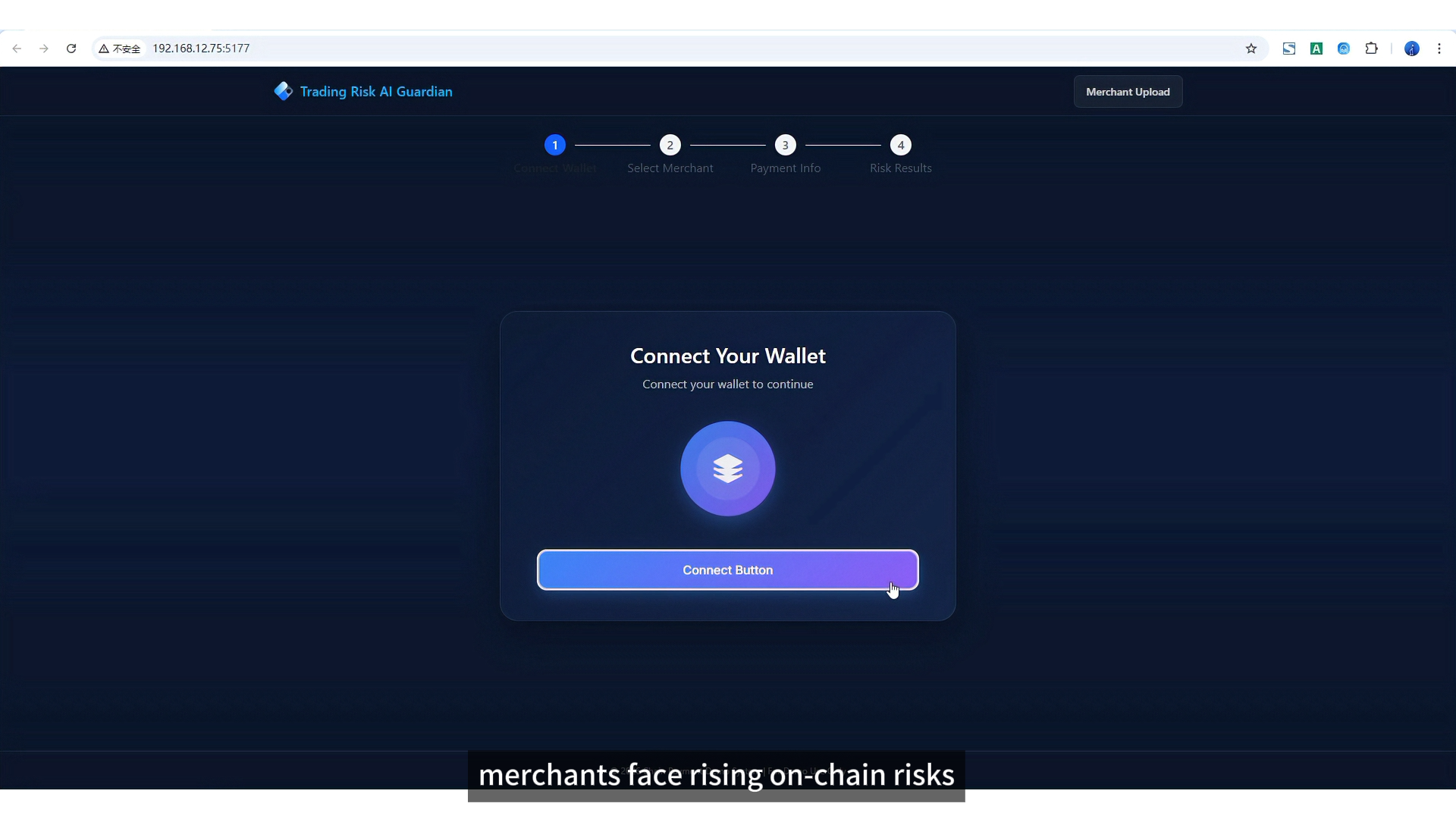
- Merchant Application Layer: Provides an interface for merchants to initiate payments, view risk results, and manage their accounts.
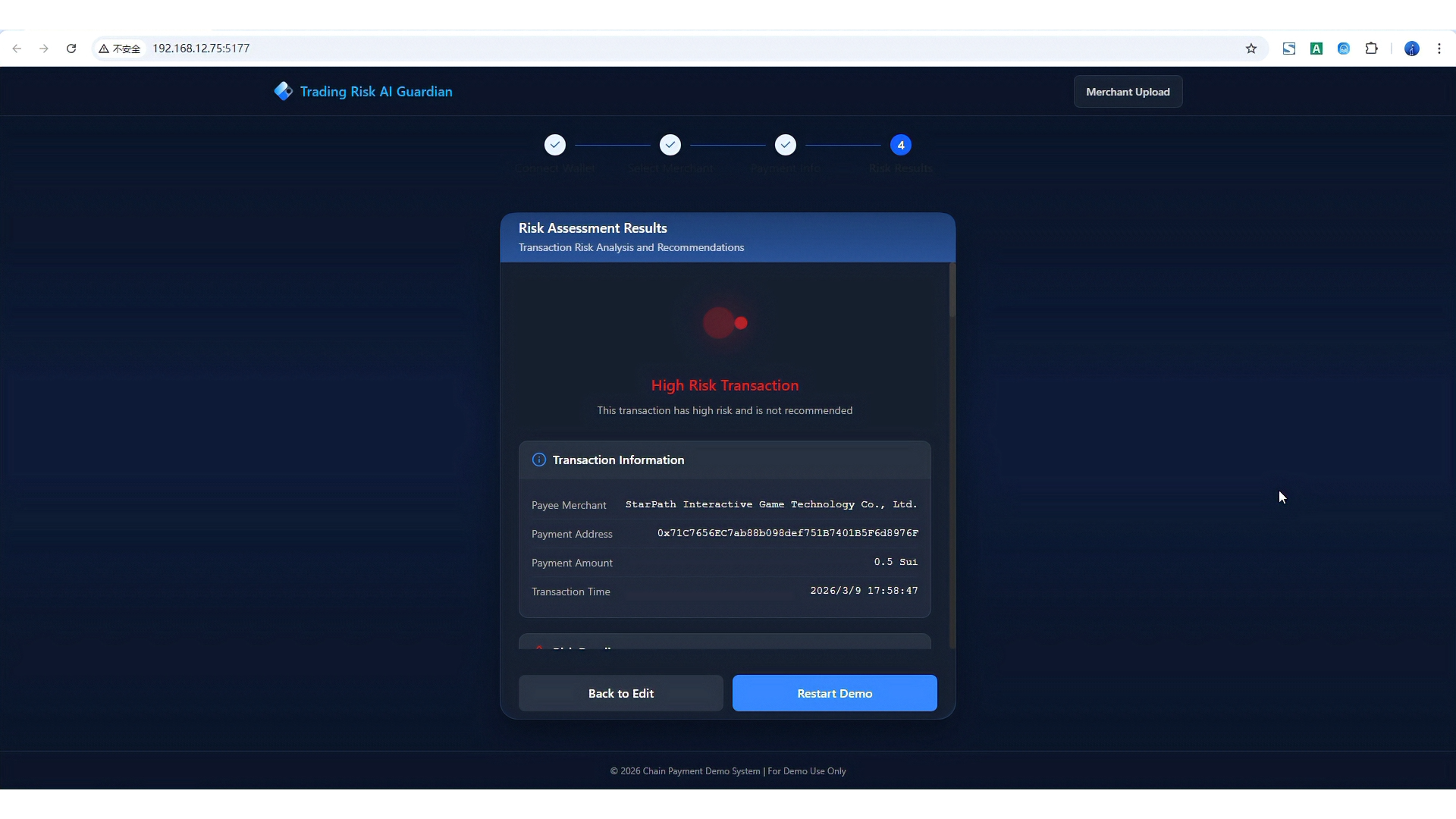
When a payment request is initiated, the system retrieves historical data from decentralized storage, performs AI risk evaluation, assigns a risk level, and records the result on-chain. Depending on the risk score, the transaction can be automatically approved, flagged for manual review, or rejected.
Challenges We Faced
One of the main challenges was designing a smooth workflow between on-chain logic and off-chain AI computation. Ensuring that AI risk evaluation results remain transparent and verifiable while keeping computation efficient required careful architecture design. Another challenge was structuring transaction data and feature sets so that the AI model could perform meaningful risk assessment while maintaining scalability for future merchant adoption.
Built With
- move
- react
- sui
- vite
- warlus

Log in or sign up for Devpost to join the conversation.