-
-
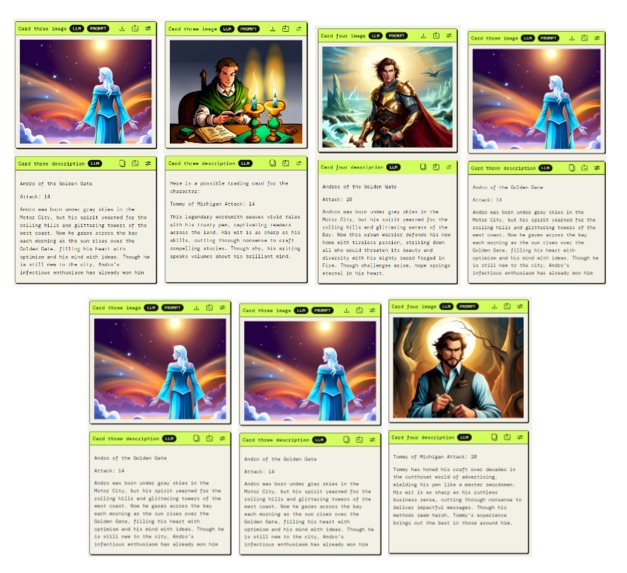
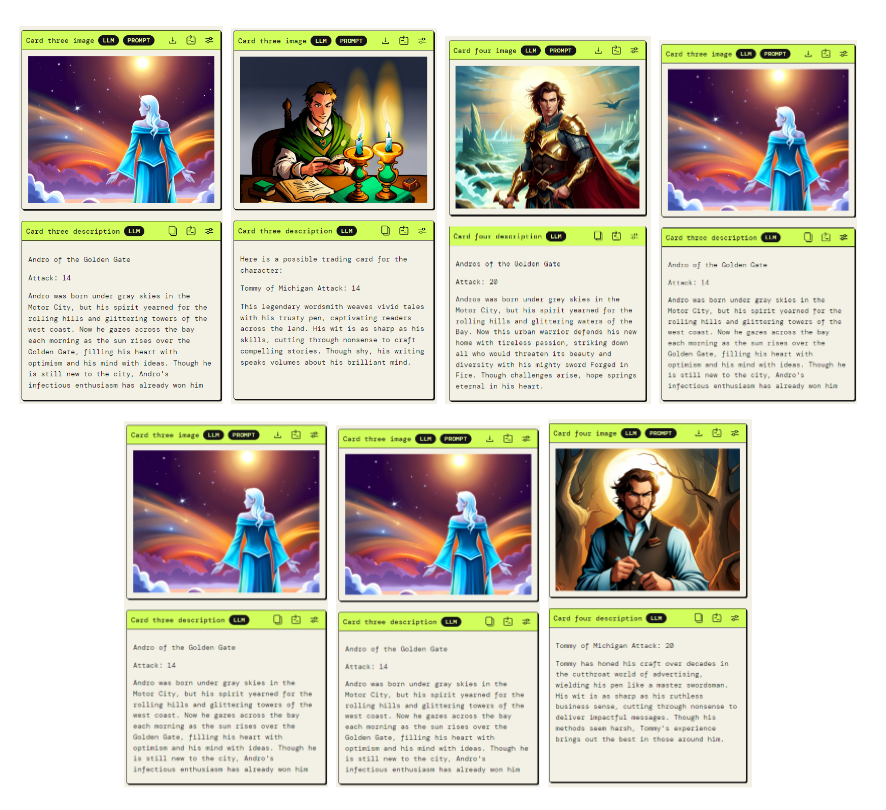
Full hand of cards
-
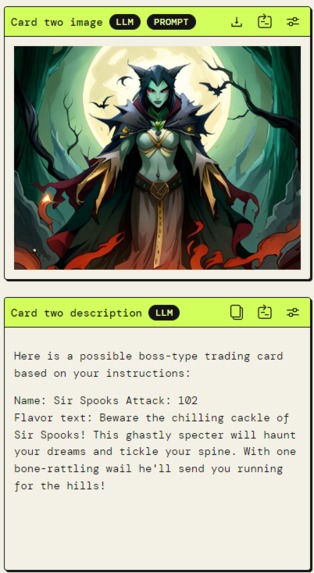
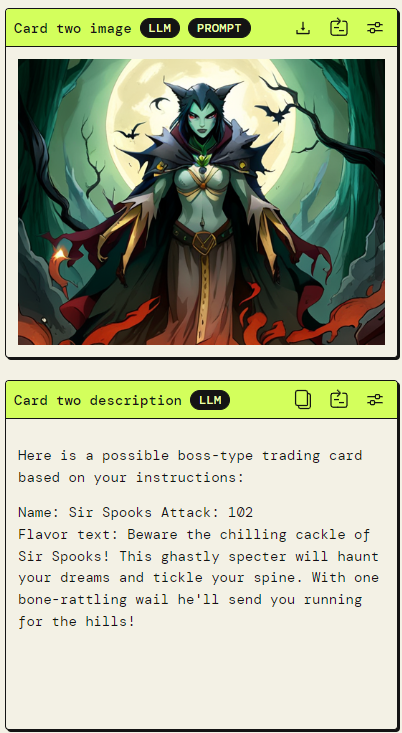
Boss card
Put yourself in the game
With my bachelor party approaching, I was thinking of something unique and unforgettable to do. I wanted to steer clear of the typical party games and activities because, let's be honest, they can get boring pretty quickly. I was looking for a game that was both immersive and engaging, where everyone can fully be part of the experience. I could not find quite what I was looking for so I decided to create my own game. However, a significant challenge stood in my way: I possessed neither game design expertise nor creative flair. The task of crafting my own game seemed daunting.
Luckily, Artificial Intelligence was there to help!
Face Your Fears - make your own game
I ended up creating a party-style trading card game called Face Your Fears which uses A.I. to generate cards based on you and your friends. In this post, I'll be discussing the real magic behind my game, the PartyRock app that generates the cards. If you are interested in reading about how the actual game is played, please check this post.
In the PartyRock app, users simply provide a few details about themselves and the app swiftly creates cards of varying power levels all based on them. These cards, which can be directly printed or added to design programs, create a truly immersive experience where you and your friends become the main players.
Not only did I create a game to challenge friends to face their fears together, but A.I. also allowed me to face a fear of my own: building a fully fleshed-out game.
Built with prompts working in tandem
Using a scratch PartyRock template, I added a simple text input field with a call to action for the user to submit a description about the character they want to make into trading cards. It can be themselves, their friend, Alexander the Great, anyone! The widgets then generate four cards, each composed of text and image, that are generated based on the prompt plus hard-coded rules about the card’s attack power based on rarity level. For example, the common cards can only have an attack power as high as 5 while the mythic level can have an attack power of 20.
Thanks to the square shape of the widgets and PartyRock’s overall design, the widgets themselves become the trading cards and users can print their screen as a PDF to start building their deck.
Making games is hard
The main challenge was creating both a new game and a PartyRock tool that could be part of the game. While the details involved with the game itself are explained here, the main challenge I had was changing the rules of the game while I learned the features and limitations of PartyRock. One example was that I originally planned to have the images of the four cards generated on one image widget, but I could not engineer a prompt that could create four separate cards within one widget. This led me to have four separate image generators for each of the card rarities (Common, Uncommon, Rare, Mythic).
But cards were made!
My biggest success: real cards were made! The original goal of making trading cards based on anyone, complete with a rarity level and attack, was accomplished. This tool does the thinking for you while guaranteeing you have the content needed to start your own collectible card game.
Generative A.I. can help non-creatives create
The usefulness of A.I. in an app is dependent on its ability to resolve a genuine problem. This use of generative A.I. clearly resolves the challenge of simultaneously developing information for several cards within the established trading card game format; encompassing components such as attack levels, images, and descriptions.
Anyone interested in play-testing?
To continue, I would need to really build out Face Your Fears as an actual, online multiplayer game. Based on the tried and true process for game development, I am still in the prototype phase. Luckily, the steps involved in developing a game share a lot of overlap with developing software! To continue making this game into reality, there are a few remaining steps:
1. Create prototype
Ideally, this game will one day be fully online and allow for the content generated to be embedded in an online trading card game. Until I can figure out how to embed the content generated from this tool into software, it is way easier to simply take the content created from this tool and use it to print physical cards. There are a lot of resources online that can allow you to print your own game cards. Using the tool, I can ask 5 friends to generate cards for me based on their own description or simply make my own five characters for testing.
2. Play-testing
Once I have the cards, then it’s time to play! Play-testing is similar to User Acceptance Testing in product development in which users try the prototype game and pressure test if it works or is fun. The play-testing can even focus on specific aspects of the game at a time. For instance, it may make sense to really work out how players attack each other.
3. Iterating
Using feedback from play-testing, I would need to iterate on the rules to enhance the level of fun. The key to a party-style game like this is simplicity, so all iterations need to hopefully make the game as simple as possible without losing the appeal of having A.I. add you to the game.
4. Self publishing
Once the game is fun, it’s time to release!
Built With
- partyrock


Log in or sign up for Devpost to join the conversation.