-
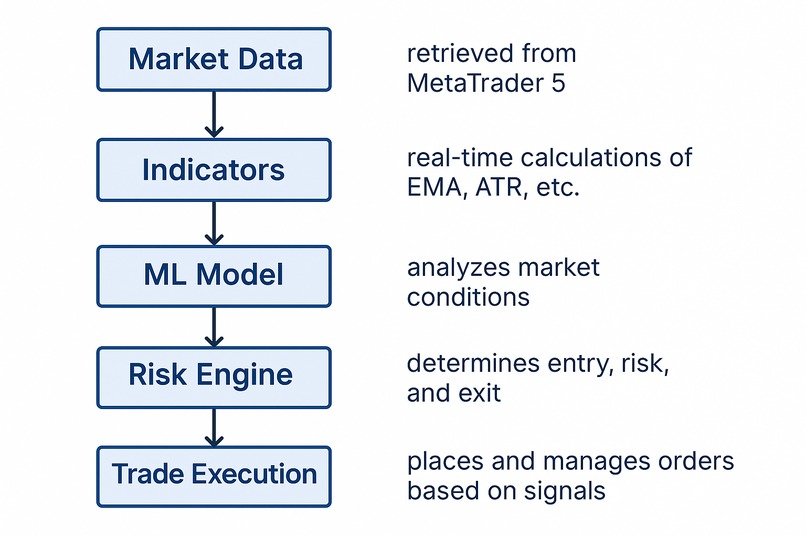
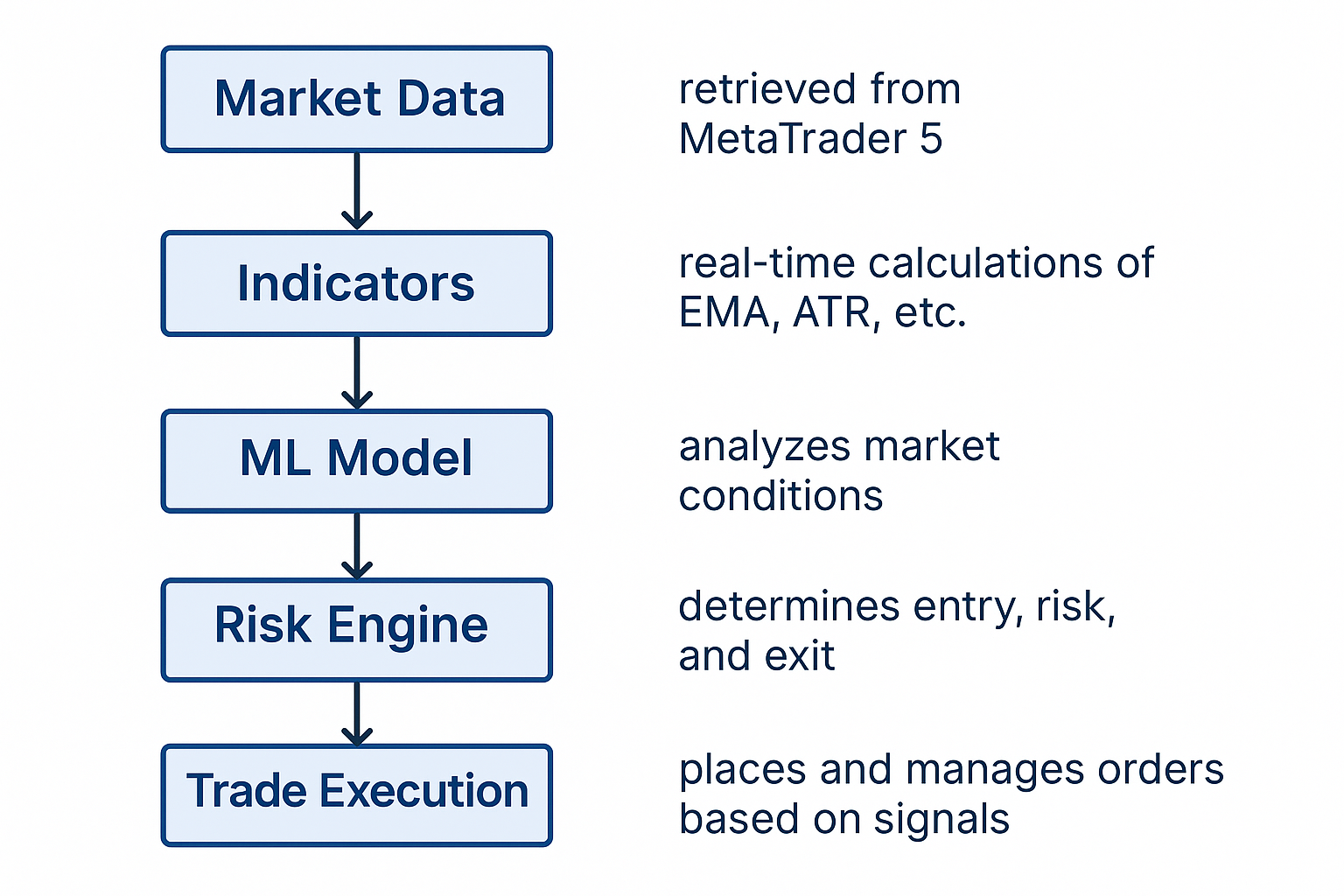
System Architecture
-
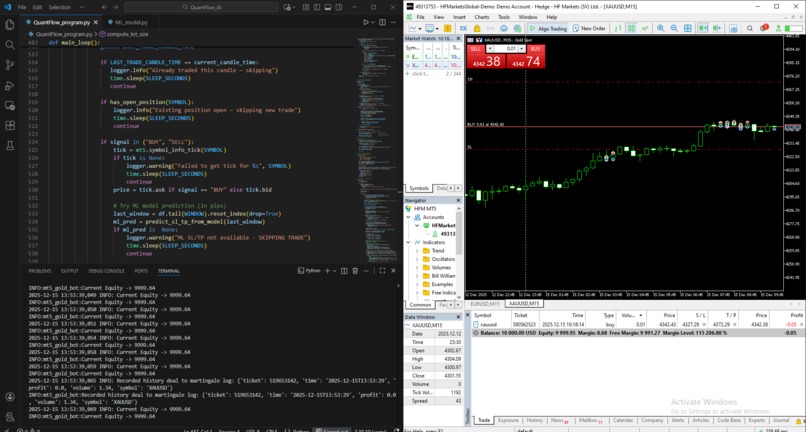
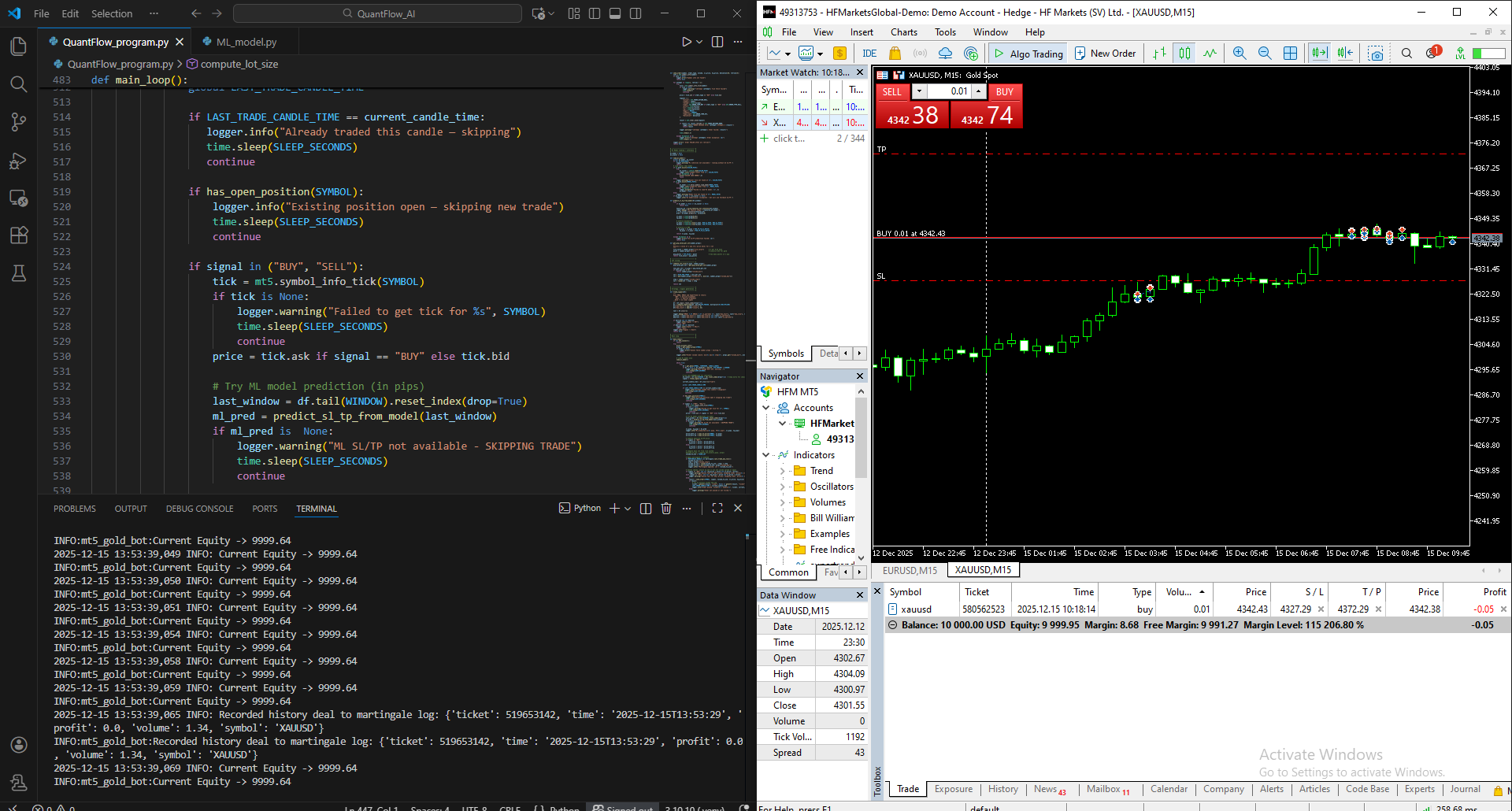
Trade Execution
Inspiration
I have a strong interest in innovation and problem-solving, especially in the financial technology (FinTech) industry. Traditional trading systems are often driven by human emotions such as fear and greed, which leads to inconsistent results and poor risk management.
The inspiration behind QuantFlow AI was to build an emotion-free, logic-driven trading system that can adapt to changing market conditions using data, mathematics, and artificial intelligence. My goal was to introduce a smarter, more disciplined approach to algorithmic trading that can scale beyond a single market or strategy.
What it does
QuantFlow AI is an AI-powered automated trading bot designed to trade financial markets (such as Gold and Forex) using pure logic and data-driven decisions. Key features: 1. Trades without human emotions using rule-based logic and AI models 2. Automatically adapts Stop Loss (SL) and Take Profit (TP) based on market volatility. 3.Uses dynamic lot sizing based on account risk and market conditions. 4.Learns from historical market data using machine learning. 5.Designed to work across multiple instruments, not limited to one market. 6.Built with scalability in mind for future expansion into advanced AI strategies.
The system focuses on risk-reward consistency, probability, and market structure, rather than random or manual decision-making.
How we built it
QuantFlow AI was built using a combination of software engineering, quantitative finance, and machine learning. Tech Stack: * Programming Language: Python *Development Tools: VS Code *Trading Platform: MetaTrader 5 (MT5) *AI & ML Libraries: TensorFlow, NumPy, Pandas, Joblib *Indicators Used: EMA, ATR, volatility-based metrics
Architecture: 1.Market data is collected from MT5 2.Indicators and features are calculated in real time 3.A machine learning model analyzes market conditions 4.The system dynamically decides: *Entry direction *Stop Loss distance *Take Profit target *Position size based on risk
5.Trades are executed automatically with full logging and monitoring, The codebase is modular, making it easy to test, debug, and extend.
Challenges we ran into
1.Finding the optimal SL and TP distances for different market conditions 2.Handling noisy and inconsistent historical market data 3.Training ML models efficiently with large datasets (time-consuming process) 4.Designing a safe martingale and risk structure without overexposure 5.Ensuring the bot behaves consistently during high-volatility events 6.Debugging real-time trading behavior versus backtesting results
7.Each challenge helped improve the system’s robustness and design quality.
Accomplishments that we're proud of
1.Successfully implemented advanced mathematical logic for trading decisions 2.Built an end-to-end AI trading system from scratch 3.Overcame comfort-zone limits by working with finance, AI, and software together 4.Designed a system that is scalable, modular, and extensible 5.Created a strong foundation for future AI-driven trading research
This project significantly elevated my understanding of real-world AI applications.
What we learned
1.Practical application of machine learning in financial markets. 2.Importance of risk management over pure profit. 3.How market volatility impacts strategy performance.
This project transformed my knowledge from intermediate to advanced-level understanding in algorithmic trading.
What's next for Trading bot
1.Deep learning models for better market regime detection. 2.Reinforcement learning for self-adapting strategies. 3.Cloud-based deployment with monitoring dashboards. QuantFlow AI is not just a project — it is the foundation for a next-generation intelligent trading system


Log in or sign up for Devpost to join the conversation.