Inspiration
Prediction markets promise one of the purest forms of collective intelligence, yet most participants still trade in uncertainty rather than insight. The idea behind TradeWizard emerged from noticing that markets like Polymarket provide liquidity and resolution, but leave interpretation entirely to the user. Professional traders rely on research teams, models, and signals, while everyday participants are left to interpret headlines and gut feelings. TradeWizard was inspired by the belief that prediction markets shouldn’t just be accessible; they should be intelligible. The project set out to build the intelligence layer that turns raw probability markets into structured, explainable decision environments.
What it does
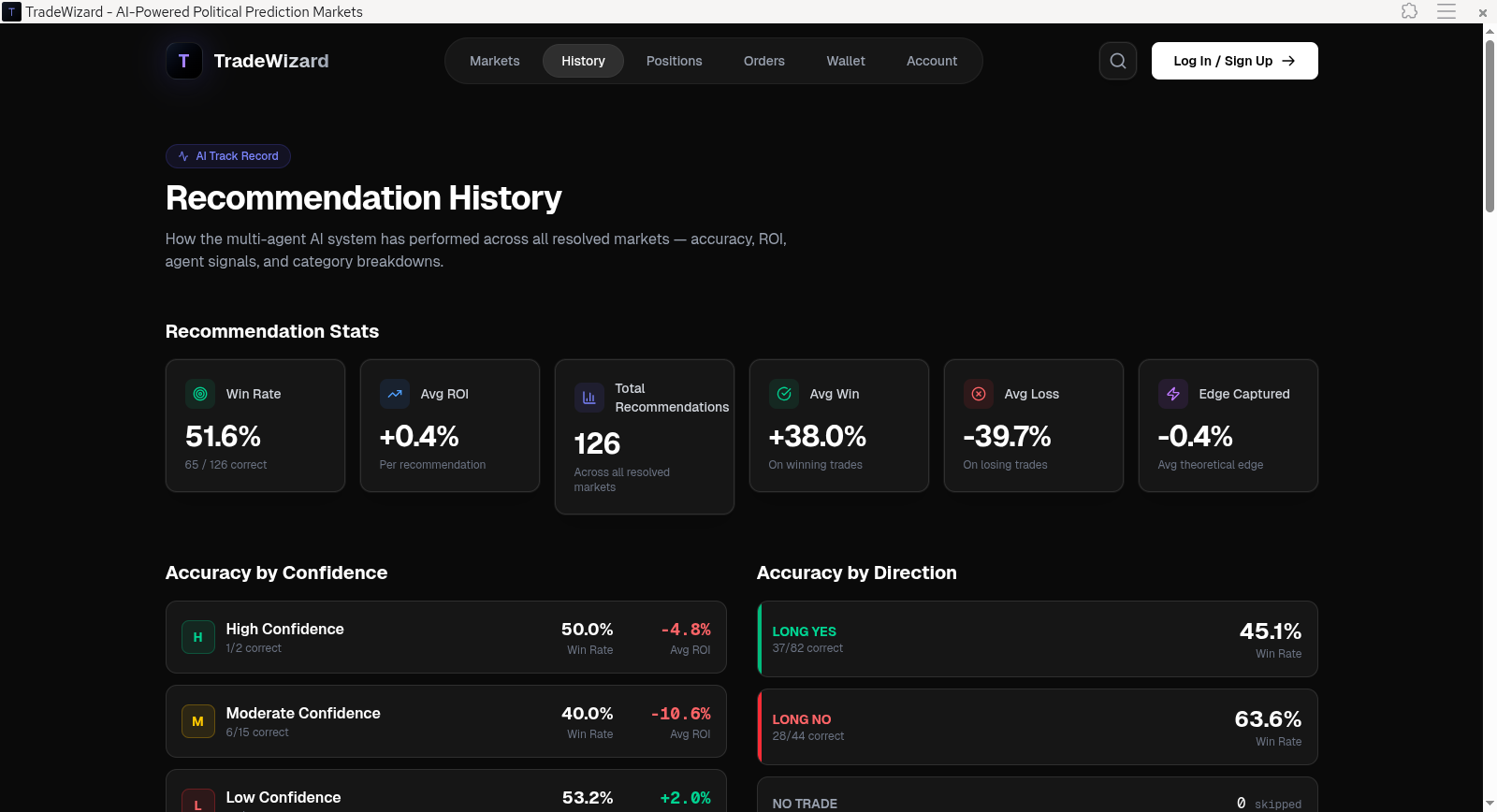
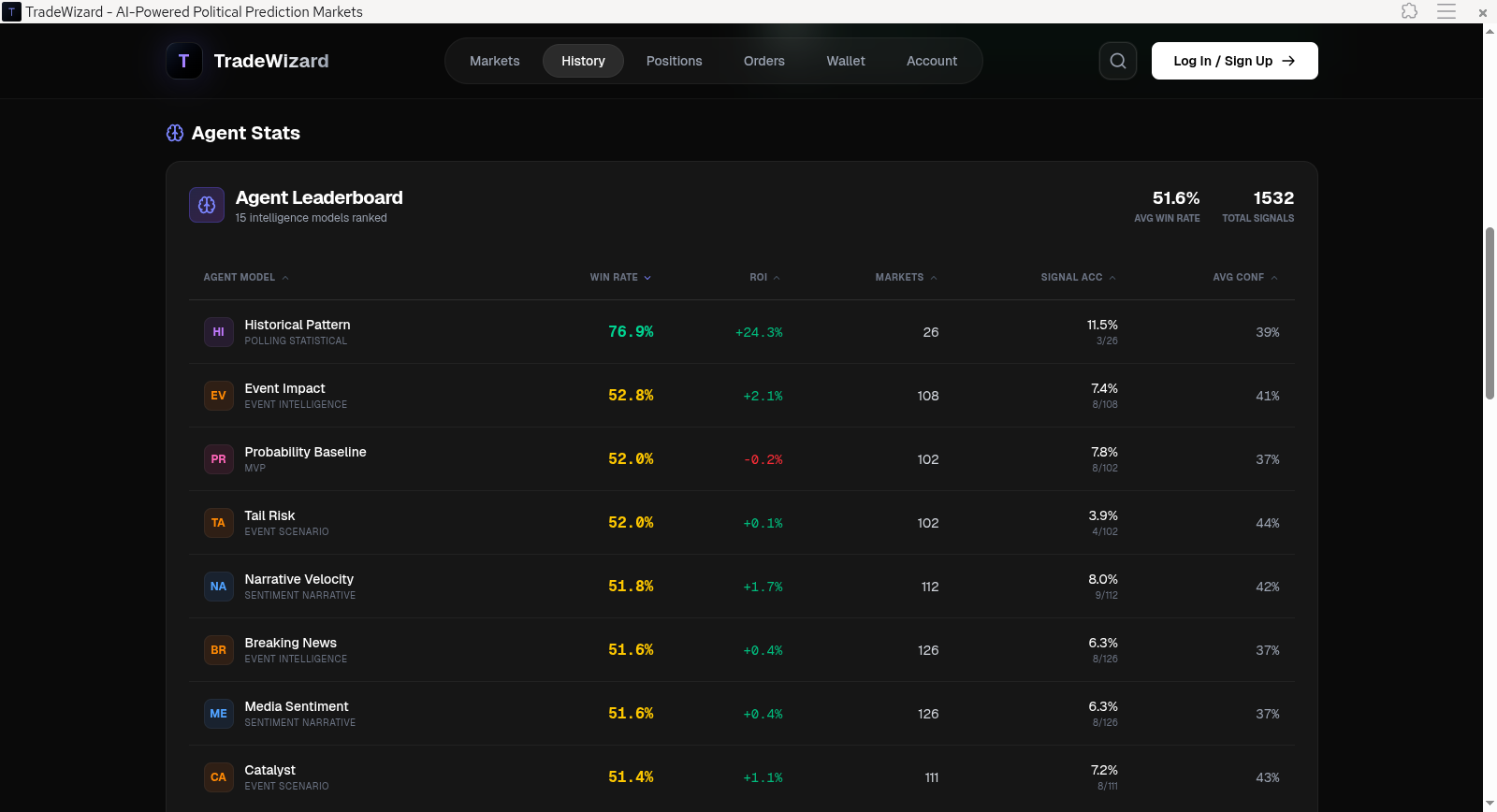
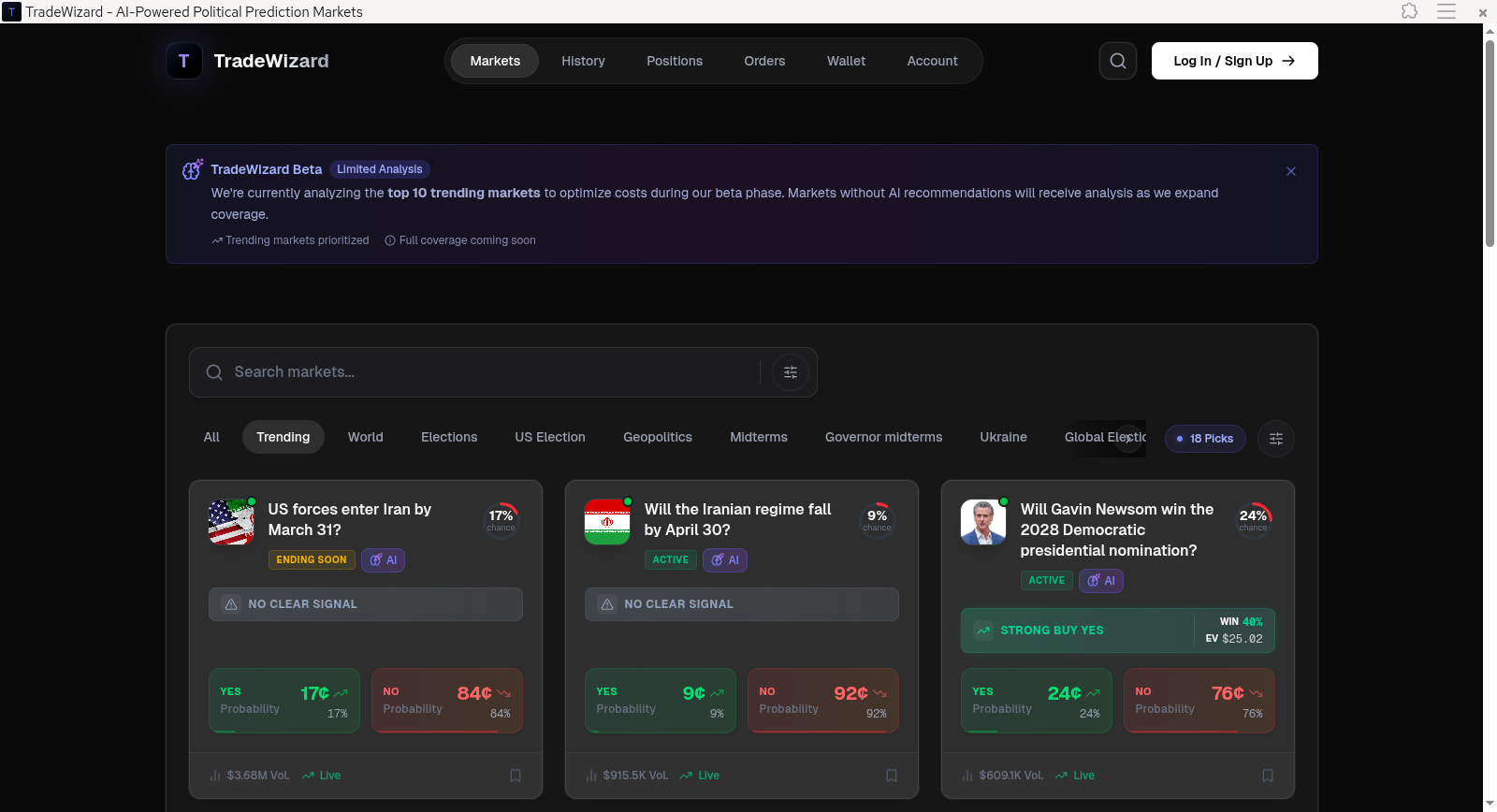
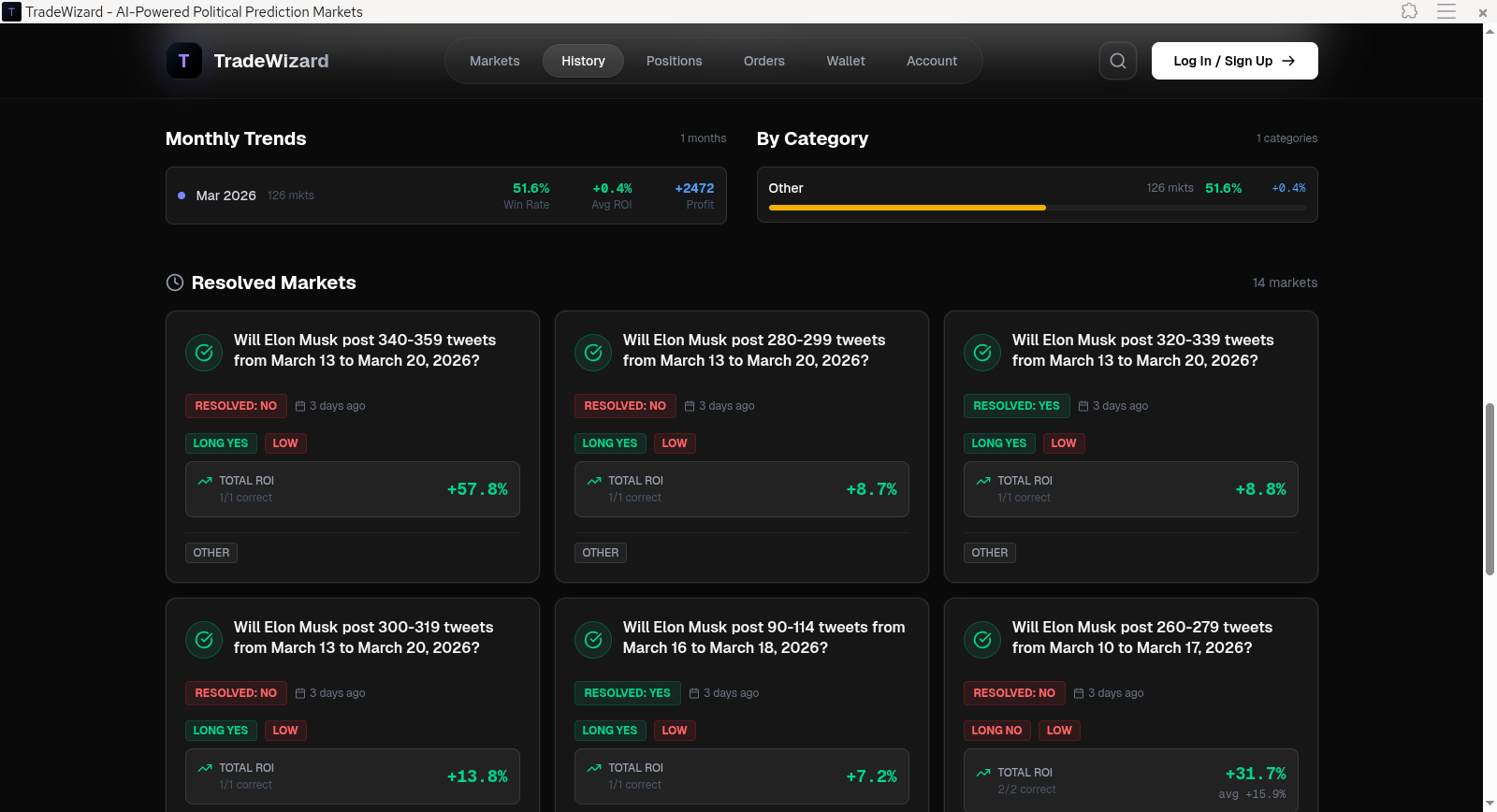
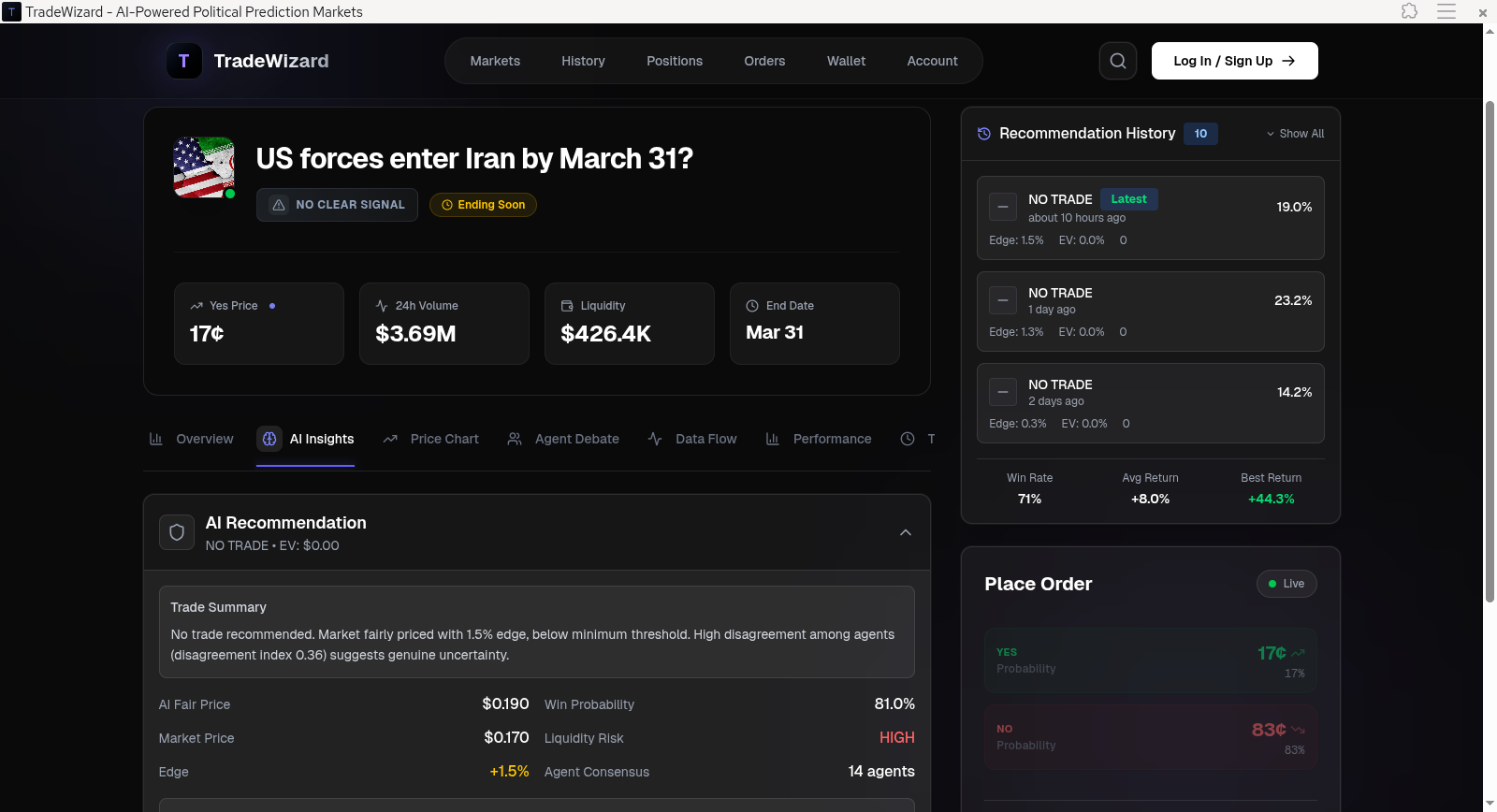
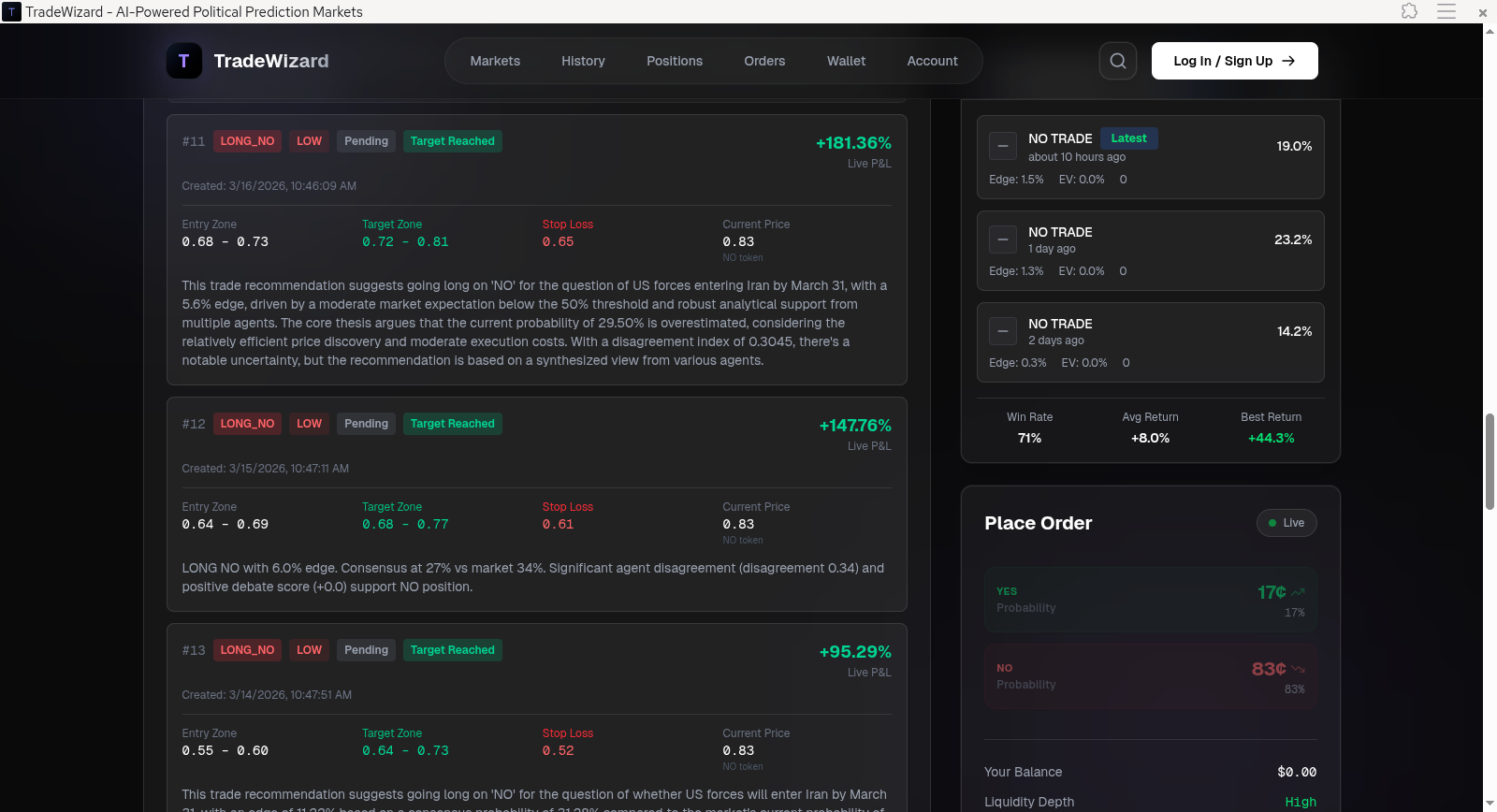
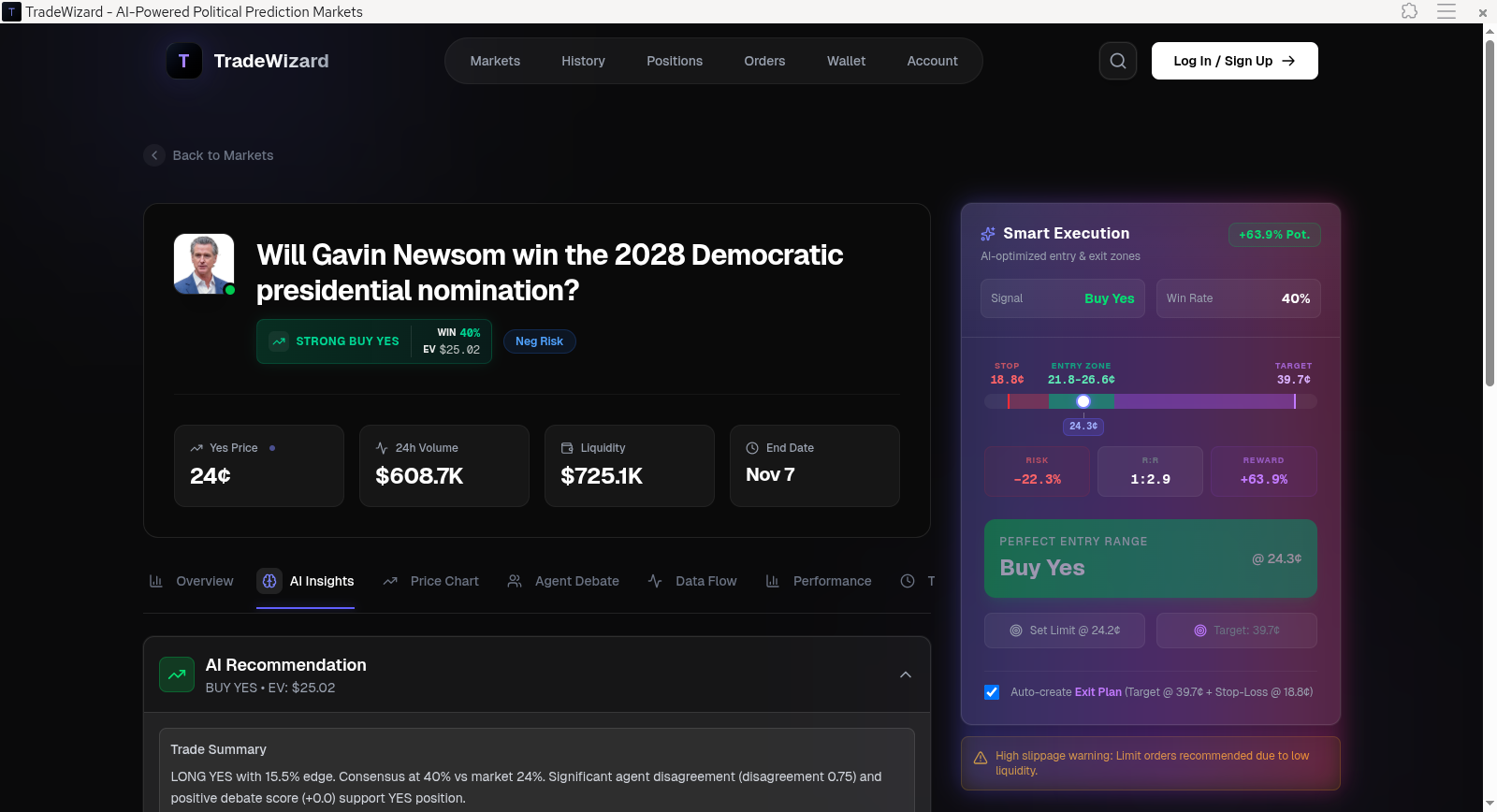
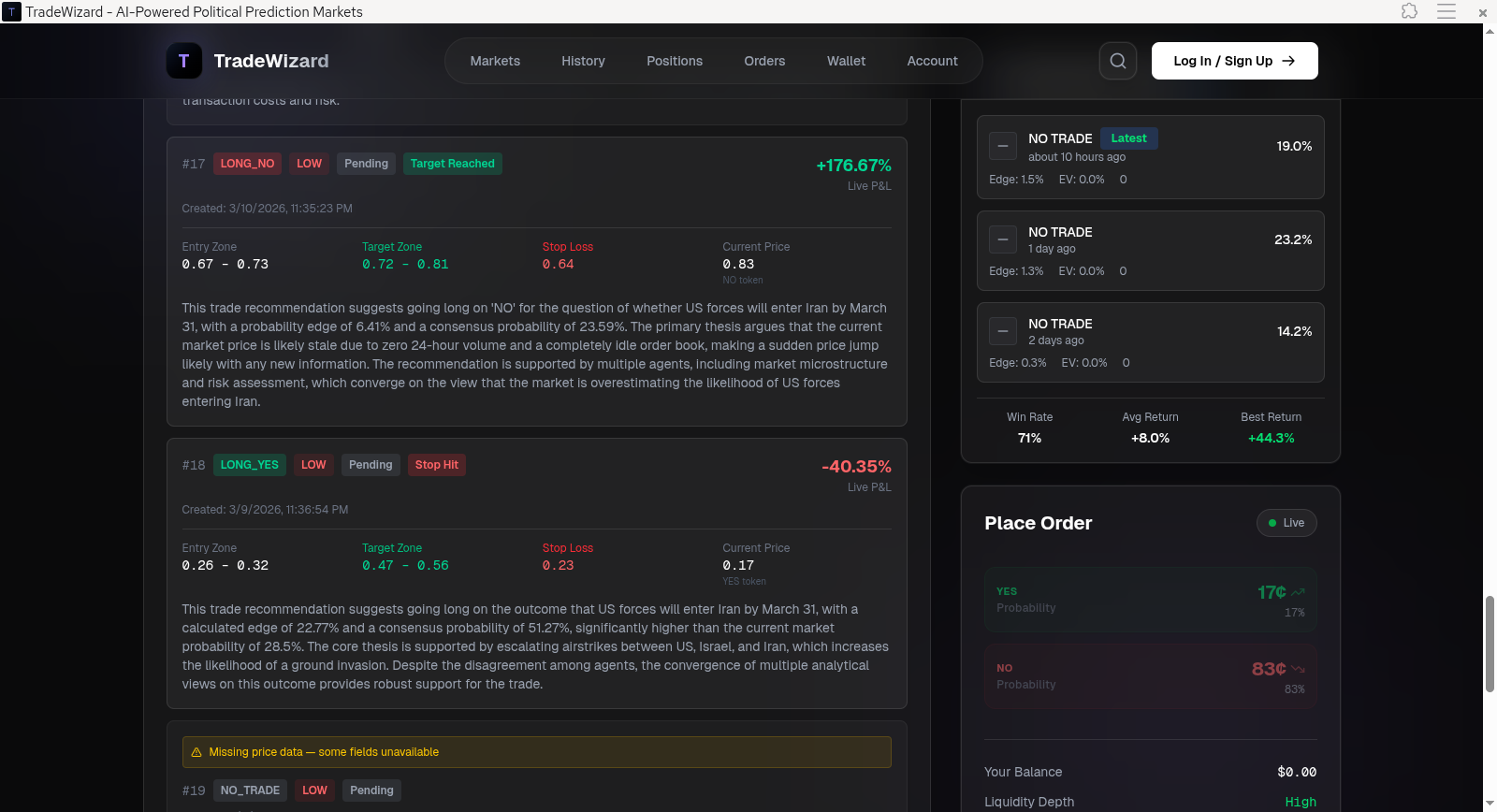
TradeWizard is an AI-powered prediction trading intelligence platform that analyzes real-world event markets and generates explainable trading strategies. Instead of simply showing price and probability, the system deploys a coordinated network of specialized AI agents that examine news flow, historical data, sentiment, liquidity, and risk. Their combined output produces market summaries, probability assessments, trade theses, entry and exit zones, and portfolio guidance. Users interact with prediction markets through a dashboard that highlights opportunity rather than noise, effectively transforming prediction trading from speculative guessing into probability-driven strategy.
How we built it
TradeWizard was architected as a modular three-tier system designed for independence, scalability, and rapid iteration. At its core sits a Python-based multi-agent workflow service powered by LangGraph and deployed on the DigitalOcean Gradient AI platform, which allows us to run orchestrated LLM agents serverlessly with observability and cost control built in. This intelligence engine communicates with a Node.js orchestration and monitoring layer that manages workflows, automation, persistence, and integrations. The user experience is delivered through a Next.js frontend that integrates real-time market data and seamless authentication.
Across the stack we used Supabase for persistence, multiple LLM providers for model diversity, and event-driven workflows to allow agents to collaborate in parallel. The architecture was intentionally designed so each component can run independently or as a unified system, ensuring resilience while keeping deployment flexible for hackathon and production contexts alike.
Challenges we ran into
One of the biggest challenges was coordinating multiple AI agents into a coherent decision system rather than a collection of disconnected outputs. Building a consensus engine that could fuse signals, weigh confidence, and resolve conflicting analyses required iterative experimentation with orchestration logic and evaluation loops.
Another challenge was balancing intelligence depth with responsiveness. Prediction markets reprice quickly, so the system needed to remain computationally efficient while still performing meaningful analysis. Integrating multiple LLM providers and external data sources also introduced complexity around rate limits, error handling, and observability, which had to be addressed to achieve production-level reliability.
Accomplishments that we’re proud of
We successfully built a fully operational multi-agent AI trading intelligence system that can analyze live prediction markets end-to-end. The platform is not a prototype; it is deployable today, with a production-ready architecture, testing coverage, and observability.
We are especially proud of how deeply we integrated DigitalOcean’s Gradient AI platform into the core of the system. Rather than treating AI as a simple API call, we used it as the orchestration backbone, enabling dynamic agent selection, parallel analysis, and traceable workflows. This allowed us to build a scalable intelligence layer that feels cohesive rather than experimental.
What we learned
We learned that multi-agent AI systems become dramatically more useful when they are structured around decision workflows instead of prompts. Orchestration, memory, and evaluation matter as much as model capability.
We also learned that explainability is not a luxury in financial intelligence; it is a requirement. Users trust recommendations only when they understand the reasoning behind them. Designing outputs that communicate logic, not just conclusions, proved just as important as building the models themselves.
Finally, we learned that cloud-native AI platforms like DigitalOcean Gradient AI significantly reduce the friction of deploying complex agent systems, allowing small teams to build infrastructure that previously required much larger engineering organizations.
What’s next for TradeWizard
With the core system now fully built and operational, the next phase focuses on real-world validation and growth. We are moving into live user testing, performance tuning under production load, and refining the intelligence layer based on real trading behavior rather than simulated workflows. This stage will help us sharpen recommendation quality, optimize response times, and improve the clarity of strategy explanations.
From there, we plan to expand TradeWizard beyond political markets into broader event-driven domains such as macroeconomic indicators, sports outcomes, and major cultural events. As the agent network scales across more categories, the platform will evolve from a market assistant into a universal intelligence layer for trading uncertainty.
The long-term goal is for TradeWizard to become the default interface through which people understand and trade real-world outcomes; where AI continuously interprets global events and turns them into actionable probability insight.
Built With
- next.js
- python
- supabase
- typescript


Log in or sign up for Devpost to join the conversation.