-
-
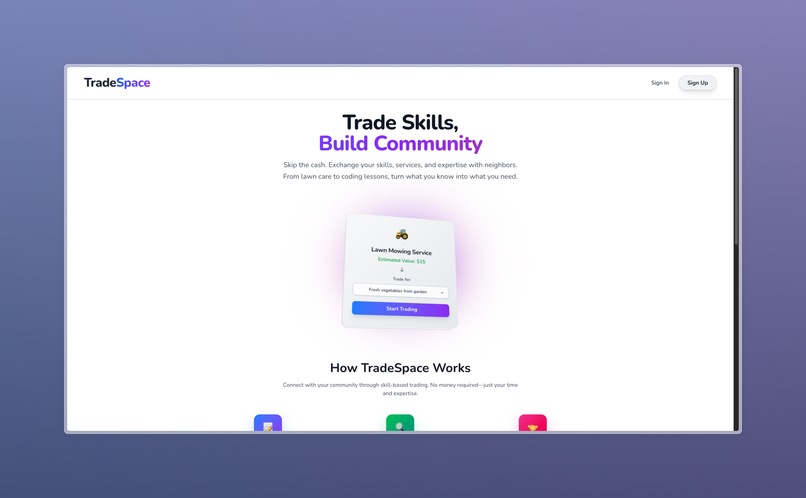
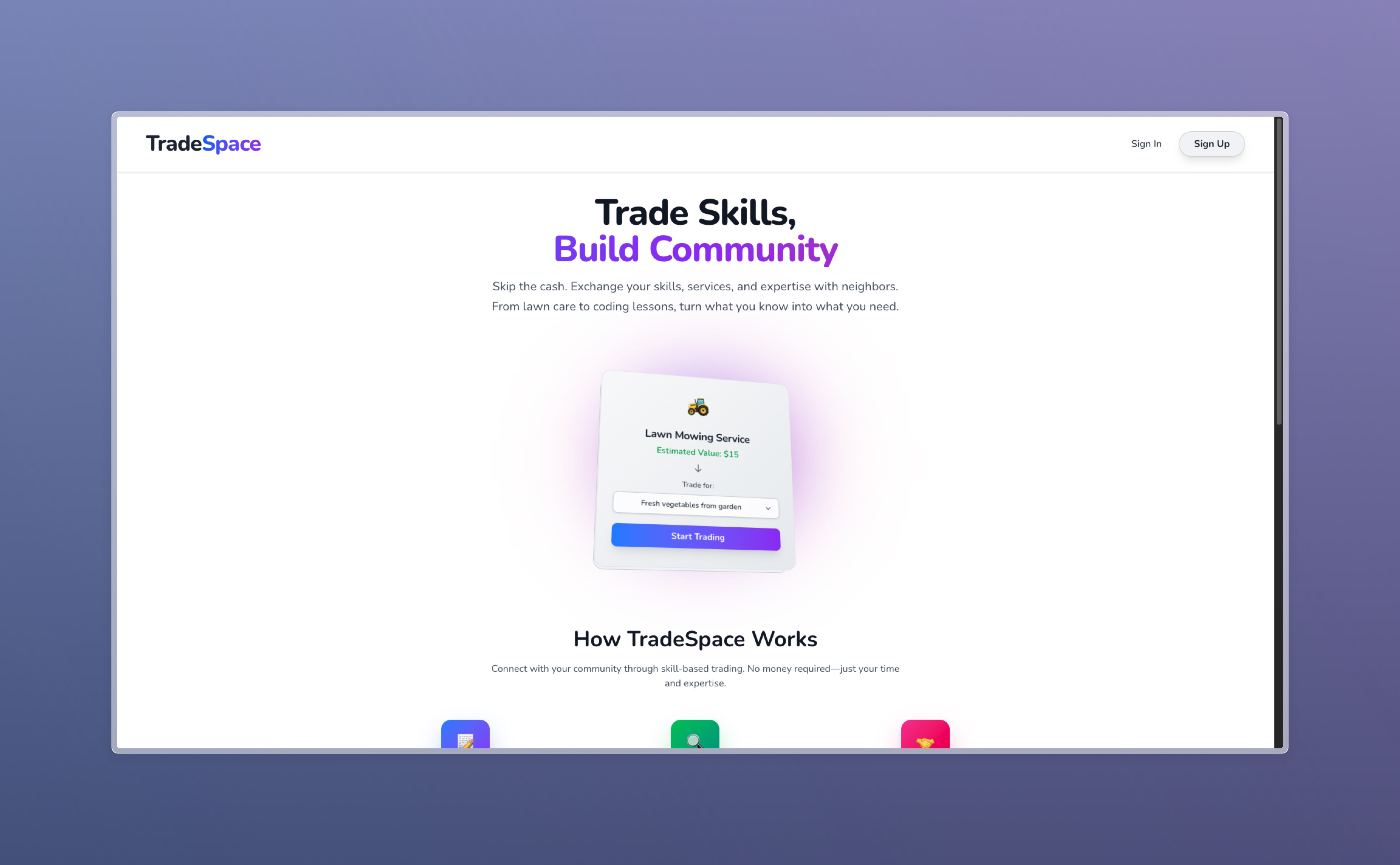
Landing page
-
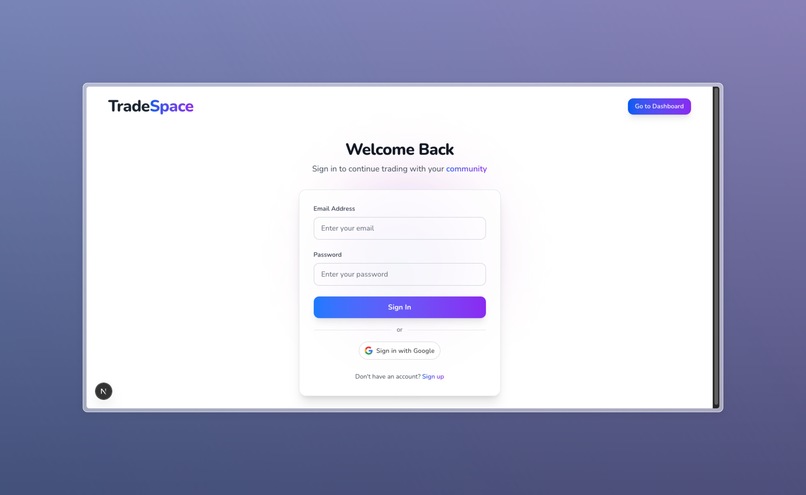
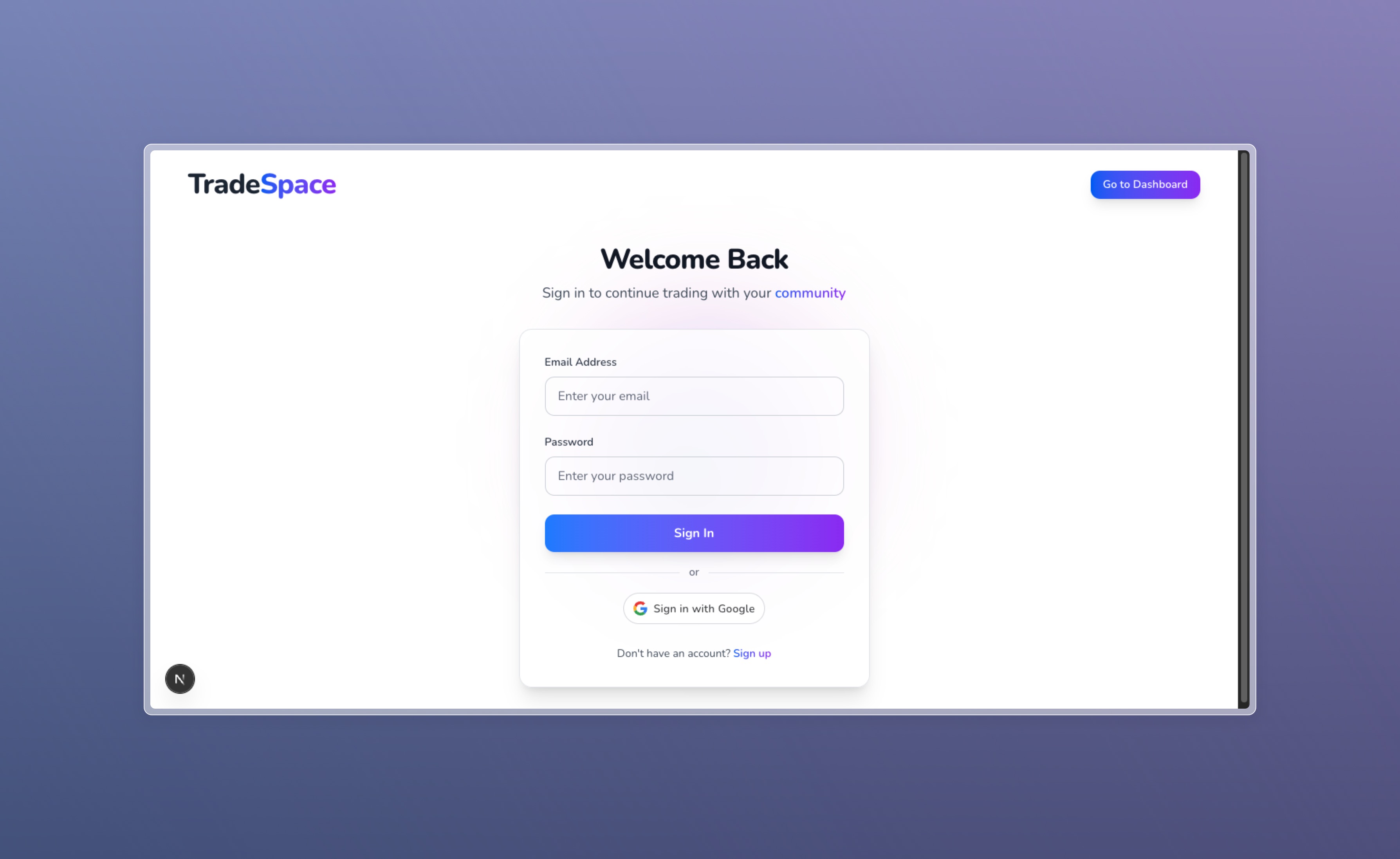
Sign in page
-
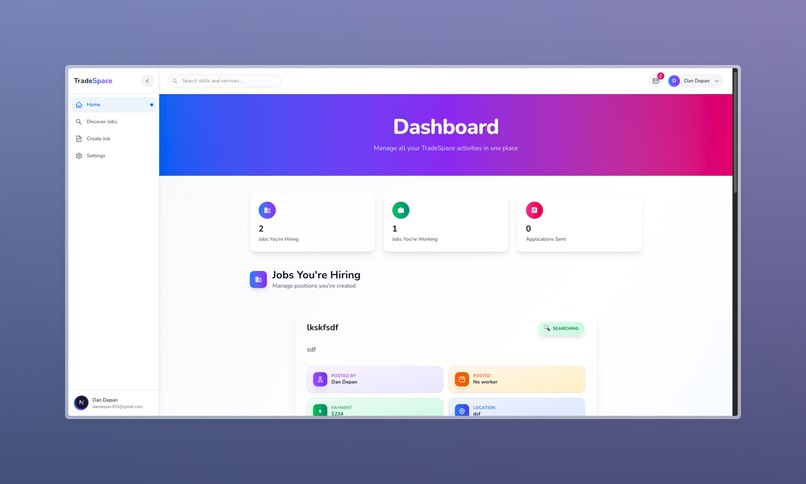
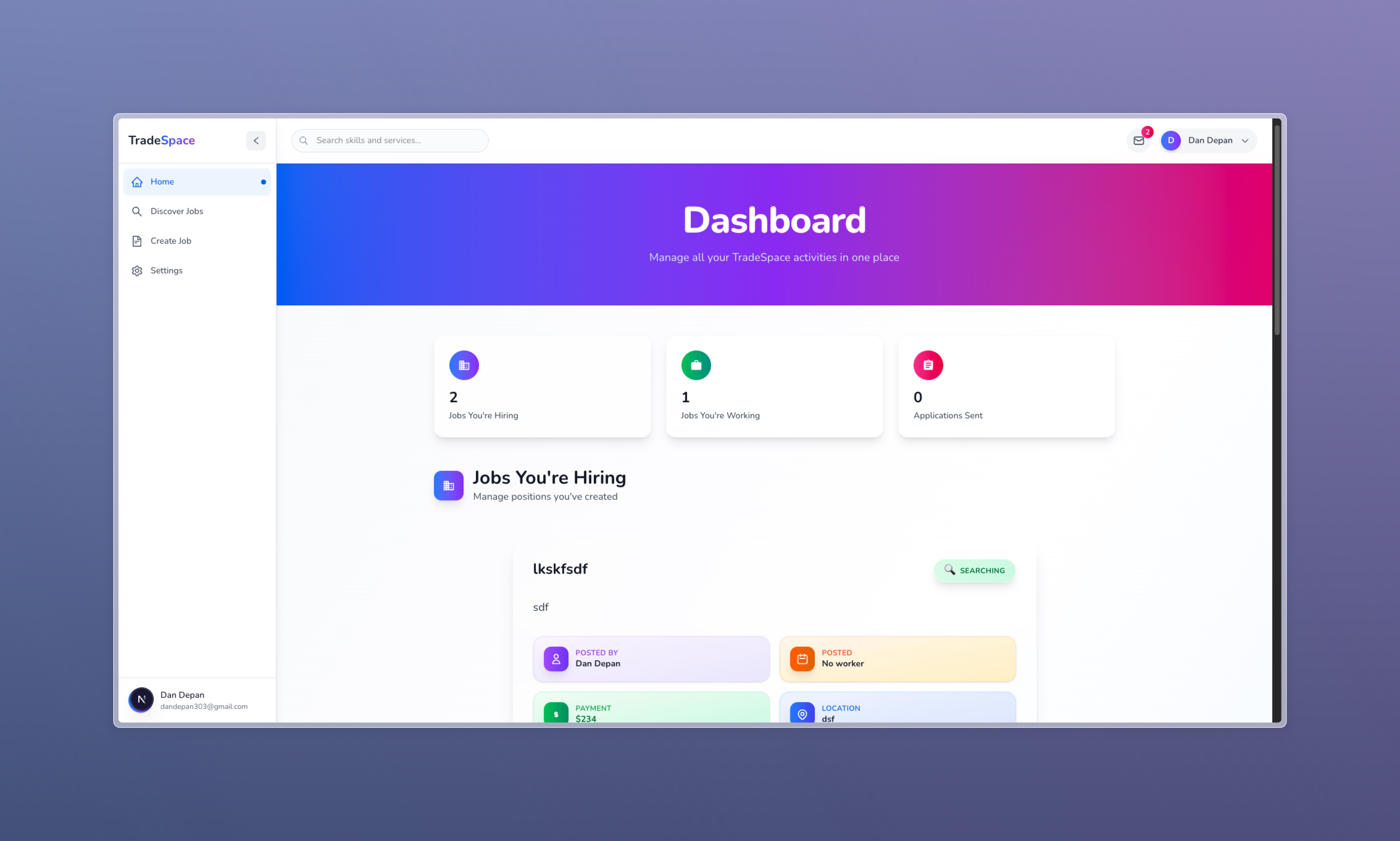
Dashboard
-
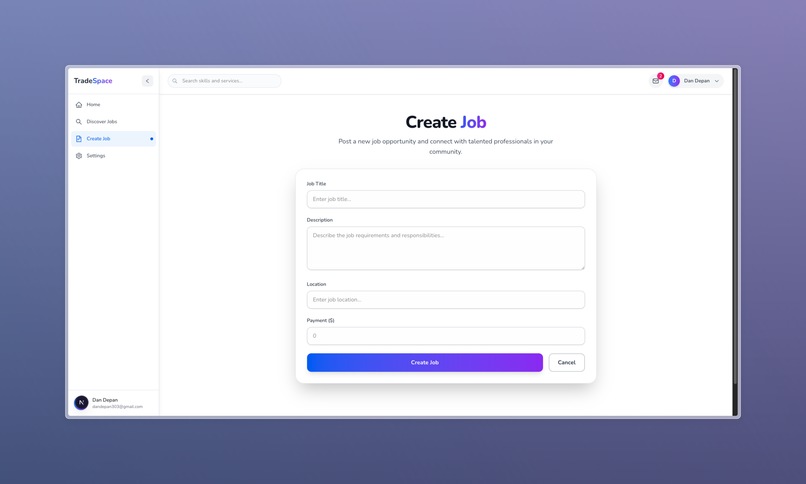
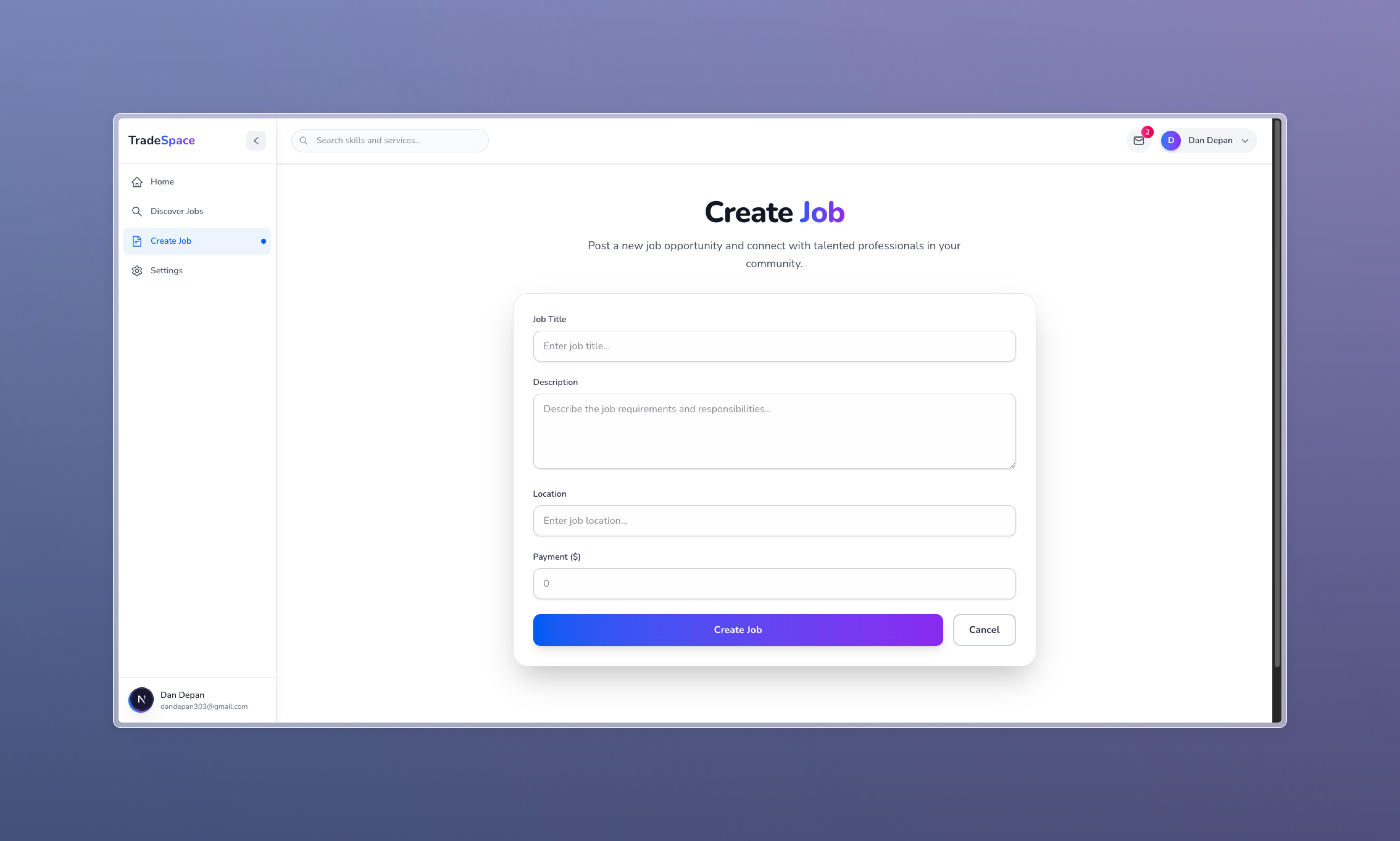
Create Job Page
-
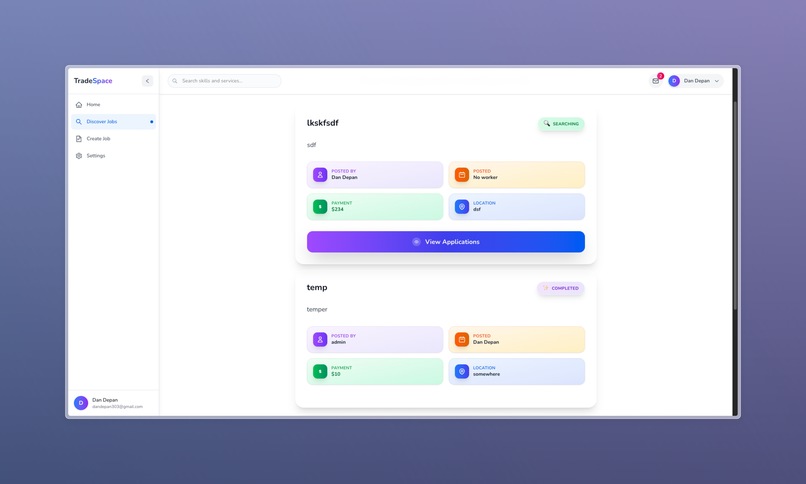
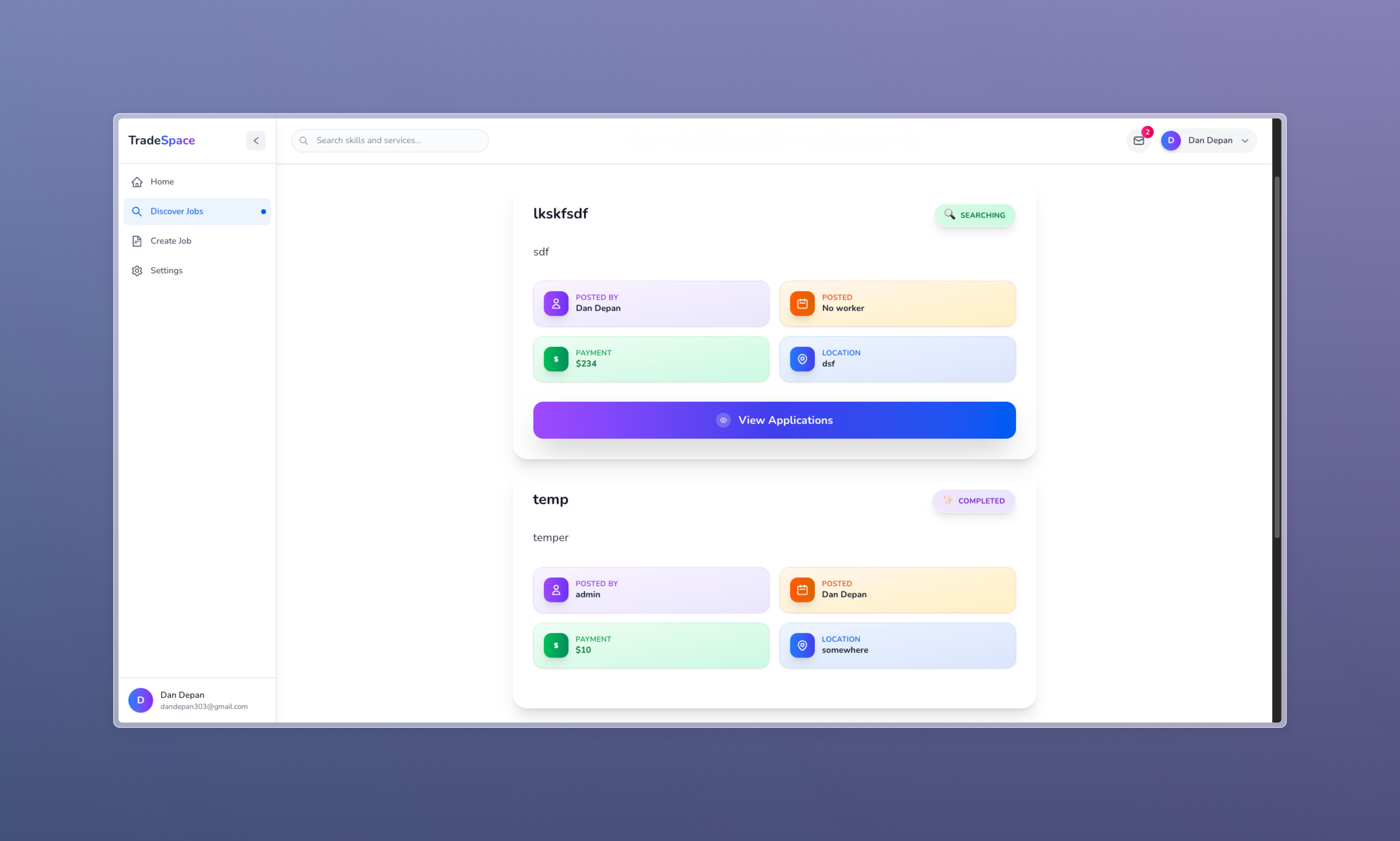
Searching for jobs page
The problem it solves
Many economically disadvantaged communities don't have access to stable income, credit, or cash marketplaces, which limits their ability to meet everyday needs or grow skills. Platforms like Fiverr rely heavily on digital banking and money, which excludes those who don't have that. TradeSpace provides a solution to this because it allows direct skill and resouce exchange without money which allows people to support each other with what they have, time, talents, and goods. TradeSpace creates inclusive economic participation, especially for those trapped in poverty.
How it aligns with the Social Good theme
Tradespace is built around empowering people through community cooperation, which aligns with social good. By giving people the ability to barter and aid each other, it promotes things like dignity and trust among people who are venerable. This project aligns with social good directly because it addressees poverty, inclusion and helping communities thrive from the ground up without dependence on cash.
Inspiration
We were inspired by platforms like Fiverr that let people connect to freelancers worldwide. So we wanted to create a space that removes money as the barrier to that. TradeSpace was built around us believing that every person has a skill to offer, even if they don't have cash. Our goal is to let people in economically challenged communities trade their time, skills, and resources directly so we can build trust and support without the need for money.
What it does
Tradespace is a barter platform is where users list their services, goods, or favors that they have or need. This is why we decided to restrict TradeSpace to it's own digital currency instead of cash. Instead of paying with cash, people post and apply for jobs, saying what they offer in a fair, transparent way. For example, someone might offer a bike repair in exchange for fresh vegetables or child care. TradeSpace includes a robust rating and trust system to ensure all trades are completed honestly so that communities can be lifted through collaborative exchange.
How we built it
We used Next.js for the frontend and Node.js for the backend APIs, along with Axios, Supabase, and Prisma for authentication and database management. The app has easy navigation and personal offers, with a mobile-first design principle, (since we know that most disavantaged people do not have access to desktops), we also implemented rating and reputation to foster trust. We designed the UI with accessibility and low literacy in mind, using icons and simple language.
Challenges we ran into
We ran into a big question when building TradeSpace. How do you make it easy to trade while protecting people from scams? Implementing a clean and small packet rating system for low-bandwith locations was a challenge, since every byte of data saved mattered. We also faced the challenge of users with diverse tech and literacy skills, so we had to make sure that UX clarity was a top priority. Additionally it was difficult managing a large project that comes with a complex and sizeable database and designing all the API endpoint to handle ratings, jobs and trades securely and efficiently.
Accomplishments that we're proud of
We've built a smooth barter experience like online shopping, but without money. The trust features, like rating, add another layer of safety. And for us, this has been by far the largest and most ambitious project in terms of size and page count. The complexity of managing the diverse user flows pushed us to modularize React components and use Next.js's app router for routing and layouts. We also refined our API designs from previous protects creating RESTful endpoints and security layers, all of which was a first for us.
Built With
- app-router
- axios
- css3
- google-authentication
- google-cloud
- next.js
- node.js
- prisma
- react
- supabase
- tailwindcss


Log in or sign up for Devpost to join the conversation.