Inspiration
Growing up, I saw friends struggle to break into skilled trades—expensive bootcamps, limited hands-on practice, and no clear path to apprenticeships. I wanted to build something accessible: a platform that combines high-quality video learning with VR (so learners practice safely) and connects them directly to local employers. The goal was to make trade skill education affordable and actionable, not just theoretical.
What it does
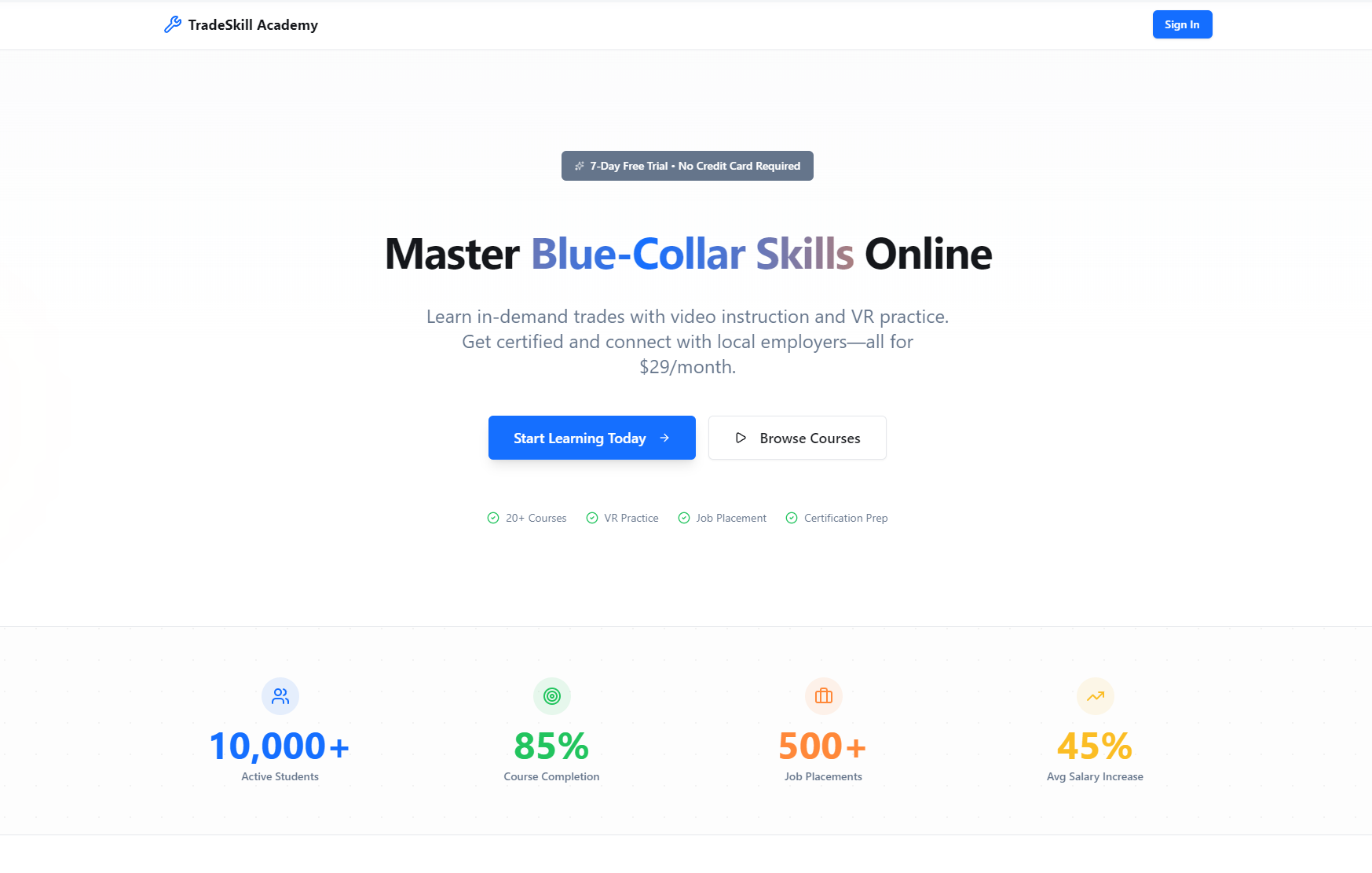
TradeSkill Academy is an all-in-one platform for learning blue-collar skills (electrical, plumbing, welding, etc.). Users access 4K video lessons, interactive quizzes, VR/3D simulations, certification prep tools, and a job board for apprenticeships. It also calculates earning potential by trade/location and fosters community via forums/mentorship.
How we built it
We started with core user research to map pain points (access to practice, apprenticeship matching). Built the frontend with React/Redux for responsive design; backend on Node.js/Express with MongoDB/PostgreSQL for user/course data. Integrated AWS for video hosting, Stripe for subscriptions, and Mapbox for location filters. VR simulations use Three.js (desktop) and Meta/Apple SDKs (headsets). We iterated with beta testers (trade learners/employers) to refine progression logic and matching algorithms.
Challenges we ran into
The biggest hurdle was real-time VR simulation feedback—ensuring the system detected errors accurately and provided clear guidance. We also struggled with geolocation precision for apprenticeship matching (rural areas had sparse data) and video playback optimization for 4K content on low-bandwidth connections. Payment processing edge cases (failed billing, trial cancellations) required rigorous testing to avoid user access issues.
Accomplishments that we're proud of
We built a seamless progression system that enforces sequential learning (critical for skill mastery) while keeping UX intuitive. The VR/3D simulation mode works across headsets and desktops, making practice accessible to all. Beta users reported 85%+ quiz pass rates and successful apprenticeship applications—validating the platform’s real-world impact. We also hit the performance benchmark: 1000 concurrent users with no lag.
What we learned
User-centric design is non-negotiable—trade learners prioritized practical, hands-on tools over flashy features. We also learned that backend flexibility matters: the apprenticeship matching algorithm needed constant tweaks to adapt to regional job market changes. Integrating multiple APIs (Stripe, Mapbox, VR SDKs) taught us to build robust error handling for third-party dependencies.
What's next for this project
First, expand course offerings beyond the initial 10 core trades (adding HVAC and masonry). We’ll roll out live text-based Q&A (then video) with trade experts, and integrate employer-sponsored training modules (a top request from beta employers). We also plan to refine the salary calculator with more regional data and add Spanish language support (high demand from users in US border states). Long-term, we’ll explore mobile VR compatibility for iOS/Android to reach more learners.

Log in or sign up for Devpost to join the conversation.