-
-
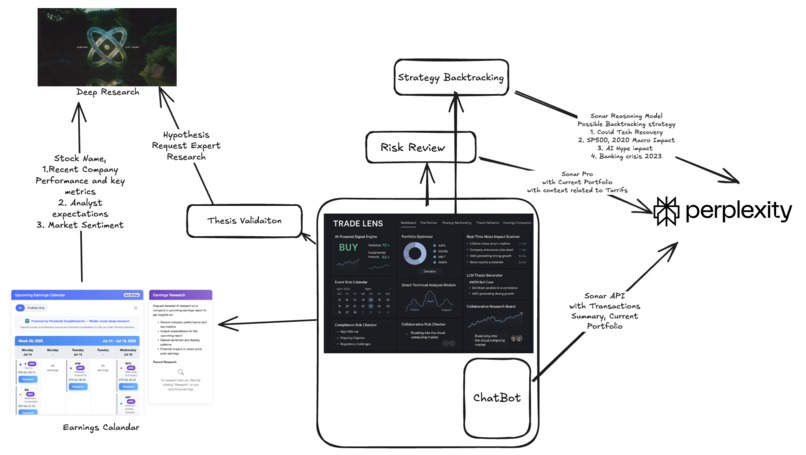
Architecture
-
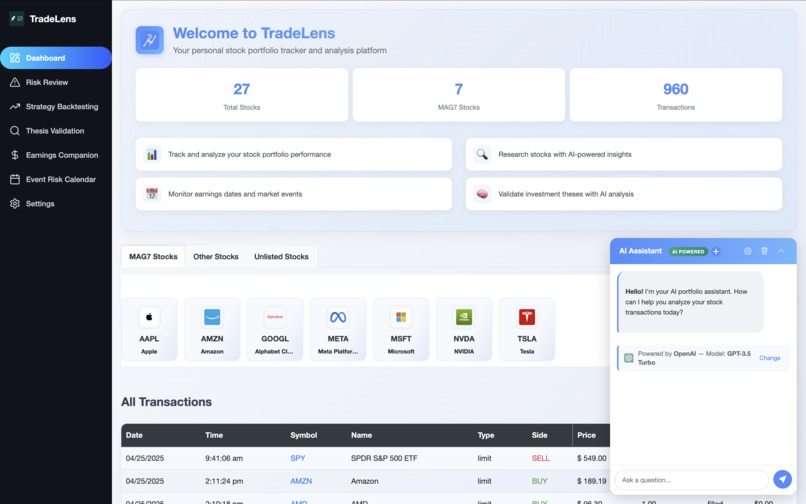
Main Dashboard with Perplexity powered Chat assistant
-
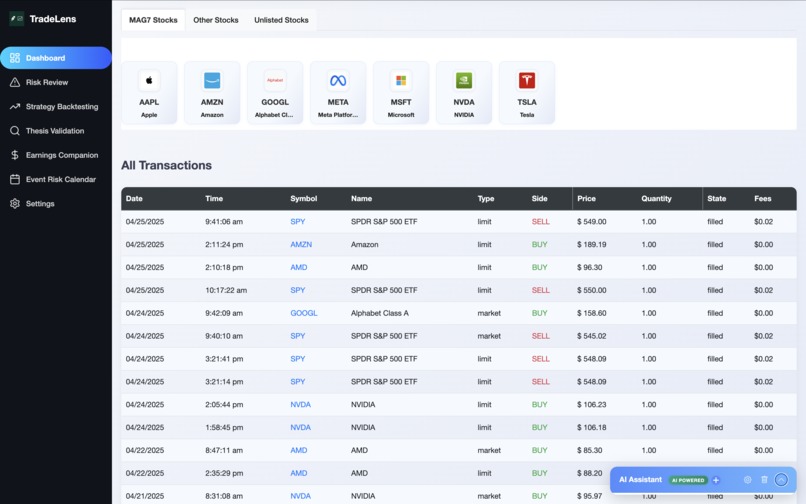
Stock transactions
-
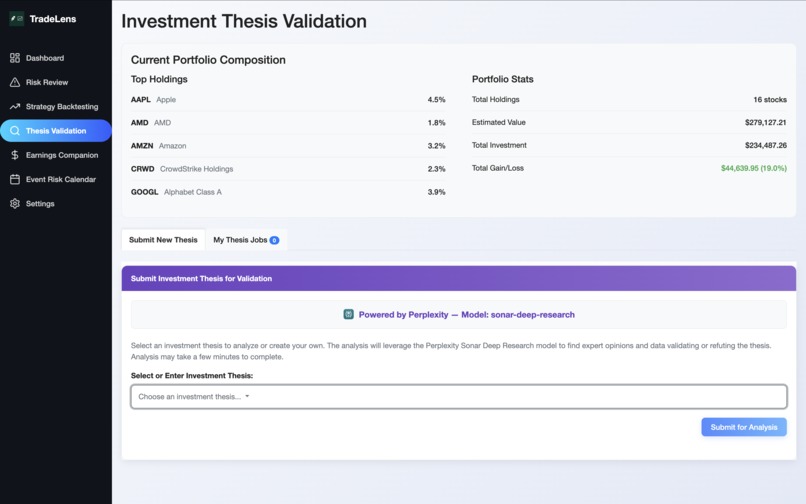
Investment Thesis using Sonar Reasoning model
-
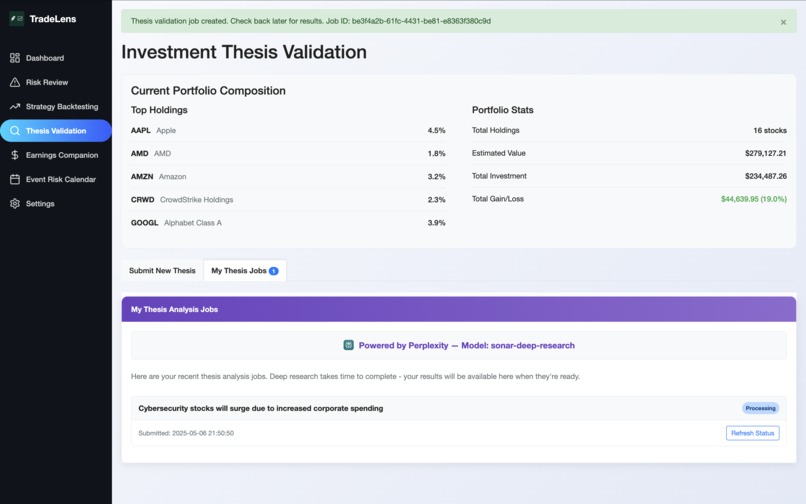
Investment Thesis using Sonar Reasoning model Job Handling
-
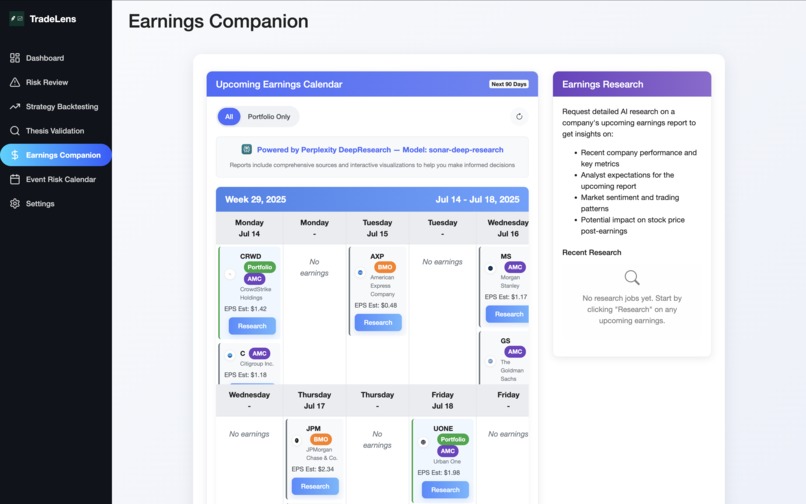
Earnings calandar
-
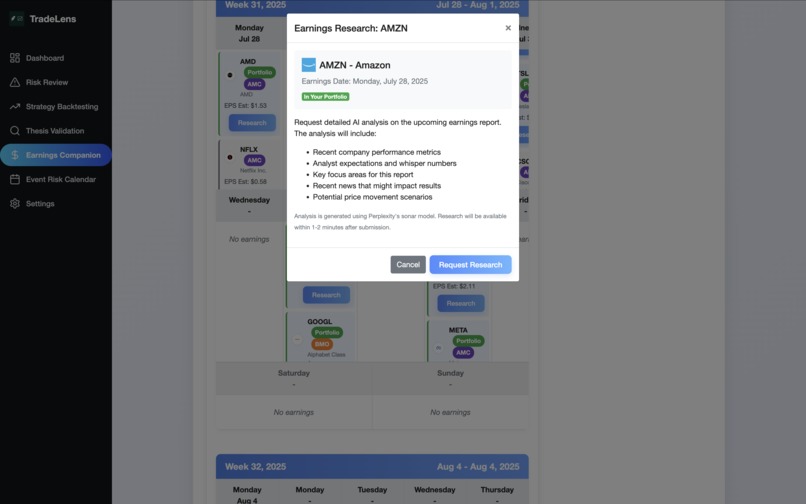
Detailed research for earnings for a stock using deep research sonar
-
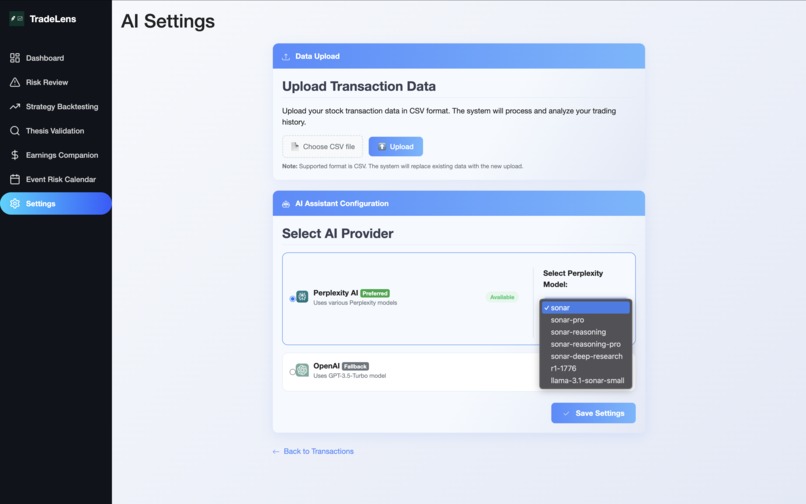
Perplexity Model Selection
-
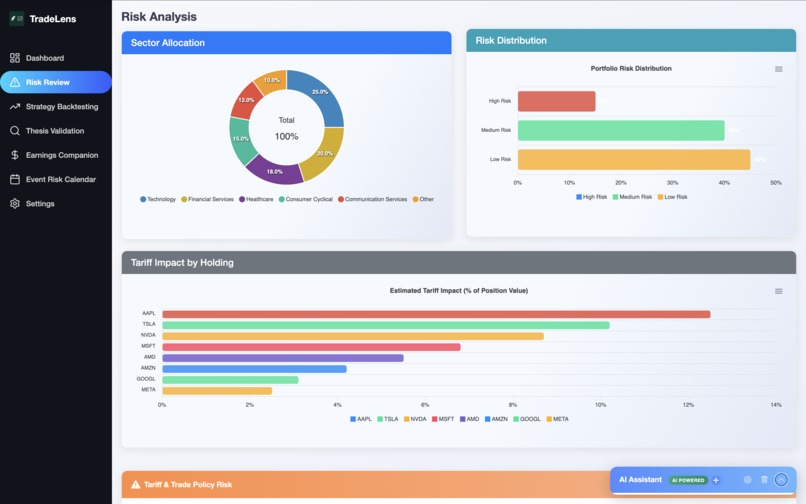
Risk Analysis Page using sonar model
-
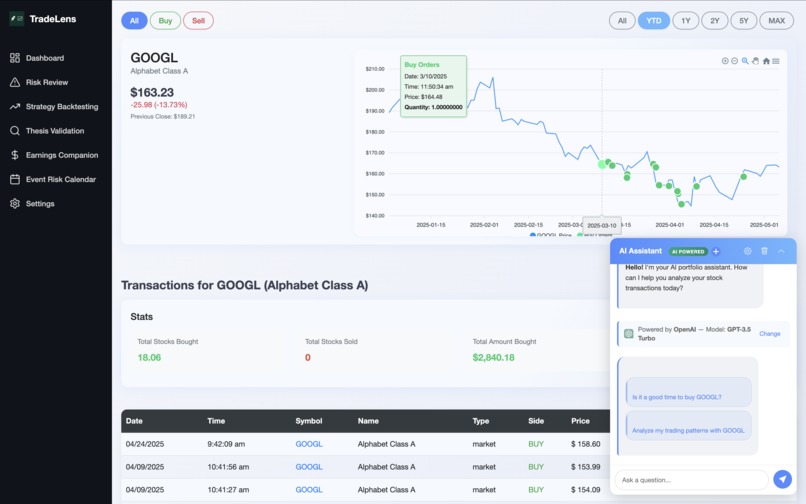
Plot sell and buy transactions with customized chat instructions
-
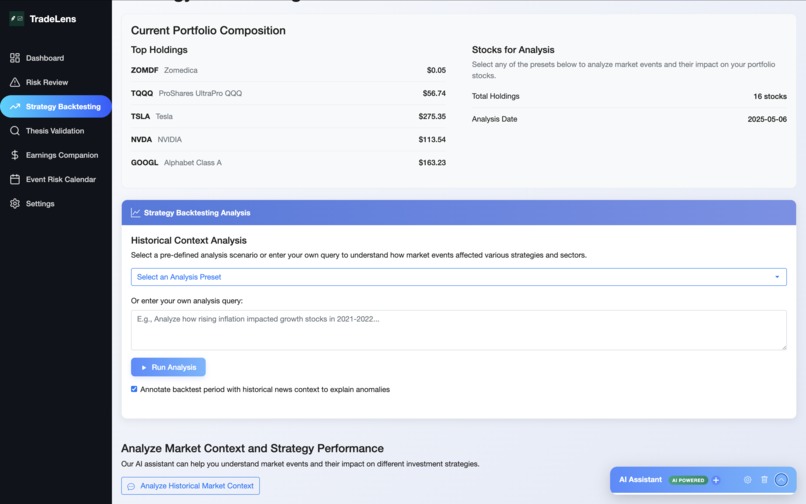
Strategy Backtracking using sonar pro model
-
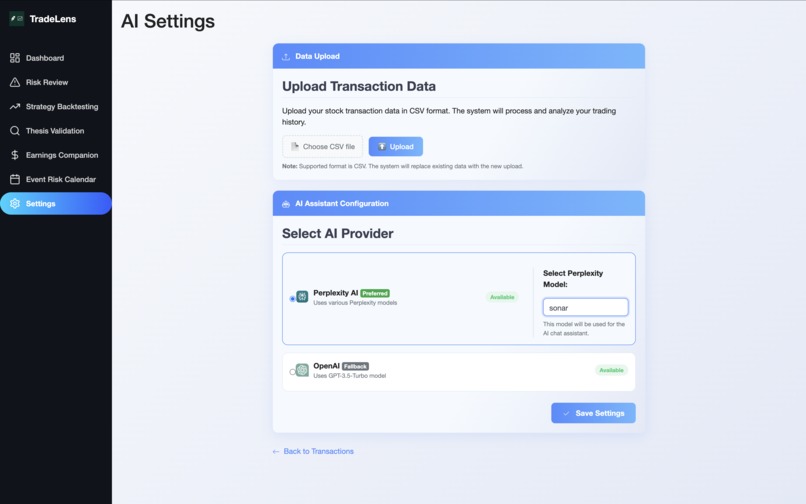
Settings page


Inspiration – Tariffs, Trust & Information Overload
Over the last two years the market narrative has flipped almost weekly: chip-export controls on Monday, 100 % EV tariffs on Tuesday, a dovish FOMC minutes leak on Wednesday. As an individual investor I found myself:
- Refreshing four different sites to see whether an overnight headline truly mattered to my NVDA long.
- Questioning the credibility of each source (“clickbait or real?”).
- Trying to map high-level policy moves (tariffs, supply-chain bans, new IRA credits) onto my actual P/L in Stock Investing Account – manually.
The thesis was simple: if I could validate the signal (is this news item real & material?) and quantify the exposure (how much of my portfolio is at risk?) inside a single dashboard, I would make faster, calmer decisions.
Large-context LLMs—especially Perplexity’s Sonar Deep Research model—turned out to be the missing piece. They ingest the headline, cross-reference primary sources, and respond with a grounded risk summary or thesis critique. This project was born from that “what if an LLM looked over my shoulder every time tariffs move?” moment.
How It Was Built
| Layer | Tech & Reasoning |
|---|---|
| Backend | Flask (Python) for rapid routing; SQLite for zero-setup persistence; yfinance for historical & live prices; threading for long-running AI jobs. |
| Data Ingestion | Raw CSV parsed into a normalised transactions table. Split-aware price adjustment logic keeps pre- and post-split fills consistent with Yahoo’s adjusted series. |
| Business Logic | ‑ Tariff risk classifier (analyze_tariff_risk) categorises each holding as high / medium / low based on hard-coded sector heuristics.- Event engines pull FOMC, CPI, and earnings calendars to build a combined “macro risk” view. - Job queues for thesis validation or earnings deep-dives store progress and keep the UI non-blocking. |
| AI Layer | Abstracted provider (get_settings) lets the user toggle OpenAI vs. Perplexity. Default is sonar-deep-research—chosen for its larger context window and source-citation JSON schema. Chat history, portfolio snapshot and tariff context are injected as system prompts. |
| Frontend | Jinja2 templates + Bootstrap 5 + ApexCharts. Pages: Dashboard, Stock Detail, Thesis Validator, Earnings Companion, Event-Risk Calendar. |
| Dev-Ops | .env driven config, venv, make-like shell scripts (run_server.sh, clean.sh, rebuild_db.sh) for one-command setup / reset. |
What I Learned
- Prompt-engineering for finance – Splitting context into “portfolio snapshot”, “macro backdrop” and “user query” dramatically improved Sonar’s answer relevance.
- Caching strategy matters – A 300 s mem-cache for
yfinancecalls reduced API hits by 92 %. Separate 24-h cache for split history avoided subtle mis-pricings. - Front-to-back traceability – Surfacing every server exception (try/except blocks with
print) while preserving UX taught me the value of graceful degradation (e.g., show “N/A” when a delisted ticker 404s). - User trust hinges on transparency – Embedding the exact sources returned by Perplexity (URL + quote) beside each thesis verdict turned skepticism into confidence.
- Threading pitfalls – Flask’s dev server + Python threads can dead-lock; switching long jobs to background threads but reading progress via polling JSON endpoints kept things responsive.
Challenges Faced
API Rate Limits & Cost
OpenAI’s frequent 429s forced a dynamic fallback to Perplexity. Maintaining conversation state across providers without leaking proprietary headers was non-trivial.Corporate Actions
Adjusting historic transactions for stock splits, while still displaying split-adjusted Yahoo prices, required reversing the usual split logic (multiply price, divide quantity for after-split trades).Delisted & Unlisted Symbols
Many meme-era tickers return sparse metadata. A tri-state categoriser (“mag7 / other / unlisted”) plus defensiveNonehandling kept the UI from breaking.Macro Event Correlation
Mapping CPI release impact to a single equity is more art than science. I settled on a simplistic sector-based impact score, leaving room for future ML refinements.UI Clarity vs. Feature Creep
The temptation to add every cool dataset (Treasury yields, options chain) was real. A strict “does this help validate the thesis?” filter kept the scope in check.
Next Steps
- Vector-store the entire chat history + source docs for RAG-style follow-ups.
- Add Monte-Carlo or historical VaR back-testing in the Strategy page.
- Migrate long-running jobs to a real task queue (Celery + Redis) for production stability.
- Build a plugin for automatic nightly import of new stock investing statements.
“In a world of noisy headlines and faster tariffs, context is alpha.
This project is our attempt to put that context—validated by an AI research assistant—one click away from every trade.”


