-
-
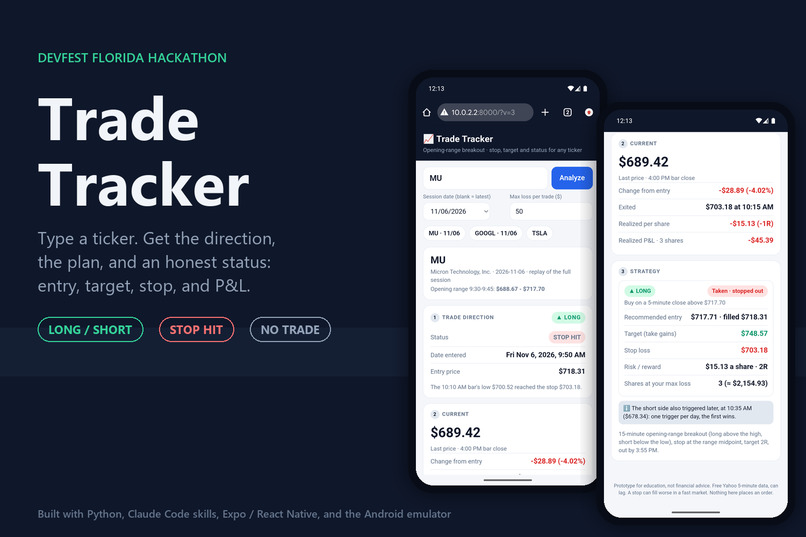
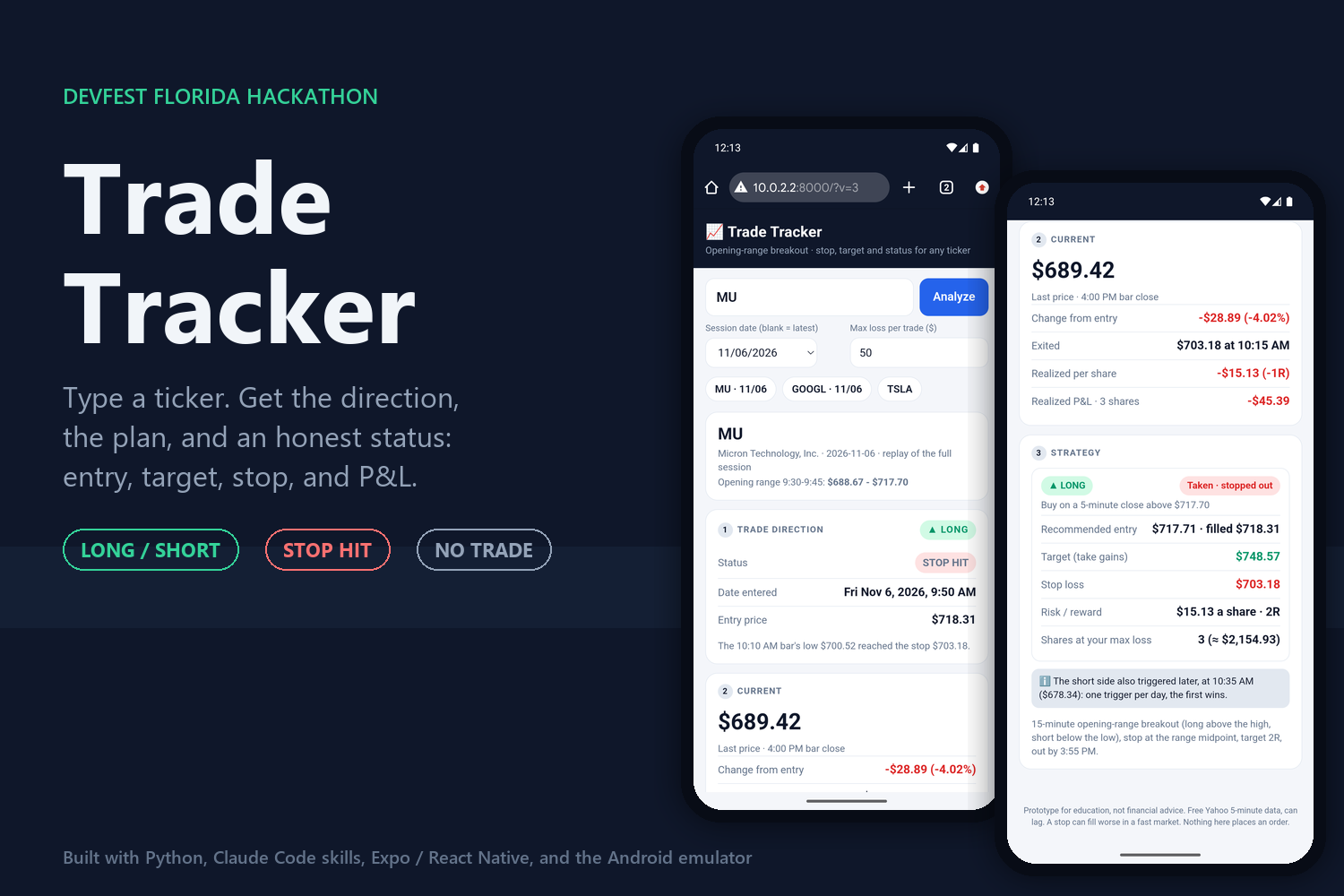
Trade Tracker: entry, target, stop and P&L for any ticker
-
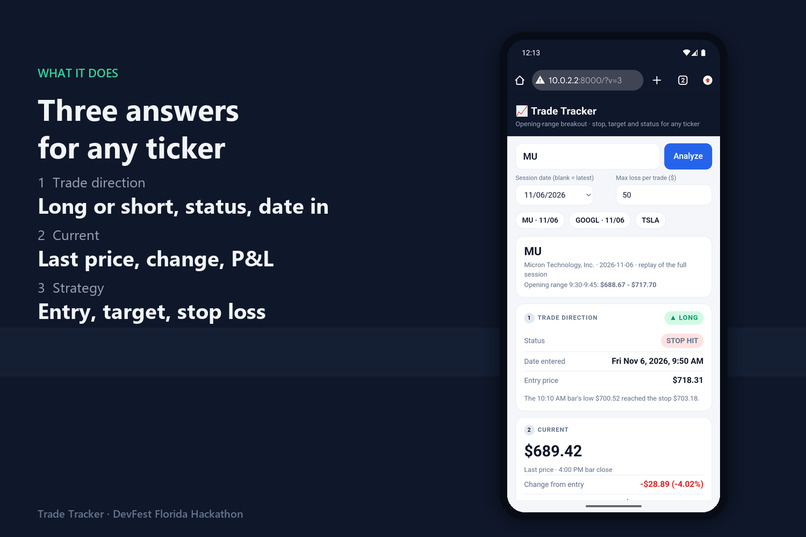
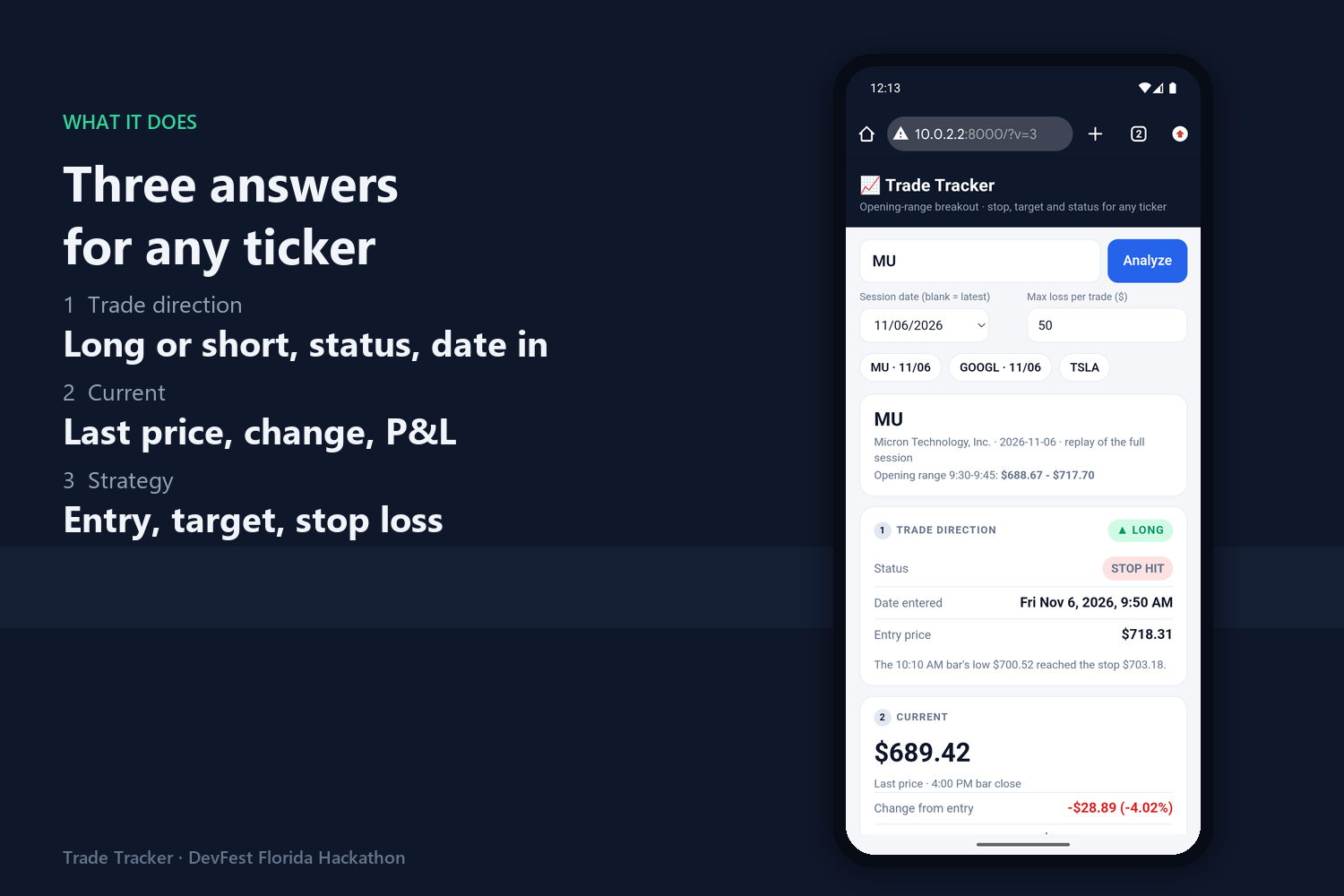
Three answers for every ticker: direction, current, strategy
-
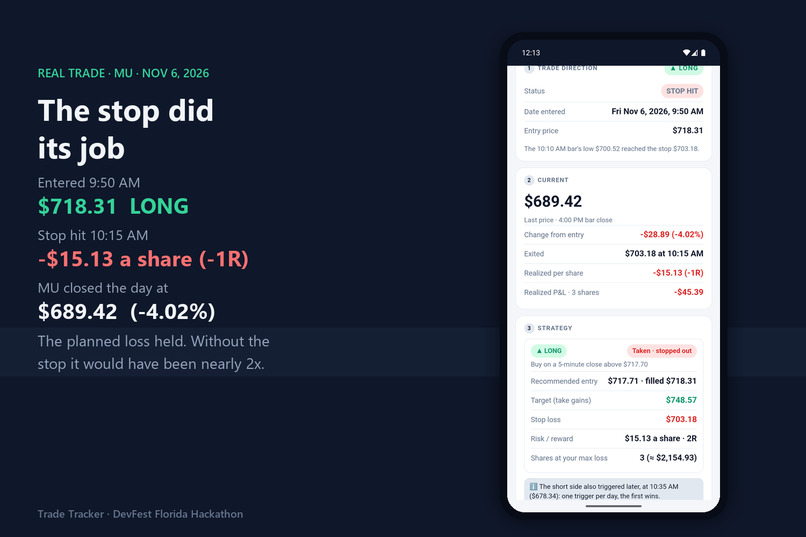
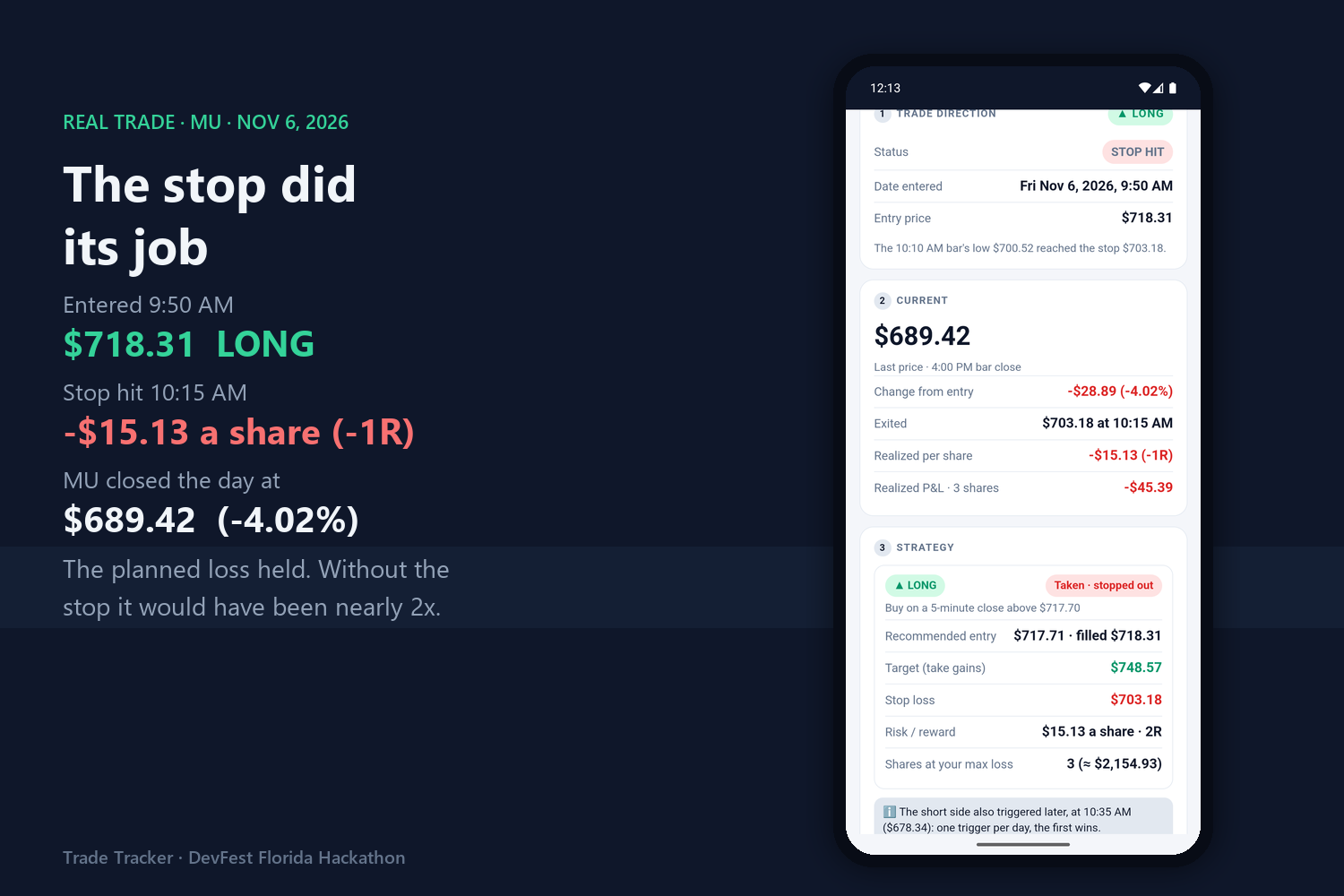
Real trade, MU on Nov 6, 2026: the stop limited the loss to the planned -1R
-
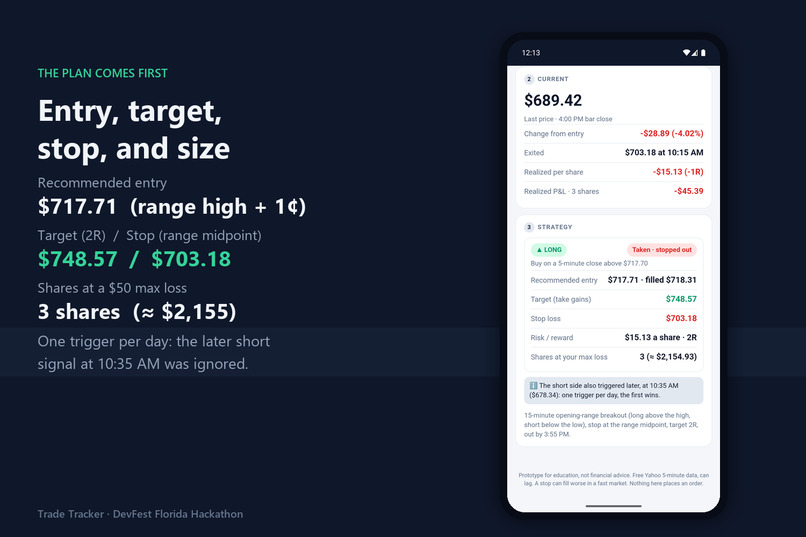
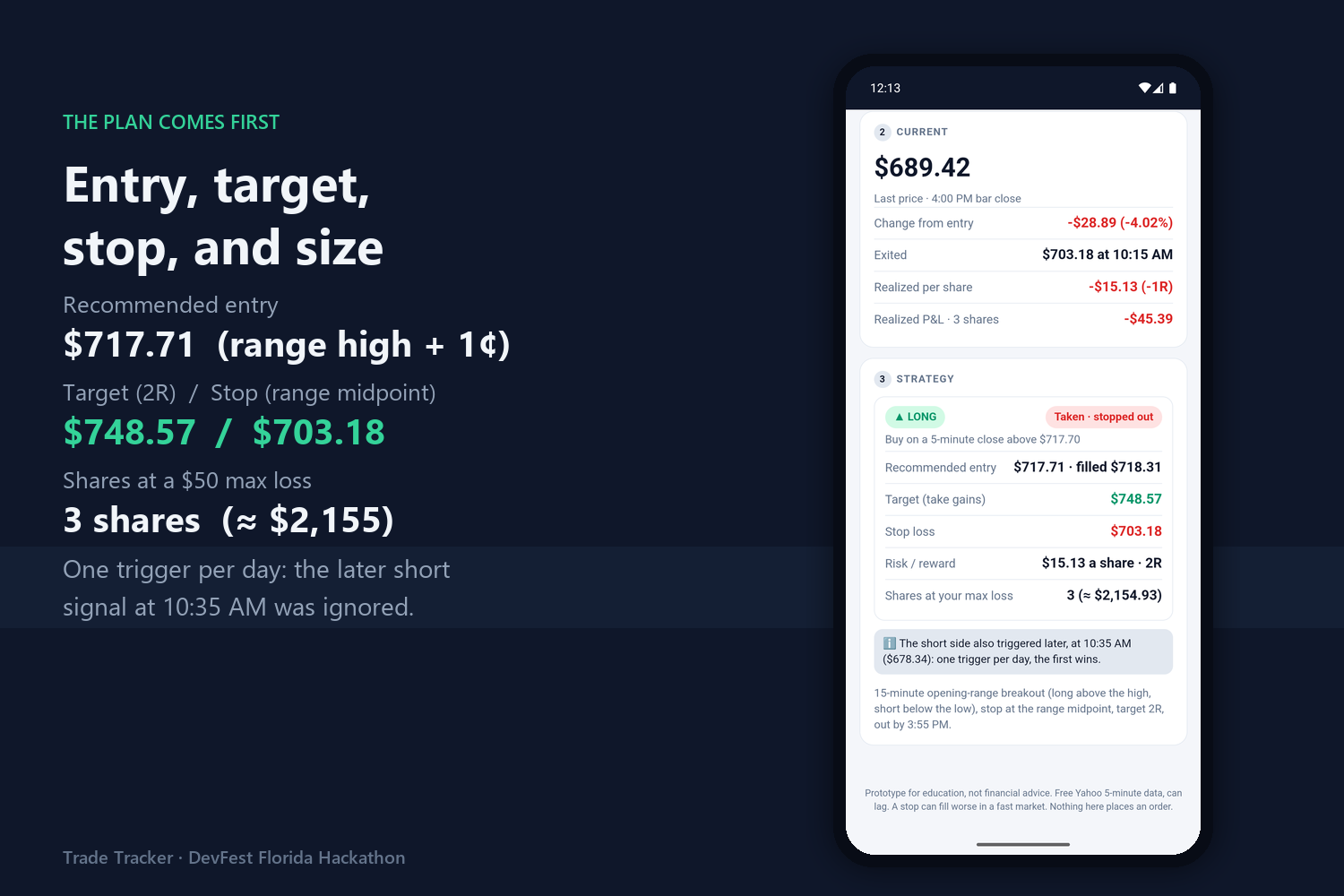
The plan comes first: entry, 2R target, stop, and position size
-
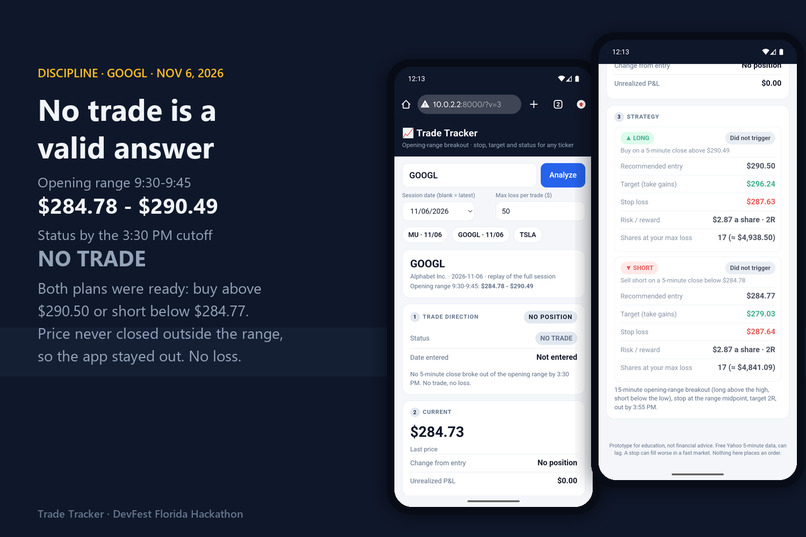
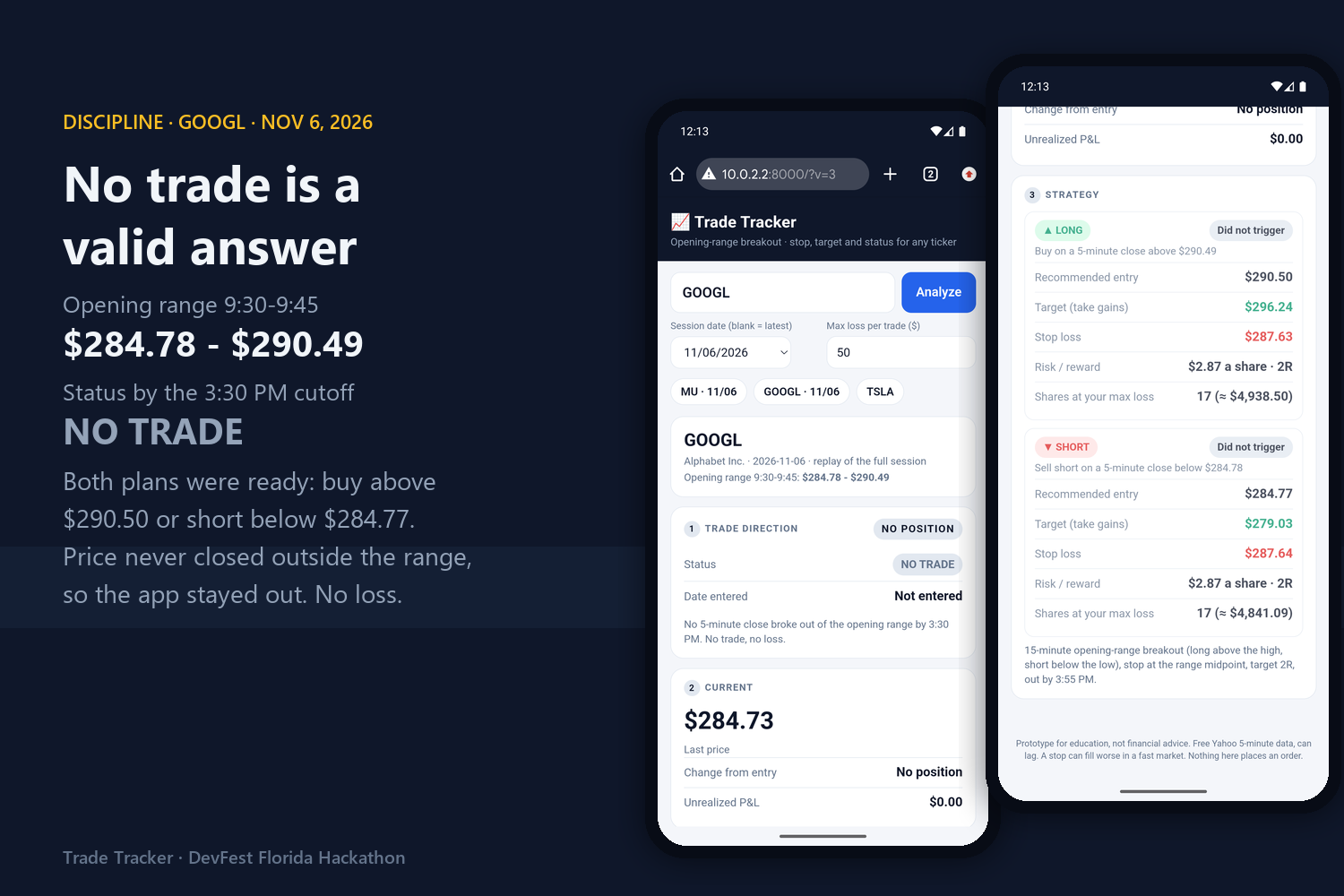
GOOGL never broke its range: no trade is a valid answer
-
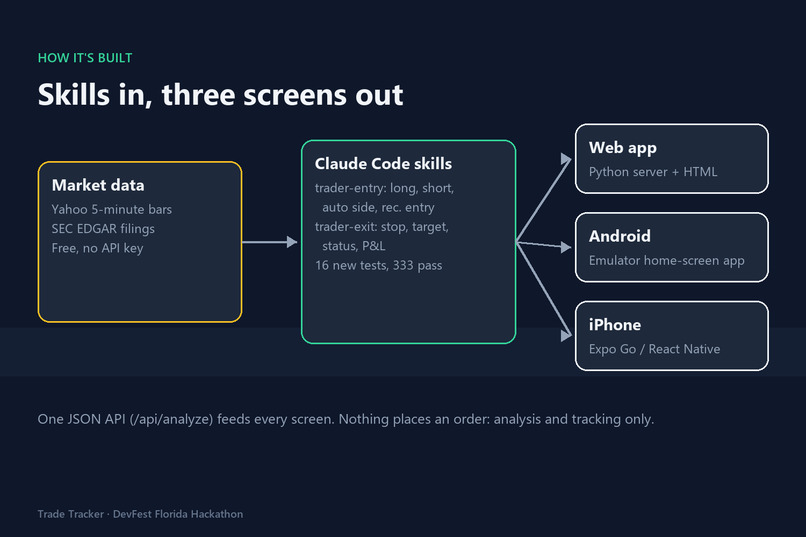
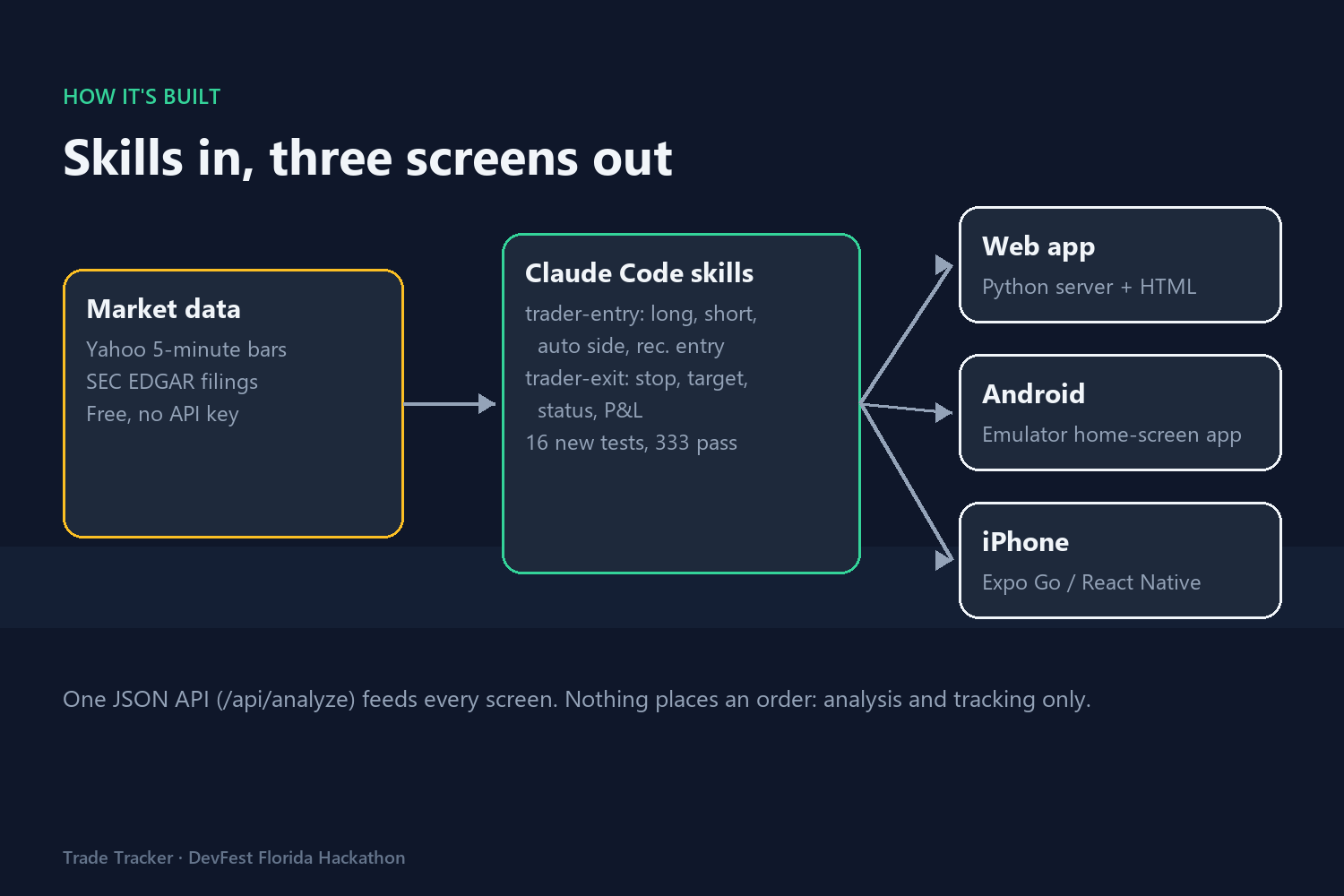
Claude Code skills feed one JSON API and three front ends
Inspiration
Day traders make three decisions under pressure: which way to trade, where to get in, and when to get out. Most people make them from gut feel, in the moment, and that's how one bad trade wipes out a week of good ones. We wanted an app that makes those decisions before the trade, from a written rule, and then reports the result honestly, even when the answer is "you lost exactly what you planned to lose" or "don't trade today."
What it does
Type any US stock or ETF ticker and Trade Tracker answers in three panels:
- Trade direction: long or short, the status (active, target hit, stop hit, or closed at 3:55 PM), and when it was entered.
- Current: last price, change from entry, and unrealized P&L (realized once the trade closes).
- Strategy: recommended entry, target, stop loss, and how many shares fit your maximum loss.
The method is the 15-minute opening-range breakout. The first 5-minute candle that closes above the 9:30-9:45 AM high is a long signal (below the low, a short). The stop sits at the range midpoint, the target is twice the risk, and every trade is out by 3:55 PM.
$$R = \text{entry} - \text{stop} \qquad \text{target} = \text{entry} + 2R \qquad \text{shares} = \left\lfloor \frac{\text{max loss}}{R} \right\rfloor$$
Real example: Micron (MU), Nov 6, 2026. The app recommended buying above $717.71. At 9:50 AM a candle closed at $718.31, so it went long. At 10:15 AM the stop at $703.18 was hit: -$15.13 a share, exactly the planned \( -1R \) loss (-$45.39 on 3 shares). MU kept falling and closed at $689.42, down 4%. The stop limited the damage.
Same day, Google (GOOGL): no candle closed outside the $284.78-$290.49 range, so the status was NO TRADE. Staying out is a valid answer.
How we built it
- Engine: Claude Code skills. We started from the open-source, MIT-licensed day-trader-skill pack (Python, standard library only, free Yahoo Finance and SEC EDGAR data). It handled long trades only and stopped at the plan. During the hackathon we added:
- Short trades, plus an auto mode that takes whichever side breaks first
- A recommended entry price and rule while a setup is waiting
- A trade status engine that walks every 5-minute bar after entry and reports active, target hit, stop hit, or closed, with last price, change from entry, and P&L
- 16 new tests. All 333 tests in the pack pass.
- API: a small Python server exposes one JSON endpoint:
GET /api/analyze?ticker=MU&date=2026-11-06&max_loss=50
- Three front ends, one API: a phone-sized web app, an Android home-screen app (Pixel 8, Android 16 emulator), and an iPhone app built with Expo / React Native in Expo Go.
- Claude Code helped throughout: extending the skills, writing tests, setting up the Android SDK and Expo on Windows, and preparing this submission.
Challenges we ran into
- Bars hide the order of events. When one 5-minute bar touches both the stop and the target, you can't tell which came first. We count it as the stop, the cautious reading, and exit at the bar's open when the price gaps past the stop.
- Mobile tooling on Windows: setting up the Android SDK, the emulator and Expo from the command line meant working around sandboxed paths, firewall prompts, and PowerShell script policies.
- Free data has limits. Yahoo keeps about 60 days of 5-minute bars and can lag, so the demo replays real past sessions. That also makes it repeatable for judges.
Accomplishments that we're proud of
- Every number in the demo is real, verifiable market data.
- The app is honest by design: losses and no-trade days are shown as clearly as wins.
- One engine on three platforms (web, Android, iPhone), built in a weekend.
- We extended an existing open-source project without breaking it: 333 tests pass.
What we learned
- Discipline is a feature. A good stop and the right position size matter more than a clever entry signal.
- Putting a JSON API between command-line skills and the screens lets any front end reuse the same logic.
- Expo Go is the fastest way to get a React Native app onto a real iPhone from a Windows laptop.
What's next for Trade Tracker
- Push alerts when a stop or target hits
- More methods, such as multi-day swing trades
- Paper trading through a broker API, so users can practice with fake money
- A TestFlight / App Store build with Expo EAS, with the API hosted online
Prototype for education, not financial advice. Most day traders lose money, and a stop can fill worse than planned in a fast market. Nothing in the app places an order.
Built With
- andrio-studio
- andriod-emulator
- claude
- claude-code
- css3
- expo.io
- html5
- javascript
- powerpoint
- python
- react-native
- rest-api
- sec-edgar
- yahoo-finance

