Inspiration
I’ve always hated how learning new skills often comes with a hefty price tag—whether it’s courses, workshops, or one-on-one lessons. As someone who’s freelanced and switched careers, I saw friends trading skills informally (a designer teaching a writer to use Figma in exchange for copy tips) and thought: why not build a platform to scale this? SkillSwap was born from that frustration and the belief that knowledge should be shared, not sold.
What it does
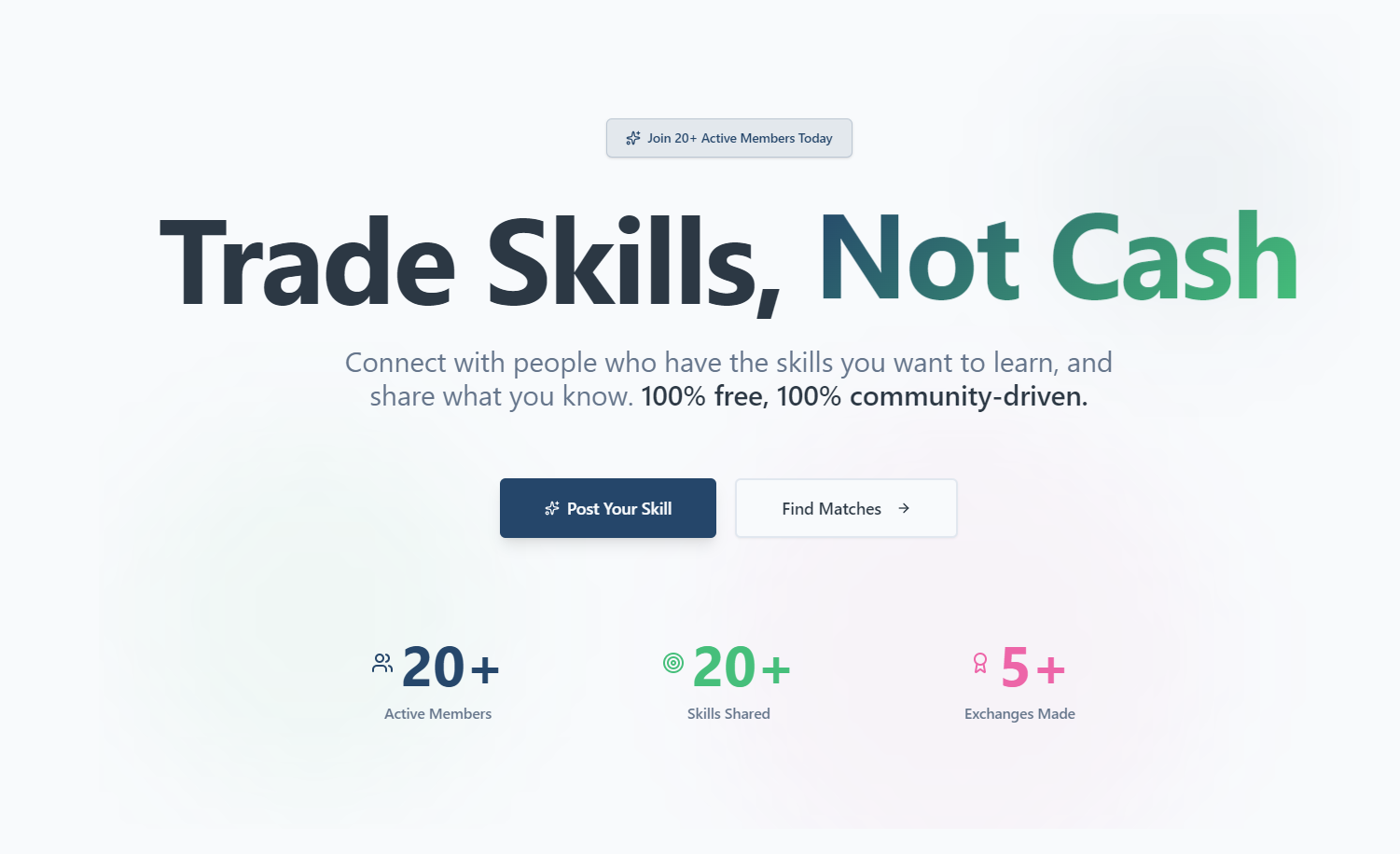
SkillSwap lets users post skills they can offer (e.g., Spanish, woodworking) and skills they want to learn (e.g., coding, watercolor). Our AI matches users based on complementary skills and availability, tracks exchange progress, and lets users rate each other to build trust. Premium users get unlimited high-precision matches, ad-free use, and priority placement—all to make skill exchange seamless.
How we built it
We started with wireframing in Figma to map out user flows (homepage, posting, matching pages). The frontend was built with React and TailwindCSS for responsiveness; the backend uses Node.js/Express to handle data logic, with MongoDB for storing skill posts and exchange history. We integrated third-party AI APIs to build the matching algorithm, focusing on skill complementarity and availability overlap. We iterated on UI/UX with peer feedback to ensure the platform felt intuitive for freelancers, students, and hobbyists alike.
Challenges we ran into
The biggest hurdle was perfecting the matching algorithm—balancing free vs. premium user limits (3 daily matches for free users) while keeping precision high for premium tiers. We also struggled with designing a skill level verification system that was trustable but not overly bureaucratic; we landed on self-selection with community peer review, but testing this flow took weeks of iteration. Additionally, making the platform responsive across desktop and mobile required constant tweaking of grid layouts for skill cards.
Accomplishments that we're proud of
We built a fully functional platform where users can post skills, get matched, track exchanges, and leave reviews—all without login barriers for demo use. The AI matching logic accurately calculates match percentages, and the UI clearly differentiates free/premium features. Most importantly, beta testers actually started trading skills (a photographer teaching editing to a marketer, in exchange for social media tips)—proof the core idea works.
What we learned
I learned how to balance technical constraints with user needs—e.g., limiting free matches without alienating users. I also gained a deeper understanding of building trust in peer-to-peer platforms (the rating/trust badge system was far more complex than I anticipated). Collaboration-wise, I honed how to integrate third-party APIs seamlessly and debug matching logic that relies on multiple data points (skills, availability, skill levels).
What's next for this project
First, we’ll add user authentication to make profiles persistent—critical for long-term trust. We want to integrate real-time messaging so users can coordinate exchanges without leaving the platform, and explore payment processing for premium subscriptions (currently a placeholder). We also plan to add video call integrations to make skill exchanges more interactive, and expand the skill category tags to cover niche areas (e.g., sustainable living, vintage repair) based on user feedback. Finally, we’ll refine the skill verification system with automated checks (e.g., portfolio uploads) to boost trust further.

Log in or sign up for Devpost to join the conversation.