Inspiration
Living with chronic illness means tracking dozens of symptoms, medications, and daily health metrics. Existing apps are either too complex or too simple. I wanted to build something that empowers patients to understand their health patterns and communicate effectively with doctors—a tool that respects the reality of living with limited energy (spoon theory).
What it does
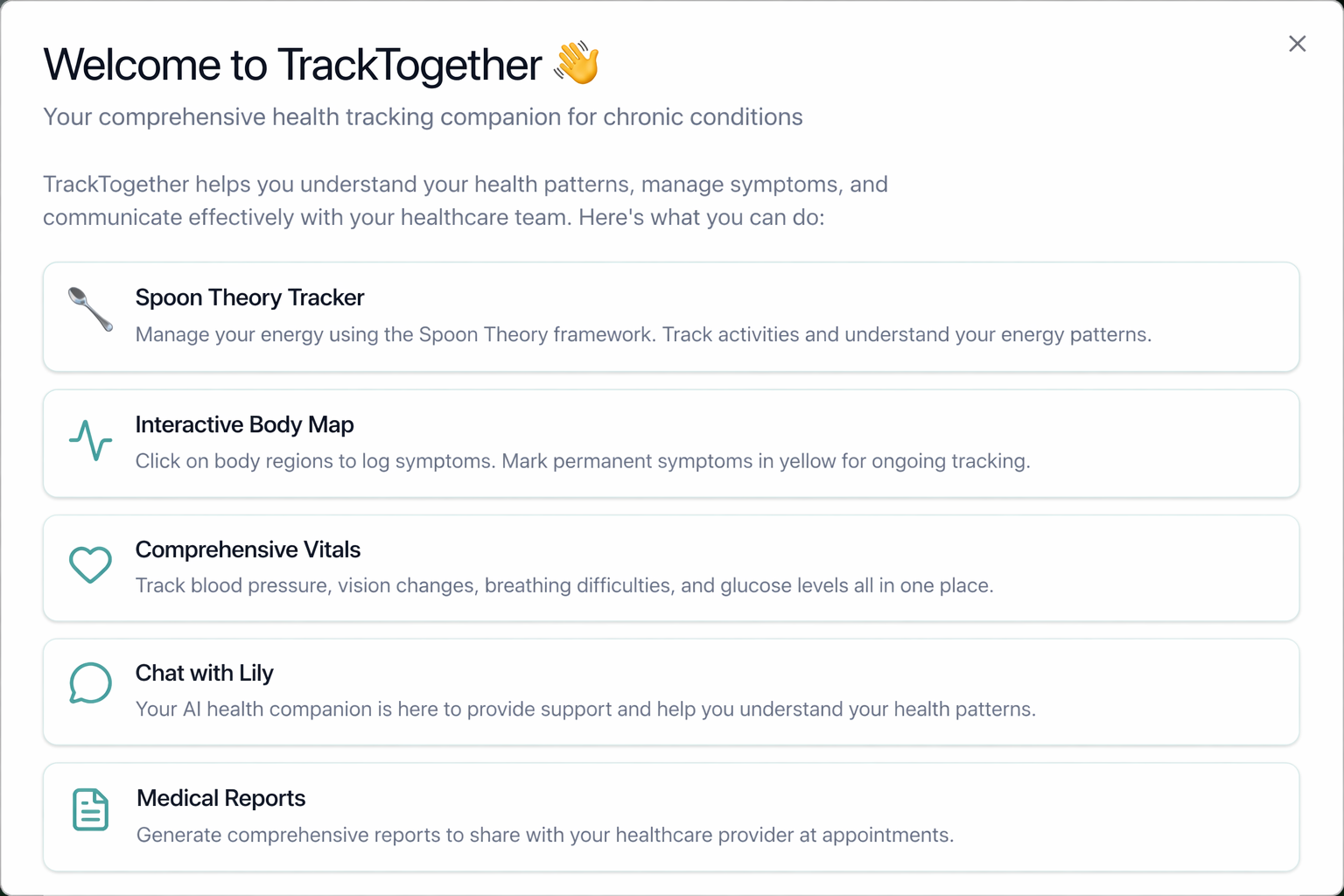
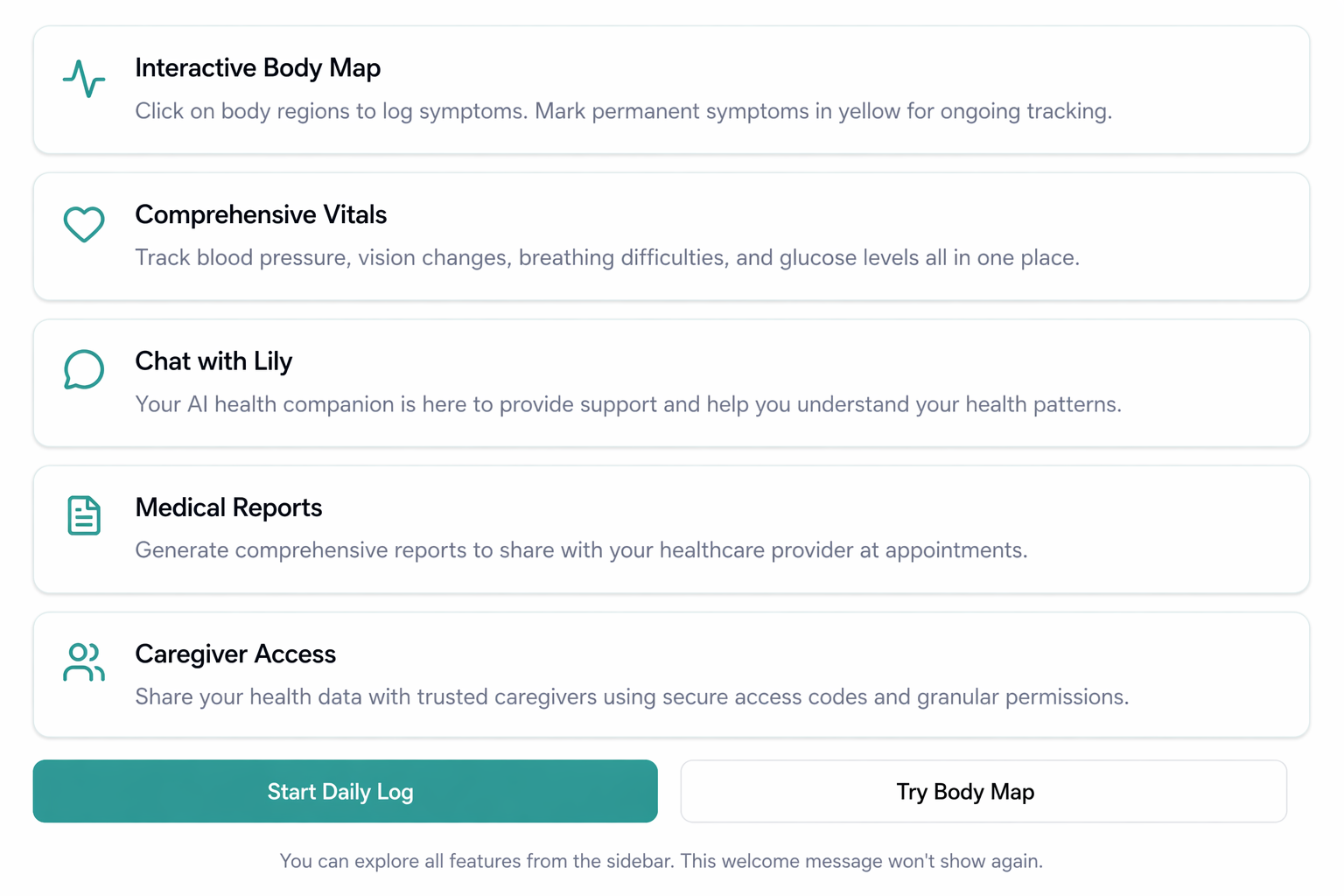
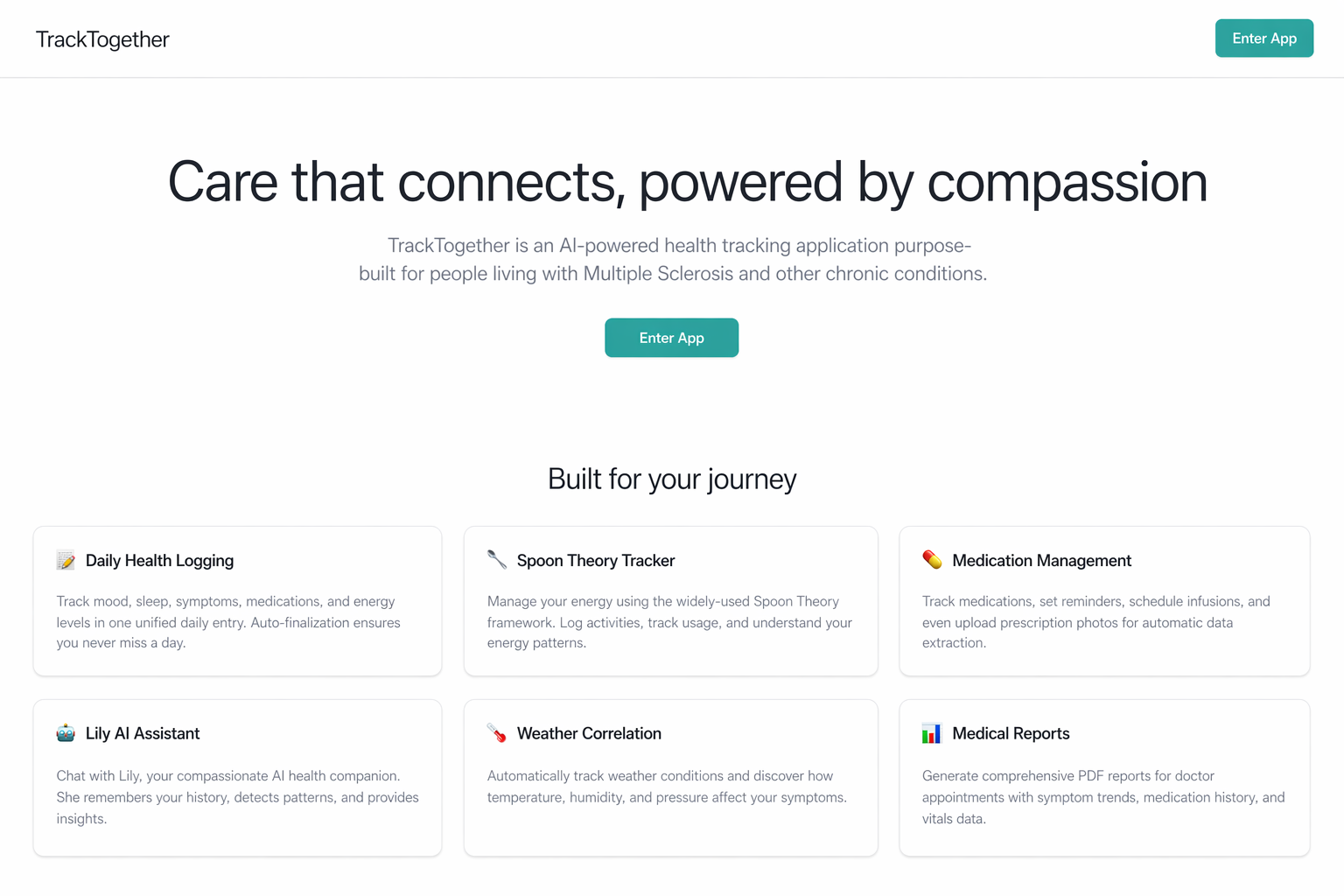
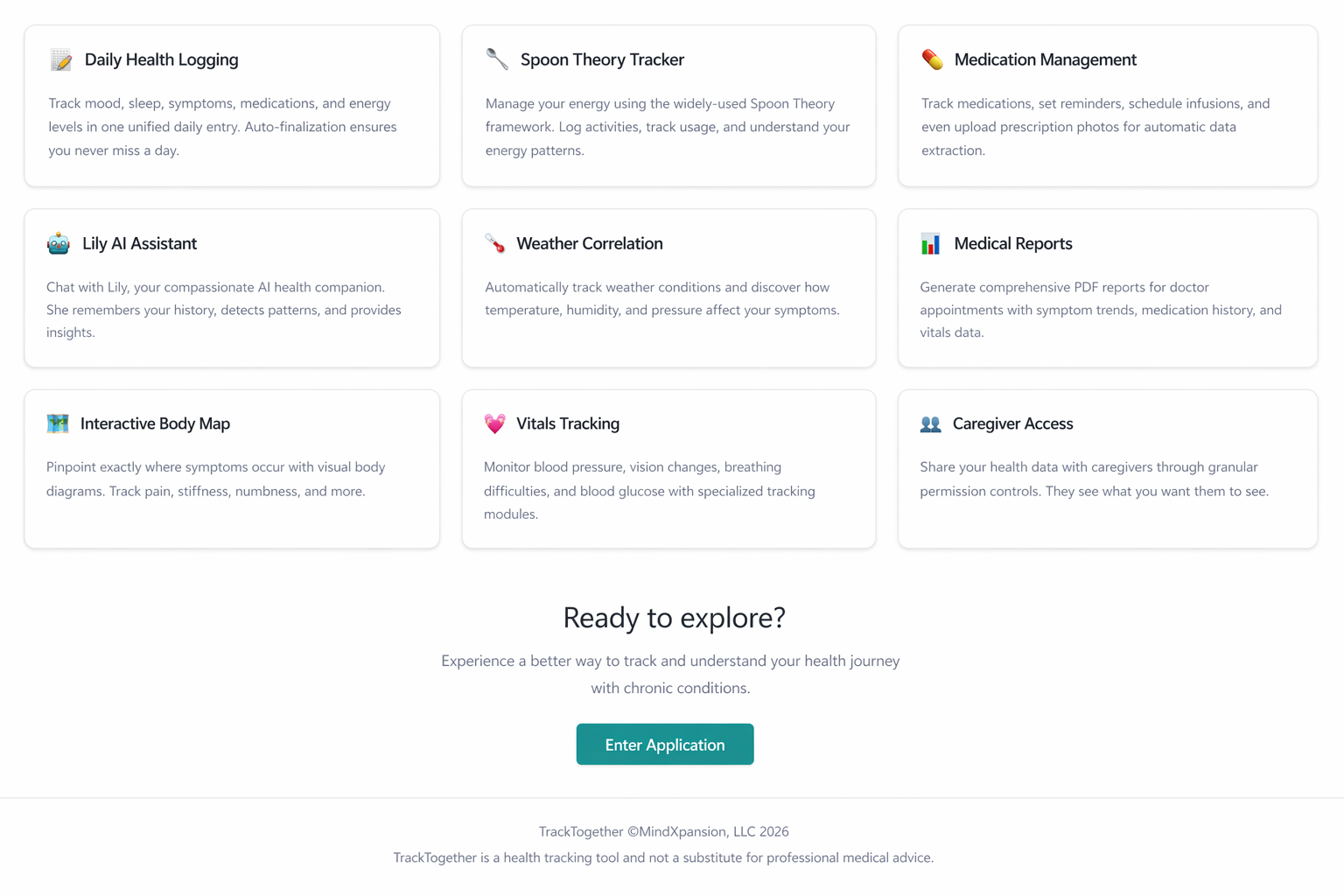
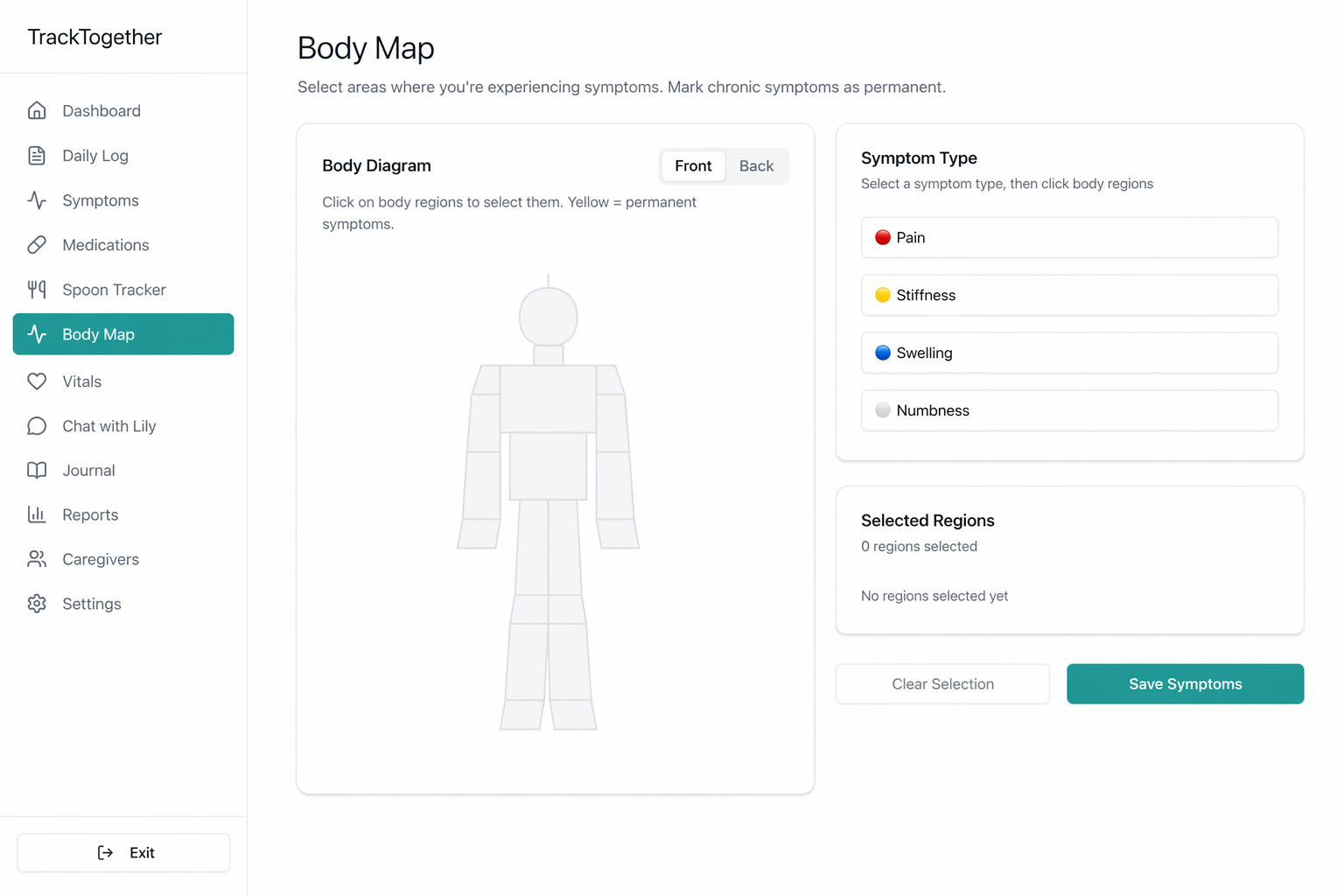
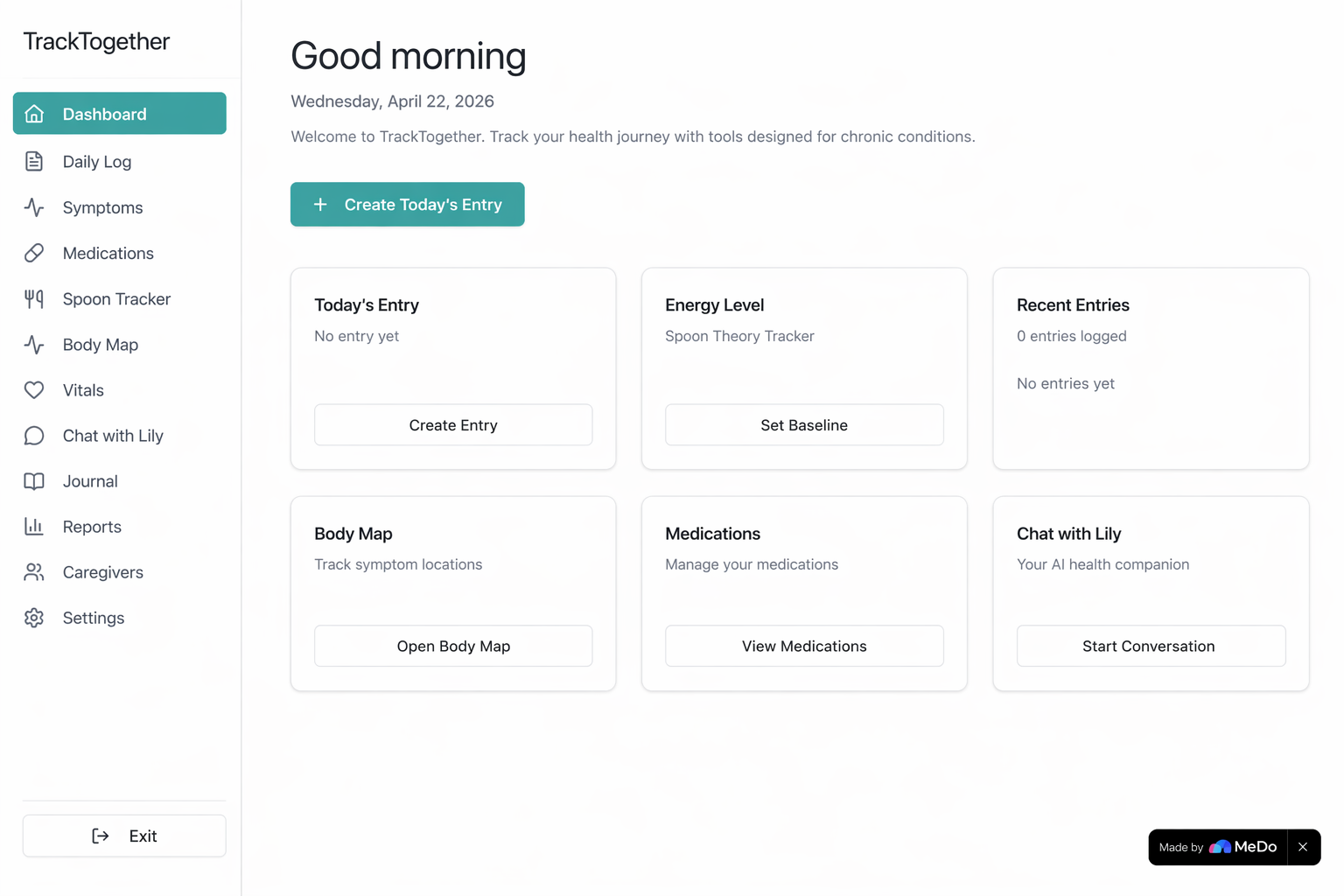
TrackTogether is a comprehensive health tracking platform for chronic illness patients. It features: daily symptom logging with an interactive body map, spoon theory energy tracking, medication management with pharmacy integration, vitals monitoring (BP, glucose, vision, breathing), AI health companion chat, medical report generation for doctors, and caregiver access management.
How we built it
I used MeDo conversationally, iterating through features one by one. Started with "build a health tracking app for chronic illness" and refined through 9 versions. MeDo generated the React + TypeScript + shadcn/ui frontend, Supabase backend with 25+ tables and RLS policies, and localStorage demo mode. The body map was particularly impressive—MeDo created the entire SVG with clickable regions, permanent symptom marking, and database integration in one go.
Challenges we ran into
The interactive body map was complex—getting SVG click detection to work required adding pointerEvents: 'auto' to regions. Date timezone bugs caused reports to show wrong dates (4/1 became 3/31). Lily's chat repeated responses consecutively. TypeScript type mismatches between form data and database schemas needed careful alignment. Each challenge was solved through clear communication with MeDo.
Accomplishments that we're proud of
Built 15+ fully functional pages in hours, not weeks. The spoon theory tracker with visual spoon icons (🥄) perfectly captures the chronic illness experience. The body map lets users mark permanent symptoms in yellow vs temporary in red. Medical reports generate comprehensive summaries for doctors. Every button works—zero placeholder content. The minimal aesthetic creates a calming, accessible interface for users managing health challenges.
What we learned
MeDo excels at iterative refinement—each bug fix or feature addition was handled conversationally. Breaking complex features into clear requirements yields better results. The importance of demo mode for hackathons. How powerful shadcn/ui + Tailwind is for rapid UI development. That localStorage can simulate a full backend effectively. Chronic illness tracking requires thoughtful UX—every interaction should minimize cognitive load.
What's next for TrackTogether
Integrate real AI (OpenAI) for Lily to provide personalized health insights. Add data visualization with charts for symptom trends over time. Implement medication reminder notifications. Build mobile app version for on-the-go tracking. Add export to PDF for medical reports. Create community features for patients to share coping strategies. Integrate with wearables (Apple Health, Fitbit) for automatic vitals tracking.
Built With
- lucide-icons
- react-hook-form
- reactrouter
- shadcn/ui
- sonner
- supabase
- tailwind-css
- typescript
- vite


Log in or sign up for Devpost to join the conversation.