-
-
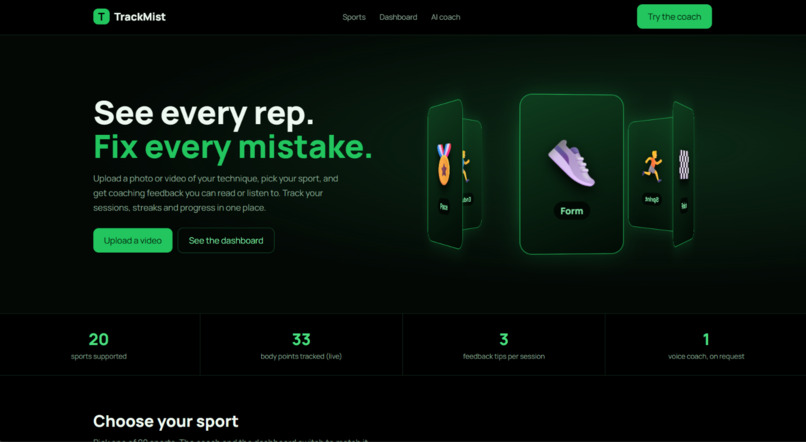
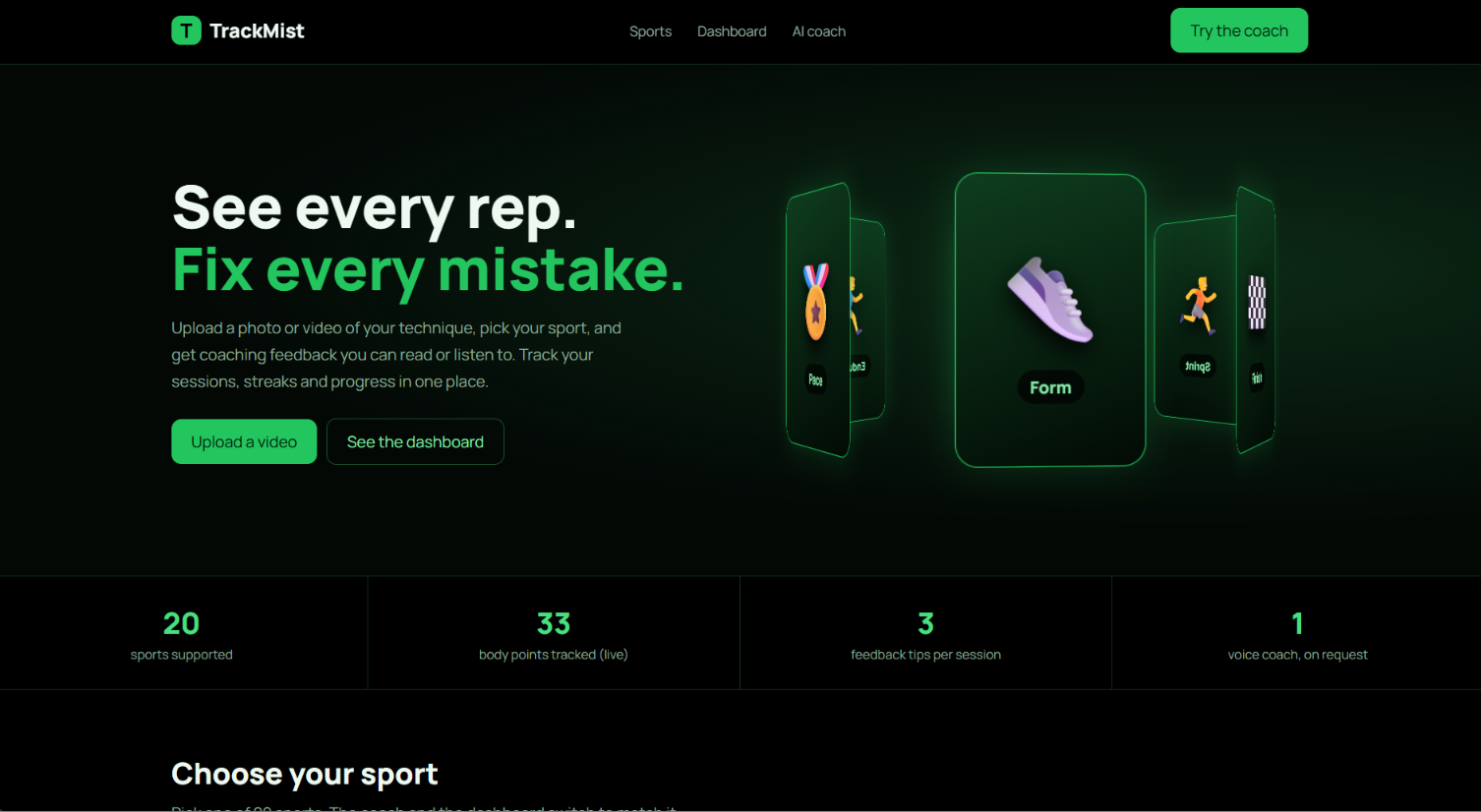
This is our TrackMist website
-
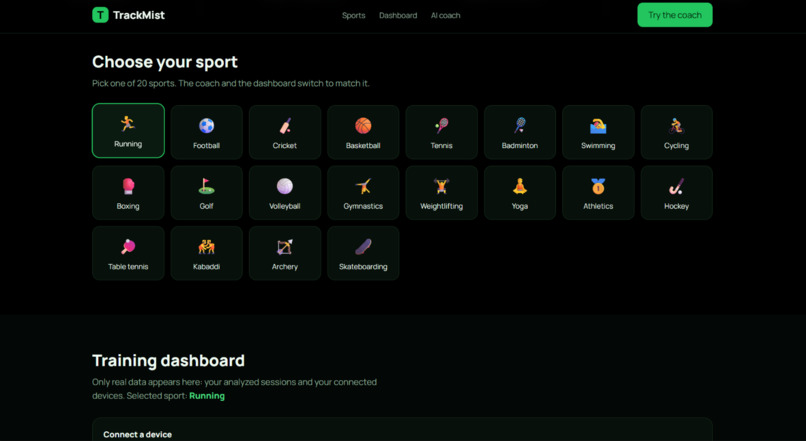
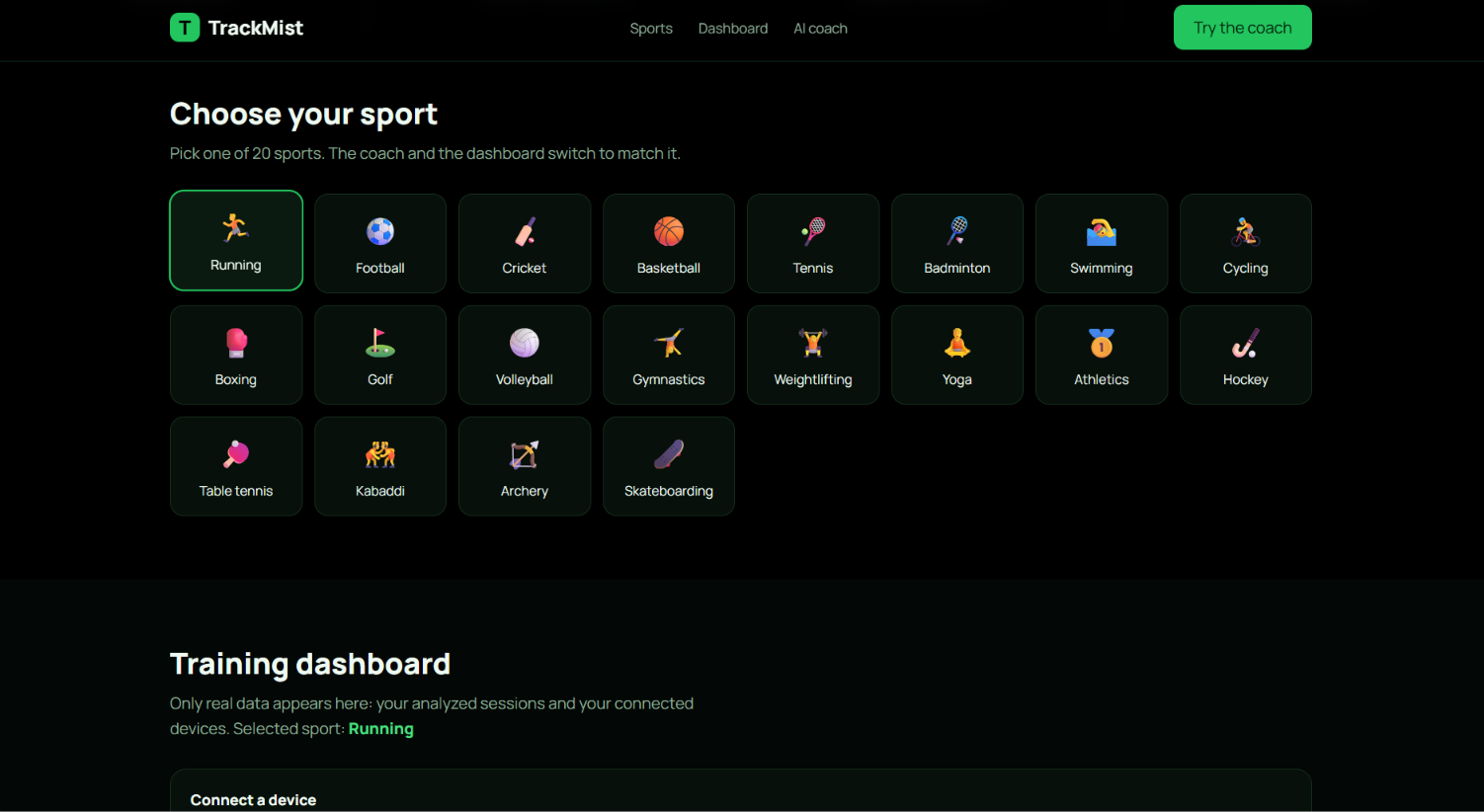
you can choose the sports you want to play and track your performance
-
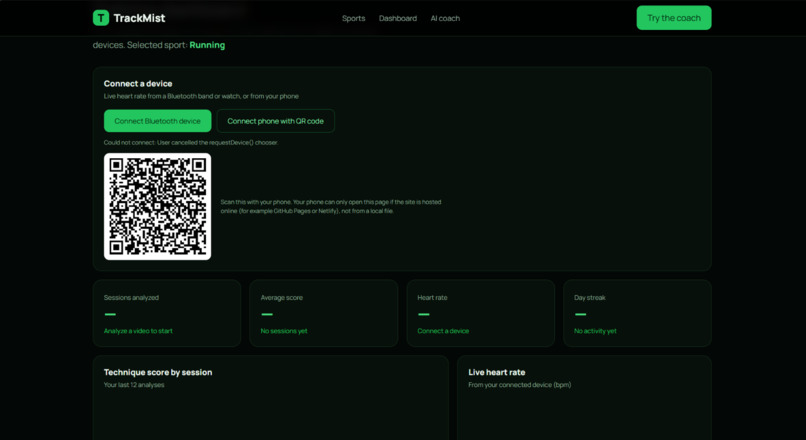
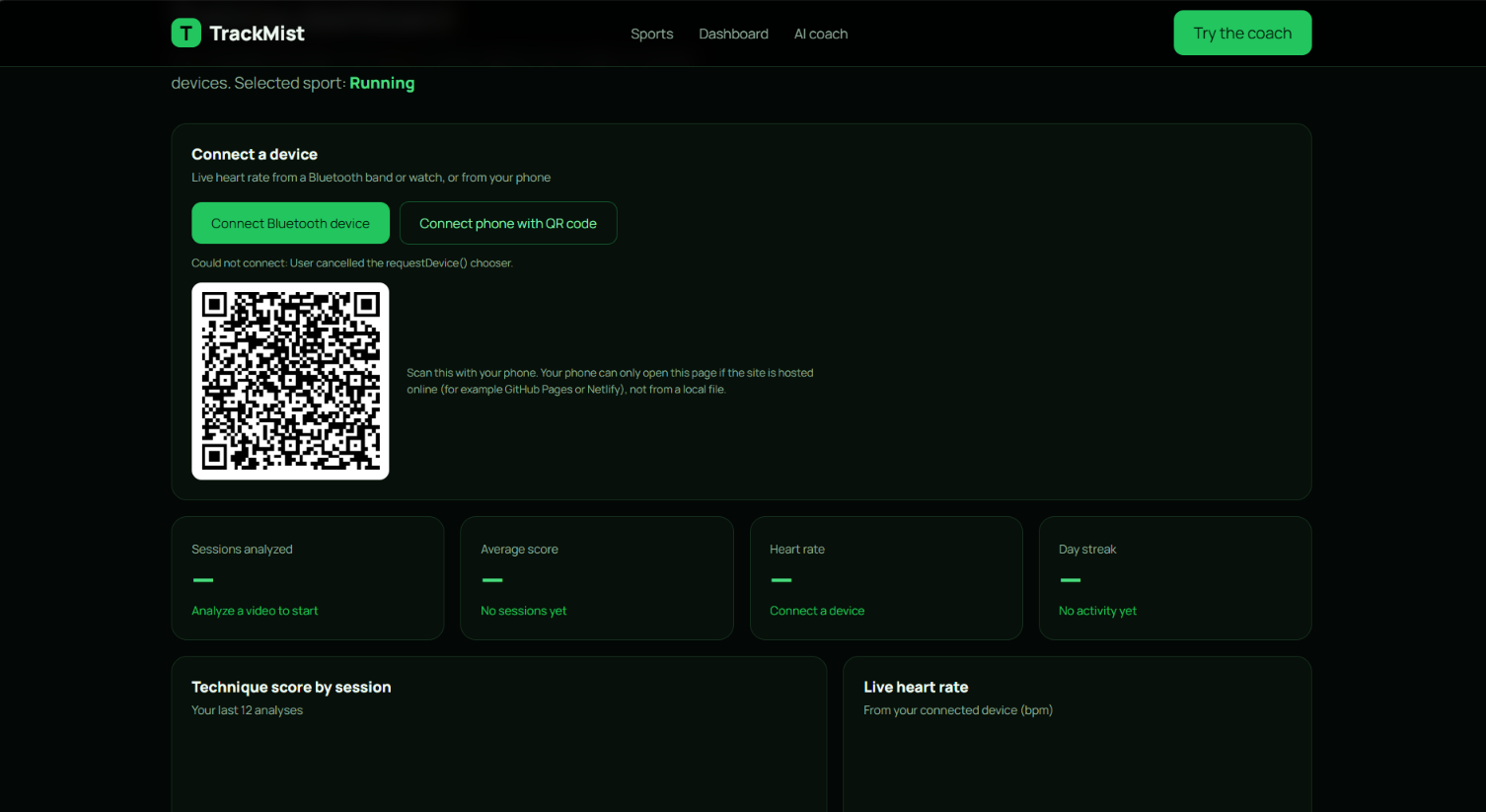
we have a option to connect your device with our QR code or by directly by Bluetooth of your device
-
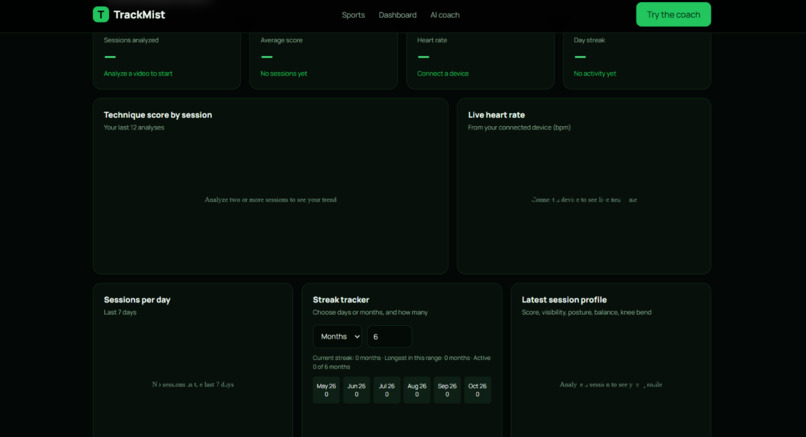
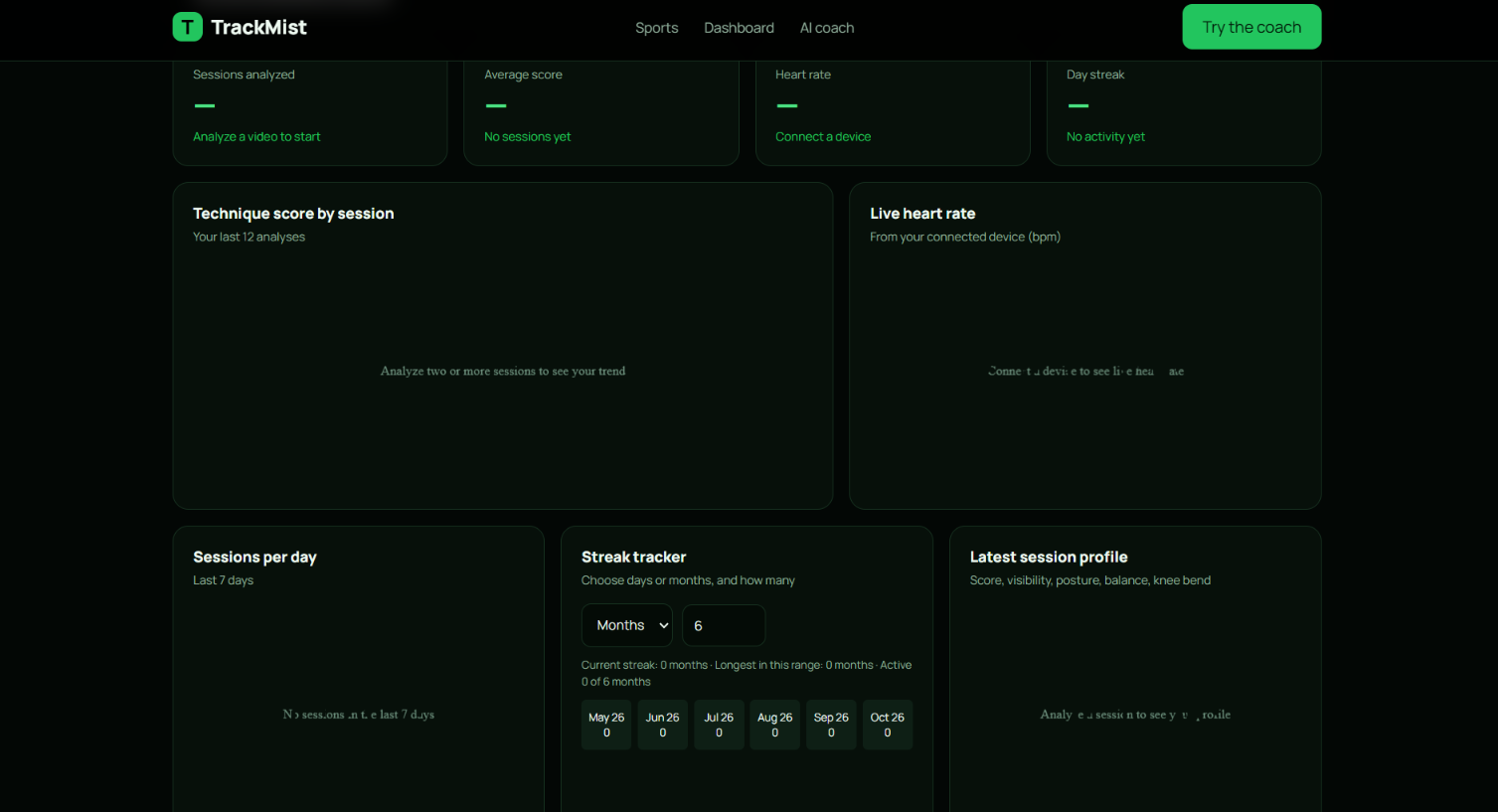
this is the place were you can see your performance for every sports and see the graph and analyse your progress for months or for days
-
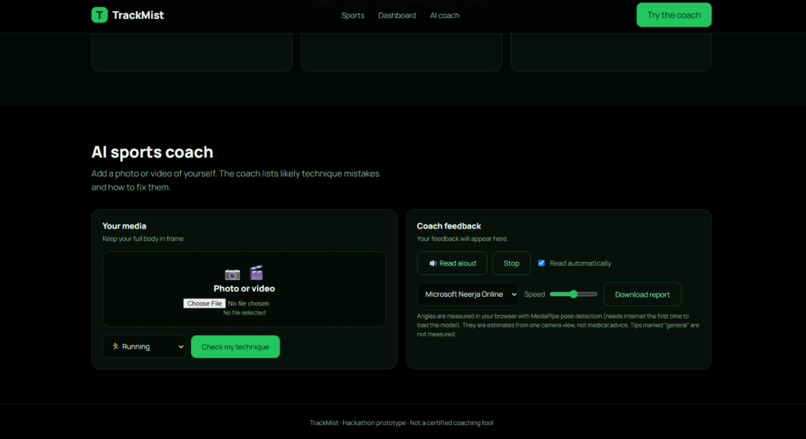
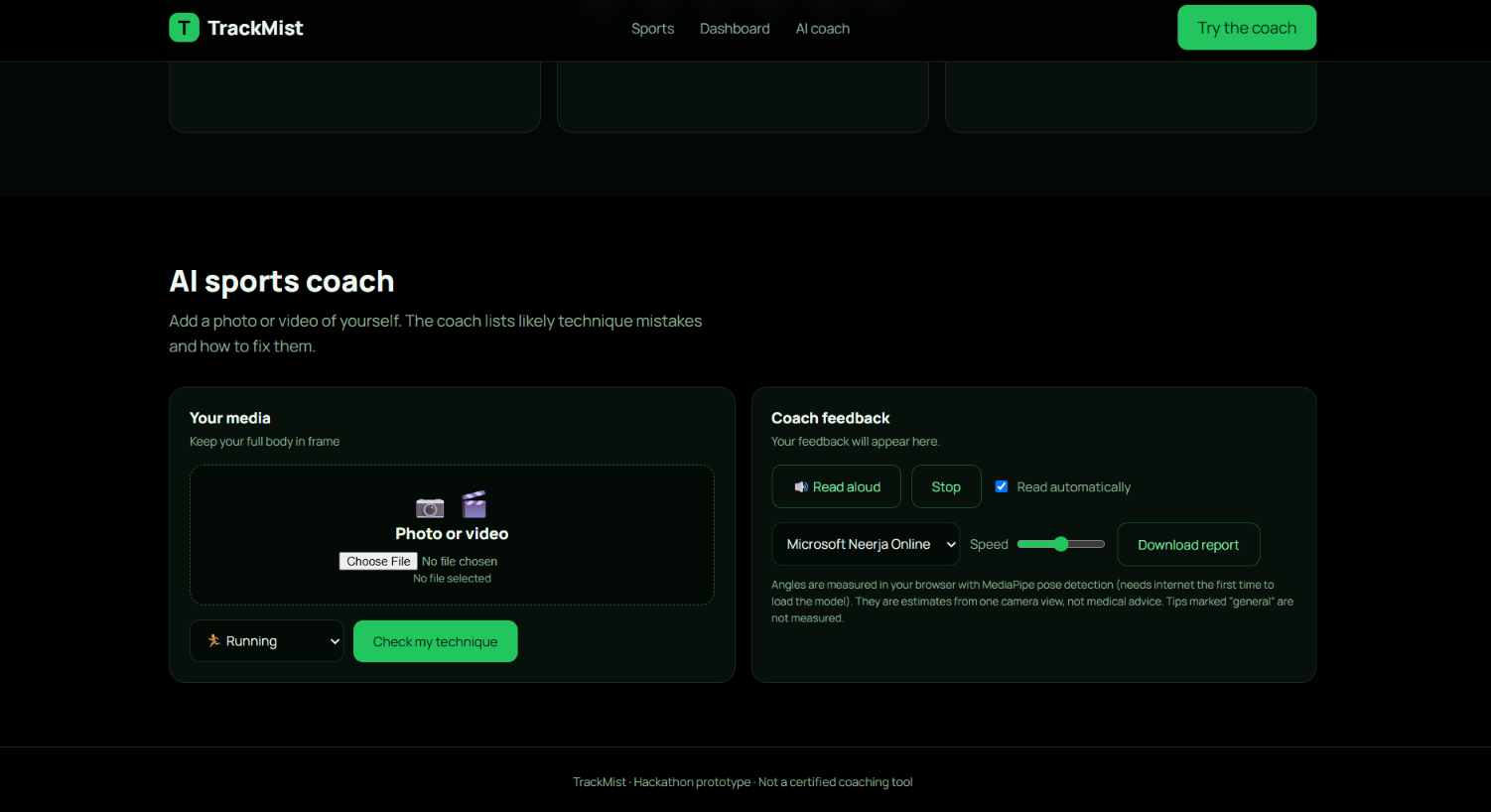
the main key highlight of our website because this is a AI or coach which tell you that what to improve in your skills by photos and videos
Inspiration
Most athletes train without a coach watching every rep. Good coaching and motion-capture systems are expensive, so small mistakes in posture and technique go unnoticed until they turn into bad habits or injuries. We wanted to give any athlete a free "digital sports twin" that watches their movement, remembers their progress, and explains what to fix, using only a phone or laptop.
What it does
TrackMist is a browser-based sports analytics platform.
- AI coach: upload a photo or video in one of 20 sports. TrackMist detects the body with pose estimation, draws a skeleton over each frame, and measures knee bend, elbow angle, torso lean, left/right balance and how much of the body is visible. It turns these into a technique score, plain-language mistakes and a drill for each one.
- Progress comparison: each result is compared with the athlete's last session in the same sport, so they can see what improved and what got worse.
- Voice coach: feedback is read aloud, with a choice of voice and speed.
- Live device data: athletes can connect a Bluetooth heart-rate band or watch, or scan a QR code to stream heart rate and movement from their phone. It appears on the dashboard automatically.
- Dashboard and streaks: technique trends, sessions per day, live heart rate and a streak tracker where the user chooses days or months and how many.
- Everything on the dashboard comes from real sessions and devices. There is no placeholder data.
How we built it
- Front end in HTML, CSS and JavaScript with a black and green design and a 3D rotating hero.
- MediaPipe Pose Landmarker runs in the browser to find 33 body points, and we calculate joint angles from them.
- Charts are drawn with the Canvas API in green shades.
- Web Bluetooth reads the standard heart-rate service from wearables.
- PeerJS (WebRTC) and a QR code link a phone to the dashboard without our own server.
- The Web Speech API provides the voice coach.
- Session history and device readings are stored in the browser (localStorage), so the athlete's data stays on their own device.
Challenges we ran into
- Our first prototype showed illustrative numbers, which looked good but was not honest. We replaced them with measurements from real pose detection and removed all sample data.
- Browsers limit what a web page can do. Web Bluetooth works in Chrome and Edge on desktop and Android but not on iPhone Safari, and pairing a phone by QR needs the site to be hosted online.
- Without a backend, we had to send data between devices peer-to-peer and keep history on the device.
- Angles measured from one camera view are estimates, so we added a visibility check that warns when the whole body is not in frame.
Accomplishments that we're proud of
- Real in-browser pose analysis across 20 sports with no installation and no special hardware.
- Feedback that comes from measured angles and includes a drill for every problem.
- A working device connection through Bluetooth or a phone QR code, with a streak tracker the user can set to days or months.
- A voice coach that makes the feedback usable while training.
What we learned
- How pose landmarks turn into joint angles and why camera angle and framing matter so much.
- How to use the Web Bluetooth, WebRTC and Web Speech APIs, and where their limits are.
- That honest, clearly labelled estimates are more useful to athletes than impressive-looking numbers.
What's next for TrackMist
- Sport-specific scoring rules built with coaches, instead of general posture checks.
- Side-by-side playback of two sessions with skeletons overlaid.
- Hindi and Marathi support, and asking the coach questions by voice.
- Athlete profiles with goals, cloud sync across devices and shareable PDF reports.
- Connecting more wearables and training-load data such as speed, cadence and workload.
Built With
- canvas-api
- css3
- html5
- javascript
- mediapipe
- peerjs
- pose-estimation
- qrcode.js
- web-bluetooth-api
- web-speech-api
- webrtc


Log in or sign up for Devpost to join the conversation.