-
-
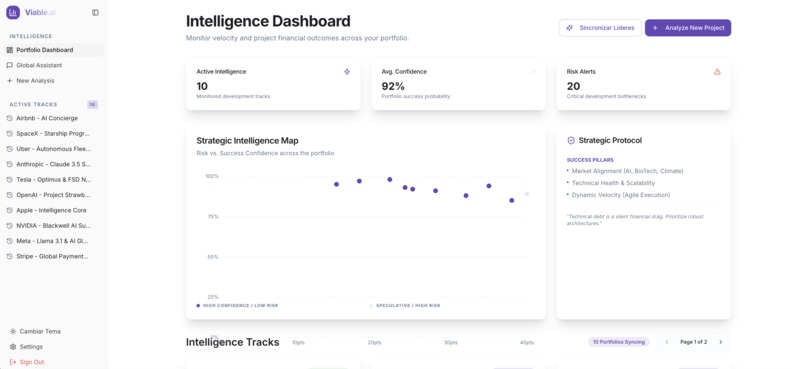
Viable AI
-
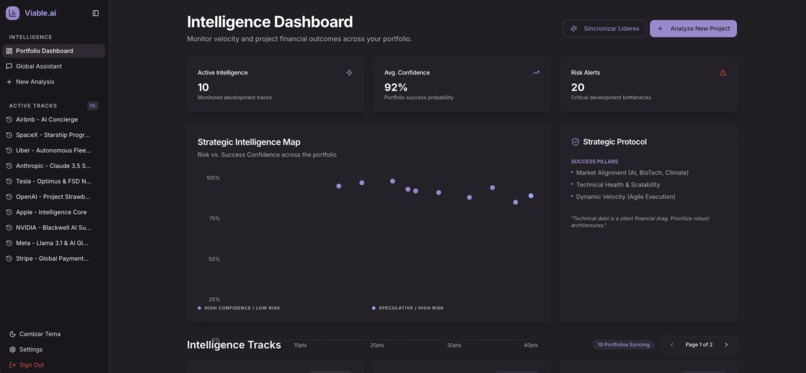
Viable AI
Inspiration
In the world of venture capital and financial investing, by the time news breaks, the opportunity has already passed. Financial reports look to the past, but operational or "alternative" data (such as developer activity, code commits, or web traffic) predict the future. We were inspired by the hackathon challenge of "connecting disconnected systems." We wanted to build a bridge between codebase (GitHub) and capital (financial markets) to find promising startups before they make headlines. We wanted to move away from the classic "call center" agent paradigm, simply answering questions in a chat, and create a proactive analyst who looks for "alpha" (outperforming the market) while we sleep.
What it does
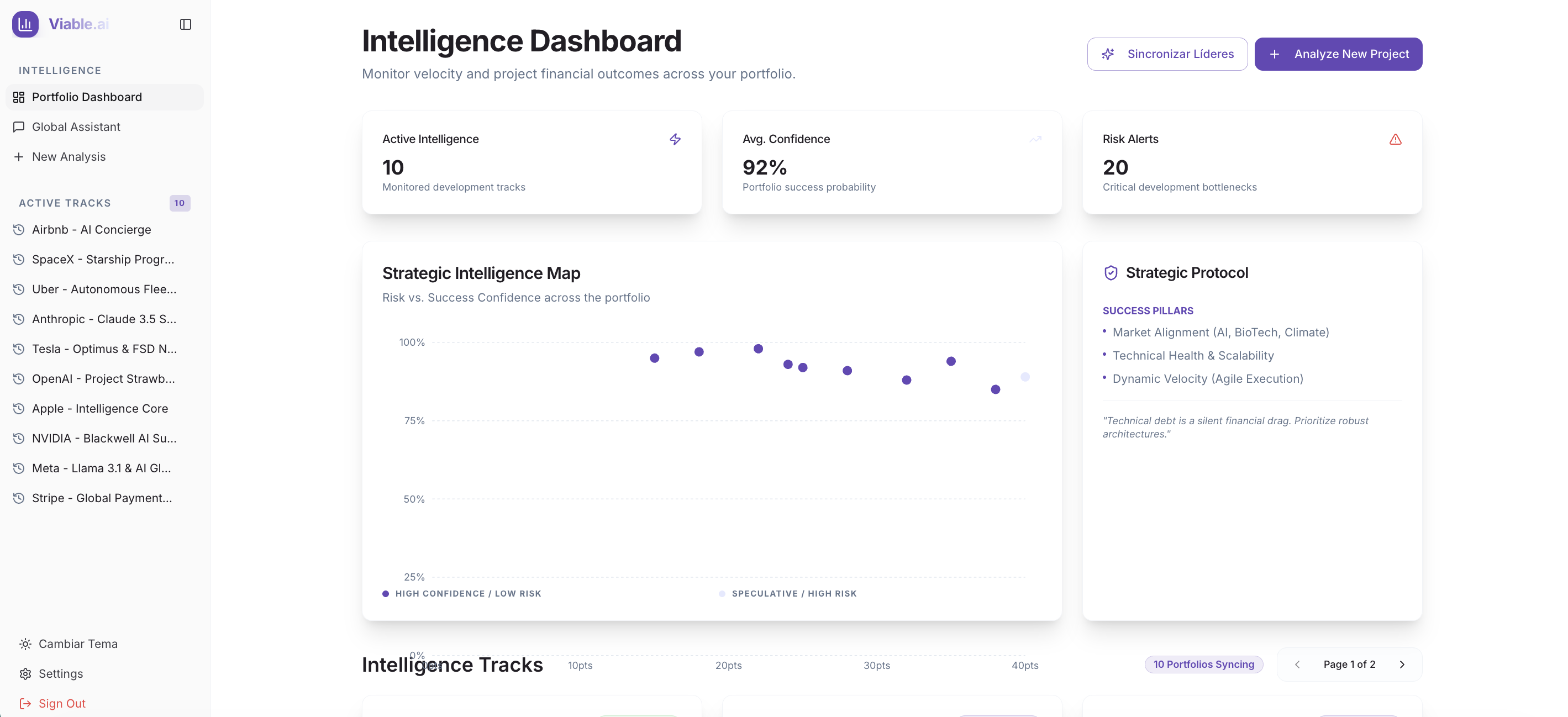
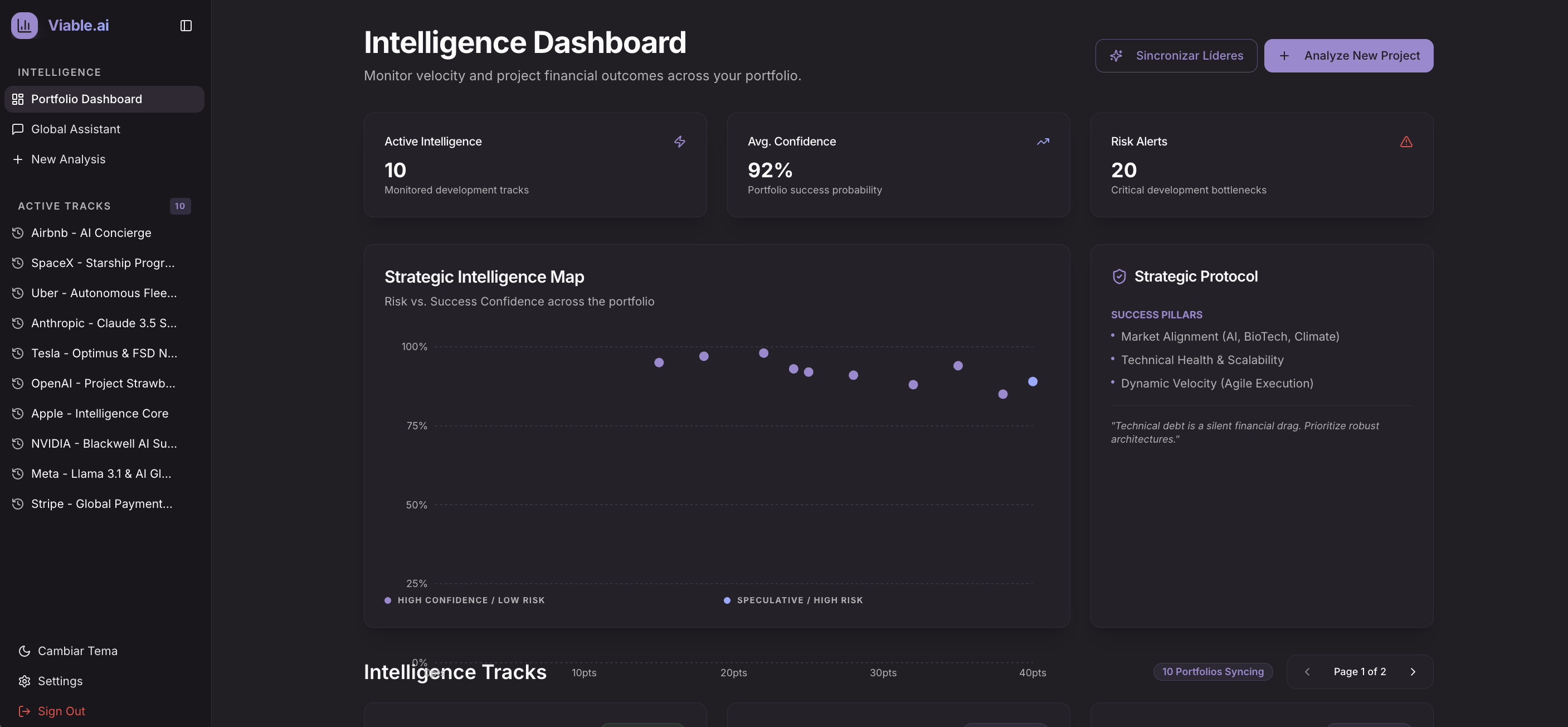
Tracker AI is a specialized Investment Intelligence agent. Instead of searching for financial news, it analyzes raw software development data to calculate "Development Velocity."
The agent evaluates thousands of repositories and cross-references technical activity spikes with market valuation databases. If it detects a startup with explosive code growth but no media coverage or high valuation, the agent triggers a workflow to alert the investment team in Slack.
How we built it
The core architecture relies on Elastic Agent Builder to orchestrate the LLM's reasoning and connect to the data. We built it on three pillars:
- Hybrid Ingestion and Search: We indexed simulated GitHub telemetry data and financial metrics.
- Tools with ES|QL (The Logic): We created a custom tool powered by ES|QL. We used STATS to calculate this aggregation, and then a LOOKUP JOIN to cross-reference technical projects with their financial valuations in a single, efficient query.
- Automation with Elastic Workflows: To make the agent proactive, we integrated Elastic Workflows. We set up a scheduled trigger that invokes the Track AI analytics tool every morning and uses an HTTP integration to send alerts.
Challenges we ran into
The biggest challenge was controlling the LLM's tendency to overthink things when performing analytical calculations. Language models are terrible at handling complex math on large datasets. We solved this by implementing "guardrails" using parameters in our ES|QL tools. This forced the LLM to pass the user-requested variables to our rigid, proven query structure, ensuring that the financial analysis was 100% accurate.
Another challenge was managing the asynchronous nature of the actions, for which Elastic Workflows were vital in separating query execution from external notification.
Accomplishments that we're proud of
We are very proud to have created an agent that takes reliable action. AlphaScout AI is not just a search tool; it is an automated and verifiable workflow that demonstrates measurable impact (reducing hours of startup forensic investigation to milliseconds of processing).
What we learned
We learned that the true power of agents lies not in the size of the foundational model, but in the quality of the tools they have access to. We also discovered ES|QL's immense capacity to process multiple data joins without needing to denormalize our entire database beforehand.
What's next for Tracker AI
Our next step is to move the agent completely out of the browser. We plan to configure Elastic's Model Context Protocol (MCP) server to integrate AlphaScout AI directly into Claude Desktop or IDE environments. Additionally, we want to integrate more alternative data streams, such as Glassdoor customer satisfaction ratings or SEC records.
Built With
- agent-builder
- apis
- built-with-what-languages
- cloud-services
- databases
- elastic-workflows
- elasticsearch
- esql
- frameworks
- github
- kibana
- platforms
- slack-api

Log in or sign up for Devpost to join the conversation.