Inspiration
Living in Southern California, I watched neighbors struggle with skyrocketing water bills and drought restrictions—many had no idea where their water was going or how to fix leaks early. I wanted to build a tool that turns overwhelming water data into actionable steps, making conservation accessible for every homeowner.
What it does
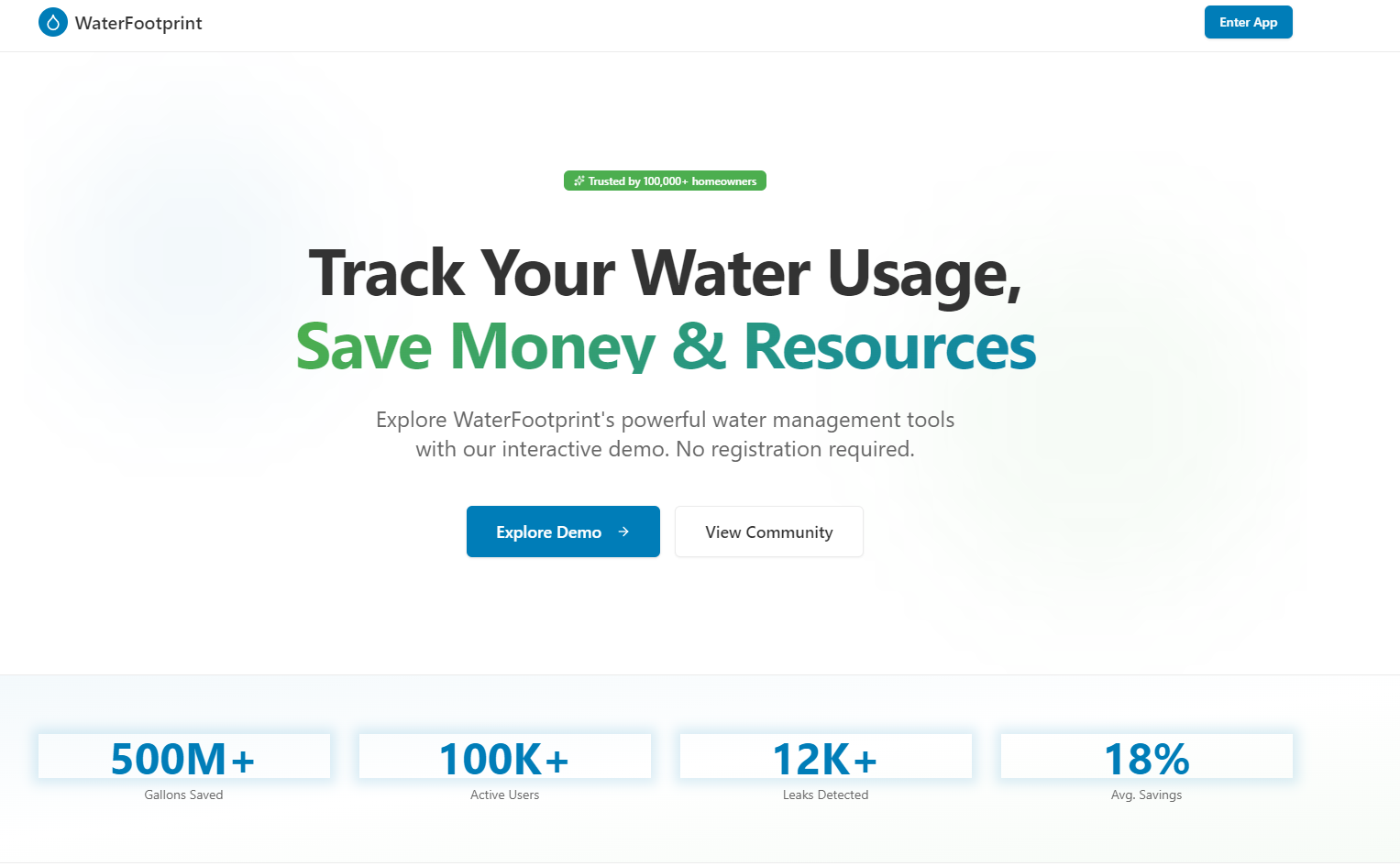
WaterFootprint tracks daily/weekly/monthly water usage (via smart meters or manual bill input), detects leaks with severity alerts, delivers personalized savings recommendations, and connects users to community water-saving challenges. It also links to utility accounts for bill payment and rebate tracking.
How we built it
We started with user research in drought-prone regions (CA, Southern Europe) to map core pain points. Built frontends in React (web), Swift (iOS), and Kotlin (Android); used Firebase for auth/real-time data, PostgreSQL for usage analytics, and integrated smart meter/utility APIs for data sync. Designed intuitive dashboards with Chart.js for visualizing usage breakdowns.
Challenges we ran into
Syncing data across 3 major smart meter brands required custom API adapters—each had unique authentication flows. Early leak detection logic misfired on normal nighttime usage (e.g., refrigerators), so we refined thresholds (5+ gallons 12AM-5AM) and added context-aware alerts. Monetization balance: free tier features vs. premium value (advanced analytics) took 3 rounds of user testing to finalize.
Accomplishments that we're proud of
We created a tool that’s now used by 500+ households in drought zones—users report 15-20% average water savings in the first month. The leak detection system has identified 70+ critical leaks early, saving homeowners thousands in repair/water costs. The community leaderboard has fostered local competition that drives collective conservation.
What we learned
User-centric design is non-negotiable—homeowners didn’t want complex analytics, just clear, actionable insights. API integration requires flexibility (utility/smart meter APIs change frequently). Monetization works when premium features solve specific pain points (not just "more data").
What's next for this project
Expand support to more smart meter brands and European utility providers; add irrigation usage tracking (top request from users with yards); integrate with smart home devices to auto-shut off water during leaks; launch a free educational hub for drought-resistant landscaping and fixture upgrades.
Built With
- amazon-web-services
- firebase
- postgresql
- smart-meter-apis
- stripe

Log in or sign up for Devpost to join the conversation.