-
-
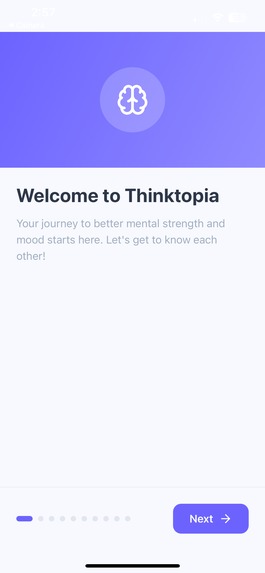
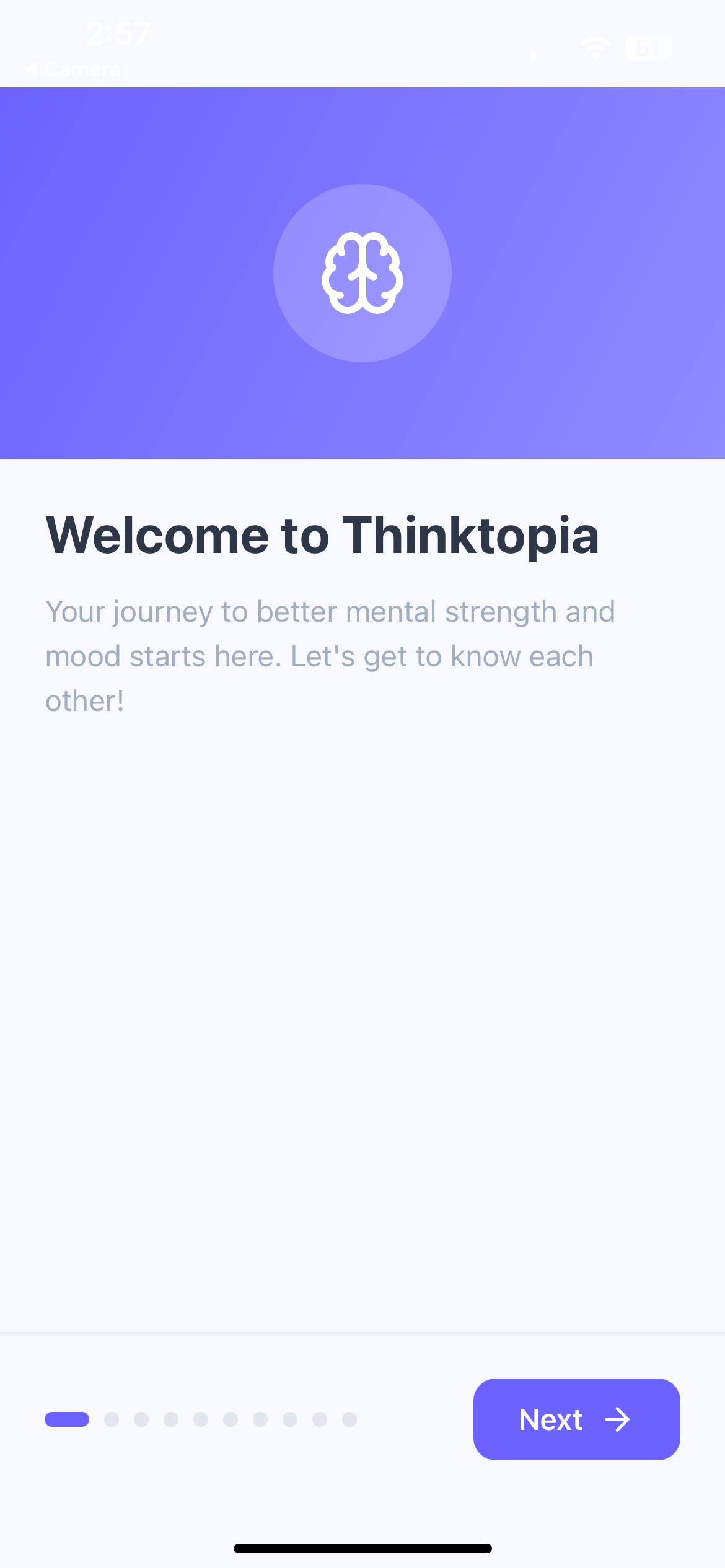
Landing / start page
-
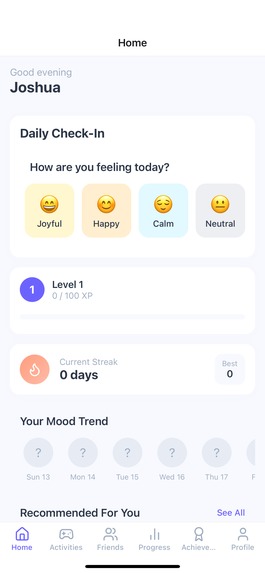
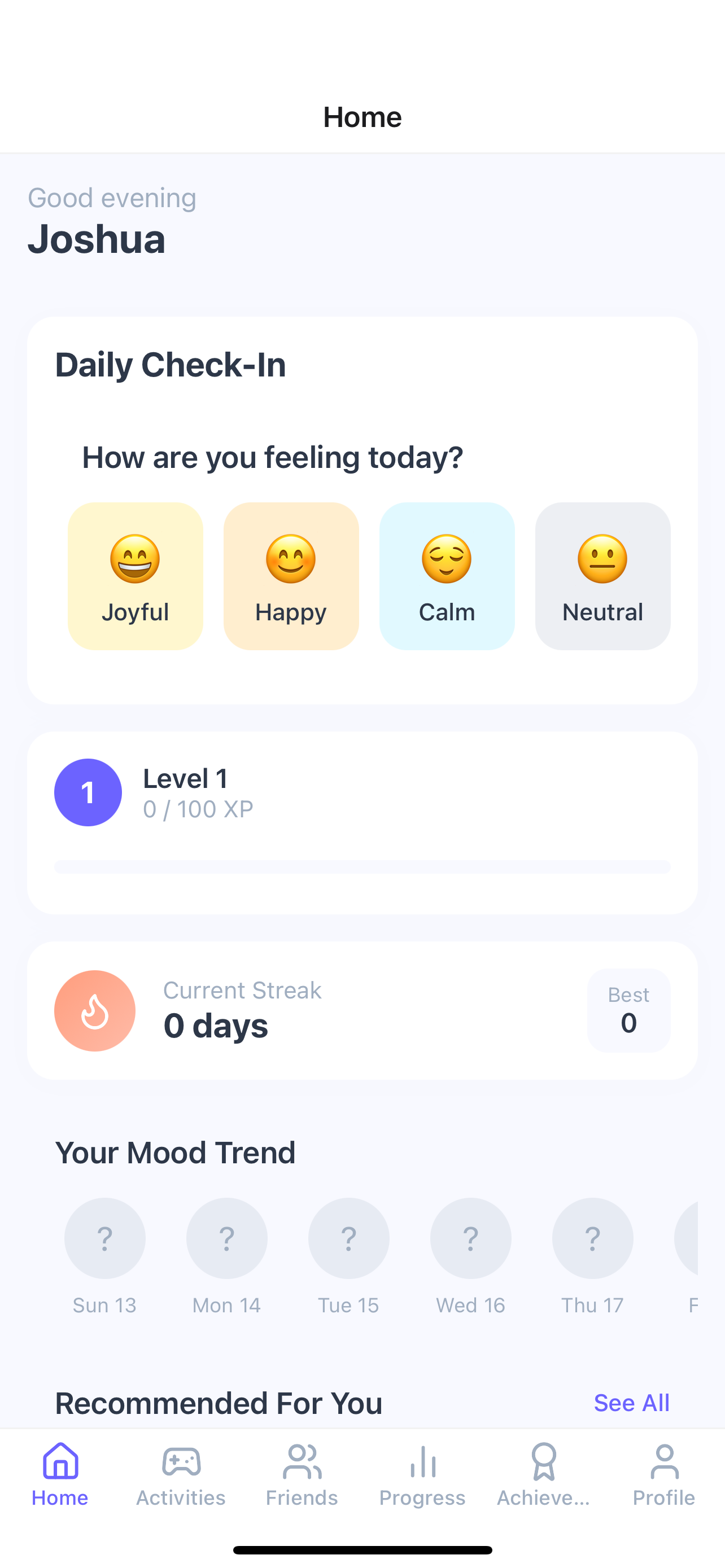
Homepage
-
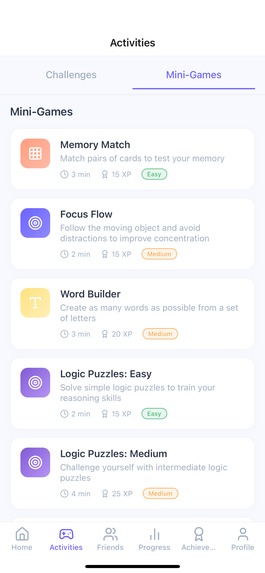
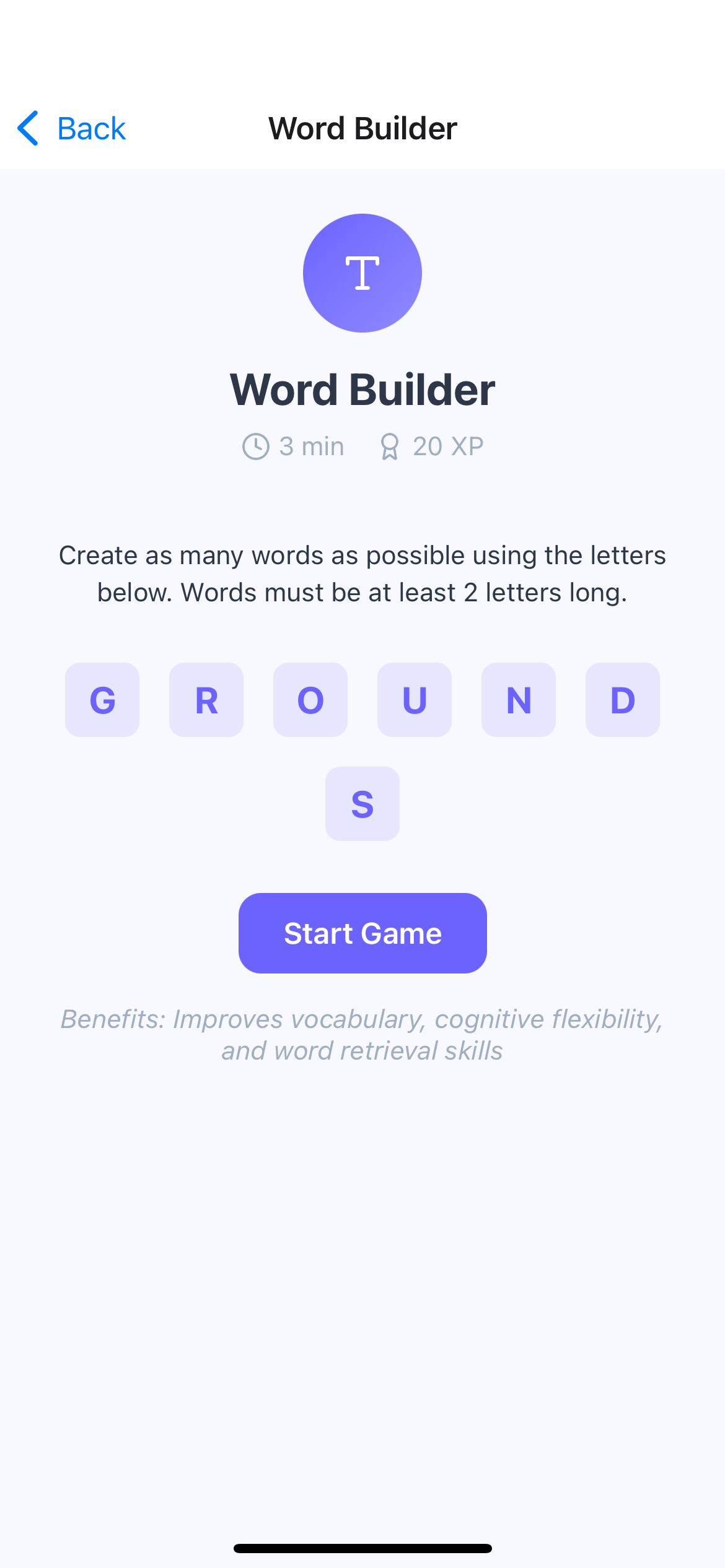
Mini-game page
-
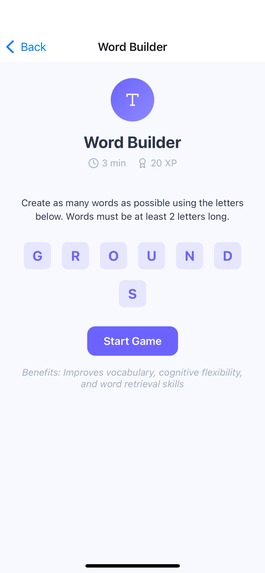
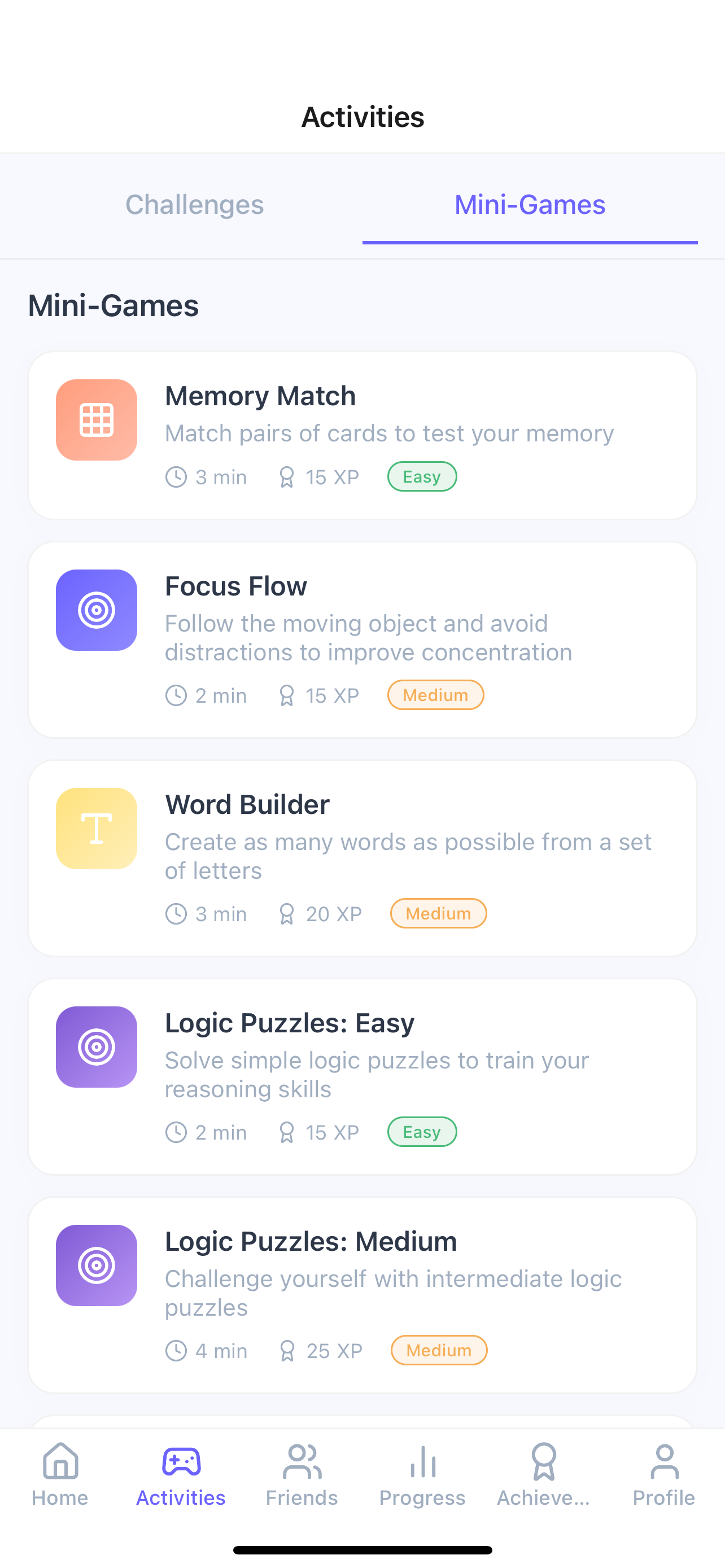
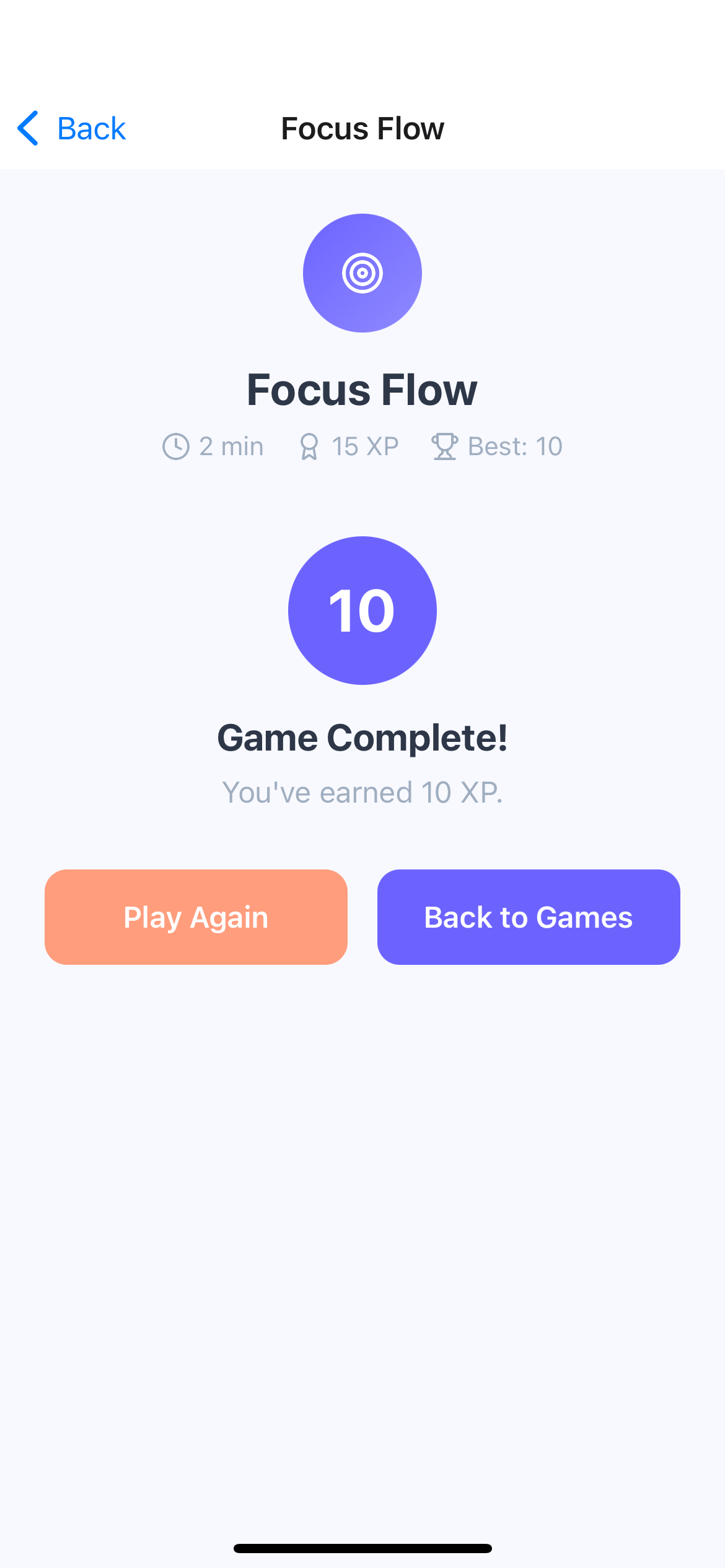
Play fun games!
-
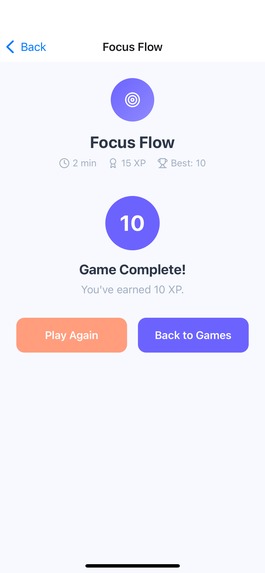
Level up!
-
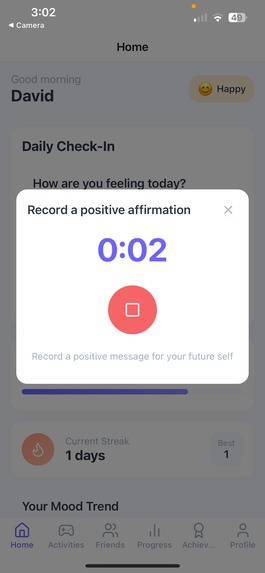
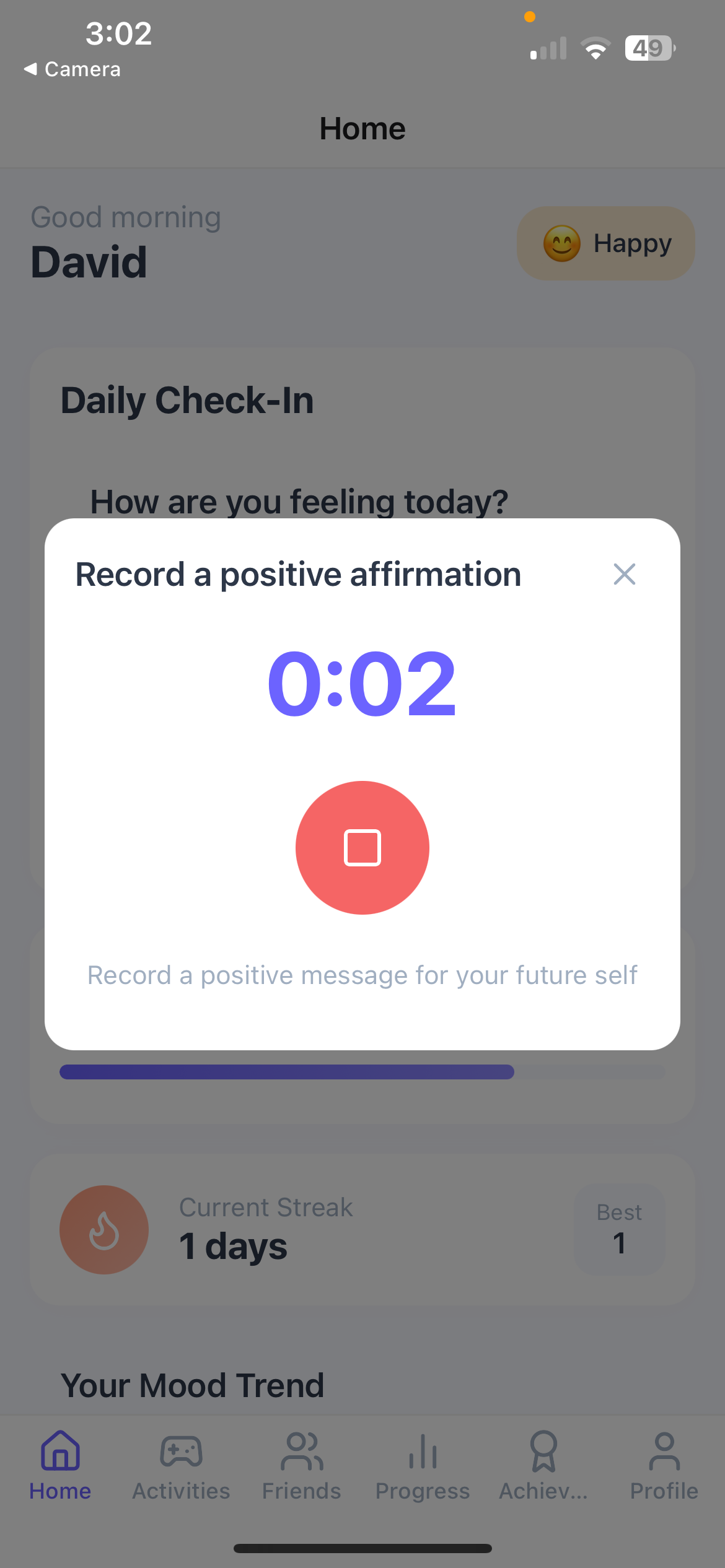
Record positive affirmations!
-
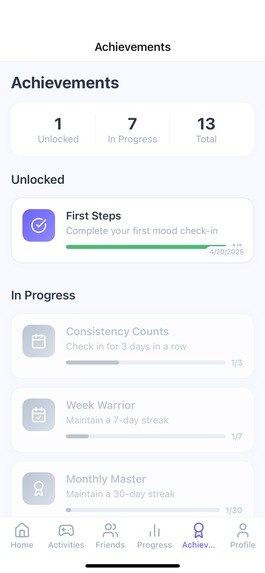
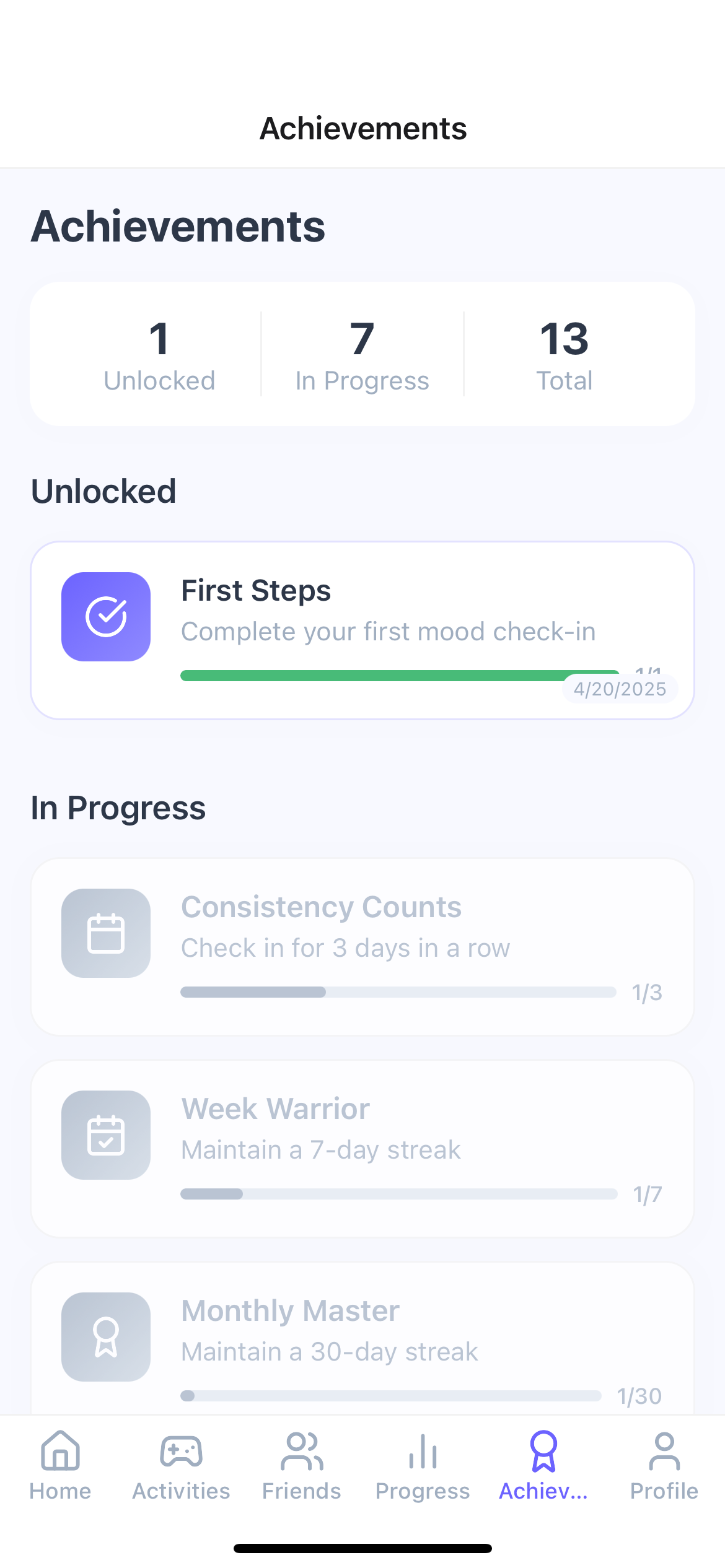
Earn badges!
-
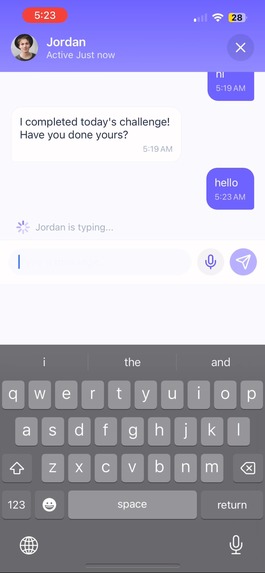
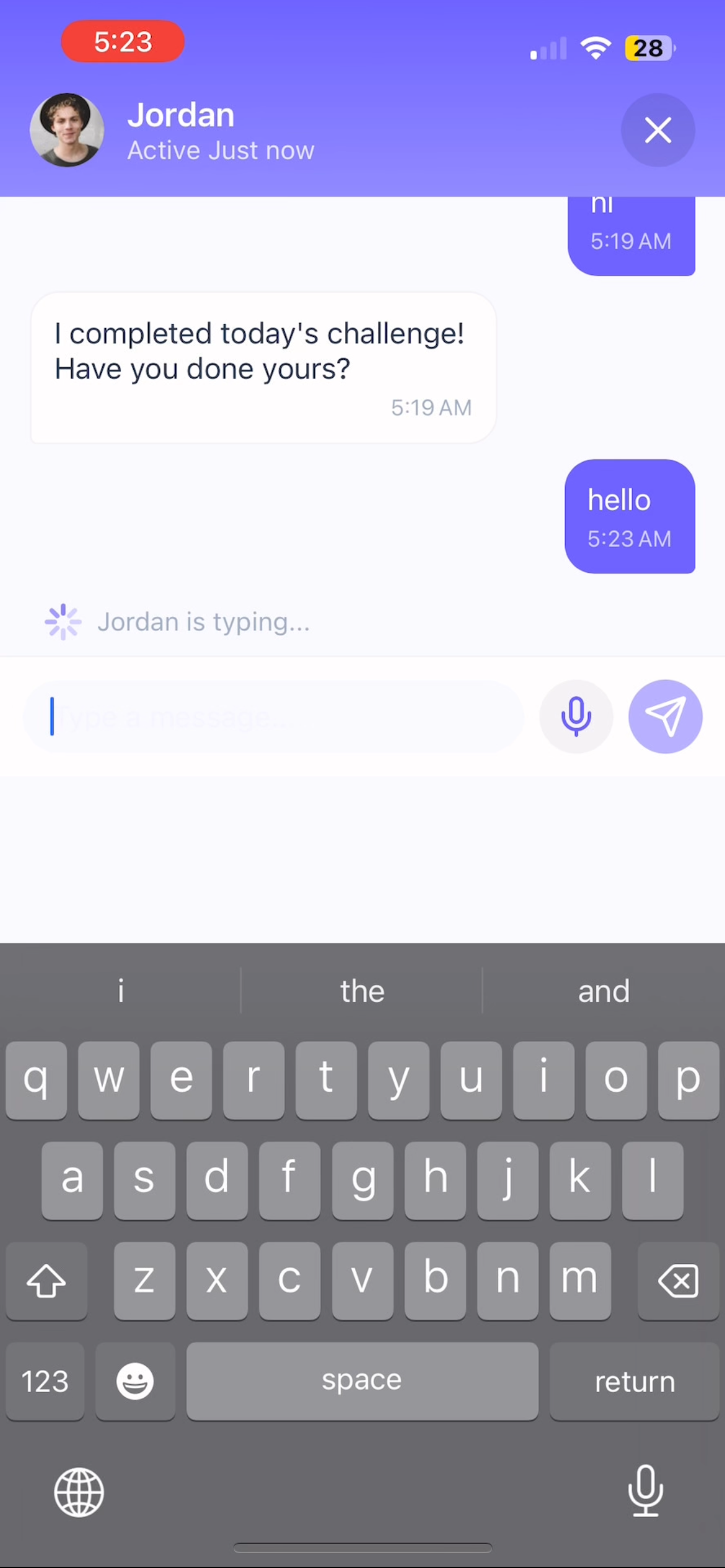
Chat with friends!
Inspiration
We wanted to create a therapeutic yet fun mobile app that is suited for users of all ages and interests. We strived to come up with a formula that creates a user experience that is universally fun, empowering, and accessible for all types of players.
What it does
The app is like its own little world, with social features and mini-games that will keep the user mentally productive. Within the daily mood checker we integrated AI in order to improve the journaling aspect of the app. Instead of taking a random prompt from a question bank, the app uses an LLM ai model that is given a prompt with the users data, current mood selected, and is given instructions to try to create a journal prompt that will benefit the user the most based on their current mood. The app will ask the user about their mood when they do the daily check in. If they have a more positive emotion, they have the option to record an affirming audio message for the future self if that future self feels down. Vise versa when they feel sad the app will pop up with a previous affirmation message to motivate the user! Friends can also send each other voice messages for motivation! The app also offers interactive guides on therapeutic physical activities such as breathing exercises and stretches. Users can also play brain-teasing mini-games such as word combination challenges, flipping card matching, gratitude garden, and logic puzzles. For the social features we have a friend system, and a recommended friend list. The user can add or search for friends. Friends are recommended if the user and the friend have at least 1 shared interest. Users can message their friends, adding a sense of community to this little world in your pocket!
How we built it
We spent the majority of the time planning , drawing the app out physically , we went through dozens of versions till we settled with what we have right now. Then it was just a matter of programming. Our thought process isn't to think "okay, we have this tech lets make it have a use". Instead we think of a need or want, something that needs to be solved, then think about how can we use the tech do that for the user. Using that approach we were able to come up with our vision and build it. We used typescript, react native, and node.js, to build our app . We found utilizing typescript on VS Code to be efficient. By using typescript we were able to ensure cross platform for android and iOS!
Challenges we ran into
The biggest challenges we ran into was coming up with the games and building them. Our intentions were to create games that were widely, almost universally, accepted as fun and playable for all types of players.
Accomplishments that we're proud of
We are proud of the voice affirmations feature. We believe the ability to listen to your past self reaffirm and motivate you when you are feeling down is a feature that no one has come up with to our knowledge, so we are proud of building this feature. If you want to check out the app for yourself , open up this link on your mobile device! (Make sure to download the expo go app) : link
What we learned
We learned many lessons from previous hackathons. From this one we learned how good planning ahead can be. We finished pretty early and actually got some decent sleep! Normally we are coding to the last minute trying to fix bugs due to poor planning. Spending the first few hours just drawing everything out and really imagining the pseudocode really helped with delaying roadblocks down the line.
What's next for ThinkTopia
We will add more games based on user feedback. Co op games to do with friends, goal setting, and more!
Built With
- ai
- expo.io
- git
- llm
- moblie
- node.js
- react-native
- typescript


Log in or sign up for Devpost to join the conversation.