-
-
traceslr
-
arquitectura
-
architecture
-
gemini
-
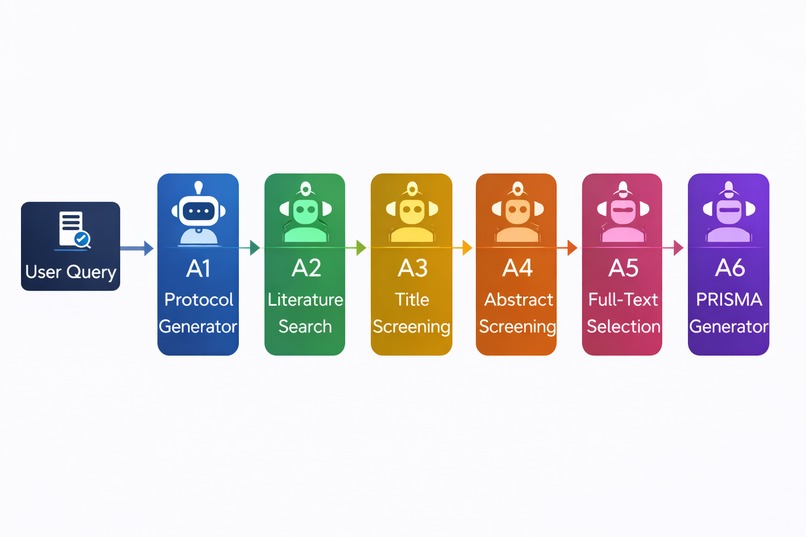
agents
-
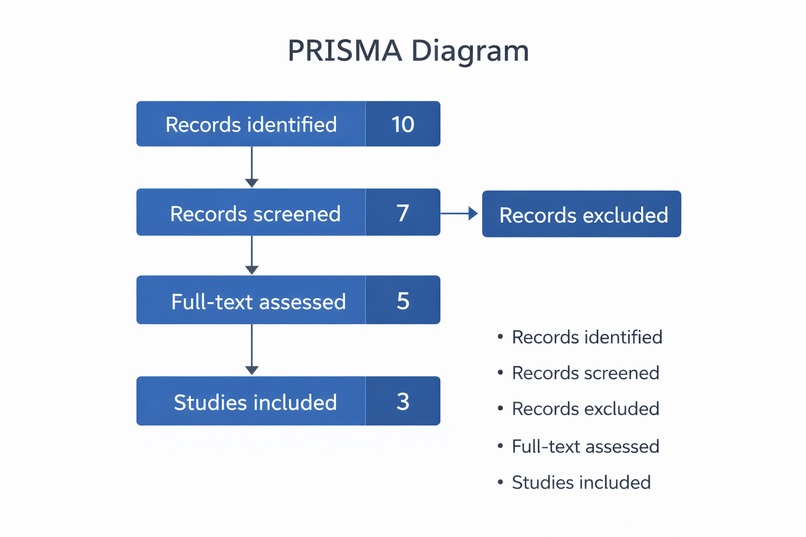
prisma
-
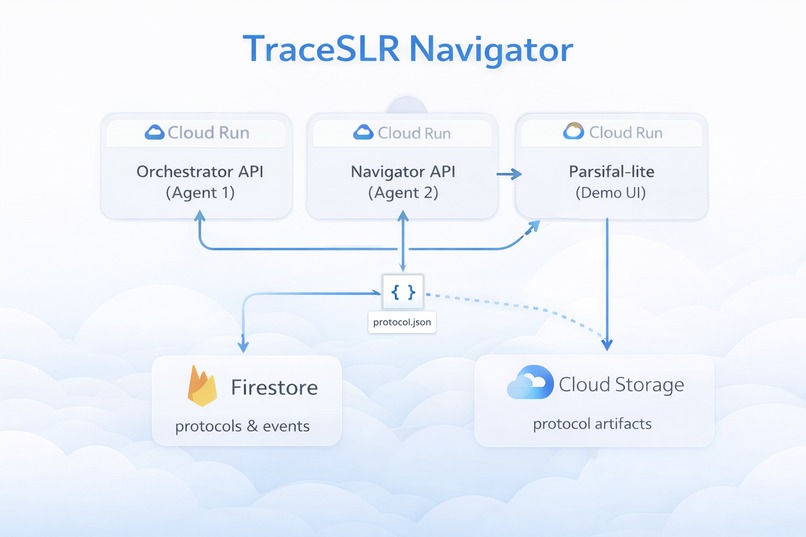
cloud
-
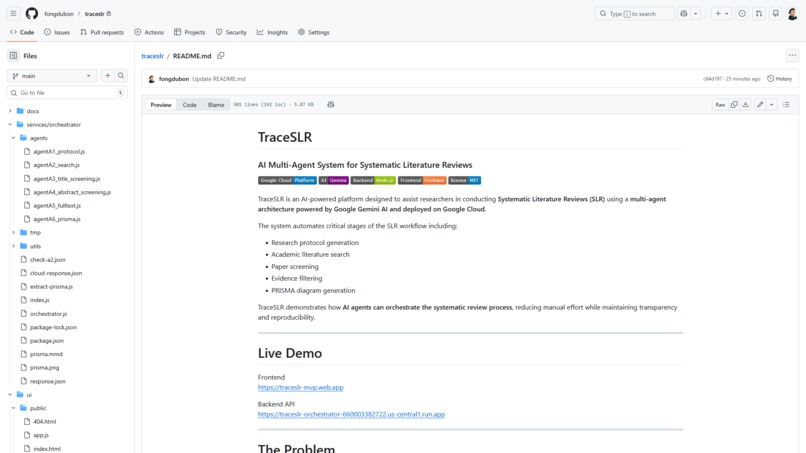
project
-
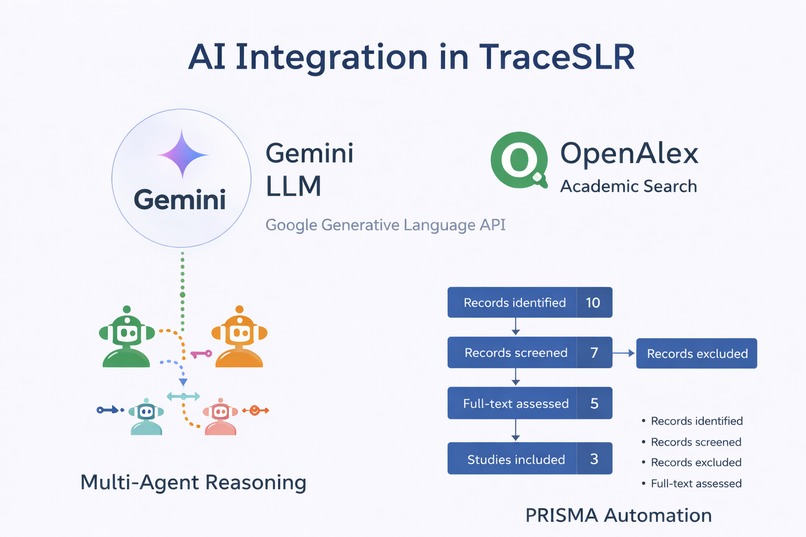
Integración IA


Inspiration
Systematic Literature Reviews (SLR) are essential for research, but the PRISMA workflow is still time-consuming and repetitive: defining the protocol, crafting search strings, documenting inclusion/exclusion decisions, and configuring review tools. While working on my doctoral research, I repeatedly faced the same friction—manual setup, copy-paste across platforms, and difficulty keeping a complete, auditable trail as the scope evolves. TraceSLR Navigator was inspired by the need for a faster, traceable, and reproducible way to start and manage SLR workflows.
What it does
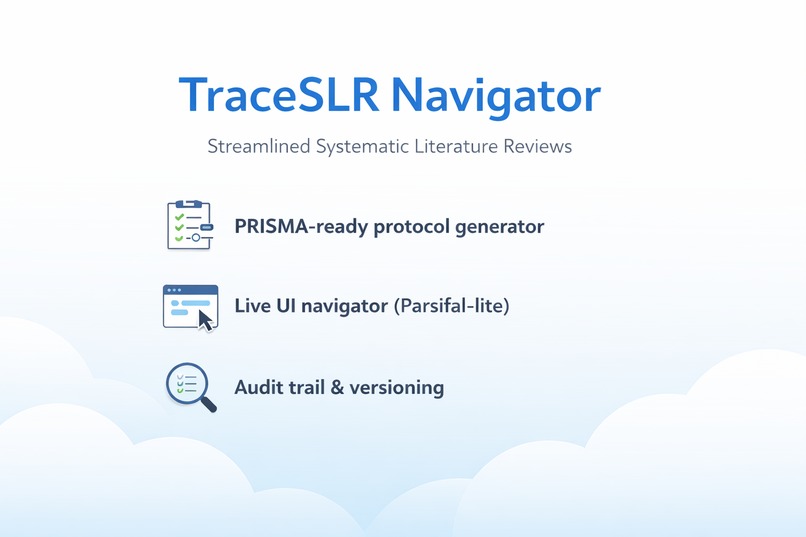
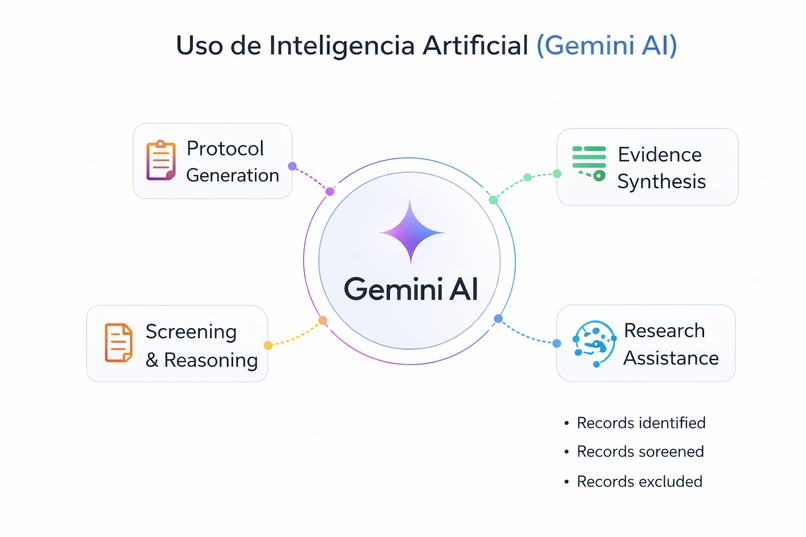
TraceSLR Navigator is a multi-agent research assistant for SLRs that: Builds PRISMA-ready protocols from a research problem: objectives, PICOC, research questions, keywords/synonyms, inclusion/exclusion criteria, quality checklist, and extraction fields. Auto-fills review setup workflows through a live UI navigator in a controlled demo environment (Parsifal-lite) to show end-to-end “agent + UI action” behavior. Keeps everything traceable via an audit trail: protocol versions, changes, and UI navigation steps.
How we built it
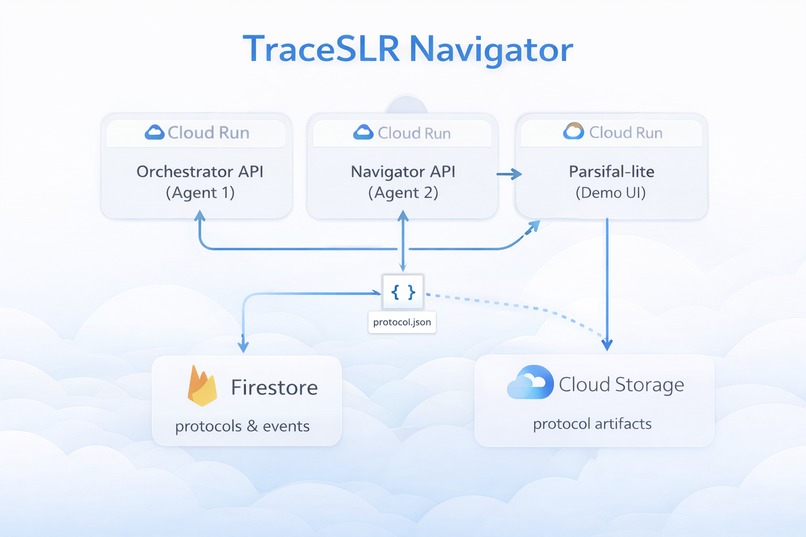
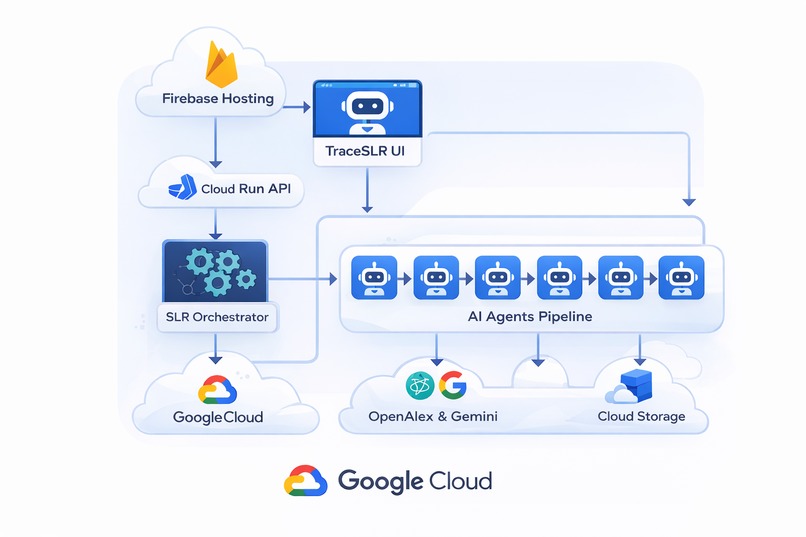
We implemented a modular MVP on Google Cloud: Orchestrator API (Agent 1) on Cloud Run to generate, validate, and version the SLR protocol and export artifacts (protocol.json, protocol.md). Navigator API (Agent 2) on Cloud Run to execute step-by-step autofill into the demo UI and log each action. Parsifal-lite (demo review setup web app) on Cloud Run as a stable target for UI-driven automation. Firestore for protocol/version storage and the audit timeline (events). Cloud Storage to store exported artifacts and bundles. A schema-first design (protocol.json) connects agents reliably and keeps outputs reproducible.
Challenges we ran into
UI automation fragility: real academic platforms can change frequently or include anti-bot measures. We mitigated this by building Parsifal-lite for a stable, demoable workflow while keeping real connectors as future work. Maintaining methodological coherence: ensuring PICOC ↔ research questions ↔ keywords ↔ query strings stay consistent required validation rules and versioning, not just one-shot generation. Traceability by design: deciding what to log (and how) so the system can answer “what changed, when, and why?” without clutter.
Accomplishments that we're proud of
A working end-to-end MVP: research problem → PRISMA-ready protocol → live UI autofill → audit timeline. Versioned protocols with clear change history (v1, v2, …) suitable for research workflows. A clean audit trail of both methodology decisions and UI actions, supporting transparency and reproducibility. A deployment-ready architecture on Cloud Run + Firestore + Cloud Storage.
What we learned
Live agents are most reliable when they operate on structured artifacts, not only free text. In research workflows, trust comes from traceability: explicit criteria, versioning, and logged actions. For hackathon demos, a controlled UI target can deliver a stronger “wow moment” than fragile real-world automation.
What's next for TraceSLR Navigator
Add real connectors (assisted or API-based) for Scopus, Web of Science, ACM, IEEE exports (BibTeX/CSV/RIS). Extend beyond protocol setup into screening phases: title/abstract triage, quality scoring, and evidence cards with citations. Integrate with real SLR platforms through import/export, and expand reporting to generate full PRISMA flow diagrams and tables automatically. Optional research visualization: build an ontology/knowledge graph and immersive exploration (e.g., graph tools and VR).
Built With
- artifact-registry-database:-firestore-(protocols
- artifactregistry
- audit-events)-storage:-cloud-storage-(protocol-artifacts:-json/markdown/zip)-api-spec-/-tooling:-openapi-3.0
- cloud-build
- cloudbuild
- cloudlogging
- cloudmonitoring
- cloudrun
- cloudstorage
- express.js
- firestore
- geminiapi
- google-cloud
- javascript
- navigator-api
- nextjs
- node.js
- openapi
- parsifal-lite)
- postman
- react
- react/next.js-(web-ui)-agents/ai:-google-gemini-api-(live/multimodal-ready)-via-google-genai-sdk-/-adk-(planned/used-for-protocol-generation)-cloud-platform:-google-cloud-platform-(gcp)-cloud-services:-cloud-run-(orchestrator-api
- swagger
- typescript
- versions


Log in or sign up for Devpost to join the conversation.