-
-

Landing Page 4/4
-
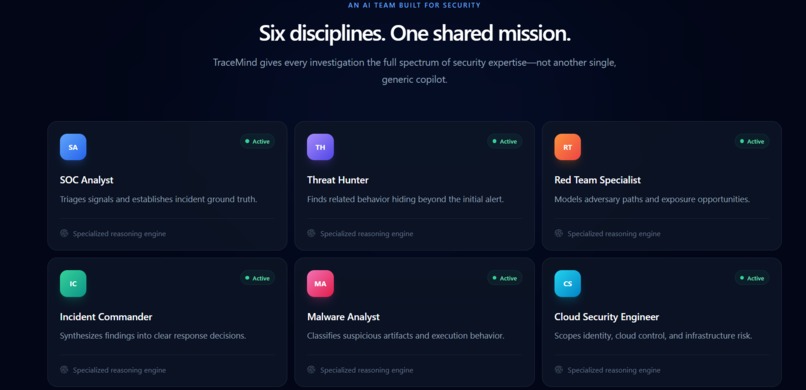
Landing Page 3/4
-
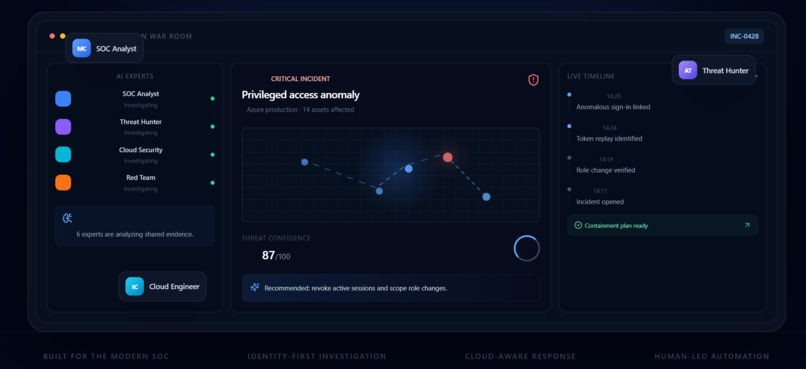
Landing Page 2/4
-
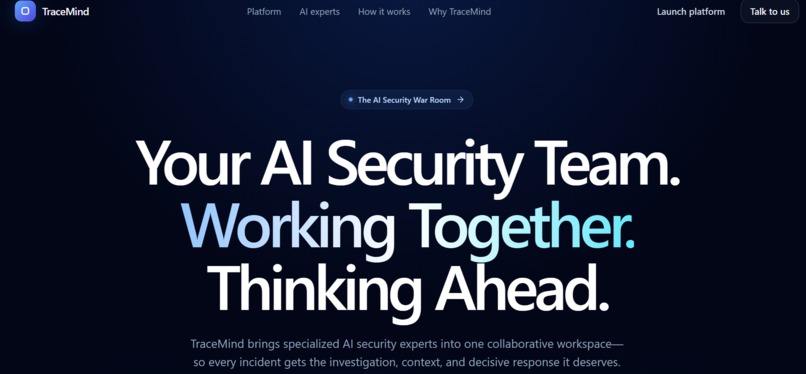
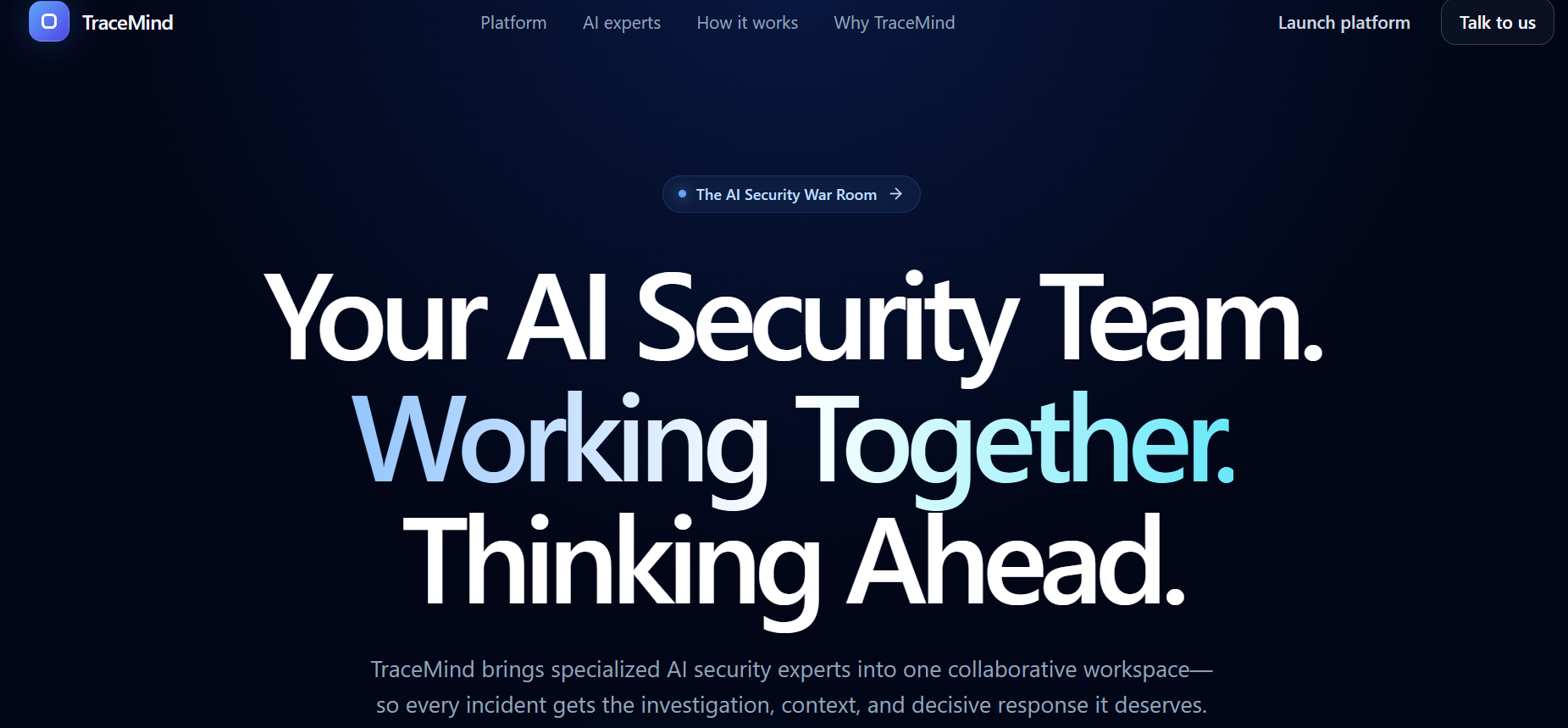
Landing Page 1/4
-
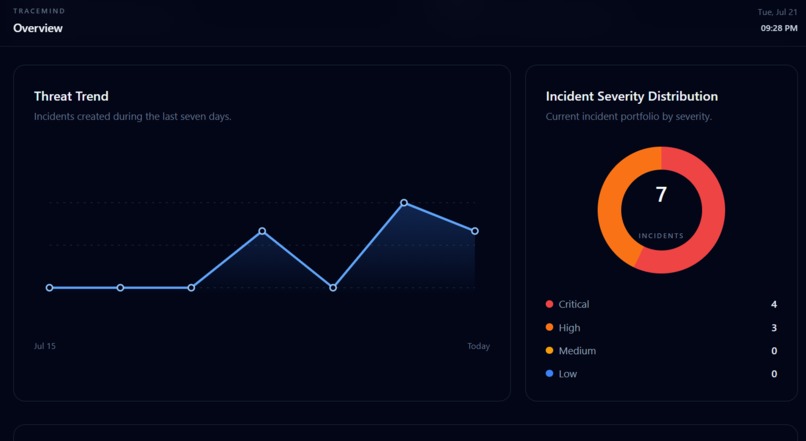
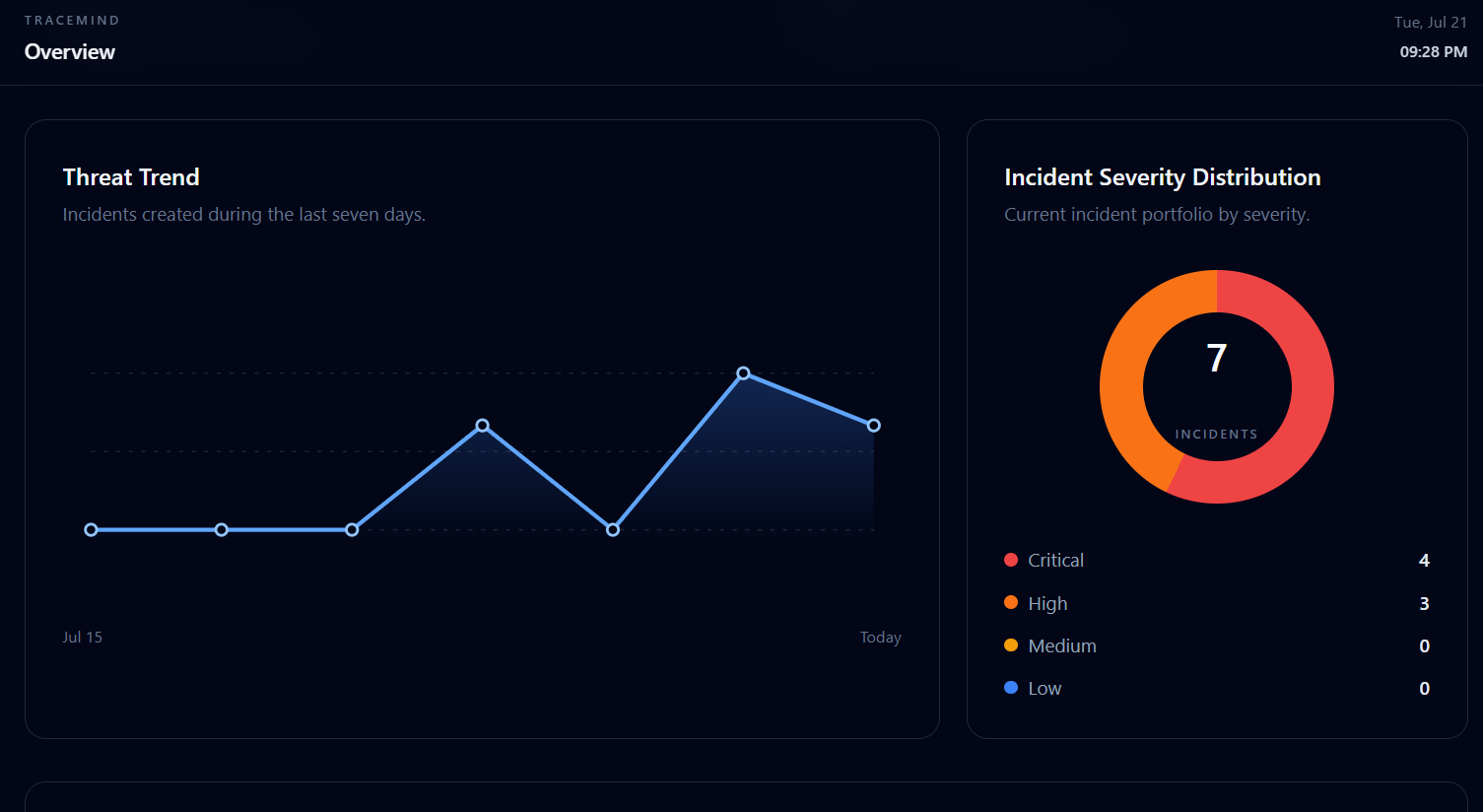
Graph of all Previous Incidents
-
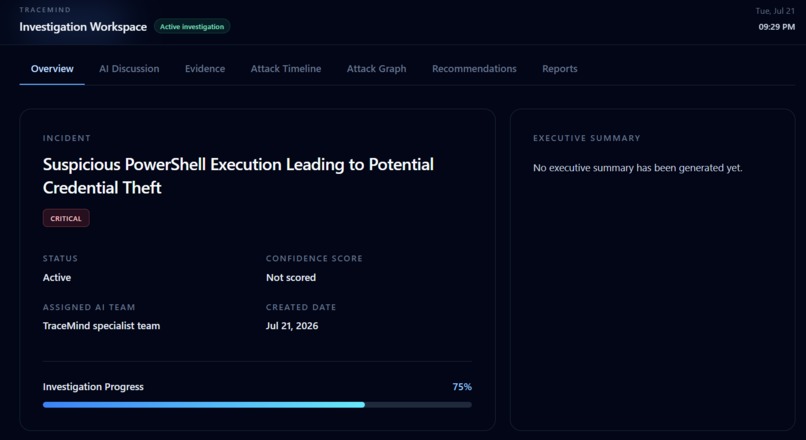
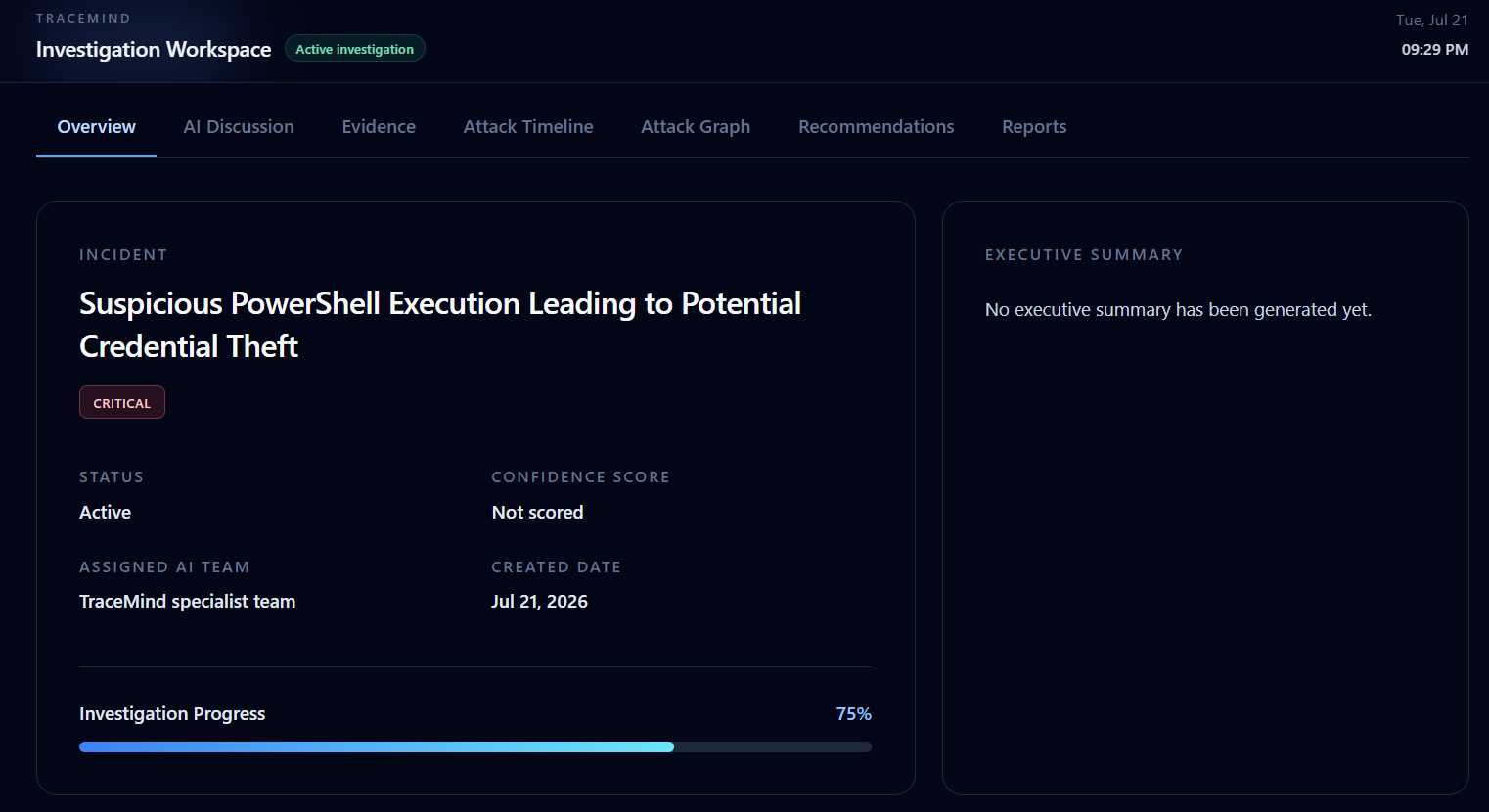
Investigation of an Incident
-
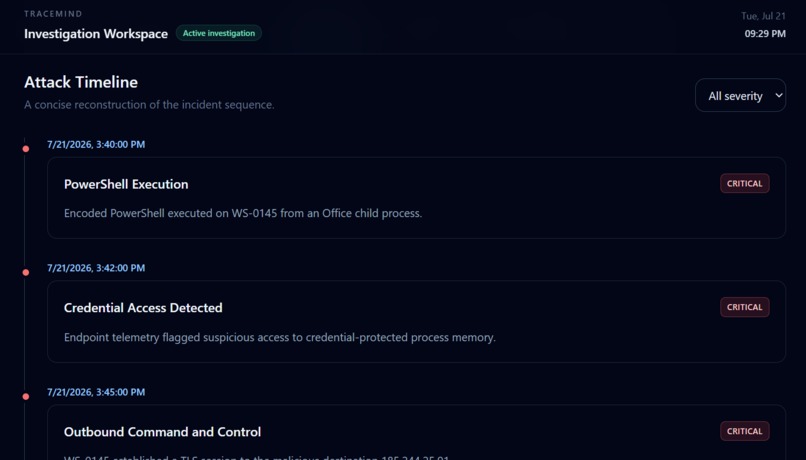
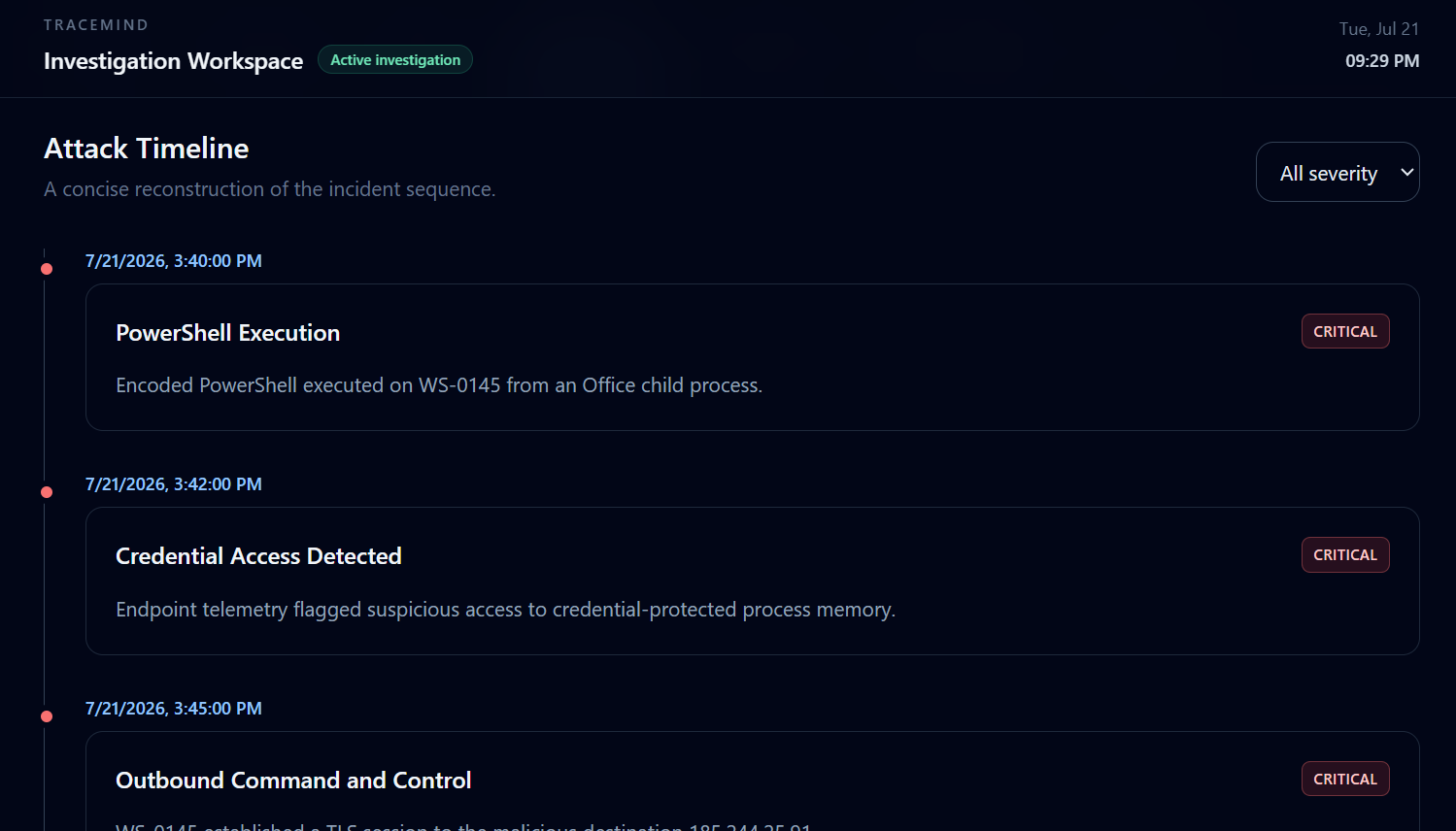
Attack timeline of incident
-
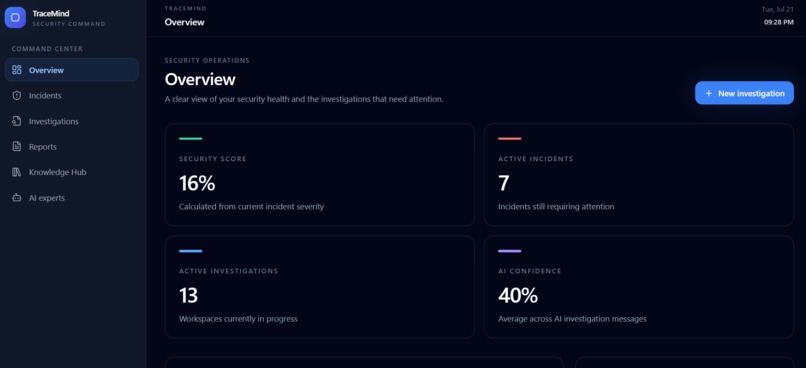
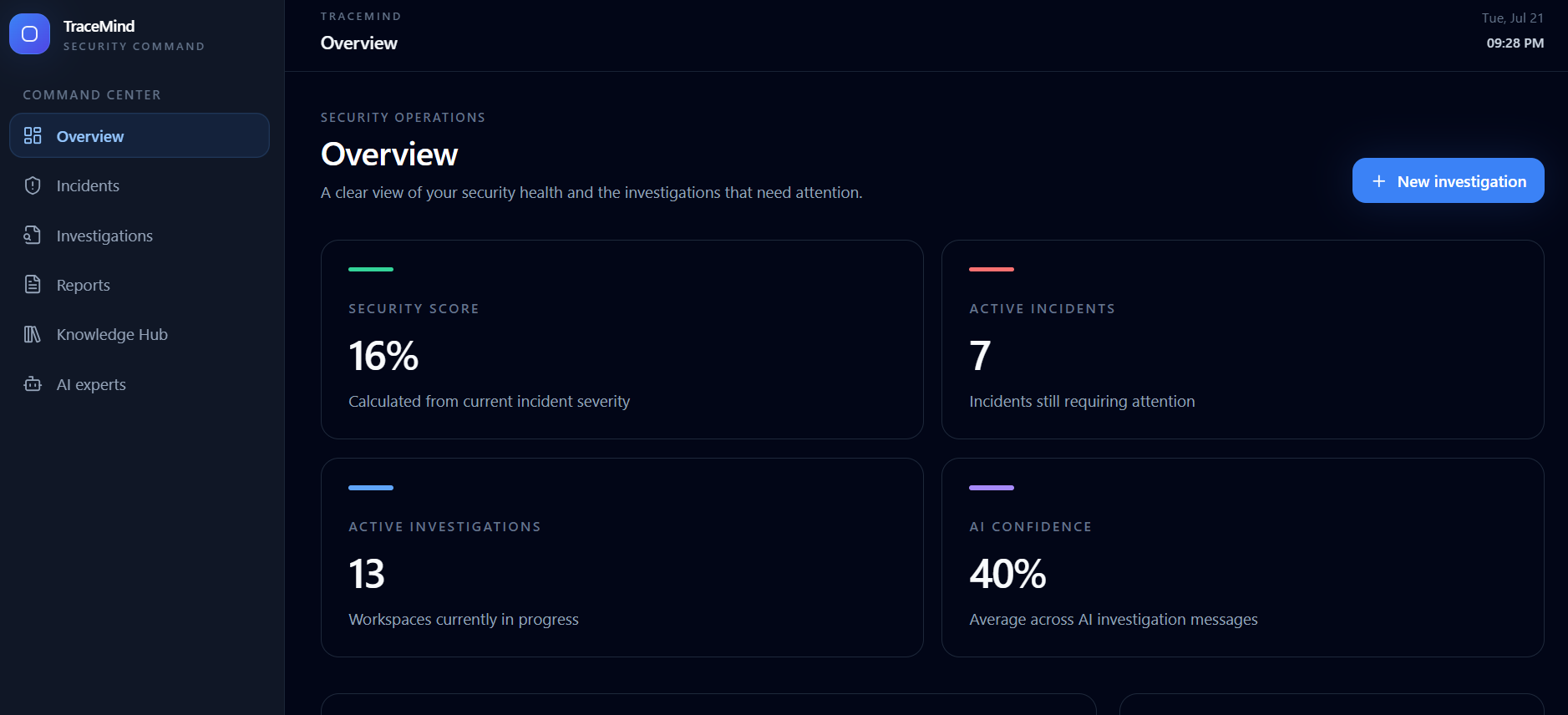
Overview/Dashboard of Tracemind
-
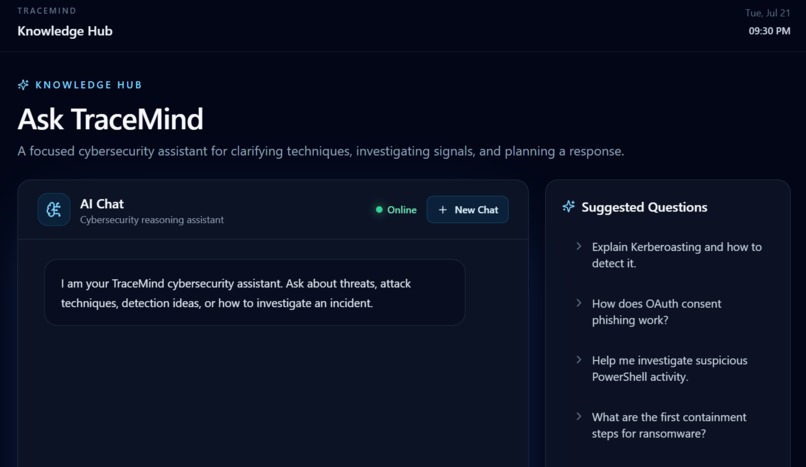
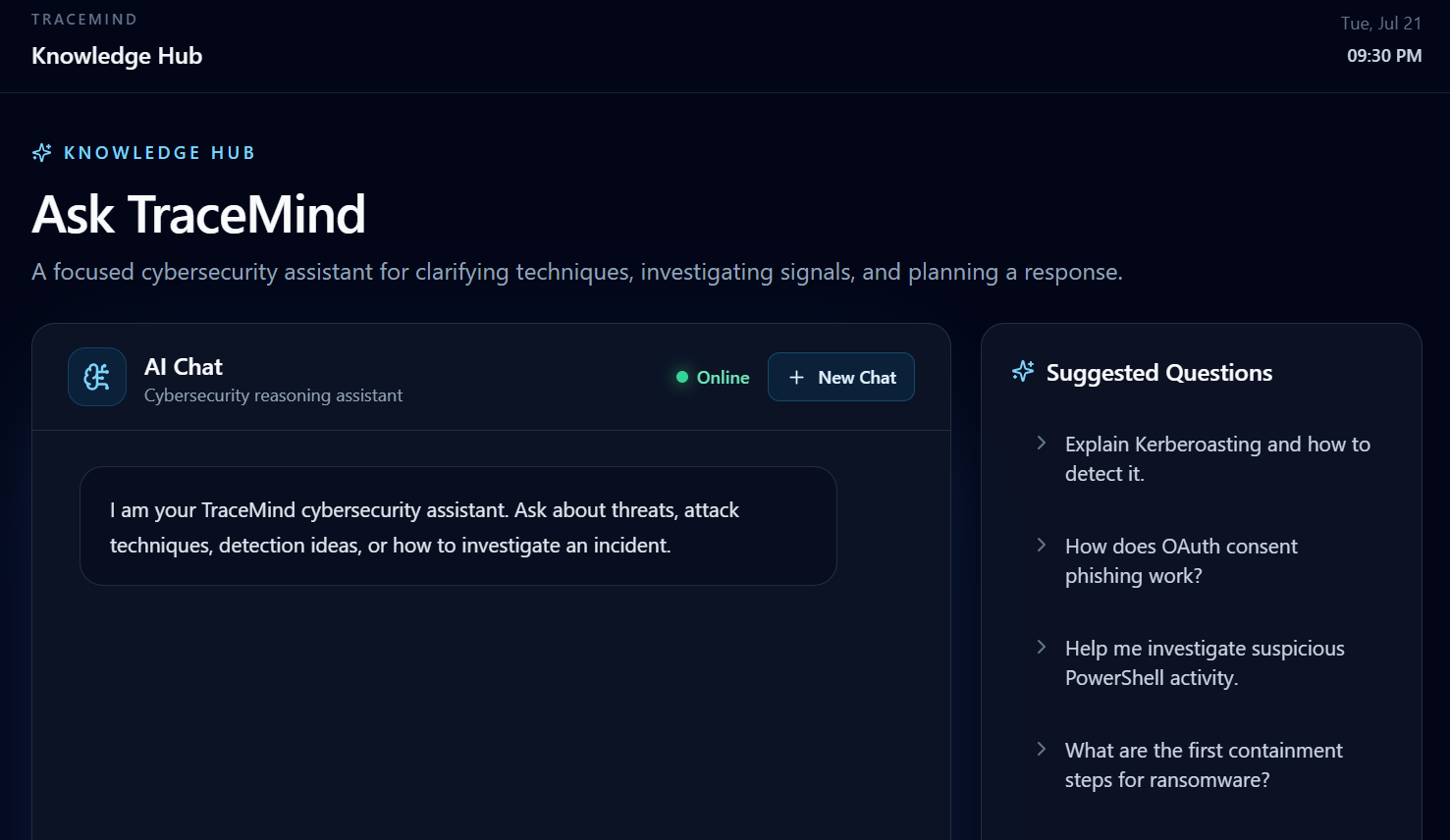
AI knowledge hub
-
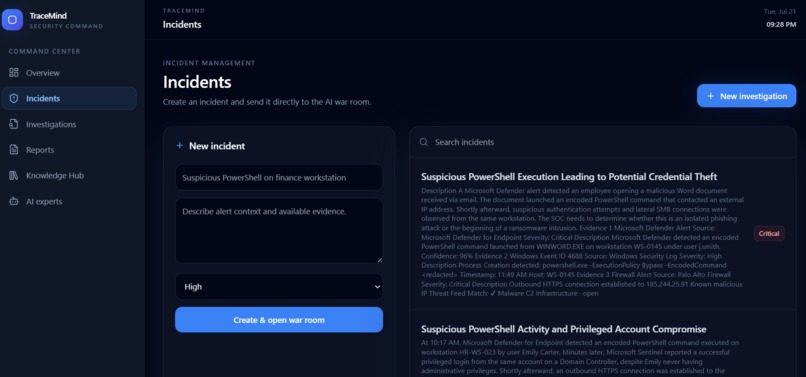
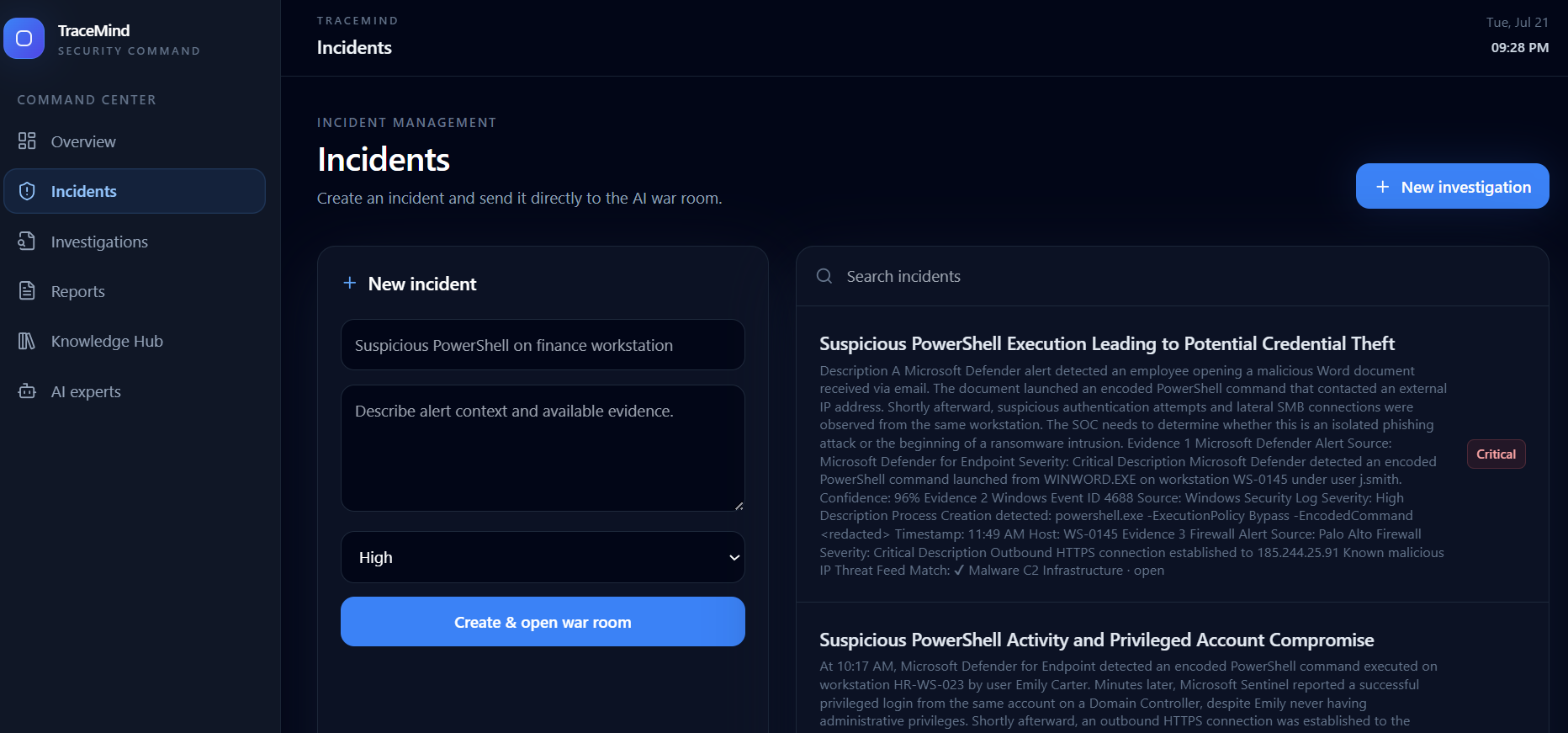
Creation of Incident
-
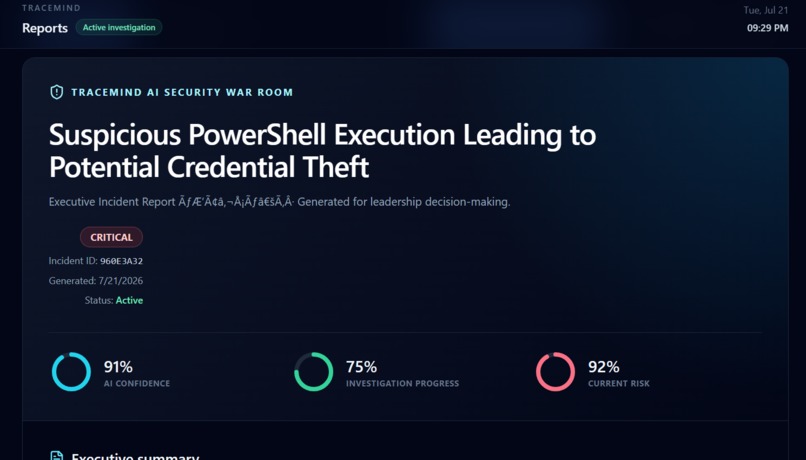
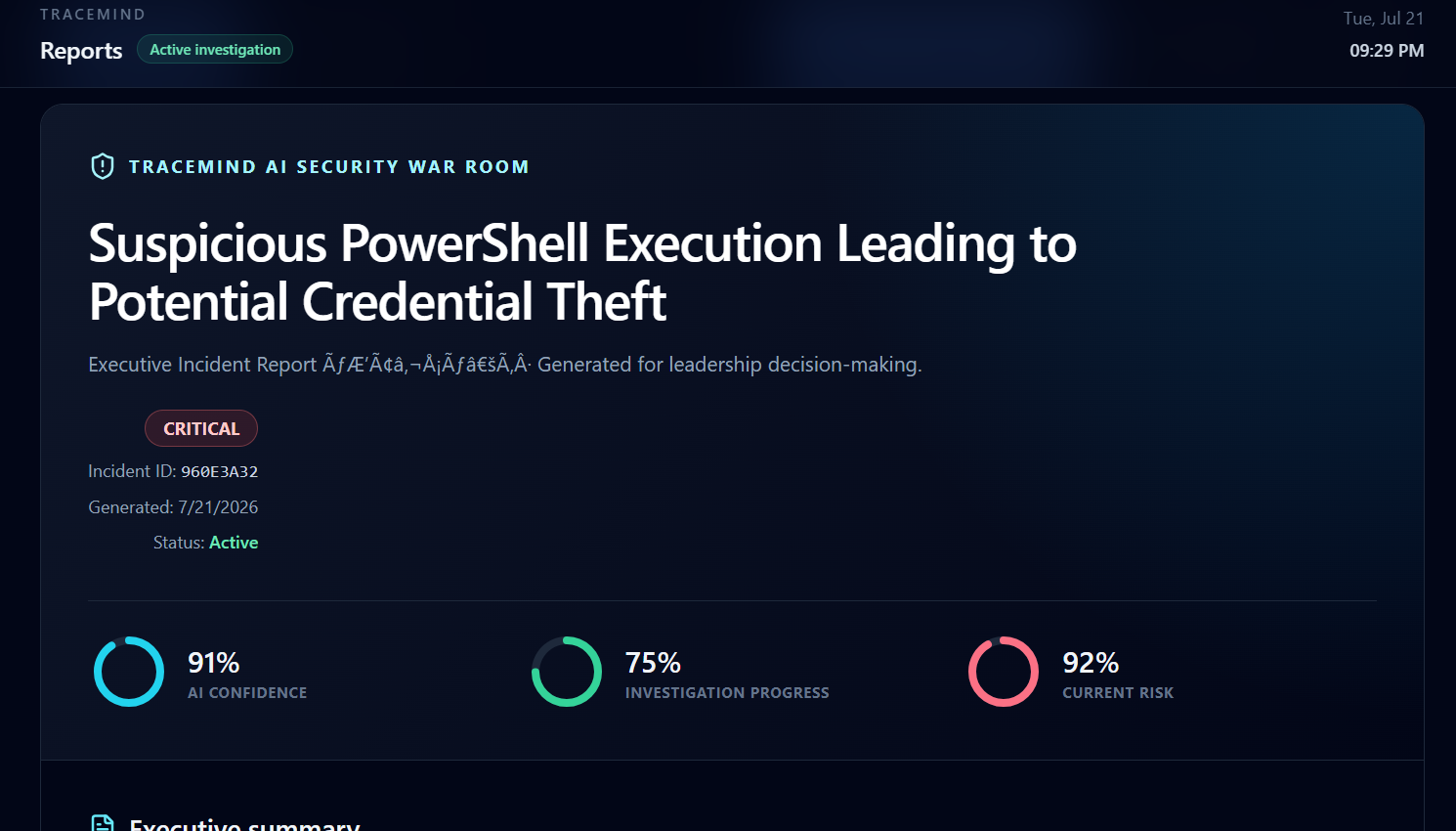
Reports of Incident

Inspiration
Security analysts often spend hours switching between alerts, logs, and multiple security tools before they can understand what actually happened during an incident. We wanted to build a platform that reduces investigation time by combining AI reasoning with structured incident response.
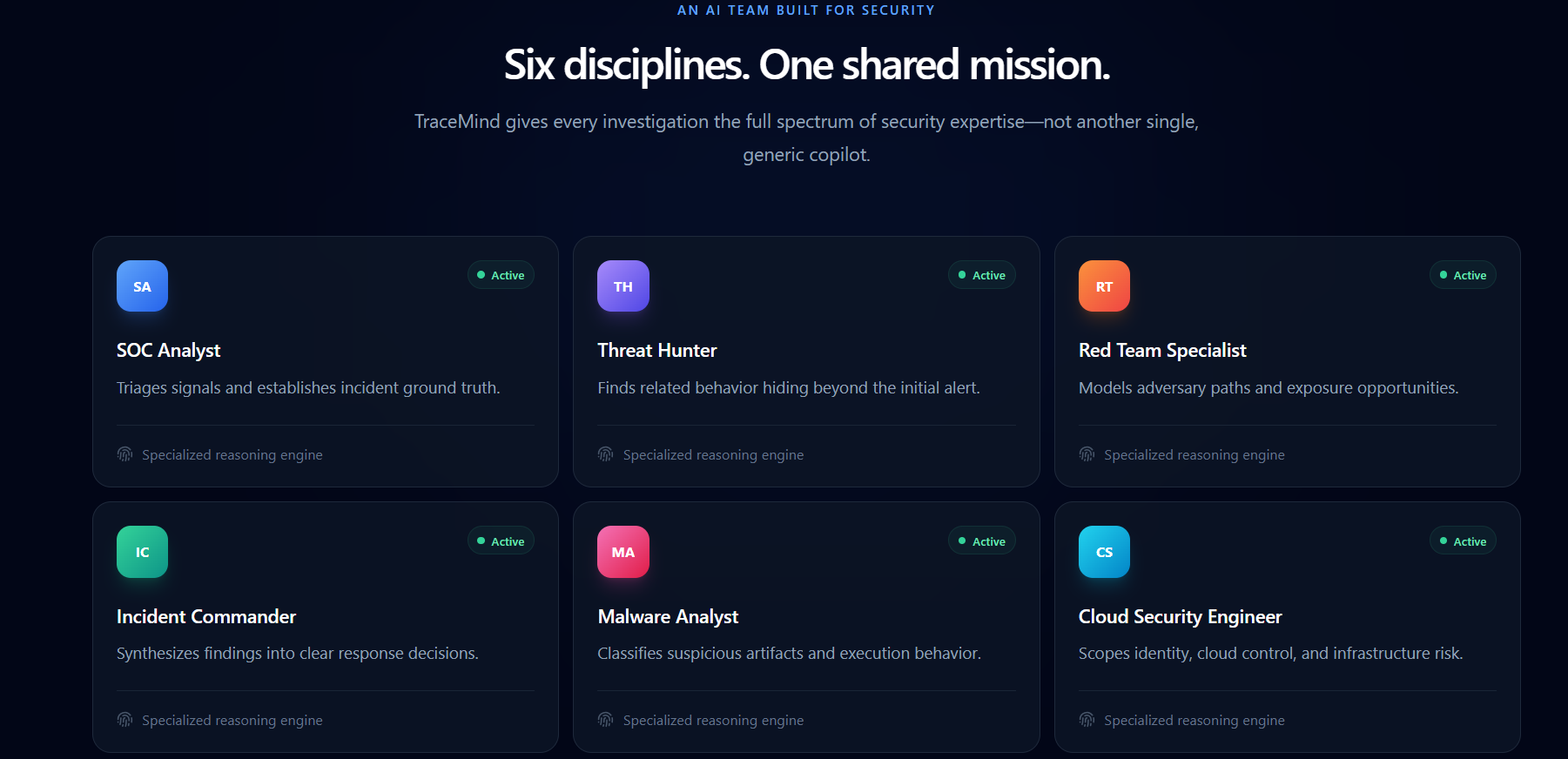
The OpenAI Build Hackathon inspired us to explore how multiple AI specialists could collaborate within a single investigation. Rather than creating a general-purpose chatbot, we designed an AI-powered investigation platform where specialized experts, including a SOC Analyst, Threat Hunter, Malware Analyst, Red Team Specialist, Cloud Security Engineer, and Incident Commander, work together to analyze evidence and guide responders.
Throughout development, GPT-5.6 helped design investigation workflows, improve specialist reasoning, and refine prompts, while Codex acted as an AI pair programmer by generating, debugging, refactoring, and accelerating both backend and frontend development. This allowed us to transform an architectural concept into a working platform within the hackathon timeframe.
What it does
TraceMind is an AI-powered Security Investigation Platform designed for SOC analysts and cybersecurity professionals.
Key capabilities include:
- AI-assisted incident investigations
- Evidence management
- Multi-agent security analysis
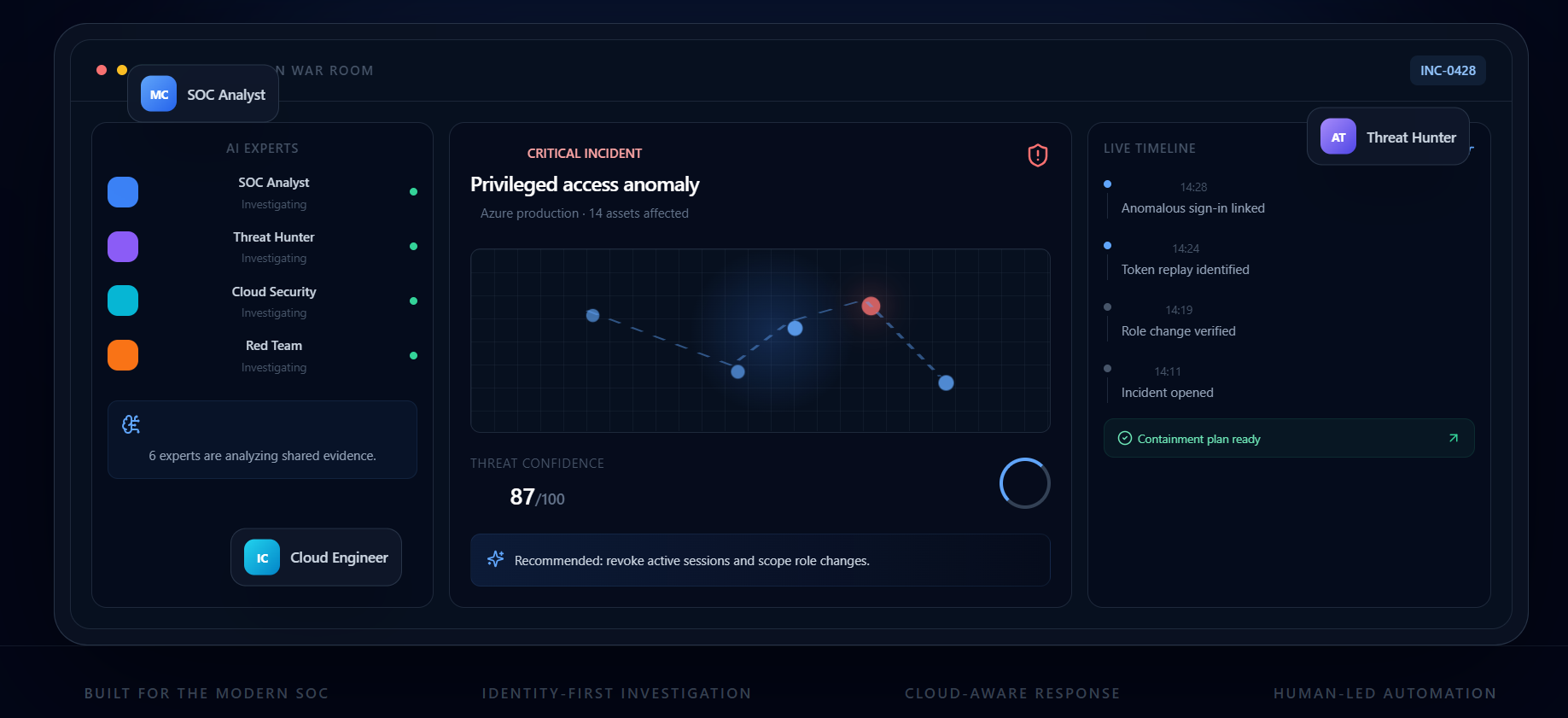
- Attack timeline reconstruction
- Visual attack path graph
- Prioritized response recommendations
- Executive and technical report generation
- AI Knowledge Hub for cybersecurity assistance
Instead of relying on a single AI response, TraceMind orchestrates six specialized AI experts that independently analyze evidence and collaboratively produce actionable investigation results.
How we built it
Frontend
- React
- Vite
- TypeScript
- Tailwind CSS
Backend
- FastAPI
- PostgreSQL
- SQLAlchemy
- Alembic
AI
- OpenAI Responses API
- GPT-5.6
- Codex
GPT-5.6 powered the investigation reasoning, AI specialists, structured reports, and recommendation generation.
Codex significantly accelerated development by assisting with backend services, REST API endpoints, database models, frontend components, debugging complex integration issues, UI refinements, and implementation of investigation workflows. It functioned as an AI software engineering partner throughout the project.
Challenges we ran into
One of the biggest challenges was making each AI specialist behave like an actual cybersecurity professional instead of producing generic AI responses. Significant prompt engineering and iterative refinement were required to give every expert a unique reasoning style.
Another challenge was integrating evidence management, attack timelines, attack graphs, recommendations, AI-generated reports, and backend orchestration into a seamless workflow.
Authentication, database migrations, frontend-backend integration, and debugging complex API interactions also presented challenges. Codex played a key role in identifying issues, suggesting fixes, and accelerating implementation throughout development.
Accomplishments that we're proud of
- Built a complete AI-powered security investigation workflow
- Designed six specialized AI security experts
- Automated executive and technical report generation
- Implemented attack timeline reconstruction
- Built an interactive attack path graph
- Developed a clean investigation dashboard
- Successfully integrated GPT-5.6 and Codex into both development and AI workflows
What we learned
This project showed us that AI can be far more effective when specialized experts collaborate rather than relying on a single general-purpose assistant.
We also experienced how powerful the combination of GPT-5.6 and Codex can be. GPT-5.6 enhanced investigation quality and reasoning, while Codex dramatically accelerated implementation, debugging, and iterative development. Together, they enabled us to build a production-style AI cybersecurity platform within the limited hackathon timeline.
What's next for TraceMind
Future improvements include:
- Live SIEM integrations
- Threat intelligence feeds
- MITRE ATT&CK mapping
- Multi-user collaboration
- Real-time alert ingestion
- Automated evidence correlation
- Cloud-native deployment
- Enterprise authentication and role-based access control
Built With
- agents
- ai
- alembic
- api
- codex
- css
- cybersecurity
- docker
- fastapi
- gpt-5.6
- incident
- jwt
- openai
- postgresql
- python
- react
- responses
- rest
- sqlalchemy
- supabase
- tailwind
- typescript
- vite

Log in or sign up for Devpost to join the conversation.