-
-
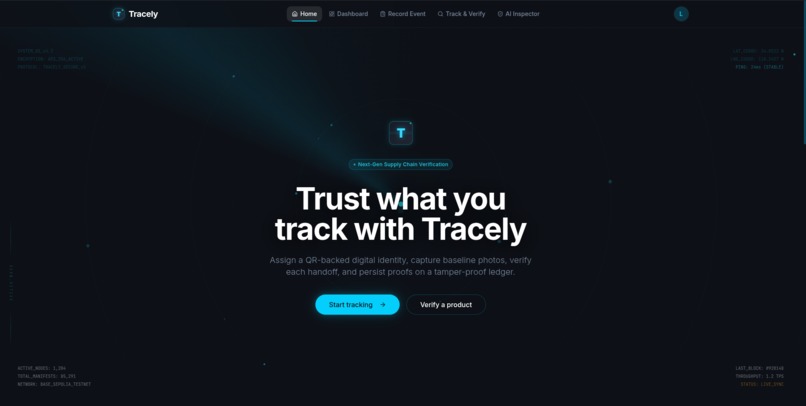
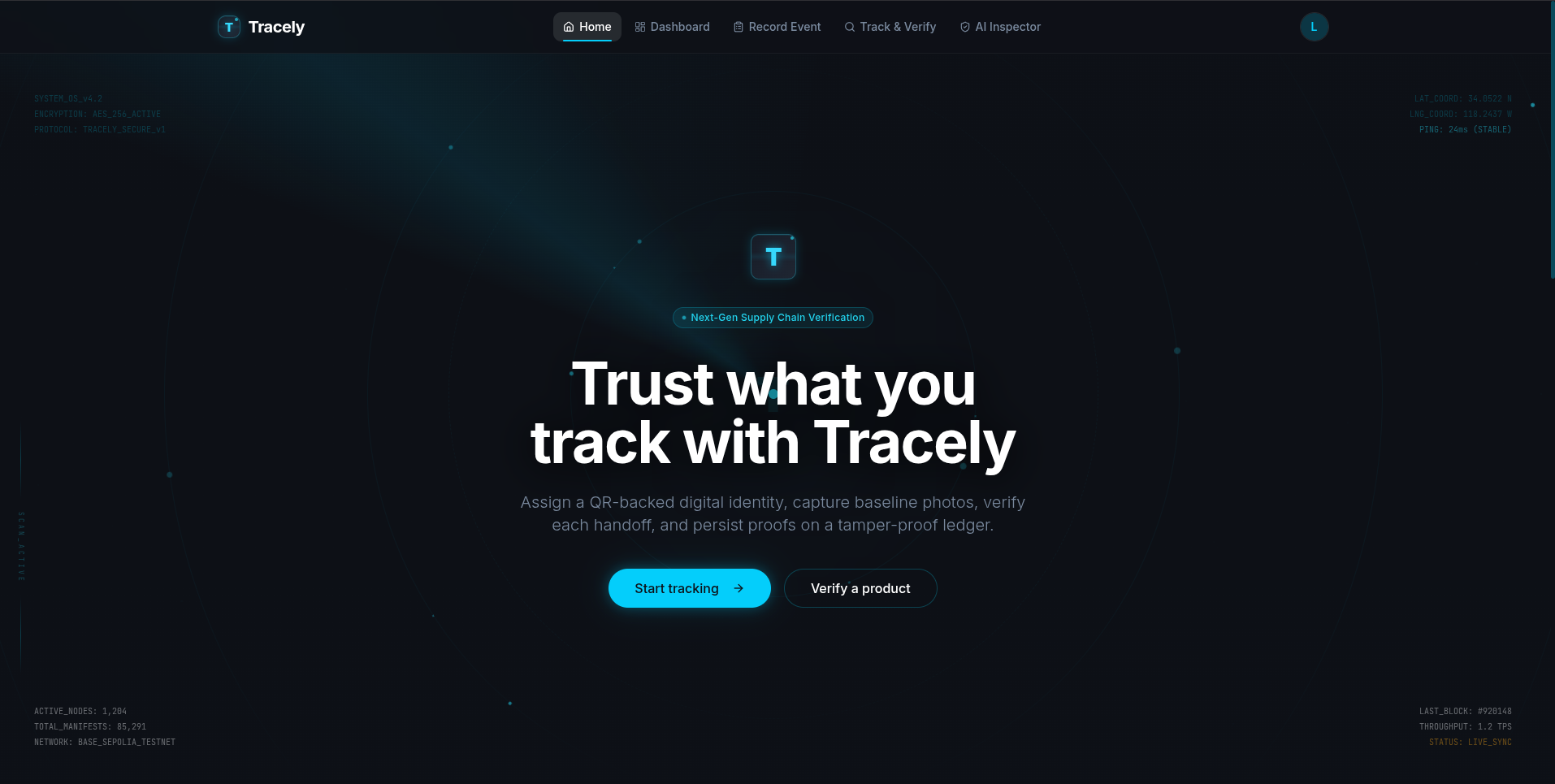
main page
-
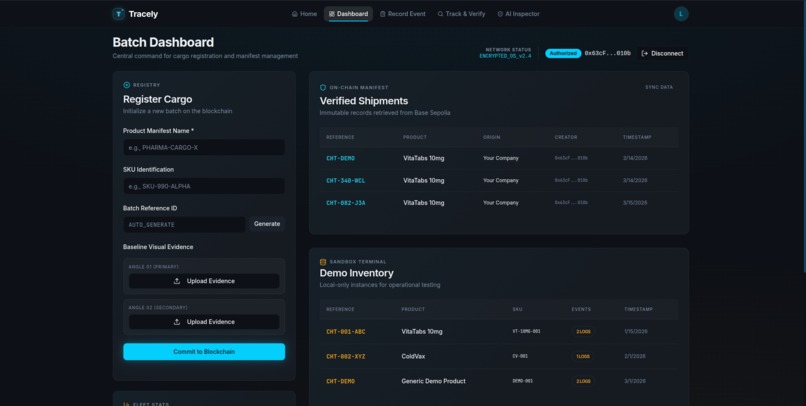
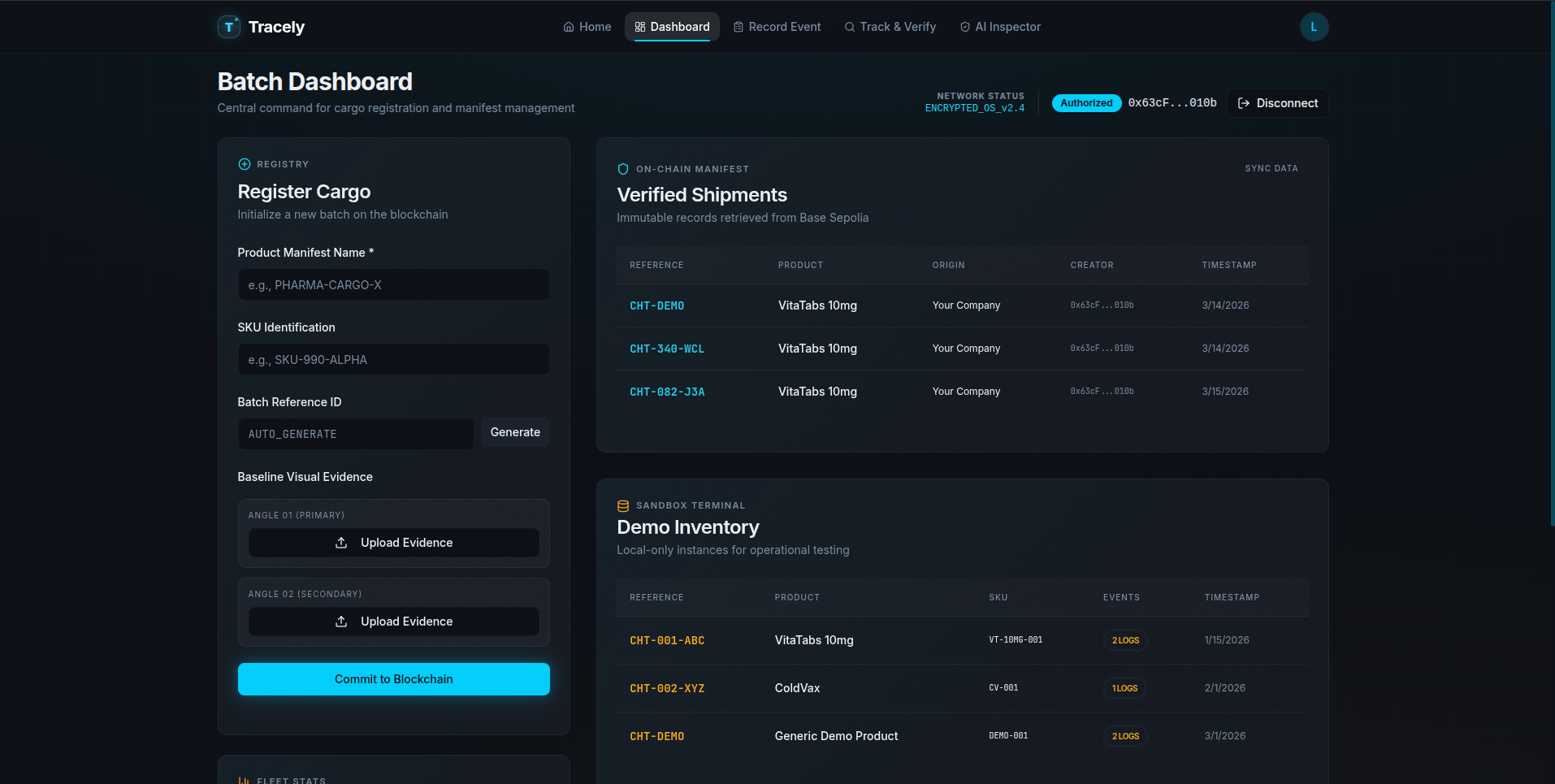
admin dashboard
-
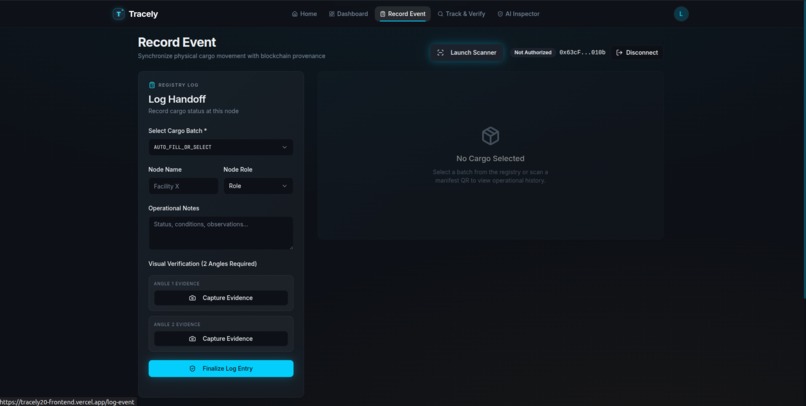
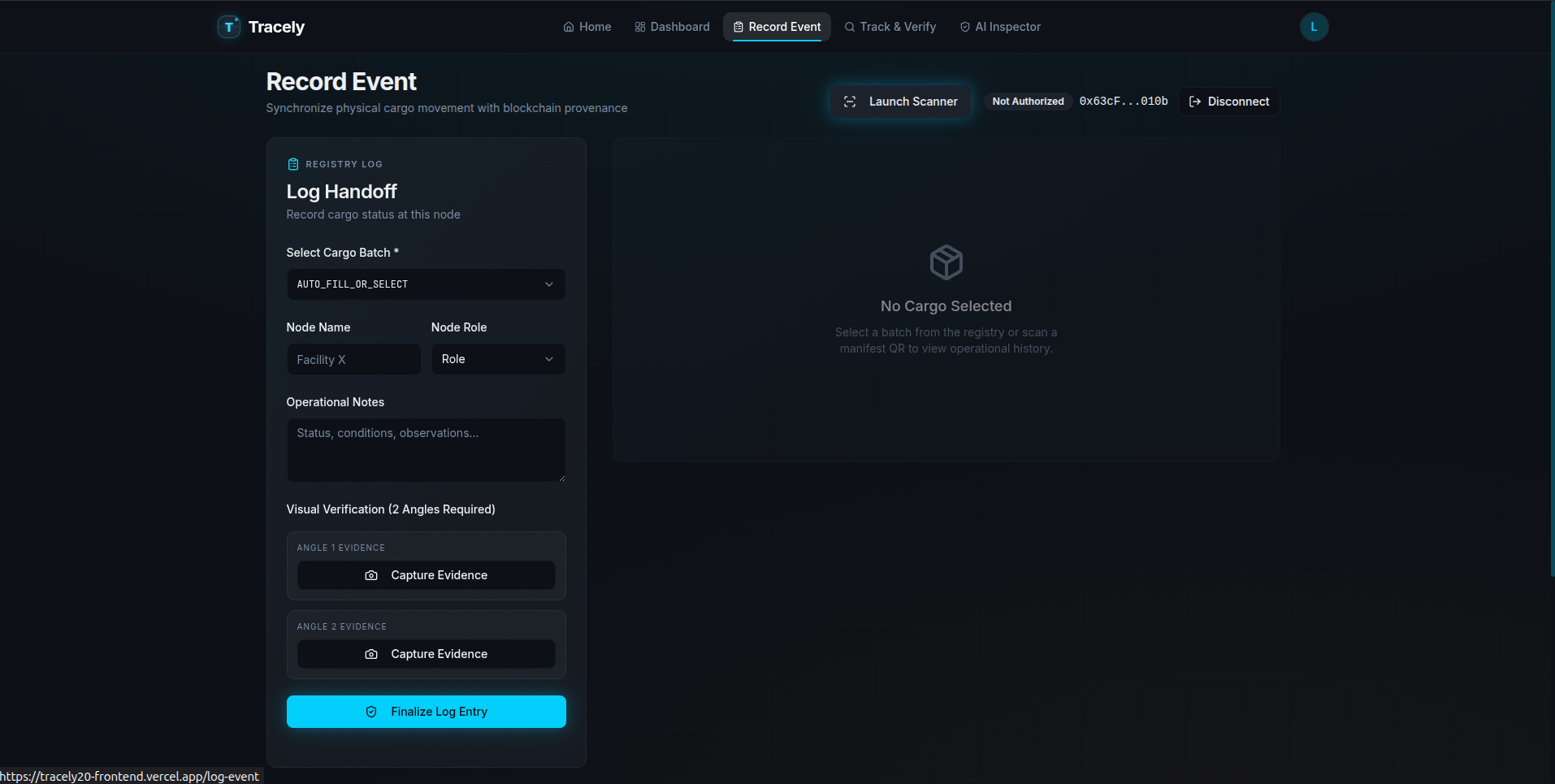
logging in new event
-
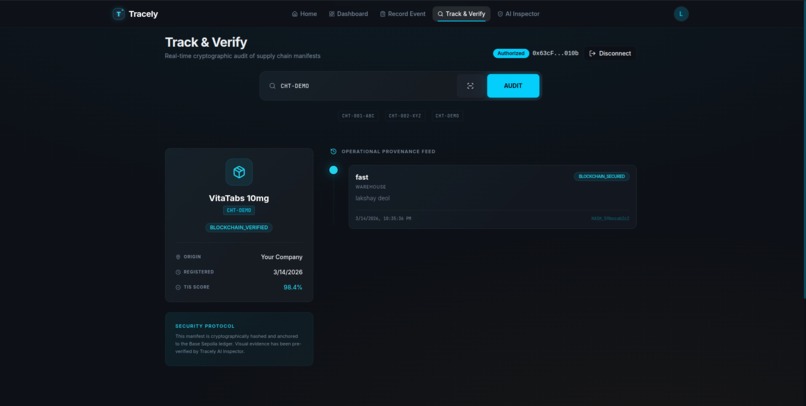
checking logs
-
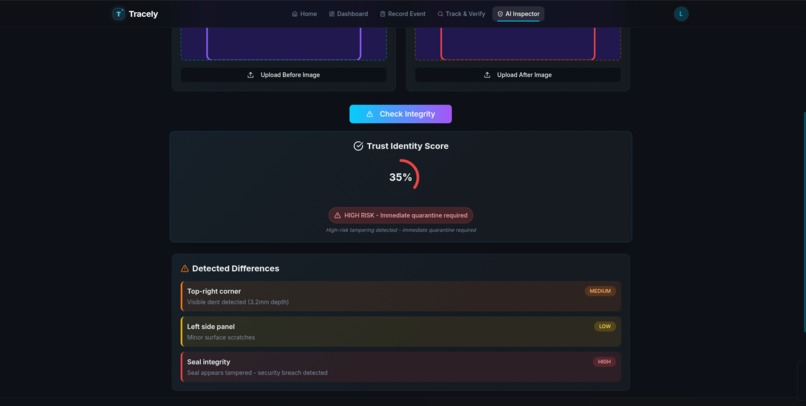
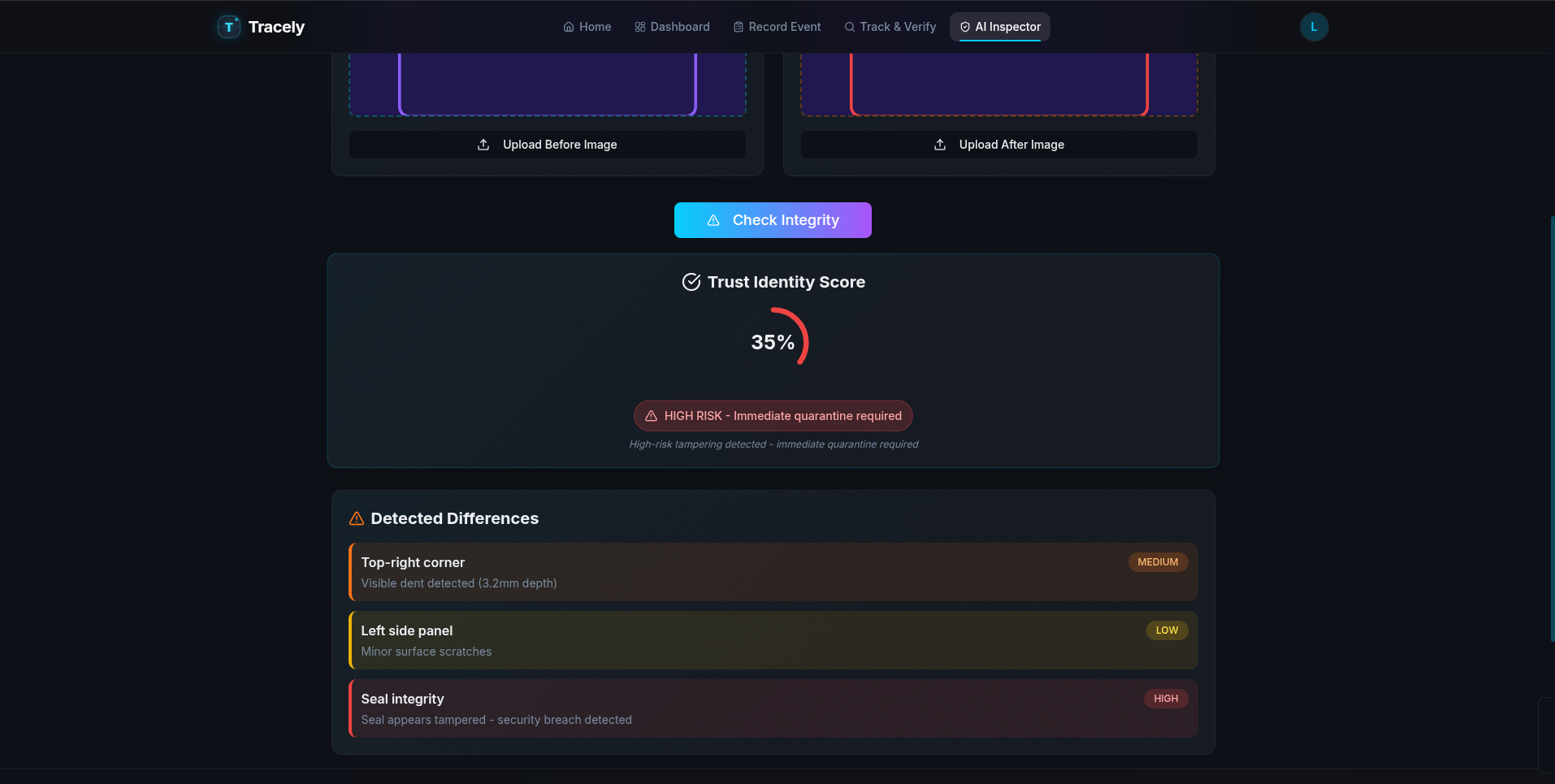
Checking Integrity using AI (using opencv and gemini flash 3 )
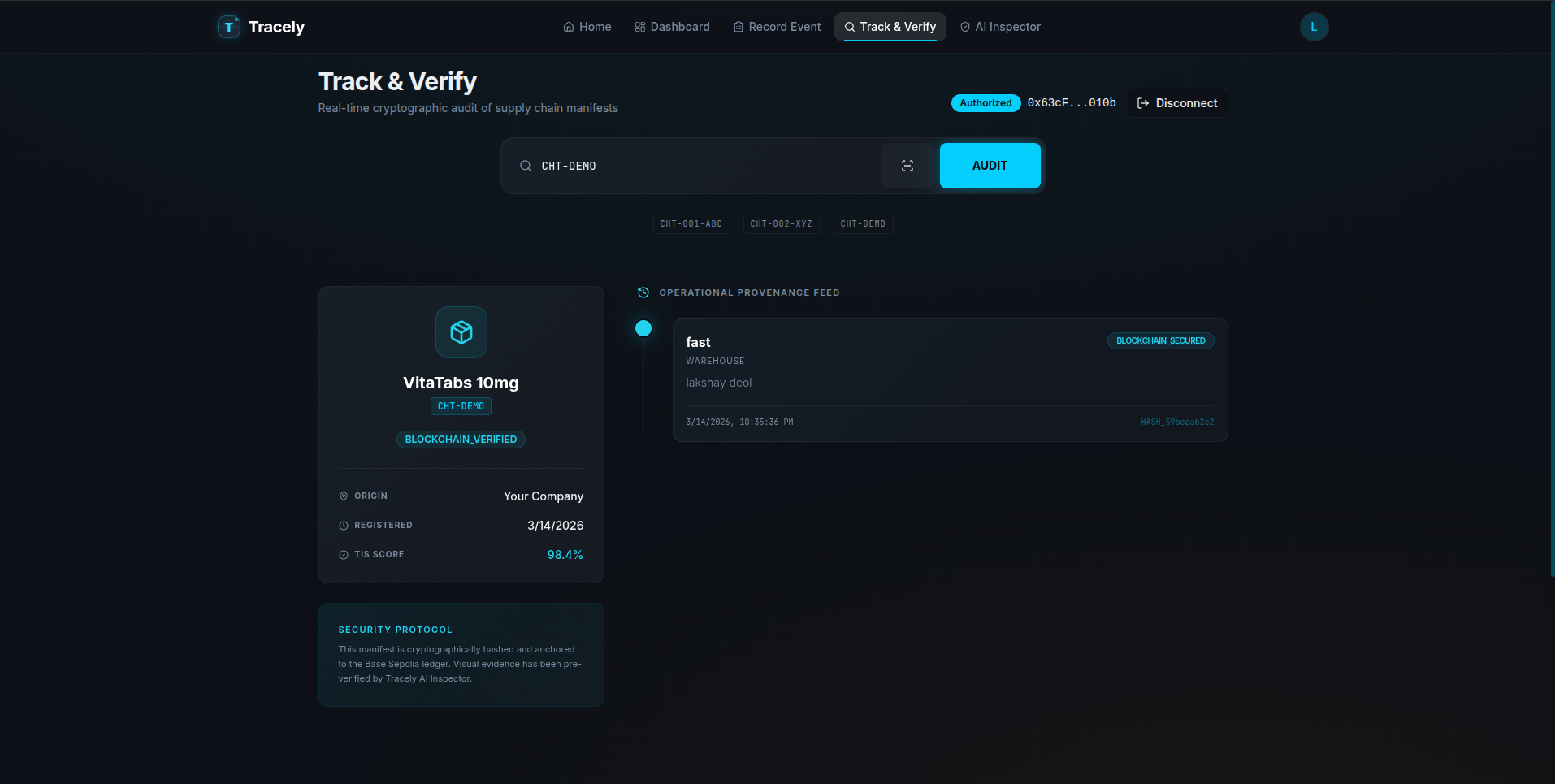
Tracely: Next Gen Supply Chain Verification
Tracely is a production-ready provenance platform designed to solve the $461 billion counterfeit goods crisis by combining Multimodal AI Vision with Blockchain Immutability.
Inspiration
The global supply chain suffers from a "Transparency Gap."
Current tracking systems know where a package is located, but cannot verify:
- What is inside the package
- Whether the package has been tampered with
- If the product is authentic
This problem becomes critical in industries like:
- Pharmaceuticals
- Luxury electronics
- Medical logistics
- High-value manufacturing
A single tampered seal can result in life-threatening consequences or millions in losses.
We wanted to create a system that delivers institutional-grade trust without requiring expensive IoT hardware — using only a standard smartphone camera.
What Tracely Does
Tracely creates a Digital Twin for every physical asset using a three-layer trust architecture.
1. Forensic Vision Layer
Uses a Gemini 3 Flash Ensemble to detect:
- Micro-variations in packaging
- Seal lift anomalies
- Repackaging attempts
- Digital tampering
These changes are often invisible to the human eye.
2. Quantitative Trust Layer
Tracely converts visual evidence into a:
Trust Integrity Score (TIS)
TIS < 40% → Automatic Quarantine Triggered
This allows logistics systems to make automated trust decisions.
3. Immutable Audit Trail
Every transfer event is permanently recorded using:
- Ethereum (Sepolia)
- Solidity Smart Contracts
- IPFS via Pinata
The system stores:
- Custody transfers
- Actor identities
- Forensic image evidence
- Integrity reports
How We Built It
The Brain (AI)
A Consensus Ensemble Architecture using:
- Two independent Gemini 3 Flash models
- OpenCV fallback verification layer
If AI confidence drops below:
Confidence < 0.6
the OpenCV pipeline automatically activates to normalize results.
The Ledger (Web3)
Built using:
- Solidity Smart Contracts
- Ethereum Sepolia Testnet
- IPFS Decentralized Storage
- Pinata Gateway
This creates a tamper-proof chain of custody.
The Dashboard
Frontend stack:
React 18 + Vite + TypeScript + TailwindCSS
Designed as a high-density logistics command center dashboard.
The Middleware
We used Requestly to:
- Simulate network failures
- Inject damaged-seal data
- Mock backend responses
- Test TIS resilience
This enabled rapid testing without redeployments.
Challenges We Faced
AI Hallucinations
Early versions relied on a single AI inference model, which occasionally missed subtle seal lifts.
Solution
We implemented:
- Ensemble-based consensus verification
- Statistical agreement validation
- Confidence normalization
The Atomic Sync Problem
Managing synchronization between:
- MongoDB
- Ethereum
- IPFS
was extremely complex.
Solution
We built a middleware verification layer that only caches metadata after blockchain confirmation.
Infrastructure Security
Developing secure Auth0 and MongoDB integrations on macOS required:
- SSL certificate injection
- Certifi-based backend security handling
to maintain production compliance.
Accomplishments We're Proud Of
The TIS Algorithm
Weighted trust scoring based on severity:
| Threat Type | Penalty |
|---|---|
| Seal Tampering | -40 |
| Digital Editing | -50 |
| Repackaging | -35 |
Zero-Redeploy Testing
Using Requestly Redirect Rules, we reduced development bottlenecks by:
70%
This allowed instant UI and backend state simulation without rebuilding.
Institutional Scalability
Tracely supports:
- Multi-angle forensic verification
- Blind-spot elimination
- Enterprise-scale asset tracking
What We Learned
We learned that decentralized enforcement is only as strong as the integrity of its input data.
AI can become the eyes of the blockchain, but forensic-grade systems require a “Trust-but-Verify” architecture.
Using ensemble AI models is not just an optimization layer — it is a security requirement.
What's Next: The Chainlink Production Path
To scale Tracely globally, we plan to integrate Chainlink to solve the Oracle Problem.
1. Chainlink Functions (AI Oracle)
Currently, TIS computation happens on a Flask backend.
In production:
- Smart contracts will trigger off-chain AI computation
- Chainlink Functions will execute Gemini Ensemble logic
- TIS results will return on-chain in a trust-minimized way
2. Chainlink Automation (Enforcement)
When:
TIS < 40%
Chainlink Automation will automatically:
- Trigger on-chain alerts
- Freeze escrow payments
- Notify manufacturers
- Flag compromised batches
3. Dynamic NFTs (dNFTs)
Each physical item will be represented as a:
Chainlink-powered Dynamic NFT
The NFT metadata will update in real-time with:
- Integrity status
- Current owner
- Trust Integrity Score
- Transfer history
4. Real-World Impact Goals
Projected outcomes:
| Metric | Expected Improvement |
|---|---|
| Fraud Reduction | Up to 30% |
| Audit Speed | 5x Faster |
| Supply Chain Transparency | Significantly Improved |
Technology Stack
Frontend
- React 18
- Vite
- TypeScript
- TailwindCSS
Backend
- Flask
- Python
AI Layer
- Gemini 3 Flash Ensemble
- OpenCV
Blockchain
- Solidity
- Ethereum Sepolia
Storage
- IPFS
- Pinata
Authentication
- Auth0
Database
- MongoDB
Middleware Testing
- Requestly
Conclusion
Tracely transforms supply chain security by combining:
- AI-powered forensic verification
- Blockchain immutability
- Decentralized trust infrastructure
The platform enables scalable, transparent, and tamper-resistant provenance tracking for the future of global logistics.

Log in or sign up for Devpost to join the conversation.