





Inspiration
With the rapid growth of AI-generated images, videos, and audio, it is becoming increasingly difficult to distinguish real media from manipulated content. Deepfakes can spread misinformation, damage reputations, and reduce trust in digital information. This inspired us to develop DeepfakeGuard AI.
What It Does
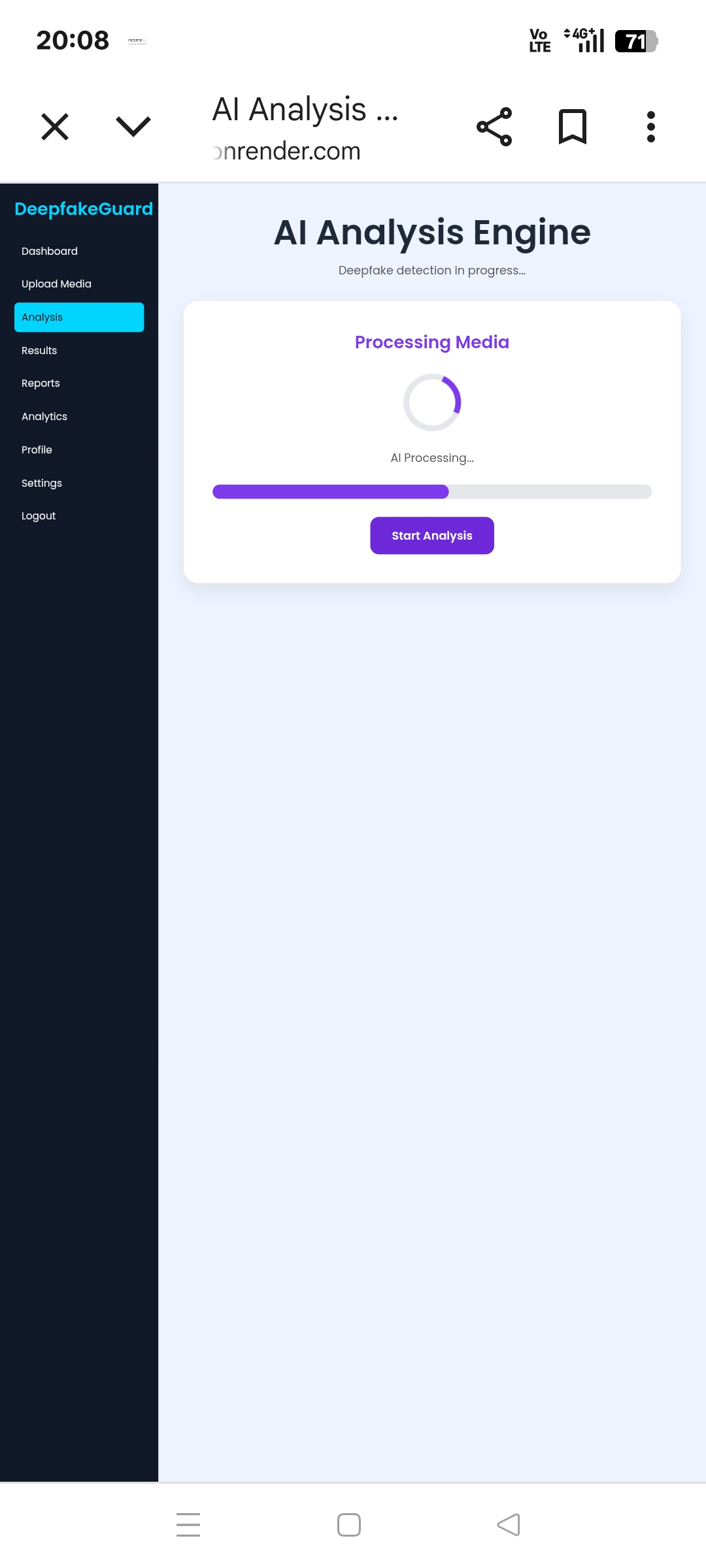
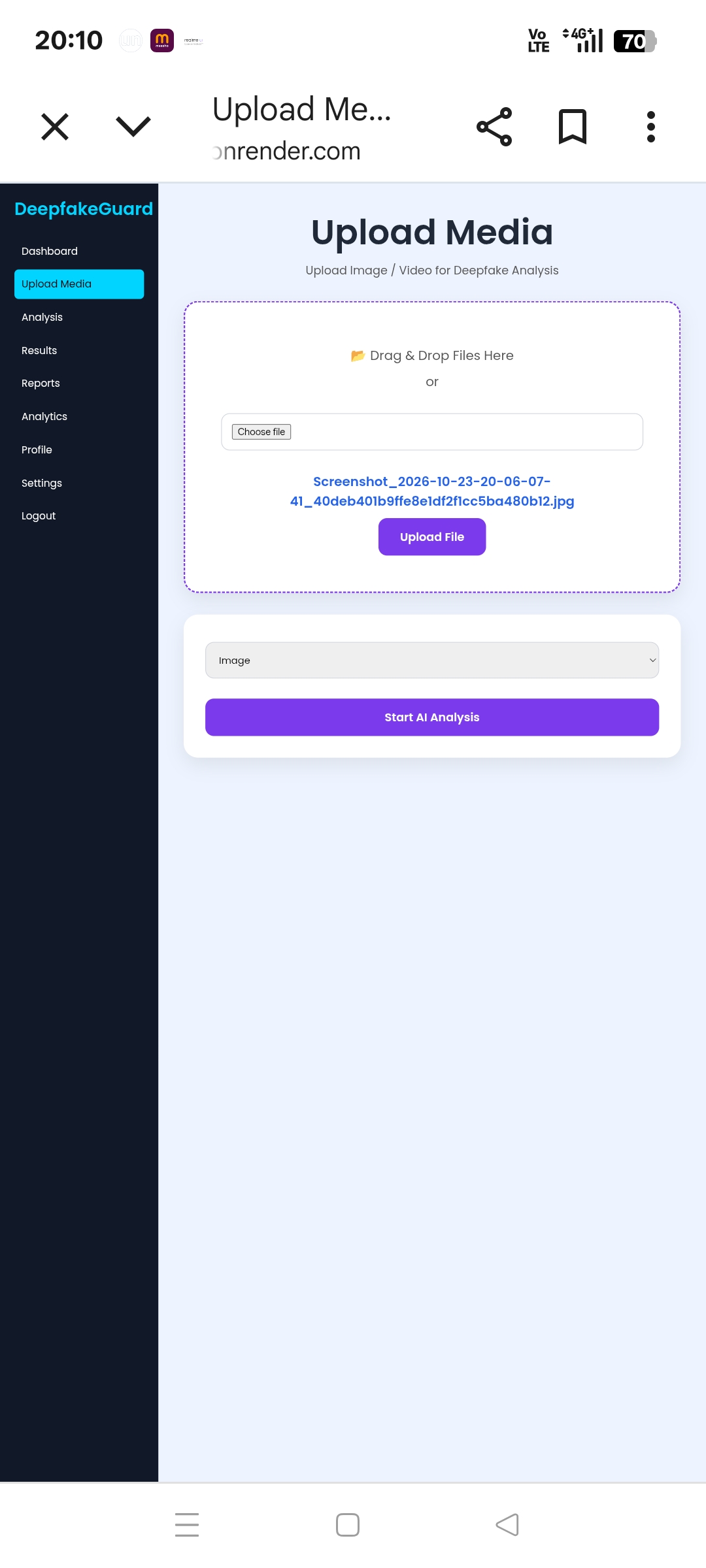
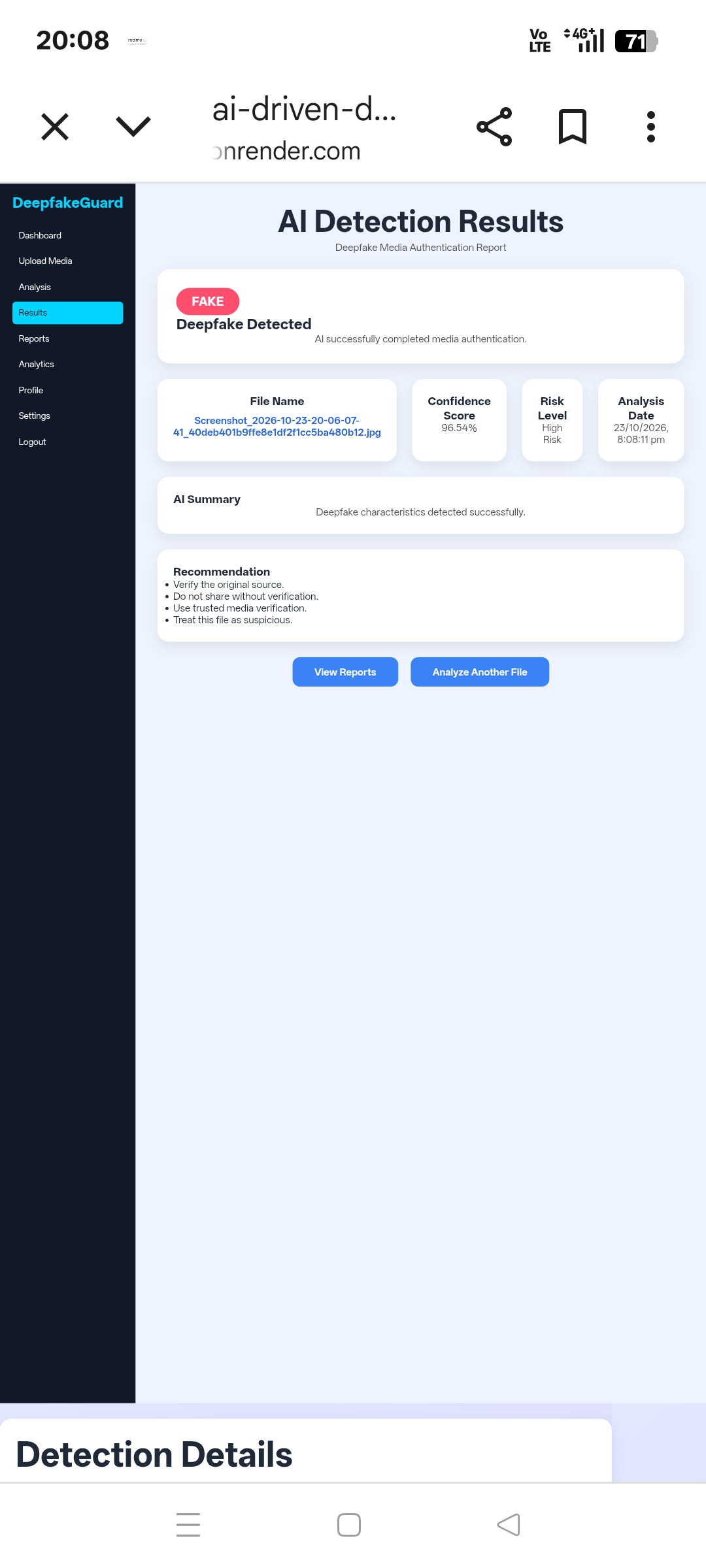
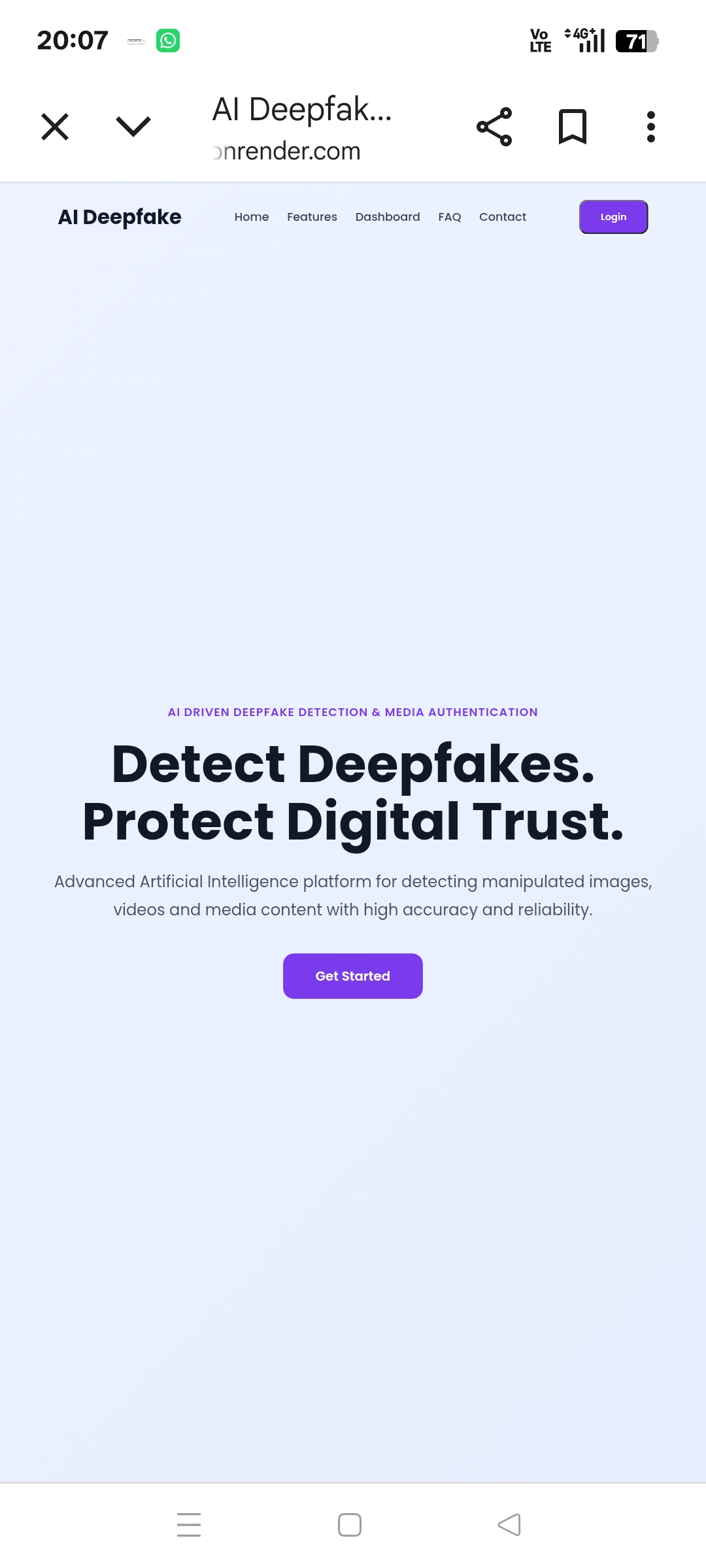
DeepfakeGuard AI is a web-based project designed to support the detection of potentially manipulated digital media. Users can upload media files for analysis and receive results that help them assess the authenticity of the content.
How We Built It
We developed the web application using Python and Flask, with a user-friendly interface for media uploads and analysis. The project also includes database functionality to manage user information and analysis history. Our goal is to combine AI-based analysis with digital media authentication.
Challenges We Faced
Some of the main challenges were handling different media formats, designing a simple user interface, managing uploaded files, and exploring reliable ways to identify manipulated content.
What We Learned
Through this project, we improved our understanding of web application development, backend integration, database management, and the challenges involved in deepfake detection.
Future Scope
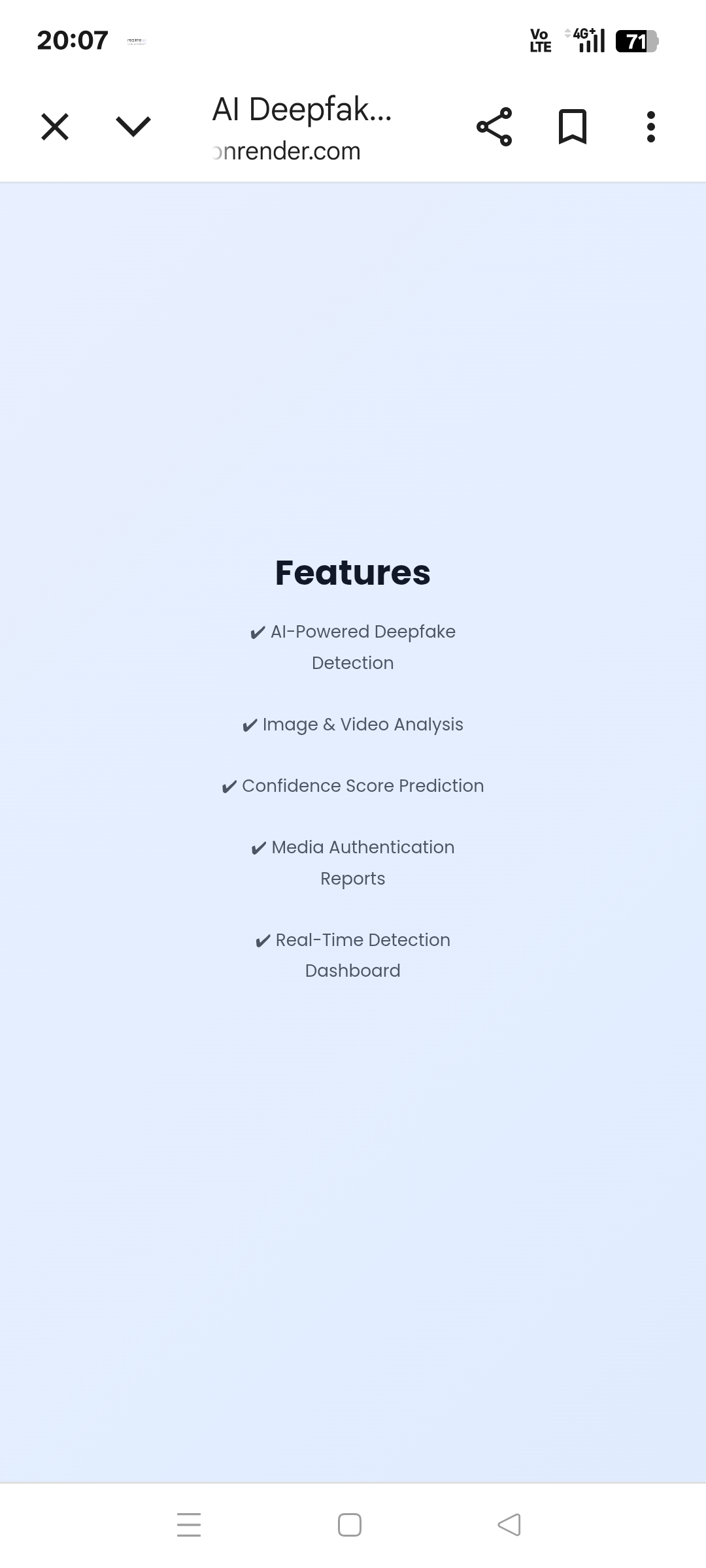
Future improvements include integrating advanced deepfake detection models, supporting image, video, and audio analysis, and providing detailed forensic reports to help users make more informed decisions about digital media authenticity.


Log in or sign up for Devpost to join the conversation.